8 Small Square Bedroom Ideas That Feel Balanced
Square bedrooms sound simple on paper, but they’re oddly tricky once you start placing furniture.
Everything wants to sit evenly, which sounds great until the room starts feeling stiff or boxed in. Balance matters here, but not the boring kind that looks like a furniture showroom display.
The goal is to make the space feel intentional without forcing symmetry everywhere. A square room can feel calm, cozy, or even stylish if you stop treating it like a math problem and start thinking about how you actually live in it.
1. Centered Bed With Flexible Side Space
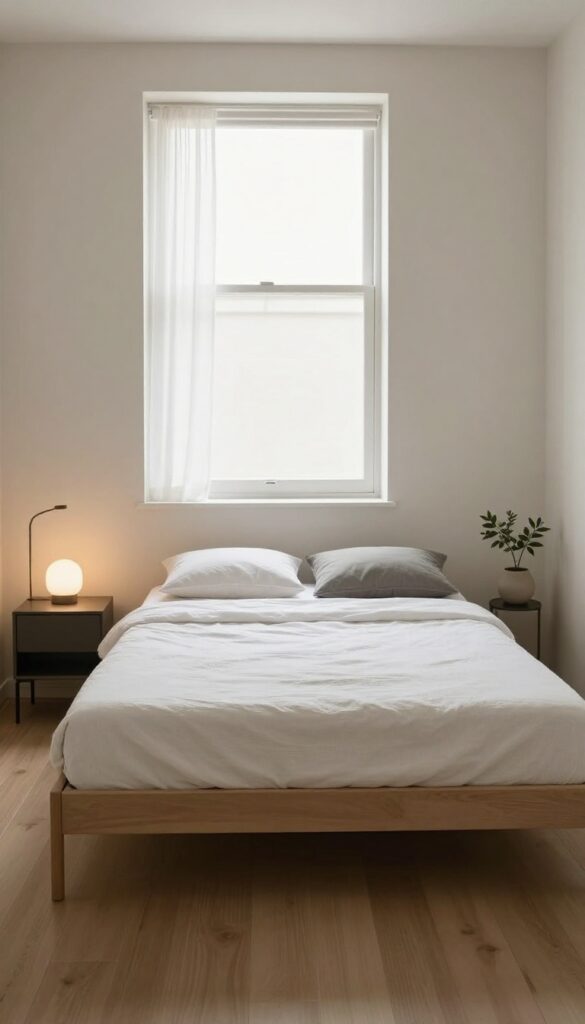
A centered bed works especially well in square bedrooms because it gives the room instant structure. When the bed sits evenly between walls, the layout feels grounded instead of lopsided.
It’s also one of the easiest ways to make a small room feel orderly without trying too hard.
That said, symmetry doesn’t mean rigidity. You don’t need identical nightstands or lamps on both sides. I’ve found that keeping the bed centered while letting the sides differ slightly makes the space feel more lived-in and less staged.
Why This Works
A square room naturally supports balance, and a centered bed uses that to your advantage. It creates equal walking space on both sides, which makes the room feel more open even if it’s small. The eye reads the layout as calm instead of cluttered.
This setup also makes furniture placement easier later. You’re not constantly trying to correct a layout that feels off-center or cramped.
How to Do It
- Place the bed directly in the middle of the main wall
- Leave equal space on both sides, even if it’s tight
- Use slim nightstands or wall-mounted shelves
- Keep the foot of the bed mostly clear
Style & Design Tips
Stick with a bed frame that has clean lines and minimal bulk. Low-profile frames work especially well in square rooms because they don’t visually chop up the space. Avoid oversized headboards unless the ceiling is high enough to handle the visual weight.
Mixing textures helps prevent the layout from feeling stiff. Soft bedding, a fabric bench, or a woven rug can add warmth without crowding the room.
Pro Tip or Budget Hack
If space is tight, skip nightstands altogether and use wall-mounted sconces with a small floating shelf. It saves floor space and instantly makes the room feel more custom.
2. Corner Bed Placement for Better Flow
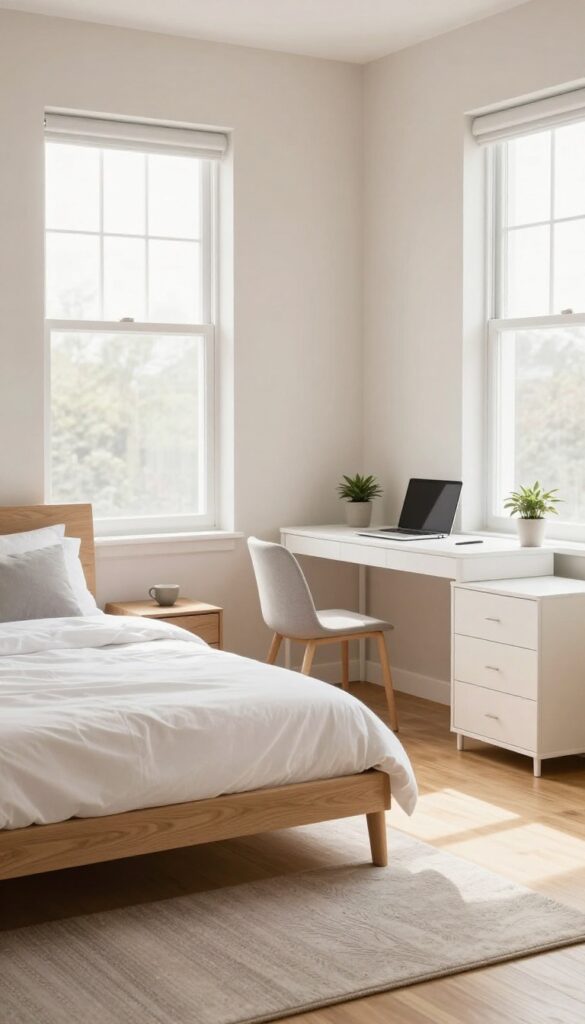
Placing the bed in a corner sounds like a downgrade, but in a small square room it can actually open things up. This layout works especially well when you want space for a desk, dresser, or reading nook without cramming everything together.
I’ve used this setup in guest rooms and teen bedrooms, and it always makes the room feel more flexible. You’re trading symmetry for movement, which often feels better in real life.
Why This Works
Corner placement frees up the center of the room, making it easier to move around. It also creates a natural zoning effect without needing walls or dividers. The room feels less rigid and more adaptable.
This layout works well if the room has an awkward door or window placement. Instead of fighting it, you’re working around it.
How to Do It
- Push the bed snugly into one corner
- Use a tall headboard or wall art to anchor it
- Leave the open side for walking space or furniture
- Add a rug to define the sleeping area
Style & Design Tips
Use layered bedding to make the bed feel intentional, not temporary. Pillows stacked against the wall add comfort and style without needing extra furniture.
Avoid placing heavy furniture directly opposite the bed. That can make the room feel boxed in instead of balanced.
Pro Tip or Budget Hack
A corner bed pairs perfectly with a small floating desk or vanity on the opposite wall. It’s a great way to add function without making the room feel crowded.
3. Floating Furniture to Open the Floor
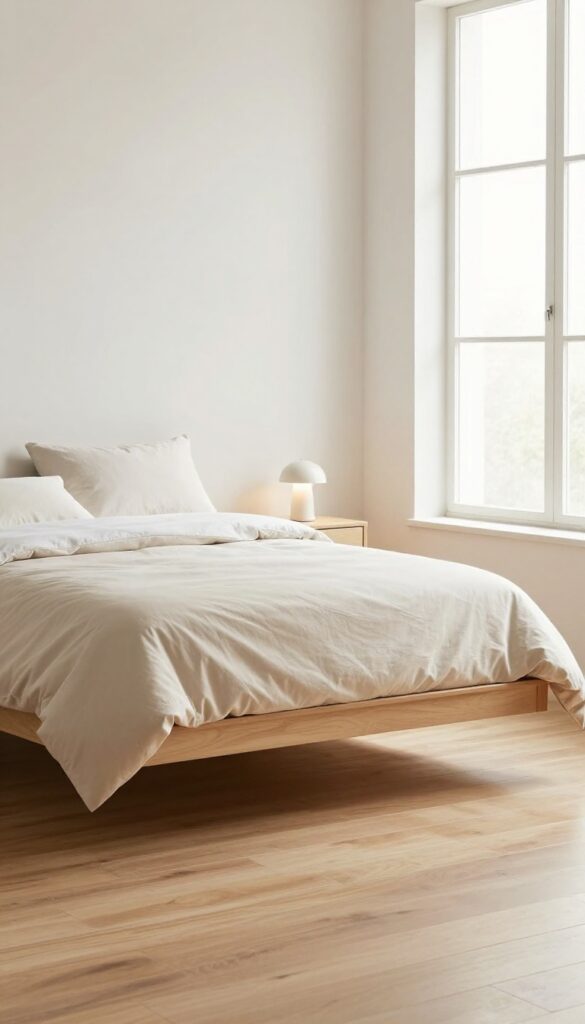
Heavy furniture sitting flat on the floor can make a small square bedroom feel compressed. Floating elements help visually lift the space and create breathing room. This is one of those tricks that looks subtle but makes a huge difference.
I didn’t fully appreciate floating furniture until I tried it in a tight bedroom. Suddenly the room felt cleaner, lighter, and way easier to keep organized.
Why This Works
When you can see more floor, the room feels bigger. Floating furniture creates visual space without actually removing anything. It also improves airflow and makes cleaning less annoying.
This works especially well in square rooms where furniture tends to cluster awkwardly.
How to Do It
- Install floating nightstands or shelves
- Choose wall-mounted lighting instead of lamps
- Keep at least one wall mostly clear
- Avoid bulky dressers when possible
Style & Design Tips
Stick to simple shapes and neutral tones for floating pieces. Too much visual detail defeats the purpose and can make the room feel busy.
Balance floating elements with something grounded, like a rug or upholstered bed, so the room doesn’t feel too sparse.
Pro Tip or Budget Hack
Floating shelves can double as nightstands and decor storage. They’re cheaper than full furniture pieces and easy to install with basic tools.
4. Symmetrical Storage for Visual Calm
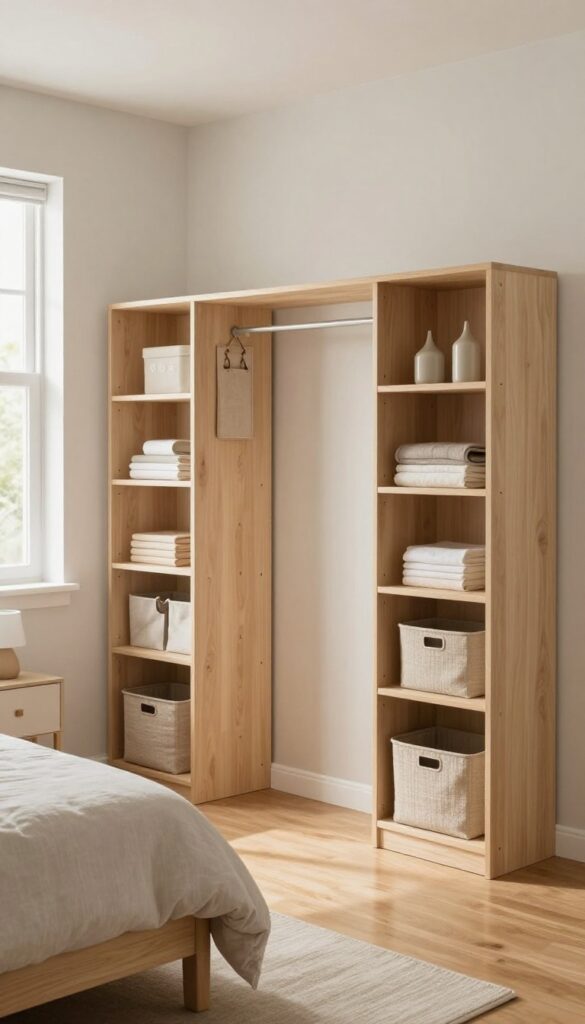
Storage can make or break a small bedroom, especially a square one. When storage is uneven, the whole room feels off balance. Symmetry helps create a sense of order even if the room isn’t large.
This doesn’t mean everything has to match perfectly. It just means the visual weight feels even on both sides.
Why This Works
The brain likes balance, especially in small spaces. Symmetrical storage reduces visual noise and makes the room feel calmer. It also helps prevent clutter from taking over.
When storage looks intentional, the room instantly feels more put together.
How to Do It
- Use matching dressers or shelves on each side
- Keep heights similar for visual balance
- Store heavier items lower to ground the room
- Use closed storage for a cleaner look
Style & Design Tips
Go for simple hardware and clean lines. Overly decorative storage can overwhelm a small square room fast.
If you want personality, add it through decor instead of furniture shapes.
Pro Tip or Budget Hack
You can fake symmetry by using matching baskets or bins on mismatched shelves. It creates cohesion without buying new furniture.
5. Soft Zoning With Rugs and Lighting
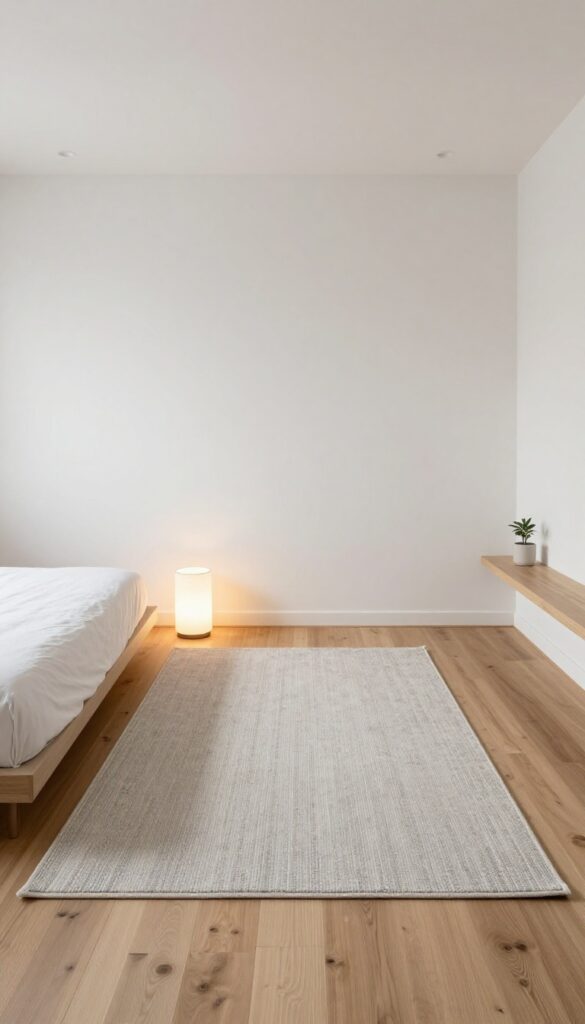
Small square rooms often feel like everything is happening in one spot. Soft zoning helps define areas without adding walls or bulky furniture. It’s subtle but incredibly effective.
I’ve found that even a small rug or lighting change can completely shift how the room feels.
Why This Works
Zoning creates purpose. Your brain understands where to sleep, relax, or get ready without needing physical barriers. This makes the room feel larger and more organized.
It also adds visual interest without clutter.
How to Do It
- Place a rug under the bed to anchor the space
- Use a floor lamp or pendant for a reading area
- Keep zones visually light and uncluttered
- Stick to a cohesive color palette
Style & Design Tips
Choose rugs that are slightly larger than you think you need. Too-small rugs make the room feel cramped and throw off proportions.
Lighting should feel layered, not harsh. One overhead light is rarely enough.
Pro Tip or Budget Hack
Battery-powered wall sconces are an easy way to add lighting without wiring. They’re renter-friendly and surprisingly affordable.
6. Vertical Storage to Maximize Space
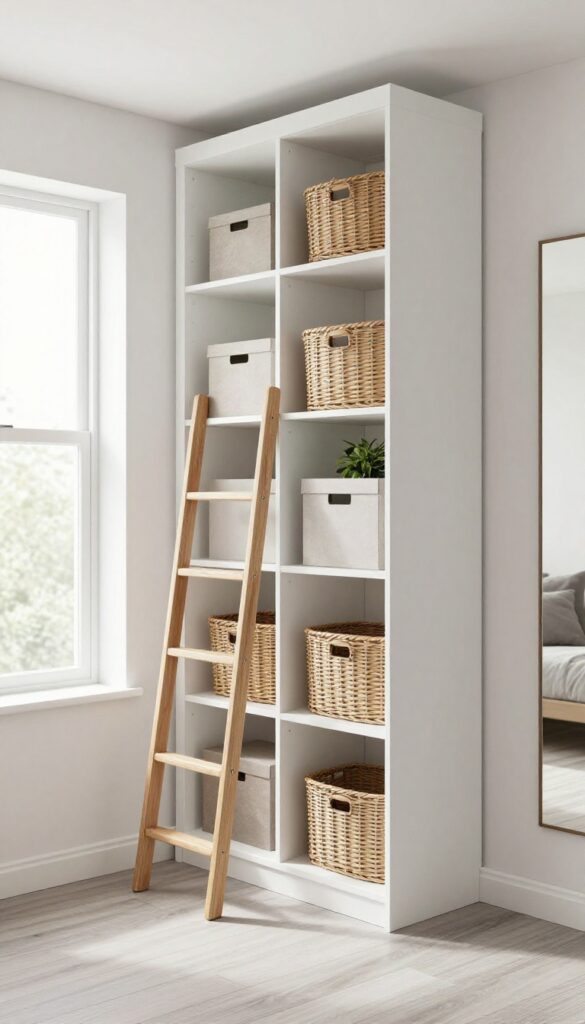
When floor space is limited, going vertical is the smartest move. Tall storage draws the eye upward and makes the room feel larger than it actually is. This is especially helpful in square rooms where width is limited.
Vertical storage also keeps clutter off the floor, which instantly makes the space feel calmer.
Why This Works
Your eyes naturally follow vertical lines upward, creating the illusion of height. This helps counteract the boxed-in feeling square rooms sometimes have.
It also lets you store more without sacrificing walking space.
How to Do It
- Use tall bookcases or wardrobes
- Install shelves above door frames
- Stack storage vertically instead of horizontally
- Keep heavier items lower for stability
Style & Design Tips
Stick with lighter colors for tall pieces to avoid overwhelming the room. Open shelving works best when styled simply, not stuffed.
Leave some negative space so the room can breathe.
Pro Tip or Budget Hack
Over-the-door organizers are underrated. They’re cheap, easy to remove, and perfect for small bedrooms with limited closet space.
7. Balanced Color Palette for Visual Flow
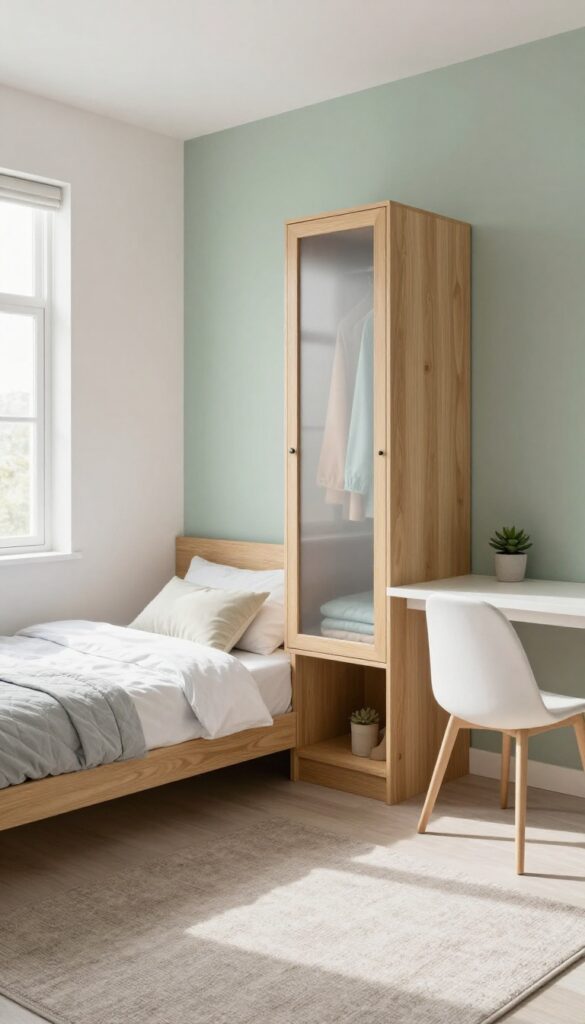
Color plays a huge role in how balanced a room feels. In small square bedrooms, too many bold colors can make the space feel chaotic. A controlled palette keeps things calm and cohesive.
This doesn’t mean boring or all-white. It just means intentional.
Why This Works
A limited color palette helps the room feel connected. Your eye moves smoothly around the space instead of bouncing between clashing tones.
It also makes small rooms feel more polished and thought-out.
How to Do It
- Choose one main color and one accent
- Repeat colors in small doses around the room
- Keep walls light for openness
- Use texture instead of extra colors
Style & Design Tips
Soft neutrals with one muted accent work beautifully in square rooms. Too many bold colors shrink the space visually and make it feel busy.
If you love color, use it in art, pillows, or throws instead of walls.
Pro Tip or Budget Hack
Changing pillow covers or bedding is the easiest way to refresh color without repainting or buying new furniture.
8. Multi-Use Furniture for Flexibility
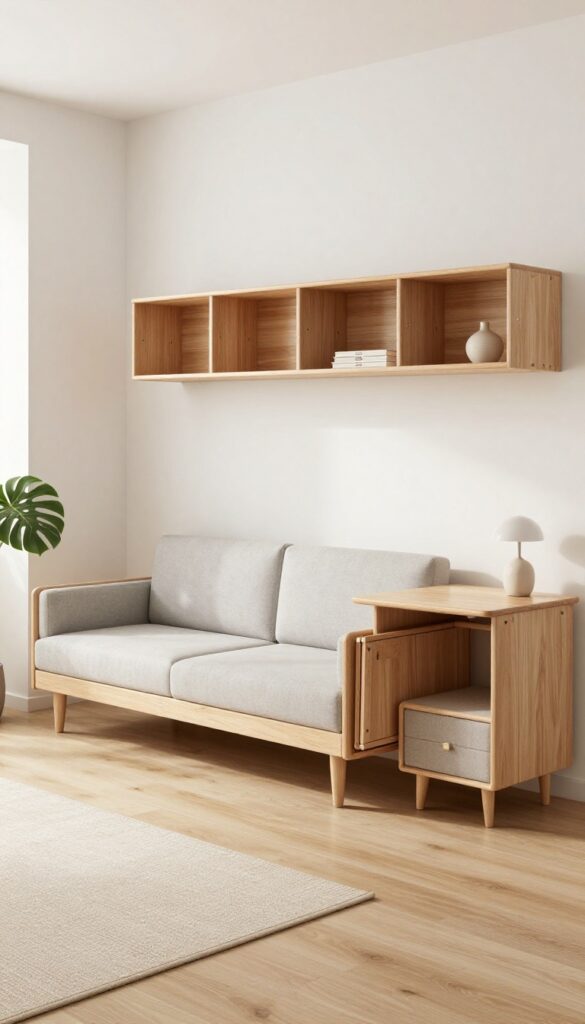
Small square bedrooms benefit most from furniture that does more than one job. The fewer pieces you need, the more balanced the room will feel.
This approach has saved me more space than any layout trick ever has.
Why This Works
Multi-use furniture reduces clutter and simplifies the layout. When each item serves a purpose, the room feels intentional instead of crowded.
It also gives you flexibility as your needs change.
How to Do It
- Choose a bed with storage drawers
- Use an ottoman that doubles as seating
- Pick a desk that can act as a vanity
- Look for foldable or stackable pieces
Style & Design Tips
Keep multi-use pieces visually simple so they don’t feel bulky. Clean lines help them blend in instead of standing out.
Avoid oversized furniture even if it offers storage. Balance matters more than capacity.
Pro Tip or Budget Hack
Storage benches at the foot of the bed are gold. They add seating, storage, and structure without taking up much space.
Final Thoughts
Small square bedrooms don’t need complicated layouts or expensive furniture to feel balanced. A few thoughtful choices can completely change how the space functions and feels.
The key is paying attention to flow, scale, and purpose instead of forcing symmetry everywhere. Once you stop fighting the shape of the room and start working with it, everything falls into place a lot easier.