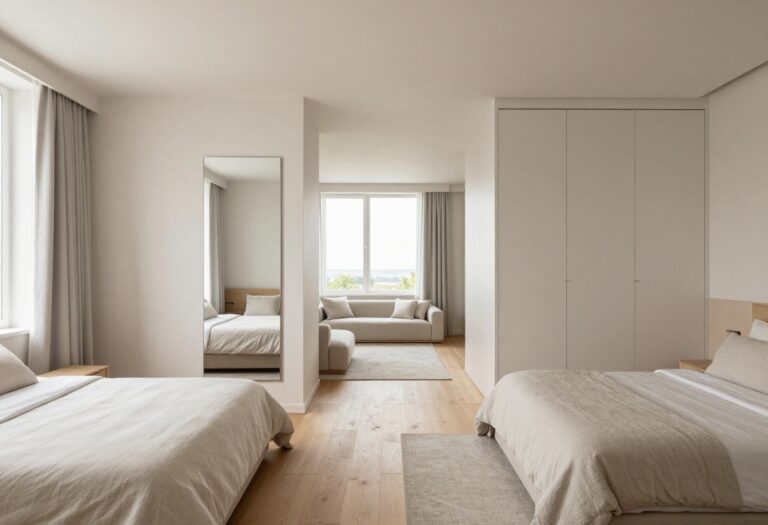
8 Two Window Bedroom Ideas for Better Balance
Two windows in a bedroom can feel like a blessing and a headache at the same time. On paper, more light sounds great, but in reality, it often creates layout confusion, awkward furniture placement, or a room that feels visually split in half.
I’ve dealt with this more times than I can count, and the fix is almost never about adding more stuff.
What usually works is understanding how the windows affect balance, flow, and function. Once you stop fighting their placement and start designing with them, everything clicks.
These ideas are the ones I’ve seen work over and over again, especially in real homes where perfection isn’t the goal.
1. Center the Bed Between the Windows
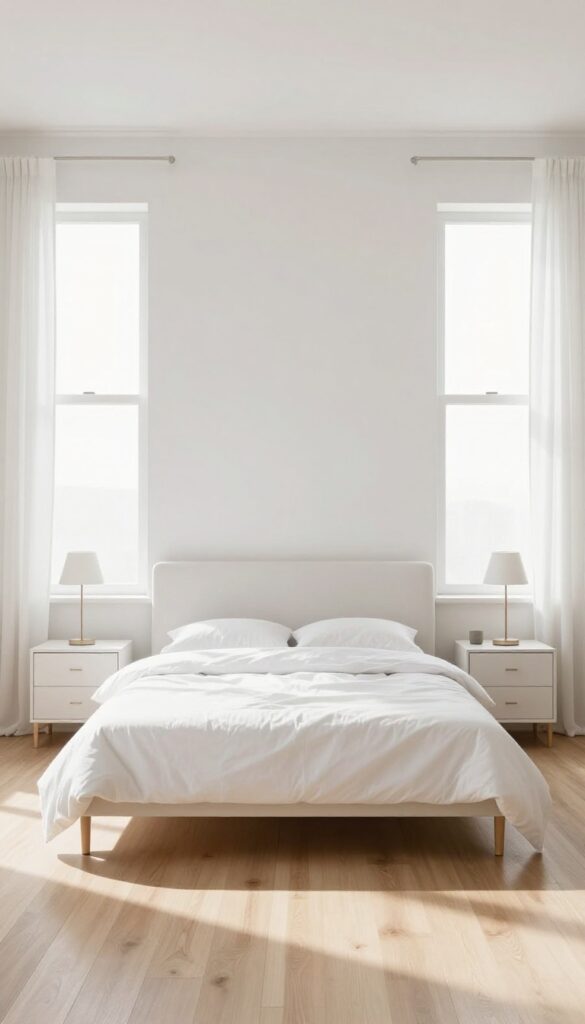
Two windows can easily make a bedroom feel lopsided if the bed isn’t anchored properly. When the bed floats off to one side, the whole room tends to feel like it’s leaning.
Centering the bed between the windows creates instant balance and gives the space a clear focal point.
I’ve tried this setup in both small and medium-sized bedrooms, and it almost always makes the room feel calmer.
The symmetry does a lot of visual work without you needing to add extra décor. It also helps the windows feel intentional instead of random.
Why This Works
Placing the bed between two windows naturally creates symmetry, which the eye finds comforting. It makes the room feel organized without trying too hard. The windows act like built-in framing elements for the bed.
How to Do It
- Measure the wall carefully so the bed sits evenly between both windows
- Use matching nightstands on each side for visual balance
- Keep window treatments similar to avoid pulling attention to one side
Style & Design Tips
Stick to simple headboards here because the windows already create visual interest. Upholstered or low-profile wood headboards work especially well. Avoid heavy curtains that overwhelm the wall or block light unevenly.
Pro Tip or Budget Hack
If the windows aren’t perfectly aligned, fake symmetry by hanging curtains at the same height and width. The eye reads the fabric, not the window placement.
2. Use One Window for Light and the Other for Function
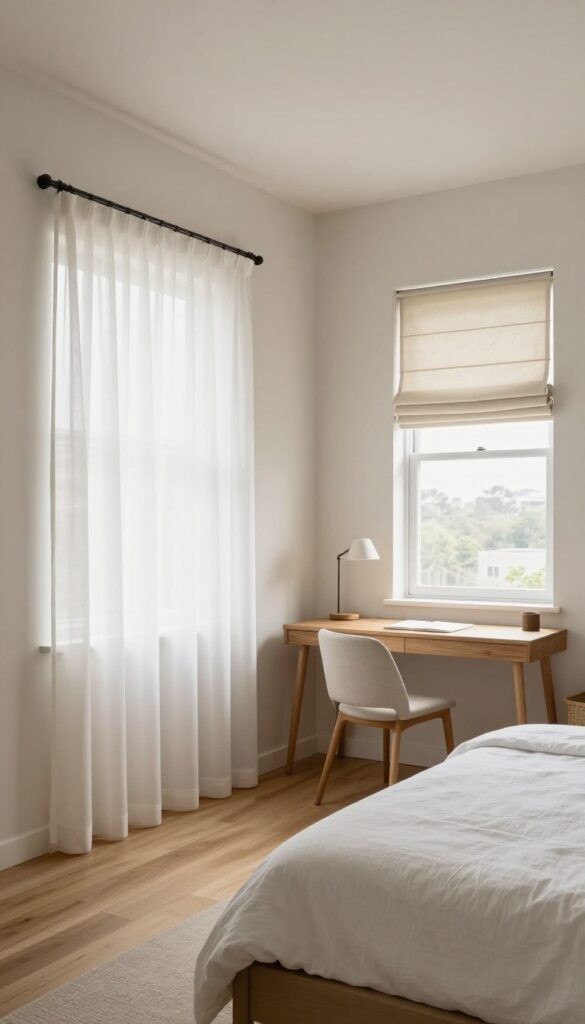
Not every window needs to do the same job. In fact, treating them differently can solve layout issues fast. One window can stay open and airy, while the other becomes part of a functional zone.
I’ve done this in rooms where one window sits awkwardly near a corner. Instead of fighting it, I turned that side into a desk or reading nook. It instantly made the layout feel intentional.
Why This Works
Dividing function gives each window a purpose instead of competing for attention. It also helps define zones in bedrooms that double as work or relaxation spaces.
How to Do It
- Keep one window unobstructed for natural light
- Place a desk, chair, or vanity near the second window
- Use different but complementary window treatments
Style & Design Tips
Keep colors consistent so the room doesn’t feel chopped up. Soft neutrals or warm woods help everything flow. Avoid bulky furniture that blocks light or airflow.
Pro Tip or Budget Hack
A slim desk or floating shelf works better than a full vanity if space is tight. You’ll still get function without crowding the room.
3. Frame the Windows with Matching Curtains
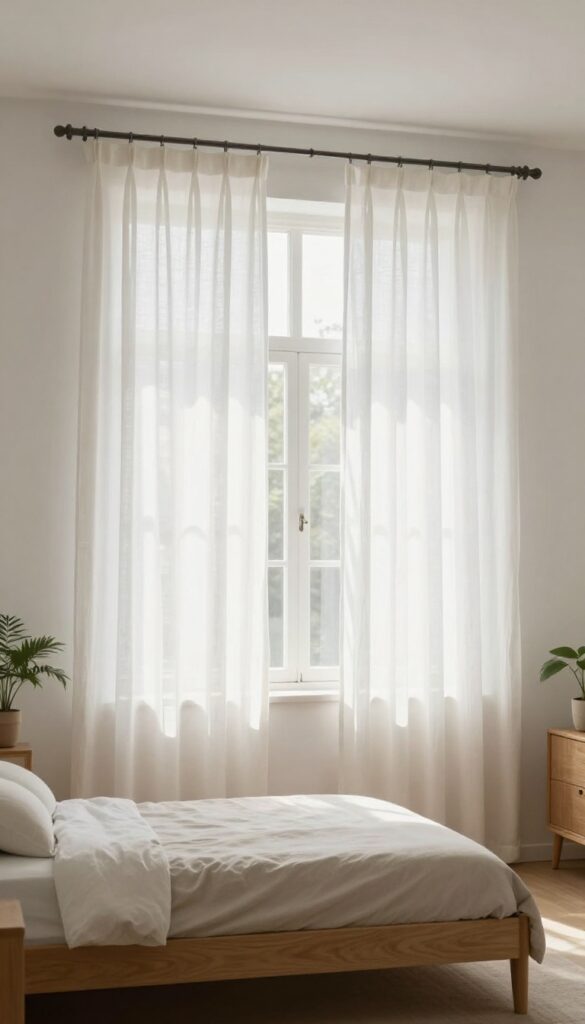
Curtains do more than block light. They visually connect separate elements in a room, especially when you’re dealing with two windows on the same wall. Matching curtains create cohesion instantly.
I’ve noticed that mismatched or uneven curtains make rooms feel messy, even when everything else is styled nicely. Consistency here makes a huge difference.
Why This Works
Matching curtains visually tie the windows together, making them feel like a pair instead of two separate features. This creates a cleaner, more balanced look.
How to Do It
- Hang curtain rods at the same height
- Use the same fabric and color for both windows
- Extend rods slightly beyond the window frames
Style & Design Tips
Lightweight fabrics like linen or cotton keep things airy. Avoid heavy blackout curtains unless you really need them, since they can make the room feel closed in.
Pro Tip or Budget Hack
Buy longer curtains and hang them higher than the window frame. It makes the ceiling feel taller without any renovation.
4. Create a Symmetrical Furniture Layout
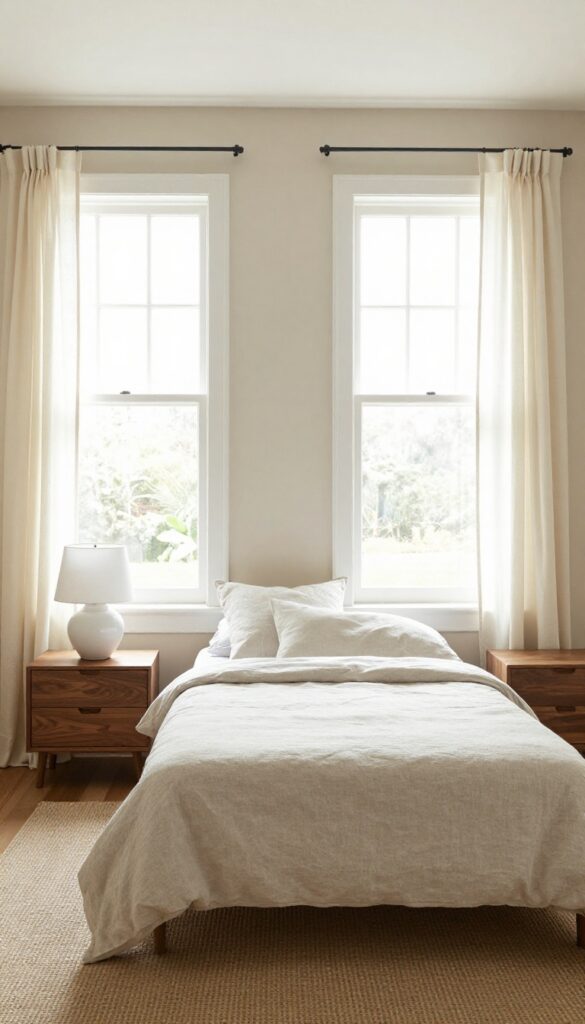
When you have two windows, symmetry becomes your best friend. Matching furniture pieces help stabilize the space and prevent it from feeling chaotic. This is especially helpful in larger bedrooms.
I’ve found this works great with nightstands, lamps, or even small accent chairs placed under each window.
Why This Works
Symmetry gives the brain something predictable to follow. It reduces visual clutter and makes the room feel calmer and more intentional.
How to Do It
- Place matching nightstands or chairs beneath each window
- Use identical lamps or decor items
- Keep spacing even on both sides
Style & Design Tips
Stick to simple shapes and neutral colors to avoid overwhelming the room. Too much contrast breaks the balance you’re trying to create.
Pro Tip or Budget Hack
If you don’t want to buy two of everything, use similar-sized items in the same color family. The eye cares more about balance than perfection.
5. Turn One Window into a Reading Nook
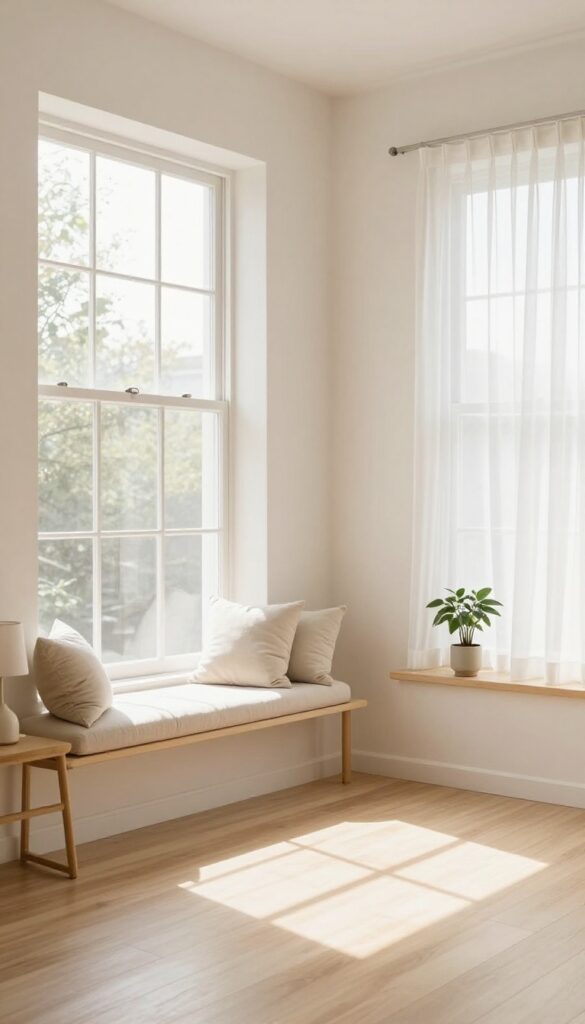
Not every window needs to frame the bed. One of my favorite tricks is turning a window into a cozy reading corner while keeping the other more functional or decorative.
This works especially well if one window gets better light during the day. It creates a natural spot to relax without adding clutter.
Why This Works
A reading nook adds purpose to unused space and makes the room feel more lived-in. It also breaks up the monotony of a traditional bedroom layout.
How to Do It
- Add a chair or bench under the window
- Include a small side table or floor lamp
- Use a throw or cushion for comfort
Style & Design Tips
Choose soft textures and calming colors. Avoid oversized chairs that block light or dominate the room.
Pro Tip or Budget Hack
A simple cushion on a storage bench works just as well as a fancy chair and gives you extra storage.
6. Balance the Room with Wall Art or Mirrors
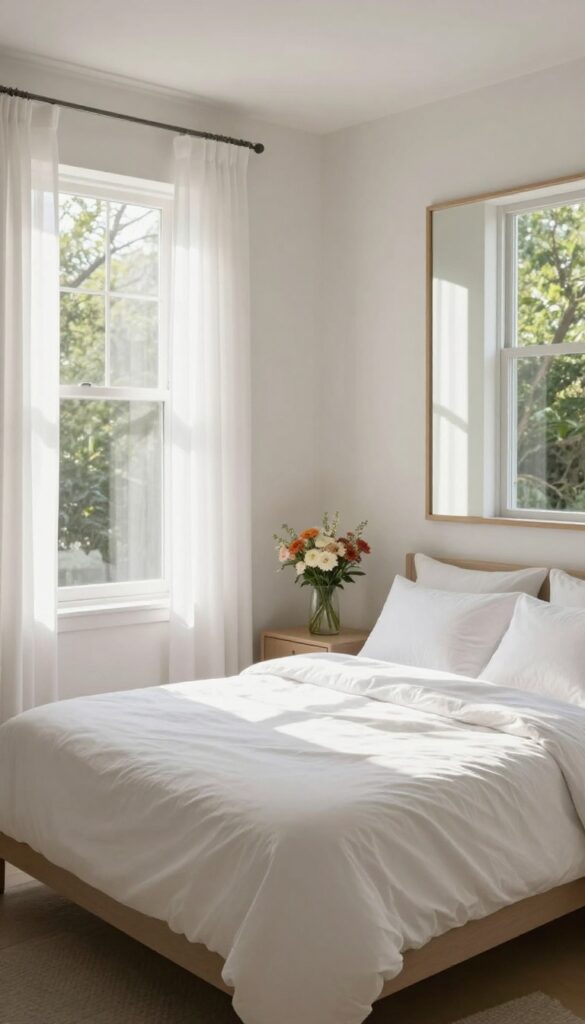
When two windows throw off visual balance, wall décor can fix it fast. Mirrors or artwork help anchor empty wall space and keep the room from feeling lopsided.
I’ve used mirrors especially when windows face different directions and create uneven lighting.
Why This Works
Mirrors reflect light and visually expand the space. Artwork adds weight where a window might be missing.
How to Do It
- Place art or mirrors opposite the windows
- Keep sizes proportional to the wall
- Use similar frames for cohesion
Style & Design Tips
Go simple with artwork if the room already has strong architectural features. Too much detail competes with the windows.
Pro Tip or Budget Hack
A large mirror can replace multiple smaller pieces and instantly make the room feel bigger.
7. Use Color to Create Visual Balance
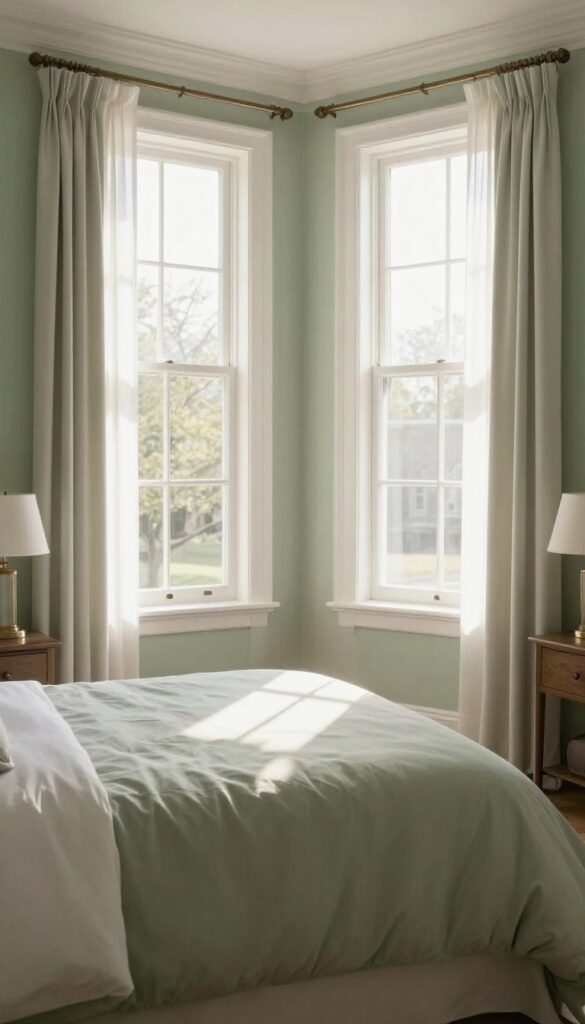
Color plays a bigger role than most people realize when dealing with multiple windows. Uneven light can make one side of the room feel heavier or darker.
I’ve found that using consistent tones throughout the space helps smooth out those differences.
Why This Works
Color unifies the room and minimizes contrast caused by uneven lighting. It keeps the focus on layout instead of light patterns.
How to Do It
- Use the same wall color throughout
- Repeat accent colors on both sides
- Keep bedding and decor in a tight palette
Style & Design Tips
Soft neutrals work best, but muted colors like sage or warm gray also do the job well. Avoid overly dark shades unless the room is very bright.
Pro Tip or Budget Hack
Matching throw pillows or bedding accents can balance color without repainting anything.
8. Let the Windows Guide the Layout
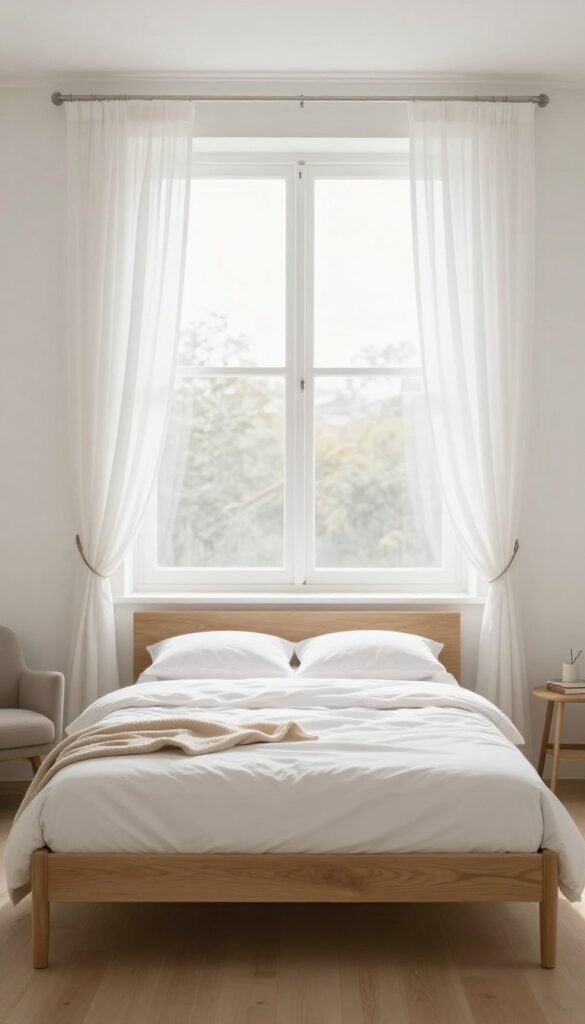
Sometimes the best move is to stop forcing symmetry and let the windows dictate the layout. Not every room needs to be perfectly balanced to feel good.
I’ve seen rooms look amazing when the bed is slightly off-center because the layout simply made more sense that way.
Why This Works
Designing around natural architecture creates flow instead of resistance. The room feels intentional rather than forced.
How to Do It
- Place major furniture where it feels natural
- Leave breathing room around windows
- Avoid blocking light paths
Style & Design Tips
Lean into the layout instead of fighting it. Function always beats symmetry in real homes.
Pro Tip or Budget Hack
Before buying anything new, rearrange what you already have. You’ll be surprised how much better things feel with a fresh layout.
Final Thoughts
Two windows can feel tricky at first, but they’re actually a design advantage once you know how to work with them. The key is balance, not perfection, and letting the room guide your decisions instead of forcing a layout.
I’ve learned that the best bedrooms feel intentional, not overdesigned. If you take your time, test a few ideas, and trust what feels right, those two windows will end up being your favorite feature.