10 Fresh Kitchen Desk Ideas That Give Your Space a Budget-Friendly Update
A kitchen desk might sound like a luxury, but it's actually one of the most practical additions you can make. Whether you need a spot to pay bills, help with homework, or just scroll through recipes, a small desk area can transform how you use your kitchen. The best part?
You don't need a huge renovation or a big budget to make it happen. These ten ideas prove that a kitchen desk can be both stylish and affordable.
From repurposing an old console table to building a simple floating shelf desk, there's something here for every space and skill level. We'll focus on real-world solutions that look good and work hard.
1. Repurpose a Console Table as a Slim Desk
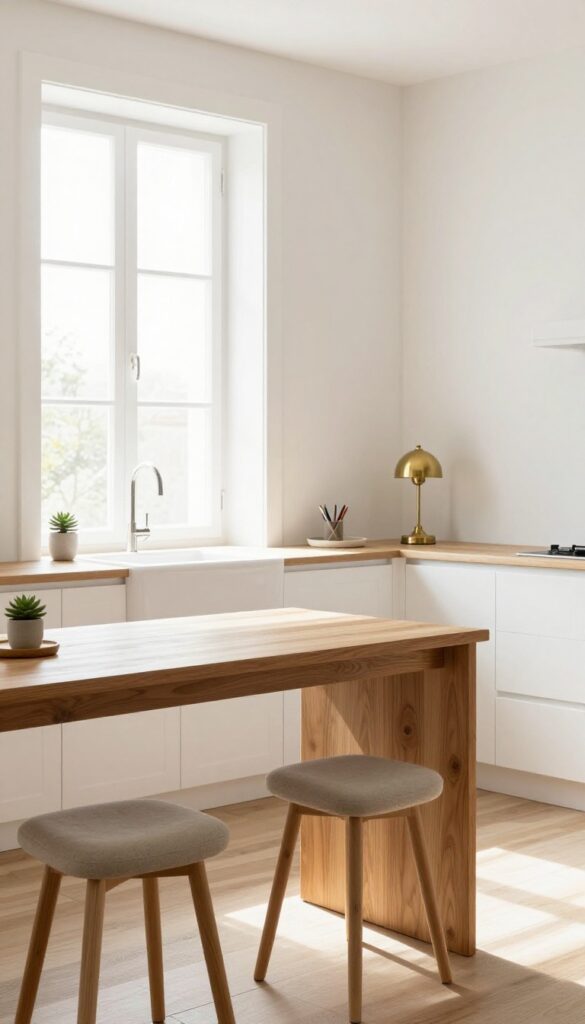
Not every kitchen has space for a bulky desk, but that doesn't mean you have to skip the idea altogether. A narrow console table slides neatly into spots that would otherwise go unused—like an empty wall, the gap between cabinets, or under a window. It gives you a dedicated surface for a laptop, meal planning, or quick notes without eating into your prep area.
Look for one with drawers or a lower shelf so you can stash mail, notebooks, or a tablet out of sight. A small lamp and a simple tray for pens keep it tidy and intentional.
Why It Works
Console tables are designed to be slim, so they fit where standard desks won't. Their shallow depth means you can still walk past comfortably, and the added storage keeps clutter off the counter. This is a budget-friendly move because you can often find a console table secondhand or use one you already own.
Best For
Small kitchens, galley layouts, or any kitchen where floor space is tight. Also great for renters who can't install built-in desks and need a flexible, movable solution.
Styling Tip
Choose a console table with a finish that complements your cabinets—wood tones for warmth, white for airiness, or black for contrast. Add a small stool or slim chair that can tuck underneath when not in use. Keep the surface mostly clear, with just a lamp, a tray, and maybe a small plant for life.
2. Install a Floating Shelf Desk
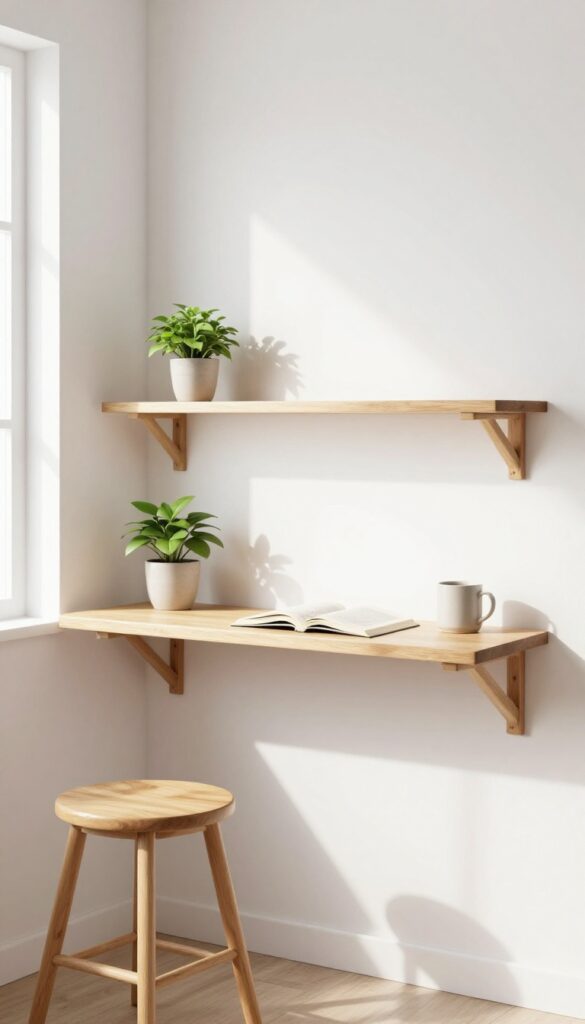
A floating shelf desk is one of the easiest ways to carve out a workspace in a cramped kitchen. Mount a sturdy wooden shelf at standard desk height—around 30 inches—on any empty wall, and you instantly have a spot for meal planning, paying bills, or helping with homework. The beauty of this idea is that it takes up zero floor space, making it ideal for galley kitchens or breakfast nooks where every inch counts.
Pair it with a slim stool that tucks completely underneath, and your kitchen keeps its open, uncluttered feel.
Why It Works
It’s incredibly budget-friendly because you only need a shelf, brackets, and a small stool. The open design also forces you to keep the surface tidy, which helps the kitchen stay organized. Plus, you can customize the look with a stained wood shelf for warmth or a painted one to match your cabinets.
Best For
Tiny kitchens, rental apartments where you can’t install permanent cabinetry, or any kitchen with a blank wall that’s at least 24 inches wide. It’s also great for homes that need a secondary workstation without committing to a full desk setup.
Styling Tip
Add a small task lamp with a swing arm to keep the surface clear, and use a wall-mounted magnetic strip for knives or a spice rack above the desk to free up counter space. Baskets or hooks mounted underneath the shelf can hold cookbooks, bags, or utensils.
3. Turn a Kitchen Cart into a Mobile Desk
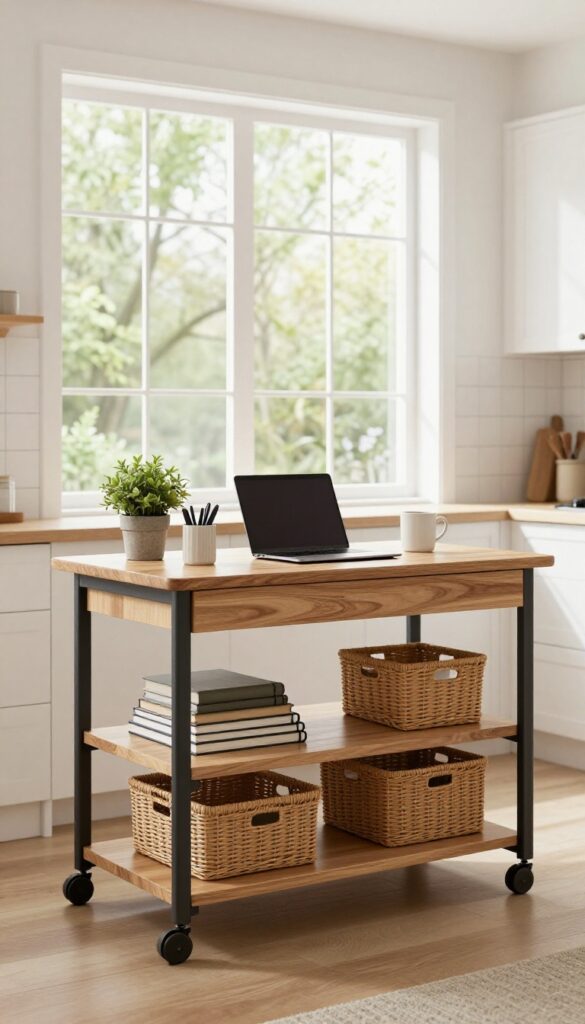
A rolling kitchen cart isn't just for extra prep space—it can double as a compact, mobile desk that fits right into your daily routine. The flat top gives you a stable surface for a laptop or a notebook, while the lower shelves keep your supplies neatly tucked away. It's a budget-friendly way to add a work zone without committing to a permanent setup, and you can roll it wherever you need it most.
Why It Works
Because it's flexible and doesn't require any construction or permanent installation, a kitchen cart desk adapts to your changing needs. You can use it as a standing desk, pull it up to a counter stool, or even wheel it into the dining room for a change of scenery. The storage underneath keeps clutter hidden, so your kitchen stays looking tidy.
Best For
This idea works great in small kitchens or open-plan spaces where every square foot counts. It's also perfect for renters who can't modify the space, or for anyone who wants a temporary desk that can disappear when guests come over.
Styling Tip
Choose a cart with a butcher-block top for a warm, natural look, or go with a sleek metal frame for a more industrial vibe. Add a small plant or a ceramic mug for pens to make it feel intentional. Keep the shelves organized with baskets or trays so it doesn't turn into a catch-all.
4. Use a Small Drop-Leaf Table
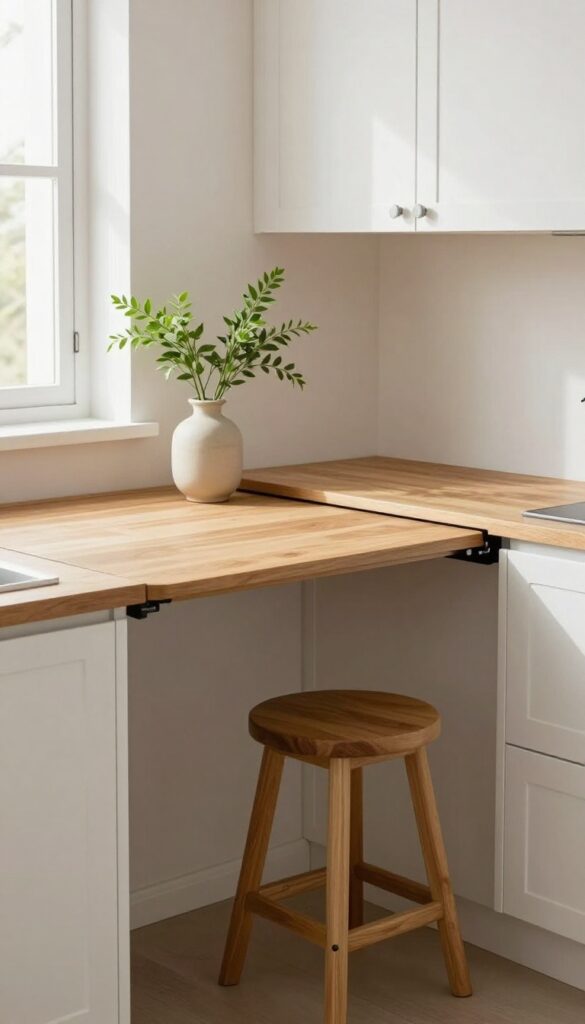
A drop-leaf table is the ultimate space-saving trick that doesn't sacrifice style. When folded, it tucks neatly against a wall or into a corner, leaving your kitchen feeling open and uncluttered. But the moment you need extra counter space for meal prep or a spot to enjoy a quick breakfast, the leaves flip up and you've got an instant work surface.
It's like having a secret weapon for small kitchens—practical, charming, and surprisingly versatile.
Why It Works
Drop-leaf tables are budget-friendly because they give you two furniture pieces in one: a compact console when closed and a full dining or work table when open. You're not paying for a bulky piece that dominates the room. Plus, they come in a range of finishes and styles, from rustic wood to sleek modern, so you can match your kitchen's vibe without breaking the bank.
Best For
This idea shines in galley kitchens, L-shaped layouts, or any kitchen where floor space is at a premium. It's also perfect for renters who can't install permanent countertops or islands. If you have a narrow wall or an empty corner, a drop-leaf table turns that dead zone into a functional hub.
Styling Tip
Choose a table with a finish that complements your cabinets—try a warm oak with white shaker cabinets for a cozy feel, or a matte black with modern gray cabinets for contrast. Add a small stool in a neutral tone that slides completely underneath when not in use. Top the table with a simple runner or a small plant to keep it looking intentional, not cluttered.
5. Create a Desk Nook Under Existing Cabinets
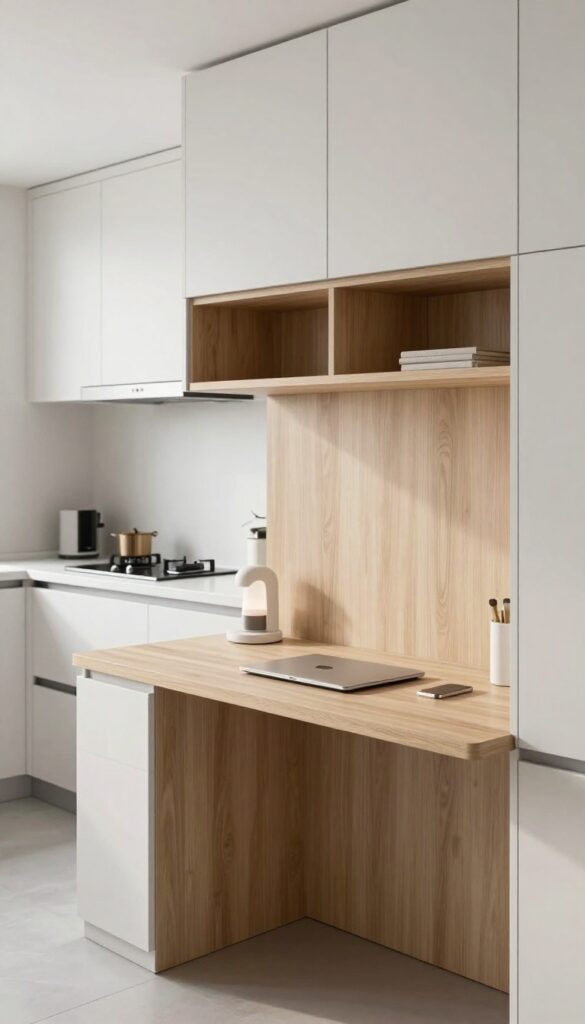
That awkward stretch of counter between the fridge and the stove? It might be the perfect spot for a mini workstation. Instead of leaving it bare or filling it with random appliances, tuck a slim desk underneath the upper cabinets.
The key is keeping it shallow enough that you can still prep food nearby, but deep enough for a laptop and a notebook. This trick turns wasted wall space into a functional command center without costing a cent in new cabinetry.
Why It Works
It uses vertical space that's already there, so you don't lose floor area or have to buy bulky furniture. A shallow desktop (12–14 inches deep) paired with a floating shelf above creates a dedicated zone for paying bills or meal planning. Since it sits under existing cabinets, the desk feels built-in, not like an afterthought.
Best For
Renters or homeowners who have a short run of counter with upper cabinets above and want a spot to stash a laptop or tablet. It's also great for small kitchens where every inch counts and a separate desk would crowd the room.
Styling Tip
Mount a small shelf 6–8 inches above the desktop for a lamp and a phone charger. Use a drawer organizer inside the cabinet below to keep pens, chargers, and sticky notes tidy. Add a stool that slides completely underneath when not in use.
6. Repurpose a Vintage Desk or Secretary
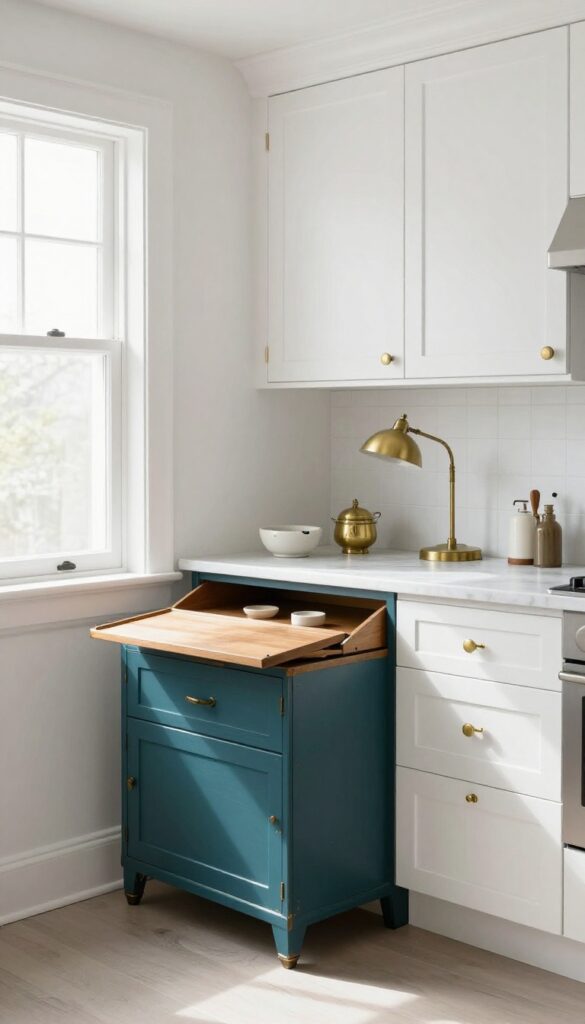
Scouting flea markets or estate sales for a small vintage desk or secretary can give your kitchen a one-of-a-kind focal point without blowing your budget. These pieces bring instant character with their original hardware, worn edges, and clever compartments. A fold-down front hides coffee supplies or paperwork in seconds, keeping counters clear and the room feeling tidy.
Why It Works
Vintage desks are built to last and often cost less than new kitchen furniture. Their built-in drawers and cubbies provide storage for recipe cards, pens, and small gadgets, while the desktop gives you a spot for a laptop or a morning coffee. The mix of old wood and modern kitchen finishes creates an eclectic, collected-over-time look that feels personal and warm.
Best For
This idea shines in kitchens that need a small workspace or a landing zone for mail and keys. It’s especially great for renters or anyone on a tight budget, since you can often find a solid desk for under $100 and refresh it with a coat of paint or new knobs.
Styling Tip
If the original finish is worn, try painting the desk in a bold hue like deep teal or mustard yellow to make it pop against neutral cabinets. Leave the desktop natural or seal it with a matte polyurethane for durability. Add a small task lamp and a ceramic catchall for a finished vignette.
7. Build a Desk into a Kitchen Island
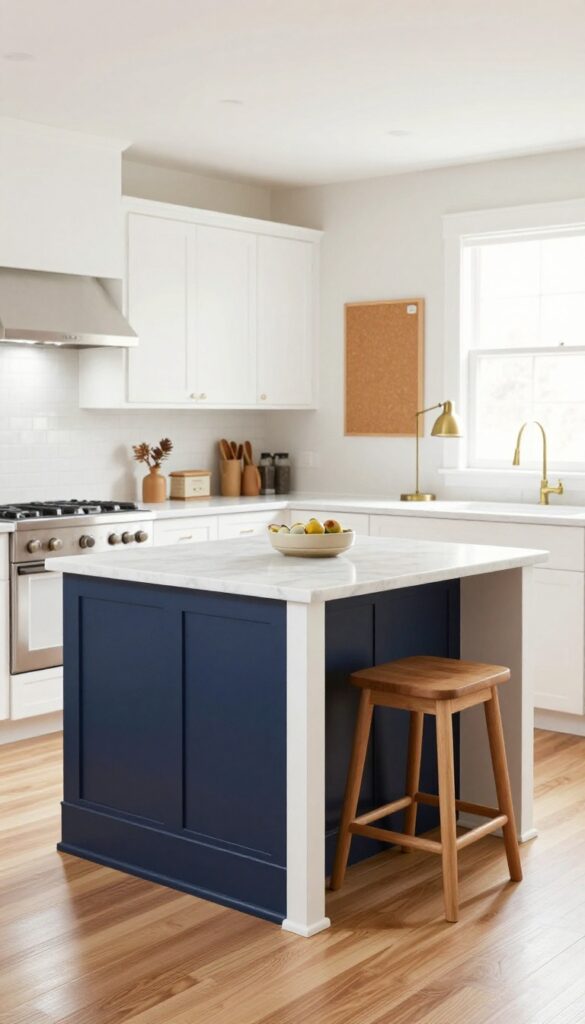
Large kitchen islands are great for prep and storage, but they can also double as a workspace. By dropping the counter height on one end and adding a stool, you create a built-in desk that blends right in. It’s a clever way to tuck a home office into the heart of your home without sacrificing style or breaking the bank.
Why It Works
This setup uses existing square footage more efficiently. The lower section visually breaks up the island, making it feel more intentional and less like a giant block. Plus, the space underneath can house drawers or open cubbies for supplies, keeping the surface clutter-free.
Best For
Kitchens with a large island (at least 8 feet long) where you need a small desk area but don’t have room for a separate home office. It’s especially useful in open-concept homes where you want to stay connected while working.
Styling Tip
Use a slim stool that slides under the desk when not in use. Paint the desk section a slightly different shade than the rest of the island—like a soft white against a navy base—to define the zone. Add a small task lamp and a corkboard above to keep it practical.
8. Use a Wall-Mounted Fold-Down Desk
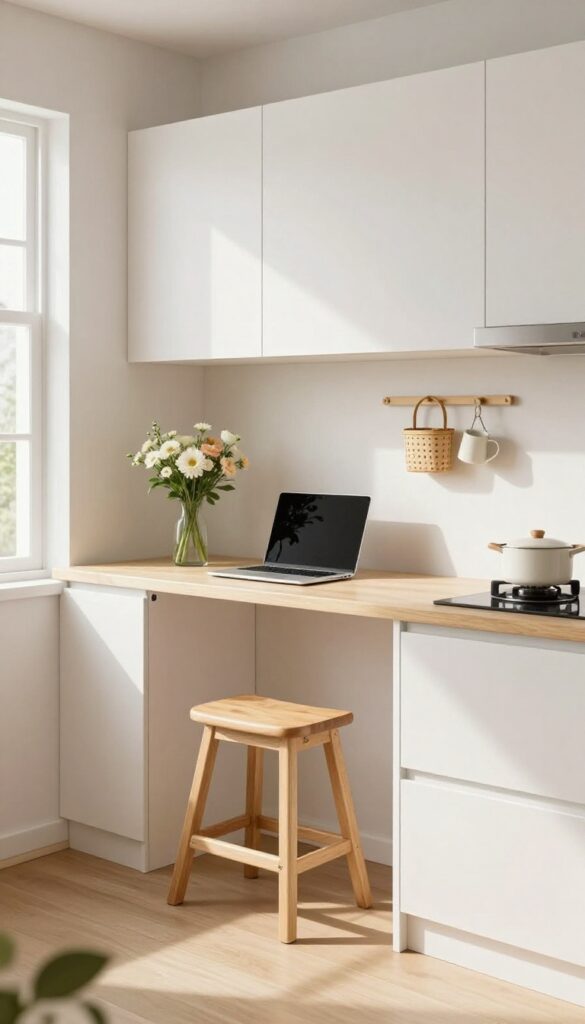
When counter space is at a premium, a wall-mounted fold-down desk can be a game-changer. It gives you a spot to pay bills, scroll recipes, or help with homework, then vanishes when you need the floor space back. The key is choosing a sturdy model that blends with your cabinetry—think a warm wood tone or a crisp white that matches your trim.
Pair it with a folding stool that tucks under a nearby cabinet, and you've got a functional workstation that doesn't clutter your kitchen.
Why It Works
This idea works because it creates an instant workspace without sacrificing square footage. When folded down, the desk takes up minimal visual space, and when closed, it's essentially a slim panel on the wall. It's a smart solution for kitchens where every inch counts, and it keeps your countertops free for food prep.
Best For
Best for tiny kitchens, galley layouts, or any kitchen where you need a dedicated spot for a laptop or meal planning but lack room for a traditional table or island. It's also great for renters who can't install permanent built-ins.
Styling Tip
Mount a pegboard above the desk to hold small baskets, a mug for pens, and a spice jar for your most-used seasonings. Choose a fold-down stool with a simple design—like a wooden or metal frame—that can hang on a hook when not in use. Keep the area clutter-free by limiting the desk's contents to only what you need daily.
9. Add a Desk to an Unused Corner
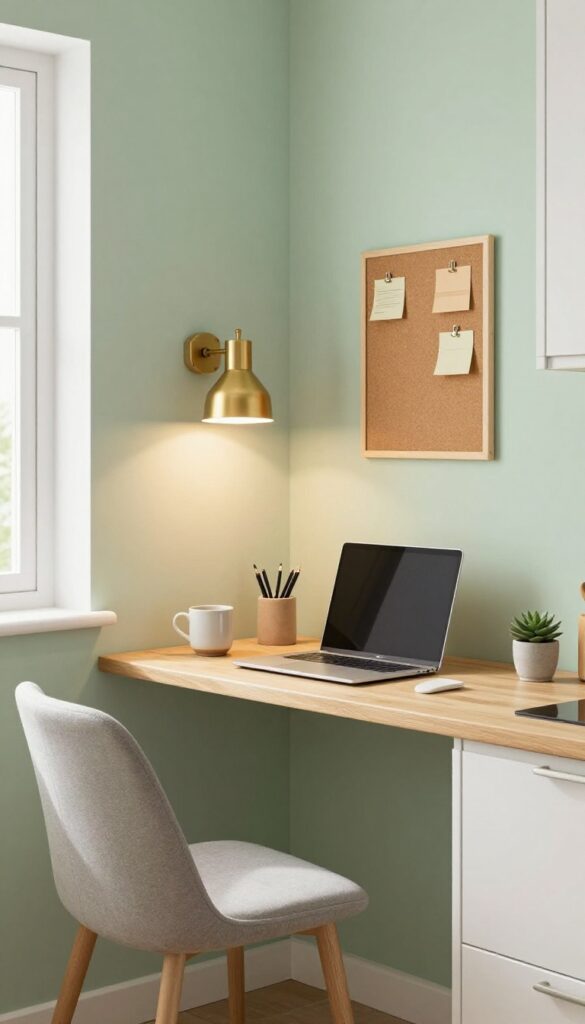
That awkward corner near the pantry or between cabinets often ends up as a catch-all for random appliances or empty shopping bags. Instead of letting it collect clutter, turn it into a compact desk nook that gives you a spot to pay bills, meal plan, or help kids with homework. A corner shelf or small triangular table fits snugly without eating into your walkway, and a wall-mounted lamp keeps the surface clear.
Add a slim chair that slides under when not in use, and you've got a functional workstation that cost next to nothing to set up.
Why It Works
Corner desks make use of square footage that's otherwise wasted, so you gain a dedicated workspace without sacrificing counter space or storage. Since the setup is minimal—just a shelf or small table, a lamp, and a chair—you can pull it together for under $100 if you shop secondhand or use items you already own.
Best For
This idea is perfect for galley kitchens, L-shaped layouts, or any kitchen with a dead corner that doesn't have cabinets or appliances. It also works well in eat-in kitchens where you want a small desk area but don't have room for a full home office.
Styling Tip
Keep the desk feeling intentional by painting the corner wall a soft neutral or a muted accent color like sage green. Use a small corkboard or magnetic strip above the desk for notes and reminders, and add a tiny plant or mug of pens for personality without clutter.
10. Style a Simple Table with a Desk Setup
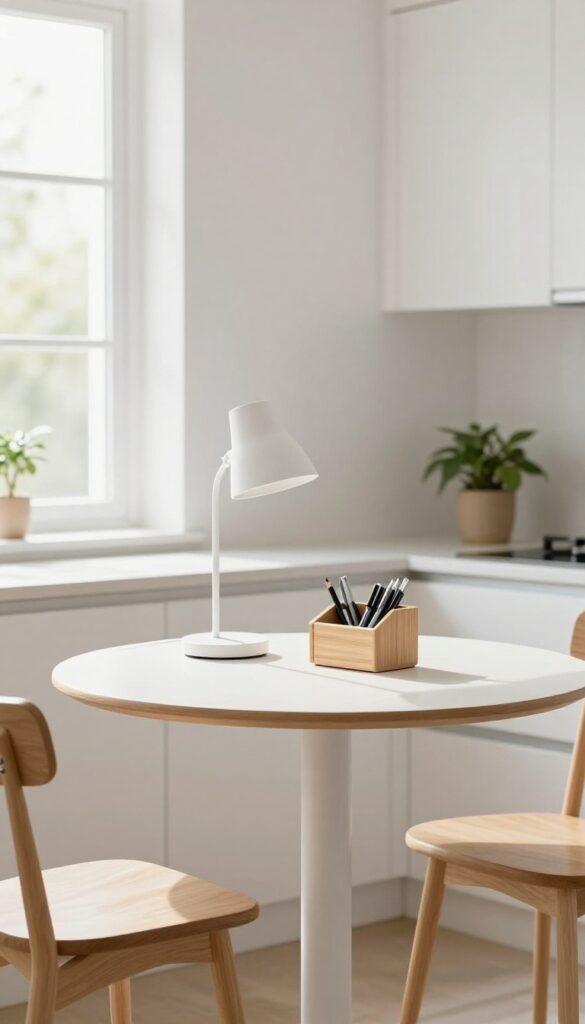
A small bistro table or side table can double as a desk without eating up floor space. Pick a sturdy table with clean lines—round or square—and place it against a wall or under a window. A slim desk lamp, a compact organizer, and a comfortable chair turn it into a functional workstation.
Keep the surface mostly clear so it feels crisp and intentional, not cluttered.
Why It Works
This setup keeps costs low by repurposing furniture you may already own or can find secondhand. It adds a dedicated work zone without requiring a full desk, making it ideal for tight layouts. The minimalist approach also makes the kitchen feel more open and purposeful.
Best For
Small kitchens or eat-in areas where a full desk would overwhelm the space. It's also great for renters who want a flexible, non-permanent workstation that can easily be moved or removed.
Styling Tip
Choose a chair with a slim profile—like a wooden spindle chair or a metal cafe chair—so it doesn't visually crowd the area. Add a small tray or a single plant to keep the table feeling styled but not busy. A cordless lamp or one with a hidden cord keeps the look tidy.
FAQ
What is the best height for a kitchen desk?
Standard desk height is about 30 inches, but if you're using a counter-height table or island, aim for 36 inches and pair it with a counter stool. Measure your chair or stool first to ensure a comfortable fit.
How can I make a small kitchen desk look stylish on a budget?
Focus on a few key pieces: a good desk lamp, a small plant, and a stylish tray or organizer. Use a cohesive color scheme that complements your kitchen. Thrift stores and flea markets are great for finding unique, affordable desks.
What kind of chair works best for a kitchen desk?
A slim, backless stool saves space and tucks under the desk. If you have room, a small upholstered chair adds comfort. Look for something easy to clean, like wood or metal with a washable cushion.
How do I keep my kitchen desk organized?
Use vertical storage like wall-mounted shelves or pegboards. Keep only essentials on the desk surface. Drawer dividers, small bins, and trays help corral supplies.
A weekly tidy-up keeps clutter from building up.
Can I add a desk to a very small kitchen?
Absolutely. Look for fold-down desks, floating shelves, or a slim console table. Even a narrow 12-inch deep shelf can work if you use a laptop.
Consider a rolling cart that can be moved out of the way when not in use.
Conclusion
Adding a desk to your kitchen doesn't have to be complicated or expensive. With a little creativity and some smart shopping, you can create a functional workspace that blends right in with your decor. Whether you choose a repurposed piece or a simple DIY project, the key is to keep it practical and personal.
We hope these ideas inspire you to carve out a little corner for productivity in your kitchen. Remember, the best kitchen desk is one that fits your space, your style, and your budget. Happy decorating!