9 Shared Bedroom Ideas for Teens That Feel Fair
A pile of hoodies on one chair, earbuds tangled on the nightstand, and two very different alarms going off five minutes apart can turn a simple bedroom into daily chaos.
Shared teen rooms carry a weird mix of energy, half competition and half truce. Privacy matters more than it did a few years ago, yet space somehow feels smaller. Getting that balance right usually takes more than just moving a bed.
I’ve seen shared bedrooms work beautifully, and I’ve seen them slowly turn into cold wars fought over shelves and chargers.
The difference almost always comes down to how intentionally the space gets divided and designed. Fair doesn’t mean identical, and that’s where most people get stuck.
This list focuses on ideas that actually reduce tension instead of just looking good on Pinterest. Each one aims to give teens a sense of control, ownership, and breathing room without needing a full renovation or a massive budget.
1. Create Clear Personal Zones
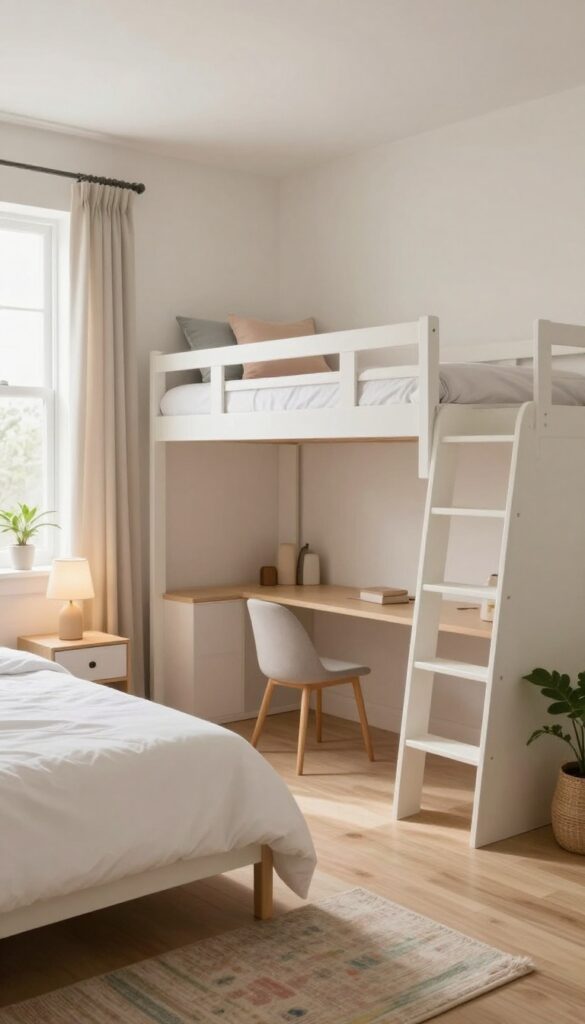
Nothing sparks conflict faster than blurred boundaries in a shared room. When teens don’t know where their space ends and someone else’s begins, everything starts to feel borrowed or invaded.
Clear personal zones immediately lower that tension and make the room feel more intentional.
This idea works because it doesn’t require symmetry or strict rules. Each teen gets a defined area that belongs to them, even if the room itself stays shared.
I’ve noticed attitudes shift fast when kids feel like something is truly “theirs,” even if it’s just half the room.
Why This Works
Defined zones give teens psychological ownership, which matters more than square footage. When belongings stay in one area, mess feels contained instead of overwhelming. The room also looks calmer because everything has a logical place.
How to Do It
- Use rugs to visually mark each side of the room
- Position beds so they anchor each teen’s zone
- Assign wall space directly above each bed or desk
- Keep storage for personal items within each zone
Style & Design Tips
Choose rugs that complement each other without matching exactly to avoid a forced look. Visual separation works best when it feels intentional, not accidental, so align furniture edges cleanly. Avoid splitting the room down the middle with tape or harsh lines that feel childish.
Pro Tip or Budget Hack
If rugs aren’t an option, paint half the wall behind each bed in slightly different shades of the same color. This keeps things cohesive while still defining territory. Paint costs far less than new furniture and makes a big impact.
2. Use Matching Furniture With Personal Styling
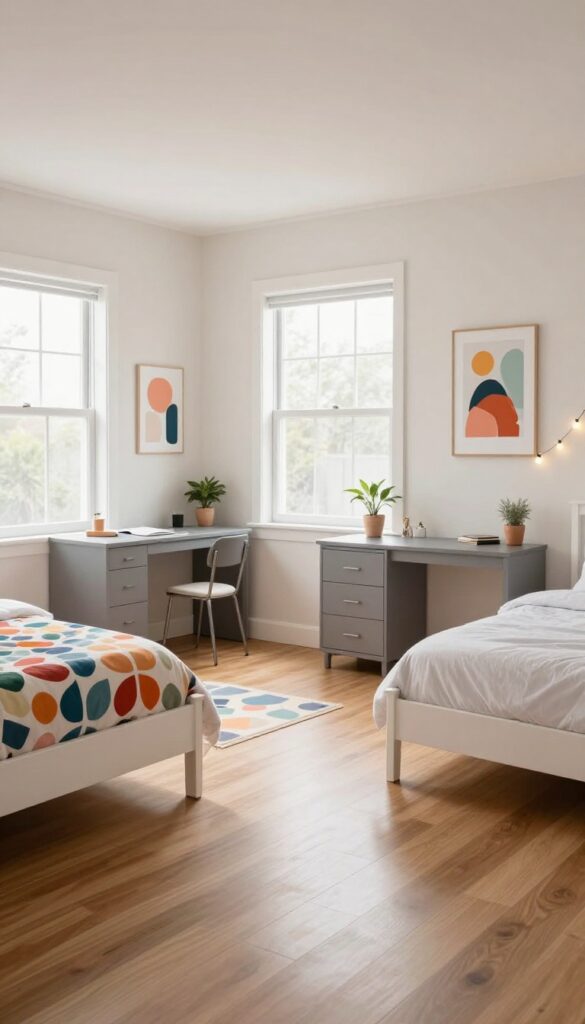
Fairness doesn’t always mean sameness, but matching core furniture prevents endless comparisons. When beds, desks, or dressers are the same size and style, arguments about who has “better stuff” disappear. What changes is how each teen styles their own pieces.
This approach feels balanced without being boring. I’ve seen teens become surprisingly creative when they get the same base but different freedom to personalize it. It turns competition into self-expression instead of resentment.
Why This Works
Matching furniture creates visual harmony and removes hierarchy. No one feels shortchanged when the foundations are equal. Personal styling on top lets individuality shine without disrupting the room’s balance.
How to Do It
- Buy identical beds, desks, or shelving units
- Let each teen choose bedding, desk accessories, and décor
- Keep furniture placement symmetrical when possible
- Allow personal lighting like lamps or LED strips
Style & Design Tips
Stick to neutral furniture finishes like wood, white, or black so styles don’t clash. Contrast should come from soft items, not large furniture pieces. Avoid overly trendy furniture that one teen may outgrow faster than the other.
Pro Tip or Budget Hack
Secondhand stores often have pairs of identical furniture if you’re patient. Paint or refinish both pieces together for a cohesive look. This costs far less than buying new and still feels intentional.
3. Install Room Dividers That Feel Flexible
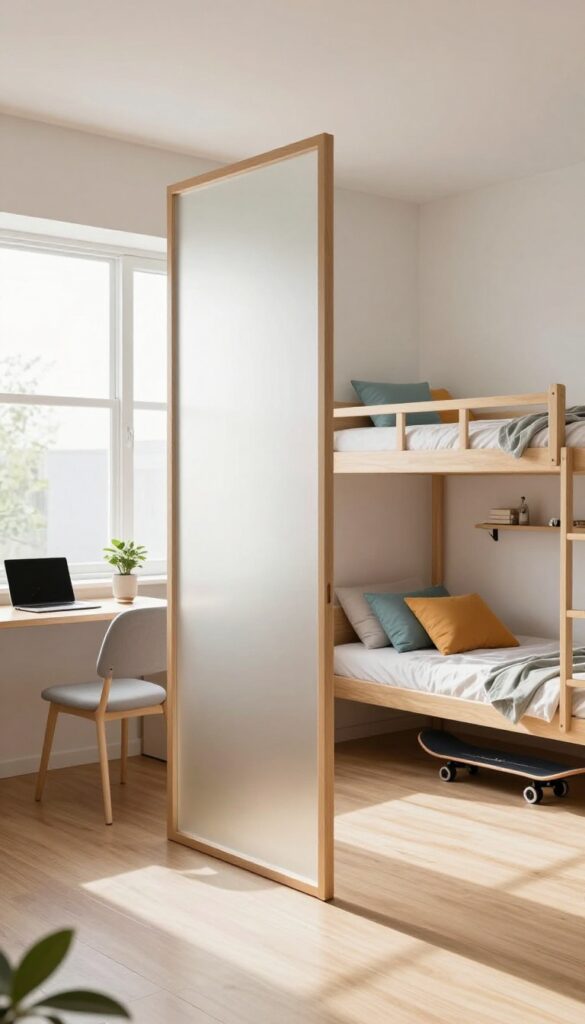
Sometimes teens want privacy without permanent walls. Flexible room dividers offer separation when needed and openness when not. This option works especially well for siblings with different schedules or personalities.
Dividers can calm a room instantly without making it feel boxed in. I’ve found that even light separation reduces noise complaints and constant staring contests. It’s about visual relief as much as physical division.
Why This Works
Temporary separation gives teens control over their environment. It respects privacy while keeping the room adaptable. The ability to open or close space reduces daily friction.
How to Do It
- Use curtains on ceiling-mounted tracks
- Try folding screens or bookcase dividers
- Install tension rods for lightweight curtains
- Choose dividers that can be moved easily
Style & Design Tips
Go for breathable materials like fabric or open shelving to avoid blocking light. Neutral dividers blend better over time than bold patterns. Avoid heavy, dark dividers that shrink the room visually.
Pro Tip or Budget Hack
A tall curtain from a discount store works surprisingly well as a divider. Hang it with a tension rod to avoid drilling. This setup costs little and can be removed anytime.
4. Give Each Teen Their Own Lighting
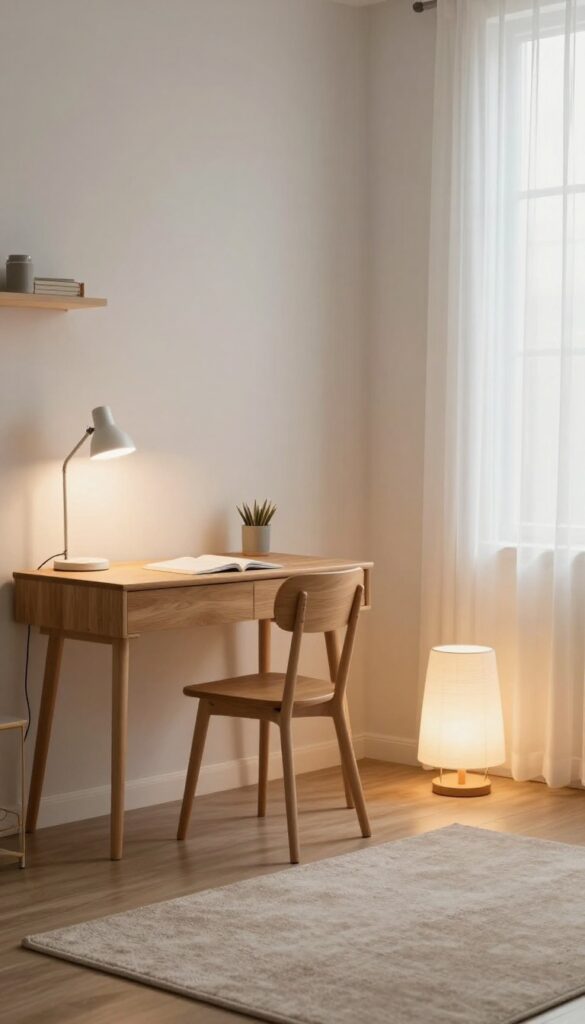
Shared overhead lighting causes more arguments than you’d expect. One teen wants bright light to study, while the other wants dim vibes to relax. Separate lighting options solve this quietly and effectively.
Personal lighting gives teens control over their mood and schedule. I’ve seen bedtime conflicts almost vanish once each side had its own lamp. It’s a small change with big emotional payoff.
Why This Works
Lighting directly affects comfort and focus. Individual control prevents one person’s needs from dominating the room. It also adds personality without clutter.
How to Do It
- Add bedside lamps for each teen
- Install clip lights or wall-mounted sconces
- Use desk lamps for study zones
- Choose bulbs with adjustable brightness
Style & Design Tips
Keep lamp styles different but coordinated to avoid visual chaos. Warm light works best for relaxation, while cooler light suits study areas. Avoid overly harsh bulbs that strain eyes.
Pro Tip or Budget Hack
Smart bulbs let teens control brightness from their phones without rewiring. They’re often cheaper than buying multiple fixtures. This also reduces arguments over switches.
5. Divide Storage Fairly and Clearly
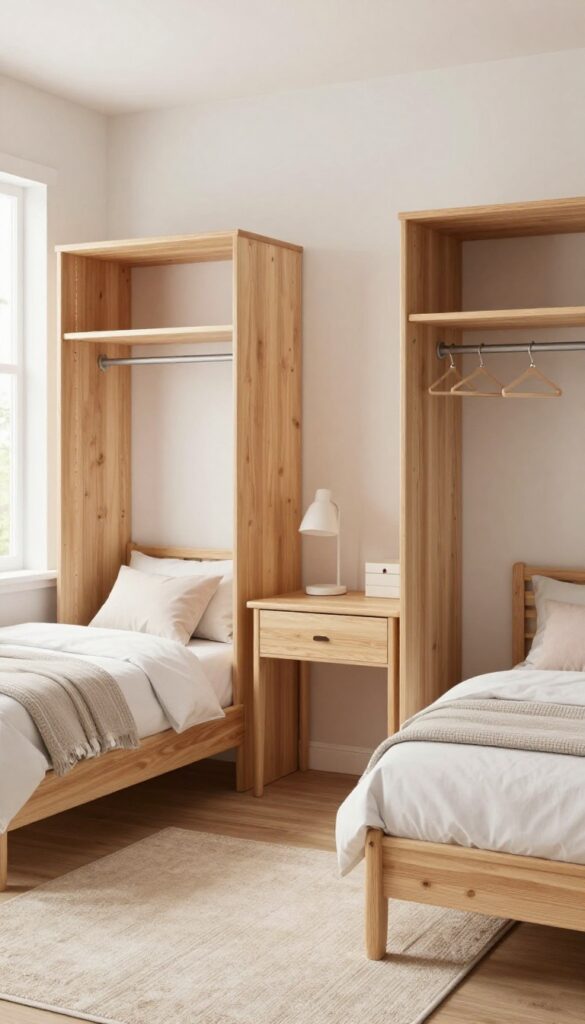
Storage inequality breeds resentment faster than anything else. When one teen has more drawers or shelf space, it becomes a daily reminder of unfairness. Clear, equal storage keeps peace long-term.
This idea focuses on function over aesthetics. I’ve learned that teens care less about how storage looks and more about whether it’s truly theirs. Clear labels and equal access matter.
Why This Works
Fair storage prevents constant negotiation over space. Each teen knows exactly where their things belong. The room stays tidier because responsibility is shared evenly.
How to Do It
- Assign equal drawer counts or shelf sections
- Use bins or baskets labeled per teen
- Keep shared storage only for neutral items
- Store personal items close to each bed
Style & Design Tips
Choose storage that matches the room’s style so it doesn’t feel temporary. Consistency in containers makes the room feel calmer. Avoid mixing too many bin styles or colors.
Pro Tip or Budget Hack
Use identical plastic bins and let teens decorate them with removable stickers. This keeps things fair while allowing personality. Stickers can change without replacing storage.
6. Let Each Teen Choose One Design Element
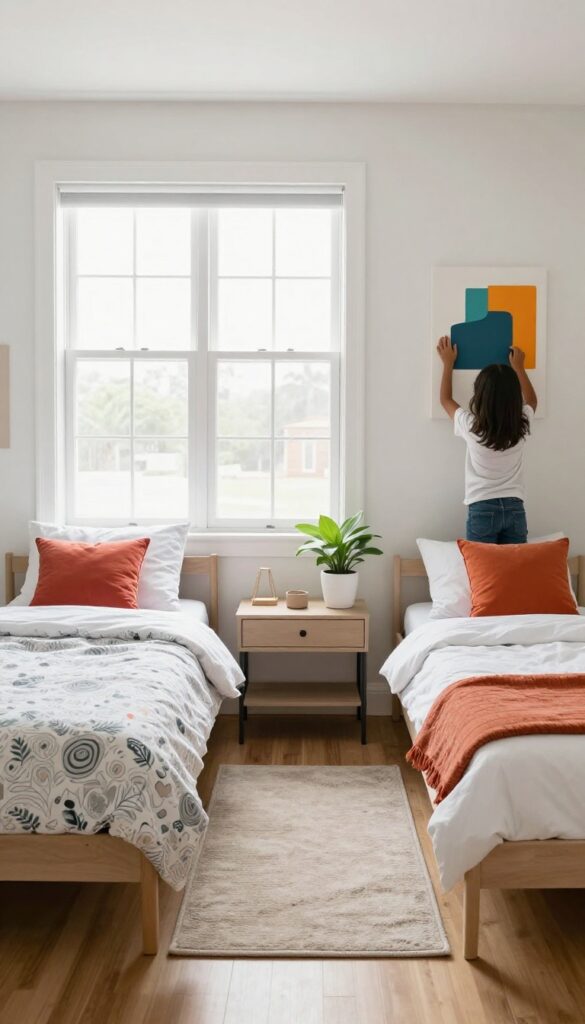
Total design democracy often fails in shared rooms. Letting each teen choose one major element feels fair without turning the room into chaos. This could be bedding, wall art, or a color accent.
I’ve seen this work wonders when siblings have very different tastes. Limiting choices reduces arguments while still honoring individuality. Everyone feels heard without overwhelming the space.
Why This Works
One clear choice gives teens ownership. It prevents endless compromise discussions. The room still feels cohesive because limits exist.
How to Do It
- Assign one choice per teen upfront
- Set clear boundaries for size or placement
- Balance bold choices with neutral surroundings
- Review choices together before finalizing
Style & Design Tips
Anchor the room with neutral walls and floors first. Bold elements work best in controlled doses. Avoid letting both teens choose large, competing focal points.
Pro Tip or Budget Hack
Wall decals or removable wallpaper let teens express style without permanent commitment. They’re affordable and easy to swap later. This keeps peace during style changes.
7. Use Headboards or Wall Panels as Separators
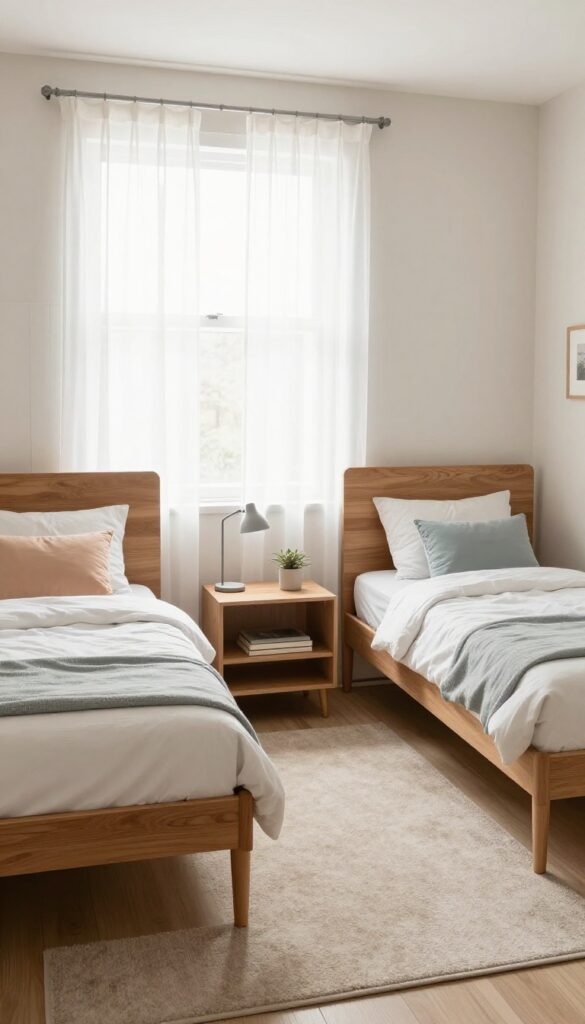
Headboards and wall panels subtly define space without cutting the room in half. They create personal backdrops for each bed and visually anchor zones. This works especially well in smaller rooms.
I’ve noticed rooms instantly feel more “grown-up” with this approach. Teens love having a backdrop for photos and décor. It adds structure without feeling restrictive.
Why This Works
Visual anchors create separation without blocking light. Each bed feels intentional and private. The room gains depth and polish.
How to Do It
- Install individual headboards for each bed
- Use wall panels or painted rectangles behind beds
- Keep spacing equal on both sides
- Align décor symmetrically where possible
Style & Design Tips
Choose textures like wood, fabric, or simple molding. Consistency in size matters more than style. Avoid overly ornate designs that overpower the room.
Pro Tip or Budget Hack
Painted arches or rectangles behind beds mimic custom panels for almost no cost. Tape and paint can create clean lines. This looks high-end without the price.
8. Create Shared Rules With Visible Systems
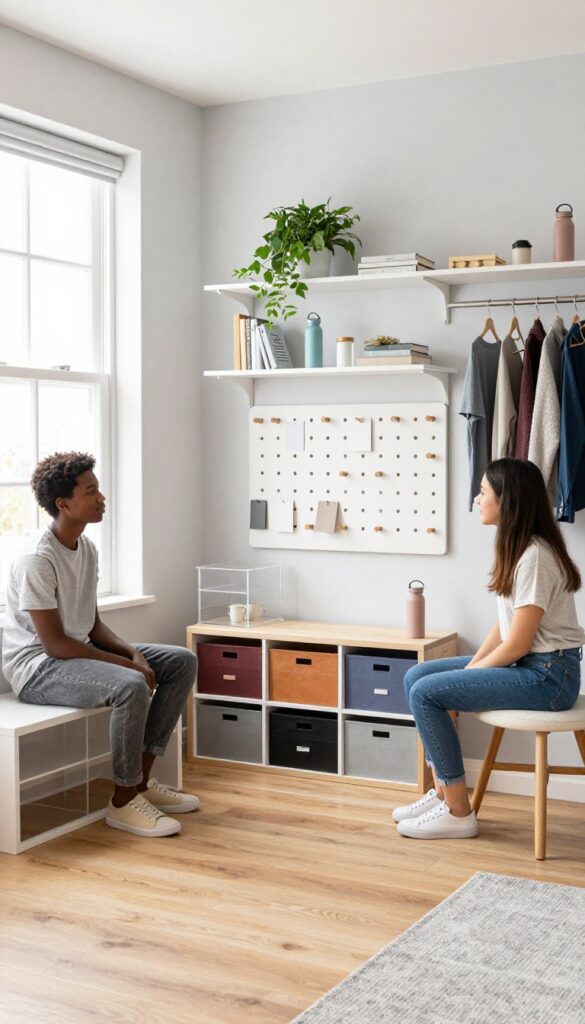
Unspoken rules cause the most arguments. Creating visible systems makes expectations clear and fair. This turns the room into a shared responsibility instead of a battleground.
I’ve seen teens respond better when rules feel agreed upon, not imposed. Visual systems feel neutral and reduce emotional debates. It’s about clarity, not control.
Why This Works
Clear systems remove guesswork. Teens know what’s expected without reminders. Conflict drops when rules feel objective.
How to Do It
- Use a shared calendar or whiteboard
- Define quiet hours visually
- Create cleaning zones per person
- Review rules together periodically
Style & Design Tips
Choose boards or charts that match the room’s décor. Functional items can still look intentional. Avoid bright, childish designs that feel patronizing.
Pro Tip or Budget Hack
A simple corkboard from a thrift store works well for shared notes. Paint the frame to match the room. This keeps things organized and stylish.
9. Design a Neutral Shared Hangout Spot
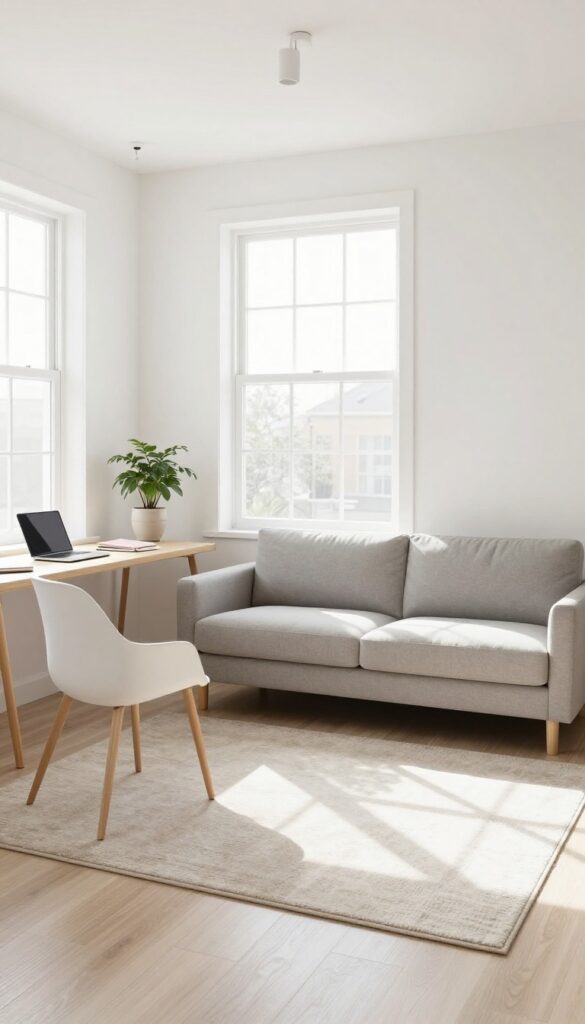
Shared rooms work better when not everything feels personal. A neutral hangout spot gives teens common ground. This could be a small seating area or shared desk.
I’ve found this reduces territorial behavior. When there’s a space that belongs to both, the room feels less divided. It encourages cooperation without forcing closeness.
Why This Works
Shared zones balance personal ones. They remind teens the room isn’t a competition. Neutral spaces also improve flow and usability.
How to Do It
- Add a small bench or pouf between beds
- Use a shared desk or vanity
- Keep décor minimal and neutral
- Avoid assigning ownership of this area
Style & Design Tips
Stick to calming colors and simple shapes. Neutral doesn’t mean boring when textures vary. Avoid placing personal items here to keep it fair.
Pro Tip or Budget Hack
Floor cushions work great as flexible seating. They’re cheap and easy to move. This keeps the space adaptable for different needs.
Final Thoughts
Shared bedrooms don’t need to feel like a constant compromise or a daily argument waiting to happen. Small, intentional design choices can shift the entire mood of the room and how teens treat each other. Fairness often comes from clarity and balance, not identical setups.
Trying everything at once usually backfires, so starting with one idea makes more sense. Even one clear change can improve how the room feels and functions. Progress beats perfection every time.