7 Red Bedroom Ideas That Feel Bold Not Loud
Red is one of those colors people either love or avoid completely, mostly because it has a reputation for being “too much.”
The funny thing is, when you use it with intention, it can actually make a bedroom feel grounded, confident, and surprisingly calm. The trick isn’t avoiding red, it’s knowing how to work with it instead of fighting it.
I’ve tried red in a few different spaces over the years, sometimes successfully and sometimes… not so much.
What I’ve learned is that red works best when it’s treated like a supporting character rather than the main star screaming for attention.
The ideas below focus on balance, smart placement, and ways to make red feel intentional instead of overwhelming.
1. Deep Red Accent Wall Behind the Bed
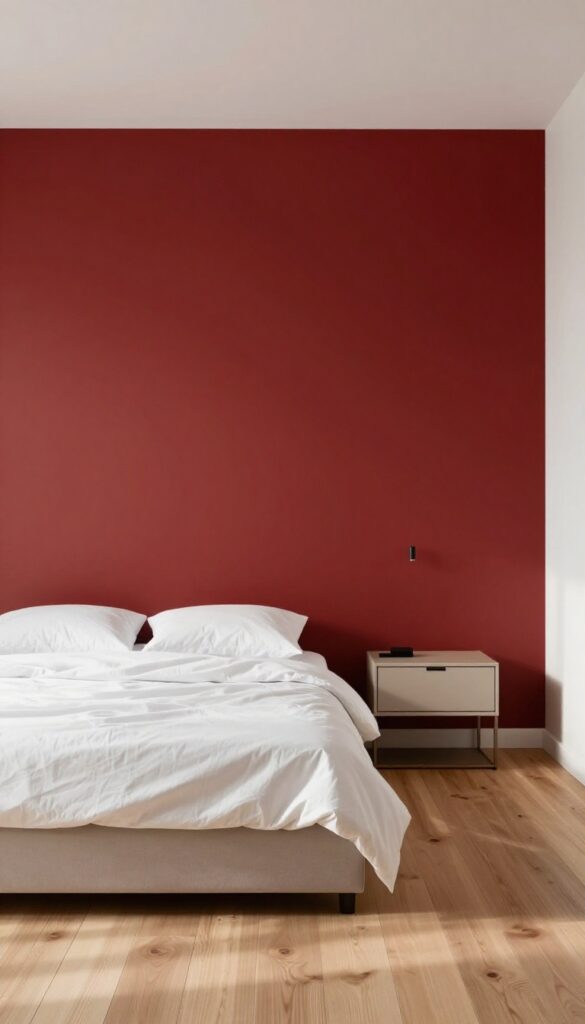
A full red bedroom can feel like a lot, but a single accent wall changes the whole game. Putting that wall behind the bed anchors the room and gives the color a purpose instead of letting it float around randomly.
It creates a strong focal point without swallowing the entire space.
I’ve done this in a guest room before, and the key was choosing a deeper, slightly muted red instead of a bright fire-engine shade.
The bed naturally breaks up the color, which helps it feel grounded rather than overpowering. When paired with neutral bedding, the wall reads bold but not loud.
Why This Works
Red naturally draws the eye, so placing it behind the bed gives the room a clear visual anchor. It adds depth without competing with every other element in the room. The wall also helps frame the bed, which makes the whole layout feel more intentional.
How to Do It
- Choose a deep red with brown or earthy undertones
- Paint only the wall behind the headboard
- Keep the other walls light and neutral
- Use simple bedding to avoid visual overload
Style & Design Tips
Matte finishes work better than glossy ones because they soften the intensity of the color. Pair the wall with warm woods or black accents for balance. Avoid busy wallpaper or heavy patterns on the same wall.
Pro Tip or Budget Hack
If painting feels like too much commitment, try removable wallpaper in a muted red tone. It gives the same impact and is easy to remove if you change your mind later.
2. Red Bedding as a Statement Layer
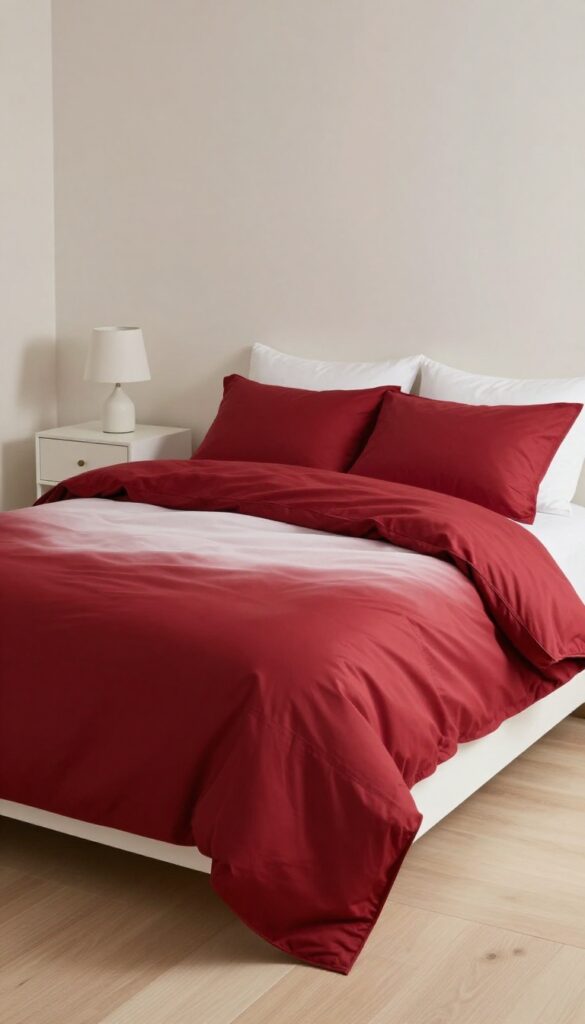
Red bedding is one of the easiest ways to bring color into a bedroom without making a permanent change. It’s also surprisingly versatile when you keep everything else simple. A deep red duvet or comforter can instantly make a room feel richer and more intentional.
I’ve found that red bedding works best when the rest of the room stays calm. White walls, wood furniture, and minimal decor let the bedding do the heavy lifting without making the space feel busy. It’s bold, but in a controlled way.
Why This Works
Bedding sits at the visual center of the room, so color here makes a big impact. Red adds warmth and contrast without needing to repaint or replace furniture. It’s also easy to switch out seasonally.
How to Do It
- Choose a solid red or subtle textured fabric
- Keep pillows mostly neutral
- Layer with whites, creams, or soft grays
- Avoid mixing too many patterns
Style & Design Tips
Look for fabrics with texture like linen or washed cotton to soften the intensity. Deep reds like wine or brick feel more mature than bright cherry tones. Keep throw pillows simple to avoid visual clutter.
Pro Tip or Budget Hack
If full red bedding feels like too much, start with a red throw blanket folded at the foot of the bed. It gives you the look without the commitment.
3. Red Through Artwork and Wall Decor
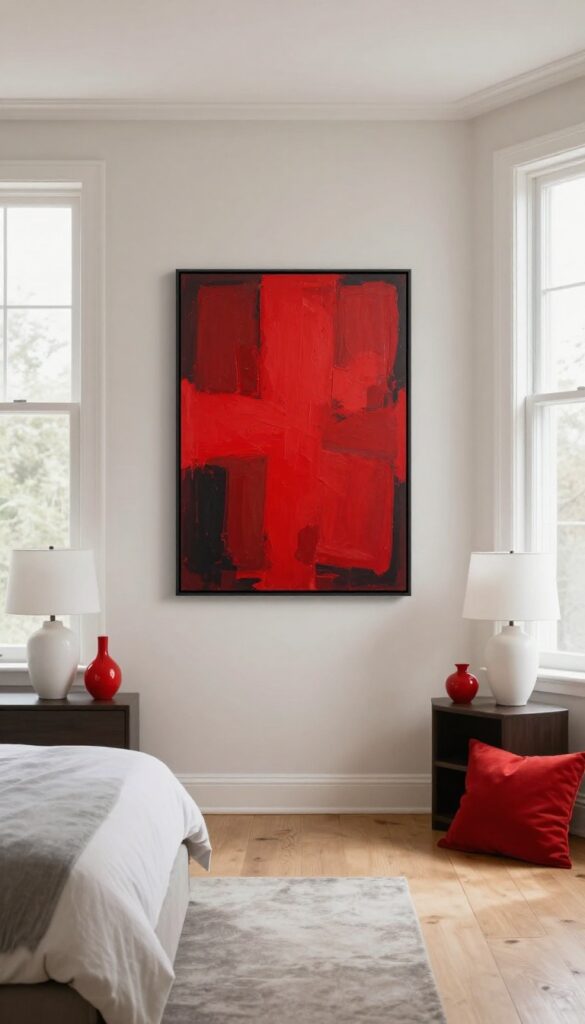
Artwork is one of the safest ways to bring red into a bedroom. You can control the amount of color and easily swap it out if your taste changes. Even small pops of red in art can shift the entire mood of the room.
I’ve used this trick in neutral bedrooms that felt a little too bland. A single piece of art with red tones instantly adds energy and depth without overwhelming the space. It’s subtle but effective.
Why This Works
Art lets you introduce color in a controlled, intentional way. Red in artwork feels less aggressive because it’s balanced by negative space. It also draws the eye upward, making the room feel more dynamic.
How to Do It
- Choose artwork with red as an accent, not the main color
- Keep frames simple and neutral
- Limit red pieces to one or two per wall
- Hang at eye level for best balance
Style & Design Tips
Abstract art works especially well because it keeps the color from feeling too literal. Black, white, and wood frames pair best with red tones. Avoid cluttering the wall with too many pieces.
Pro Tip or Budget Hack
Printable art is a great option if you want to experiment. You can switch designs seasonally without spending much.
4. Red Upholstered Headboard
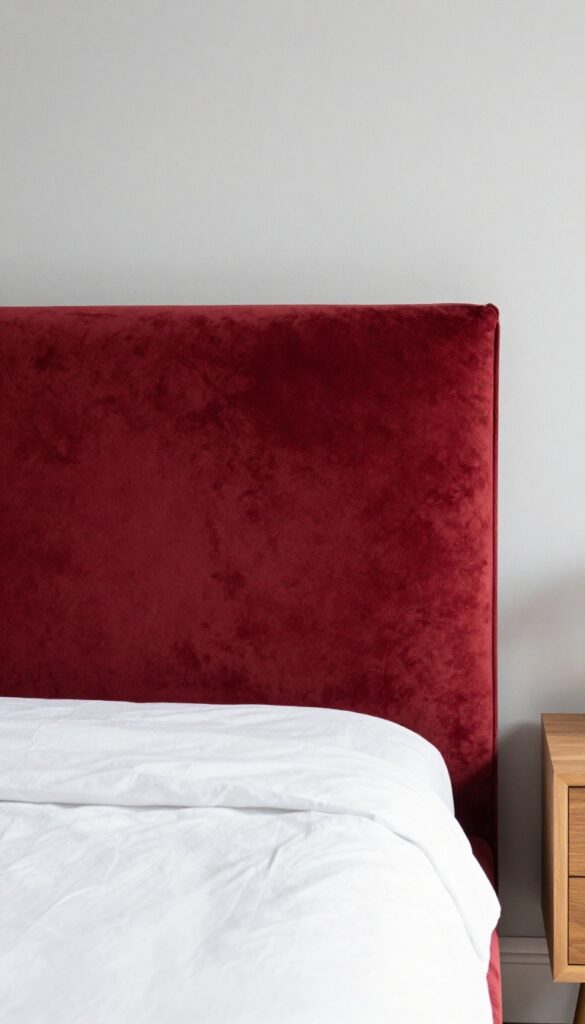
A red headboard makes a strong statement while keeping the rest of the room flexible. It adds color, texture, and personality without taking over every surface. This works especially well in neutral or monochrome bedrooms.
I once swapped out a plain gray headboard for a deep red upholstered one, and the room instantly felt more finished. It didn’t need extra decor because the headboard carried the design on its own.
Why This Works
The headboard naturally draws attention, so adding color here feels intentional. Upholstery softens the boldness of red and makes it feel more inviting. It also adds a layer of texture that paint can’t.
How to Do It
- Choose velvet or linen for a softer look
- Stick to darker reds for a more mature feel
- Pair with neutral bedding
- Keep surrounding decor minimal
Style & Design Tips
Avoid overly ornate headboards if the color is bold. Clean lines work best and keep the look modern. Wood nightstands help balance the richness of the red.
Pro Tip or Budget Hack
If buying a new headboard isn’t in the budget, use a removable fabric cover or even a wall-mounted upholstered panel for a similar effect.
5. Red Through Rugs and Textiles
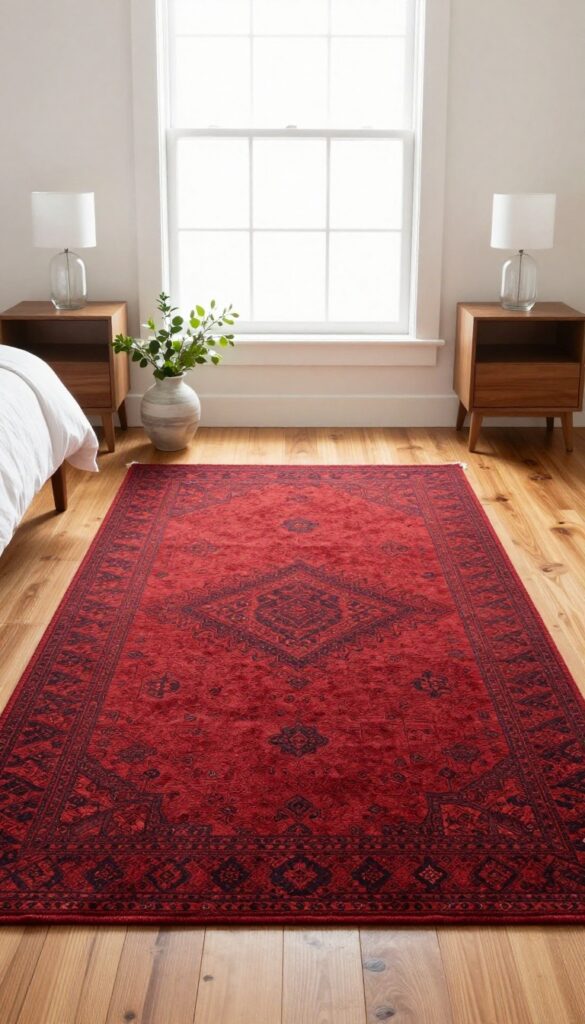
A red rug can completely change how a bedroom feels, especially if the rest of the space is neutral. It grounds the room and adds warmth without taking up visual space on the walls. This is one of my favorite ways to use red.
I’ve noticed that patterned red rugs tend to work better than solid ones. The pattern breaks up the color and keeps it from feeling too intense. It also hides wear better over time.
Why This Works
Rugs anchor furniture and define the space visually. Red adds warmth at floor level, which balances out lighter walls and bedding. It makes the room feel layered and intentional.
How to Do It
- Choose a rug with red mixed into a pattern
- Keep surrounding colors neutral
- Make sure the rug is large enough for the bed
- Avoid pairing with too many other bold colors
Style & Design Tips
Vintage-style or Persian-inspired rugs work especially well with red. They feel timeless and cozy rather than trendy. Stick to muted reds instead of bright primary tones.
Pro Tip or Budget Hack
If a large rug is expensive, layer a smaller red rug over a neutral jute or flatweave rug. It looks styled and costs less.
6. Red Accents Through Decor and Accessories
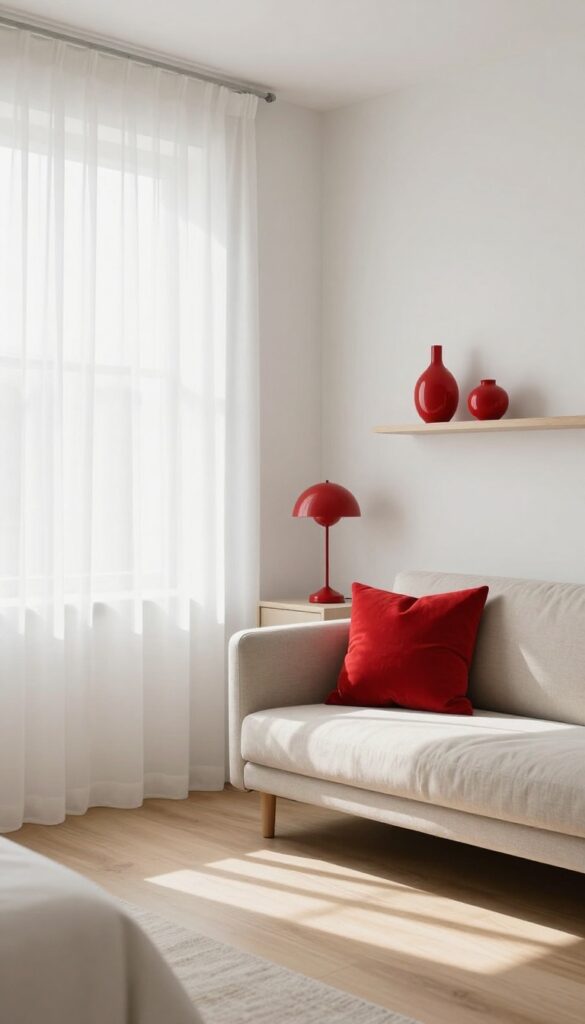
Sometimes a little red goes a long way. Small accessories like lamps, pillows, or decor pieces can introduce color without overwhelming the room. This approach works great if you’re cautious with bold colors.
I like using red in odd numbers, like three small accents spread around the room. It feels intentional without looking staged. The key is restraint.
Why This Works
Small accents allow you to control how much red enters the space. They’re easy to change and don’t commit you to a long-term look. This makes them perfect for experimenting.
How to Do It
- Choose 2–3 red accents max
- Spread them across the room
- Keep everything else neutral
- Stick to one shade of red
Style & Design Tips
Ceramic lamps, throw pillows, and artwork are easy ways to add color. Avoid mixing too many shades of red, as it can look chaotic. Consistency is key.
Pro Tip or Budget Hack
Thrift stores often have great red decor pieces for cheap. A quick clean or spray paint refresh can make them look high-end.
7. Red Paired With Natural Materials
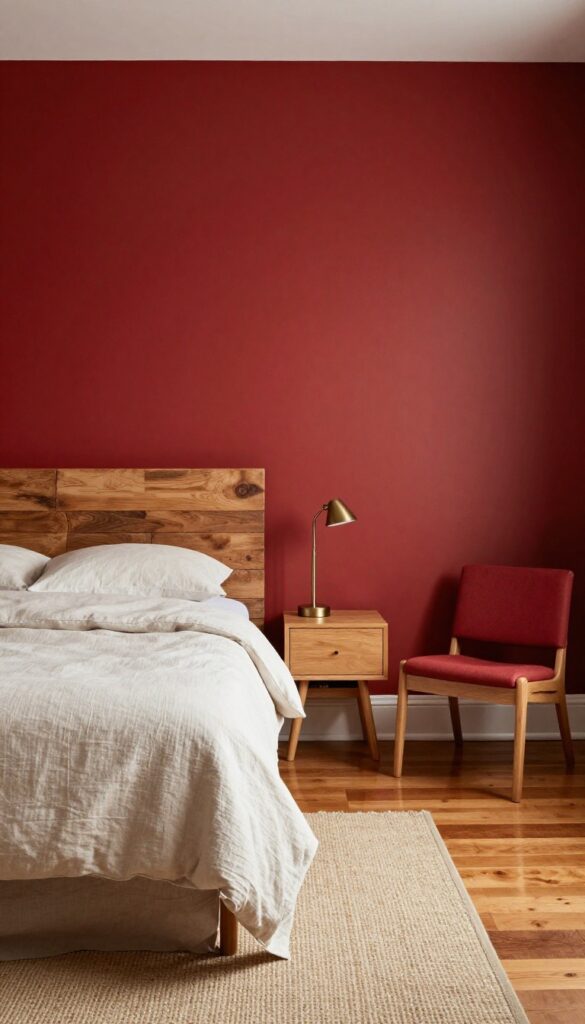
Red looks its best when balanced with natural textures like wood, linen, and leather. These materials soften the color and make it feel grounded instead of flashy. This combo works especially well in cozy or modern bedrooms.
I’ve found that red paired with warm wood tones feels inviting rather than intense. It adds personality without losing that calm, relaxed bedroom vibe.
Why This Works
Natural materials balance the boldness of red and keep the space from feeling too polished. They add warmth and texture, which makes the room feel lived-in and comfortable.
How to Do It
- Use wood furniture or flooring
- Add linen or cotton bedding
- Include woven or leather accents
- Keep finishes matte or satin
Style & Design Tips
Avoid shiny metals when using red heavily. Stick to brushed brass, wood, or black finishes. Let texture do the work instead of adding more color.
Pro Tip or Budget Hack
If you can’t replace furniture, add wood trays, baskets, or stools. They introduce the same grounding effect without a big investment.
Final Thoughts
Red doesn’t have to feel loud, dramatic, or overwhelming when it’s used with intention. The key is balance, restraint, and pairing it with the right textures and tones. A little planning goes a long way in making red feel stylish instead of stressful.
If you’ve been avoiding red because it feels risky, start small and build from there. You might be surprised how quickly it becomes your favorite accent once you see how good it can actually look.