9 Long and Narrow Bedroom Ideas That Feel Wider
A long, narrow bedroom usually forces furniture into a straight line, which changes how the room functions more than people expect.
The shape itself isn’t the problem, but the way most people try to “fill” it often makes things worse. When everything hugs the walls and nothing breaks the visual tunnel, the room feels smaller instead of calmer.
What helps is thinking in terms of flow rather than square footage. Small layout shifts, smarter furniture choices, and a few design tricks can completely change how the space feels.
Once you stop treating the room like a hallway with a bed, it gets much easier to make it feel balanced and comfortable.
1. Shift the Bed Off the Exact Center
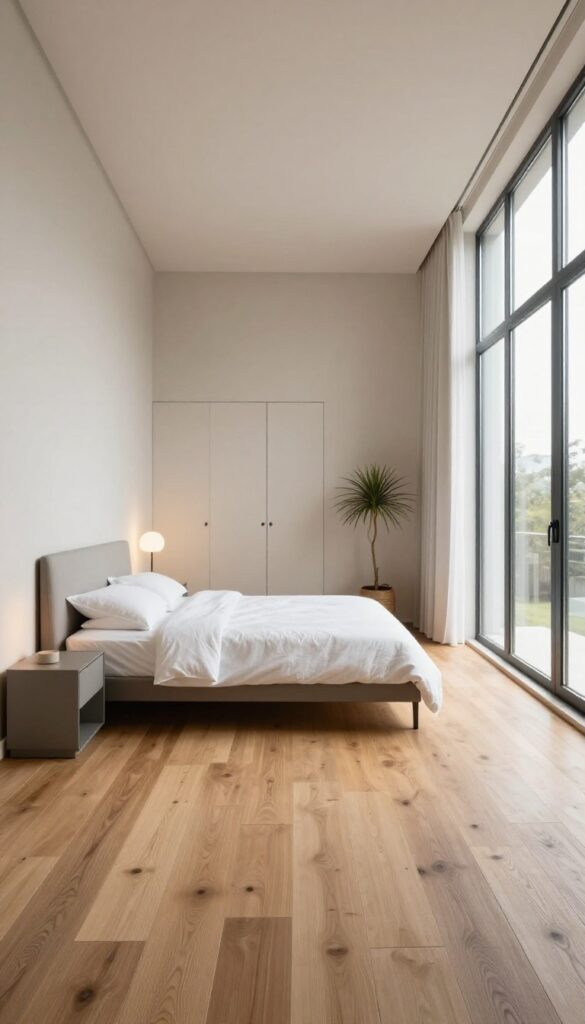
Most people automatically center the bed on the longest wall because it feels symmetrical, but that often exaggerates how narrow the room is.
In long bedrooms, perfect symmetry can actually work against you by creating a straight visual runway. Shifting the bed slightly off-center gives the layout more flexibility and reduces that tunnel effect.
I’ve done this in a couple of narrow spaces, and it immediately made the room feel less rigid. It also opened up room for better storage or a more functional nightstand setup. Once the bed isn’t dominating the exact middle, everything else becomes easier to place.
Why This Works
Breaking symmetry keeps the eye from traveling straight down the room. It introduces variation, which makes the space feel wider and more intentional. The room starts to feel designed instead of default.
How to Do It
- Move the bed a few inches toward one side rather than centering it perfectly
- Use a slightly larger nightstand on the open side for balance
- Keep the walking path on one side wider than the other
Style & Design Tips
Stick to a low-profile bed frame so the room doesn’t feel top-heavy. Avoid oversized headboards that stretch wall to wall, since they exaggerate the room’s length. Soft, rounded edges work better here than sharp, boxy furniture.
Pro Tip or Budget Hack
If shifting the bed exposes an awkward wall gap, fill it with a narrow floating shelf instead of a bulky table. It adds function without eating up floor space and costs far less than new furniture.
2. Use Area Rugs to Visually Widen the Room
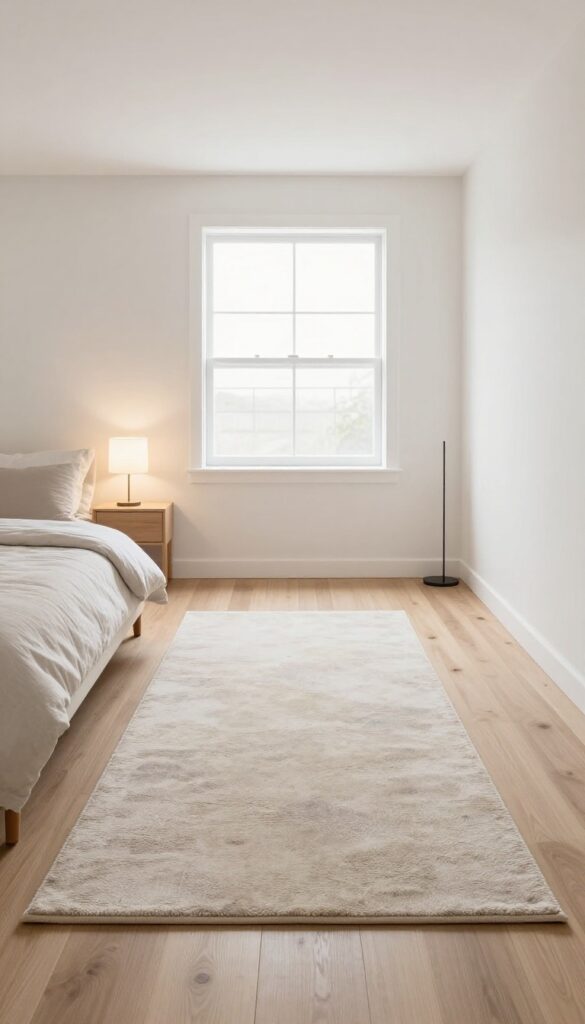
Rugs are one of the most overlooked tools in narrow bedrooms, and they make a massive difference when used correctly. A properly placed rug can visually stretch the width of the room instead of emphasizing its length. The trick is orientation, not size alone.
I used to place rugs lengthwise because it felt logical, but that actually made rooms feel longer and skinnier. Turning the rug sideways changed everything, even with the same furniture.
Why This Works
Horizontal lines visually widen a space, while vertical lines make it feel longer. A rug placed perpendicular to the bed interrupts the tunnel effect and adds visual balance. It also helps define the sleeping zone more clearly.
How to Do It
- Choose a rug wider than your bed frame
- Place it horizontally so it extends on both sides
- Let at least one-third of the rug show on each side
Style & Design Tips
Go for simple patterns or subtle stripes that run side to side. Avoid busy designs that pull attention down the length of the room. Neutral colors with soft contrast work best for keeping things open.
Pro Tip or Budget Hack
If a large rug is out of budget, layer two smaller rugs side by side. As long as the colors match, it creates the same widening effect for less money.
3. Keep Furniture Low and Visually Light
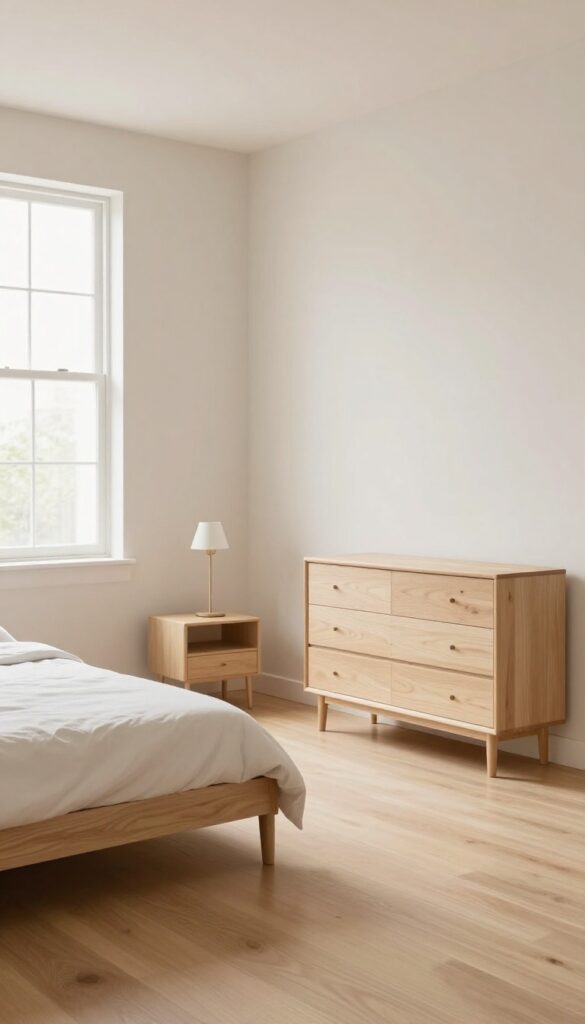
Tall furniture makes narrow rooms feel boxed in, especially when everything lines the walls. Lower-profile pieces create more visual breathing room and keep the ceiling from feeling cramped. This is one of those changes that feels subtle but has a big payoff.
I learned this after swapping a tall dresser for a low console, and the room instantly felt calmer. Nothing changed structurally, but the proportions suddenly made sense.
Why This Works
Lower furniture keeps the visual weight closer to the floor. That leaves more open space above, which tricks the eye into feeling like the room is wider and less crowded. It also improves sightlines across the room.
How to Do It
- Choose low bed frames or platform beds
- Swap tall dressers for long, low storage units
- Use wall-mounted shelves instead of floor units
Style & Design Tips
Stick to furniture with legs rather than solid bases. Seeing floor space underneath makes the room feel airier. Light wood tones or matte finishes help avoid visual heaviness.
Pro Tip or Budget Hack
Cut the legs slightly shorter on an existing bed frame or swap them out entirely. It’s a cheap tweak that changes the room’s proportions instantly.
4. Create Zones Instead of One Long Space
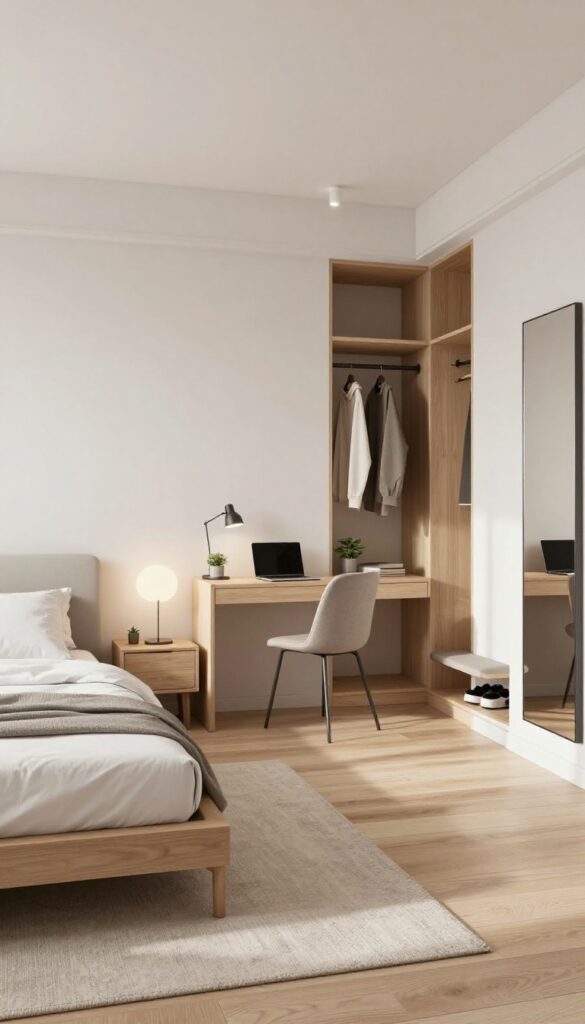
Long bedrooms feel awkward when everything is shoved against the walls in a straight line. Dividing the room into subtle zones helps break up the length and makes it feel more intentional. This works especially well if the room also doubles as a workspace or dressing area.
I’ve found that even a small visual division can change how the whole room feels. You don’t need walls or dividers, just smart placement.
Why This Works
Zoning gives the eye multiple stopping points instead of one long stretch. That naturally reduces the hallway effect and makes the room feel more dynamic. It also improves how the space functions day to day.
How to Do It
- Use a rug to define the sleeping area
- Add a small chair or bench to create a second zone
- Position a dresser perpendicular to the wall
Style & Design Tips
Keep each zone visually connected through color or material. Too much contrast can make the room feel chopped up. Consistency is what keeps it cohesive.
Pro Tip or Budget Hack
A simple folding screen or open bookshelf can divide space without blocking light. You can often find these secondhand and repaint them for a custom look.
5. Use Vertical Lines Sparingly and Intentionally
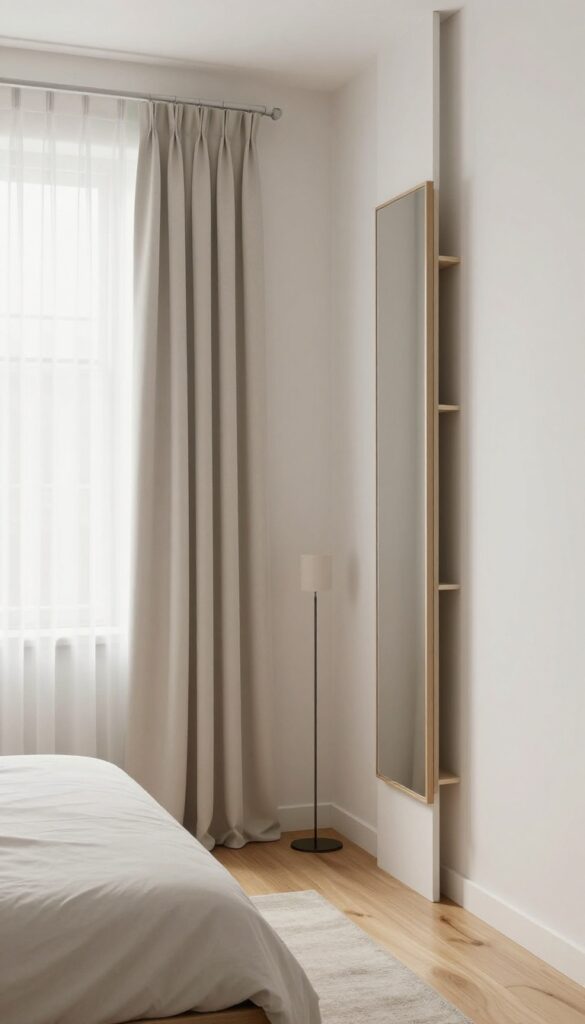
Vertical lines can be helpful, but in narrow bedrooms they need to be used carefully. Too many vertical elements make the room feel even longer and tighter. The goal is balance, not exaggeration.
I made this mistake once with floor-to-ceiling curtains and tall mirrors everywhere, and the room felt like a tunnel. Pulling back made a huge difference.
Why This Works
Vertical lines draw the eye upward and forward. When overused in a narrow room, they reinforce the long shape instead of softening it. Using them selectively adds height without narrowing the space.
How to Do It
- Limit vertical stripes or paneling to one wall
- Balance with horizontal elements like shelves
- Choose curtains with minimal vertical contrast
Style & Design Tips
If you want height, use subtle texture instead of bold stripes. Soft fabric folds or narrow panels feel lighter than sharp lines. Avoid heavy drapes that puddle dramatically.
Pro Tip or Budget Hack
Hang curtains slightly wider than the window frame to visually widen the wall. This costs nothing and makes the room feel instantly bigger.
6. Choose Nightstands That Don’t Bulge Out
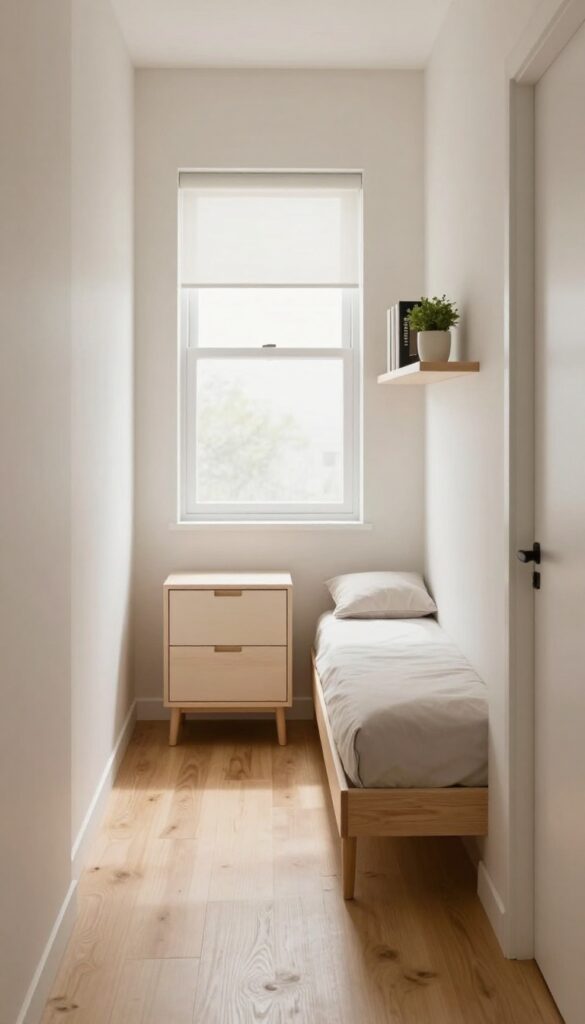
Bulky nightstands eat up precious walking space in narrow bedrooms. Even a few extra inches can make the room feel cramped, especially near doorways or closets. Slimmer options create better flow without sacrificing function.
I switched to a wall-mounted shelf once and never went back. It looked cleaner and made vacuuming easier too.
Why This Works
Reducing depth along the walkway keeps movement comfortable. It also prevents the bed area from feeling boxed in. The more floor you see, the larger the room feels.
How to Do It
- Use floating shelves instead of tables
- Choose narrow nightstands under 14 inches deep
- Mount reading lights to free up surface space
Style & Design Tips
Look for nightstands with open bottoms or slim legs. Closed, chunky furniture visually crowds the space. Minimal designs always win here.
Pro Tip or Budget Hack
A small wall-mounted tray can replace a nightstand entirely. It holds the basics and costs far less than a full piece of furniture.
7. Keep the Color Palette Tight and Calm
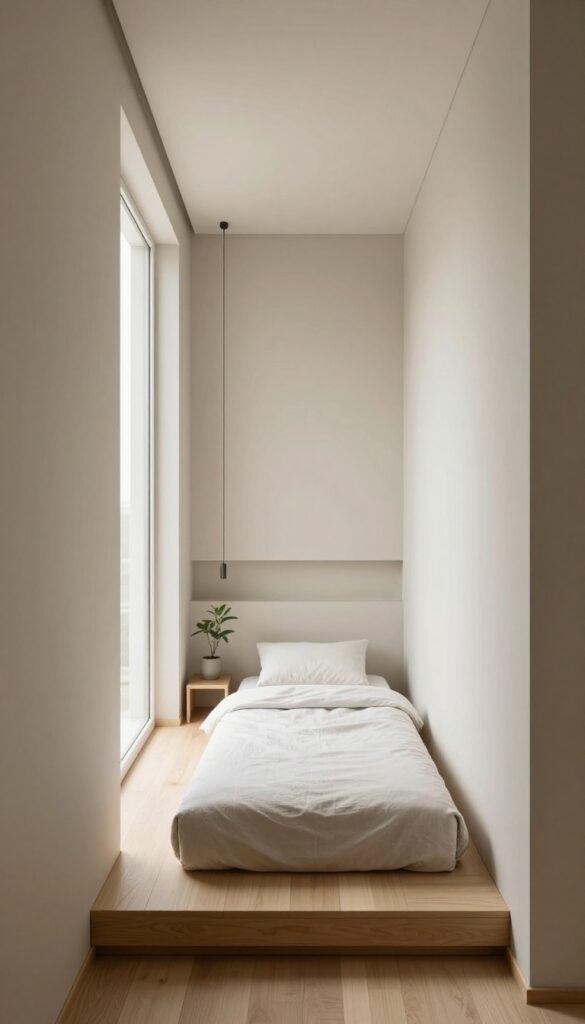
Too many colors in a narrow room can feel chaotic fast. A tight color palette helps the space feel wider and more pulled together. This doesn’t mean boring, just intentional.
I’ve noticed that rooms with three or fewer main colors always feel calmer. The moment extra shades creep in, the space starts to feel busy.
Why This Works
A limited palette reduces visual breaks. The eye moves more smoothly across the room, making it feel larger. Consistency also helps furniture blend instead of compete.
How to Do It
- Choose one main color and two supporting shades
- Keep walls and large furniture in similar tones
- Add contrast through texture, not color
Style & Design Tips
Soft neutrals, warm whites, and muted earth tones work especially well. Avoid high-contrast color blocking, which emphasizes the room’s shape.
Pro Tip or Budget Hack
If repainting isn’t an option, swap bedding and curtains to match your wall color more closely. It’s a cheap way to calm the space instantly.
8. Use Mirrors Strategically, Not Everywhere
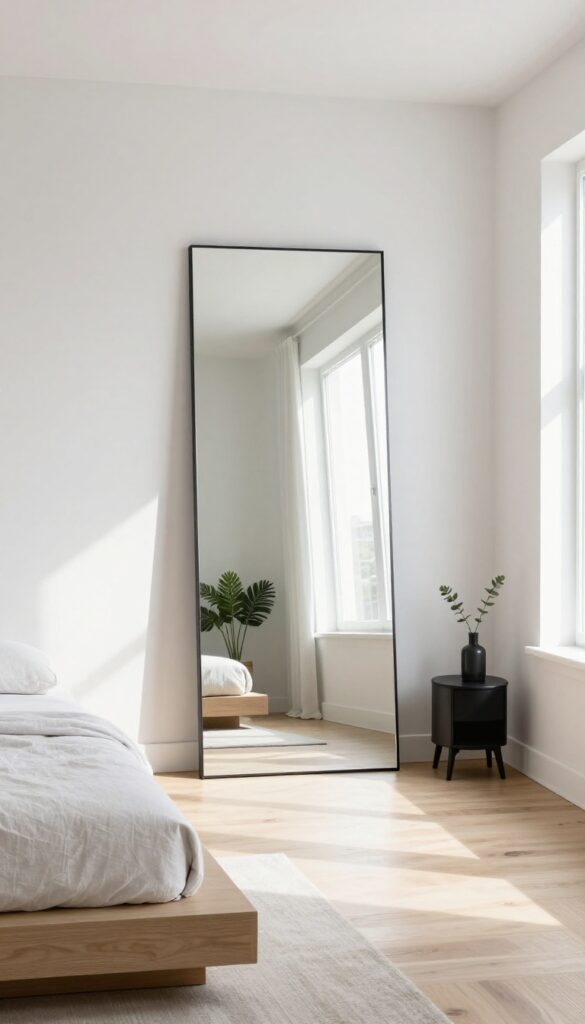
Mirrors can help narrow bedrooms, but only when used thoughtfully. Too many mirrors can feel chaotic and reflect clutter, which makes the room feel worse. Placement matters more than size.
I’ve found that one well-placed mirror works better than three random ones. It’s about reflection, not decoration.
Why This Works
Mirrors bounce light and create depth when placed perpendicular to the room’s length. This visually widens the space instead of extending it. They also make tight corners feel less boxed in.
How to Do It
- Place mirrors on shorter walls
- Avoid floor-to-ceiling mirrors on long walls
- Angle mirrors to reflect open space, not clutter
Style & Design Tips
Frameless or thin-framed mirrors look lighter and less intrusive. Round or oval shapes soften harsh lines and add balance.
Pro Tip or Budget Hack
Leaning mirrors work just as well as mounted ones and cost less to install. You can easily move them around to test placement.
9. Leave Intentional Empty Space
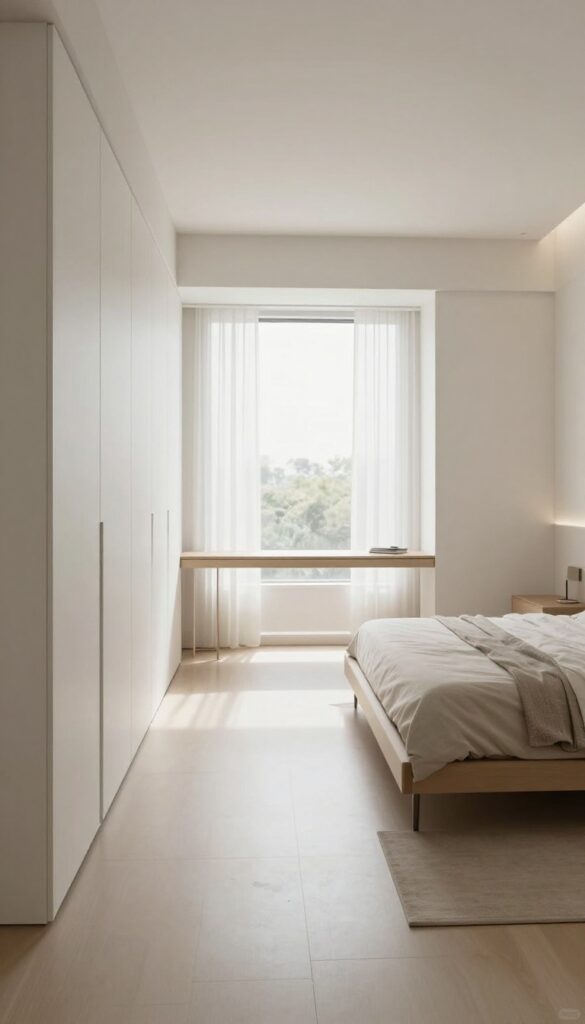
The hardest thing to accept in a narrow bedroom is that empty space is actually helpful. Filling every corner makes the room feel tighter, not cozier. Space to breathe is part of good design.
This took me a while to learn, especially when storage felt tempting. Once I removed a few unnecessary pieces, the room finally felt calm.
Why This Works
Empty space gives the eye a place to rest. It prevents visual overload and makes the room feel more balanced. Negative space is just as important as furniture.
How to Do It
- Remove one non-essential item from the room
- Keep at least one wall mostly clear
- Avoid stacking furniture along every surface
Style & Design Tips
Let one or two areas stay visually quiet. Not every wall needs decor, and that’s okay. The room will feel more intentional because of it.
Pro Tip or Budget Hack
If you’re unsure what to remove, try the “one-week test.” Move an item out temporarily and see if you miss it.
Final Thoughts
Long and narrow bedrooms don’t need dramatic renovations to feel better. A few smart layout choices and some restraint go a long way toward making the space feel wider and more comfortable. Most of the time, it’s about removing friction rather than adding more stuff.
Once you start thinking in terms of flow, balance, and breathing room, everything clicks into place. Small changes add up fast, and the room ends up feeling calmer, easier to use, and way more enjoyable to be in.