9 Living Room Shelf Decor Ideas That Look Polished
Shelf styling usually fails for one simple reason: too many items competing for attention without a clear purpose.
When shelves feel messy or unfinished, it’s almost always because function and balance weren’t considered together. Once you start treating shelves like part storage, part visual anchor, everything changes.
I’ve rearranged my own living room shelves more times than I care to admit, mostly after realizing something felt off but I couldn’t explain why.
Over time, I figured out what actually works versus what just looks good in photos. These ideas come from that trial-and-error phase, not a showroom fantasy.
1. Layered Books with Intentional Spacing
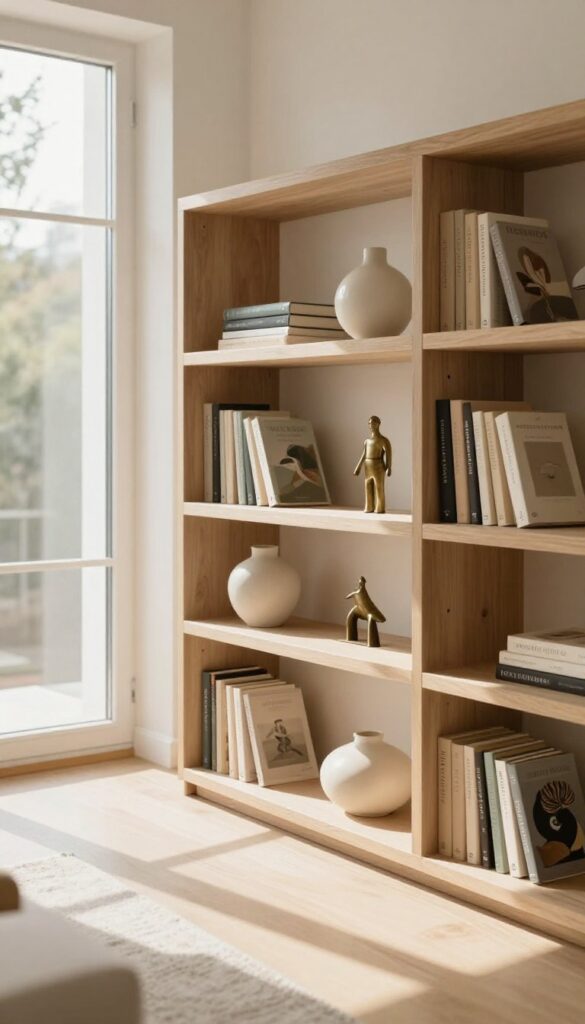
Most people stack books randomly and call it décor, then wonder why their shelves feel cluttered. The issue usually isn’t the books themselves, but how tightly they’re packed together. Shelves need breathing room to feel intentional instead of chaotic.
I used to cram every book I owned onto one shelf until it looked like a thrift store clearance rack.
Once I started spacing them out and mixing orientations, the entire shelf felt calmer and more styled without buying anything new.
Why This Works
Books add structure, height variation, and visual rhythm. When spaced correctly, they create natural breaks that let decorative items stand out instead of getting lost.
The mix of horizontal and vertical placement keeps the eye moving without overwhelming it.
How to Do It
- Group books in sets of three to five instead of long rows
- Stack some horizontally to act as bases for decor
- Leave small gaps instead of filling every inch
- Turn a few spines inward for a softer look
Style & Design Tips
Stick to a loose color theme if your books are visually loud. Neutral or muted spines help everything feel more cohesive, especially in small living rooms.
Avoid mixing too many tall and tiny books together, as it makes shelves feel uneven and chaotic.
Pro Tip or Budget Hack
If your books are too colorful, flip the spines inward or use dust jackets made from kraft paper. It costs nothing and instantly creates a clean, curated look.
2. Decorative Objects in Odd Numbers
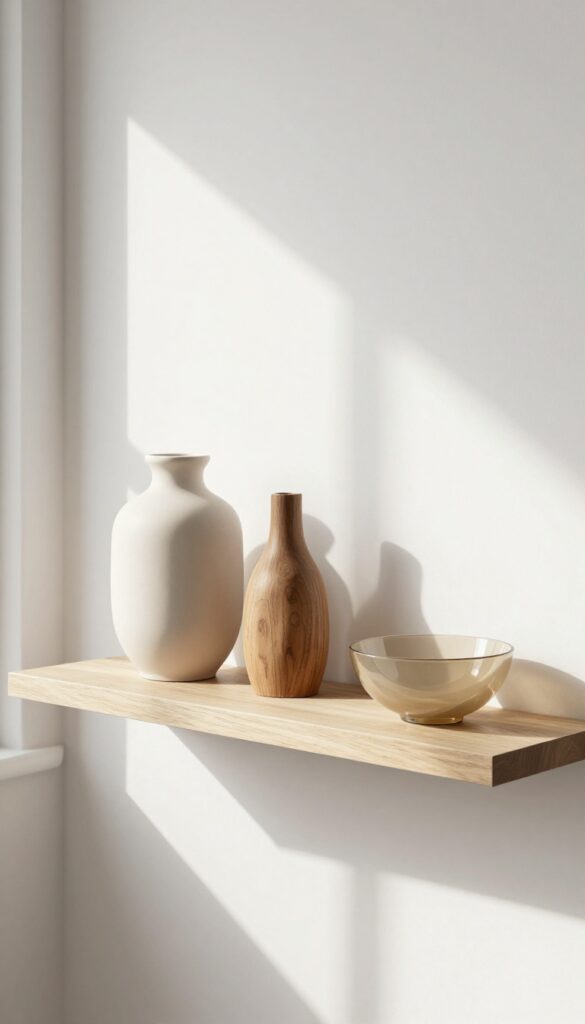
Perfect symmetry looks good in theory but feels stiff in real life. Odd-number groupings naturally feel more relaxed and visually interesting, especially on shelves. Three items almost always look better than two or four.
I learned this after endlessly rearranging a pair of vases that never looked quite right. The moment I added a third, smaller piece, the shelf finally made sense.
Why This Works
Odd numbers create movement and balance without forcing symmetry. Your eye flows across the shelf instead of stopping abruptly.
This also makes your decor feel more collected and less staged.
How to Do It
- Group items in sets of three or five
- Mix heights so nothing lines up perfectly
- Keep one item visually heavier than the others
- Leave negative space around the group
Style & Design Tips
Use a mix of materials like ceramic, wood, and glass to avoid flatness. Keep colors within the same family for a polished look.
Avoid using three items of the same size or shape, which defeats the purpose.
Pro Tip or Budget Hack
Thrift stores are great for finding small objects that look expensive when grouped together. Even mismatched items can look intentional if the colors work.
3. Plants That Add Shape Without Chaos
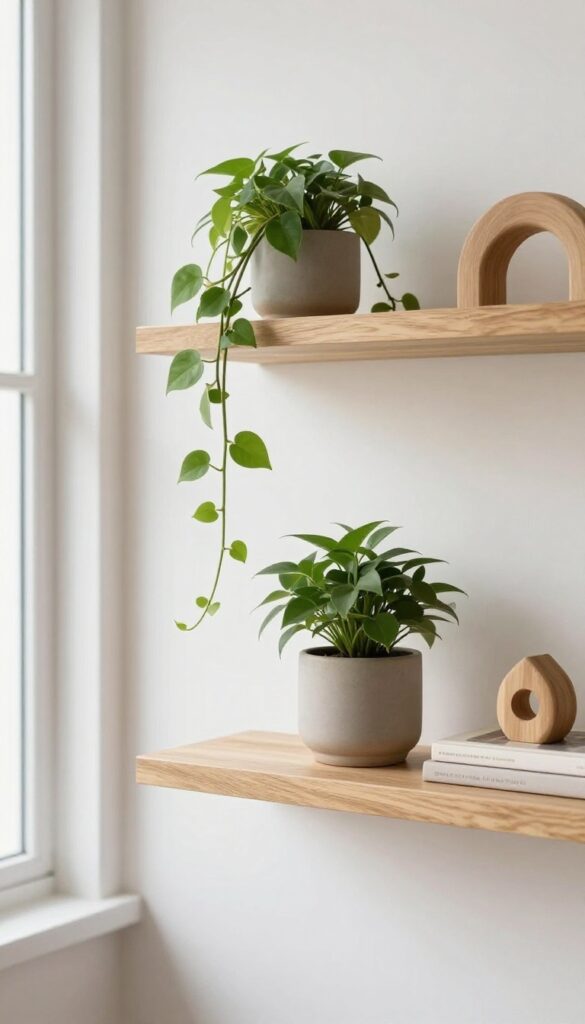
Plants instantly make shelves feel alive, but too many can turn into visual noise. The key is choosing plants with distinct shapes and placing them strategically. One or two well-chosen plants beat five random ones every time.
I used to overload shelves with greenery until everything felt busy. Now I stick to fewer plants and let them actually stand out.
Why This Works
Plants soften hard lines and add organic movement. When placed intentionally, they create contrast against books and decor.
They also help shelves feel less rigid and more lived-in.
How to Do It
- Use one trailing plant per shelf section
- Mix one leafy plant with structured decor
- Choose low-maintenance varieties
- Keep pots simple and neutral
Style & Design Tips
Matte planters look cleaner than glossy ones. Earth tones work especially well with wood shelves.
Avoid plants with wildly different leaf shapes sitting next to each other, as it can feel chaotic.
Pro Tip or Budget Hack
High-quality faux plants work just as well on shelves where real light is limited. Dust them occasionally and no one will know.
4. Layered Art and Frames
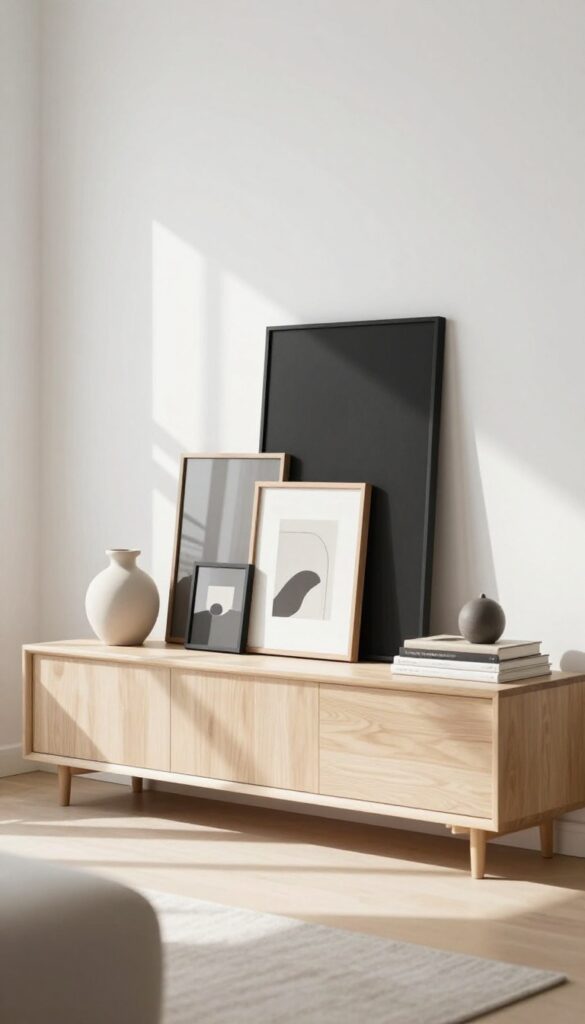
Shelves are perfect for art because you don’t have to commit to nail holes. Leaning frames instead of hanging them gives a relaxed, styled look that’s easy to change later.
I rotate my framed prints seasonally, which keeps the space feeling fresh without redoing everything.
Why This Works
Layered art adds depth and personality without overwhelming the wall. It also creates a focal point that anchors the shelf visually.
Leaning frames naturally soften hard lines and feel more casual.
How to Do It
- Place larger frames at the back
- Layer smaller frames slightly in front
- Mix art with small objects for balance
- Keep frames within a similar color family
Style & Design Tips
Matte frames look cleaner than glossy ones. Black, wood, or soft metallics are easier to mix than bright colors.
Avoid overcrowding the shelf with too many frames, which can feel cluttered fast.
Pro Tip or Budget Hack
Print art at home using high-quality paper and simple frames. It looks custom without the price tag.
5. Functional Storage That Looks Good
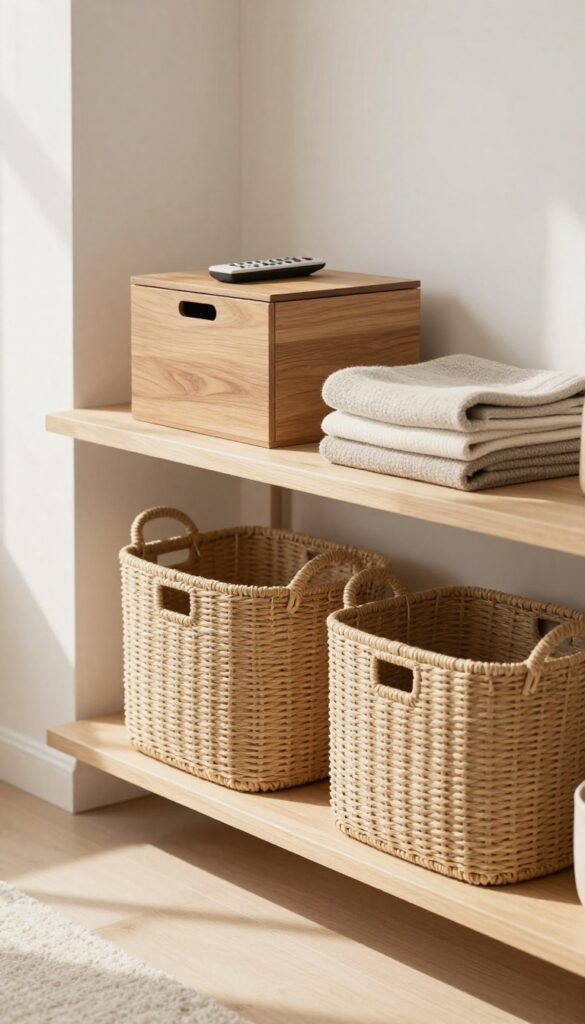
Shelves shouldn’t be decorative only. When storage looks good, it keeps clutter from spreading to other parts of the room.
I learned this after constantly moving remote controls and candles off the coffee table because they had nowhere to live.
Why This Works
Functional items give shelves purpose and prevent visual clutter elsewhere. When storage looks intentional, it blends seamlessly with decor.
This also makes your living room easier to maintain.
How to Do It
- Use baskets or boxes with clean lines
- Stick to two or three materials max
- Hide small clutter inside closed containers
- Keep frequently used items accessible
Style & Design Tips
Woven baskets add warmth while wood boxes feel more structured. Choose based on the overall vibe of your space.
Avoid plastic bins unless they’re hidden or very high quality.
Pro Tip or Budget Hack
Matching storage containers instantly elevate shelves. Even inexpensive ones look upscale when coordinated.
6. Personal Items That Feel Curated
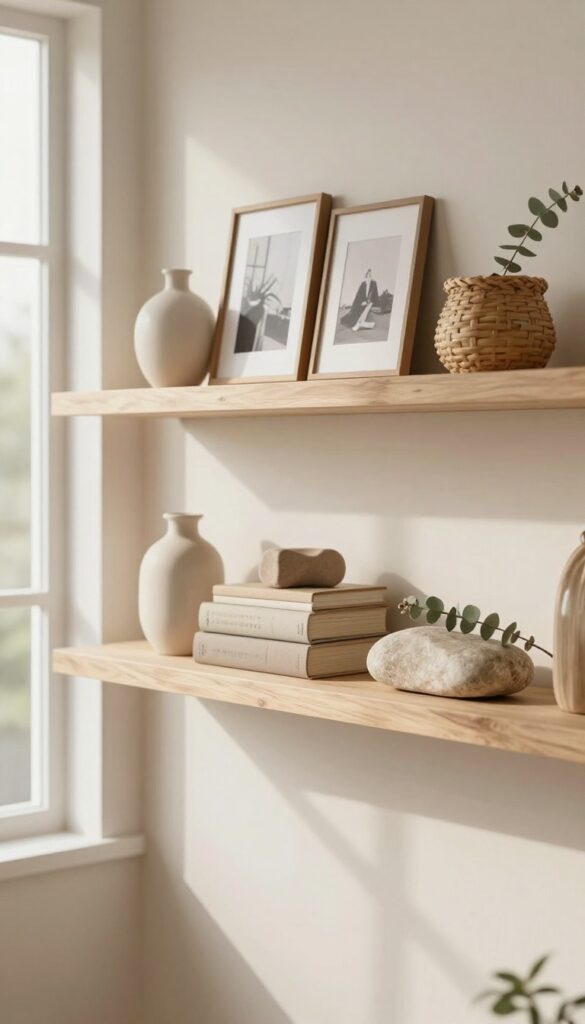
Personal decor is what makes shelves feel lived-in rather than staged. The trick is editing instead of displaying everything you own.
I used to overload shelves with souvenirs until they looked chaotic. Now I rotate a few favorites and store the rest.
Why This Works
Personal items create emotional connection and authenticity. When displayed thoughtfully, they make a room feel intentional instead of cluttered.
They also tell a story without needing explanation.
How to Do It
- Choose items with meaning or visual appeal
- Limit personal pieces to a few per shelf
- Mix with neutral decor for balance
- Rotate items occasionally
Style & Design Tips
Group sentimental items with neutral objects so they don’t overpower the shelf. Keep color palettes cohesive.
Avoid placing too many small items together, which can feel messy.
Pro Tip or Budget Hack
If something feels too sentimental to display, photograph it and keep the image instead. The shelf will look cleaner, and the memory stays.
7. Texture Mixing for Visual Interest
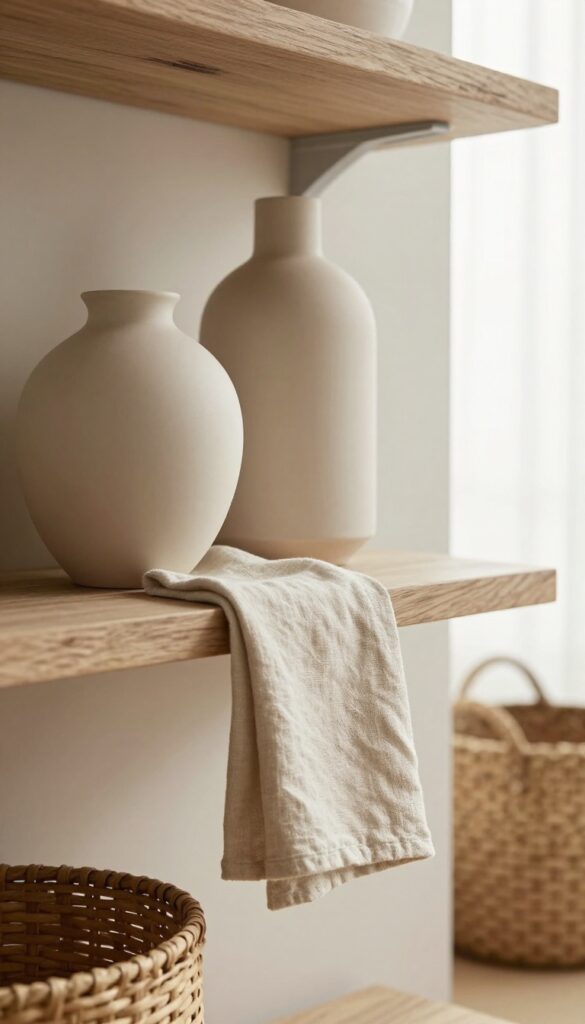
Texture matters more than color when it comes to shelf styling. Flat surfaces everywhere make shelves feel boring, even if the colors are nice.
Once I started mixing rough and smooth textures, my shelves finally looked layered and intentional.
Why This Works
Texture adds depth without needing more items. It keeps shelves visually interesting even with a neutral palette.
It also prevents decor from looking flat or one-dimensional.
How to Do It
- Pair smooth ceramics with rough wood
- Add soft elements like fabric or baskets
- Mix matte and slightly glossy finishes
- Avoid too many similar textures together
Style & Design Tips
Stick to two or three textures per shelf for balance. Too many textures can feel chaotic.
Natural materials usually blend better than synthetic ones.
Pro Tip or Budget Hack
A simple folded linen or small woven mat can add texture without adding clutter.
8. Negative Space That Actually Works
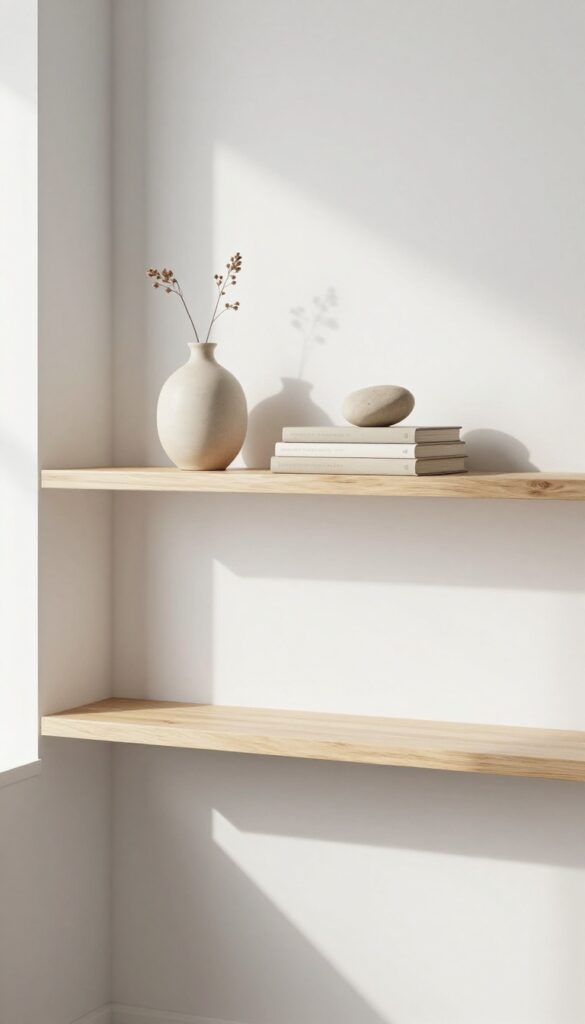
Empty space isn’t wasted space. It’s what makes everything else look intentional.
I used to feel like every shelf needed to be filled, but leaving space actually made my decor look more expensive.
Why This Works
Negative space gives the eye a place to rest. It highlights what’s there instead of competing with it.
It also keeps shelves from feeling overcrowded or heavy.
How to Do It
- Leave at least one section partially empty
- Avoid filling corners just because you can
- Step back and assess visual balance
- Remove one item if it feels crowded
Style & Design Tips
Asymmetry works better than perfect balance here. Let one side breathe while the other holds more weight.
Avoid lining items edge to edge.
Pro Tip or Budget Hack
When in doubt, remove something. Shelves almost always look better with less.
9. Seasonal Swaps That Don’t Require Redecorating
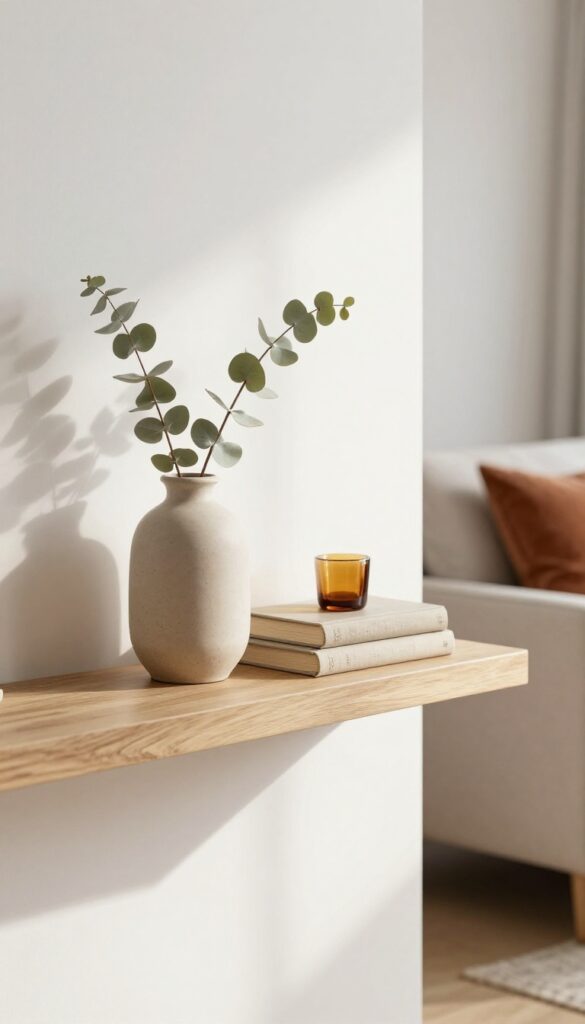
Seasonal decor doesn’t need a full overhaul. Small swaps keep shelves fresh without creating storage headaches.
I change maybe three items per season, and it makes the whole room feel updated.
Why This Works
Subtle changes keep your space feeling current without effort. It also prevents decor fatigue.
Seasonal swaps add variety without clutter.
How to Do It
- Rotate pillows, small objects, or greenery
- Swap colors, not entire layouts
- Keep core pieces consistent
- Store off-season items together
Style & Design Tips
Stick to seasonal color tones rather than themed decor. It feels more mature and less holiday-specific.
Avoid novelty items that only work once a year.
Pro Tip or Budget Hack
Use reversible items or neutral bases that work year-round with small add-ons.
Final Thoughts
Shelf styling isn’t about perfection or trends. It’s about balance, intention, and knowing when to stop adding things. Once you start thinking of shelves as functional design instead of display space, everything gets easier.
If something feels off, it usually is. Trust your eye, make small changes, and don’t be afraid to edit. The best shelves always look like they evolved naturally over time.