9 Basement Bedroom Ideas for Rooms With No Windows
Concrete walls hold a cool chill long after summer fades, and the hum of a furnace feels louder at night. A single lamp throws a soft circle of light across the floor, catching dust in the air like slow snow.
Basements have a way of feeling unfinished even when everything technically works.
That slightly underground feeling doesn’t have to win. With a few smart design choices, a basement bedroom can feel intentional, calm, and surprisingly cozy.
I’ve seen some windowless rooms turn into the most slept-in spaces in the house once the right tweaks land.
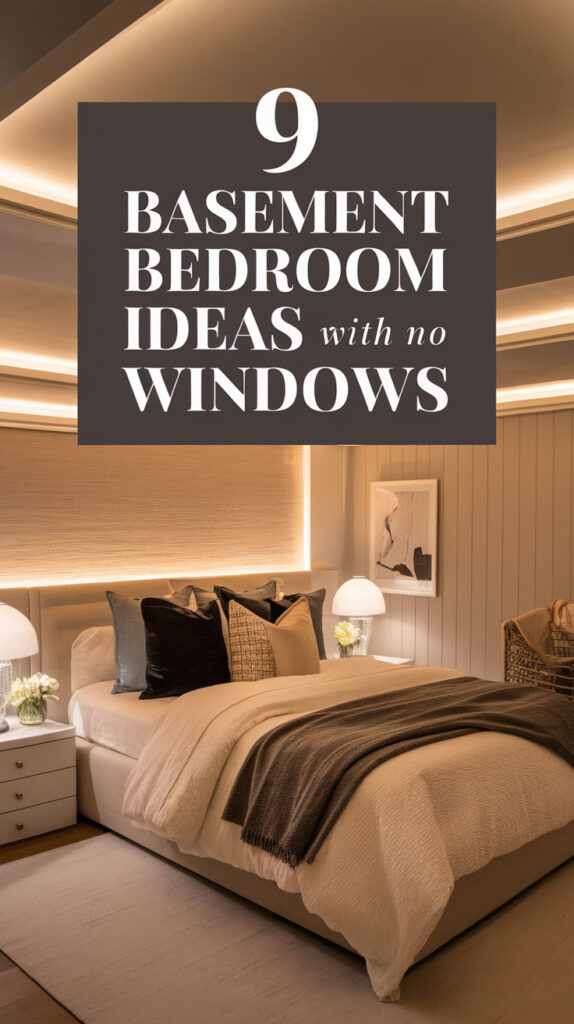
1. Fake-It Natural Light With Layered Lighting
A dark basement bedroom usually fails because it relies on one sad overhead bulb that makes everything look flat.
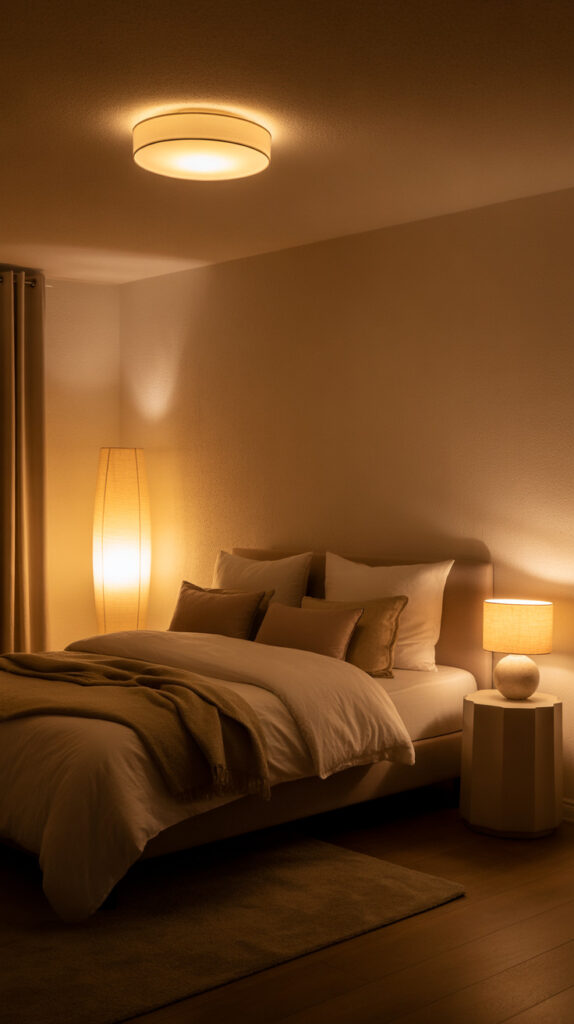
The goal here isn’t brightness alone, but depth and warmth that mimics daylight. When lighting layers work together, the room stops feeling underground and starts feeling designed.
I learned this the hard way after setting up a basement guest room with a single ceiling fixture and wondering why everyone avoided it.
Once I added multiple light sources at different heights, the space finally felt livable. Light placement matters more than wattage.
Why This Works
Layered lighting tricks the brain into reading the room as larger and brighter than it actually is. When light comes from multiple directions, shadows soften and corners visually recede. That balance replaces the harsh cave feeling that basements love to create.
How to Do It
- Start with a soft overhead fixture using a warm bulb instead of stark white.
- Add at least two lamps at different heights, like a floor lamp and a bedside lamp.
- Include indirect lighting such as wall sconces or LED strips behind furniture.
Style & Design Tips
Warm light always wins in windowless rooms, so stick to bulbs labeled soft white or warm white. Avoid exposed industrial fixtures that cast sharp shadows, since they exaggerate concrete textures. Mixing lamps with fabric shades helps diffuse light and adds visual softness.
Pro Tip or Budget Hack
Plug all lights into a single dimmer power strip so you can control the mood without rewiring anything. I’ve used this trick in rentals, and it instantly makes the room feel intentional instead of patched together.
2. Use Light, Reflective Wall Colors Strategically
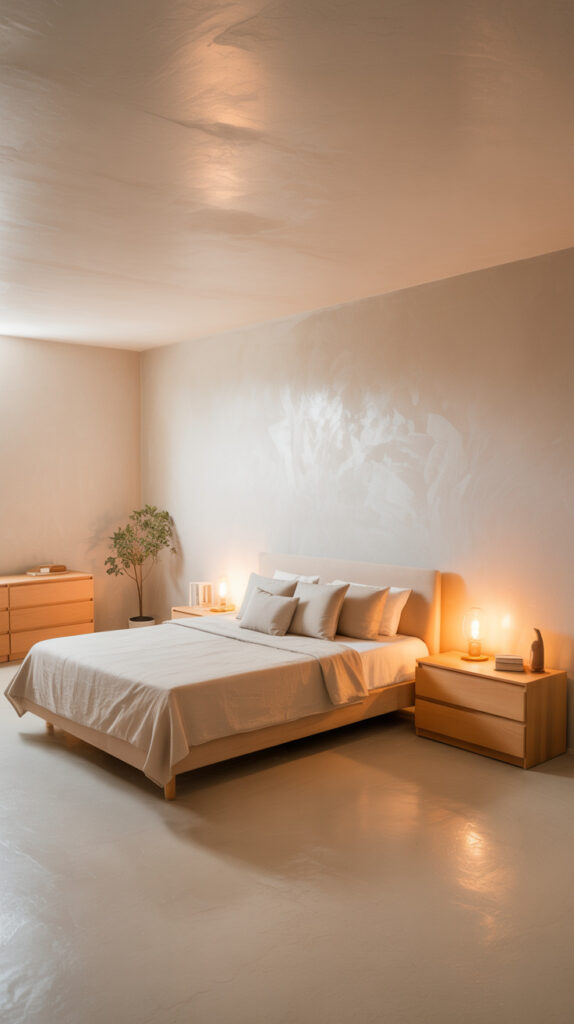
Painting a basement bedroom dark might sound cozy, but it often swallows what little light exists. Lighter wall colors reflect light instead of absorbing it, which makes the room feel more open. This doesn’t mean the space has to look boring or sterile.
I used to think white walls felt lazy until I realized how much flexibility they give in a basement. The right soft neutral can carry color through decor without closing the room in. Paint becomes the quiet background that lets everything else shine.
Why This Works
Light-reflective colors bounce artificial light around the room more effectively. This creates a sense of openness that compensates for the lack of windows. The walls stop feeling like boundaries and start acting like amplifiers.
How to Do It
- Choose soft whites, pale greige, light taupe, or muted beige tones.
- Use satin or eggshell finishes to subtly reflect light without glare.
- Paint trim the same color as walls to avoid harsh visual breaks.
Style & Design Tips
Avoid stark bright white, which can feel cold under artificial light. Warm undertones work better underground and prevent that hospital vibe. Consistency matters, so keep the ceiling close in tone to the walls for a seamless look.
Pro Tip or Budget Hack
If repainting the whole room feels overwhelming, paint just one large wall behind the bed in a lighter tone. That single reflective surface can noticeably lift the room’s brightness.
3. Choose Low-Profile, Cozy Furniture
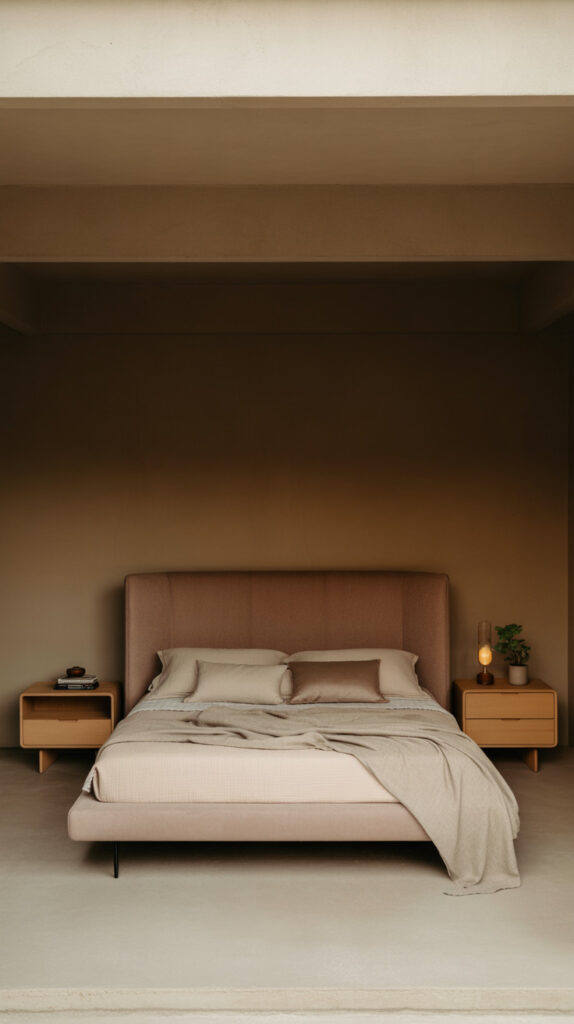
Bulky furniture makes basement bedrooms feel cramped fast. Lower-profile pieces help ceilings feel higher and rooms feel calmer. The difference is subtle but powerful once everything is in place.
I once swapped a tall headboard for a simple platform bed, and the entire room felt like it gained height overnight. Furniture proportions matter more underground than anywhere else. Big pieces steal visual breathing room.
Why This Works
Low furniture keeps sightlines open and prevents the ceiling from feeling oppressive. The eye moves horizontally instead of stacking vertically, which reduces that boxed-in sensation. Everything feels calmer and more grounded.
How to Do It
- Pick platform beds or low bed frames without footboards.
- Choose nightstands with open legs instead of solid blocks.
- Skip tall armoires and use dressers with wider, shorter profiles.
Style & Design Tips
Stick with clean lines and avoid overly ornate furniture details. Upholstered beds add softness without visual weight. Negative space under furniture helps air flow and light move around the room.
Pro Tip or Budget Hack
Remove legs from an existing bed frame to lower it closer to the floor. It’s a simple change that can completely shift the room’s proportions without buying new furniture.
4. Add Texture to Replace Missing Views
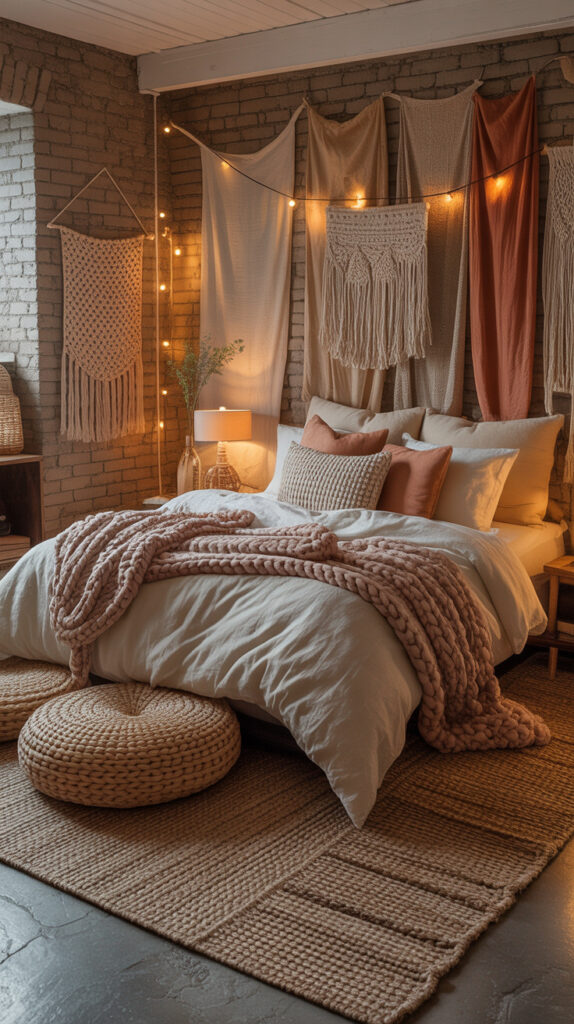
Windows usually provide visual interest, so without them, texture has to step in. Texture adds depth, warmth, and dimension that flat walls can’t offer alone. This keeps the room from feeling dull or unfinished.
I’ve noticed that the coziest basement bedrooms lean hard into texture. Soft fabrics, layered materials, and tactile surfaces create a space you want to sink into. The room feels designed for comfort instead of daylight.
Why This Works
Texture gives the eye something to explore, which replaces the stimulation a window normally provides. It also softens hard basement surfaces like concrete or drywall. This balance makes the space feel intentionally cozy.
How to Do It
- Layer bedding with quilts, throws, and textured pillows.
- Use area rugs with visible weave or pile.
- Add fabric wall hangings or upholstered headboards.
Style & Design Tips
Mix textures but keep the color palette tight to avoid chaos. Soft knits, linen, boucle, and wool all work beautifully together. Avoid shiny finishes that bounce harsh light.
Pro Tip or Budget Hack
Use curtain panels on a blank wall to mimic the softness of window treatments. Hung high and wide, they add drama and texture without needing an actual window.
5. Create a Faux Window Feature Wall
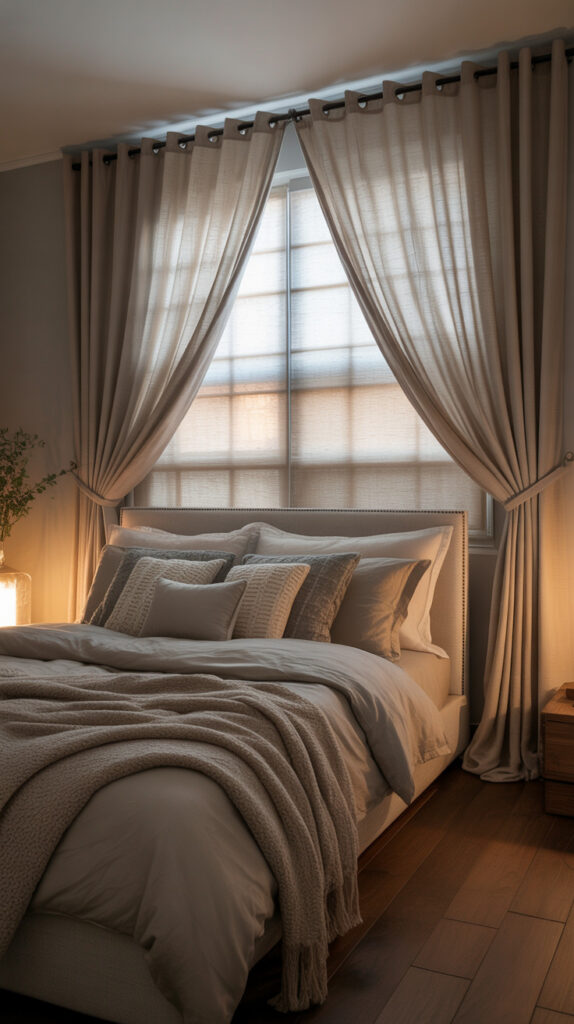
When a room has no windows, sometimes pretending works better than fighting reality. Faux window features add visual relief and give the room a focal point. This trick sounds bold, but it works shockingly well.
I helped a friend frame out a faux window with curtains and a backlit panel, and guests constantly asked what direction it faced. The illusion didn’t feel cheesy because it was done simply. The room instantly felt less underground.
Why This Works
The brain expects bedrooms to have windows, so a visual substitute eases that tension. Lighted panels or framed art suggest depth and openness. The room feels psychologically lighter even without real sunlight.
How to Do It
- Hang curtain rods high with full-length curtains on a blank wall.
- Place a framed landscape print or light panel behind them.
- Use soft backlighting to mimic daylight glow.
Style & Design Tips
Keep the faux window clean and minimal to avoid looking theatrical. Neutral curtains work best, especially in linen or cotton blends. Symmetry helps sell the illusion, so center it carefully.
Pro Tip or Budget Hack
Use LED light panels or daylight bulbs behind frosted acrylic for a convincing glow. This setup costs far less than egress windows and installs in an afternoon.
6. Keep Storage Built-In and Minimal
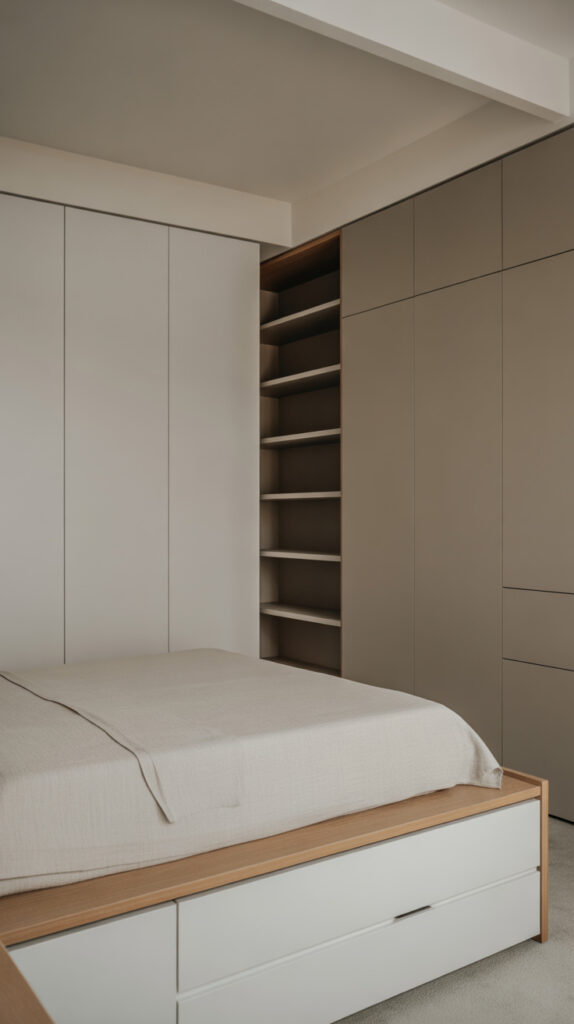
Basement bedrooms often double as storage, which can quickly overwhelm the space. Built-in or hidden storage keeps clutter out of sight. The room feels calmer when storage doesn’t scream for attention.
I’ve stayed in basement rooms where visible bins ruined the vibe instantly. Once storage disappeared behind closed doors, the room finally felt like a bedroom instead of overflow space. Clean lines matter more here.
Why This Works
Visual clutter shrinks a room faster than low ceilings. Built-in storage preserves floor space and keeps the eye moving smoothly. Everything feels more intentional and less chaotic.
How to Do It
- Use under-bed drawers or storage beds.
- Install wall-mounted shelves with closed cabinets.
- Choose nightstands with drawers instead of open shelves.
Style & Design Tips
Match storage finishes to wall colors so they blend in. Flat-front cabinets feel quieter than decorative doors. Avoid open shelving unless styled very intentionally.
Pro Tip or Budget Hack
Use fabric storage bins that match wall color inside closets or shelves. They hide clutter without the cost of custom cabinetry.
7. Warm Up the Room With Strategic Color Accents
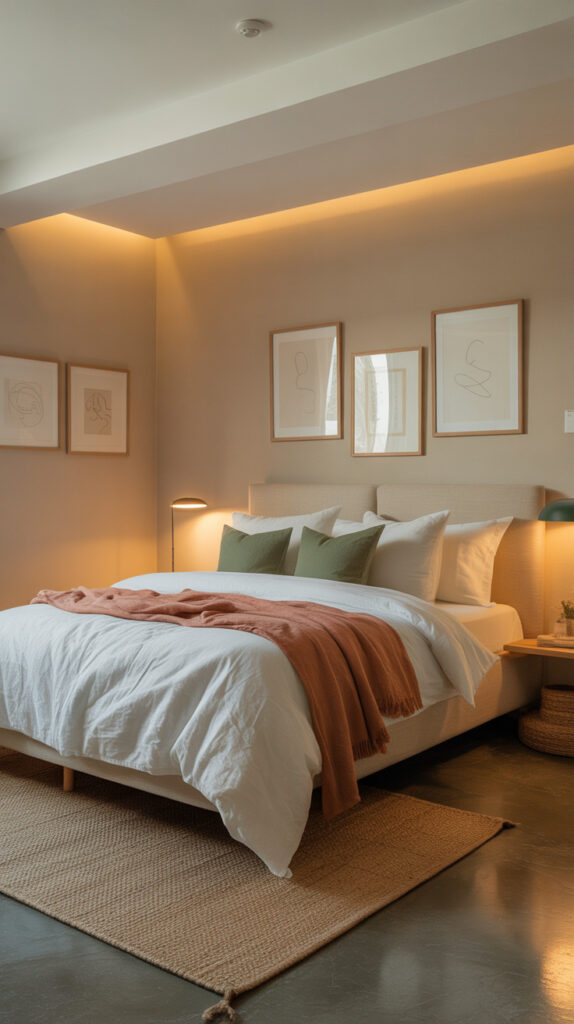
All-neutral basement bedrooms can feel flat if nothing breaks the palette. Thoughtful color accents add warmth and personality without closing the room in. The key is restraint.
I like adding color through bedding or art instead of walls. That way, the room stays bright but still feels personal. A little color goes a long way underground.
Why This Works
Color draws the eye and creates focal points. When used intentionally, it adds energy without overpowering the space. The room feels styled rather than sterile.
How to Do It
- Choose one accent color and repeat it subtly.
- Add color through pillows, throws, or art.
- Keep large surfaces like walls and floors neutral.
Style & Design Tips
Muted tones work better than bold primaries in low-light rooms. Think dusty blue, sage, clay, or warm rust. Consistency beats variety when light is limited.
Pro Tip or Budget Hack
Swap pillow covers seasonally to refresh the room without redecorating. It’s the easiest way to test colors without commitment.
8. Make the Ceiling Work Harder
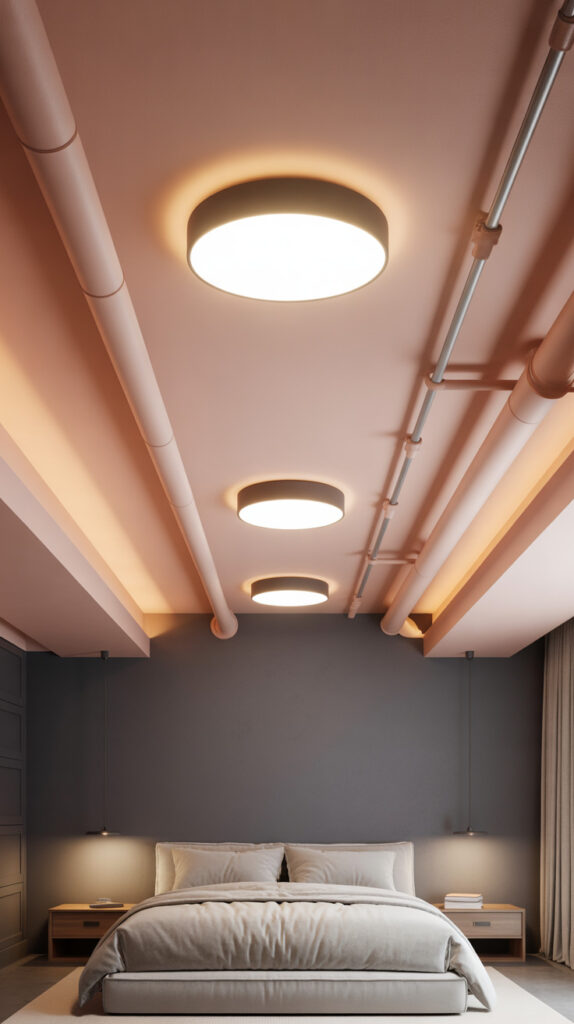
Basement ceilings often get ignored, but they matter more than people think. A well-treated ceiling can visually lift the room. Ignoring it leaves the space feeling heavy.
I once painted a low ceiling a shade lighter than the walls, and the difference was immediate. The room felt taller without changing a single measurement. Small ceiling choices have outsized impact.
Why This Works
The ceiling defines the room’s vertical limit. Lightening it or simplifying its look reduces visual weight. The room feels more open and breathable.
How to Do It
- Paint the ceiling a lighter shade than the walls.
- Minimize exposed ductwork where possible.
- Use flush-mount or semi-flush lighting fixtures.
Style & Design Tips
Avoid dark ceiling colors that compress the room. Simple finishes work best underground. Visual calm overhead helps the whole room relax.
Pro Tip or Budget Hack
Paint exposed pipes the same color as the ceiling to visually hide them. It’s cheap and surprisingly effective.
9. Focus on Comfort Over Perfection
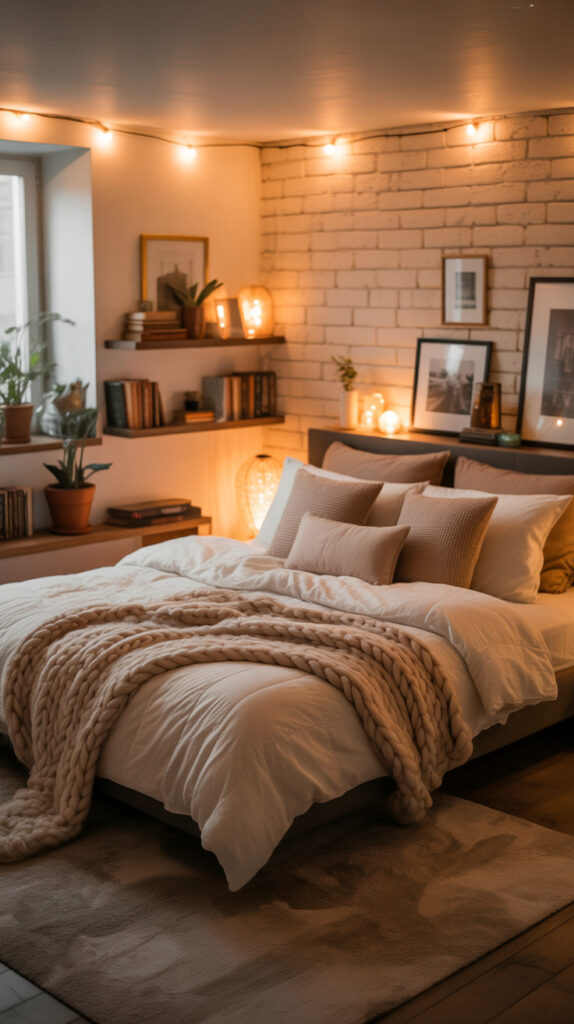
Basement bedrooms shine when they feel lived-in, not staged. Comfort should always come before trends. The room should invite rest, not comparison.
Some of the best basement bedrooms I’ve seen break design “rules” but feel amazing to sleep in. That matters more than perfect symmetry. Comfort always wins at the end of the day.
Why This Works
Comfort creates emotional safety, which matters more in enclosed spaces. When the room supports rest, everything else fades. The space becomes somewhere you want to be.
How to Do It
- Invest in good bedding and a supportive mattress.
- Add personal items that make the space feel yours.
- Keep lighting soft and adjustable.
Style & Design Tips
Avoid over-styling just for photos. Real comfort looks slightly imperfect. Trust your instincts over trends.
Pro Tip or Budget Hack
Spend money on what touches your body, not what sits on shelves. Better sheets beat decorative objects every time.
Final Thoughts
Basement bedrooms don’t need to fight their location to feel good. Small, thoughtful choices add up faster than big renovations ever could. Once the space feels calm and comfortable, the lack of windows fades into the background.
Try one idea first and see how the room responds. Comfort builds confidence, and confidence makes design choices easier. That quiet, cozy basement might end up becoming your favorite place to sleep.