9 Front Yard Flower Bed Ideas That Impress
Curb appeal usually comes down to structure, not square footage. A front yard can be tiny and still look intentional, or it can be huge and somehow feel unfinished.
Most people don’t need more plants. They need better placement, cleaner edges, and a little strategy behind the layout.
1. Layered Border Flower Bed Along the Walkway
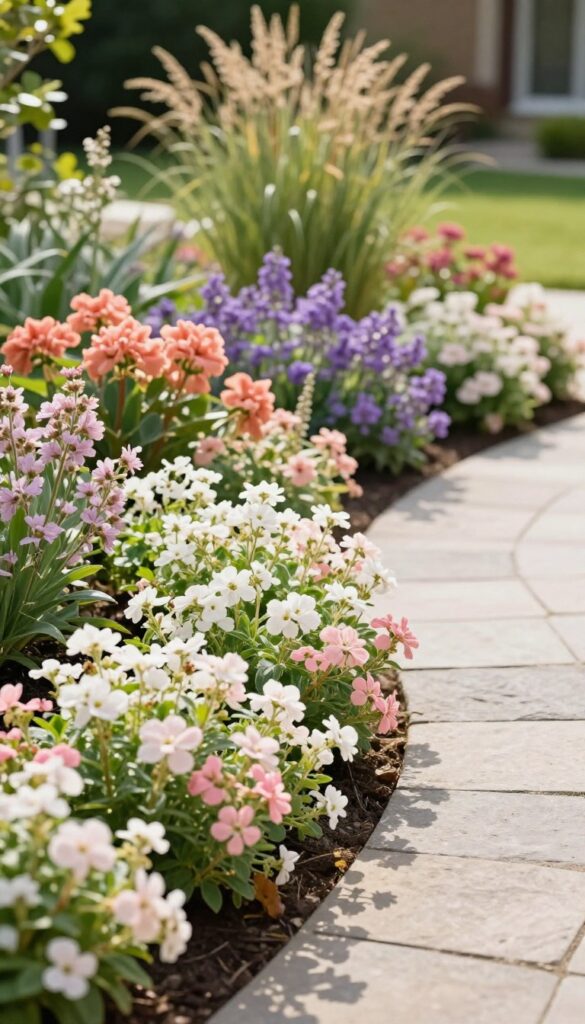
Flat flower beds disappear visually, especially when everything sits at the same height. A layered border along the walkway fixes that by creating movement from the ground up instead of one low strip of color.
I like this style because it frames the path naturally without feeling overdesigned. When you mix low ground cover in front, medium blooms in the middle, and taller plants toward the back, the whole entrance feels more polished without trying too hard.
Why This Works
Layering mimics how plants grow in nature, so it automatically feels balanced. Your eye moves gradually from short to tall instead of hitting a wall of greenery.
It also keeps the walkway from looking narrow. The graduated height creates softness without crowding the path.
How to Do It
- Define the edge first with a spade or edging tool to create a clean border. This prevents grass from creeping in and keeps everything sharp.
- Plant low-growing flowers or ground cover along the front edge. This anchors the design visually.
- Add mid-height perennials behind them to build depth. Choose varieties that bloom at different times for longer color.
- Place taller plants or ornamental grasses toward the back. These add drama without blocking the walkway.
Each step builds dimension, which is what makes this layout stand out from a flat planting strip.
Style & Design Tips
Stick to 2–3 main colors for a cohesive look. Too many shades in a narrow space can start to feel messy fast.
Repeat the same plant groupings every few feet for rhythm. Consistency makes even simple flowers look intentional.
Pro Tip or Budget Hack
Buy smaller perennials instead of mature ones. They cost less and fill out within a season or two anyway.
2. Raised Brick Flower Bed for Structure
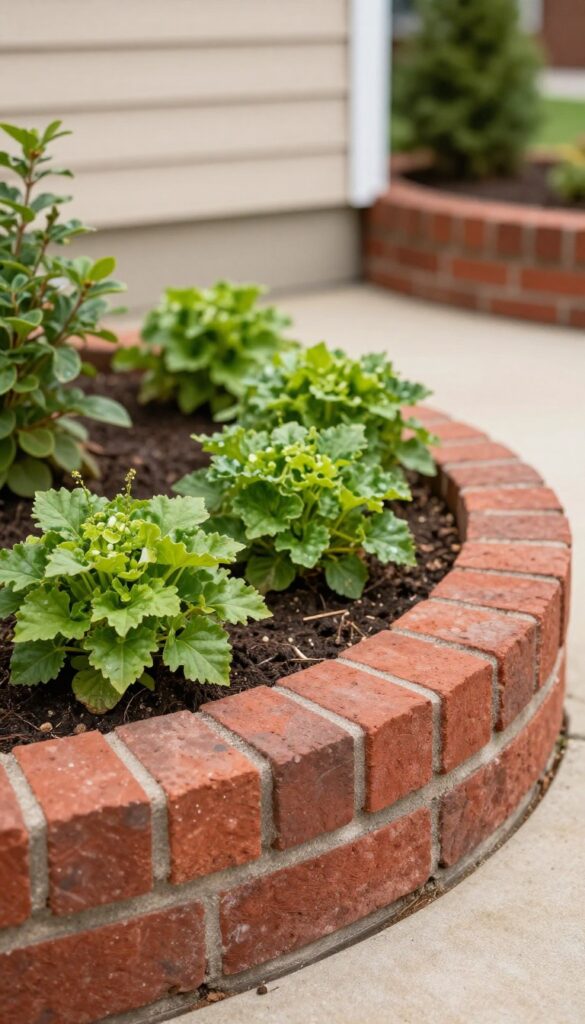
Some yards look scattered because nothing visually anchors the plants. A raised brick flower bed instantly solves that by adding a solid frame around your greenery.
I’ve used brick edging before, and the difference shocked me. Even average plants looked better once they sat inside a defined border.
Why This Works
Brick introduces texture and contrast against soft foliage. That combination makes the bed feel designed rather than accidental.
The raised height also improves drainage. Plants tend to thrive when their roots aren’t sitting in compacted soil.
How to Do It
- Outline your bed shape with spray paint or a hose to visualize the curve. Soft curves usually look more natural than harsh angles.
- Dig a shallow trench for the brick base. A stable foundation prevents shifting later.
- Lay bricks tightly and level them carefully. Uneven bricks will drive you crazy once you notice them.
- Fill the bed with quality soil before planting. Good soil makes a visible difference in plant health.
Taking time to level the bricks matters. A clean structure elevates everything planted inside it.
Style & Design Tips
Choose brick tones that match your home’s exterior. Warm brick pairs beautifully with beige or cream siding.
Avoid overfilling the bed with too many plant types. Let the brick frame shine instead of competing with it.
Pro Tip or Budget Hack
Check local classifieds for leftover bricks from renovation projects. You can often score them for a fraction of retail cost.
3. Curved Island Flower Bed in the Lawn
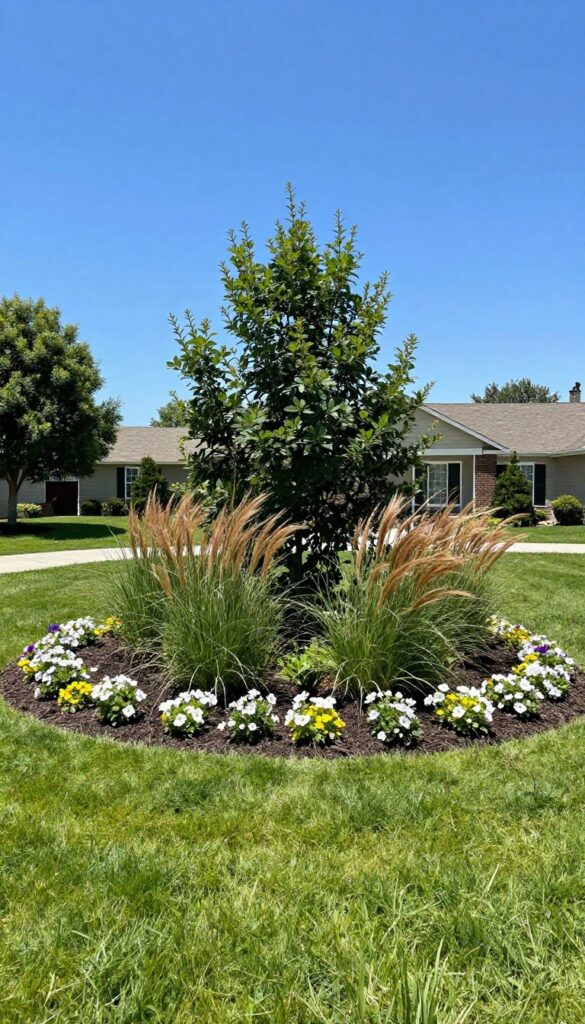
A single island bed in the middle of a plain lawn can completely change the vibe. It breaks up empty space and adds interest without needing fences or hardscaping.
I love island beds because they feel intentional but not fussy. They give your yard a focal point instead of one long stretch of grass.
Why This Works
Curves soften the rigid lines of driveways and sidewalks. That contrast creates visual balance.
An island layout also allows 360-degree planting. You can layer plants in all directions for a fuller look.
How to Do It
- Mark a curved shape that feels organic. Avoid perfect circles unless your home design calls for symmetry.
- Remove grass thoroughly so weeds don’t sneak back. Skipping this step leads to constant maintenance.
- Add a layer of compost before planting. Healthy soil supports fuller growth.
- Place taller plants in the center and gradually step down in height outward.
This setup ensures the bed looks good from every angle, not just from the street.
Style & Design Tips
Mix flowering plants with ornamental grasses. The movement from grasses adds texture even when flowers aren’t blooming.
Stick to odd-number groupings for a more natural appearance. Symmetry can look stiff in island beds.
Pro Tip or Budget Hack
Use a tree as the central anchor. A small ornamental tree makes the bed feel established immediately.
4. Flower Bed with Decorative Rock Accents
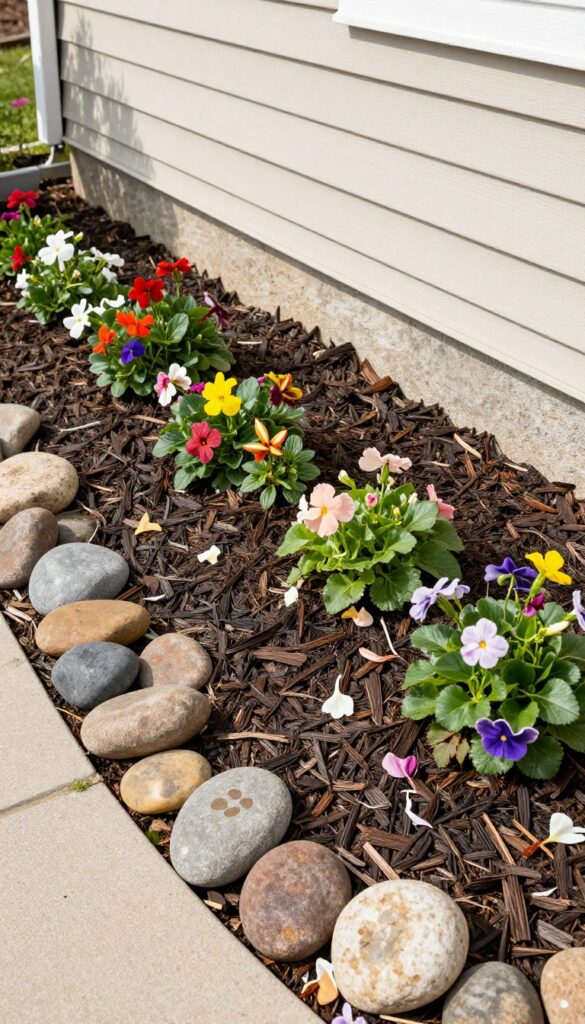
Plain mulch sometimes looks flat, especially against bright siding. Adding decorative rock accents creates contrast and dimension without adding more plants.
I tried mixing river rock with mulch once, and it instantly looked more styled. The trick is balance, not overload.
Why This Works
Rock introduces a hard texture that highlights soft petals and leaves. The contrast makes both elements stand out.
It also reduces maintenance. Rocks don’t decompose like mulch, so you refresh less often.
How to Do It
- Choose one rock type and color. Mixing too many varieties can look chaotic.
- Use landscape fabric underneath to prevent weeds. This saves time long term.
- Add rocks in sections or borders rather than covering the entire bed. Partial accents look more intentional.
- Keep mulch around plant bases for moisture retention.
This combination keeps plants healthy while elevating the design visually.
Style & Design Tips
Light-colored rock brightens darker homes. Dark stones look sleek against modern exteriors.
Avoid tiny gravel that scatters easily. Larger stones stay in place and look more refined.
Pro Tip or Budget Hack
Buy rock in bulk from local suppliers instead of pre-bagged versions. Bulk pricing often cuts costs significantly.
5. Symmetrical Flower Beds Framing the Entrance
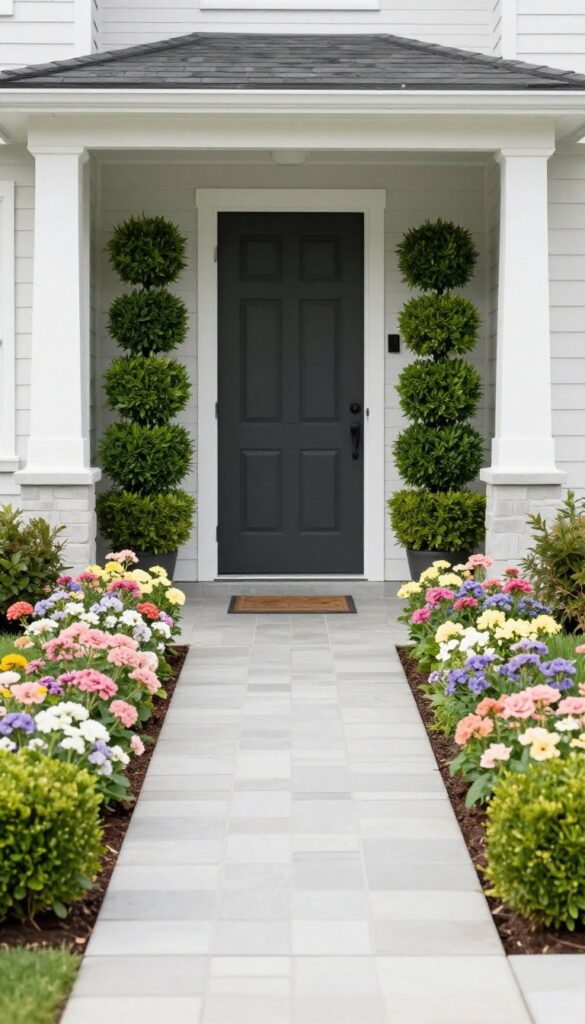
An unbalanced entryway can make even a beautiful home look off. Symmetrical flower beds on both sides of the door bring order and calm instantly.
I lean toward symmetry for formal-style homes because it feels polished without effort. When both sides mirror each other, the entrance feels deliberate.
Why This Works
Symmetry appeals to the eye naturally. Humans gravitate toward balanced compositions.
It also highlights the front door as the focal point. The flower beds act like subtle framing.
How to Do It
- Measure both sides carefully to keep dimensions equal. Small differences show more than you think.
- Choose identical plant combinations for both beds. Consistency matters here.
- Add a central vertical element like a shrub or topiary. This grounds the layout.
- Keep the height proportionate to the doorway.
Precision in placement creates that clean, elevated look.
Style & Design Tips
Stick to structured plants like boxwoods for a more classic feel. Looser flowers can soften the formality.
Avoid overcrowding. Negative space makes symmetry feel intentional rather than cramped.
Pro Tip or Budget Hack
Start with affordable shrubs and fill gaps with seasonal annuals. Swap the annuals each year for fresh color.
6. Low-Maintenance Perennial Flower Bed
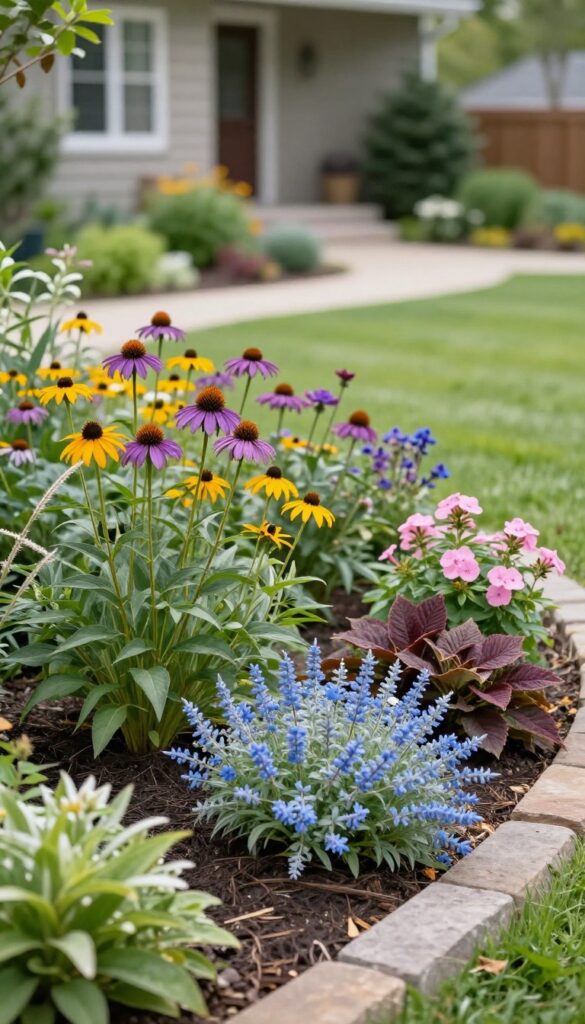
Not everyone wants to replant every season. A perennial-focused bed saves time and still delivers consistent beauty year after year.
I switched part of my yard to mostly perennials, and maintenance dropped dramatically. It’s honestly a game changer if you prefer low effort.
Why This Works
Perennials return each season, so you build a fuller look over time. They establish deeper roots and require less watering.
The layered blooms throughout the year keep the yard interesting without constant reworking.
How to Do It
- Research plants that thrive in your climate. Local garden centers can guide you well.
- Choose varieties with staggered bloom times. This prevents gaps in color.
- Space plants properly so they have room to mature. Crowding leads to constant dividing.
- Mulch heavily to reduce weeds and conserve moisture.
Planning ahead saves frustration later.
Style & Design Tips
Mix foliage colors, not just flower colors. Varied leaf tones create interest even when nothing blooms.
Avoid planting everything in straight lines. Slight staggering looks more organic.
Pro Tip or Budget Hack
Divide mature perennials every few years. You get free plants without spending more.
7. Modern Minimalist Flower Bed with Clean Lines
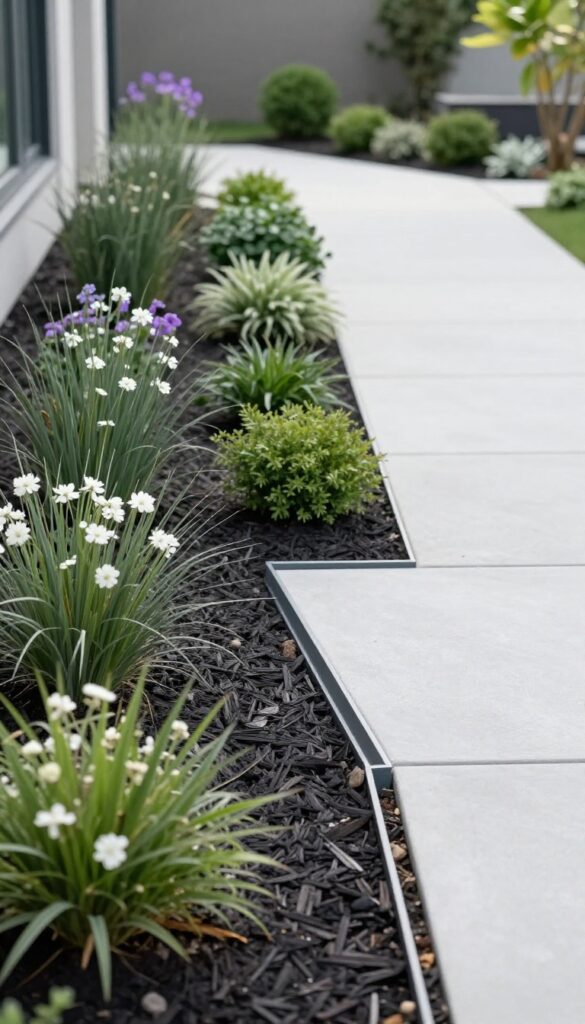
Busy beds don’t suit every home style. For modern exteriors, a minimalist flower bed with clean edges and limited plant types looks far more impressive.
I personally love this approach on contemporary houses. It feels calm, intentional, and just sharp.
Why This Works
Minimalism emphasizes form and structure. Fewer plant varieties create stronger visual impact.
Clean lines also make maintenance easier. You manage fewer species and shapes.
How to Do It
- Use straight edging materials like metal or concrete. Crisp lines matter here.
- Limit plant selection to 2–3 species. Repetition strengthens the design.
- Incorporate architectural plants like ornamental grasses or structured shrubs.
- Keep mulch uniform and tidy.
Consistency is what makes minimalist beds look high-end.
Style & Design Tips
Stick to a restrained color palette like white, green, and soft purple. Too many bright tones clash with modern design.
Avoid mixing too many textures. Let one bold texture shine.
Pro Tip or Budget Hack
Start small and expand gradually. A focused minimalist bed costs less upfront and still looks deliberate.
8. Flower Bed Around a Mailbox
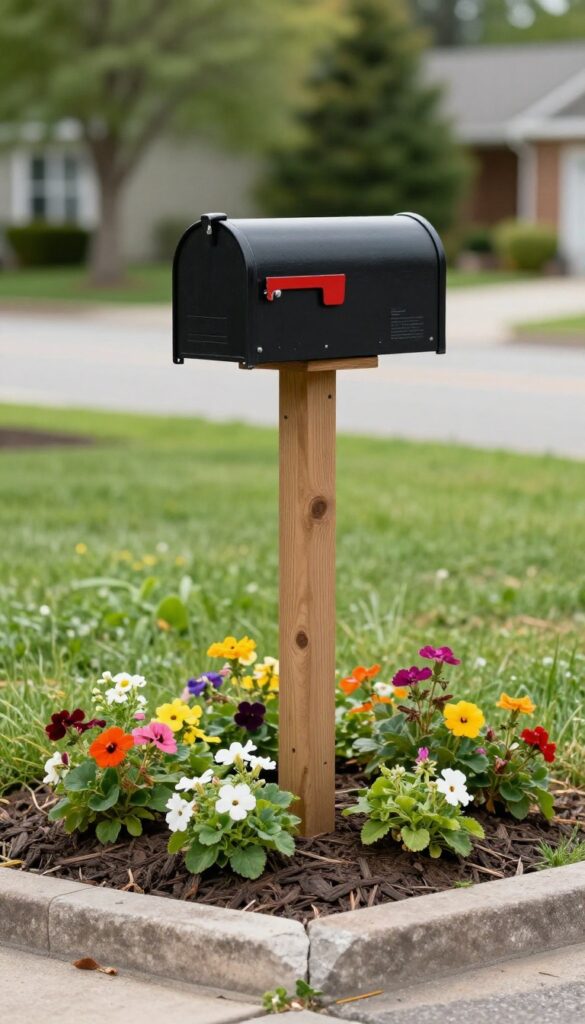
A lonely mailbox in a patch of grass feels unfinished. Wrapping a small flower bed around it turns an overlooked corner into a charming feature.
I didn’t think mailbox beds mattered until I saw one done right. It subtly upgrades the whole street view.
Why This Works
It adds personality to a space that’s usually ignored. Small details elevate overall curb appeal.
It also softens hard metal or wood with color and texture.
How to Do It
- Create a small circular or square border around the base. Keep it proportionate.
- Choose low-growing flowers so the mailbox remains visible.
- Add edging to prevent grass invasion.
- Refresh mulch regularly for a clean look.
Keeping it simple avoids clutter in a small space.
Style & Design Tips
Pick hardy plants that handle road exposure and occasional salt. Durability matters here.
Avoid tall shrubs that block visibility from the street.
Pro Tip or Budget Hack
Use leftover plants from larger beds to fill this space. It’s an easy way to reuse extras.
9. Mixed Shrub and Flower Border for Depth
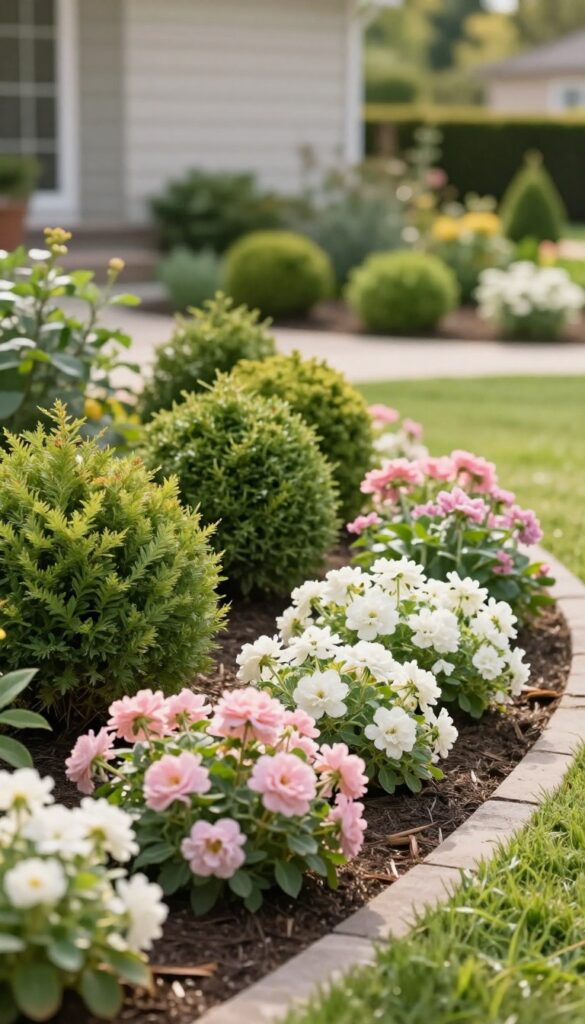
Flat flower-only beds sometimes lack dimension. Mixing shrubs with flowering plants creates a fuller, layered appearance that feels professionally designed.
I’ve noticed that even one or two shrubs can change the entire look. They add structure that flowers alone can’t provide.
Why This Works
Shrubs provide year-round form, even when flowers fade. That keeps the yard from looking empty in off seasons.
The height variation adds depth, making the space look larger.
How to Do It
- Plant shrubs first to establish structure. They act as the backbone.
- Fill gaps with flowering perennials around them.
- Maintain spacing so shrubs can grow properly.
- Prune regularly to keep shapes defined.
Starting with structure prevents the bed from feeling chaotic.
Style & Design Tips
Choose evergreen shrubs for consistent greenery. They keep the yard lively in winter.
Avoid random placement. Group plants intentionally in clusters.
Pro Tip or Budget Hack
Buy smaller shrubs and let them grow in. They’re cheaper and adapt better to your soil.
Final Thoughts
Strong flower beds rely more on planning than plant quantity. Structure, layering, and proportion matter far more than exotic varieties.
Start with one area and refine it before expanding. Once you see how much impact a well-designed bed makes, it’s hard not to keep going.