10 Brown Bedroom Ideas for Cozy Vibes
Brown works because it grounds a room instantly and hides visual chaos better than almost any other color.
Bedrooms often feel disconnected when every surface competes for attention, and brown fixes that without trying too hard.
Warm neutrals create comfort through contrast, not decoration. When used intentionally, brown turns a basic bedroom into a layered, cozy space that feels calm instead of flat.
1. Layered Brown Bedding for Instant Warmth

Most bedrooms look unfinished because the bed feels like an afterthought instead of the main event. A single comforter in a safe neutral might work, but it rarely feels cozy. Layering different shades of brown across your bedding adds depth without overwhelming the room, and it makes the bed look styled instead of accidental.
I’ve tried the all-white hotel look before, and it lasted about three days before it felt cold and high-maintenance. Switching to layered taupe, mocha, and chocolate tones completely changed the vibe without buying new furniture.
Why This Works
Brown shades naturally blend, so layering them feels intentional rather than busy. The subtle contrast between light and dark tones creates dimension, which makes the bed look plush and inviting.
Texture does most of the heavy lifting here. When you combine linen, cotton, and knit throws in similar tones, the bed feels rich even if the pieces are affordable.
How to Do It
- Start with a light brown or beige fitted sheet to create a soft base.
- Add a medium-toned duvet or comforter for contrast.
- Fold a darker brown throw blanket across the foot of the bed.
- Layer 3–5 pillows in slightly different brown shades and textures.
Each layer builds visual warmth, so avoid matching everything exactly.
Style & Design Tips
Mix matte and slightly textured fabrics instead of glossy finishes. A shiny brown satin duvet can look dated fast, while soft weaves feel timeless.
Avoid using the exact same brown tone across every piece. The goal is variation, not monotony.
Pro Tip or Budget Hack
If buying a full bedding set feels expensive, just add a chunky brown knit throw and two darker pillow covers. That small upgrade can completely transform a basic neutral bed.
2. Chocolate Brown Accent Wall Behind the Bed
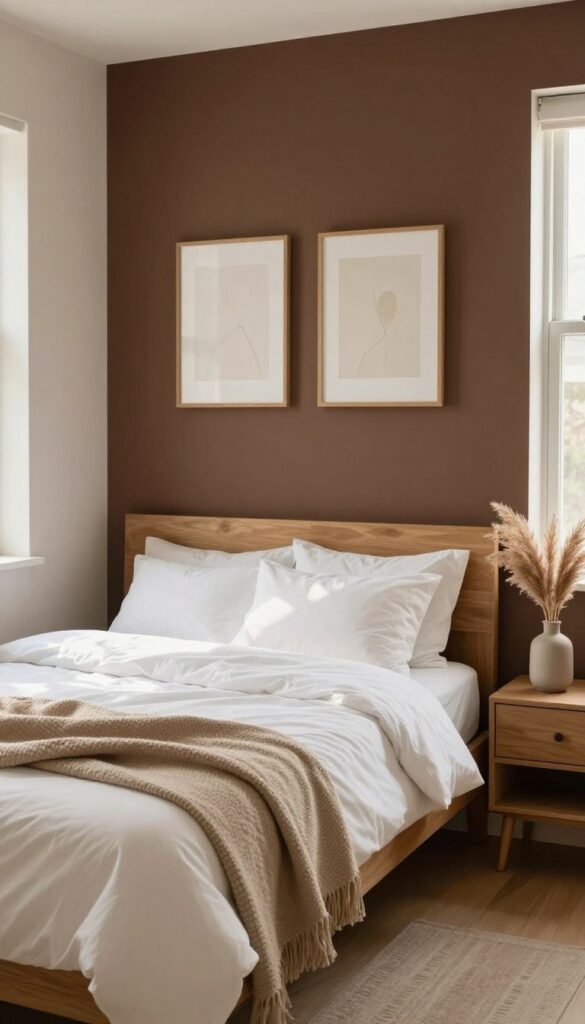
Blank bedroom walls often make the space feel unfinished or temporary. Painting one wall in a deep chocolate brown creates instant structure and gives the room a focal point.
I hesitated before trying this because dark walls can feel risky, but behind the bed, it actually made the room look larger and more intentional.
Why This Works
A darker wall recedes visually, which adds depth instead of shrinking the room. When placed behind the bed, it anchors the furniture and frames the headboard naturally.
Brown also pairs easily with creams, whites, and warm woods, so it won’t clash with existing pieces.
How to Do It
- Choose a rich, warm chocolate brown instead of a gray-toned brown.
- Paint only the wall behind the bed to keep balance.
- Keep the other walls light to prevent the room from feeling heavy.
- Add simple wall art in light frames for contrast.
Placement matters here. Center the bed on the wall for symmetry.
Style & Design Tips
Pair the wall with crisp white or beige bedding to create contrast. Dark-on-dark can work, but only if you introduce texture.
Avoid cool undertones in nearby décor, or the brown can look muddy instead of warm.
Pro Tip or Budget Hack
If painting feels like too much commitment, use peel-and-stick wallpaper in a subtle brown texture. It gives the same effect without the long-term pressure.
3. Wooden Furniture with Mixed Brown Tones
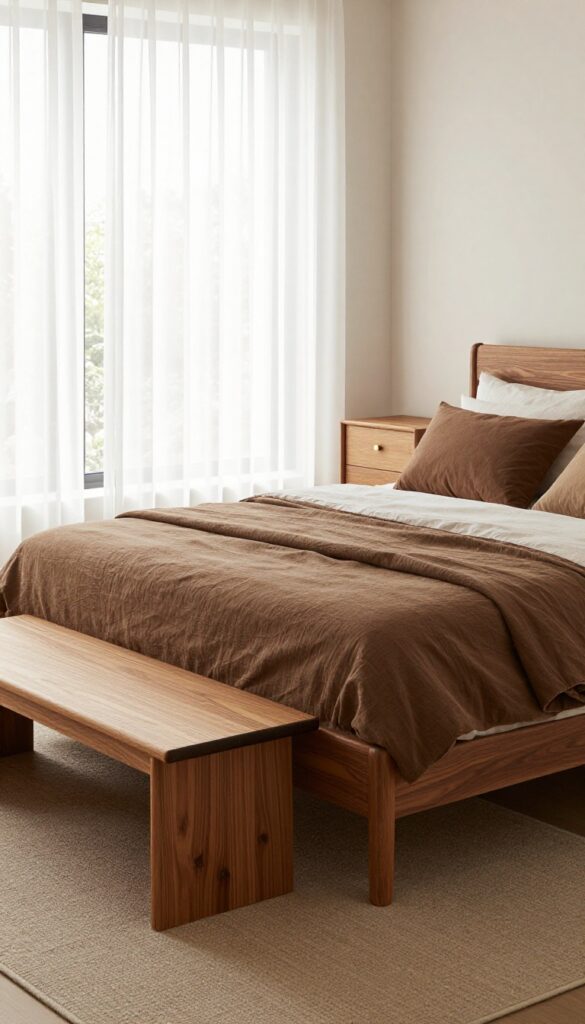
Matching bedroom sets used to be the default, but they often make a room feel flat. Mixing different wood finishes in brown tones creates character and depth without looking chaotic.
I once replaced a perfectly matched dresser just to break up the monotony, and honestly, it was worth it.
Why This Works
Natural wood already contains variation, so combining walnut, oak, and espresso tones feels organic. The key is staying within warm brown families.
This approach keeps the room visually interesting while maintaining cohesion.
How to Do It
- Choose one dominant wood tone for larger pieces like the bed frame.
- Introduce a slightly lighter or darker brown for nightstands.
- Add a small accent piece, like a bench or stool, in a third tone.
- Keep hardware finishes consistent to tie everything together.
Balance prevents the room from feeling mismatched.
Style & Design Tips
Avoid pairing warm browns with very cool gray woods. That contrast can look accidental rather than curated.
Use rugs or textiles to soften transitions between wood tones.
Pro Tip or Budget Hack
Thrift stores often carry solid wood furniture that can be refinished in a custom brown stain. A little sanding and staining can give you a high-end look for less.
4. Brown Leather or Faux Leather Headboard
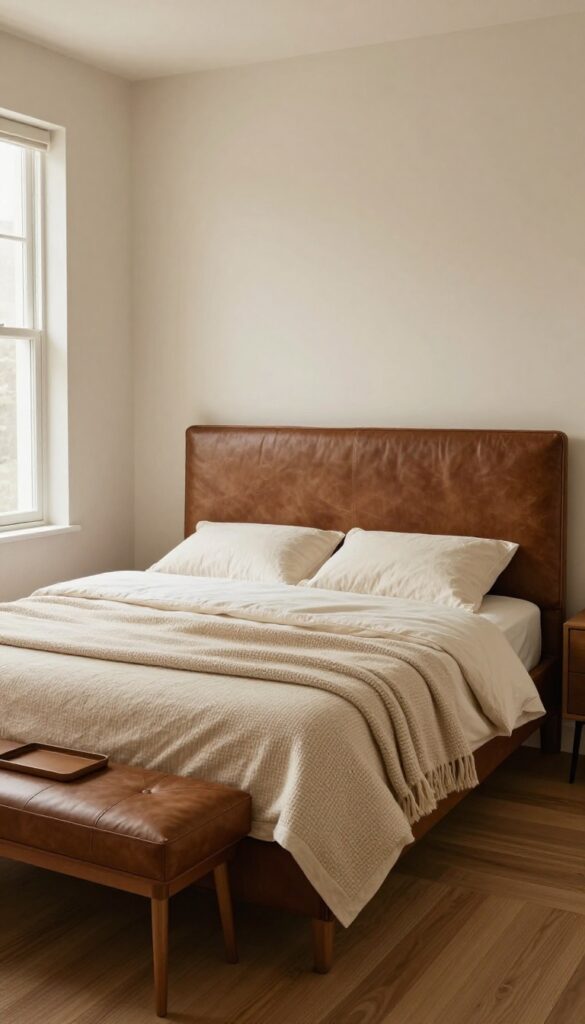
A basic fabric headboard sometimes disappears into the wall. A brown leather or faux leather headboard adds texture and makes the bed feel grounded.
I didn’t expect such a small change to make such a big difference, but the leather instantly made the space feel more elevated.
Why This Works
Leather adds richness without adding clutter. The material reflects light subtly, which keeps dark brown from feeling too heavy.
It also pairs beautifully with soft textiles, creating contrast.
How to Do It
- Choose a medium to dark brown leather tone.
- Keep the headboard design simple for a modern look.
- Pair with lighter bedding for balance.
- Add matching leather details, like a small bench or tray.
Keep proportions in mind so the headboard doesn’t overwhelm the room.
Style & Design Tips
Avoid overly shiny finishes, which can look synthetic. Matte or lightly textured leather feels more natural.
Pair leather with woven throws to soften the look.
Pro Tip or Budget Hack
Faux leather options are often more affordable and easier to maintain. Many look surprisingly realistic, especially in deeper brown shades.
5. Brown Curtains for Soft Framing
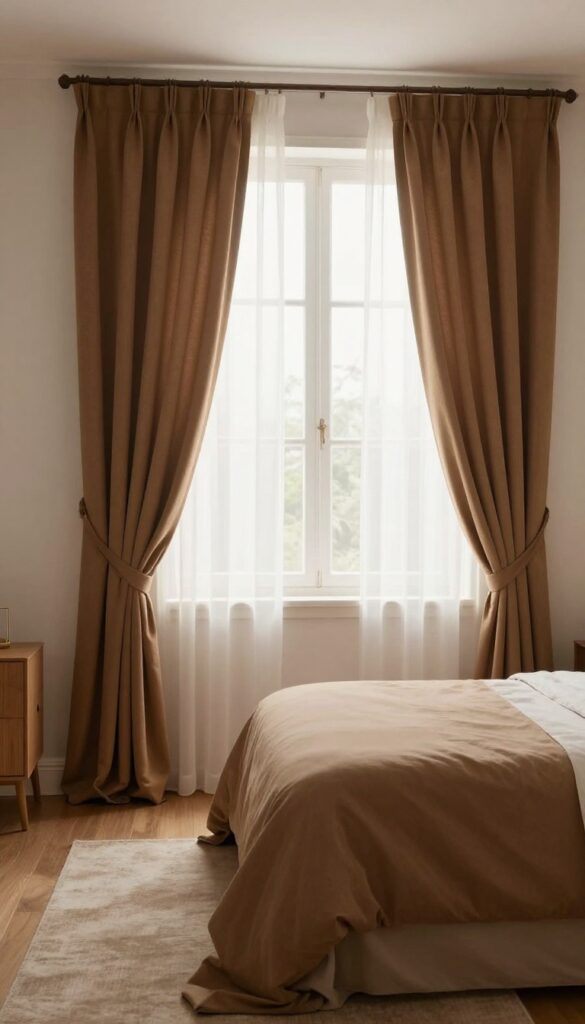
Windows without proper framing can make a bedroom feel incomplete. Brown curtains add warmth and define the vertical space without feeling dramatic.
I used to default to white curtains, but switching to warm brown instantly made the room feel cozier.
Why This Works
Curtains frame the bed visually, especially when placed behind it. Brown tones soften incoming light and add depth.
They also connect other brown elements across the room.
How to Do It
- Choose a warm brown fabric with some weight.
- Hang the curtain rod higher than the window frame.
- Let the curtains graze the floor.
- Keep tiebacks simple or skip them entirely.
Proper placement makes the room look taller.
Style & Design Tips
Avoid very thin fabrics if privacy matters. Layering sheer and heavier brown curtains works beautifully.
Stick to solid colors if the room already has texture elsewhere.
Pro Tip or Budget Hack
Buy longer curtain panels and hem them yourself. Custom height always looks more expensive than standard sizing.
6. Brown Area Rug to Anchor the Room
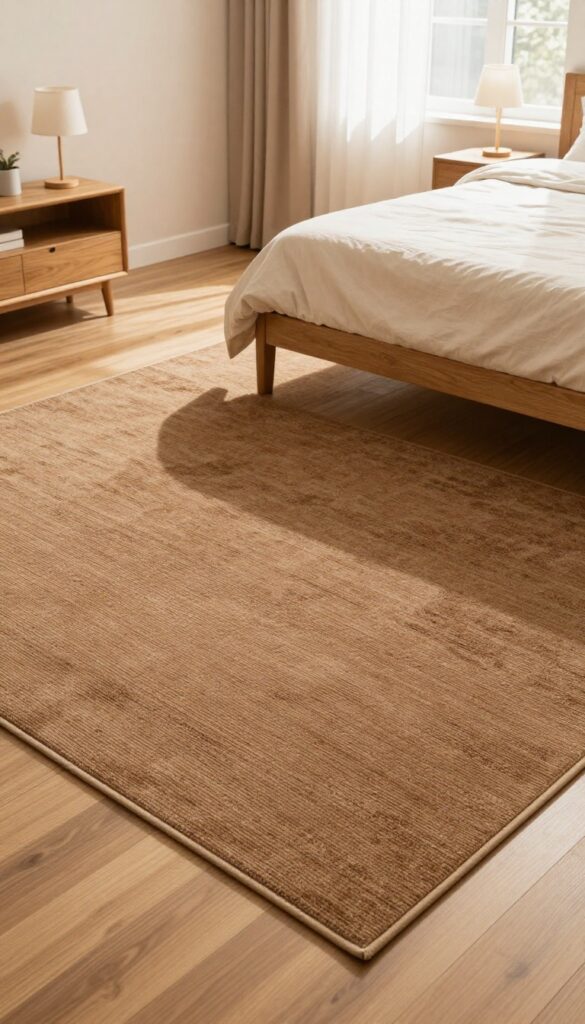
Hard floors can make a bedroom feel cold. A brown area rug instantly softens the space and ties furniture together.
The first time I added a large rug under the bed, I realized how unfinished the room looked before.
Why This Works
A rug visually connects the bed, nightstands, and other furniture pieces. Brown hides wear better than lighter rugs.
It also adds texture underfoot, which makes the room feel layered.
How to Do It
- Choose a rug large enough to extend beyond the bed on both sides.
- Center it under the bed for symmetry.
- Pick a tone that complements your furniture.
- Use a rug pad for comfort and safety.
Size matters more than pattern here.
Style & Design Tips
Subtle patterns in brown tones can add interest without overwhelming the room. Avoid overly busy designs.
Keep the rug slightly darker than the walls for grounding.
Pro Tip or Budget Hack
Check clearance sections for oversized rugs. A high-quality neutral rug often gets discounted because it’s less trendy.
7. Brown Throw Pillows for Easy Updates
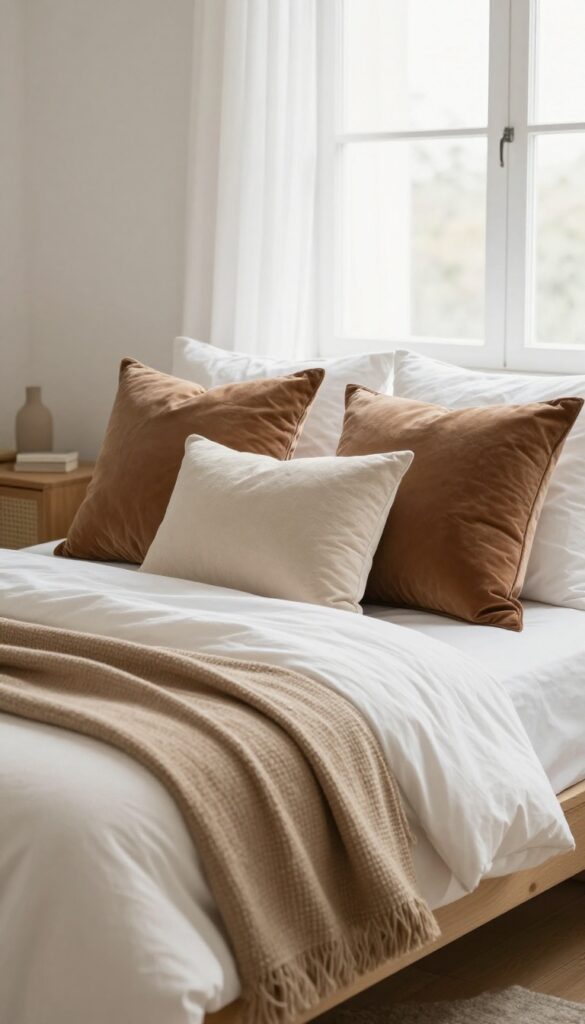
Sometimes a bedroom doesn’t need a full makeover. Swapping out throw pillows for brown ones can instantly shift the mood.
It’s the easiest change I’ve made that still felt intentional.
Why This Works
Pillows add color and texture without permanent commitment. Brown tones blend easily with most palettes.
They also create a cohesive thread across bedding and furniture.
How to Do It
- Choose 2–3 brown pillow covers in different textures.
- Mix light and dark shades.
- Arrange larger pillows in back, smaller in front.
- Avoid overloading the bed.
Balance keeps it from feeling cluttered.
Style & Design Tips
Stick with warm browns if your walls lean warm. Cool browns can clash subtly.
Add one contrasting neutral pillow for dimension.
Pro Tip or Budget Hack
Buy pillow covers instead of full pillows. You can reuse inserts and switch covers seasonally.
8. Brown Nightstands with Warm Lighting
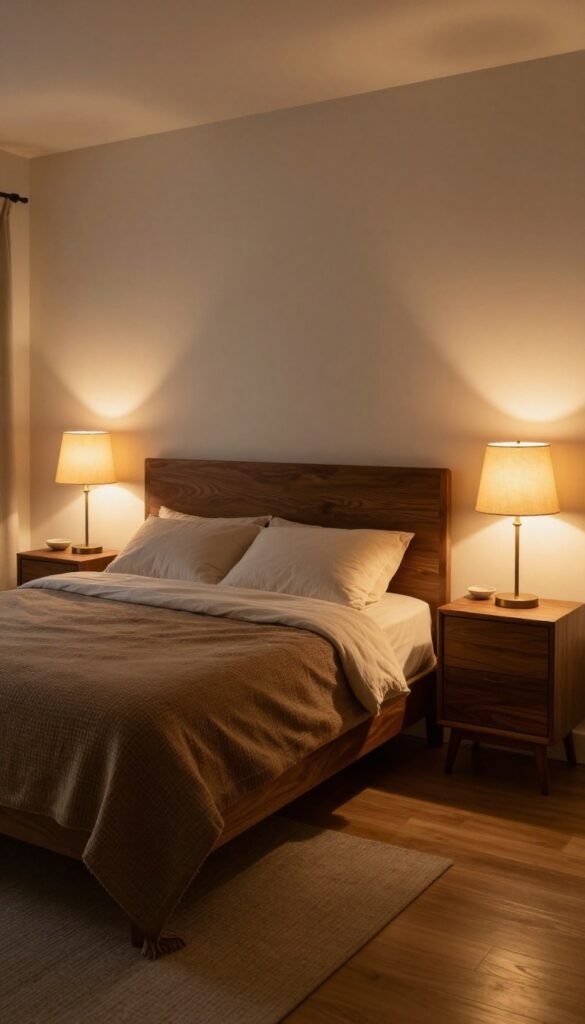
Cold white lighting can cancel out cozy décor instantly. Brown nightstands paired with warm bulbs create a soft glow that feels inviting.
I learned this the hard way after using bright white bulbs that made everything look sterile.
Why This Works
Brown absorbs and reflects warm light beautifully. Combined with soft bulbs, it enhances depth.
Lighting affects mood more than people realize.
How to Do It
- Choose warm LED bulbs around 2700K.
- Use brown or wood-finish nightstands.
- Add simple lamps with fabric shades.
- Keep surfaces uncluttered.
Simplicity keeps the look refined.
Style & Design Tips
Avoid chrome or overly cool metallic finishes nearby. Warm metals complement brown better.
Use matching lamps for symmetry.
Pro Tip or Budget Hack
Switching bulbs costs less than buying new décor. That small change can transform the entire vibe.
9. Brown Wall Art Frames for Subtle Cohesion
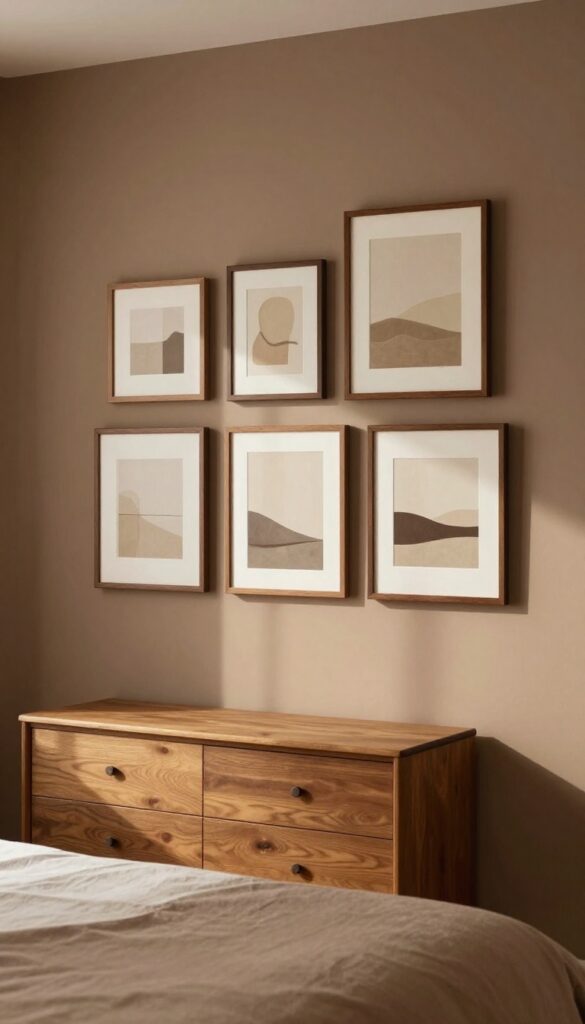
Random frame colors can break visual flow. Using brown frames ties artwork into the overall palette.
I swapped out black frames for warm wood ones, and the room instantly felt softer.
Why This Works
Frames act like outlines for your walls. Brown keeps them subtle and cohesive.
It blends with wood furniture naturally.
How to Do It
- Choose similar brown tones for all frames.
- Mix frame sizes but keep spacing consistent.
- Use neutral artwork for balance.
- Hang at eye level for best proportion.
Consistency creates harmony.
Style & Design Tips
Avoid overly ornate frame designs. Clean lines keep the look modern.
Pair frames with a darker accent wall for contrast.
Pro Tip or Budget Hack
Spray-paint mismatched frames in the same brown tone. It’s an easy way to create uniformity without buying new ones.
10. Brown Accent Bench at the Foot of the Bed
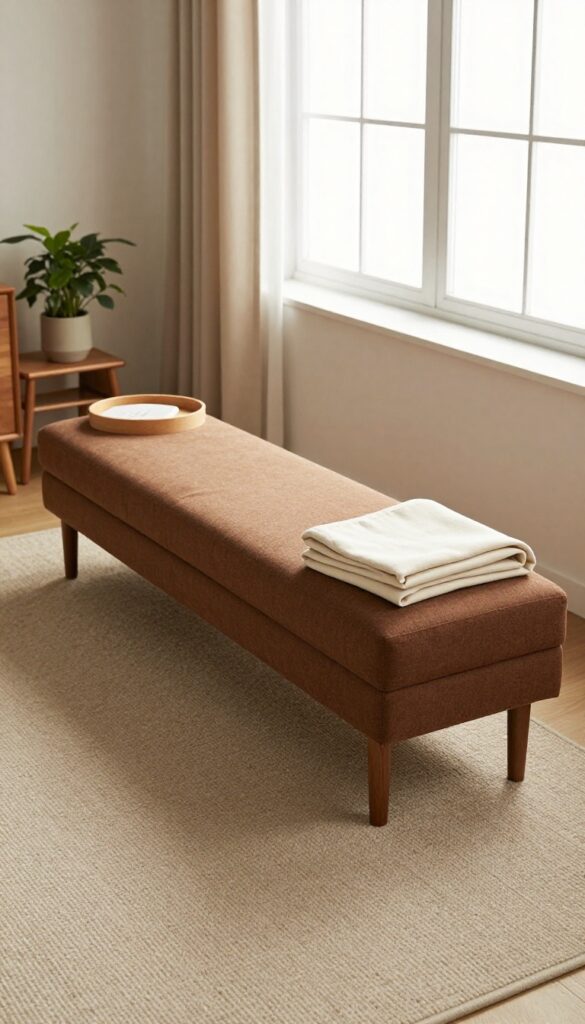
The foot of the bed often feels empty or underused. A brown bench adds function and visual weight.
I added one mostly for practicality, but it quickly became one of my favorite pieces.
Why This Works
A bench creates balance and finishes the bed area. Brown tones ground the space.
It also provides seating and storage in smaller rooms.
How to Do It
- Choose a bench slightly narrower than the bed.
- Opt for a brown upholstered or wooden style.
- Leave enough walking space around it.
- Style with a folded throw or tray.
Function and style should work together.
Style & Design Tips
Avoid bulky designs in small rooms. Sleek profiles look cleaner.
Match the bench tone loosely to other brown elements.
Pro Tip or Budget Hack
Storage benches give you hidden space for blankets. That dual-purpose design makes the investment worthwhile.
Final Thoughts
Brown isn’t boring when it’s layered thoughtfully and paired with texture. It brings warmth, depth, and balance without demanding attention.
Small changes often make the biggest difference. Start with one idea, test it, and build from there until the room feels like it finally makes sense.