9 Open Concept Living Room Ideas That Feel Seamless
Open layouts work best when everything feels intentional instead of randomly placed. When a living room blends into other spaces without clear boundaries, small design choices suddenly matter a lot more.
The difference between “open and airy” and “why does this feel messy?” usually comes down to flow, balance, and a little restraint.
I’ve seen plenty of open spaces that looked great in photos but felt awkward in real life. Furniture floated oddly, rugs fought for attention, and nothing felt anchored.
The good news is that fixing those problems doesn’t require a renovation or a designer budget, just smarter choices and a bit of planning.
Below are the ideas I’ve personally used, tested, or learned the hard way. Some are practical, some are visual tricks, and a few will save you from buying things you’ll regret later.
1. Use Area Rugs to Quietly Define Zones
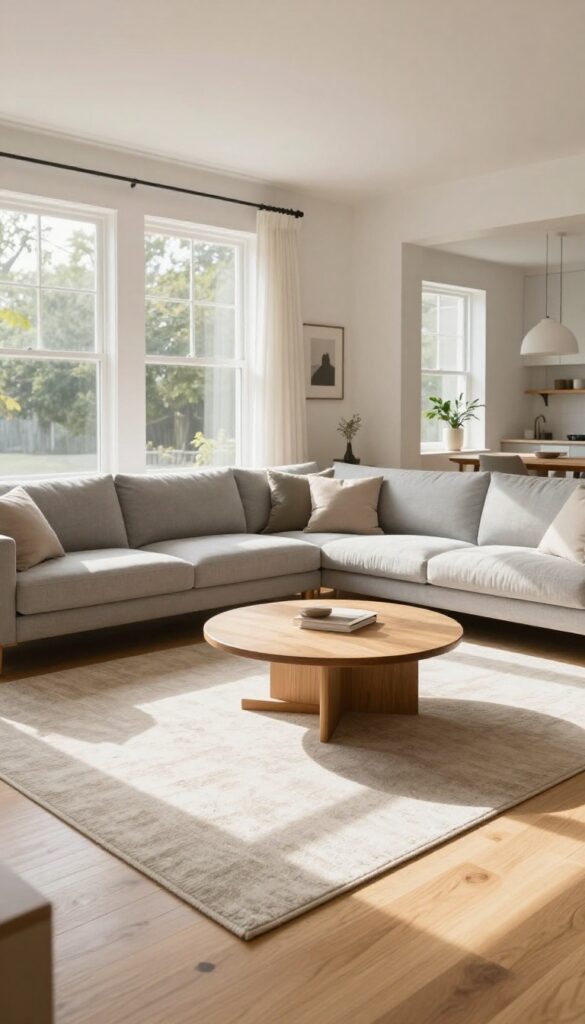
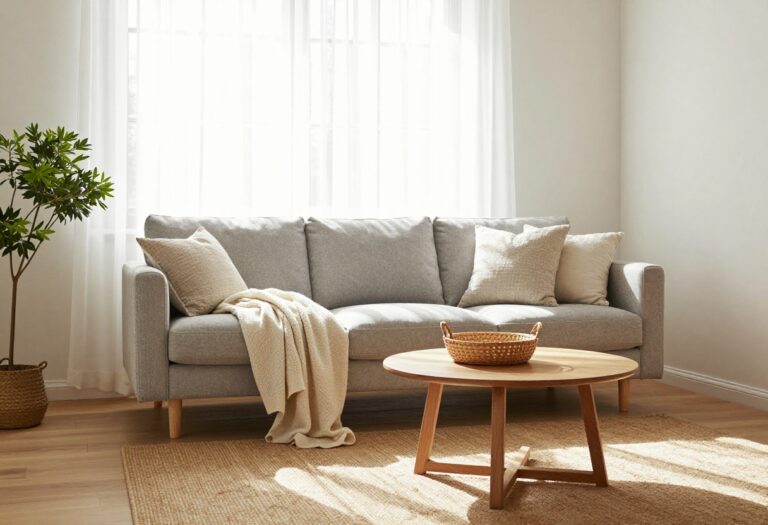
Open layouts can feel chaotic when every space blends together without structure. A rug gives your living room an invisible boundary without blocking sightlines or making the space feel smaller.
It’s one of the easiest ways to tell your brain, “this is the living area,” without saying it out loud.
I used to think rugs were just decorative until I lived in an open-plan apartment where everything felt like one long hallway.
The moment I added a properly sized rug under the sofa and coffee table, the room finally made sense. It grounded the furniture and made the space feel intentional instead of temporary.
Why This Works
Rugs create visual separation while keeping airflow and light uninterrupted. They also help anchor furniture so pieces don’t look like they’re floating around randomly.
Your eye naturally reads the rug as a “room,” even when walls aren’t there. That sense of structure makes the whole space feel calmer and more organized.
How to Do It
- Choose a rug large enough that at least the front legs of furniture sit on it
- Center the rug under your main seating area
- Keep the edges aligned with major furniture pieces
- Avoid rugs that are too small, even if they’re cheaper
Style & Design Tips
Neutral rugs work best in open spaces because they don’t compete with nearby areas. Subtle patterns hide wear while still adding interest. Avoid high-contrast designs if your space already has a lot going on.
Pro Tip or Budget Hack
If rugs are expensive where you live, try layering a smaller patterned rug over a large neutral base rug. You get the visual effect without paying for a massive statement piece.
2. Let Furniture Placement Do the Dividing
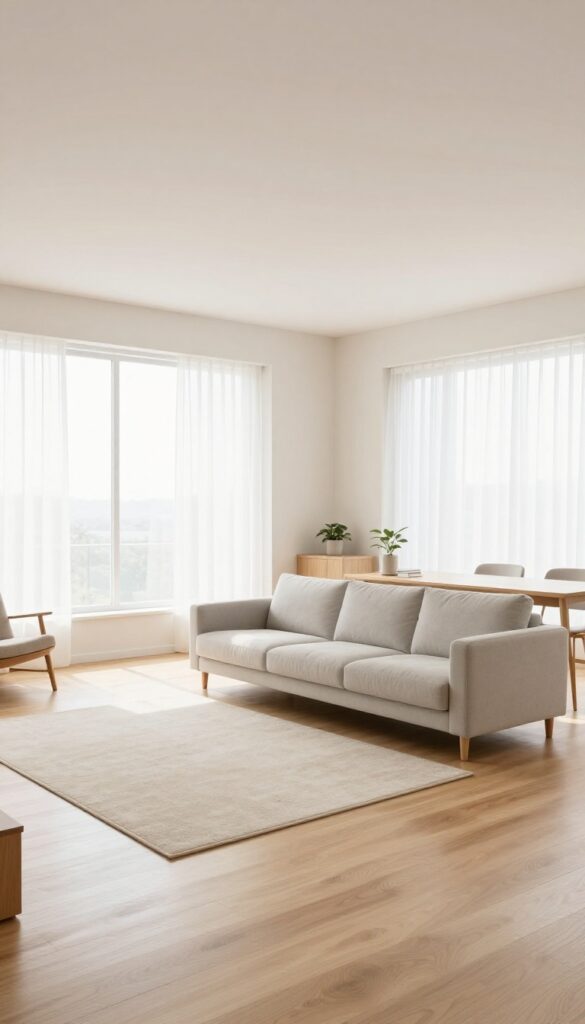
Walls aren’t the only way to separate spaces. Furniture can do the job just as well, and often better, because it keeps things flexible. A sofa placed the right way can define your living room without closing it off.
I once pushed my couch flush against a wall because it felt “correct.” The room felt awkward and empty. Turning it around to face the space instead instantly created a natural boundary and made everything feel more intentional.
Why This Works
Furniture naturally guides movement and sightlines. When placed thoughtfully, it separates areas without blocking light or making things feel cramped.
This approach works especially well in apartments or homes where walls aren’t an option.
How to Do It
- Float the sofa instead of pushing it against a wall
- Use the back of the couch to separate living and dining areas
- Add a console table behind the sofa for structure
- Keep walkways clear and logical
Style & Design Tips
Low-profile furniture keeps the space open and airy. Avoid bulky backs or tall frames that visually cut the room in half.
Pro Tip or Budget Hack
If your sofa looks unfinished from the back, throw a slim console table or bench behind it. It adds function and makes the layout look intentional.
3. Keep a Consistent Color Palette Across Spaces
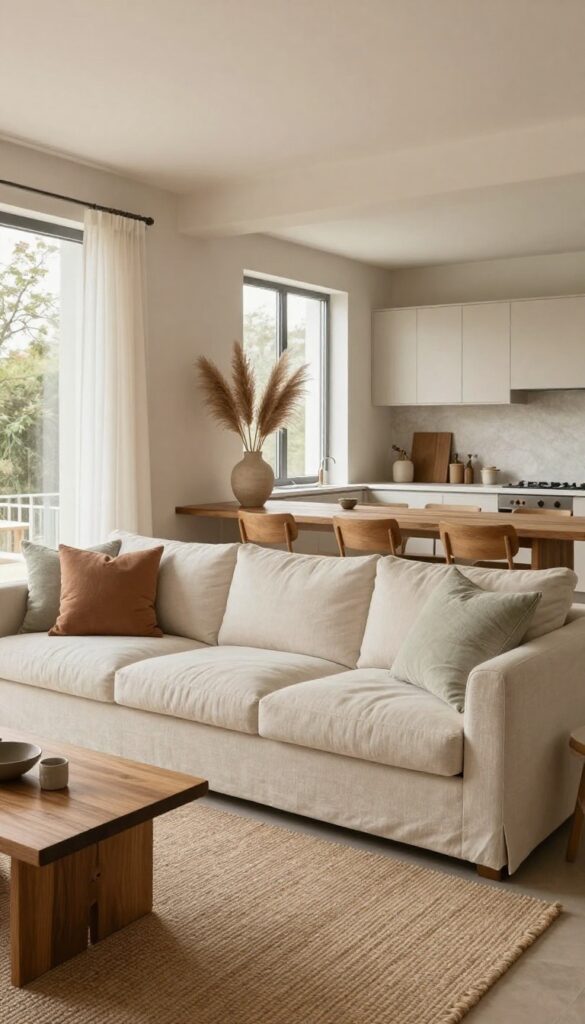
Color chaos is one of the fastest ways to ruin an open concept layout. When every area uses a different palette, the space feels chopped up instead of cohesive. A shared color story makes everything flow naturally.
This doesn’t mean everything has to match perfectly. It just means your colors should talk to each other instead of arguing.
Why This Works
A consistent palette creates visual continuity, which is key in open layouts. Your eye moves smoothly from one area to the next without feeling interrupted.
It also makes decorating easier because you’re working within a defined range.
How to Do It
- Choose 2–3 main colors and repeat them throughout
- Use different shades of the same color for depth
- Keep large furniture neutral and layer color in accessories
Style & Design Tips
Warm neutrals work well for open spaces because they’re forgiving and timeless. If you love bold color, use it sparingly in pillows, art, or decor.
Pro Tip or Budget Hack
If your rooms already have different colors, tie them together with matching throw pillows or art frames. Small repeats make a big difference.
4. Use Lighting to Create Visual Zones
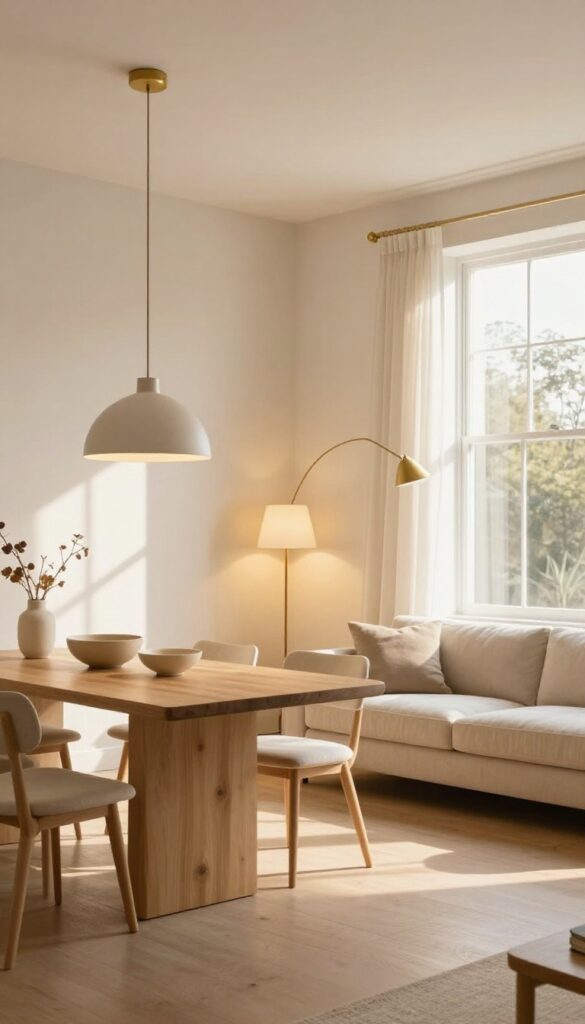
Lighting does more than brighten a room. It quietly tells people how a space should be used. In open layouts, lighting is one of the most powerful tools you have.
I learned this after relying on one overhead light for an entire open space. Everything felt flat and unfinished until I added layered lighting.
Why This Works
Different lighting levels create visual separation without physical barriers. They also make spaces feel warmer and more intentional.
Good lighting guides the eye and sets the mood for each area.
How to Do It
- Use pendant lights over dining areas
- Add a floor lamp near seating
- Use table lamps for softer corners
- Avoid relying on one overhead fixture
Style & Design Tips
Stick to similar finishes across fixtures so everything feels cohesive. Mixing too many metals can feel chaotic in an open plan.
Pro Tip or Budget Hack
Plug-in wall sconces are a great way to add layered lighting without hiring an electrician.
5. Anchor the Space With a Statement Piece
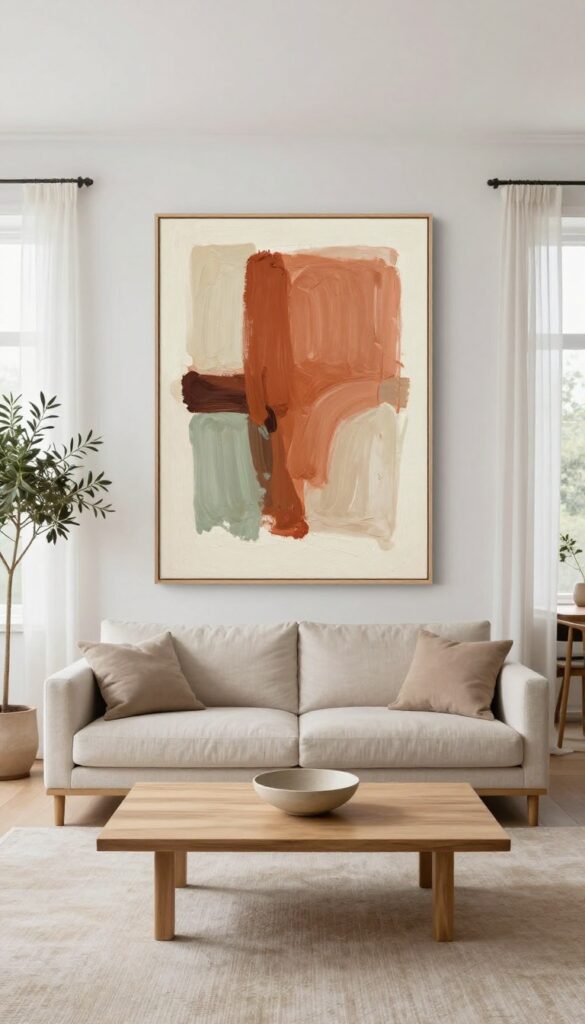
Every open living room needs a focal point. Without one, the space can feel scattered and unfinished. This doesn’t have to be expensive or dramatic, just intentional.
For me, it was a large piece of art that tied everything together. Suddenly the room felt designed instead of thrown together.
Why This Works
A focal point gives the eye somewhere to land. It creates visual order and helps everything else fall into place.
It also prevents the space from feeling cluttered or directionless.
How to Do It
- Choose one bold item per space
- Keep everything else more subdued
- Place it where it’s naturally visible
Style & Design Tips
Large art, a statement sofa, or a bold rug all work well. Avoid using multiple focal points in one area.
Pro Tip or Budget Hack
DIY art or oversized prints can look just as good as expensive pieces when framed well.
6. Keep Storage Built-In or Visually Light
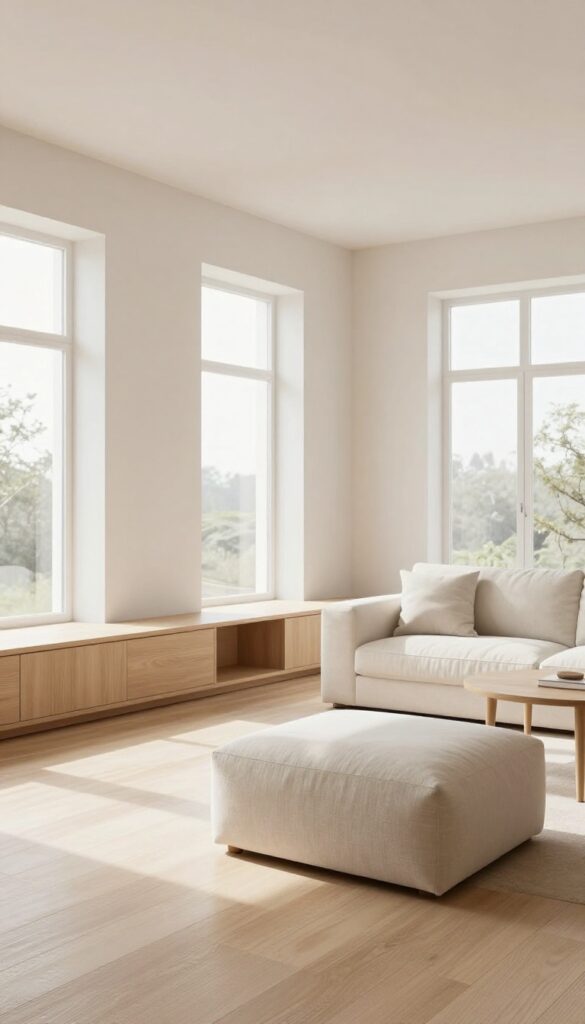
Clutter shows faster in open layouts because there’s nowhere to hide it. Smart storage keeps the space functional without making it feel heavy.
I’ve learned the hard way that too many bulky cabinets make an open space feel smaller than it actually is.
Why This Works
Built-in or low-profile storage keeps visual noise down. It lets the eye move freely across the room.
The cleaner the lines, the more seamless the space feels.
How to Do It
- Choose closed storage over open shelves
- Use furniture with hidden compartments
- Keep everyday clutter out of sight
Style & Design Tips
Stick with light colors or wood tones that match your floors. Avoid overly decorative storage pieces.
Pro Tip or Budget Hack
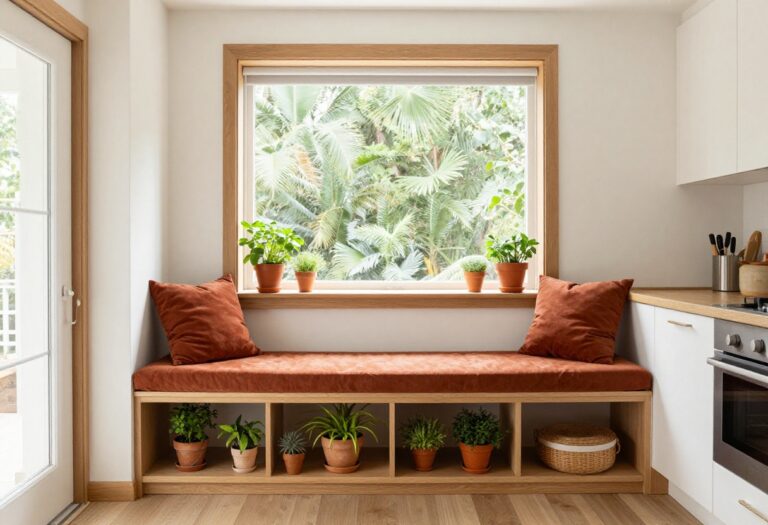
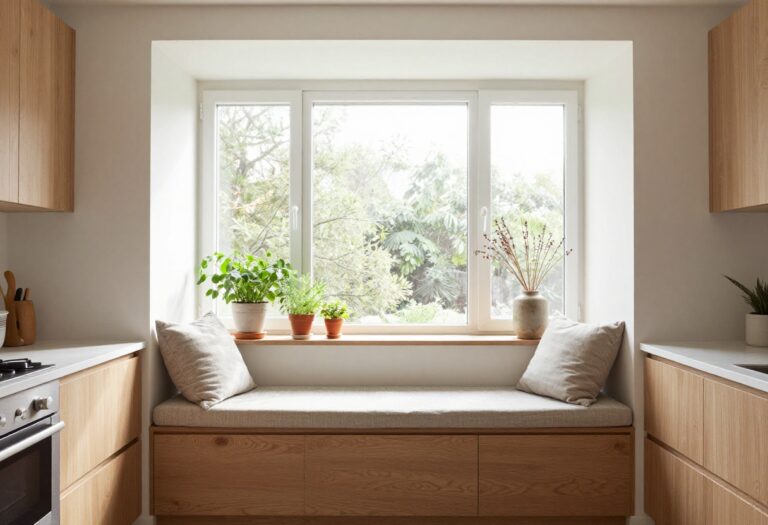
Storage ottomans or benches double as seating and clutter control without taking up extra space.
7. Use Consistent Flooring Throughout
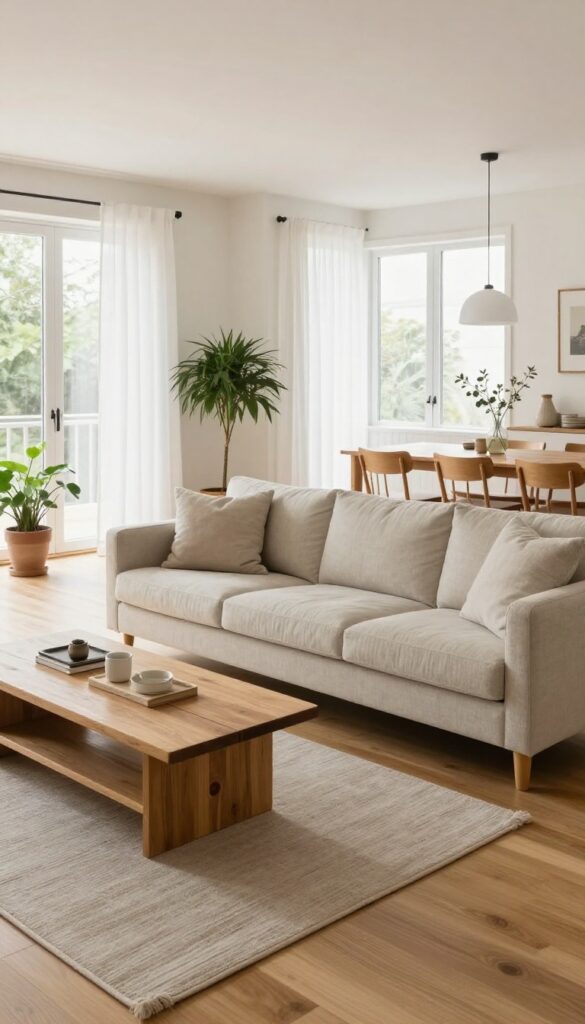
Nothing breaks flow faster than changing floors mid-room. Even a slight shift in material can make the space feel chopped up.
If you’re planning an open layout, consistent flooring should be a top priority.
Why This Works
One continuous floor creates visual flow and makes the space feel larger. It also helps furniture arrangements feel more intentional.
Transitions distract the eye and interrupt movement.
How to Do It
- Use the same flooring across connected spaces
- If not possible, match tones closely
- Avoid harsh transitions or raised thresholds
Style & Design Tips
Light wood or neutral tile works best for open layouts. They reflect light and keep things feeling open.
Pro Tip or Budget Hack
If replacing floors isn’t an option, use large rugs to visually connect different areas.
8. Balance Open Space With Soft Textures
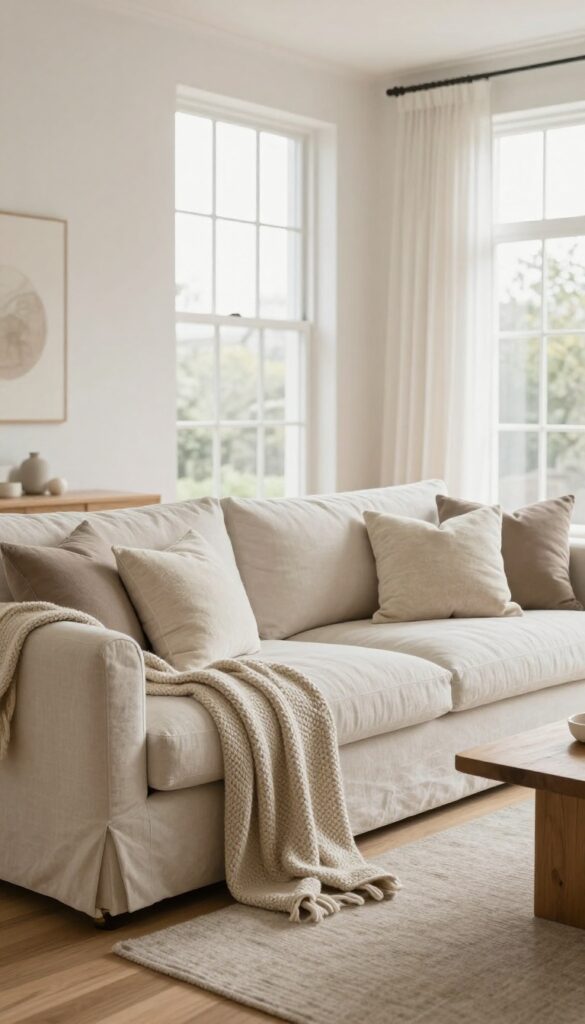
Open rooms can feel cold if everything is hard and sleek. Soft textures add warmth and make the space feel lived-in instead of showroom-like.
This is where throw pillows, curtains, and textiles really shine.
Why This Works
Texture adds depth without clutter. It softens the edges of modern or minimal layouts.
It also makes the space more comfortable and inviting.
How to Do It
- Add cushions, throws, or fabric ottomans
- Use curtains to soften windows
- Mix textures like linen, wool, and wood
Style & Design Tips
Stick to a consistent color family so textures don’t clash. Subtle variation works better than bold contrast.
Pro Tip or Budget Hack
Switching out pillow covers seasonally gives the room a refresh without buying new furniture.
9. Keep Decor Purposeful and Edited
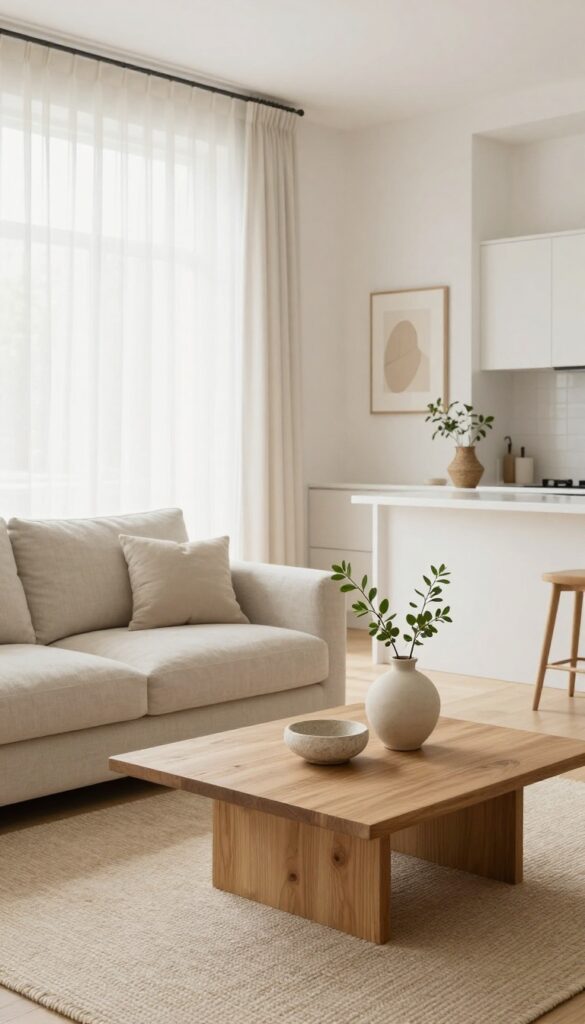
More decor doesn’t mean better design. In open layouts, restraint matters more than creativity.
I’ve found that removing a few items often makes a room look better than adding new ones.
Why This Works
Too many decorative pieces compete for attention. A curated look feels calmer and more intentional.
It also makes cleaning and rearranging easier.
How to Do It
- Limit decor to a few meaningful pieces
- Group items in odd numbers
- Leave negative space on surfaces
Style & Design Tips
Choose decor that adds texture or function, not just visual noise. Every item should earn its place.
Pro Tip or Budget Hack
Rotate decor seasonally instead of displaying everything at once. It keeps the space fresh without extra spending.
Final Thoughts
Open concept living rooms work best when they’re treated like a collection of connected spaces instead of one giant room. Small choices add up fast, and intention matters more than budget. When everything flows naturally, the space feels easy to live in and even easier to enjoy.
If there’s one thing I’ve learned, it’s that less really is more with open layouts. Start simple, adjust as you go, and trust your instincts. Your home should work for you, not the other way around.