9 Gallery Wall Living Room Ideas That Look Curated
A gallery wall usually starts as a practical way to fill empty space, then quickly turns into a design decision that can make or break a room.
Too sparse and it feels unfinished, too crowded and it turns chaotic fast. The sweet spot sits somewhere between intention and flexibility, which is harder to nail than most people expect.
I’ve put together ideas that actually work in real homes, not just styled photoshoots.
These are approaches I’ve tried, tweaked, or seen evolve over time, and they hold up even when life gets messy and tastes change.
1. Balanced Grid With Personality
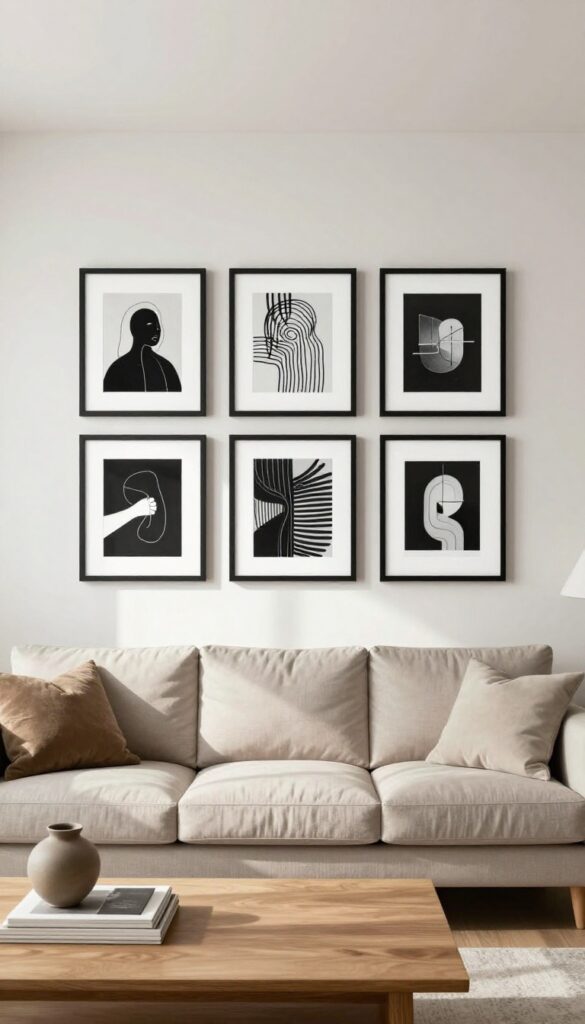
A lot of people like the idea of a clean grid, but they stop short because it feels stiff or too “hotel wall.” The trick is keeping the structure while letting the artwork bring the personality.
This works especially well in living rooms that already have strong furniture lines or symmetrical layouts.
I’ve used this setup in spaces where the sofa anchors everything, and the grid helps keep the wall from feeling chaotic.
It gives order without killing creativity, which is a rare combo. The key is not making every piece match too perfectly.
Why This Works
A grid creates instant visual calm, which helps busy living rooms feel grounded. The eye knows where to go, so even bold art doesn’t overwhelm the space. It also makes future swaps easier because the structure stays consistent.
How to Do It
- Choose frames that match in size or color, not both
- Lay everything out on the floor first
- Keep equal spacing between frames
- Hang the center line at eye level
Style & Design Tips
Mix photography with illustrations to avoid a flat look. Black frames feel modern, while wood tones warm things up quickly. Avoid mixing too many frame finishes or it starts to feel accidental instead of intentional.
Pro Tip or Budget Hack
Buy identical frames in bulk and swap out the art later. Printable art or personal photos work great and cost almost nothing to update.
2. Eclectic Mix With a Focal Anchor
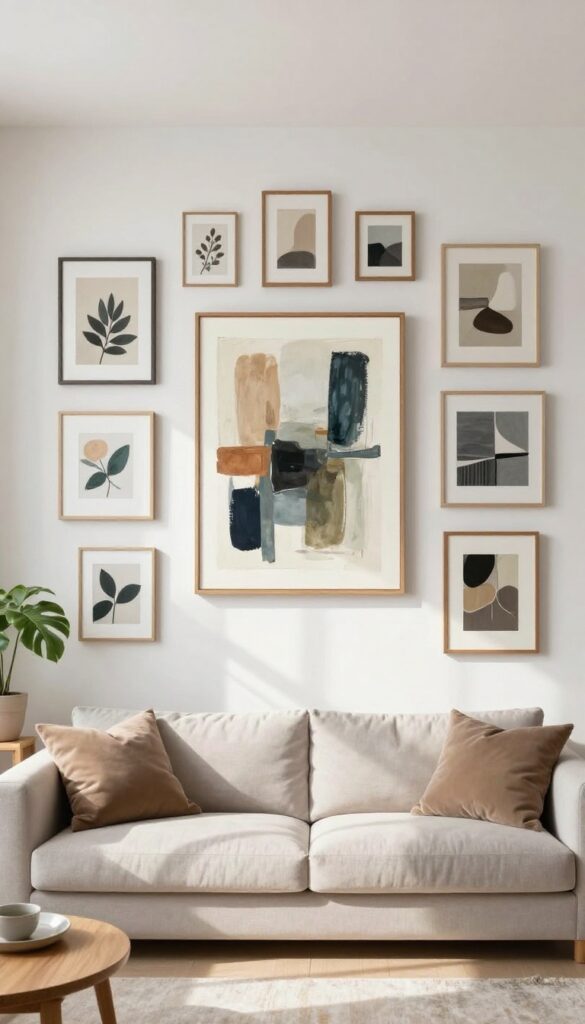
This style works best when you want personality to lead instead of symmetry. One large piece anchors the wall, and everything else supports it without competing. It’s relaxed, layered, and perfect for spaces that feel too polished.
I’ve used this approach in apartments where walls felt boring and needed energy fast. The large piece sets the tone, and the smaller ones feel like conversation starters around it.
Why This Works
The eye naturally lands on the largest piece first, which prevents visual overload. Everything else becomes supporting detail instead of visual noise. It also allows more freedom with frame sizes and styles.
How to Do It
- Start with one oversized artwork
- Place smaller pieces around it organically
- Keep spacing looser than a grid
- Step back often and adjust
Style & Design Tips
Mix textures like canvas, metal, and wood for depth. Stick to one or two color themes so things don’t feel scattered. Avoid lining edges too perfectly or it loses the relaxed vibe.
Pro Tip or Budget Hack
Use removable hooks while experimenting. It saves walls and makes rearranging painless when something feels off.
3. Black and White Photo Wall
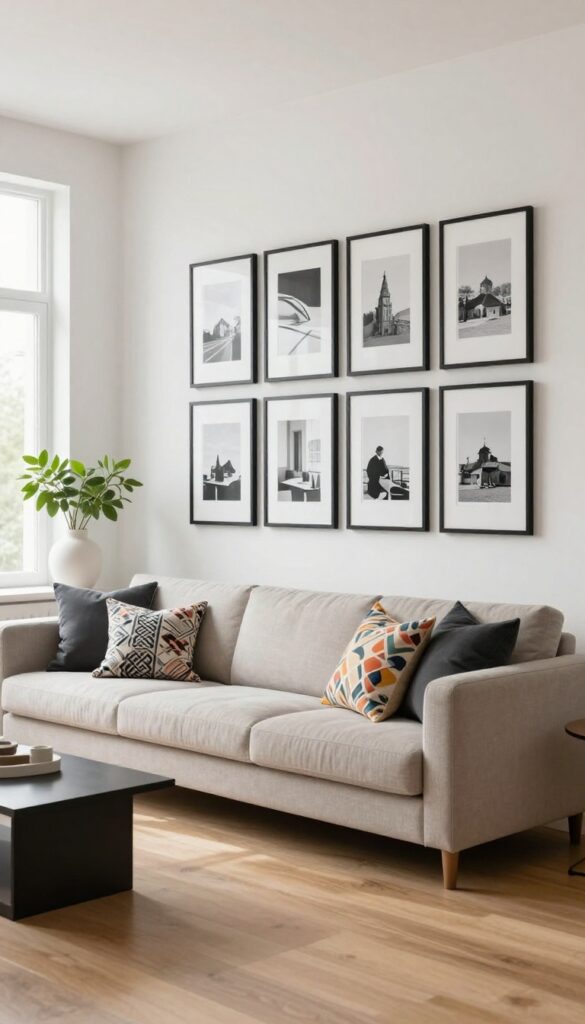
This one never really goes out of style, and for good reason. Black and white photos instantly make a space feel intentional without screaming for attention. It works especially well in modern or minimalist living rooms.
I like this look when furniture already has color or texture going on. The photos calm things down and bring balance back into the room.
Why This Works
Removing color creates cohesion even when photos are completely different. The contrast adds interest without visual chaos. It also makes personal photos feel more timeless.
How to Do It
- Convert all images to black and white
- Use similar frame styles
- Keep spacing consistent
- Mix portraits and landscapes
Style & Design Tips
Matting makes a big difference here. White mats feel clean, black mats feel dramatic. Avoid glossy finishes if glare is an issue in the room.
Pro Tip or Budget Hack
Print photos at home and invest in decent frames instead. The frames do most of the visual work anyway.
4. Leaned Gallery for a Relaxed Look
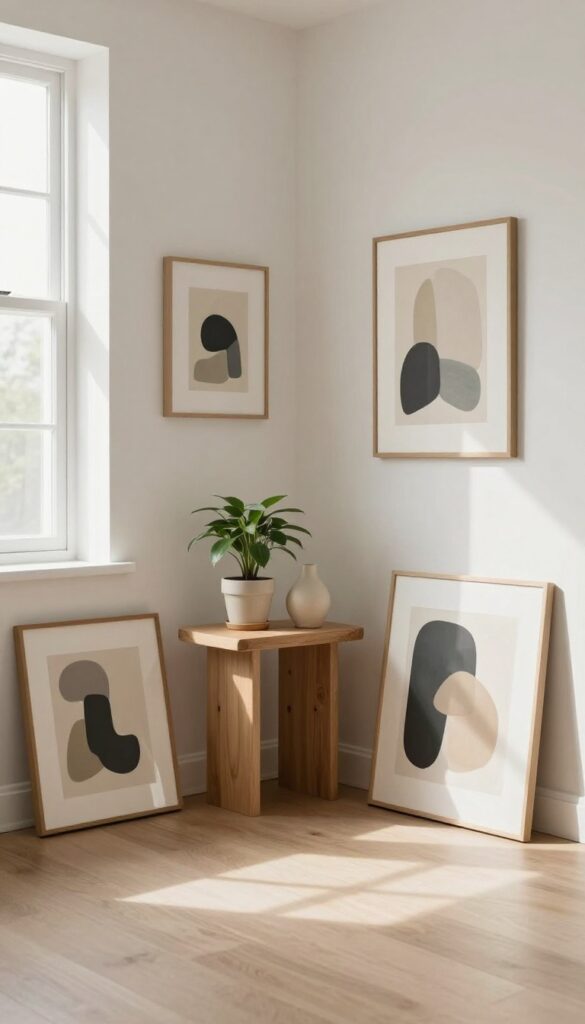
Not every gallery wall needs holes drilled into drywall. Leaned art gives off an effortless, collected feel that works especially well in casual living rooms. It also makes switching things out ridiculously easy.
I started doing this after getting tired of measuring and re-measuring. It’s forgiving and oddly stylish when done with intention.
Why This Works
Leaning frames creates depth and layering without commitment. It also softens the room visually, which helps if your space feels too rigid or formal.
How to Do It
- Use a console table or low shelf
- Lean larger pieces in the back
- Layer smaller ones in front
- Slightly overlap edges
Style & Design Tips
Mix frame heights but keep colors consistent. Avoid stacking too many items or it starts looking cluttered. Add one small object like a plant or sculpture for balance.
Pro Tip or Budget Hack
Use inexpensive poster frames for large pieces. They’re lighter and easier to swap when tastes change.
5. Color-Coordinated Gallery Wall
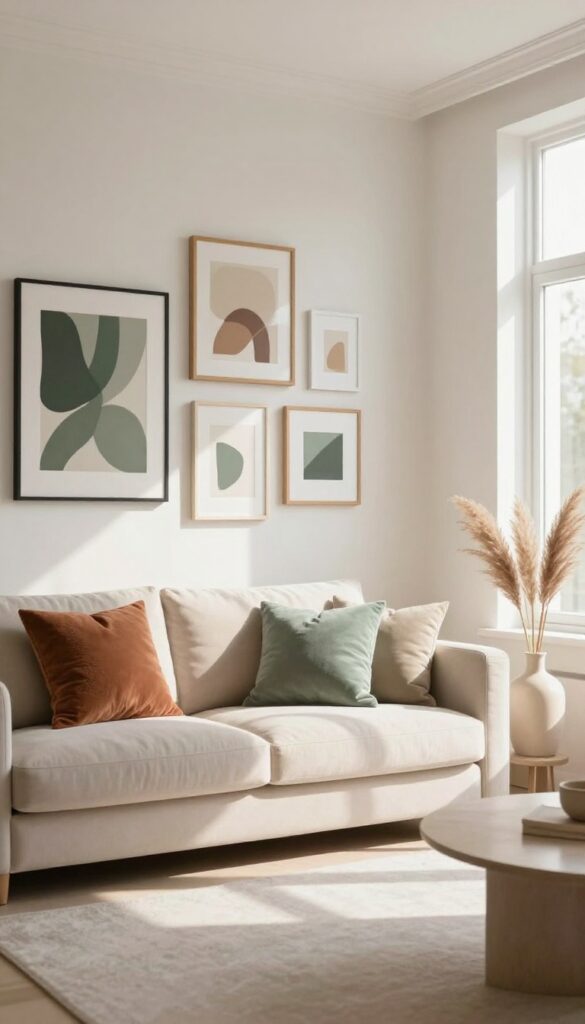
This approach works wonders if your living room already follows a color palette. Instead of matching frames, you match tones inside the artwork. The result feels intentional without being matchy.
I’ve used this in rooms where the furniture was neutral but the decor needed life. The wall became the personality without overwhelming the space.
Why This Works
Color repetition creates flow and makes the room feel cohesive. It also allows different art styles to coexist without clashing.
How to Do It
- Pick two or three main colors
- Choose artwork that includes them
- Mix abstract and simple pieces
- Spread color evenly across the wall
Style & Design Tips
Muted tones feel more timeless than brights. If using bold colors, balance them with plenty of white or neutral space.
Pro Tip or Budget Hack
Use paint samples or fabric scraps as art. Framed correctly, they look intentional and cost almost nothing.
6. Statement Frames With Minimal Art
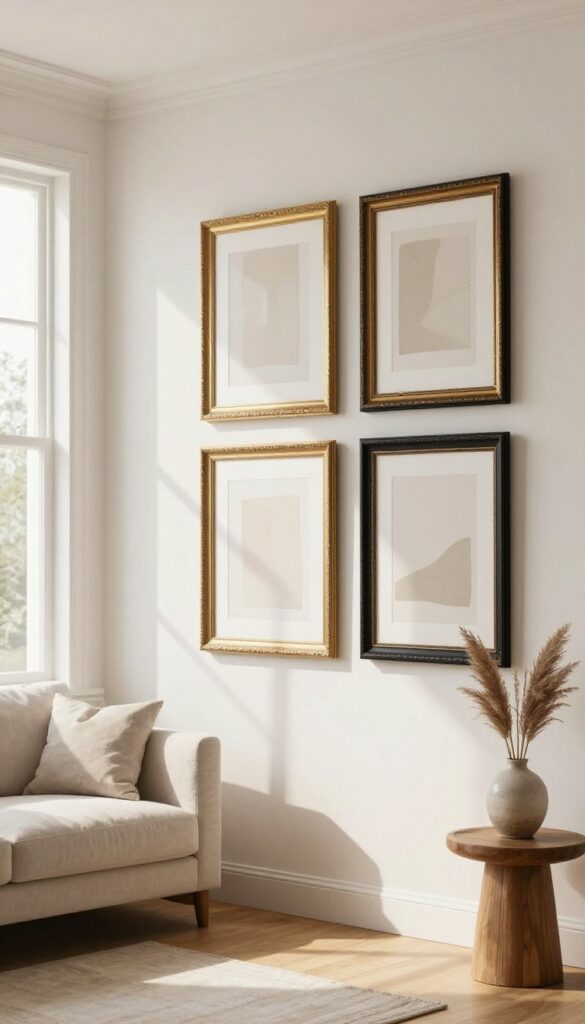
Sometimes the frame deserves more attention than the artwork. Oversized or ornate frames can carry simple prints and still feel high-end. This works especially well in classic or transitional living rooms.
I’ve seen this turn blank walls into focal points with almost zero effort. It’s bold without being loud.
Why This Works
The eye is drawn to structure first, then detail. Strong frames give the wall presence even with minimal imagery inside.
How to Do It
- Choose bold or oversized frames
- Use neutral or simple prints
- Keep spacing generous
- Limit the number of pieces
Style & Design Tips
Gold or black frames add drama. Wood frames feel warmer and more casual. Avoid mixing too many ornate styles together.
Pro Tip or Budget Hack
Thrift stores often have amazing frames for cheap. Swap out the art and keep the frame.
7. Personal Story Gallery Wall
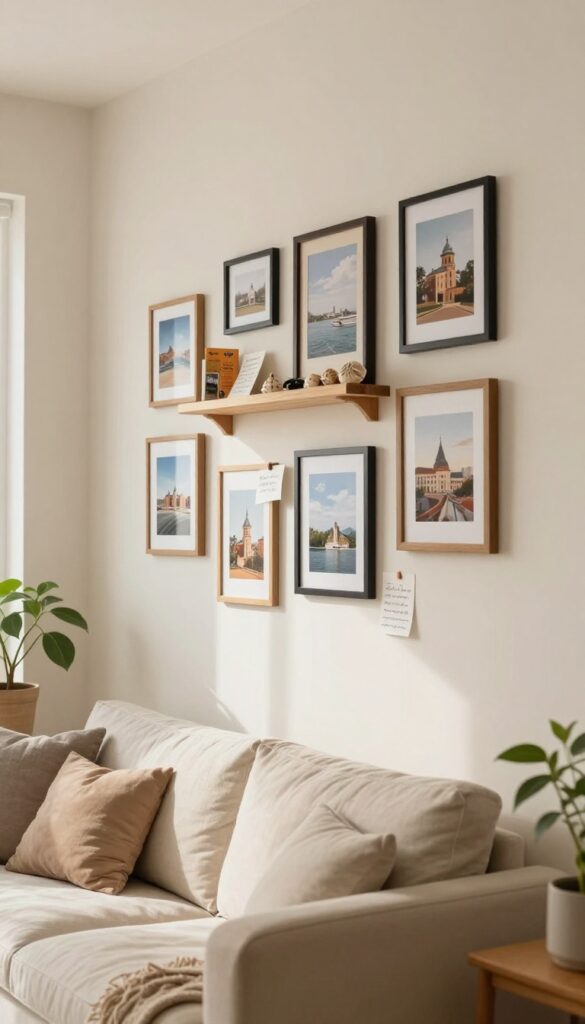
This style feels the most lived-in because it actually tells a story. Travel photos, handwritten notes, ticket stubs, and small mementos all work together. It’s imperfect in the best way.
I like this approach in family rooms where memories matter more than aesthetics. It evolves naturally over time.
Why This Works
Personal items create emotional connection and warmth. The wall grows with you, so it never feels static or outdated.
How to Do It
- Mix photos with small objects
- Use shelves or ledges
- Add pieces gradually
- Avoid over-planning
Style & Design Tips
Stick to a loose color theme to keep things cohesive. Don’t overcrowd the wall or it loses impact.
Pro Tip or Budget Hack
Print photos in different sizes at home. Variety makes the display feel curated instead of staged.
8. Minimalist Line Art Display
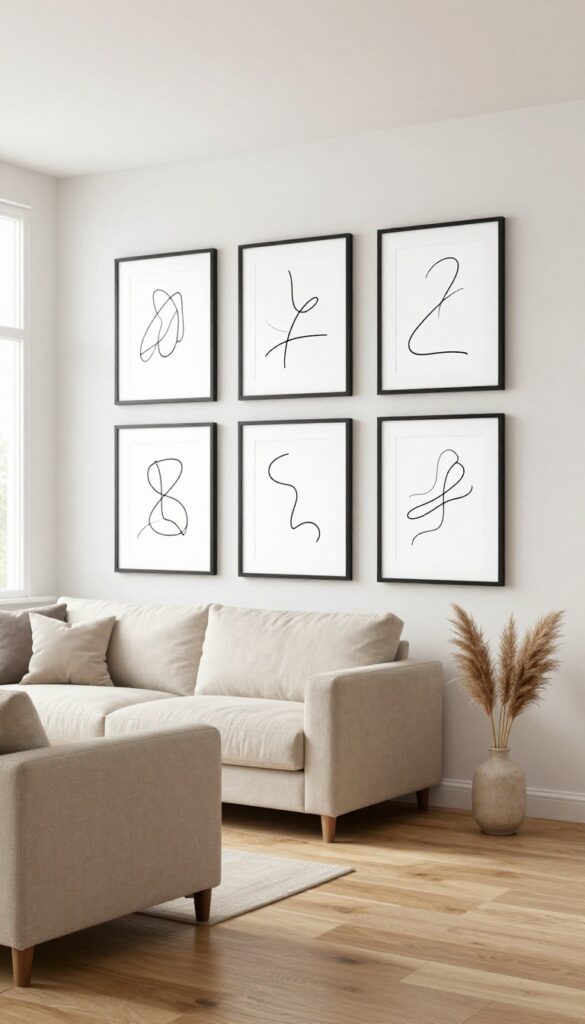
Line art is clean, modern, and surprisingly expressive. It works especially well in contemporary or Scandinavian-style living rooms. The simplicity lets the space breathe.
I used this style in a smaller room where visual clutter was a problem. It instantly made the space feel bigger.
Why This Works
Simple art creates visual rest. The repetition of lines ties everything together without demanding attention.
How to Do It
- Choose similar line styles
- Keep frames thin and simple
- Use plenty of spacing
- Stick to neutral colors
Style & Design Tips
Black on white is timeless. Beige or soft gray works if you want warmth. Avoid mixing bold colors here.
Pro Tip or Budget Hack
Free line art prints are easy to find online. Print them on quality paper for a polished look.
9. Asymmetrical Gallery With Movement
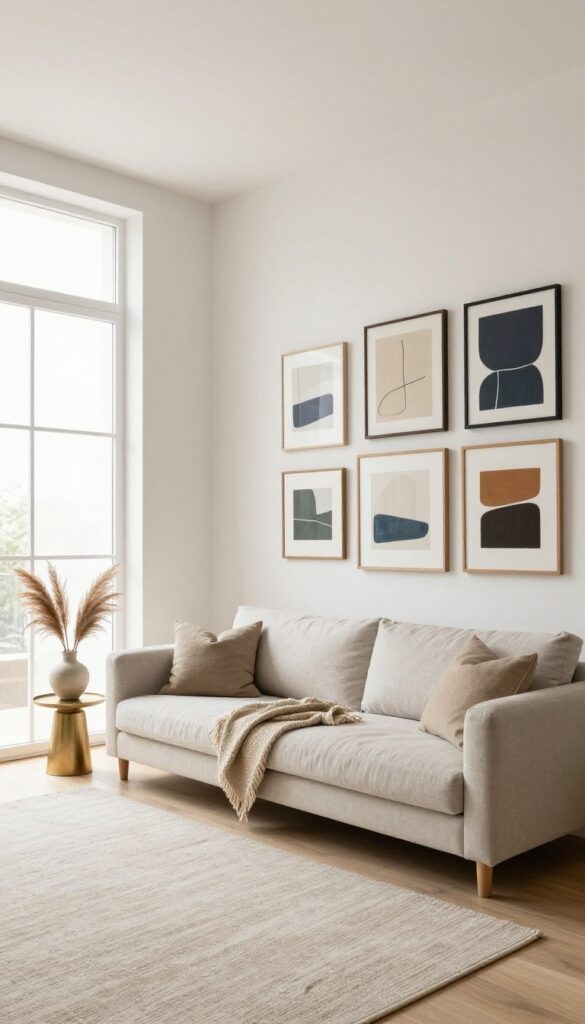
This style looks random but actually takes the most planning. Pieces vary in size and placement, but the overall flow still feels intentional. It’s perfect for creative or modern spaces.
I like this approach when a room feels too predictable. It adds energy without chaos if done right.
Why This Works
Asymmetry keeps the eye moving. It adds visual interest and feels more organic than rigid layouts.
How to Do It
- Start with one anchor piece
- Build outward in uneven spacing
- Step back often to adjust
- Trust visual balance over measurements
Style & Design Tips
Mix horizontal and vertical frames. Avoid lining edges perfectly. Let some pieces sit slightly higher or lower.
Pro Tip or Budget Hack
Cut paper templates first and tape them to the wall. It saves time and prevents unnecessary holes.
Final Thoughts
Gallery walls don’t need to follow strict rules to look good, but they do need intention. The best ones evolve naturally and reflect real life, not a catalog page. When something feels off, it usually just needs a small tweak, not a full redo.
The key is trusting your eye and giving yourself permission to experiment. A gallery wall should feel like a collection, not a performance, and that’s what makes it worth living with.