8 Bedroom Desk Ideas That Save Space
Space usually disappears faster than expected once a desk enters a bedroom. One piece of furniture suddenly dictates how everything else has to behave.
That’s why the right desk setup matters more than the desk itself.
I’ve messed this up more than once, cramming bulky furniture into rooms that had no business hosting it.
Over time, I learned that small changes in layout and function can make a desk feel intentional instead of intrusive. These ideas focus on making a desk work with your bedroom, not against it.
1. Wall-Mounted Floating Desk
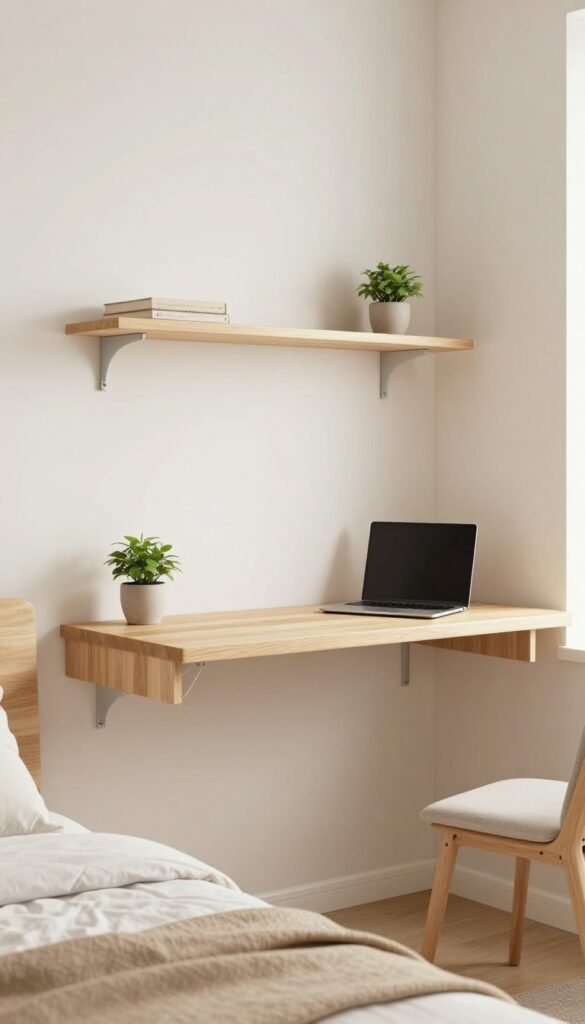
A floating desk solves the biggest problem most bedrooms have, which is floor clutter.
When the desk doesn’t touch the ground, the room instantly feels more open and less boxed in. It’s one of those setups that looks clean even when life gets messy.
I used one in a small apartment bedroom years ago, mostly out of desperation. What surprised me was how much calmer the room felt without legs crowding the space underneath.
It made vacuuming easier too, which is always a win.
Why This Works
Floating desks free up visual space, which tricks the eye into thinking the room is larger. They also force you to stay organized because there’s no place to hide junk underneath. That built-in discipline ends up being a blessing.
How to Do It
- Mount the desk directly into wall studs for stability
- Keep the depth between 16–20 inches to avoid bulk
- Add a floating shelf above if storage is needed
Style & Design Tips
Go for wood tones if you want warmth or white if the room already feels tight. Avoid thick brackets since they kill the floating effect. Minimal hardware makes the biggest visual difference here.
Pro Tip or Budget Hack
An unfinished butcher block and a pair of heavy-duty brackets cost way less than most “designer” floating desks. Sand it, seal it, and you’ve got a custom look for a fraction of the price.
2. Desk Built Into a Wardrobe or Closet Nook
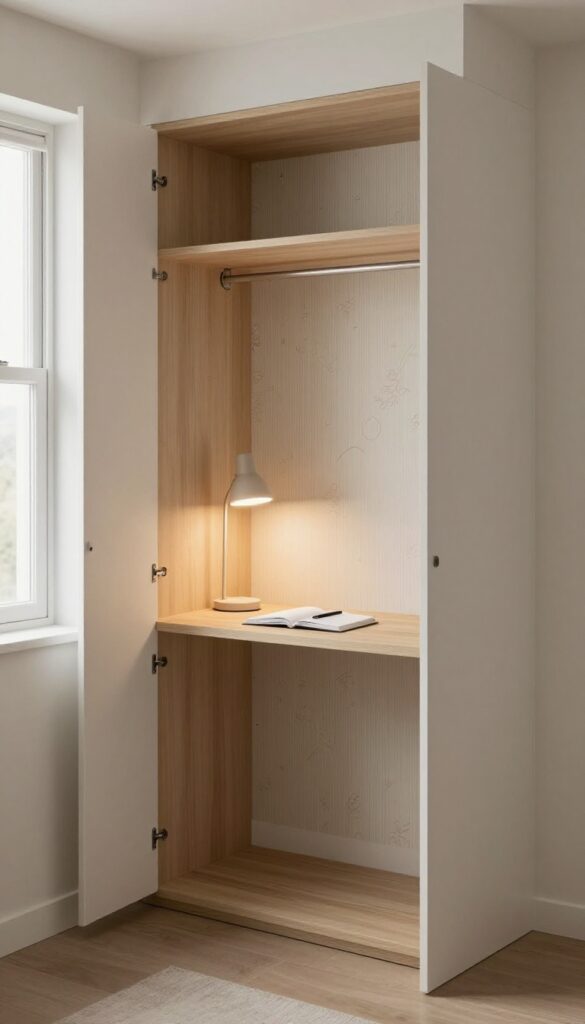
Closets often waste vertical space that could work much harder. Turning part of a wardrobe into a desk setup keeps everything compact and visually contained. It’s especially useful if you don’t want your workspace on display 24/7.
I tried this once in a rental where floor space was laughably limited. Closing the doors at night made the room feel like a bedroom again instead of a home office hybrid.
Why This Works
A built-in desk inside a wardrobe uses space that usually goes underutilized. It also creates a natural boundary between work and rest, which helps mentally shut things off.
How to Do It
- Remove lower shelving or drawers
- Install a slim desktop at elbow height
- Add task lighting inside the closet area
Style & Design Tips
Stick with lighter interior colors so the space doesn’t feel like a cave. Matte finishes reduce glare and make long work sessions easier on the eyes. Avoid dark wood unless the room gets a lot of natural light.
Pro Tip or Budget Hack
Use peel-and-stick wallpaper inside the nook to give it personality without permanent changes. It’s cheap, removable, and instantly upgrades the space.
3. Corner Desk That Uses Dead Space
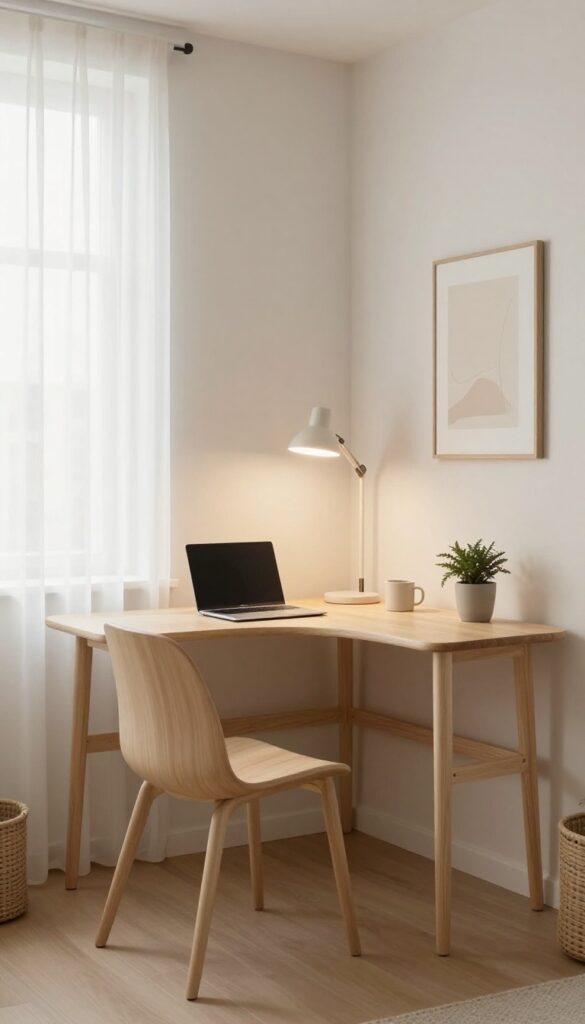
Corners usually get ignored or filled with random furniture that doesn’t quite fit. A corner desk flips that problem into an advantage. It turns an awkward angle into a functional zone without stealing room from the rest of the layout.
I used to think corner desks looked dated until I actually tried one. The right shape makes everything feel more intentional, especially in smaller bedrooms.
Why This Works
Corners naturally feel tucked away, which makes them perfect for focused work. A corner desk also frees up long wall sections for storage or decor.
How to Do It
- Choose an L-shaped or curved design
- Keep legroom clear on both sides
- Place task lighting from above or the side
Style & Design Tips
Avoid bulky corner desks with thick drawers. Slim profiles keep the space feeling open instead of boxed in. Neutral colors help the desk blend rather than dominate.
Pro Tip or Budget Hack
Two small matching tables pushed together can mimic an L-shaped desk for less money. Add a single top panel to unify the look.
4. Desk at the Foot of the Bed
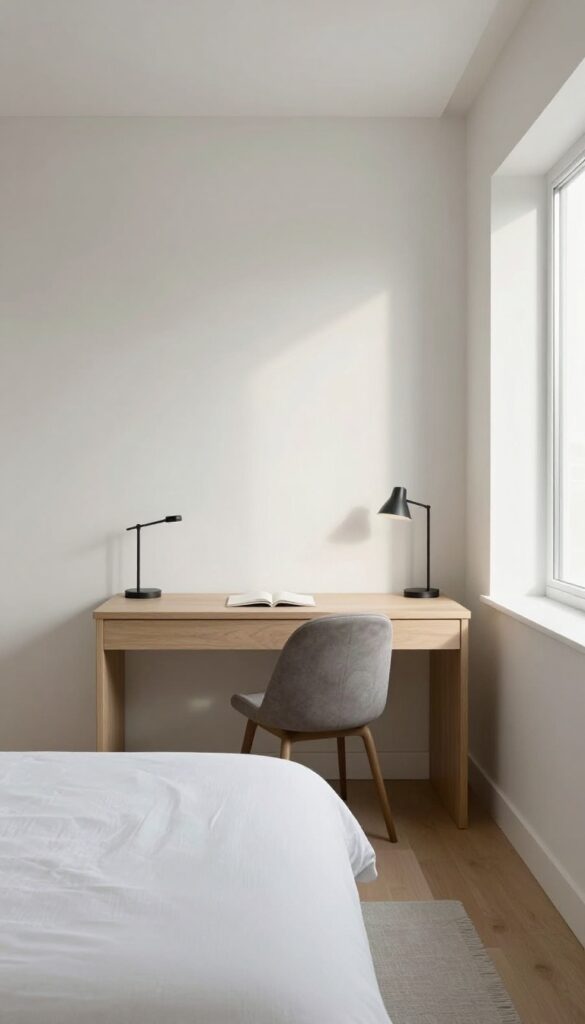
This setup sounds odd until you see it done right. Placing a narrow desk at the foot of the bed uses space that often goes unused. It works especially well in long, narrow bedrooms.
I’ve used this layout in guest rooms where space was tight. It felt surprisingly natural once everything was scaled correctly.
Why This Works
The foot of the bed usually has open clearance anyway. A slim desk fits without interrupting walkways or sightlines.
How to Do It
- Choose a desk no deeper than 18 inches
- Leave enough clearance to walk comfortably
- Pair it with a low-profile chair
Style & Design Tips
Match the desk finish to the bed frame for visual flow. Keep accessories minimal so it doesn’t feel like a second dresser. Clean lines matter more than storage here.
Pro Tip or Budget Hack
A console table works just as well as a desk and often costs less. Add a small lamp and you’re set.
5. Window-Facing Desk Setup
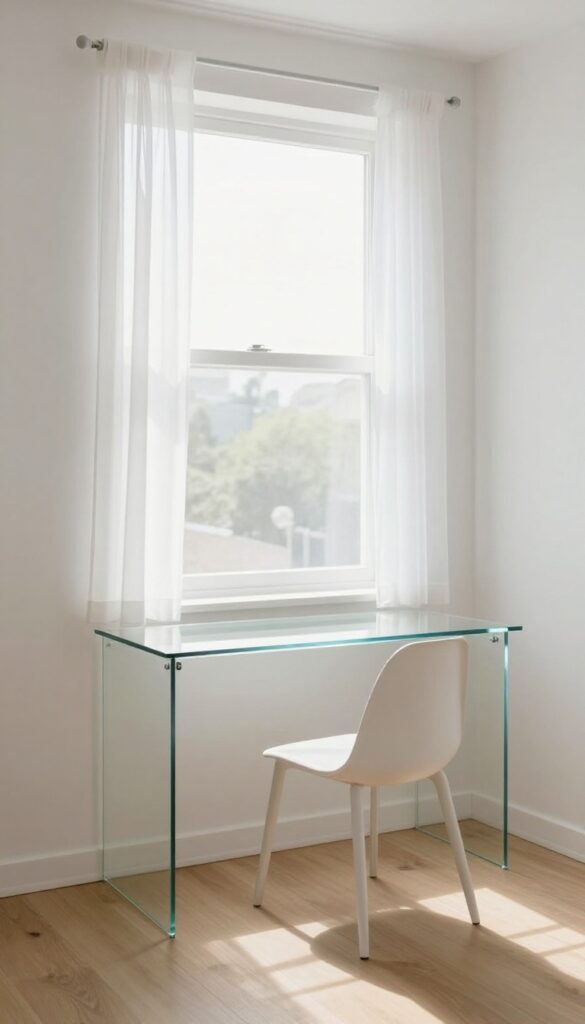
Putting a desk in front of a window might sound obvious, but most people avoid it because they worry about blocking light. The trick is choosing the right desk height and material. When done well, this setup feels open and energizing.
I’ve always worked better with natural light, and this setup made a noticeable difference in focus. It also eliminated the need for extra lighting during the day.
Why This Works
Natural light improves visibility and reduces eye strain. It also makes a small room feel more open and breathable.
How to Do It
- Use a slim or transparent desk
- Keep window treatments light and simple
- Position the desk slightly below the window sill
Style & Design Tips
Glass or light wood desks work best here. Avoid heavy curtains or dark finishes that block light. Let the window be the feature, not the desk.
Pro Tip or Budget Hack
A basic tabletop with two narrow legs can be mounted under the window for a built-in look. It’s cheaper than most pre-made desks and looks custom.
6. Fold-Down Wall Desk
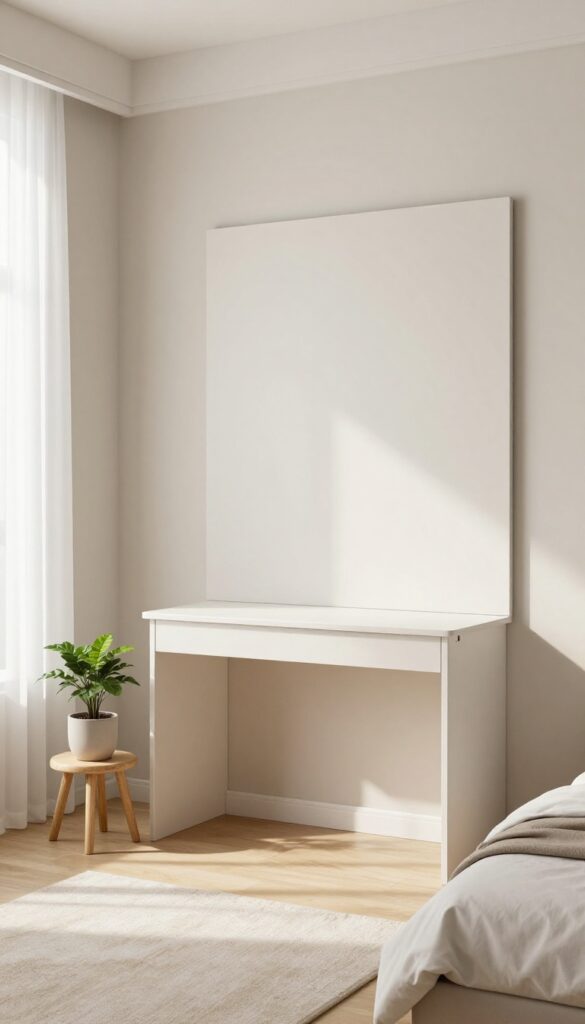
Fold-down desks are perfect for people who don’t need a desk all day. When closed, they disappear completely, which is ideal for bedrooms that double as living spaces.
I was skeptical until I tried one in a small guest room. It turned a rarely used space into something functional without committing full-time.
Why This Works
The desk only exists when you need it. That flexibility keeps the room from feeling crowded or overly utilitarian.
How to Do It
- Mount it securely to studs
- Choose a model with internal storage
- Keep the surface clear for easy folding
Style & Design Tips
Look for designs that resemble cabinets or wall panels. The more it blends in, the better it works visually.
Pro Tip or Budget Hack
DIY versions using hinges and plywood work just as well as store-bought ones. Paint it to match the wall and it practically disappears.
7. Desk Combined With a Nightstand
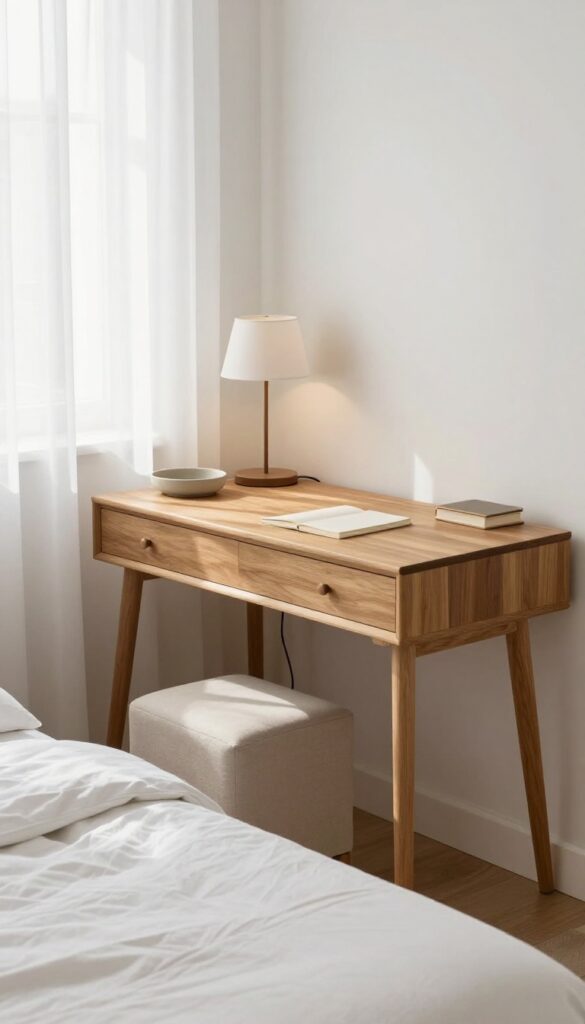
Combining functions is one of the smartest ways to save space. A desk that doubles as a nightstand keeps everything within reach without adding extra furniture.
I’ve done this in smaller bedrooms where adding another piece just wasn’t an option. It felt surprisingly natural once I adjusted the height.
Why This Works
You’re already using that area for essentials, so adding a work surface makes sense. It keeps the layout efficient and uncluttered.
How to Do It
- Choose a desk close to standard nightstand height
- Use a compact chair or stool
- Keep cables managed and hidden
Style & Design Tips
Stick to simple designs with drawers for storage. Avoid bulky desks that overpower the bed.
Pro Tip or Budget Hack
A narrow writing desk can replace a nightstand entirely. Add a small lamp and tray, and it works just as well.
8. Built-In Desk Along a Wall
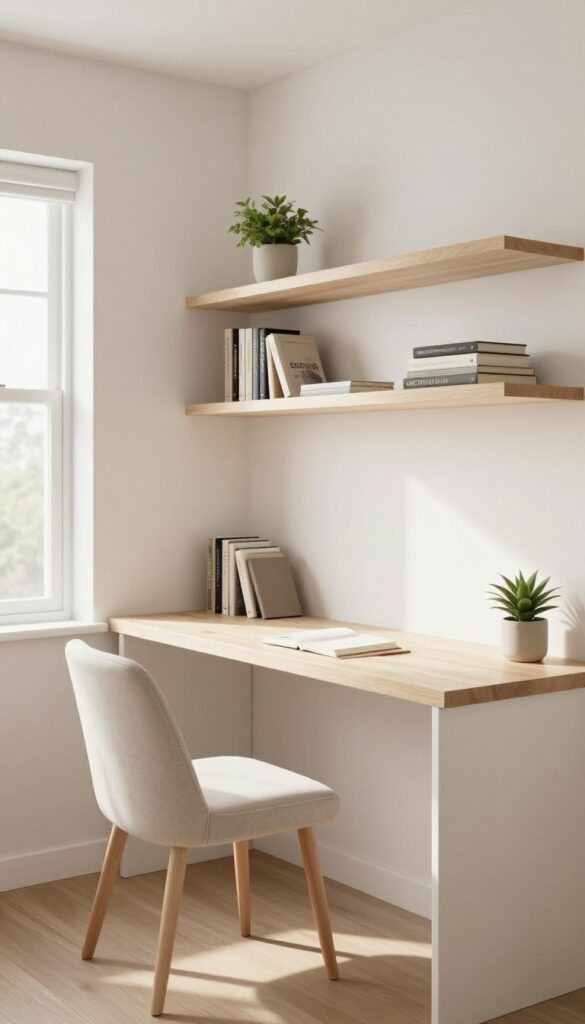
A wall-length built-in desk maximizes every inch without cluttering the room. It works especially well in shared bedrooms or multifunctional spaces.
I’ve helped install a few of these, and they always end up being the most loved feature. They feel intentional and custom, even when done on a budget.
Why This Works
Built-ins create a clean, seamless look. They also allow for more storage and workspace without adding bulky furniture.
How to Do It
- Measure wall space carefully
- Install a continuous countertop
- Add floating shelves above for storage
Style & Design Tips
Keep the color consistent with the walls for a streamlined look. Too much contrast can make the room feel chopped up.
Pro Tip or Budget Hack
IKEA countertops and brackets work perfectly for this. Paint everything the same color and it looks custom-made.
Final Thoughts
A bedroom desk doesn’t have to take over the room or ruin the vibe. With the right layout, it can actually make the space feel more organized and intentional. The key is choosing a setup that fits how you actually live, not how a catalog says you should.
I’ve learned that the best desk is the one you barely notice until you need it. If it blends in, works smoothly, and doesn’t stress you out, you nailed it.