12 Stylish Kitchen Island Decor Ideas That Add Instant Personality
Your kitchen island is more than just a prep station—it's a blank canvas waiting for a little personality. Whether you have a sprawling marble slab or a compact butcher block, the right decor can make it feel like the heart of your home.
The trick is to keep things light and airy, so the space still breathes. Think fresh flowers, natural textures, and pieces that feel intentional but not fussy.
These 12 ideas are designed to be easy to pull off, easy to love, and easy to change when your mood shifts.
1. A Low Cluster of Bud Vases
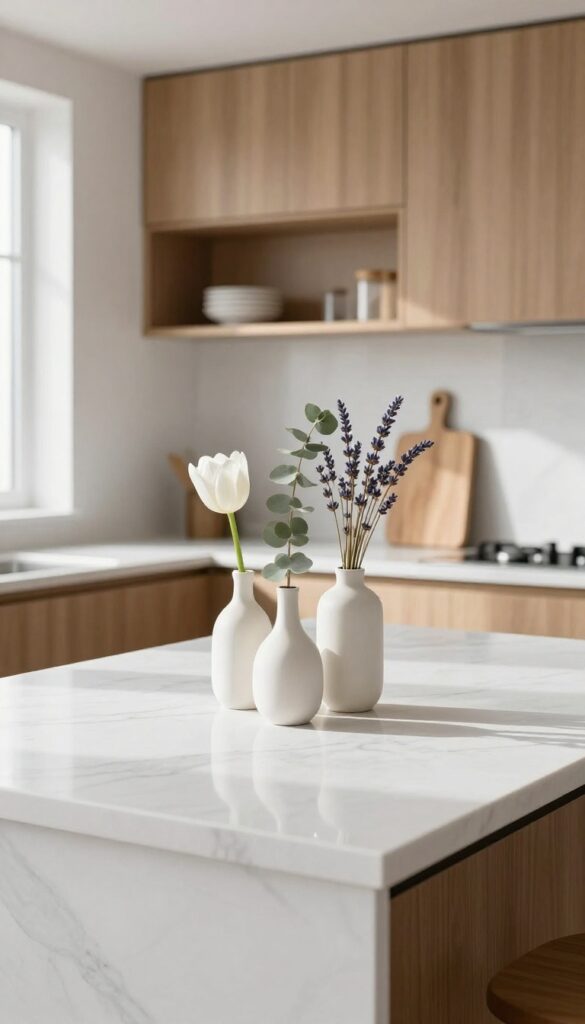
Sometimes the simplest gestures make the biggest impact. A row of tiny bud vases—each holding a single stem—brings a quiet, garden-fresh feel to your kitchen island without taking up much space or blocking the view across the room. The key is keeping everything low and intentional, so the arrangement feels like a natural part of the countertop rather than an afterthought.
Why It Works
Because the vases are small and clustered close together, they create a focal point that draws the eye without overwhelming the island. The single stems add just enough color and life to soften all the hard surfaces in a kitchen, and the low profile means you can still set down a cutting board or serving platter right next to them.
Best For
This idea shines on narrow islands where you want a touch of decor but can't spare much surface area. It's also perfect for kitchens with open sightlines to a living or dining area, because the low height keeps the visual flow uninterrupted.
Styling Tip
Stick to an odd number of vases—three or five—and vary their heights slightly so they feel organic. Choose stems that echo your kitchen's color palette: white tulips for a crisp look, eucalyptus for soft green, or dried lavender for subtle texture that lasts.
2. A Stack of Beautiful Cookbooks
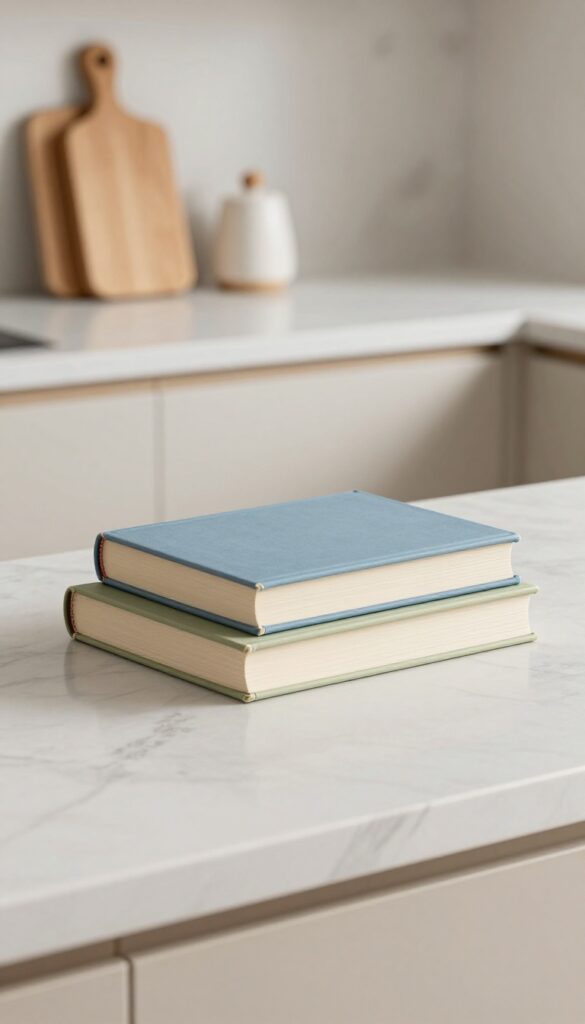
Cookbooks do more than hold recipes—they bring color, texture, and a sense of story to your kitchen island. A neatly stacked trio with pretty spines instantly draws the eye and makes the space feel curated, not cluttered. It’s an easy way to inject personality without adding permanent fixtures or spending much money.
Why It Works
The vertical layers break up a flat countertop while the book covers add visual interest through pattern and hue. A small wooden cutting board or ceramic salt cellar on top creates a finished vignette that feels intentional rather than accidental.
Best For
This idea works well in kitchens with neutral islands that need a pop of color or warmth. It’s also great for renters or anyone who wants a low-commitment decor swap—just rotate the books seasonally.
Styling Tip
Choose books with complementary spine colors—like soft blues, warm creams, or muted greens—to keep the look cohesive. Keep the stack low (two or three books max) so it doesn’t block sightlines across the island.
3. A Linen Runner with Subtle Texture
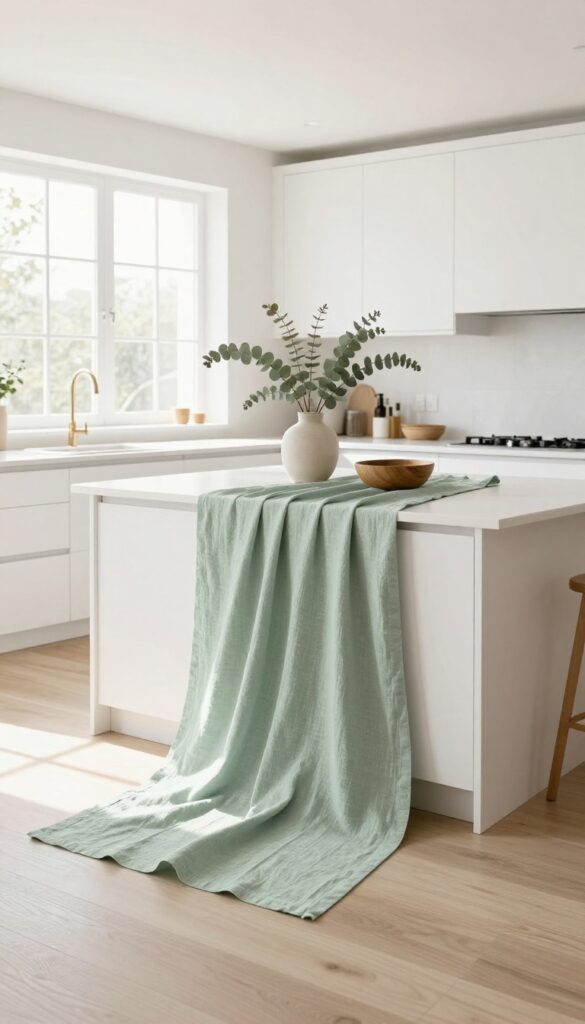
Soft textiles are an unexpected delight in a kitchen, especially on a hardworking island. A linen runner in a muted neutral—think oatmeal, pale sage, or warm stone—draped down the center instantly dials down the industrial vibe and brings in a breath of lightness. It’s a simple swap that makes the island feel more like furniture and less like a workspace, without sacrificing practicality.
Why It Works
Linen’s natural texture adds visual interest without shouting for attention. It softens the hard edges of countertops and stools, creating a layered look that feels curated but effortless. The runner also absorbs minor spills and can be tossed in the wash, so it stays fresh even in a busy kitchen.
Best For
This idea shines in kitchens with light wood floors, white or pale cabinetry, and lots of natural light. It’s perfect for islands that double as dining or gathering spots, where you want a touch of coziness without cluttering the surface.
Styling Tip
Choose a runner that’s slightly longer than your island—about six inches overhang on each end—so it hangs gracefully. Pair it with a ceramic vase of dried eucalyptus or a simple wooden bowl for an effortlessly styled centerpiece that keeps the look airy.
4. A Single Large Statement Bowl
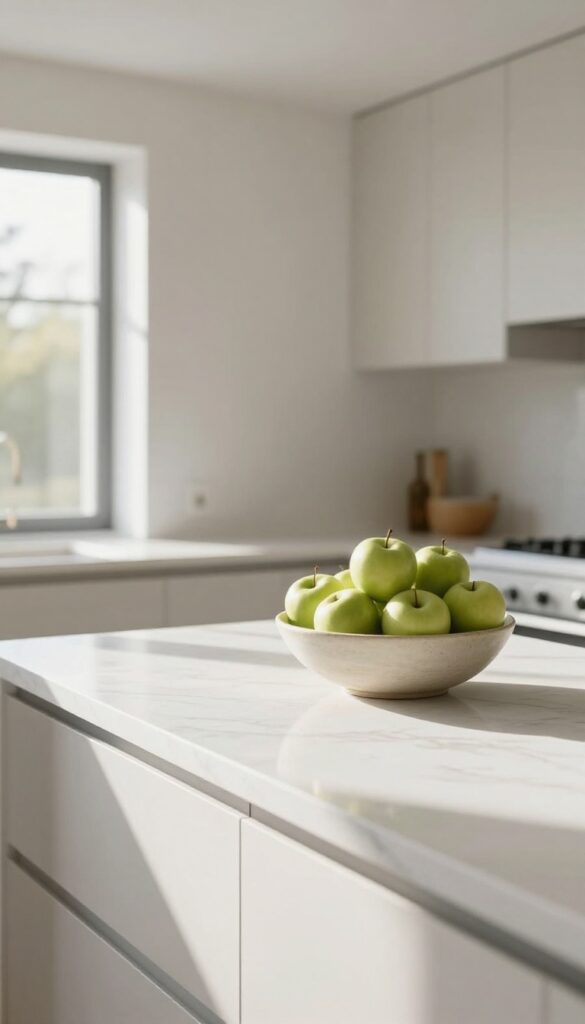
Sometimes the most impactful decor is the simplest. A single oversized bowl placed at one end of your kitchen island can anchor the entire space without adding clutter. Think of it as functional art—something that draws the eye and adds warmth, whether you choose a rich acacia wood piece or a glossy ceramic in a soft neutral tone.
The key is letting it breathe; no overcrowding, just one beautiful object doing its job.
Why It Works
A large bowl creates a natural focal point that feels intentional but not fussy. It breaks up long countertop stretches and adds texture and scale, which makes the island feel more grounded. Plus, it's endlessly versatile: swap out contents seasonally or keep it filled with everyday fruit for a pop of color that changes naturally.
Best For
This idea shines on longer islands (6 feet or more) where you have room to spare. It's perfect for kitchens that lean minimalist, Scandinavian, or farmhouse—any style where clean lines and organic materials are welcome. Avoid if your island is small or already packed with appliances.
Styling Tip
- Choose a bowl with some visual weight—think chunky wood, matte stoneware, or ribbed ceramic. Fill it with lemons, limes, or green apples for a fresh look that lasts. For a more neutral palette, try pinecones in fall or simple white eggs year-round.
- Keep the bowl centered about a foot from one edge so it doesn't block prep space.
5. A Pair of Sleek Salt and Pepper Mills
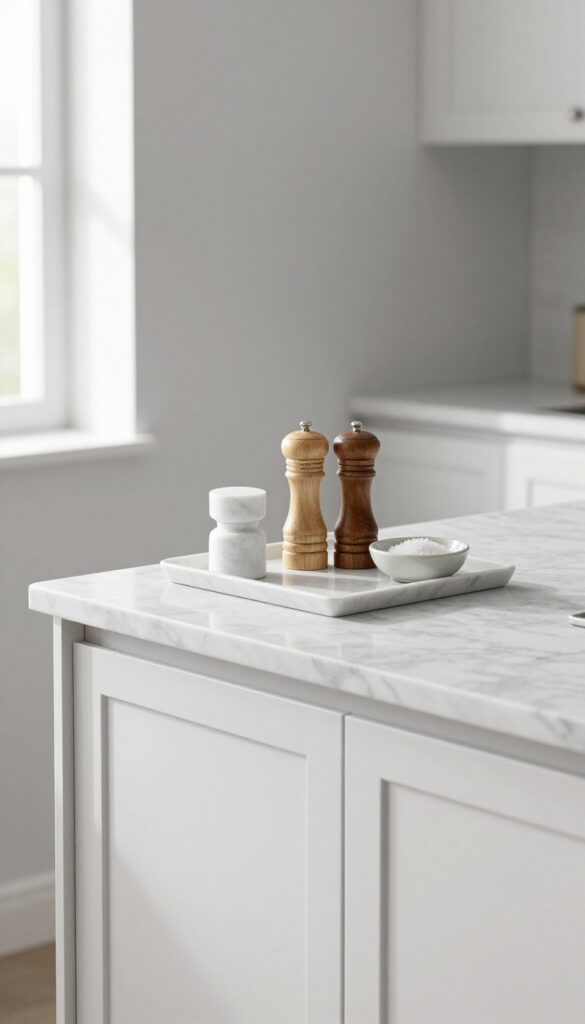
Small details can make a big difference on a kitchen island, and a coordinated set of salt and pepper mills is one of the easiest ways to add both function and style. Think smooth marble or warm acacia wood—materials that feel natural and refined without trying too hard. Placed on a simple tray, they become more than just tools; they ground the center of your island with a quiet, sculptural presence.
Why It Works
Matching mills create a visual anchor that draws the eye naturally to the island's midpoint. Their vertical lines break up the horizontal expanse of the countertop, adding height and balance. Plus, they're always within reach for cooking or serving, so beauty never gets in the way of practicality.
Best For
This idea shines on islands with clean, uncluttered surfaces where you want a subtle focal point. It works especially well in light and airy kitchens with neutral tones—white, cream, soft gray—where natural materials like marble or wood add warmth without heaviness.
Styling Tip
Choose a small tray with a low rim to corral the mills along with a tiny dish for kosher salt or peppercorns. Stick to one material family: if your mills are marble, go for a marble or clear glass tray; if acacia wood, try a bamboo or ceramic option. Keep it minimal—two mills and one small bowl is plenty.
6. A Mini Herb Garden in Small Pots
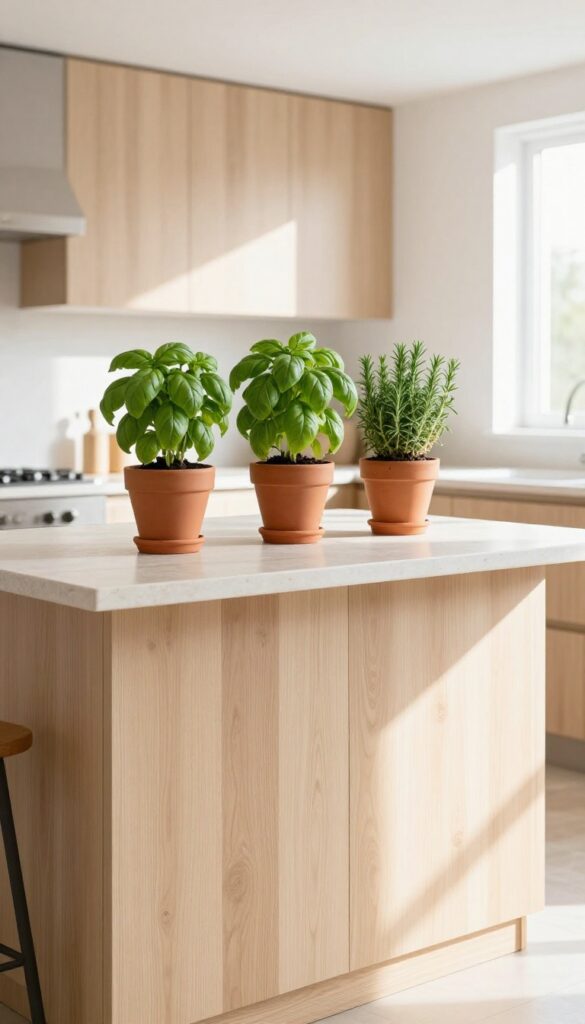
Nothing makes a kitchen feel more alive than a row of tiny herbs lined up along the counter. Three small terracotta or white ceramic pots—one with basil, one with rosemary, one with thyme—add a soft, natural rhythm to the island surface. The light green leaves against neutral stone or wood create a fresh focal point that feels both intentional and effortless.
Plus, the subtle fragrance of herbs drifting into the room makes the space smell as good as it looks.
Why It Works
Herbs bring living texture and color to an otherwise static countertop. They soften hard surfaces and add a layer of warmth that no decor object can replicate. Because they're functional, they never feel like clutter—you'll actually use them while cooking, which keeps the display purposeful.
Best For
This idea shines on kitchens with neutral or light-toned islands where a pop of green can stand out. It's perfect for home cooks who want decor that does double duty—looking beautiful while providing fresh ingredients at arm's reach.
Styling Tip
Keep the pots uniform in shape but vary the heights slightly by choosing different herb varieties. Place them on a small wooden tray or a marble coaster to catch any water drips and anchor the grouping. Rotate the pots every few days so each herb gets equal sunlight.
7. A Curved Wooden Cutting Board as a Base
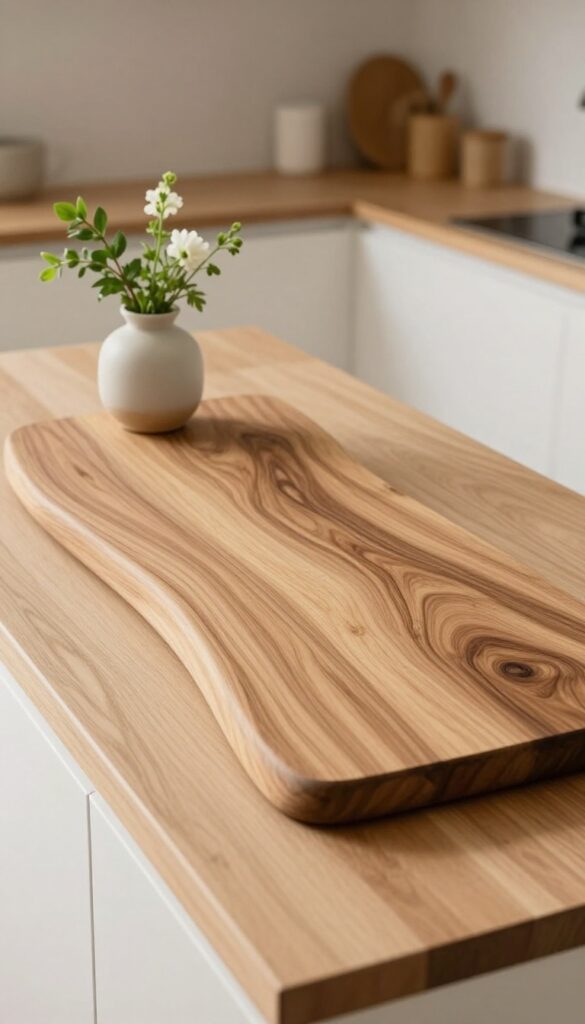
Forget hiding your cutting board in a drawer. A large, curved wooden board with beautiful grain deserves a spot on the counter. It works like a natural tray, giving other items a soft, organic foundation.
The warm wood adds texture and warmth without feeling heavy, making the whole kitchen feel lighter and more grounded.
Why It Works
A wooden cutting board introduces natural texture and warmth to an otherwise hard kitchen surface. Its curved shape softens the straight lines of countertops and cabinets, creating visual interest without clutter. Using it as a base groups smaller items together, making the counter look intentional rather than messy.
Best For
This idea works best on a clear section of countertop near the sink or stove, where you can easily grab the board for prep work. It's also great for small kitchens that need a flexible decor piece that doubles as a functional tool.
Styling Tip
Choose a board with rich grain and an irregular edge for maximum character. Lean it upright against a utensil crock for a casual look, or lay it flat with a small vase of fresh herbs or a single bloom on top. Keep the rest of the counter minimal so the board stays the star.
8. A Glass Cloche with a Natural Element
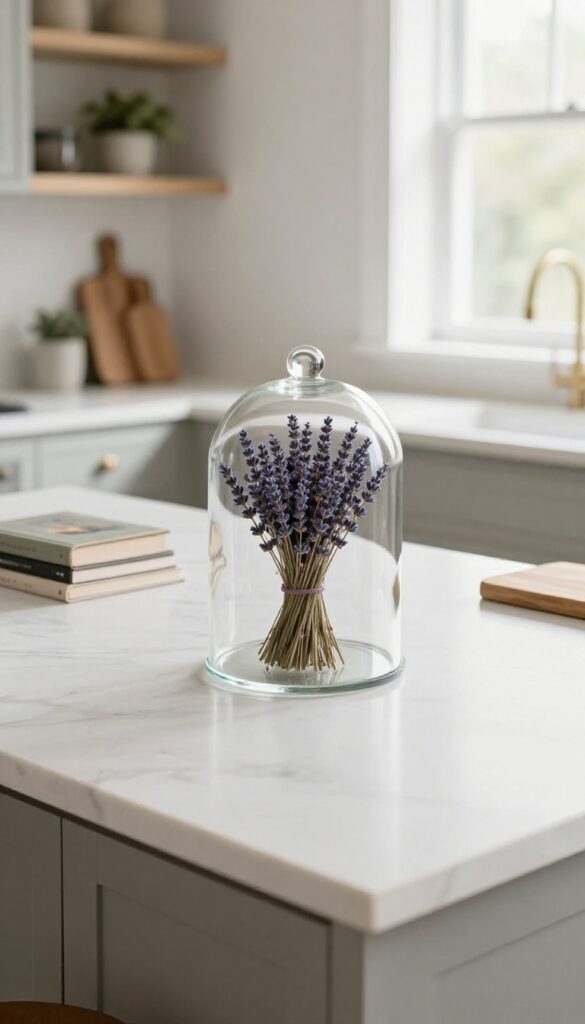
A glass cloche brings a museum-like curiosity to your kitchen island without feeling stuffy. Place it over a small bundle of dried lavender, a cluster of pinecones, or even a single artichoke. The clear dome keeps the item dust-free while letting its natural beauty shine through.
It's an easy way to add a touch of whimsy and texture that feels light and airy.
Why It Works
The cloche creates a focal point that draws the eye without cluttering the counter. Its transparency keeps the space feeling open, while the natural element inside adds organic warmth. This combo balances visual interest with a clean, uncluttered look.
Best For
This idea is perfect for kitchens with neutral or light-colored islands where a small pop of nature can stand out. It also works well in homes with a modern farmhouse or Scandinavian style, where simple, natural accents are key.
Styling Tip
Choose a cloche that's slightly oversized so the item inside has breathing room. Group it with a small stack of cookbooks or a wooden cutting board to anchor it on the island. For a cohesive look, match the cloche's base material—like wood or metal—to other finishes in your kitchen.
9. A Tray for Everyday Essentials
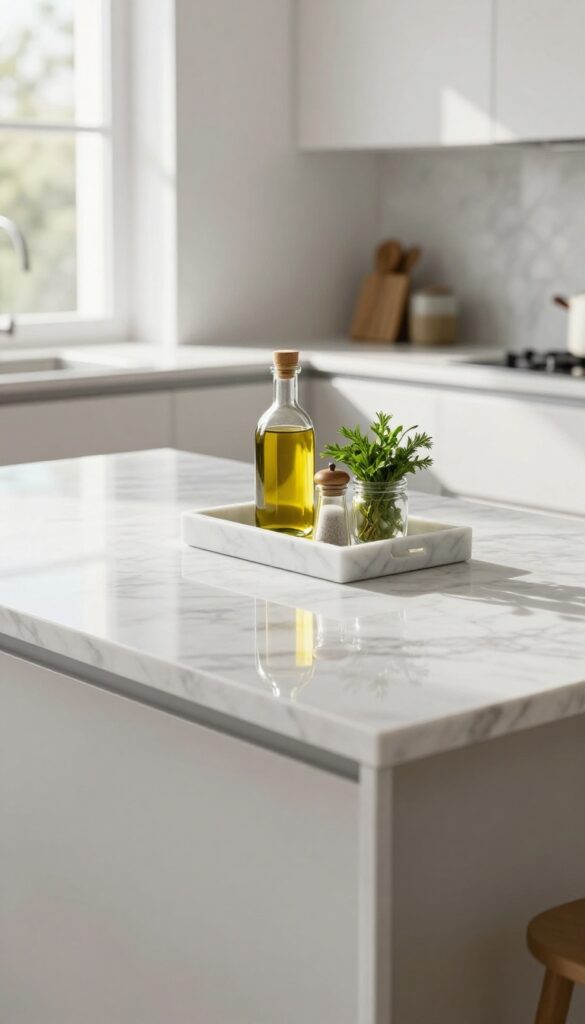
A kitchen island can quickly become a dumping ground for mail, keys, and random clutter. By dedicating one corner to a slim tray, you create a designated spot for the items you reach for most—without letting them take over. A marble or bamboo tray adds a clean, structured look that feels intentional rather than accidental.
Why It Works
The tray defines a clear boundary, so daily essentials like olive oil, salt, and a pepper grinder stay organized and easy to grab. It prevents the island from looking messy while keeping everything within arm's reach during cooking.
Best For
This idea works well in both small and large kitchens where the island doubles as a prep station. It's especially useful if you cook often and want quick access to basic seasonings without digging through cabinets.
Styling Tip
Choose a tray with raised edges to keep bottles from sliding off. For a light and airy feel, go with a light bamboo tray or a white marble one. Add a small jar of fresh herbs or a single candle for a subtle finishing touch.
10. A Sculptural Ceramic Pitcher (Empty or Filled
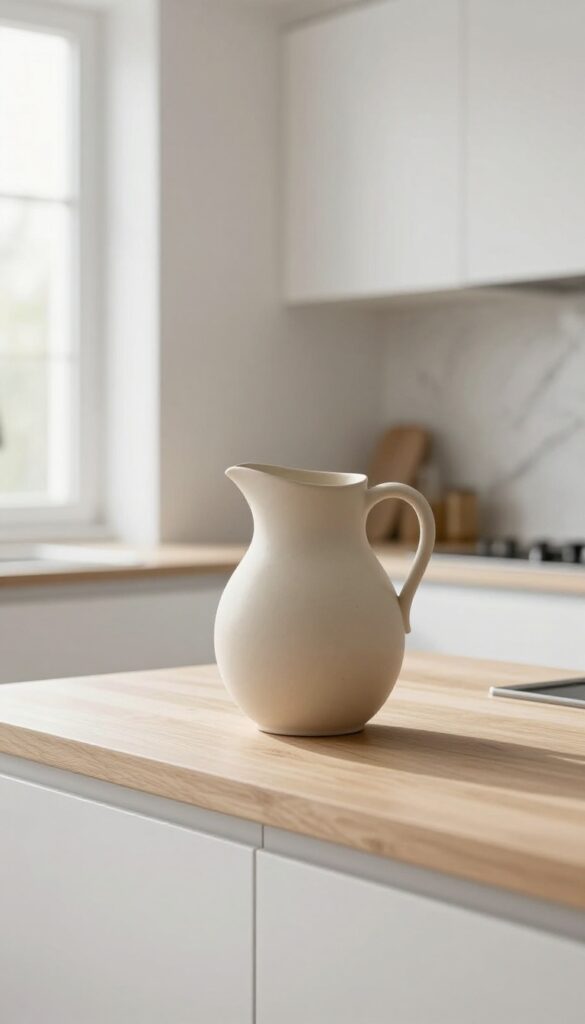
Not every kitchen island needs a towering arrangement or a cluster of tiny objects. Sometimes a single, beautifully made piece is all it takes to catch the eye and hold the moment. A sculptural ceramic pitcher brings quiet artistry to the countertop—its rounded belly, uneven glaze, and hand-thrown feel add texture without shouting.
Leave it empty so its shape speaks for itself, or tuck in a few branches of cherry blossoms or eucalyptus for soft height. Either way, it keeps the island feeling light, airy, and intentionally styled.
Why It Works
A single ceramic piece acts like a focal point without creating visual clutter. The matte finish and organic silhouette contrast nicely with the hard edges of countertops and cabinets, adding warmth and a handmade touch. It’s an easy way to bring in texture and subtle color that feels curated but not fussy.
Best For
This idea works well on smaller islands where you don’t want to crowd the surface, or on larger islands as part of a minimalist vignette. It’s especially nice in kitchens with neutral palettes—the pitcher adds personality without competing with other elements.
Styling Tip
Choose a pitcher in a tone that complements your island’s finish: warm beige for wood tones, soft gray for marble, or dusty blue for white cabinetry. If you add stems, keep them sparse—three to five branches is plenty. Place the pitcher slightly off-center for a more natural look.
11. A Stack of Coasters in a Natural Material
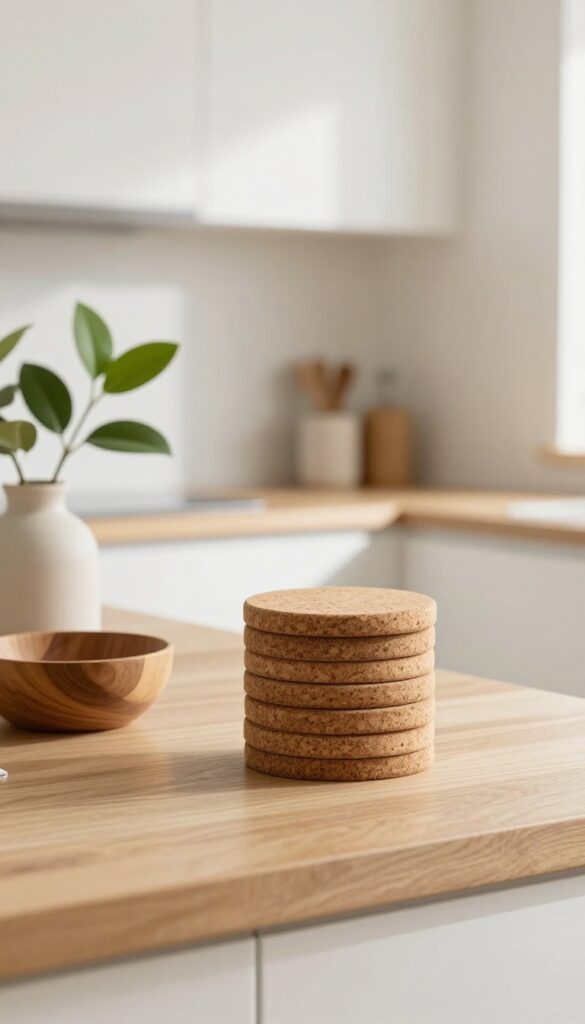
Coasters are one of those small items that often get overlooked, but a tidy stack in a natural material like cork, leather, or stone can add a quiet layer of texture to your kitchen island. They're practical without trying too hard—guests will see them and know exactly what to do. Plus, they bring a subtle earthy note that keeps the space feeling light and grounded.
Why It Works
A small cluster of coasters in neutral, organic materials introduces tactile variety without visual clutter. The natural tones blend seamlessly with most kitchen palettes, while the stacked arrangement creates a mini still life that feels intentional and inviting.
Best For
This idea works especially well on islands with clean lines and minimal decor, where a tiny detail can stand out without competing. It's also perfect for kitchens that double as entertaining spaces—guests appreciate the gentle nudge to use a coaster.
Styling Tip
Choose coasters in warm cork, soft leather, or honed stone for the most natural look. Stack four or five slightly off-center near the edge of the island where someone would naturally set down a glass. Pair them with a small wooden bowl or a single stem vase for extra charm.
12. A Small Art Piece Leaned Against the Backsplash
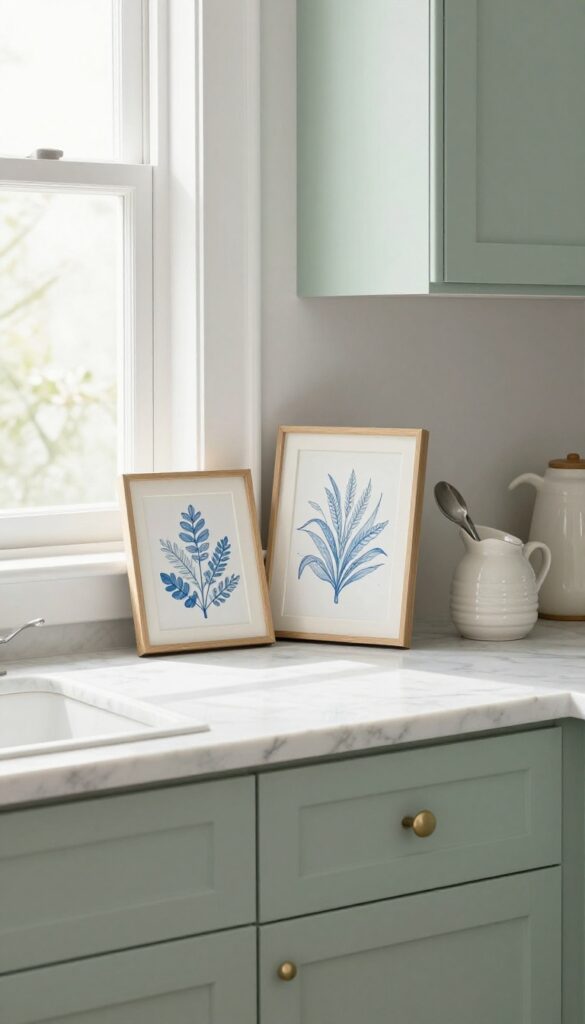
Art doesn't always need a nail and a hammer. In fact, one of the simplest ways to add personality to your kitchen island is by leaning a small framed print or a ceramic tile against the backsplash or a utensil crock. This relaxed styling trick brings an unexpected gallery feel to the island, making it feel curated rather than cluttered.
The light and airy angle shines here—choose a piece with soft colors or a simple line drawing to keep the look breezy.
Why It Works
Leaning art creates visual interest without commitment. It’s easy to swap out seasonally or whenever you crave a change, and it softens the hard surfaces of a kitchen. The casual placement feels intentional yet effortless, exactly what you want in a light, airy space.
Best For
This idea works well on islands that have a bit of counter space near the backsplash or a spot where you can prop art against a utensil crock, cookbook stand, or even a vase. It’s perfect for renters or anyone who wants to experiment with decor without drilling holes.
Styling Tip
Keep the scale small—think 5×7 inches or an 8×10 at most—so it doesn’t compete with functional items. Pair it with a neutral frame in wood or white, and choose art that echoes colors already in your kitchen, like pale blue, sage green, or warm cream.
FAQ
How do I keep my kitchen island decor from looking cluttered?
Stick to one or two focal points per island. Use trays to group small items and leave plenty of empty counter space. Rotate pieces seasonally to keep things fresh without overcrowding.
What are the best materials for kitchen island decor?
Natural materials like wood, stone, linen, and ceramic work well because they're durable and easy to clean. Avoid delicate fabrics or items that can't handle moisture near the sink.
Can I decorate my kitchen island if I use it for dining?
Absolutely. Keep decor low and centered so it doesn't interfere with eating. A runner, a small vase, or a stack of coasters can add style without getting in the way.
How often should I change my kitchen island decor?
Seasonal updates work well—think fresh flowers in spring, gourds in fall, or evergreen clippings in winter. You can also swap out items whenever you feel like a refresh.
What if my kitchen island is very small?
Scale down your decor. A single bud vase, one small cutting board with a salt cellar, or a slim tray with a pepper mill can add personality without overwhelming the surface.
Conclusion
Decorating your kitchen island doesn't have to be complicated. A few thoughtful pieces—a vase, a stack of books, a natural runner—can completely change how the space feels. The best part is that these ideas are easy to swap out whenever you want a new look.
Start with one or two that speak to you and build from there. Your island will thank you.