9 Green Tile Shower Ideas for a Fresh Relaxing Bathroom
Bathrooms usually look better when one material does more than just fill space. Green tile pulls that off nicely because it adds color, texture, and a little personality without forcing the whole room into some dramatic makeover situation.
What I like about green in a shower is how flexible it is. It can feel crisp, earthy, polished, vintage, moody, or clean depending on the shape, finish, and what you pair it with.
A lot of people want a bathroom that feels calmer but still looks finished. That is exactly where green tile shines, especially in showers, because it can soften all the hard surfaces without making the room feel dull or overly styled.
1. Soft Sage Subway Tile Shower
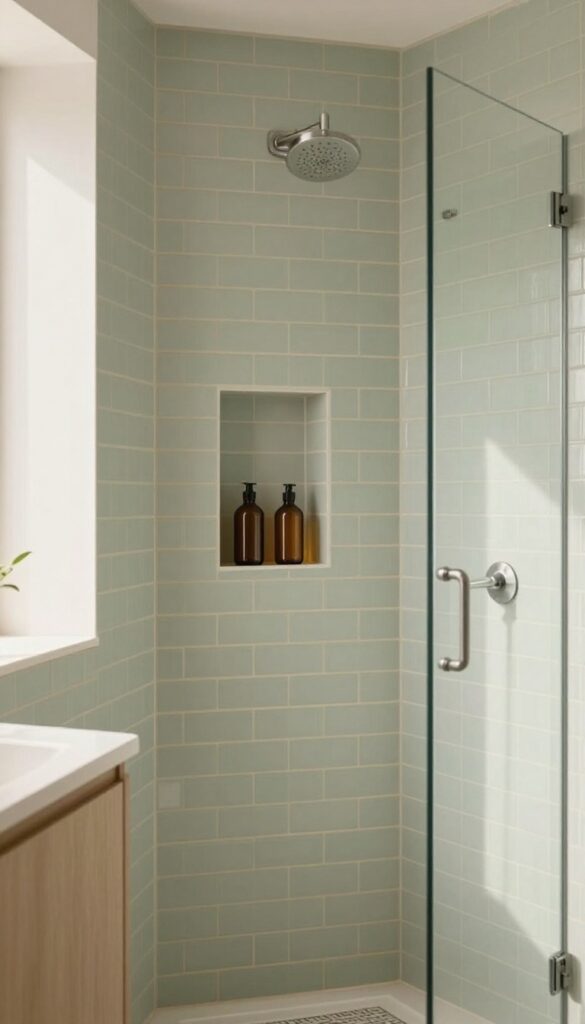
A plain shower can start feeling sterile fast, especially when everything is white, flat, and trying way too hard to look expensive. Soft sage subway tile fixes that problem without turning the bathroom into a trend experiment that feels dated in a year.
This idea works best for anyone who wants color but does not want the shower screaming for attention. I have always liked sage because it feels calm and practical at the same time, which is honestly rare in bathroom design.
Why This Works
Sage sits in that sweet spot between neutral and color, so it adds interest without making the room feel visually busy. Subway tile also gives the eye a familiar pattern, which helps the whole shower feel organized and easy to look at.
The combo is especially good in smaller bathrooms because it brings in softness without chopping up the space. If the grout is slightly warm or light beige instead of bright white, the whole thing looks more natural and a lot less cold.
How to Do It
- Choose a matte or satin sage subway tile in a standard size so the shower feels timeless instead of overly decorative.
- Lay the tile in a classic horizontal brick pattern if the bathroom is small and you want the walls to feel wider.
- Use a light warm grout and simple hardware so the green stays the star without competing with too many finishes.
Style & Design Tips
Pair this tile with white walls, pale oak, brushed nickel, or soft brass for a balanced look that feels easy and pulled together. Do not use a harsh blue-toned white nearby, because it can make sage look muddy instead of fresh.
A built-in niche lined with the same tile keeps things clean and avoids that random shelf effect. If you want a little contrast, use a slightly darker green on the shower floor, but keep the shape simple so the space does not get fussy.
Pro Tip or Budget Hack
If full wall tile is pushing the budget, run the sage tile only inside the shower and keep the rest of the bathroom simple and bright. That still gives the room a custom feel, and it saves money where it actually matters.
2. Deep Emerald Vertical Stack Tile
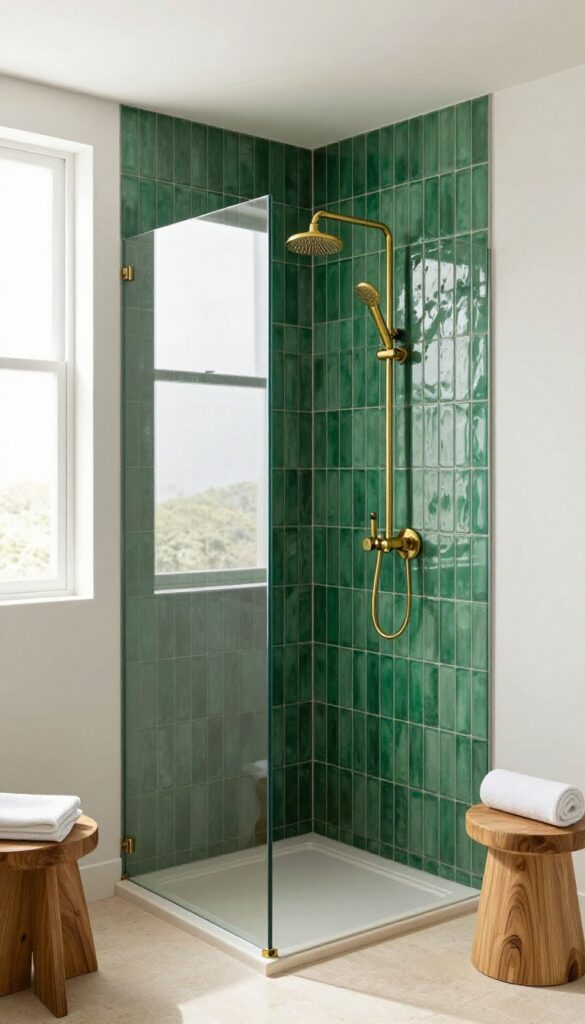
Some bathrooms need more than a soft refresh because they already look bland, builder-grade, or weirdly forgettable. Deep emerald tile gives a shower some backbone, and a vertical stack layout makes it feel modern without needing ten extra design tricks.
This one is great when the room has enough light and you want a richer look. I would not use it in every bathroom on earth, but when it fits, it looks seriously good.
Why This Works
A deep green shade adds depth, while the vertical stack pattern naturally draws the eye upward. That makes the shower feel taller, which is a nice little design win in rooms with average ceilings.
The clean layout also keeps bold color from getting chaotic. Since the pattern is simple, the richness of the emerald feels intentional instead of overly decorative or, frankly, a bit much.
How to Do It
- Pick a rectangular emerald tile with a glossy finish if the bathroom needs help reflecting light.
- Stack the tiles vertically with tight grout lines to create a cleaner, more current look than a traditional offset pattern.
- Keep the rest of the room restrained with plain flooring, minimal decor, and one metal finish for all fixtures.
Style & Design Tips
This tile looks gorgeous with warm brass, walnut wood, and crisp off-white paint. If the bathroom is already busy with patterned floors or ornate vanities, skip those extras here because emerald tile already carries plenty of visual weight.
A frameless glass panel usually works better than a bulky enclosure because it lets the tile stay visible. If you want contrast, use pale stone on the floor rather than another bold color, since too many strong elements can make the whole room feel crowded.
Pro Tip or Budget Hack
Use the emerald tile on the main back shower wall and a simpler coordinating tile on the side walls if costs start climbing. Most people notice the focal wall first anyway, so this is one of those smart shortcuts that still looks high-end.
3. Olive Green Zellige-Style Shower Wall
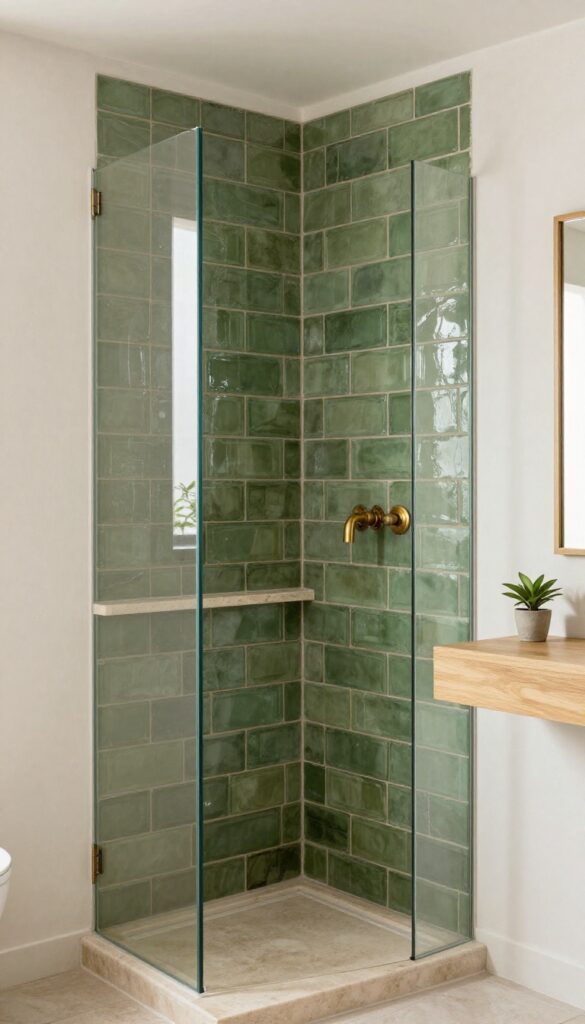
Flat tile can make a shower feel a little lifeless, even when the color is nice. Olive green zellige-style tile fixes that by bringing in movement, shine, and those tiny imperfections that make a bathroom look layered instead of factory-produced.
This is a good choice if the space feels too rigid or boxy. I am a big fan of anything that adds character without needing extra clutter, and this definitely does that.
Why This Works
Zellige-style tile has surface variation, so light hits each piece differently throughout the day. That gives the shower a softer, more organic look, which works beautifully with green because the color already has a natural feel.
Olive is also more grounded than brighter greens, so it stays stylish without feeling trendy. It can lean rustic, modern, or slightly Mediterranean depending on the rest of the room, which makes it surprisingly easy to live with.
How to Do It
- Choose an olive green handmade-look tile with slight variation so the wall has texture and depth.
- Use a matching or close grout color to let the uneven surface stand out without a grid stealing the attention.
- Balance the tile with simple shapes elsewhere, like a plain vanity, streamlined mirror, and minimal accessories.
Style & Design Tips
Olive tile looks amazing with plaster-like walls, wood tones, limestone, and aged brass. Do not pair it with super cool gray finishes unless you want the room to feel disconnected, because olive likes warmth around it.
Since this tile already has natural irregularity, keep the shower niche and trim details simple. Too many fancy cuts or decorative borders can make the space feel busy in a hurry, and that is not the vibe here.
Pro Tip or Budget Hack
If true handmade tile is too pricey, look for ceramic tiles that mimic the uneven glaze and edges of zellige. The good ones still give you that rich, collected look without absolutely wrecking the budget.
4. Mint Green Penny Tile Shower Floor
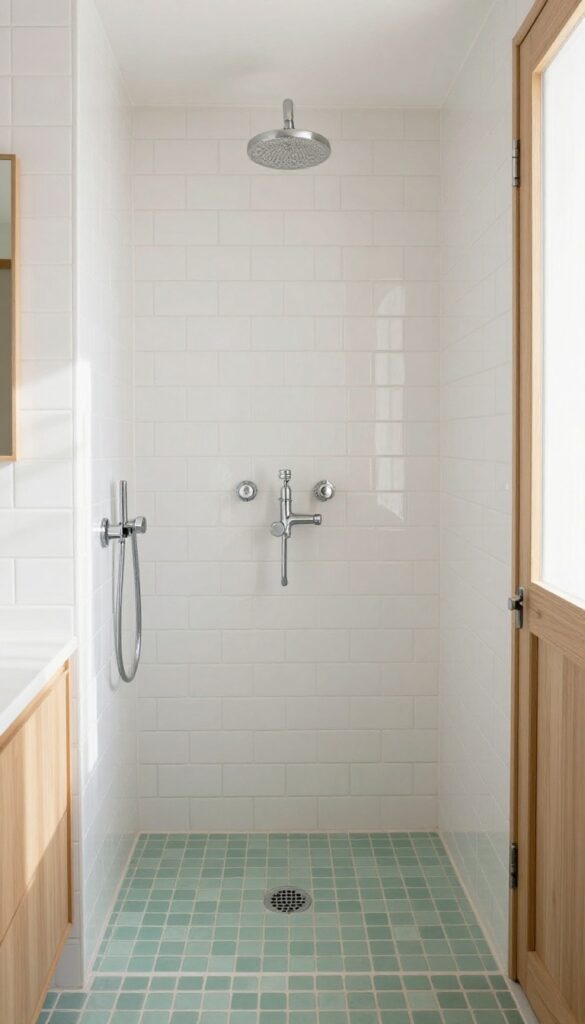
A shower wall does not always need to do all the work. Sometimes the smartest move is keeping the walls calm and letting a mint green penny tile floor bring in the personality where it counts.
This idea is perfect when someone wants a fresh look without covering every inch in color. I like it because it feels playful but still practical, and that is not always easy to pull off in a bathroom.
Why This Works
Penny tile naturally gives more grip underfoot because of all the grout lines, which makes it a solid choice for shower floors. The mint green color adds energy, but since it stays low and contained, it does not overwhelm the room.
It also works well with lots of wall styles, from white subway tile to large-format stone look panels. That flexibility makes it an easy design upgrade even in bathrooms that are not getting a full renovation.
How to Do It
- Select a mint green penny tile mosaic rated for wet floors so it performs well and holds up over time.
- Pair it with simple wall tile in white, cream, or pale greige to keep the shower from feeling overly sweet.
- Use grout that is not too stark, because bright white grout can make the floor look overly busy once everything is installed.
Style & Design Tips
Mint green tends to look best when the room stays clean and airy. Use light wood, polished chrome, or soft white finishes to keep the bathroom fresh instead of turning it into a retro throwback unless that is fully the plan.
A matching mint niche trim can tie the floor into the rest of the shower without overdoing it. Just avoid adding another pastel shade nearby, because that can push the room toward candy-shop territory pretty fast.
Pro Tip or Budget Hack
Floor mosaics usually cost less overall than tiling an entire shower in a specialty green. That makes this one of the easiest ways to add color while keeping the remodel sensible and not financially dramatic.
5. Forest Green Herringbone Accent Wall
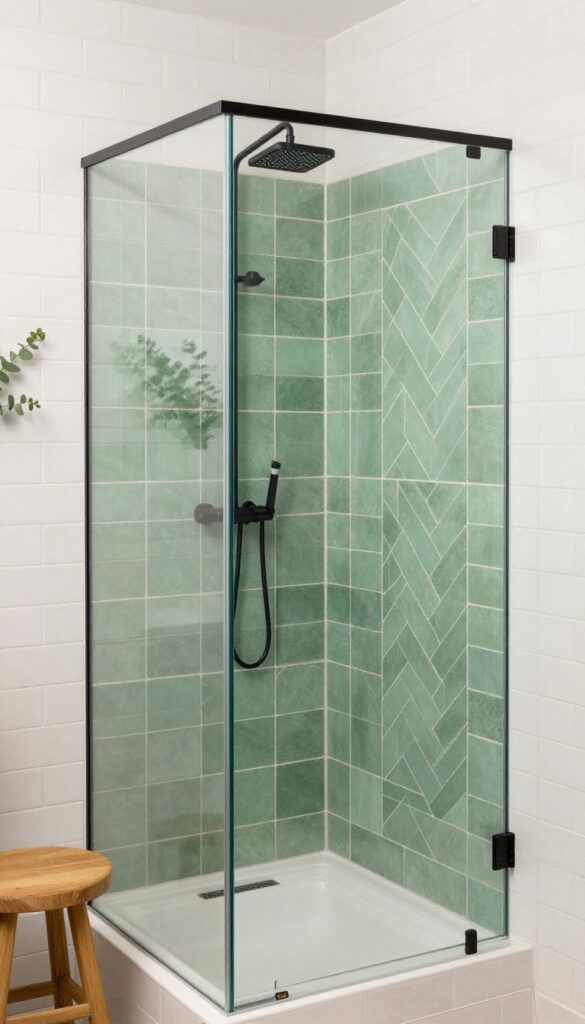
Some showers feel flat because every surface says the exact same thing in the exact same tone. A forest green herringbone accent wall adds pattern, richness, and a clear focal point without forcing the whole shower into full-on statement mode.
This is the move when the room needs one strong feature but not five. I have seen herringbone go wrong when the color and layout both get too loud, but forest green handled with restraint looks sharp.
Why This Works
Herringbone already brings motion, so using it on one wall keeps the design interesting without overwhelming the eye. Forest green adds depth and contrast, which helps the shower feel more custom and less like it came straight out of a rushed showroom display.
Because the accent stays contained, it gives the bathroom structure. The other walls can stay simpler, which keeps the overall look balanced and easier to style over time.
How to Do It
- Use forest green rectangular tile on the back wall only so the pattern reads clearly and does not overcrowd the room.
- Keep the side walls in a quieter tile, like white subway or large-format neutral porcelain, to let the herringbone stand out.
- Plan the tile layout carefully before installation because sloppy herringbone lines are painfully obvious and not in a charming way.
Style & Design Tips
Forest green looks especially strong with black fixtures, warm brass, or medium-toned wood. Do not combine it with multiple competing patterns on the floor or vanity, because herringbone already has enough movement built in.
A simple glass enclosure helps maintain a clean view of the accent wall. If the room is small, use lighter tones outside the shower so the deep green feels intentional and rich instead of heavy.
Pro Tip or Budget Hack
You can fake the custom look by using herringbone only in the upper half or center panel of the back wall and finishing the rest in plain tile. That still creates a designer feel while cutting material and labor costs.
6. Sea Glass Green Large-Format Tile
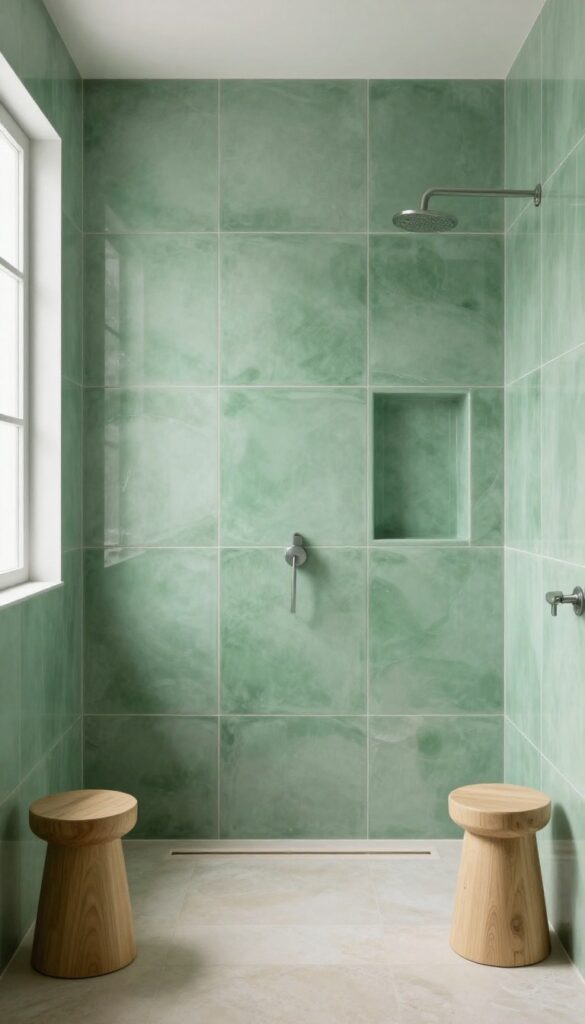
Grout lines can make a shower feel busier than it needs to be, especially in a small bathroom already juggling limited space. Sea glass green large-format tile solves that by giving the room a smoother, calmer surface with just enough color to keep it interesting.
This style works beautifully for a more polished, spa-like bathroom. Personally, I love large-format tile when the goal is clean and quiet, because it makes the whole room exhale a little.
Why This Works
Large tiles reduce visual clutter, so the shower feels more open and less chopped up. A sea glass green shade brings in softness and freshness, which helps the space feel relaxing without going bland.
It is also easier on the eyes than a busy mosaic or a strong pattern covering every wall. That makes this idea especially good for bathrooms where simplicity needs to do most of the heavy lifting.
How to Do It
- Choose a large-format porcelain tile in a muted sea glass green with minimal pattern for a cleaner finish.
- Use narrow grout joints and line up the tile carefully so the surface looks seamless and intentional.
- Keep trims, shelves, and niche details simple so the calm effect of the large tile stays intact.
Style & Design Tips
This tile pairs well with pale stone floors, light oak, brushed nickel, and white or sandy paint colors. Avoid bright, shiny accessories everywhere, because they can interrupt the quiet look and make the room feel more styled than soothing.
A recessed niche in the same tile keeps the shower elegant and uncluttered. If you need contrast, bring it in through towels or a vanity finish rather than a second dramatic tile pattern.
Pro Tip or Budget Hack
Use large-format green tile only on the shower walls and a more affordable neutral tile on the bathroom floor. That keeps the visual impact right where it matters and avoids spending extra in places nobody is staring at anyway.
7. Green and White Checkerboard Shower Niche
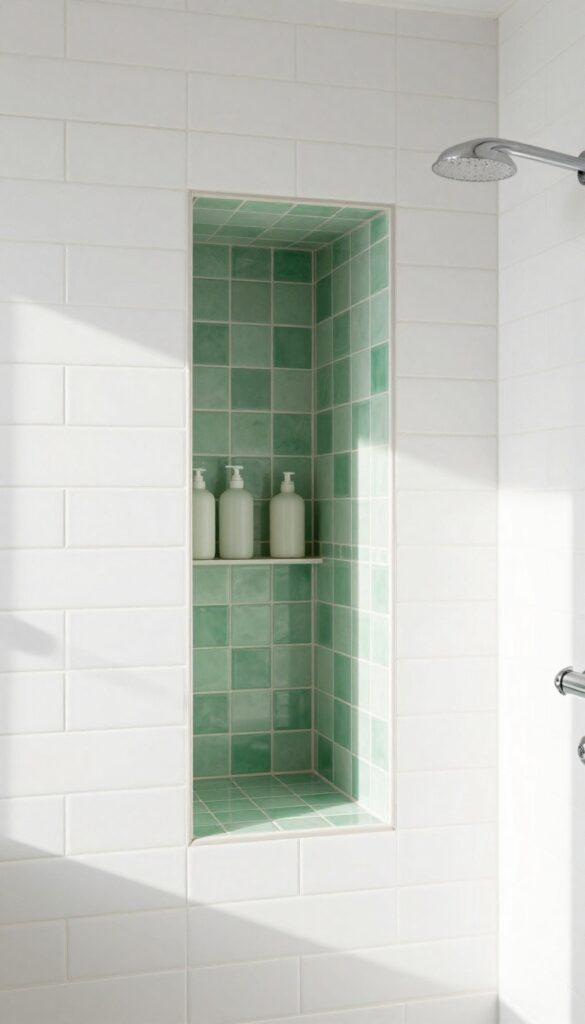
A full green shower is not the only way to add charm. Sometimes one smart little detail, like a green and white checkerboard niche, gives the whole bathroom more personality than covering every wall in expensive tile ever could.
This idea works especially well in bathrooms that already feel decent but need a little spark. I like it because it feels playful without being childish, which is a line some DIY ideas absolutely fail to respect.
Why This Works
A niche naturally draws attention because it breaks up the wall, so using patterned tile there makes the detail feel intentional. The green and white checkerboard adds contrast and rhythm in a small area, which keeps the shower lively without making it chaotic.
It is also an easy way to echo green elsewhere in the room, maybe through towels, paint, or a vanity color. That gives the bathroom a more connected look without requiring a full tile overhaul.
How to Do It
- Build or frame a shower niche in a practical size that actually fits bottles instead of just looking cute in theory.
- Tile the niche interior with small green and white squares so the checkerboard pattern feels crisp and balanced.
- Keep the surrounding shower tile simple and understated so the niche remains a fun focal point instead of blending into visual noise.
Style & Design Tips
This works best with classic shapes and restrained finishes, like white subway tile, chrome fixtures, or pale stone. Do not repeat the checkerboard pattern in three other places, because then the niche loses its charm and the room starts trying too hard.
Use one green tone consistently so the bathroom looks coordinated rather than random. If you want the niche to stand out more, frame it with a slim trim piece in the same green or a soft neutral.
Pro Tip or Budget Hack
A decorative niche lets you use pricier specialty tile in a very small quantity. That means you can grab the pretty tile you actually love without needing to sell a kidney over square footage.
8. Moody Green Tile with Natural Wood Accents
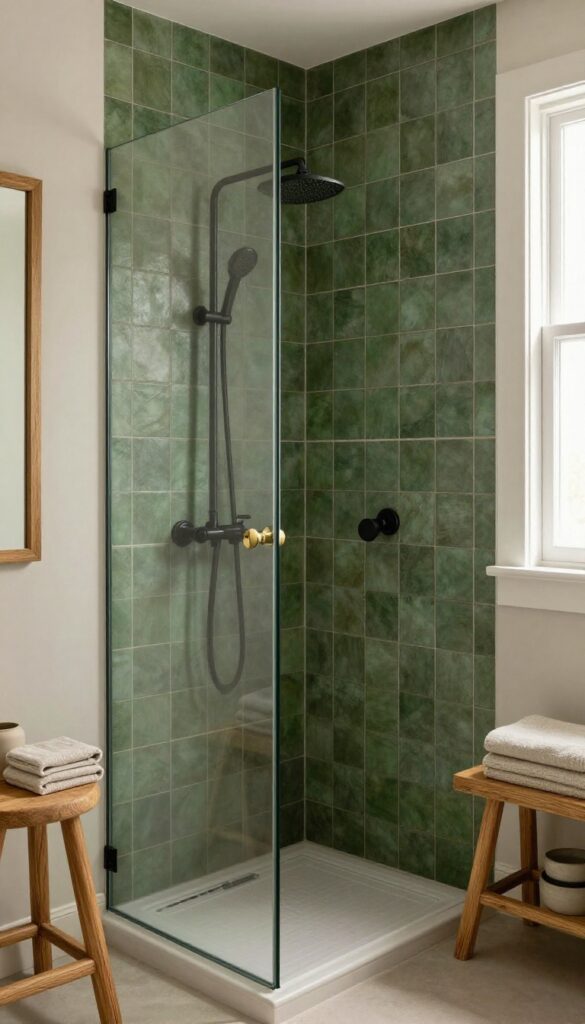
A lot of bathrooms chase brightness so hard that they end up feeling flat and generic. Moody green tile goes the opposite direction and creates a richer, cocoon-like shower, especially when natural wood keeps the whole thing from feeling too dark.
This one is ideal if the goal is cozy, dramatic, and a little elevated without becoming gloomy. I really like this mix because the wood makes the green feel grounded, not theatrical.
Why This Works
Dark green adds depth and mood, while wood introduces warmth and texture. Together, they balance each other out, which is exactly what a darker bathroom needs if it is going to feel inviting instead of cave-like.
The shower becomes a focal point, but not in a flashy way. It feels thoughtful, a little expensive, and a lot more personal than the usual all-white setup everyone acts like is the only safe option.
How to Do It
- Choose a deep moss, bottle green, or smoky green tile for the shower walls depending on how bold you want the look.
- Add natural wood through the vanity, shelving, stool, or framed mirror so the room gets warmth outside the tile.
- Use good layered lighting and a clear glass panel so the darker shower still feels open and usable.
Style & Design Tips
This palette looks best with matte black, aged brass, or earthy stone finishes. Skip orange-toned fake wood and glossy cherry finishes, because they can make the whole room look dated faster than you can say “renovation regret.”
Keep the styling simple and tactile, like linen towels, ceramic containers, and soft neutral paint. If the room is tiny, limit the dark green to the shower area and let the rest of the bathroom breathe.
Pro Tip or Budget Hack
If real wood in a bathroom feels risky, use a good wood-look vanity or moisture-resistant shelving in a natural finish. That still gives you the contrast and warmth without creating extra maintenance headaches later.
9. Mixed Green Mosaic Shower Feature Strip
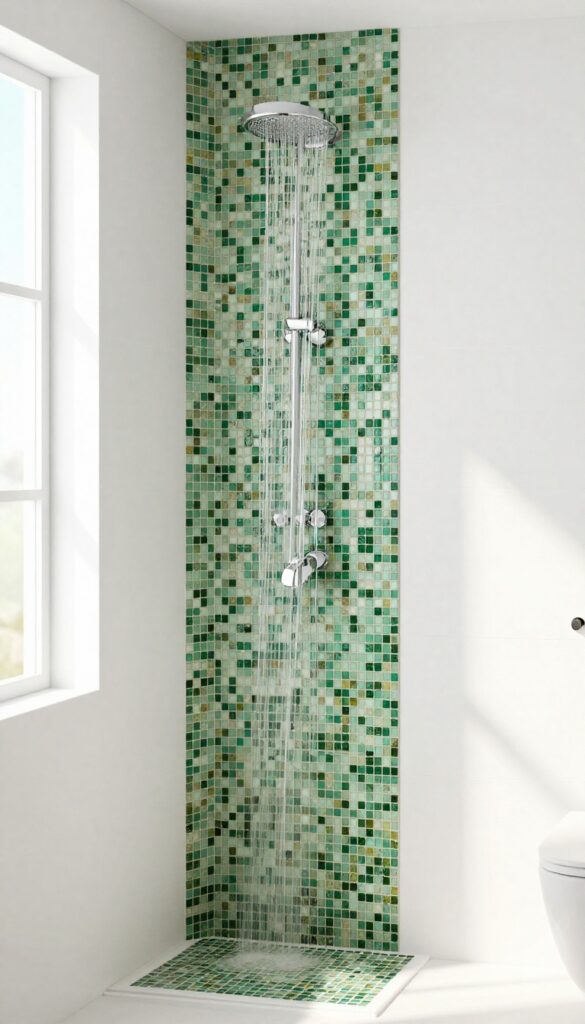
A basic shower can feel unfinished when it lacks a focal detail, but a full pattern overload is not the answer either. A mixed green mosaic feature strip gives the shower movement and color in a narrower band, which makes it feel custom without going overboard.
This is a strong choice for older bathrooms getting a lighter refresh. I have always liked feature strips when they are used with a little restraint, because they can wake up a boring shower fast.
Why This Works
A mosaic strip adds variety through shape, shade, and texture, while the rest of the shower stays simple enough to breathe. Using several green tones together gives the space depth, which makes the design feel more layered than a single flat color would.
It also helps connect different elements in the room. If the vanity, paint, or accessories already lean earthy or cool green, the strip can tie everything together in a way that looks intentional instead of pieced together over several weekends.
How to Do It
- Pick a mosaic blend with two or three green tones so the strip has depth but still feels cohesive.
- Run the strip vertically to highlight height or horizontally at eye level if you want to visually widen the shower.
- Surround it with plain wall tile in white, cream, or soft gray-green so the mosaic stays special and easy to notice.
Style & Design Tips
This idea works best when the mosaic is the only busy element in the shower. Do not use a loud patterned floor and a loud mosaic strip together, because then the eye has nowhere to rest and the room starts feeling messy.
Choose hardware and decor based on the undertone of the green mix. If the mosaic leans warm, brass and wood will feel better, while cooler greens can work nicely with chrome or soft black.
Pro Tip or Budget Hack
Feature strips use less mosaic tile than a full wall, which keeps labor and material costs more manageable. It is a smart way to get that custom shower look without turning the project into a whole money pit situation.
Final Thoughts
Green tile gives a shower personality in a way that still feels calm, practical, and easy to live with. Whether the look is soft sage, deep emerald, or a small mosaic detail, the right shade can completely change how the bathroom feels.
I would always choose the option that fits the room first and the trend second. A bathroom that feels good to use every day will outlast any flashy design move, and honestly, that is the one that wins.