9 Deck Lighting Ideas for a Cozy Night Glow
Good outdoor lighting changes how a deck actually gets used instead of just how it looks. Most decks sit empty after sunset simply because visibility drops and the space stops feeling comfortable.
Smart lighting fixes that problem without requiring a renovation or big budget. Once lighting works with the layout instead of against it, the deck suddenly becomes part of daily life again.
I learned this after realizing my own deck looked great during the day but felt oddly unfinished at night. A few lighting changes completely shifted how often people gathered there.
The goal isn’t brightness; it’s creating layers that feel intentional and easy to live with.
1. Warm String Lights Overhead
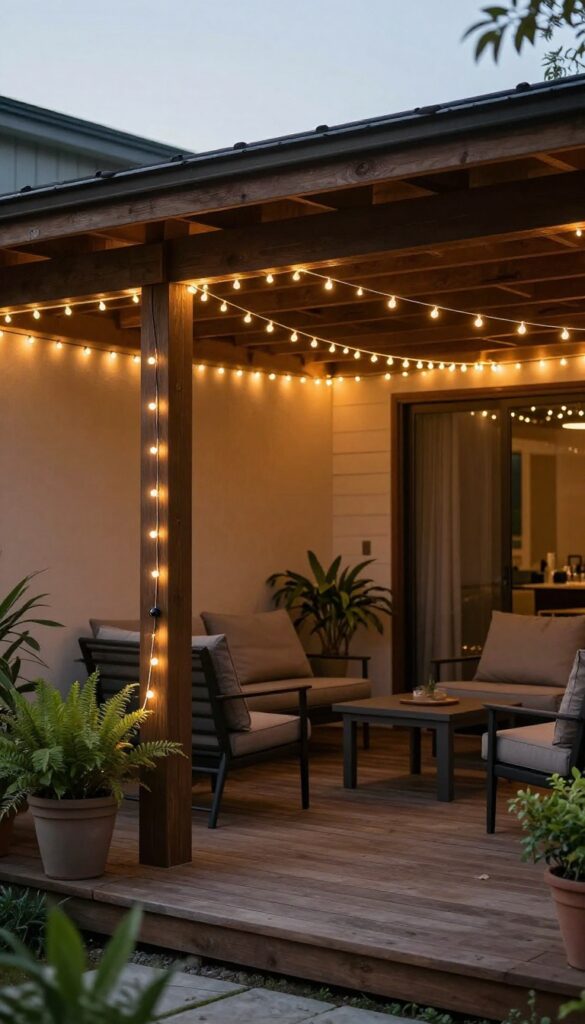
Most decks feel disconnected at night because there’s no visual ceiling tying the space together. Overhead string lights solve that instantly by defining the area without adding walls or bulky fixtures.
They create structure while keeping everything relaxed and casual, which honestly makes guests linger longer.
I used to think string lights were only for parties, but once installed permanently, they became the most functional lighting on the deck. The trick is treating them as architecture rather than decoration.
When placed thoughtfully, they guide movement and make seating areas feel grounded.
Why This Works
Overhead lighting spreads illumination evenly instead of creating harsh hotspots. The gentle glow softens shadows and makes faces visible without feeling like a spotlight situation. It also visually lowers open sky space, which psychologically makes the deck feel cozier.
Warm bulbs mimic indoor lighting temperatures, helping the outdoor area feel like an extension of the house. That continuity matters more than people expect.
How to Do It
- Install sturdy anchor points on posts or exterior walls for proper tension
- Use outdoor-rated LED string lights for durability and energy savings
- Hang lights in slight swoops rather than tight straight lines
- Plug into a timer or smart outlet for automatic evening activation
- Test spacing before final installation to avoid uneven light patches
Each step prevents sagging, glare, or uneven brightness later.
Style & Design Tips
Choose warm white bulbs (2200K–2700K) instead of cool white for a softer atmosphere. Black or dark green cords disappear visually against the night sky, making the glow feel floating rather than cluttered.
Avoid zigzag chaos across the entire deck because it quickly looks messy. One intentional pattern always beats five random ones.
Pro Tip or Budget Hack
Skip expensive pergolas and run guide wires between posts instead. Thin steel cable costs very little and keeps lights perfectly aligned even during windy weather.
2. Recessed Deck Step Lights
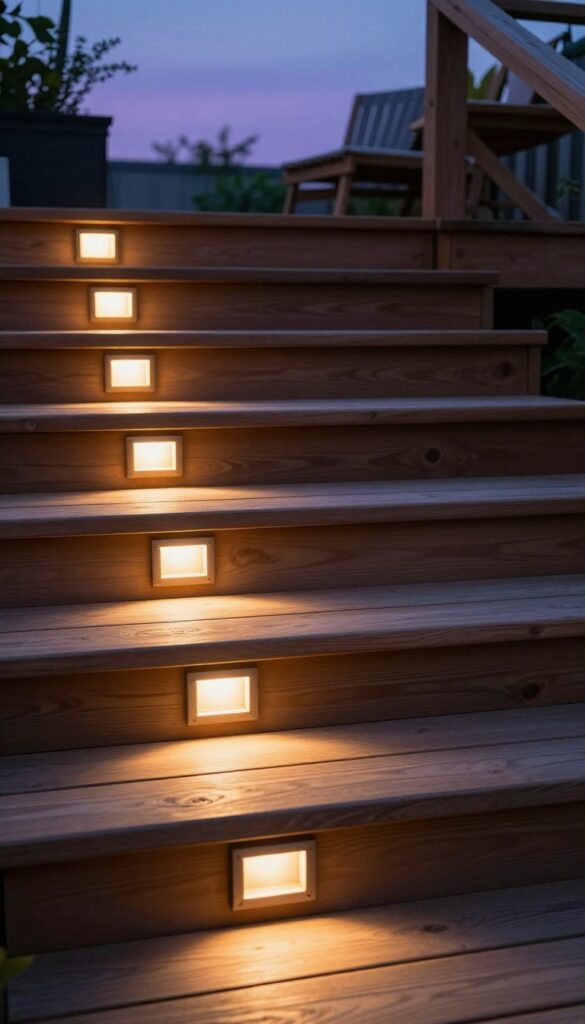
Steps become invisible once darkness hits, and that’s honestly the fastest way to make a deck feel unsafe. Recessed step lights solve visibility while staying subtle enough that you barely notice the fixtures themselves. They quietly guide movement without stealing attention from the rest of the space.
After installing these at a friend’s place, I realized how much confidence lighting adds when walking around outdoors. People naturally move more freely when they don’t have to watch every step.
Why This Works
Low-position lighting creates depth by illuminating surfaces rather than shining directly into eyes. It highlights edges and elevation changes, which improves safety while enhancing visual layering.
Because light stays close to the ground, it prevents glare and keeps the atmosphere relaxed. The deck feels calm instead of overly bright.
How to Do It
- Measure equal spacing along stair risers before drilling
- Choose low-voltage LED fixtures for easy installation
- Install lights slightly off-center to reduce harsh symmetry
- Connect to a transformer designed for outdoor use
- Seal wiring carefully to protect against moisture
Proper spacing ensures consistent guidance rather than scattered illumination.
Style & Design Tips
Stick with small square or rectangular fixtures that blend into wood or composite boards. Matching the fixture color to the deck material helps everything feel intentional.
Avoid overly bright lights because stairs should glow, not shine like runway lights.
Pro Tip or Budget Hack
Solar step lights work surprisingly well if wiring isn’t possible. Choose models with replaceable batteries so performance stays reliable over time.
3. Deck Railing LED Strip Lighting
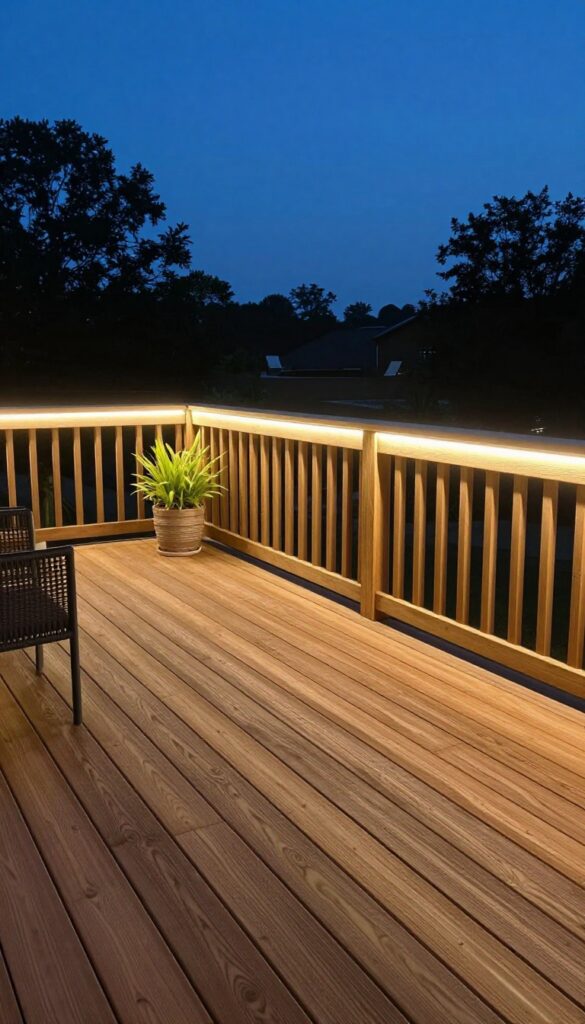
Railings often disappear visually at night, which makes decks feel smaller and less defined. LED strip lighting underneath rail caps outlines the perimeter beautifully while adding a modern edge. It’s subtle during the day and impressive once darkness arrives.
I hesitated trying this because LED strips sounded too modern, but warm-toned versions look surprisingly natural. Installed correctly, they feel custom rather than techy.
Why This Works
Indirect lighting reflects off deck flooring instead of shining outward. That bounce creates soft illumination that spreads evenly without visible bulbs.
It also defines boundaries, making the deck feel larger and more structured visually.
How to Do It
- Clean railing surfaces thoroughly before installation
- Use waterproof outdoor LED strips only
- Install under the railing lip to hide the light source
- Secure strips with mounting clips instead of adhesive alone
- Connect to a dimmer controller for brightness control
Hidden placement makes the lighting feel high-end instantly.
Style & Design Tips
Choose warm white LEDs rather than color-changing strips unless you truly love party vibes every night. Consistency helps maintain a cozy aesthetic.
Avoid visible wires at all costs because they break the illusion quickly.
Pro Tip or Budget Hack
Use aluminum LED channels for under $20 to diffuse light evenly and protect strips from weather damage.
4. Lantern Clusters for Flexible Glow
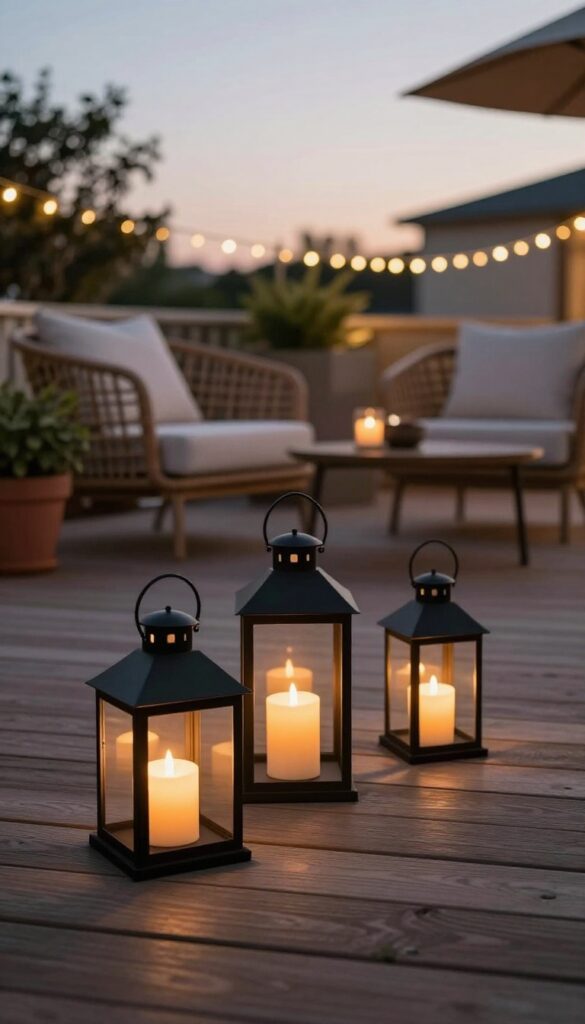
Permanent lighting isn’t always practical, especially if you like rearranging furniture. Lantern clusters provide movable lighting that adapts to gatherings, quiet evenings, or seasonal décor changes.
I started using lanterns during a temporary setup and never fully removed them because they added personality no fixed fixture could match.
Why This Works
Portable lighting creates layered illumination at different heights. That variation adds visual interest and prevents flat lighting.
Lanterns also introduce shadows, which actually makes spaces feel warmer and more intimate.
How to Do It
- Choose weather-resistant lantern materials like metal or resin
- Mix two or three sizes for visual balance
- Use LED candles instead of real flames for safety
- Place near seating areas and corners for depth
- Move placements occasionally to refresh the layout
Flexibility keeps the space feeling alive instead of static.
Style & Design Tips
Stick to one material family like black metal or woven rattan for cohesion. Mixing too many styles turns charming into cluttered quickly.
Group lanterns in odd numbers for a more natural arrangement.
Pro Tip or Budget Hack
Thrift stores often carry inexpensive lanterns that look amazing with a quick matte spray paint refresh.
5. Post Cap Lights for Subtle Structure
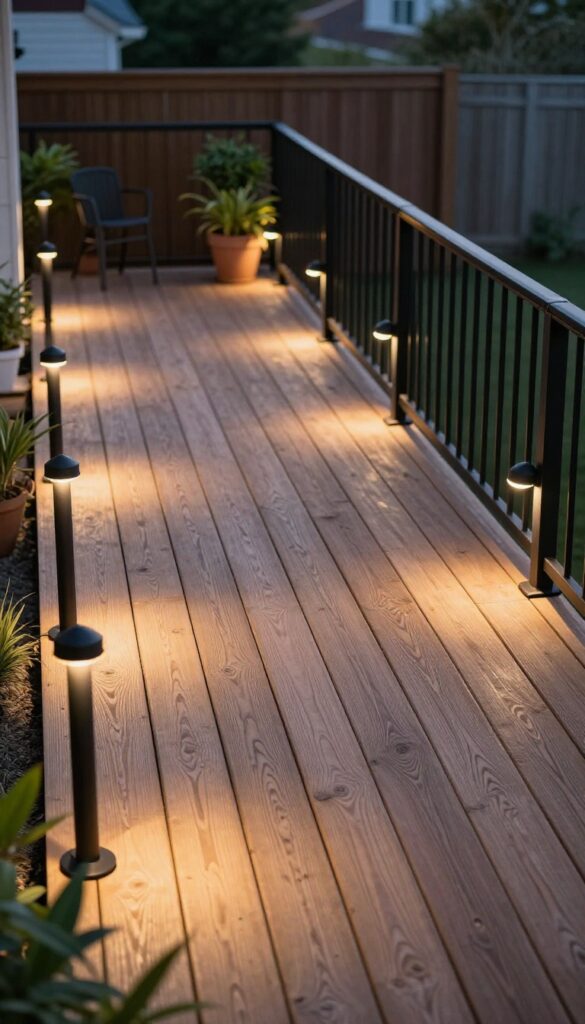
Deck posts already exist, so adding lighting to them feels logical rather than decorative. Post cap lights softly illuminate the perimeter while highlighting the deck’s structure.
This idea feels especially satisfying because it upgrades something already there instead of adding extra fixtures.
Why This Works
Evenly spaced lights create rhythm around the deck. The repetition feels organized and calming without requiring intense brightness.
The elevated position spreads light outward gently, preventing dark corners.
How to Do It
- Measure post dimensions carefully before buying caps
- Choose solar or wired options based on sunlight exposure
- Secure caps tightly to prevent movement
- Align fixtures consistently for symmetry
- Test brightness levels before final installation
Consistency makes the result feel professionally planned.
Style & Design Tips
Match finishes with railing hardware for cohesion. Matte black or bronze usually blends best with most outdoor designs.
Avoid oversized caps that overpower slender posts.
Pro Tip or Budget Hack
Solar versions eliminate wiring costs entirely and install in minutes.
6. Under-Seat Bench Lighting
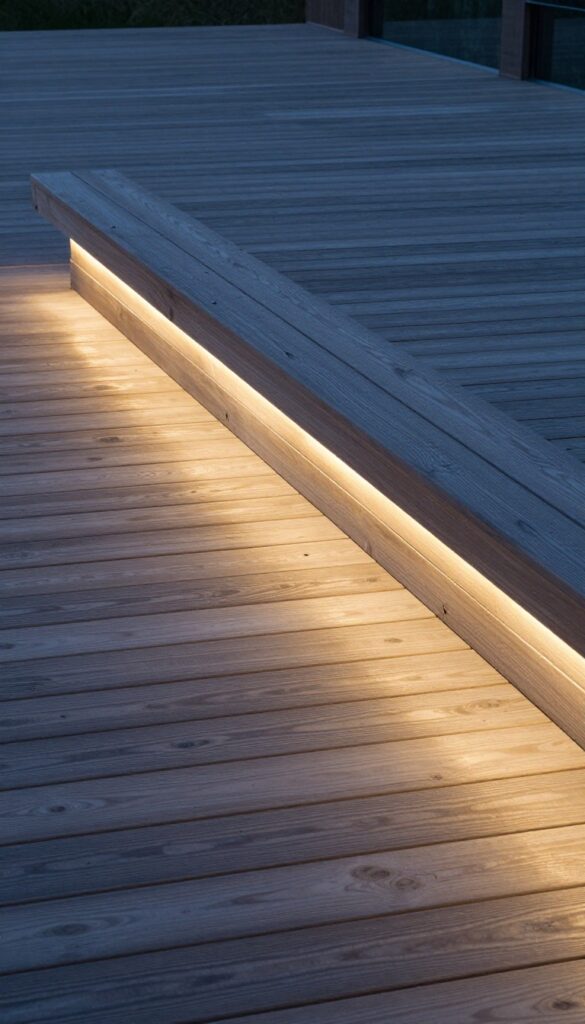
Built-in seating often disappears visually after dark, which wastes valuable deck space. Installing lighting beneath benches creates a floating effect that feels modern yet cozy.
The first time I saw this, it instantly made the deck look custom-built instead of standard.
Why This Works
Hidden lighting adds depth while keeping brightness indirect. The glow reflects across flooring, expanding perceived space.
It also acts as pathway lighting without obvious fixtures.
How to Do It
- Install waterproof LED strips beneath seat edges
- Angle lights slightly inward toward the floor
- Hide wiring behind support framing
- Connect to dimmers for adjustable ambiance
- Test at night before securing permanently
Placement angle matters more than brightness level.
Style & Design Tips
Keep light intensity low for comfort. Soft glow beats strong illumination every time in seating zones.
Avoid colored lighting unless used sparingly for events.
Pro Tip or Budget Hack
Battery-powered LED bars work well if running wires feels overwhelming.
7. Wall-Mounted Sconce Lighting
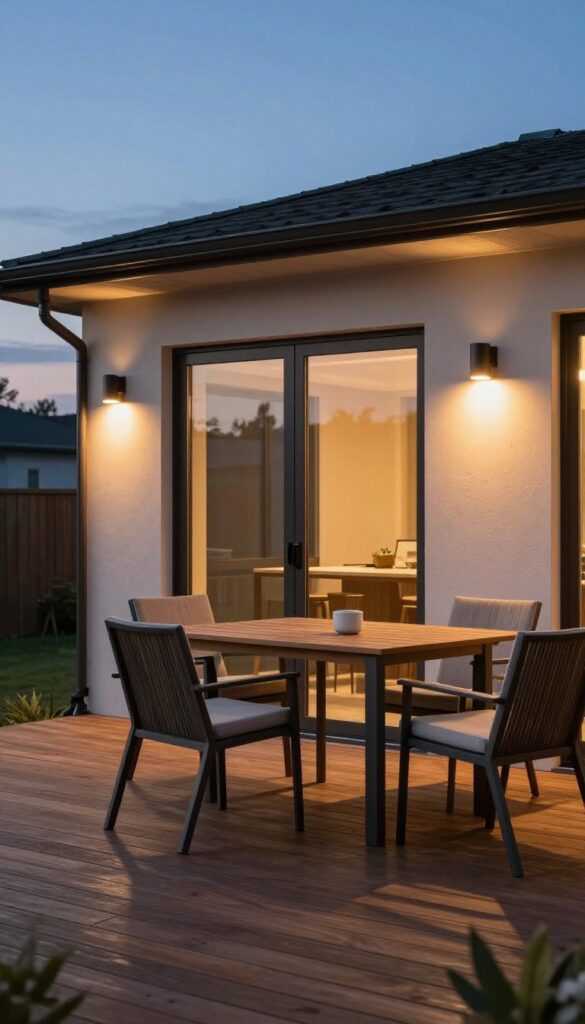
Decks attached to homes often rely too heavily on indoor spill light. Adding outdoor sconces creates intentional lighting instead of accidental brightness.
A good sconce feels like bringing indoor design standards outside, which instantly elevates the space.
Why This Works
Vertical lighting balances horizontal deck features. It draws the eye upward and adds architectural interest.
Focused light also improves visibility near doors and dining areas.
How to Do It
- Install sconces at eye level for balanced lighting
- Choose downward-facing fixtures to reduce glare
- Use outdoor-rated bulbs designed for humidity
- Space evenly along walls or door frames
- Connect to existing exterior switches if possible
Correct height prevents awkward shadows.
Style & Design Tips
Pick fixtures that match your home’s architectural style. Consistency between indoors and outdoors creates a seamless transition.
Avoid overly decorative fixtures that compete with natural surroundings.
Pro Tip or Budget Hack
Hardwired looks expensive, but plug-in outdoor sconces hidden behind furniture achieve a similar effect.
8. Ground Spotlights for Plants and Features
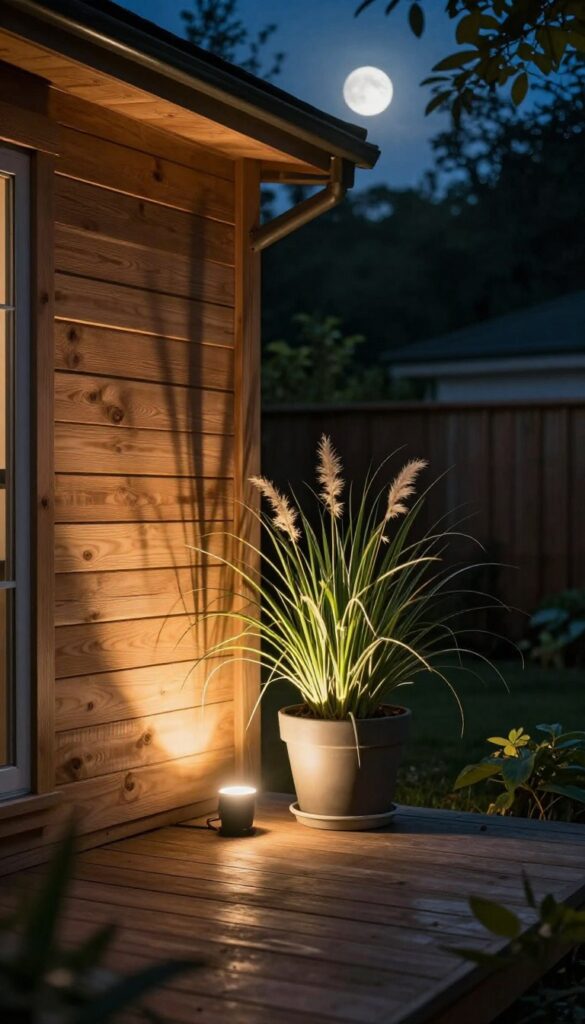
Deck lighting often ignores surrounding landscaping, which makes the area feel isolated at night. Small ground spotlights highlighting plants or textures connect the deck to its environment.
I underestimated this idea until I aimed a light at a simple potted plant and suddenly the whole space felt layered.
Why This Works
Accent lighting adds depth beyond the deck itself. Highlighting vertical elements prevents darkness from closing in visually.
It creates contrast, which makes cozy lighting feel intentional instead of dim.
How to Do It
- Position spotlights at plant bases angled upward
- Use low-lumen bulbs for subtle highlighting
- Hide fixtures behind foliage or décor
- Test angles at night before fixing placement
- Space accents sparingly for balance
Less lighting usually creates stronger visual impact.
Style & Design Tips
Focus on texture-rich elements like grasses or wood walls. One highlighted feature often looks better than many competing lights.
Avoid aiming lights directly toward seating areas.
Pro Tip or Budget Hack
Solar garden spotlights are inexpensive and surprisingly effective for small decks.
9. Fire Bowl or Tabletop Flame Lighting
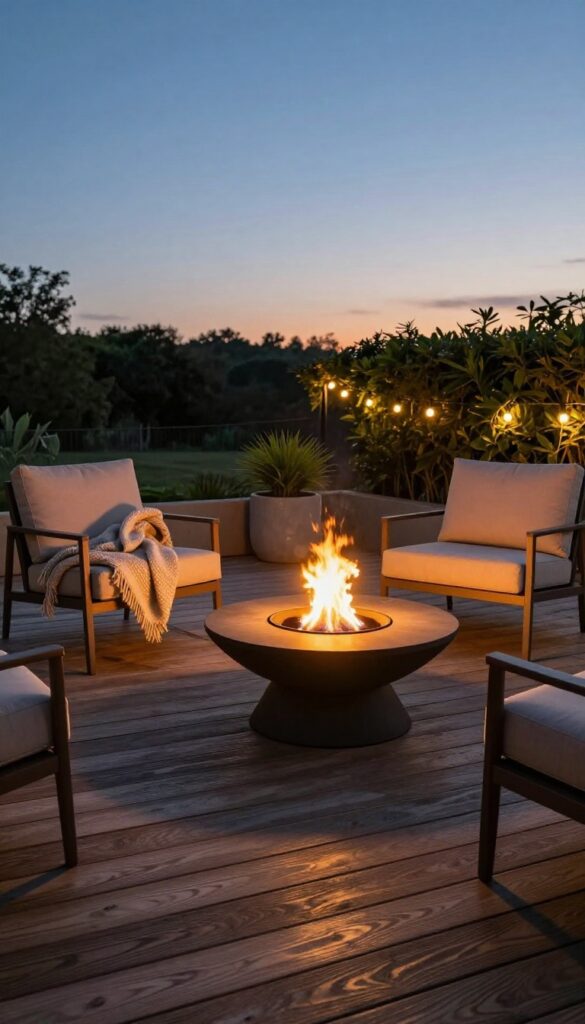
Sometimes electric lighting alone feels slightly flat. Adding a contained flame introduces movement that instantly warms the atmosphere.
A small fire bowl changed my deck more than any fixture because people naturally gather around moving light.
Why This Works
Flames create dynamic shadows and natural warmth. The flicker adds visual interest that static lights cannot replicate.
It also becomes a social focal point without overwhelming the space.
How to Do It
- Choose propane or gel fuel for easy maintenance
- Place on stable, heat-safe surfaces
- Keep clear space around the flame area
- Use protective covers when not in use
- Follow manufacturer safety guidelines carefully
Safety planning keeps the feature relaxing rather than stressful.
Style & Design Tips
Neutral-toned bowls blend best with most décor styles. Stone, concrete, or matte metal finishes feel timeless.
Avoid oversized fire features on small decks.
Pro Tip or Budget Hack
Compact tabletop fire pits deliver the same cozy effect at a fraction of the cost and work well in rental spaces.
Final Thoughts
Deck lighting works best when layered rather than relying on one bright source. Mixing overhead, low, and accent lighting creates comfort without overwhelming the space. Small upgrades usually deliver bigger results than expensive renovations.
I’ve learned that cozy outdoor spaces come from thoughtful placement, not fancy equipment. Start with one idea, see how the space changes, and build slowly from there. Once lighting feels intentional, the deck naturally becomes everyone’s favorite place to hang out.