9 Front Yard Rose Landscaping Ideas That Wow
Strong curb appeal usually comes down to structure, color balance, and how intentional everything feels.
Roses just happen to check all three boxes when you use them correctly.
Most front yards either look overdesigned or completely neglected. Roses sit perfectly in the middle when you plan them with purpose instead of planting them randomly and hoping for magic.
1. Symmetrical Rose Borders Along the Walkway
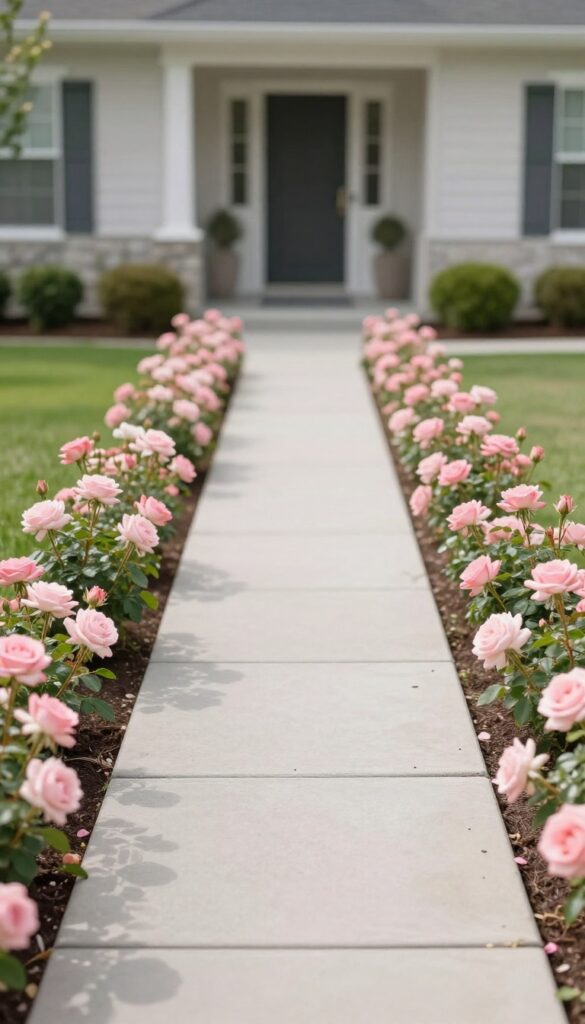
Front walkways often feel like an afterthought, even though they literally guide every guest to your door. Lining both sides with matching rose bushes instantly creates order and polish without adding complicated hardscaping. I’ve tried uneven plantings before, and trust me, symmetry just looks cleaner.
When you mirror the same rose variety on each side, the yard feels intentional instead of chaotic. It frames the path like a soft floral hallway and makes even a basic concrete walkway look elevated.
Why This Works
Symmetry naturally feels balanced to the eye. When both sides of the walkway match, it creates structure and rhythm, which makes the entire front yard feel cohesive.
Roses add height, color, and texture without blocking visibility. You get drama without sacrificing functionality.
How to Do It
- Choose one rose variety for both sides to keep things cohesive
- Space plants evenly, usually 18–24 inches apart
- Prepare soil with compost for stronger blooms
- Add a simple edging border to keep lines crisp
Even spacing matters because uneven gaps will look messy once the plants mature. Compost helps roses thrive, which means fewer sad-looking stems later.
Style & Design Tips
Stick with classic colors like red, blush, or white if your house exterior is bold. If your home is neutral, you can go for brighter pinks or even peach tones.
Avoid mixing too many rose colors in this setup because symmetry loses impact when it feels busy. Keep it focused and clean.
Pro Tip or Budget Hack
Buy smaller rose plants instead of fully mature ones. They cost less, and within a season or two, you won’t notice the difference.
2. Rose-Covered Entry Arch
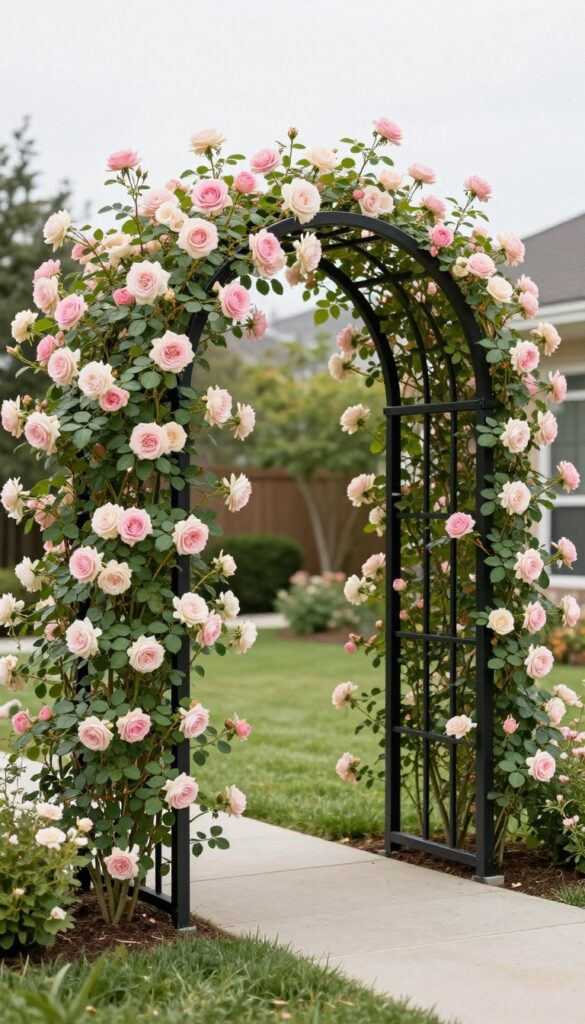
Some front doors feel flat, especially when there’s no porch depth. Installing a simple metal or wooden arch and training climbing roses over it instantly adds vertical interest. I love this because it draws the eye upward without adding bulk.
A rose arch makes the entrance feel defined and welcoming. It creates a subtle statement that says you actually planned your landscaping.
Why This Works
Vertical elements break up horizontal lawn space. Roses climbing upward create dimension and make the yard look layered instead of flat.
An arch also frames the door, which naturally highlights your entry point. That’s a smart visual trick.
How to Do It
- Install a sturdy arch anchored securely into the ground
- Choose climbing rose varieties
- Tie stems gently to guide upward growth
- Prune regularly to control shape
Guiding the stems early makes a big difference. If you ignore them, they’ll grow wild and uneven.
Style & Design Tips
Choose an arch color that contrasts your roses but complements your home. Black metal works with almost anything.
Keep nearby landscaping simple because the arch should be the focal point. Too many surrounding plants compete visually.
Pro Tip or Budget Hack
Check local garden groups for secondhand arches. People sell them cheap when redesigning their yards.
3. Mixed Rose and Boxwood Foundation Bed
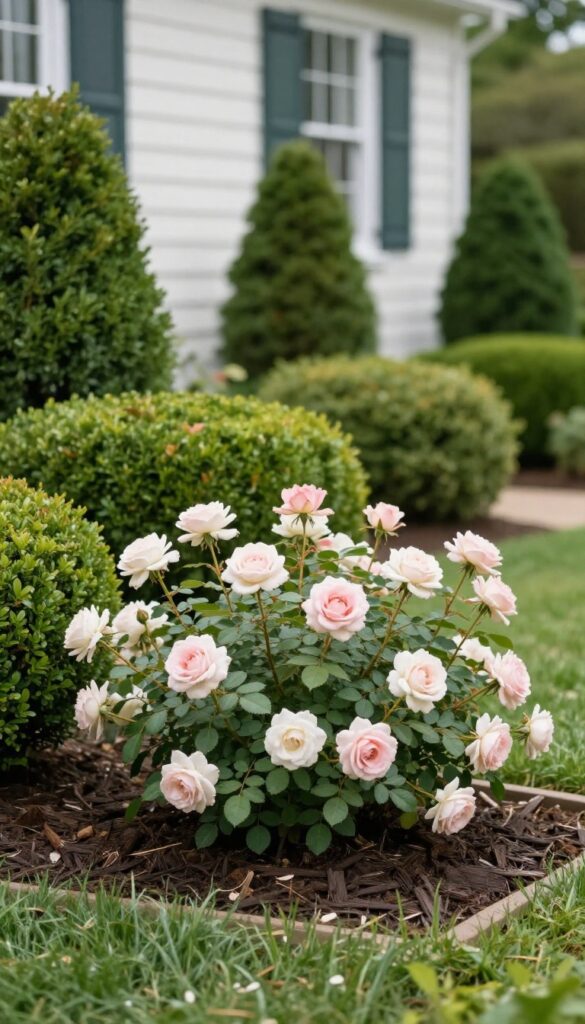
Foundation beds often look flat when filled with only one plant type. Pairing structured boxwoods with blooming roses creates contrast that feels both elegant and grounded. I’ve done this combo before, and it never looks outdated.
The rounded boxwoods anchor the space while roses add softness. It’s the perfect mix of tidy and romantic.
Why This Works
Boxwoods provide year-round greenery and structure. Roses bring seasonal color and texture, so the bed never feels boring.
The contrast between dense foliage and delicate blooms creates depth. That layering makes the house look more finished.
How to Do It
- Plant boxwoods closer to the house
- Position roses slightly in front for visibility
- Use mulch to unify the bed visually
- Maintain regular pruning for shape
Keeping boxwoods trimmed prevents them from overshadowing the roses. Clean edges matter here.
Style & Design Tips
Stick to one or two rose colors max. Too many shades will clash with the clean boxwood structure.
Add subtle landscape lighting because roses glow beautifully at night without overwhelming the yard.
Pro Tip or Budget Hack
Start with smaller boxwoods. They grow slowly, so buying large ones rarely justifies the price.
4. Circular Rose Island in the Lawn
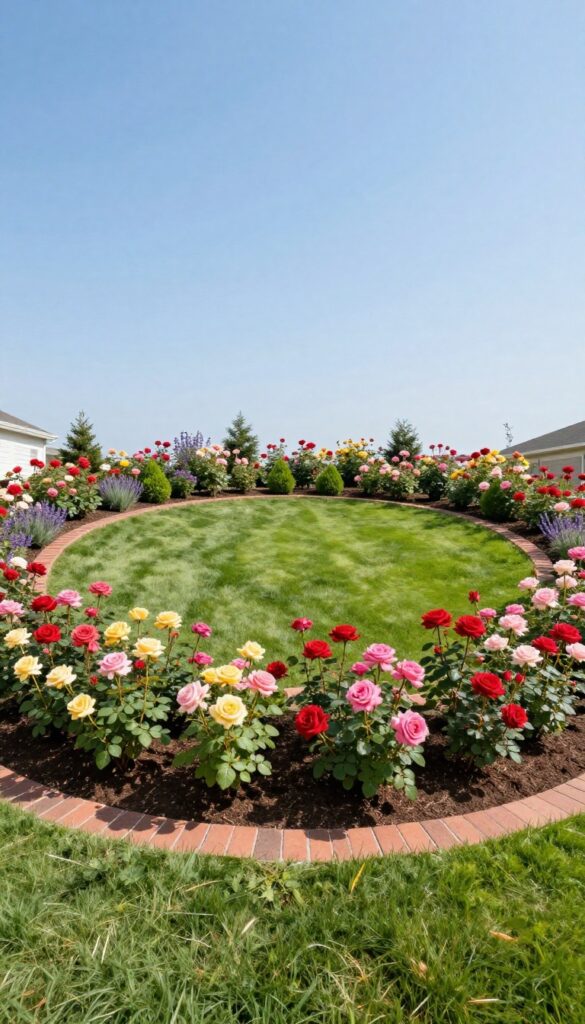
Large lawns sometimes feel empty and lifeless. A circular rose bed in the center breaks up that open space without making the yard feel crowded. I’ve seen this done poorly, but when done right, it looks high-end.
This idea works especially well in wide suburban front yards. It gives the lawn a focal point.
Why This Works
A central island creates balance and draws attention inward. It prevents the lawn from looking like a blank green sheet.
Roses add color in the middle while grass surrounds them evenly. That circular contrast looks intentional and structured.
How to Do It
- Mark a perfect circle using a stake and string
- Remove sod inside the circle
- Add rich soil and compost
- Plant roses evenly spaced
The circle must be symmetrical or it will look sloppy. Measure twice before digging.
Style & Design Tips
Add low-growing border plants around the roses for layering. Keep heights staggered for dimension.
Avoid overcrowding because too many plants will hide the circular shape. Let the form breathe.
Pro Tip or Budget Hack
Use bricks or affordable pavers as edging. They define the circle without major expense.
5. Low Rose Hedge for Soft Privacy
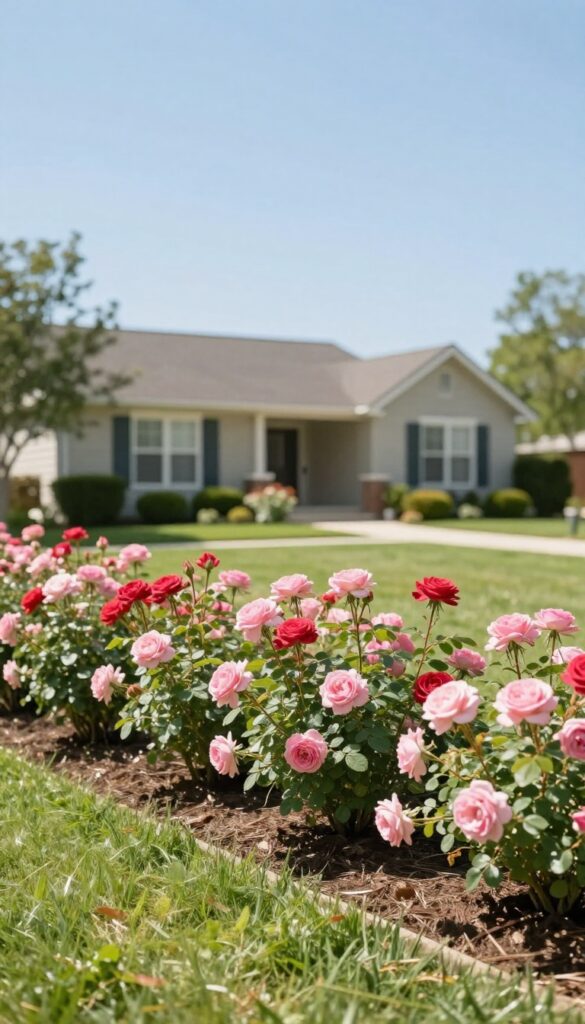
Some front yards feel overly exposed, especially if the house sits close to the street. A low rose hedge adds gentle privacy without creating a fortress vibe. I like this option because it softens boundaries.
Unlike tall fences, roses keep things open and friendly. They create separation without blocking light.
Why This Works
Hedges define property lines and structure the yard. Roses make that boundary beautiful instead of harsh.
A low hedge maintains visibility while adding texture and color. That balance keeps the yard welcoming.
How to Do It
- Choose shrub roses suited for hedging
- Plant in a straight, evenly spaced line
- Trim lightly to maintain shape
- Add mulch for moisture retention
Consistent spacing ensures the hedge fills in evenly. Gaps look awkward later.
Style & Design Tips
Keep the hedge height consistent. Uneven trimming makes it look neglected.
Choose colors that complement your exterior paint because the hedge becomes a major visual element.
Pro Tip or Budget Hack
Plant bare-root roses during planting season. They’re significantly cheaper than potted ones.
6. Tiered Rose Garden with Stone Retaining Walls
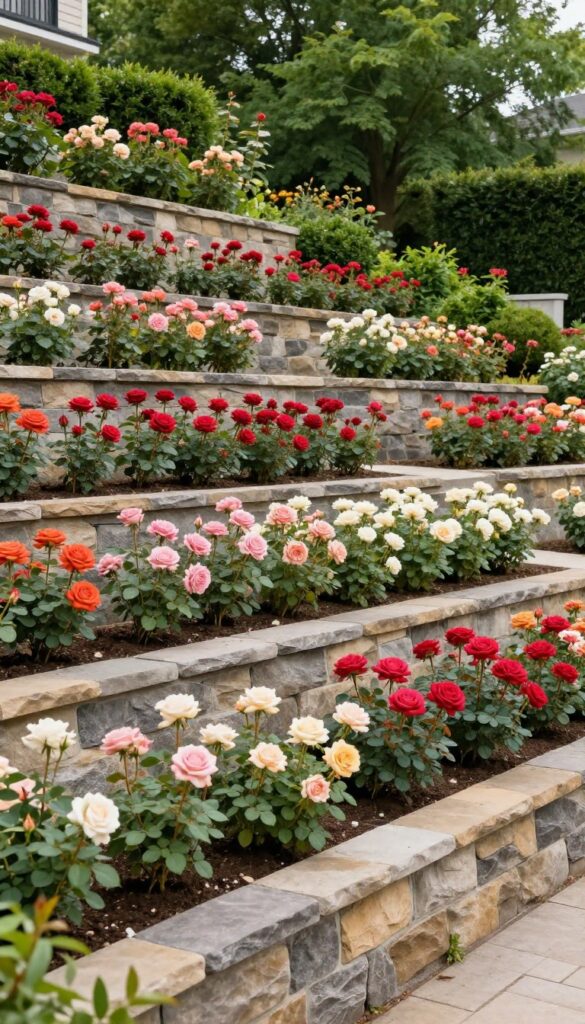
Sloped front yards can feel frustrating to landscape. Instead of fighting the incline, build tiered beds with small stone retaining walls and plant roses on each level. I’ve seen this transform awkward slopes into showpieces.
The tiers create layers of blooms at different heights. It looks structured and impressive.
Why This Works
Tiers prevent soil erosion and create organized planting areas. Roses thrive when soil stays stable and well-drained.
The layered look adds depth and dimension. That makes even a small yard feel larger.
How to Do It
- Build low retaining walls securely
- Fill each tier with enriched soil
- Plant roses staggered for visibility
- Install drip irrigation if possible
Staggering prevents one row from hiding another. Good drainage keeps roots healthy.
Style & Design Tips
Use natural stone for a timeless look. Gray or tan tones work with most rose colors.
Keep wall heights proportional because overly tall walls can overpower the yard.
Pro Tip or Budget Hack
Consider concrete blocks with stone veneer. They cost less but still look upscale.
7. Rose and Gravel Courtyard Entry
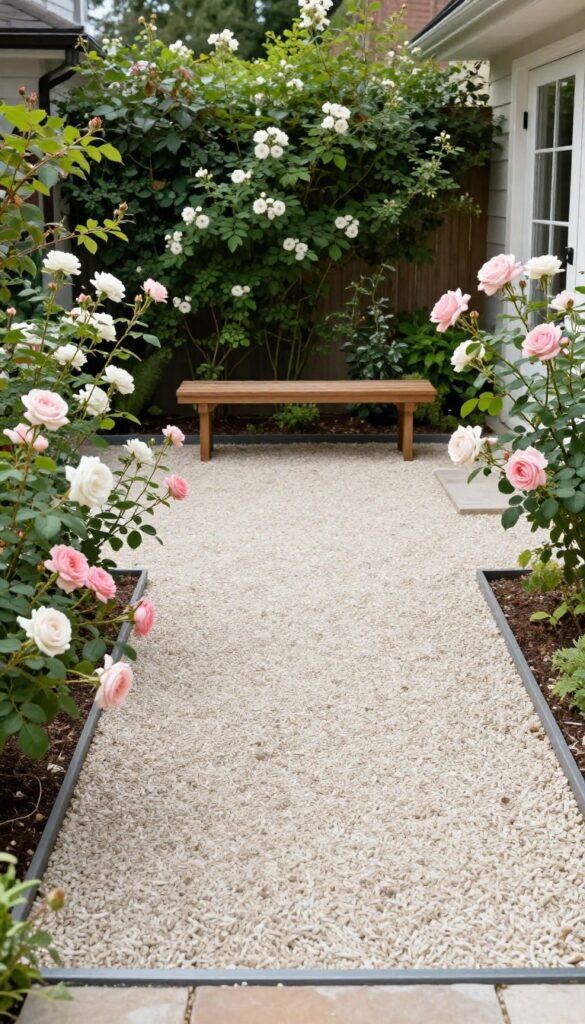
Some front yards lack defined entry space. Creating a small gravel courtyard near the door and surrounding it with roses instantly defines that zone. I love gravel because it feels relaxed yet intentional.
The crunch underfoot adds subtle charm. Roses soften the hard texture of stone.
Why This Works
Gravel provides contrast against greenery and blooms. That texture shift makes roses stand out more.
A courtyard setup organizes the front yard layout. It creates a mini destination space.
How to Do It
- Outline courtyard area with edging
- Lay landscape fabric
- Spread gravel evenly
- Plant roses around the perimeter
Landscape fabric prevents weeds. Even gravel depth keeps it looking neat.
Style & Design Tips
Choose light gravel for dark houses and darker gravel for light houses. Contrast enhances impact.
Add a simple bench because functional seating makes the space feel intentional.
Pro Tip or Budget Hack
Buy gravel in bulk instead of bags. Bulk pricing saves a surprising amount.
8. Rose Window Boxes for Elevated Impact
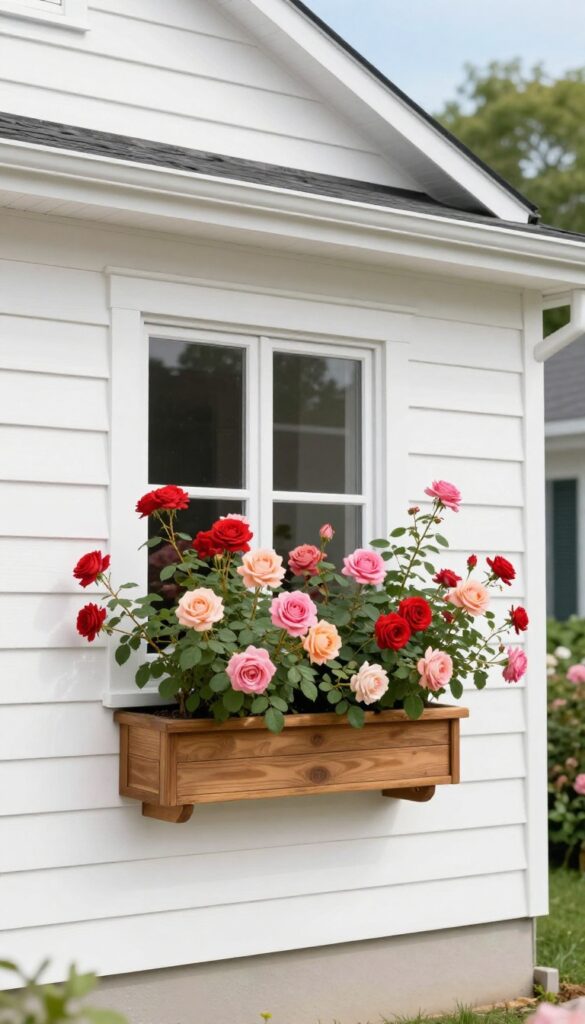
Plain front windows sometimes lack personality. Installing window boxes filled with roses adds color at eye level. I didn’t expect how dramatic this would look until I tried it.
Window-level blooms change the entire facade. It feels polished and thoughtful.
Why This Works
Elevating roses draws attention upward. That balances taller house features like shutters or trim.
Window boxes add depth and dimension to flat walls. They create visual layering.
How to Do It
- Install sturdy window boxes securely
- Add high-quality potting mix
- Plant compact rose varieties
- Water consistently
Secure mounting prevents sagging. Good soil keeps blooms vibrant.
Style & Design Tips
Match box color to trim for cohesion. Keep plant density moderate to avoid overcrowding.
Deadhead regularly because maintenance is more visible at eye level.
Pro Tip or Budget Hack
DIY wooden boxes cost far less than decorative metal ones. Paint them for durability.
9. Rose-Focused Corner Accent Bed
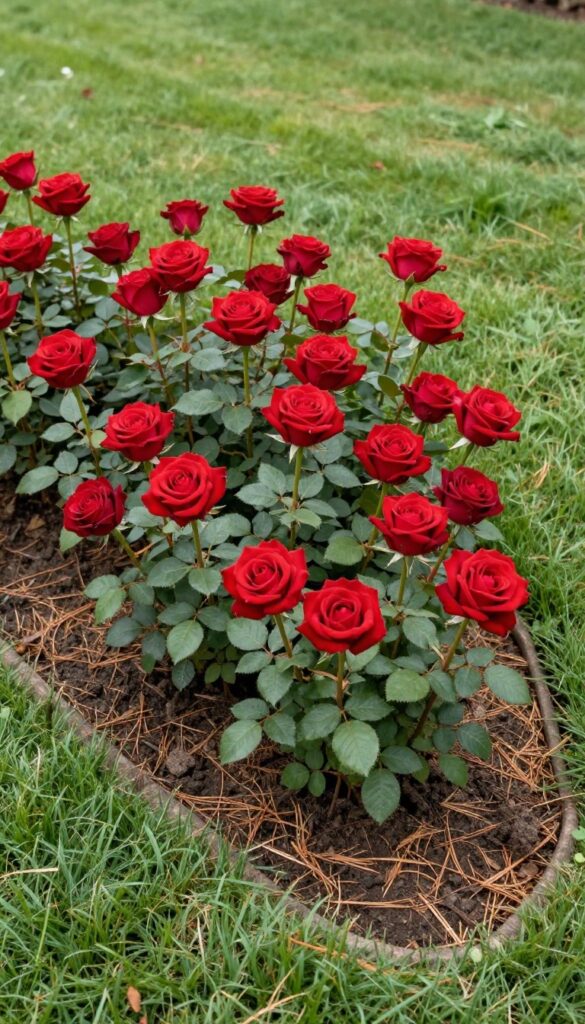
Empty front yard corners often collect random plants without purpose. Designing a dedicated rose accent bed in one corner gives that space direction. I prefer using one strong rose color for impact.
This works especially well on corner lots. It turns unused space into a highlight.
Why This Works
Corner beds anchor the yard visually. They prevent open edges from feeling forgotten.
Roses add bold color where the eye might otherwise skip. That balances the overall landscape.
How to Do It
- Outline the corner bed shape clearly
- Remove grass and enrich soil
- Plant roses in triangular formation
- Add low ground cover for texture
A triangular layout fills the space naturally. Ground cover prevents empty gaps.
Style & Design Tips
Keep shapes clean and defined. Crisp edges make the bed look intentional.
Choose one dominant rose shade because too many colors reduce focus.
Pro Tip or Budget Hack
Use inexpensive mulch alternatives like pine needles. They look great and cost less.
Final Thoughts
Front yard roses don’t require a mansion-sized property or a professional crew. They just need planning, structure, and a little patience.
I’ve tried messy layouts before, and the difference between random planting and intentional design is huge. If you pick one idea and commit to it fully, your yard will look like you hired someone, even if you didn’t.