10 Small Bedroom Cupboard Ideas That Maximize Space
Storage works best when it follows behavior instead of fighting it. A small bedroom cupboard can either feel like a daily frustration or a quiet little system that supports your routine without drama. The difference usually comes down to layout and intention, not square footage.
You’ve told me more than once that you’re tired of shoving things behind closed doors and hoping for the best. So let’s fix that properly.
These ideas aren’t fancy showroom tricks; they’re practical upgrades I’ve tested, tweaked, and sometimes messed up before getting right.
1. Double Hanging Rod System
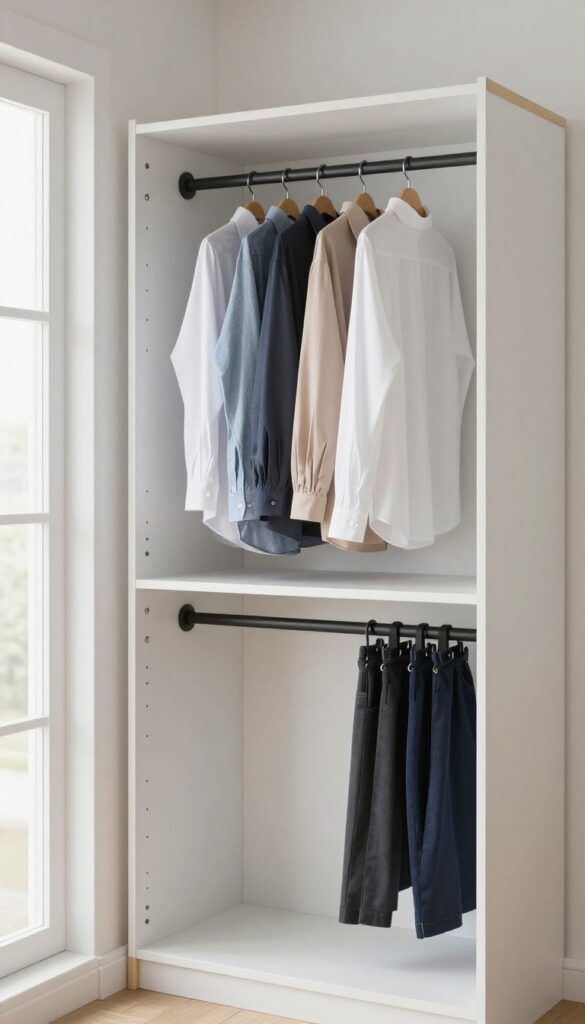
Short hanging space gets wasted more than people realize. Most cupboards come with a single rod that leaves a huge gap below shorter clothes like shirts and folded pants. Installing a second rod instantly doubles your usable hanging area without expanding the cupboard itself.
I added this in my guest bedroom and honestly wondered why I hadn’t done it sooner. It took one afternoon and completely changed how the space felt. No more overcrowded rod, and nothing drags awkwardly at the bottom.
Why This Works
Vertical space often goes unused in small cupboards. By dividing one tall section into two functional zones, you maximize storage without creating visual clutter.
It also keeps categories separate. Tops stay above, bottoms below, and your brain doesn’t have to work overtime in the morning.
How to Do It
- Measure the full height from the existing rod to the floor to determine spacing.
- Install a tension rod or a mounted rod approximately halfway down, leaving enough clearance for shirts.
- Adjust the upper rod slightly higher if needed to avoid cramping longer items.
- Test with actual clothes before tightening everything permanently.
Each step ensures proper spacing so nothing bunches up or hangs awkwardly.
Style & Design Tips
Use matching rods in a matte black or brushed steel finish for a clean look. Mixing finishes inside a small cupboard can make it feel visually chaotic.
Avoid placing the lower rod too low. If clothes brush the floor, the whole setup feels cramped and sloppy.
Pro Tip or Budget Hack
Tension rods are cheaper and renter-friendly. If you’re unsure about drilling, start there and upgrade later if you love the layout.
2. Built-In Drawer Inserts for Folded Items
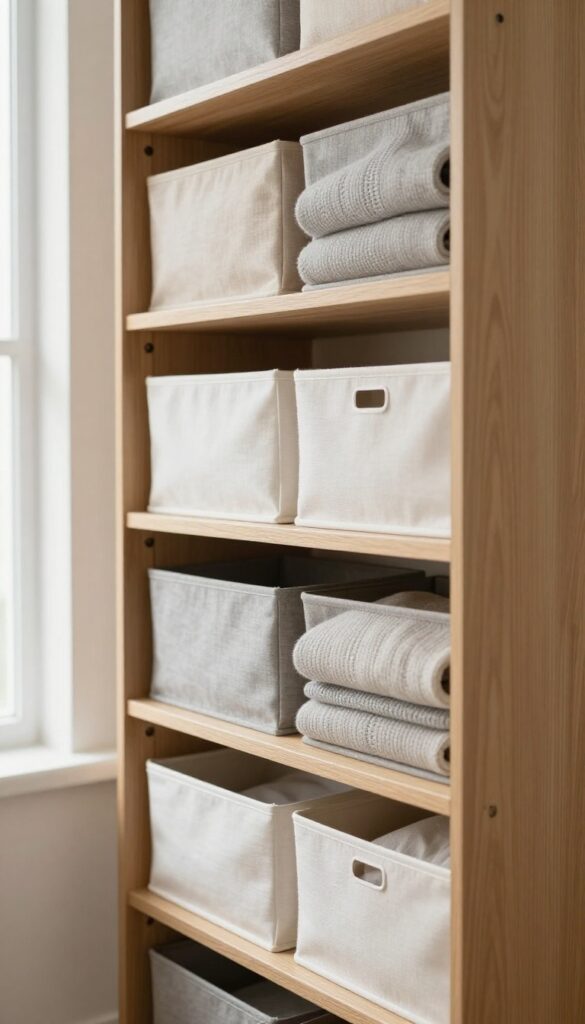
Folded clothes stacked directly on shelves always collapse. You pull one sweater and suddenly everything looks like it survived a mild earthquake. Drawer inserts or fabric bins solve that mess by containing categories.
I resisted this for years because I thought bins felt unnecessary. Turns out, I was wrong. Once I grouped items into compartments, I stopped refolding things every other day.
Why This Works
Containment prevents shifting. When items have boundaries, they don’t slide or lean into neighboring stacks.
It also improves visibility. You see exactly what you own instead of digging blindly through piles.
How to Do It
- Measure shelf depth and width carefully before buying inserts.
- Choose low-profile bins that fit without forcing the shelf space.
- Assign each bin a category like sleepwear, gym clothes, or seasonal tops.
- Avoid overfilling; leave slight breathing room for easy access.
Proper sizing makes everything feel intentional instead of stuffed.
Style & Design Tips
Stick to neutral fabric bins like beige, grey, or white to keep the cupboard calm and cohesive. Loud patterns inside a small space can feel busy.
Label discreetly if needed, but don’t overdo it. Too many labels can make it look like a storage unit instead of a bedroom cupboard.
Pro Tip or Budget Hack
Use sturdy cardboard boxes wrapped in neutral paper if you want a cheap alternative. Nobody sees inside your cupboard anyway.
3. Slim Pull-Out Vertical Shelves
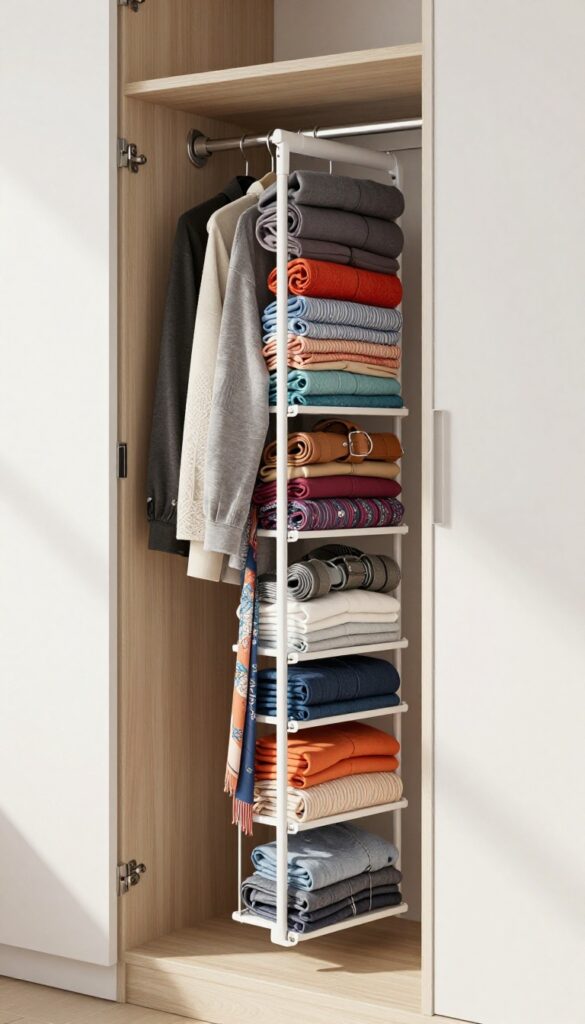
Dead space along the sides of cupboards drives me crazy. That narrow strip between the wall and your hanging clothes is prime real estate if you use it right.
Slim pull-out vertical shelves fit into those tight gaps and store smaller items like scarves, belts, or folded tees. It’s a small adjustment with a big payoff.
Why This Works
Narrow storage keeps small accessories from tangling or disappearing. It also uses awkward leftover inches that usually go unused.
Pull-out mechanisms improve access. You don’t have to dig behind clothes to reach something hidden.
How to Do It
- Measure the side gap precisely, even if it’s only 4–6 inches wide.
- Install a slim sliding shelf unit designed for tight spaces.
- Secure tracks firmly so it glides smoothly without wobbling.
- Organize by size and category to avoid overcrowding.
Accurate measurement prevents wasted money and installation headaches.
Style & Design Tips
Match the shelf material to your cupboard interior for a seamless look. White laminate or light wood keeps the space feeling open.
Avoid dark finishes in tiny cupboards unless the entire interior is already dark. Contrast can make it look narrower than it is.
Pro Tip or Budget Hack
If built-ins aren’t an option, use stackable magazine holders vertically for scarves and clutches. It’s surprisingly effective.
4. Overhead Shelf for Rarely Used Items
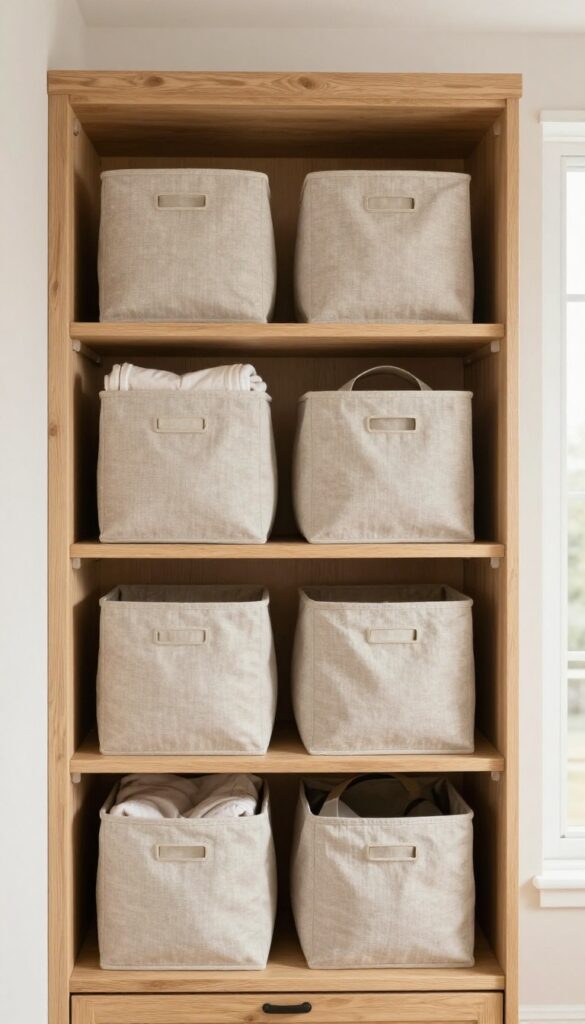
Most small cupboards stop storage too low. There’s often unused space right at the top that could hold seasonal or occasional items.
Adding a sturdy overhead shelf gives you extra storage without interfering with daily access. I use mine for extra blankets and travel bags.
Why This Works
Items you use rarely don’t need prime real estate. Moving them upward frees up eye-level shelves for everyday essentials.
It also keeps the main section visually lighter and easier to maintain.
How to Do It
- Measure the top clearance to ensure enough room for a shelf.
- Install brackets securely into studs for proper support.
- Use labeled bins for easy identification later.
- Store lightweight items only to prevent sagging.
Safety matters here, especially if you’re stacking above head height.
Style & Design Tips
Use matching bins for a uniform look. Clear bins work well if you prefer quick visibility.
Avoid stacking loose items without containers. That’s how dust and chaos sneak back in.
Pro Tip or Budget Hack
Repurpose old storage boxes and wrap them in contact paper for a polished look without spending much.
5. Sliding Door Upgrade
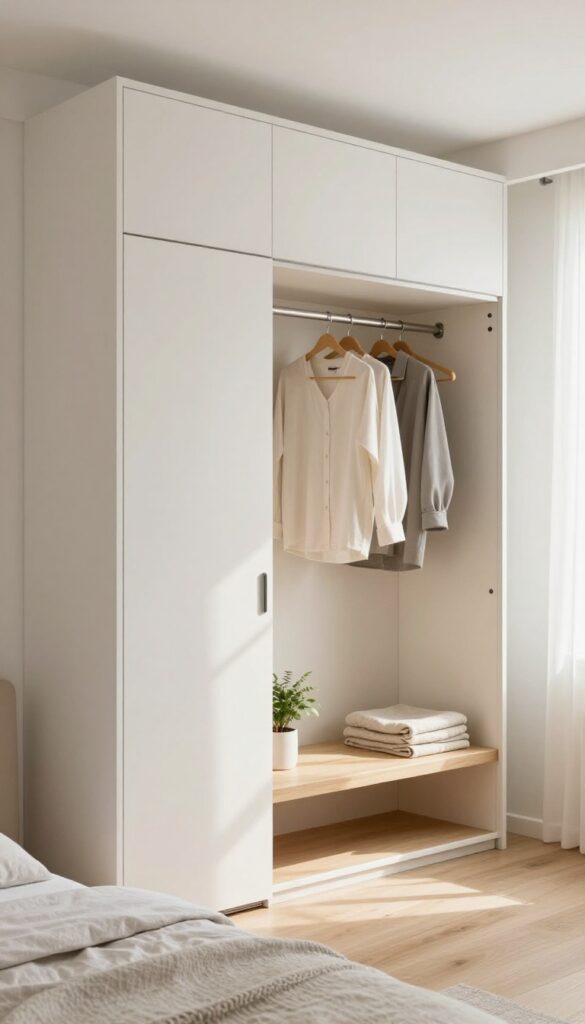
Traditional hinged cupboard doors eat into room space. In tight bedrooms, that swing radius feels annoying fast.
Switching to sliding doors instantly improves flow. It’s a practical design upgrade that makes the entire room feel less cramped.
Why This Works
Sliding doors don’t require clearance space. That means you can place furniture closer without blocking access.
They also create a cleaner exterior line, which visually simplifies the room.
How to Do It
- Remove existing hinged doors carefully.
- Install sliding tracks at the top and bottom.
- Align doors evenly to prevent sticking.
- Test multiple times before final tightening.
Smooth alignment prevents frustration later.
Style & Design Tips
Choose mirrored sliding doors if you want to reflect light and visually enlarge the space. Or go for soft matte panels for a minimalist vibe.
Avoid heavy decorative molding on sliding doors in small bedrooms. Clean lines work better.
Pro Tip or Budget Hack
If replacing doors feels expensive, remove them completely and hang a neutral curtain instead. It softens the space and costs far less.
6. Adjustable Shelf Peg System
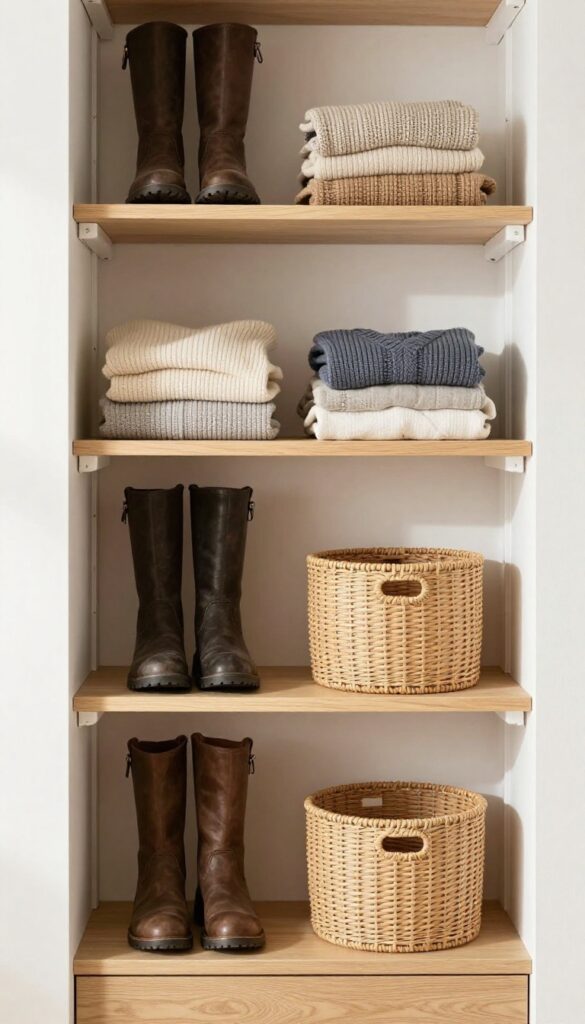
Fixed shelves limit flexibility. What works this year might not work next year when your wardrobe changes.
An adjustable peg system lets you move shelves up or down easily. I love this because storage needs never stay static.
Why This Works
Customizable spacing adapts to your lifestyle. Tall boots, bulky sweaters, or storage bins can all find proper homes.
It prevents wasted vertical space between shelves.
How to Do It
- Install vertical peg strips along cupboard sides.
- Insert shelf supports at your desired height.
- Test weight capacity before fully loading shelves.
- Rearrange as your needs evolve.
Flexibility is the whole point, so don’t lock yourself into one layout.
Style & Design Tips
Keep shelf thickness consistent for a clean look. Thicker floating-style shelves feel more modern and stable.
Avoid mixing random leftover boards. Consistency makes even small cupboards look intentional.
Pro Tip or Budget Hack
If installing new pegs isn’t possible, use stackable shelf risers to mimic adjustable levels without drilling.
7. Back-of-Door Organizer Panels
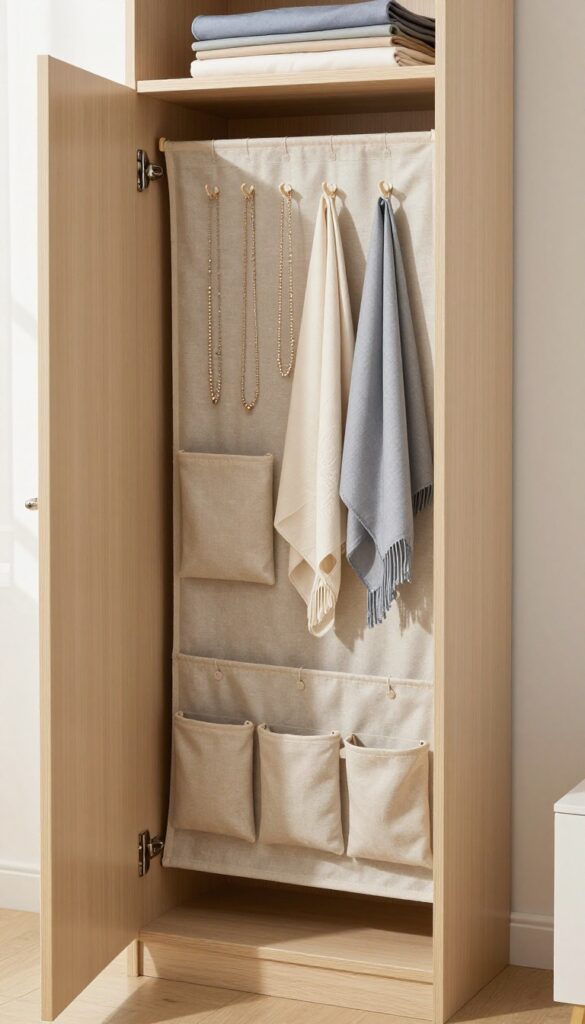
The inside of cupboard doors often goes completely unused. That surface can hold more than you think.
Slim organizer panels store jewelry, scarves, or small accessories without taking shelf space. It’s one of those simple ideas that quietly solves clutter.
Why This Works
Door storage adds vertical capacity without reducing interior width. It keeps small items visible and accessible.
You also prevent tangling by separating items properly.
How to Do It
- Choose a slim organizer that won’t interfere with closing the door.
- Secure hooks or fabric panels evenly across the surface.
- Avoid placing heavy items that stress the hinges.
- Test door closure before fully loading.
Weight balance protects your hinges long-term.
Style & Design Tips
Use organizers in neutral tones that blend with the cupboard interior. Bright patterns can look chaotic.
Keep spacing tidy. Overloading makes it look messy instead of helpful.
Pro Tip or Budget Hack
Adhesive hooks work well for light items if you’re renting. Just clean the surface properly before sticking them on.
8. Integrated Lighting Strips
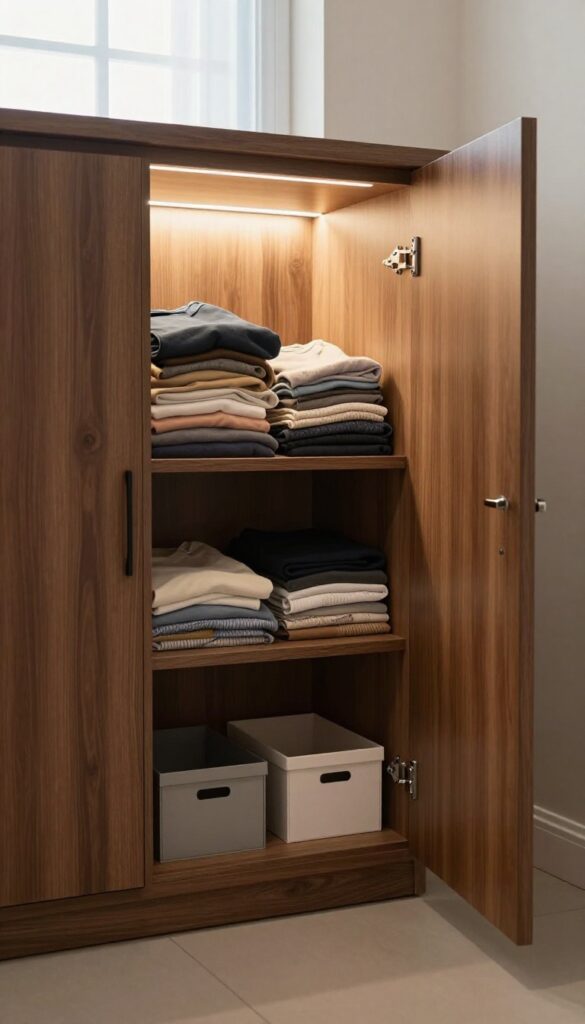
Dark cupboards hide things. You end up forgetting what you own simply because you can’t see it clearly.
Adding LED strip lighting makes everything more visible and practical. I installed battery-powered strips in one cupboard and never looked back.
Why This Works
Good lighting improves organization naturally. When you see items clearly, you put them back in the right place.
It also prevents overbuying because you actually know what’s inside.
How to Do It
- Choose motion-sensor LED strips for convenience.
- Install them along the top interior edge.
- Secure wiring neatly if hardwired.
- Test brightness to avoid glare.
Placement matters; you want even lighting, not harsh shadows.
Style & Design Tips
Go for soft white lighting instead of cool blue. It feels warmer and less clinical.
Avoid overly bright strips in small cupboards. Subtle illumination works better.
Pro Tip or Budget Hack
Battery-operated lights are easy to install and require zero wiring. They’re perfect for quick upgrades.
9. Seasonal Rotation Boxes
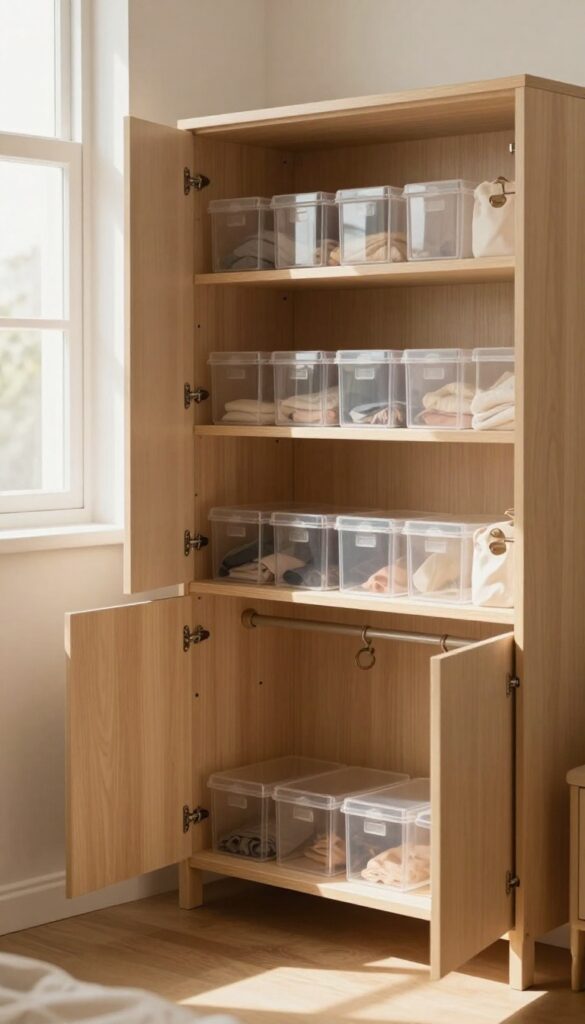
Trying to store every season’s clothing in one small cupboard creates unnecessary crowding. Rotating items keeps the space manageable.
I started doing this a few years ago and instantly felt less overwhelmed every time I opened the doors.
Why This Works
Fewer items mean better visibility and easier access. You reduce daily friction by removing what you don’t need.
It also protects off-season clothing from wear.
How to Do It
- Sort clothes by season twice a year.
- Store off-season items in labeled boxes.
- Place boxes on upper shelves or under the bed.
- Keep only current-season pieces accessible.
Regular rotation keeps the cupboard breathing.
Style & Design Tips
Use matching storage boxes to maintain visual order. Transparent lids help you quickly identify contents.
Avoid stuffing boxes too tightly. Compressed fabrics wrinkle and lose shape.
Pro Tip or Budget Hack
Vacuum storage bags save tons of space for bulky winter items. Just don’t over-compress delicate fabrics.
10. Custom Corner Shelving Units
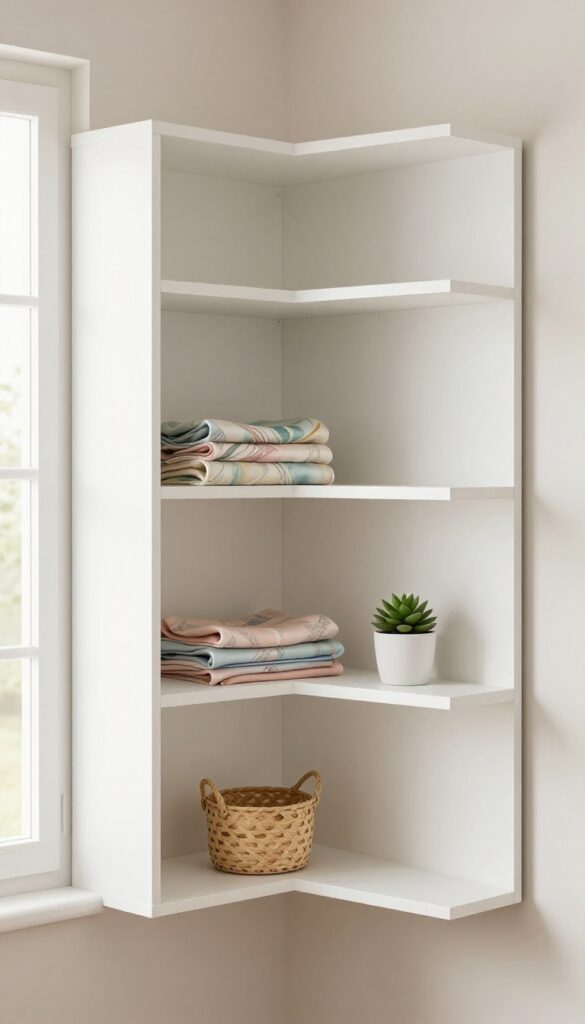
Corners inside cupboards often become awkward dumping zones. Custom corner shelves turn that wasted angle into practical storage.
This works especially well in L-shaped cupboards or oddly built layouts.
Why This Works
Corner shelving utilizes otherwise dead zones. It improves flow and prevents items from getting lost in the back.
You also create designated areas for smaller accessories.
How to Do It
- Measure corner depth carefully.
- Install triangular or curved corner shelves.
- Secure them properly for stability.
- Assign specific categories to each level.
Clear categorization keeps corners from turning chaotic again.
Style & Design Tips
Keep corner shelves light in color. White or pale wood prevents the corner from feeling heavy.
Avoid overcrowding. Leave slight space between items for breathing room.
Pro Tip or Budget Hack
If custom shelves feel pricey, use stackable corner shower caddies as a creative workaround. They fit surprisingly well.
Final Thoughts
Small cupboards don’t need dramatic renovations to feel functional. Smart layout decisions change everything, especially when you design around real habits instead of Pinterest perfection.
You don’t need to do all ten ideas at once. Pick one, try it, adjust it, and build from there until your cupboard actually works for you instead of against you.