9 Moody Living Room Ideas With Depth and Drama
A living room usually fails when it tries too hard to be safe. Neutral palettes, predictable layouts, and “everyone will like this” choices often drain the space of any real personality.
Depth and drama don’t come from expensive furniture or trends; they come from intention and contrast. Once you stop designing to avoid mistakes, the room finally starts to feel finished.
Moody living rooms work because they lean into atmosphere without becoming theatrical. They feel grounded, layered, and slightly bold in a way that still makes sense for everyday life.
This isn’t about turning your living room into a movie set. It’s about making it feel rich, thoughtful, and a little unforgettable.
1. Deep Charcoal Walls as a Neutral Base
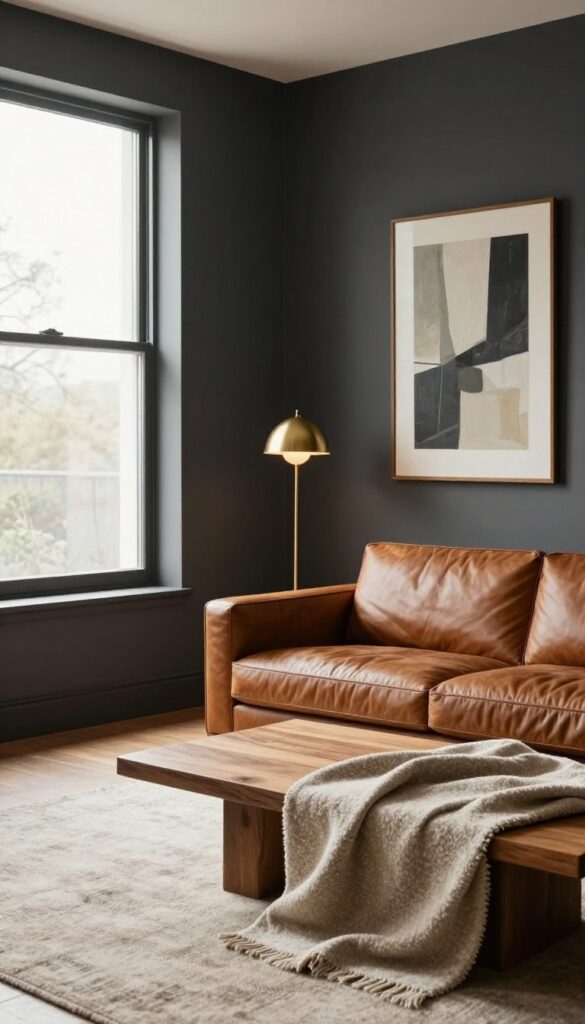
Most living rooms play it safe with beige or off-white walls, which is fine until the space starts feeling flat.
Deep charcoal works like a grown-up neutral that adds instant weight without turning the room into a cave. It also hides imperfections better than lighter paint, which is a win if your walls aren’t flawless.
I used to think dark walls would shrink a room, but that fear disappears once you actually live with them. Charcoal creates a backdrop that lets furniture, art, and lighting stand out instead of competing. It feels intentional instead of temporary, like you actually committed to a look.
Why This Works
Charcoal absorbs light just enough to soften harsh contrasts while still reflecting warmth from lamps and fixtures. It visually pushes the walls back, which can make the room feel more expansive instead of boxed in. The color also bridges warm and cool tones, making it easier to mix materials without clashing.
How to Do It
- Choose a charcoal with subtle undertones, not a flat black, because undertones keep the space from feeling cold.
- Paint all walls instead of just one accent wall to avoid a half-finished look.
- Test the color at different times of day since artificial lighting changes how dark shades behave.
Style & Design Tips
Pair charcoal walls with warm woods, leather, or brass to keep things balanced. Avoid pairing it with stark white trim unless you want sharp contrast, which can feel harsh in cozy spaces. Soft textures like wool or velvet help counter the visual weight of dark paint.
Pro Tip or Budget Hack
If repainting feels risky, start with peel-and-stick wallpaper in a charcoal tone to test the mood. It gives you the same depth without the long-term commitment. You can always upgrade to paint later once you’re confident.
2. Layered Lighting Instead of One Overhead Fixture
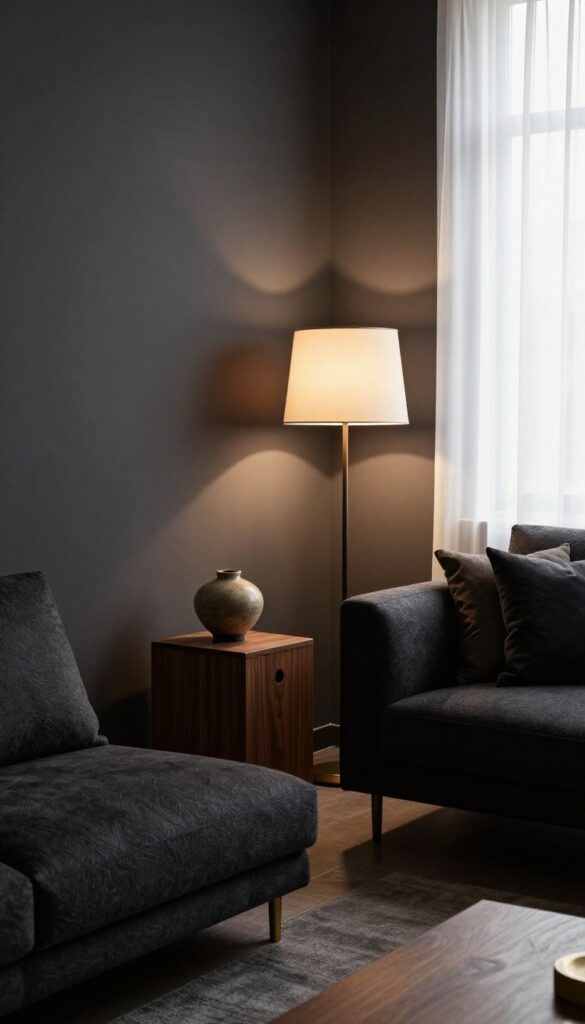
Relying on a single ceiling light is one of the fastest ways to kill any mood in a living room. Overhead lighting flattens everything and highlights what you don’t want to see. Layered lighting creates shadows, warmth, and depth that make the room feel intentional.
Once I stopped using my overhead light entirely, the room instantly felt calmer and more styled. Lamps do the heavy lifting when it comes to mood, especially in darker spaces. They also let you control how the room feels at different times without changing anything else.
Why This Works
Multiple light sources create visual rhythm and prevent harsh contrasts. Light at different heights makes the room feel larger and more dynamic. Shadows add dimension, which is essential in moody spaces.
How to Do It
- Use at least three light sources: a floor lamp, a table lamp, and a low accent light.
- Choose warm bulbs to soften dark colors and prevent a sterile look.
- Place lights near walls or corners to bounce light instead of blasting it outward.
Style & Design Tips
Stick to simple lamp shapes so the lighting supports the room instead of stealing attention. Black, brass, or ceramic bases work especially well in moody rooms. Avoid mismatched bulb temperatures, which can make the space feel chaotic.
Pro Tip or Budget Hack
Plug all lamps into a power strip with a foot switch. One tap changes the entire mood without fumbling around the room. It feels fancy without costing anything extra.
3. Statement Sofa in a Dark, Saturated Color
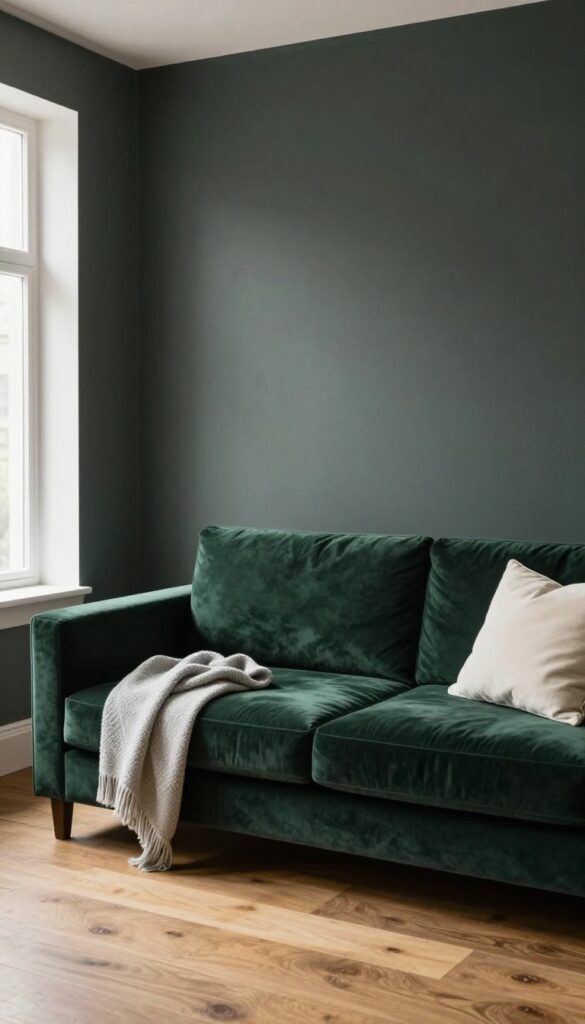
A moody living room needs an anchor, and the sofa does that job better than anything else. Dark green, navy, or chocolate brown upholstery instantly grounds the space. It also hides wear better than lighter fabrics, which matters in real life.
I used to default to gray sofas because they felt safe, but they never felt finished. A deep-colored sofa feels intentional and confident. It sets the tone for everything else in the room.
Why This Works
Dark upholstery absorbs light and visually stabilizes the room. It creates contrast against walls and floors without feeling loud. Saturated colors also age better than trendy light neutrals.
How to Do It
- Choose performance fabric to handle everyday use without stress.
- Keep the silhouette simple so the color does the talking.
- Balance the sofa with lighter pillows or throws to prevent heaviness.
Style & Design Tips
Velvet, chenille, and tightly woven fabrics elevate the look instantly. Avoid shiny finishes that reflect too much light and break the moody effect. Keep pillows minimal and intentional instead of overstuffed.
Pro Tip or Budget Hack
Buy a neutral sofa and use a tailored sofa cover in a dark color. It’s cheaper than replacing furniture and lets you change the mood later. Just avoid loose slipcovers that wrinkle easily.
4. Textured Walls for Subtle Drama
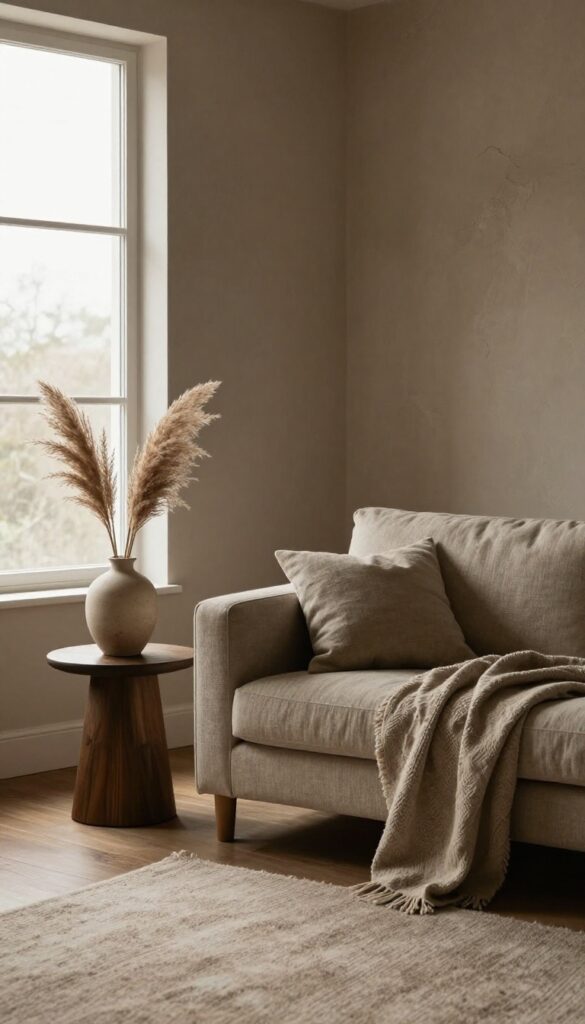
Paint alone can feel flat, even in dark colors. Texture adds depth without overwhelming the space. Think limewash, subtle plaster finishes, or even fabric panels.
I once added a textured finish to a single wall and immediately noticed how much richer the room felt. It didn’t scream for attention, but it made everything else look more expensive. Texture works quietly in the background.
Why This Works
Texture catches light unevenly, which creates natural variation. It keeps dark walls from feeling heavy or dull. The effect adds depth without adding clutter.
How to Do It
- Choose a subtle texture that feels organic, not overly patterned.
- Apply it consistently to avoid patchy results.
- Keep surrounding decor simple to let the wall speak softly.
Style & Design Tips
Muted tones work best for textured walls in moody rooms. Avoid high-contrast textures that compete with furniture. Let the wall be felt more than noticed.
Pro Tip or Budget Hack
Use textured paint additives instead of specialty finishes. They’re easier to apply and much cheaper. The result still adds dimension without the learning curve.
5. Dark Wood Furniture for Visual Weight
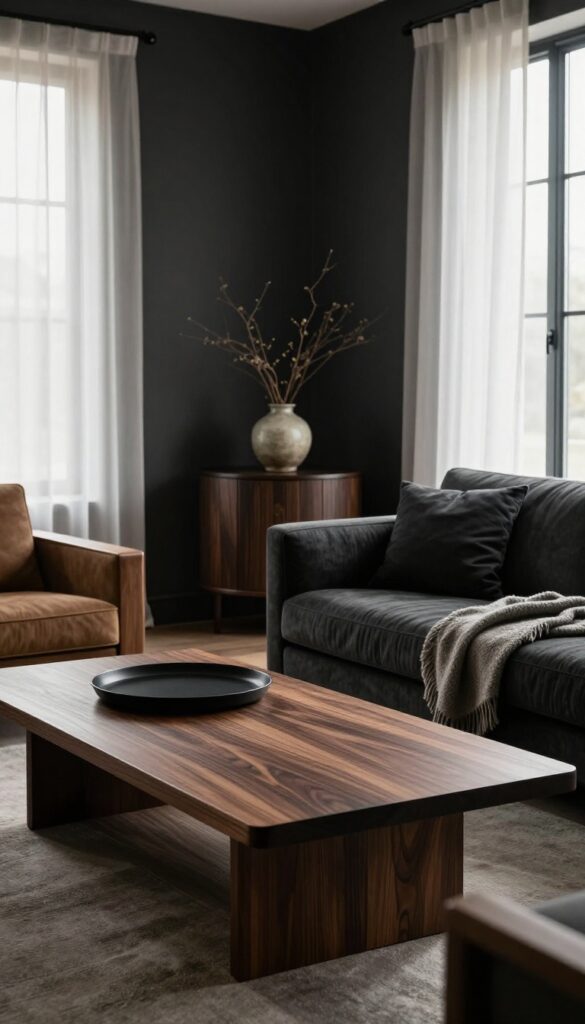
Light wood has its place, but moody living rooms thrive on darker tones. Walnut, espresso, or stained oak furniture adds grounding and contrast. These pieces feel substantial instead of decorative.
Switching from light to dark wood was the moment my living room stopped feeling temporary. Dark wood anchors the space and makes everything else feel intentional. It also hides scuffs better, which is always a bonus.
Why This Works
Dark wood absorbs light and adds warmth simultaneously. It visually lowers the room, creating a cozy, grounded feel. The material pairs well with both dark and light elements.
How to Do It
- Replace one major piece at a time to avoid overwhelming the space.
- Choose simple shapes to keep things modern.
- Mix finishes slightly to avoid a matched furniture set look.
Style & Design Tips
Pair dark wood with matte metals instead of shiny chrome. Keep surfaces clean to avoid visual heaviness. Avoid overly ornate designs that feel dated.
Pro Tip or Budget Hack
Refinish existing furniture with a darker stain. It’s cheaper than buying new and gives old pieces new life. Just prep properly to avoid blotchy results.
6. Oversized Art with a Dark Palette
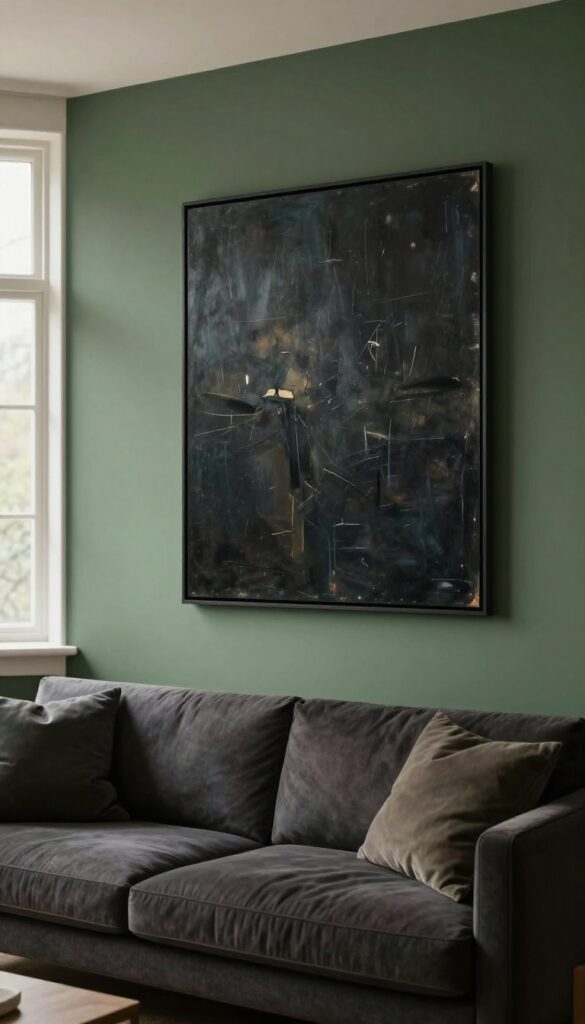
Small art gets lost in moody rooms. Oversized pieces hold their own and add drama without clutter. Dark or muted artwork blends seamlessly into the overall tone.
I used to overthink art placement until I went big. One large piece made the room feel finished in a way multiple small frames never did. Scale matters more than perfection here.
Why This Works
Large art creates a focal point and simplifies visual noise. Dark palettes blend instead of compete. The room feels curated instead of busy.
How to Do It
- Choose one main wall for your statement piece.
- Keep frames minimal or frameless for a modern look.
- Hang art slightly lower than standard to feel grounded.
Style & Design Tips
Abstracts, landscapes, or moody photography work especially well. Avoid overly bright whites that break the flow. Let the art complement, not dominate.
Pro Tip or Budget Hack
Print digital art on matte paper and frame it yourself. Large-scale art doesn’t have to be expensive. The impact comes from size, not price.
7. Soft, Low-Contrast Rugs
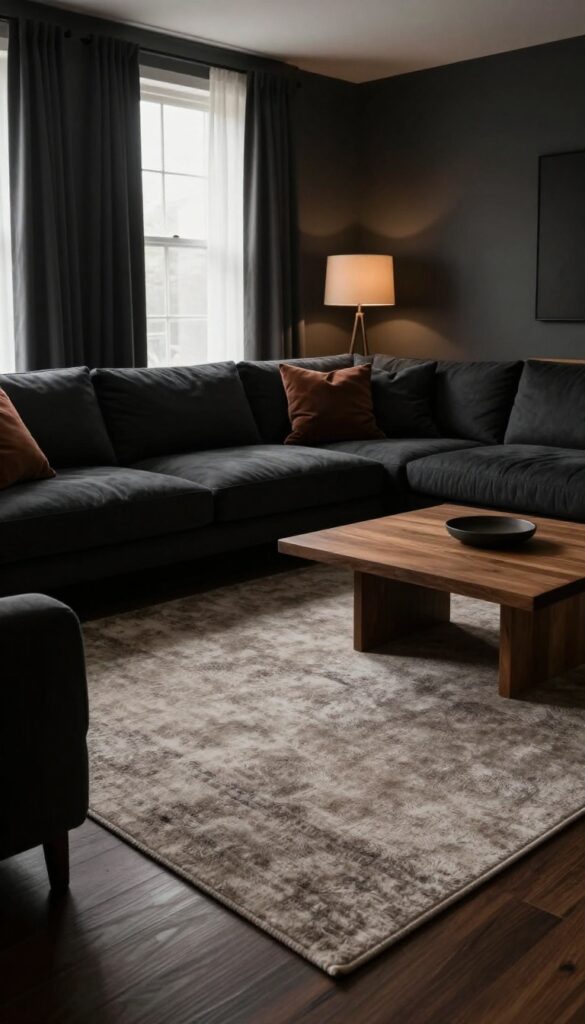
High-contrast rugs can feel jarring in a moody living room. Soft patterns or solid dark rugs ground the space instead. They also help visually connect furniture pieces.
I once swapped a bold patterned rug for a muted one and immediately felt calmer in the room. The furniture finally felt anchored instead of floating. Rugs do more than we give them credit for.
Why This Works
Low-contrast rugs reduce visual noise. They support the room’s depth instead of fighting it. The space feels cohesive and intentional.
How to Do It
- Choose a rug large enough to fit under key furniture pieces.
- Stick to muted patterns or solid colors.
- Avoid shiny fibers that reflect too much light.
Style & Design Tips
Wool or wool-blend rugs add texture without glare. Dark neutrals like charcoal, rust, or deep taupe work well. Avoid stark black unless balanced carefully.
Pro Tip or Budget Hack
Layer a smaller patterned rug over a large neutral base. You get depth without committing to one bold piece. It also lets you change styles easily.
8. Moody Accent Colors Through Accessories
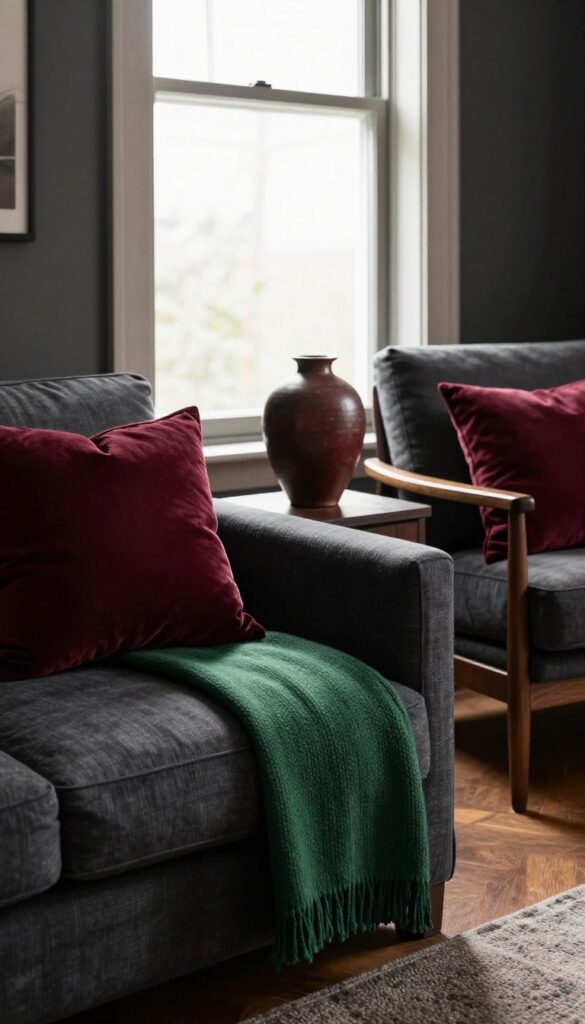
Accessories let you experiment without full commitment. Deep rust, burgundy, or forest green accents add richness. They also break up dark neutrals without overwhelming the room.
I like rotating accent colors seasonally because it keeps the room feeling fresh. Dark accessories don’t feel trendy; they feel collected. That’s a big difference.
Why This Works
Accent colors add contrast without visual chaos. They guide the eye and add interest. The room feels layered instead of flat.
How to Do It
- Choose one or two accent colors max.
- Repeat them in at least three places.
- Keep accessories intentional, not scattered.
Style & Design Tips
Use textiles like pillows or throws for easy swaps. Avoid glossy finishes that feel loud. Keep shapes simple and grounded.
Pro Tip or Budget Hack
Use removable pillow covers instead of buying new pillows. It’s cheaper and takes less storage space. You’ll actually change them more often.
9. Minimal Styling with Intentional Negative Space
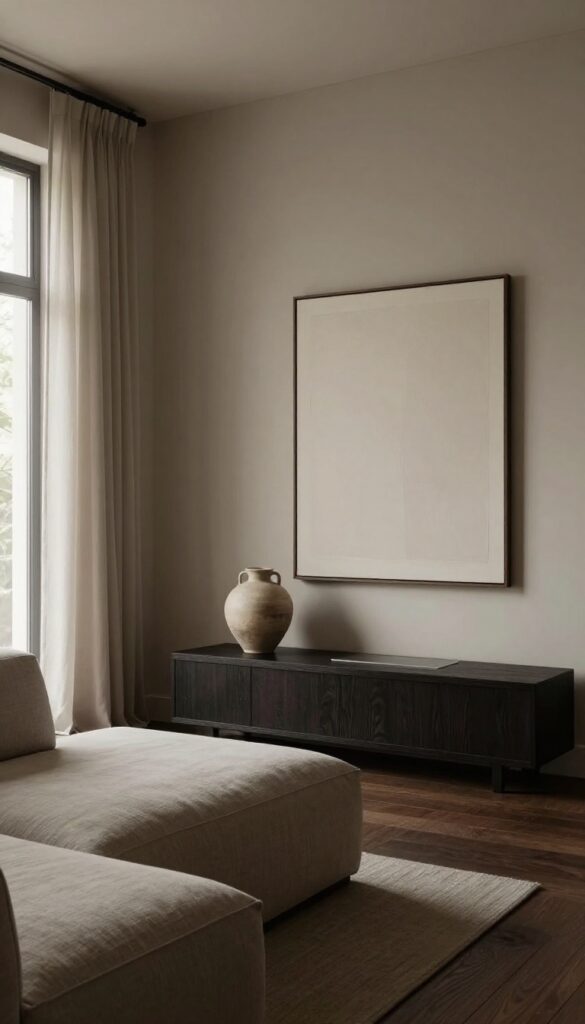
Moody rooms don’t need a lot of stuff. Too much decor kills the effect. Negative space lets the room breathe and feel intentional.
Learning to leave surfaces partially empty took practice for me. Once I did, the room felt calmer and more confident. Less really does work better here.
Why This Works
Negative space highlights what you keep. It prevents visual overload. The room feels curated instead of cluttered.
How to Do It
- Remove half of your current decor and reassess.
- Group items in odd numbers.
- Leave at least one surface completely clear.
Style & Design Tips
Choose fewer, larger pieces instead of many small ones. Stick to a tight color palette. Avoid filling space just because it’s there.
Pro Tip or Budget Hack
Store extra decor in a box instead of getting rid of it. Rotate pieces every few months. It keeps the room feeling new without buying anything.
Final Thoughts
Moody living rooms work when every choice feels intentional instead of accidental. Depth comes from contrast, restraint, and a little confidence in your decisions. You don’t need to follow trends to make it work.
Trust your instincts and give the room time to settle. The best spaces usually come together slowly. That’s part of the fun.