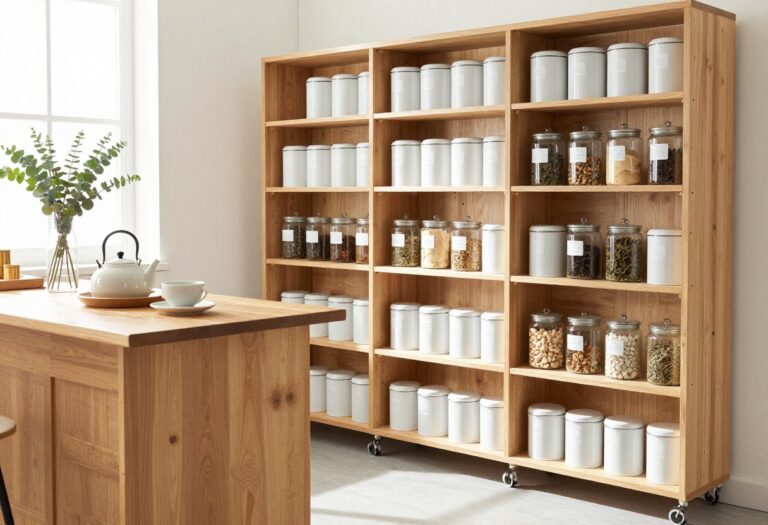
8 Living Room Wall Shelf Ideas That Save Space
A living room usually runs out of wall space long before it runs out of stuff. Furniture grows, décor piles up, and suddenly the room feels tighter than it should.
Most of the time, the issue isn’t how much you own but how poorly the vertical space is being used. Once I realized that, wall shelves stopped being decorative extras and started becoming actual problem-solvers.
Wall shelves can fix storage issues, improve flow, and make a space feel more intentional without adding visual clutter.
The trick is choosing the right type and placing it with purpose instead of just filling empty walls. Some work best for storage, others for balance, and a few quietly do both.
Let’s walk through the ones that actually make a difference.
1. Floating Shelves Above the Sofa
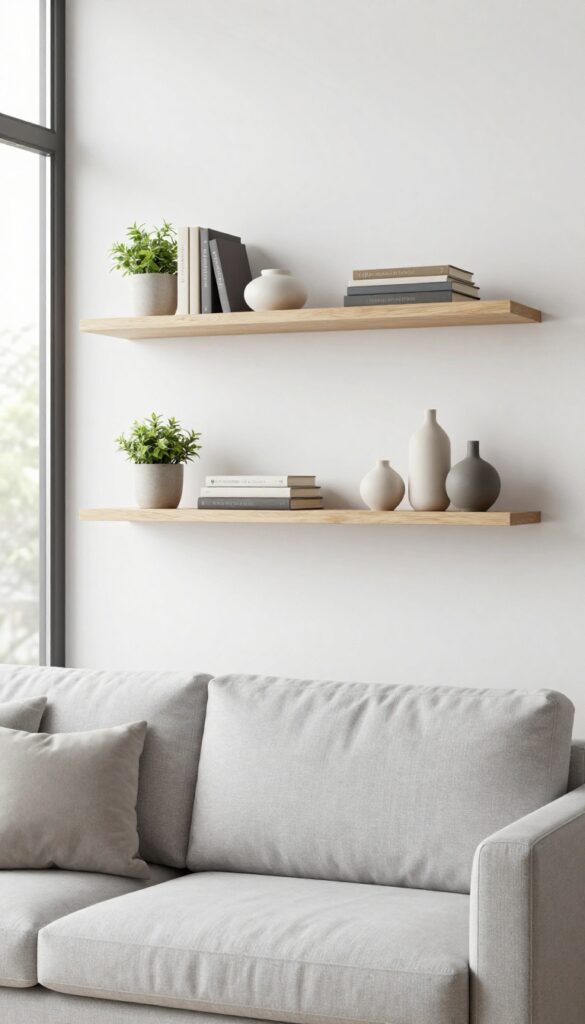
This idea solves one of the most common living room problems: a big, blank wall that feels awkward but not empty enough for a gallery.
Floating shelves give you usable space without the heaviness of cabinets or bulky furniture. They work especially well in small living rooms where every inch needs to pull its weight.
I used to avoid shelves above seating because I thought they’d look cluttered or feel unsafe. Once I tried slimmer shelves with a bit of breathing room between them, everything changed.
They framed the sofa nicely and gave me a place for books, plants, and a few personal items without overwhelming the space.
Why This Works
Floating shelves visually extend the wall upward, which helps the room feel taller. They also keep the floor clear, making the space feel more open and less crowded.
Because they’re shallow, they don’t intrude into the room the way consoles or cabinets do.
How to Do It
- Mount shelves at least 10–12 inches above the sofa back
- Keep spacing even if you’re stacking more than one
- Use anchors or wall studs for proper support
- Stick to lightweight décor to avoid visual heaviness
Style & Design Tips
Use odd-number groupings for décor so the shelves don’t look stiff. Mix vertical and horizontal items to create balance, and avoid lining everything up perfectly. Matte finishes tend to look more modern, while wood adds warmth and texture.
Pro Tip or Budget Hack
IKEA picture ledges work incredibly well here and cost way less than custom shelves. You can even flip them upside down for a slightly deeper ledge if you need more space.
2. Corner Wall Shelves That Actually Get Used
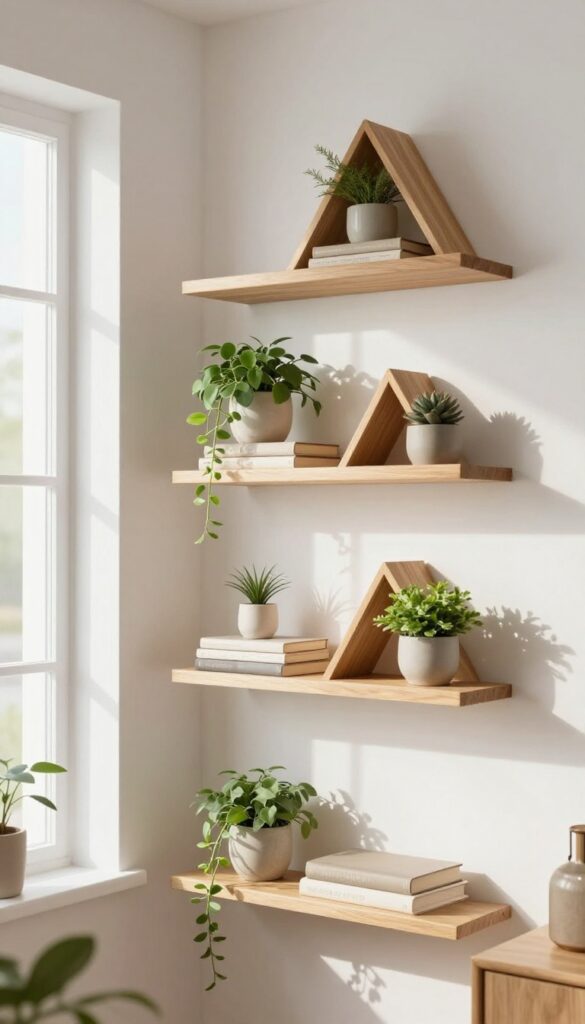
Corners are notorious for being ignored, which makes them perfect for sneaky storage. A corner shelf turns wasted space into something functional without changing the room’s layout. It’s one of the easiest ways to add storage without committing to a full furniture piece.
I added corner shelves in a small apartment once just to hold a plant, and they ended up becoming my favorite spot in the room. They softened the sharp angle and made the space feel intentional instead of awkward.
Why This Works
Corners visually disappear when left empty, but shelves give them purpose. They also pull the eye outward, making the room feel wider. Because they sit off to the side, they don’t interrupt traffic flow.
How to Do It
- Choose triangular or curved shelves for a softer look
- Mount them at staggered heights for visual interest
- Keep weight minimal to avoid sagging
- Use matching finishes for a clean feel
Style & Design Tips
Stick with lighter colors if the corner feels dark. A single trailing plant or small stack of books works better than overdecorating. Avoid deep shelves unless the corner is wide enough to handle them.
Pro Tip or Budget Hack
Floating corner shelves often cost less than standard ones and require fewer brackets. If you’re renting, look for lightweight versions that use minimal hardware.
3. Long Picture Ledges for Flexible Styling
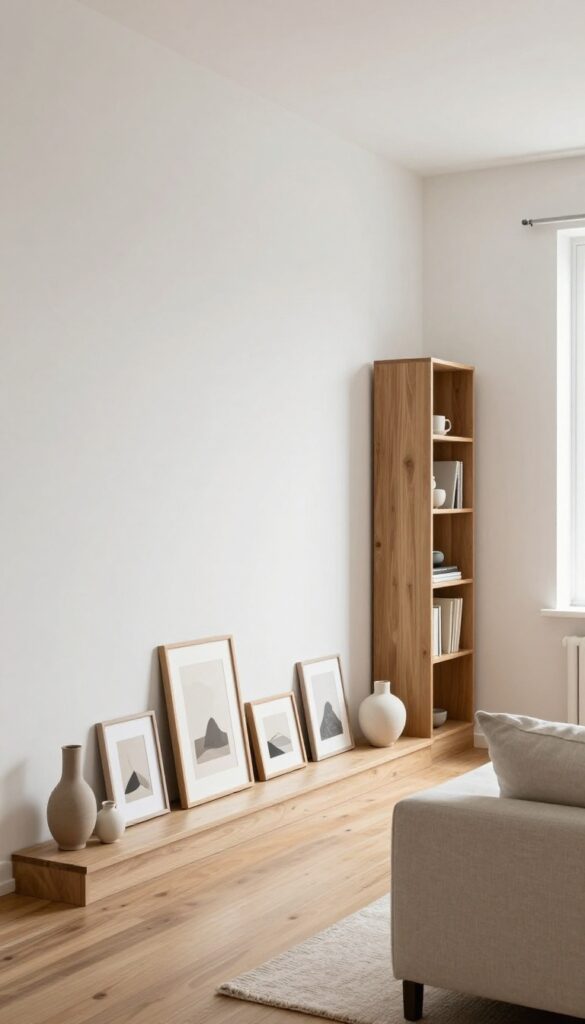
Picture ledges are one of the most underrated wall shelf options. They let you change décor without drilling new holes every time you want a refresh. That alone makes them worth considering.
I like these because they remove the pressure of committing to a layout. You can swap frames, lean art, or even layer objects without everything looking locked in place.
Why This Works
Picture ledges create horizontal movement, which balances out tall furniture and narrow rooms. They also make styling feel more relaxed and less permanent. That flexibility keeps the space feeling fresh over time.
How to Do It
- Install the ledge at eye level or slightly higher
- Leave some empty space for breathing room
- Layer items from back to front
- Keep color tones consistent
Style & Design Tips
Use neutral frames if you want the artwork to stand out. Mixing frames is fine, but keep at least one common element like color or material. Avoid cluttering the ledge from end to end.
Pro Tip or Budget Hack
You can use a narrow floating shelf instead of a picture ledge and get the same effect for less money. Just make sure the lip is tall enough to keep items from slipping.
4. Vertical Shelving for Tight Living Rooms
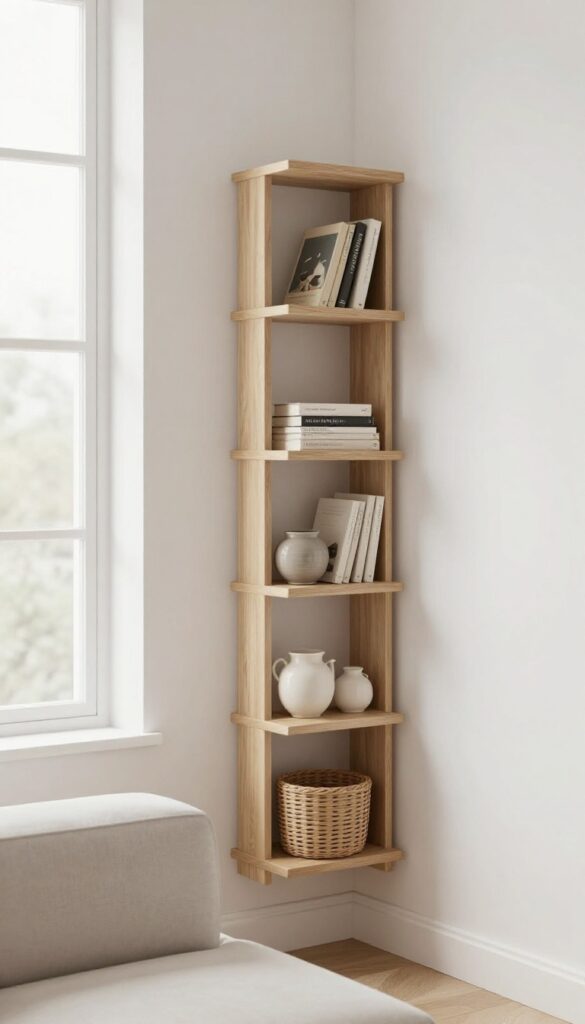
When floor space is limited, going vertical is the smartest move. Tall, narrow shelves make use of wall height without taking over the room. They’re perfect for apartments or smaller homes where every inch matters.
I added one beside a window once and was surprised how much it held without making the room feel crowded. It ended up becoming both storage and décor in one clean column.
Why This Works
Vertical shelves draw the eye upward, which visually expands the room. They also give you more storage without spreading clutter across the floor. This makes them ideal for small or narrow living spaces.
How to Do It
- Choose shelves with slim depth
- Anchor securely to avoid tipping
- Keep heavier items toward the bottom
- Use consistent spacing between shelves
Style & Design Tips
Mix closed and open storage for balance. Too many small objects can look messy, so alternate with baskets or stacked books. Light wood or white finishes help prevent a boxed-in look.
Pro Tip or Budget Hack
Ladder-style shelves often cost less and don’t require drilling. They also add a casual, modern look that works in most spaces.
5. Built-In Style Shelving Without the Cost
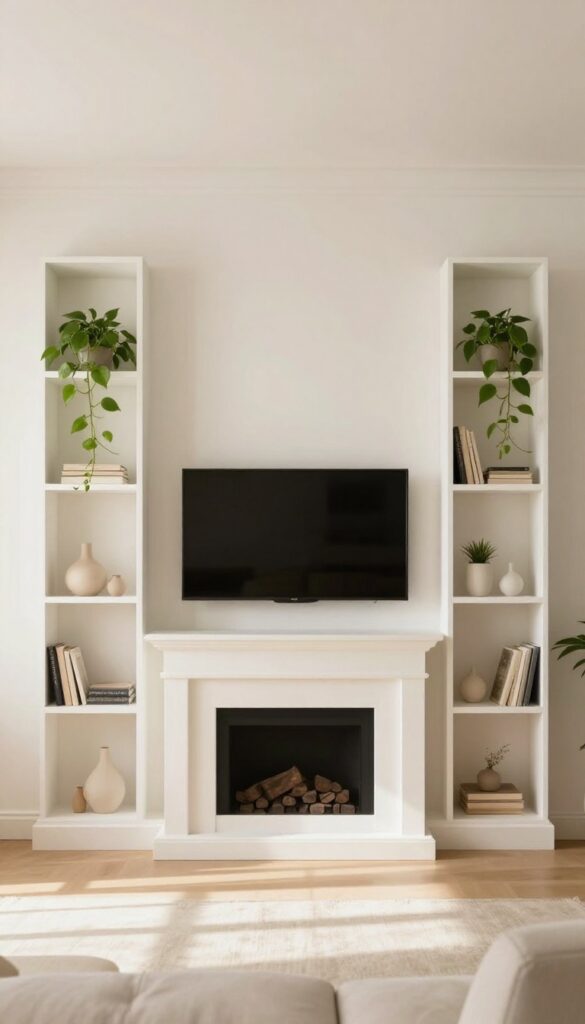
Built-ins look expensive, but you can fake the look with wall-mounted shelves and paint. This works especially well around TVs or fireplaces where blank wall space feels awkward.
I tried this in a rental using removable shelves and matching paint, and it honestly fooled most people. The trick is symmetry and spacing, not custom carpentry.
Why This Works
Built-in style shelving adds structure and makes a room feel intentional. It frames focal points and gives storage without bulky furniture. The visual impact is high even if the cost isn’t.
How to Do It
- Use identical shelves for symmetry
- Align them evenly on both sides
- Paint shelves the same color as the wall
- Leave space between items
Style & Design Tips
Stick to neutral tones for a cleaner look. Add a mix of books, plants, and small objects instead of filling every shelf. Negative space is your friend here.
Pro Tip or Budget Hack
Paint the wall and shelves the same color to create a built-in illusion. This hides seams and makes everything feel cohesive.
6. Floating Shelves Above Low Furniture
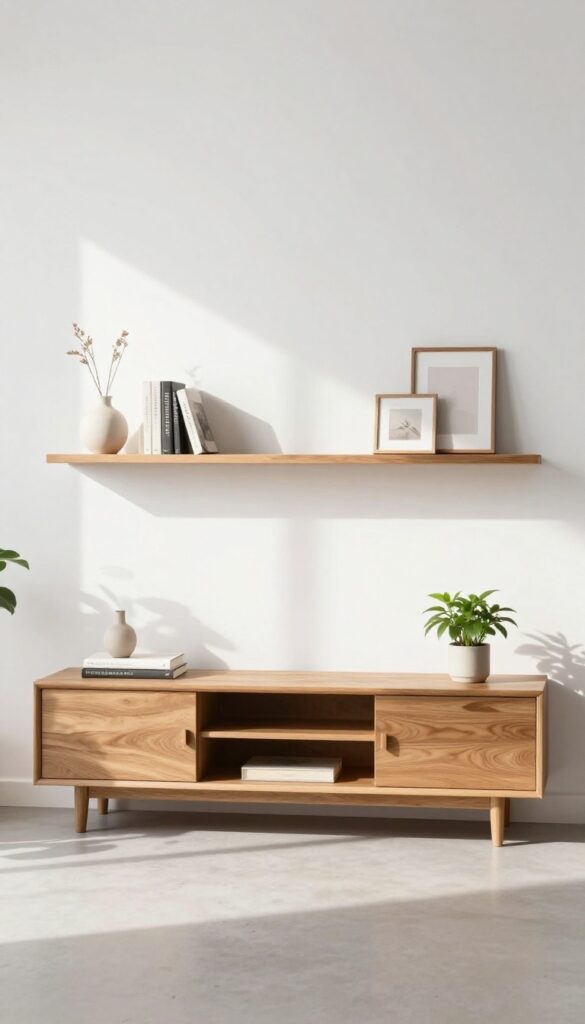
Low furniture like consoles or benches often leaves dead space above it. Adding shelves there makes the area functional without crowding the room. It’s a great way to layer storage vertically.
I added shelves above a low media console and suddenly had space for décor without needing extra furniture. It also made the whole wall feel more balanced.
Why This Works
The shelves visually connect the furniture to the wall, making the setup feel intentional. They also provide easy-access storage without overwhelming the space.
How to Do It
- Leave 10–12 inches between furniture and shelf
- Match shelf width to furniture below
- Use simple brackets or floating mounts
- Keep heavier items lower
Style & Design Tips
Use repeating elements like matching frames or colors to tie everything together. Avoid placing shelves too high or they’ll feel disconnected from the furniture.
Pro Tip or Budget Hack
If you’re unsure about placement, use painter’s tape to map it out first. It saves holes and frustration.
7. Minimalist Box Shelves for Clean Storage
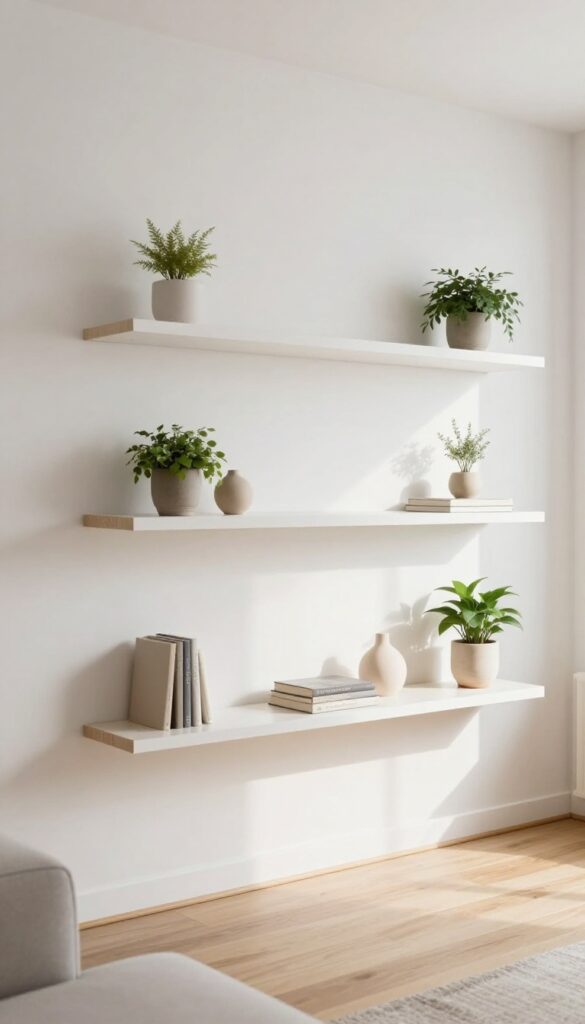
Box shelves are great when you want storage without visual chaos. They act like little frames for your stuff and work especially well in modern or minimalist spaces.
I like using these for small plants, books, or decorative pieces that need a defined home. They keep things tidy without feeling heavy.
Why This Works
Box shelves create structure while still feeling light. They also allow for creative layouts, especially when arranged asymmetrically.
How to Do It
- Use different sizes for interest
- Keep spacing intentional
- Mount securely to avoid wobble
- Don’t overload them
Style & Design Tips
Stick to one or two colors for the shelves to avoid visual noise. White, black, or natural wood usually work best. Avoid mixing too many finishes.
Pro Tip or Budget Hack
You can DIY box shelves using basic plywood and brackets. A quick coat of paint makes them look store-bought.
8. Hidden Storage Shelves for Clutter Control
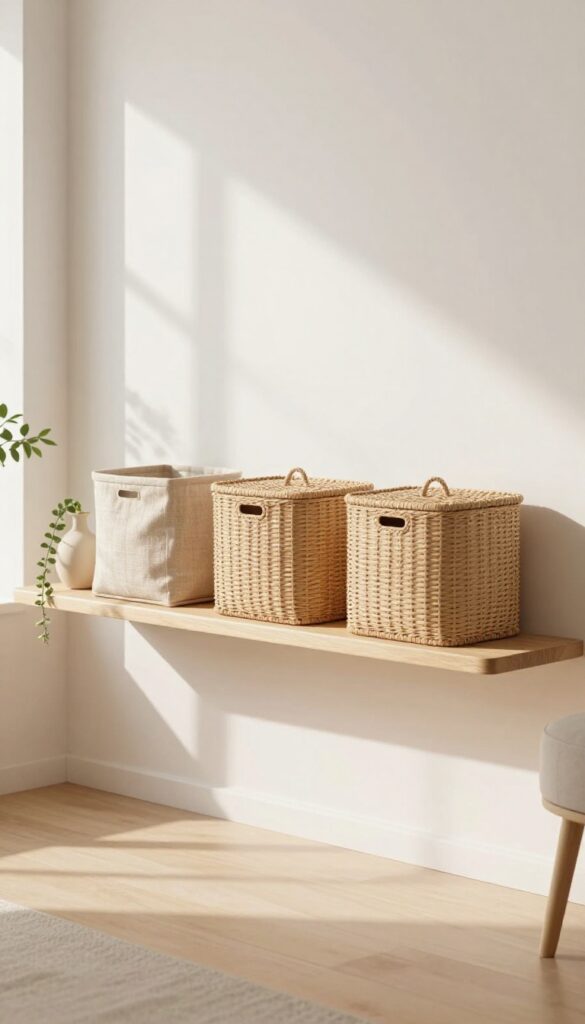
Some shelves look decorative but secretly hold everyday items. These are perfect for people who want a clean look without sacrificing function. Think shelves with baskets, bins, or hidden compartments.
I started using these when I got tired of seeing remotes and random stuff everywhere. It made the room feel calmer almost instantly.
Why This Works
Hidden storage keeps visual clutter out of sight while still being accessible. It’s especially helpful in smaller spaces where mess shows quickly.
How to Do It
- Use matching baskets or boxes
- Label items if needed
- Keep frequently used items within reach
- Avoid overfilling
Style & Design Tips
Choose textured baskets for warmth or solid bins for a clean look. Keep colors neutral so the shelf doesn’t steal attention from the room.
Pro Tip or Budget Hack
Dollar stores often carry great storage baskets that look high-end once styled. Just stick to one color family for consistency.
Final Thoughts
Wall shelves are one of those design choices that seem simple but make a huge difference when done right. They solve storage problems, improve layout flow, and add personality without eating up floor space. The key is choosing styles that fit your room instead of forcing trends that don’t work.
If you’re unsure where to start, pick one wall and experiment slowly. You’ll be surprised how much better a space feels once it works with you instead of against you.