10 Small Closet Organization Ideas for Bedroom Clothing Storage
You know that moment when you open your closet and instantly regret it. Clothes tumble forward, hangers fight each other, and somehow one sock lives there permanently without its pair.
I’ve dealt with that chaos more times than I want to admit, especially in smaller bedrooms where every inch matters.
A small closet doesn’t ruin your life, but it can quietly stress you out every single morning. I’ve tested a lot of ideas in my own space, kept what actually worked, and ditched what looked cute but failed fast.
Let’s talk about smart, realistic ways to turn a tiny closet into something that actually helps you, not annoys you.
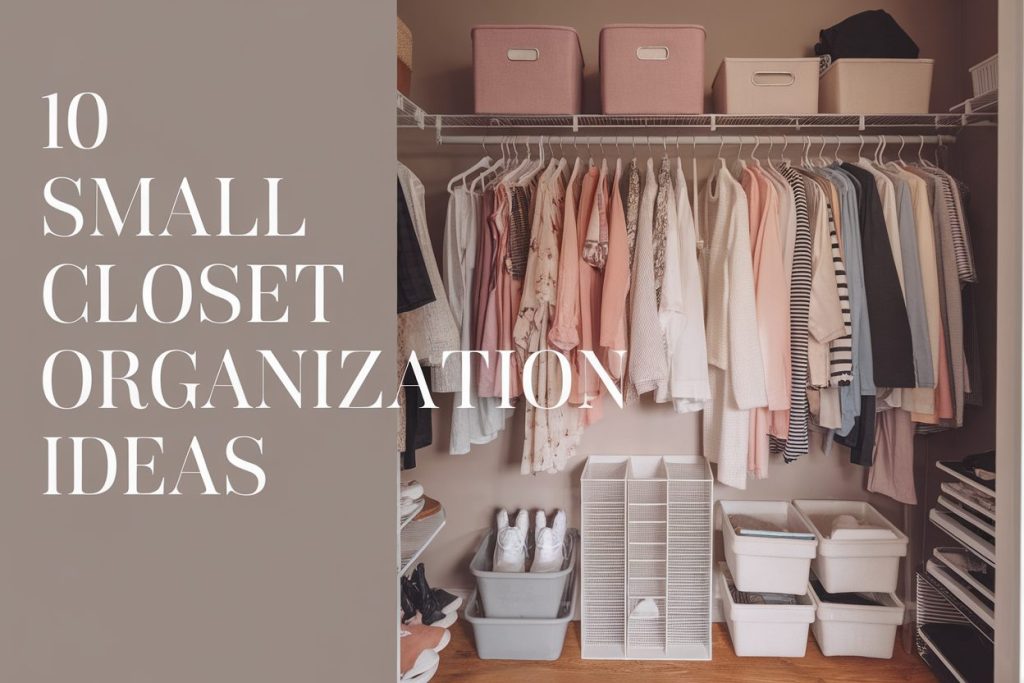
1. Double Your Hanging Space with Smart Rod Placement
Most small closets waste vertical space without even trying. I look at a single rod closet and immediately see missed potential. Adding a second rod changes everything and makes your closet feel twice as useful.
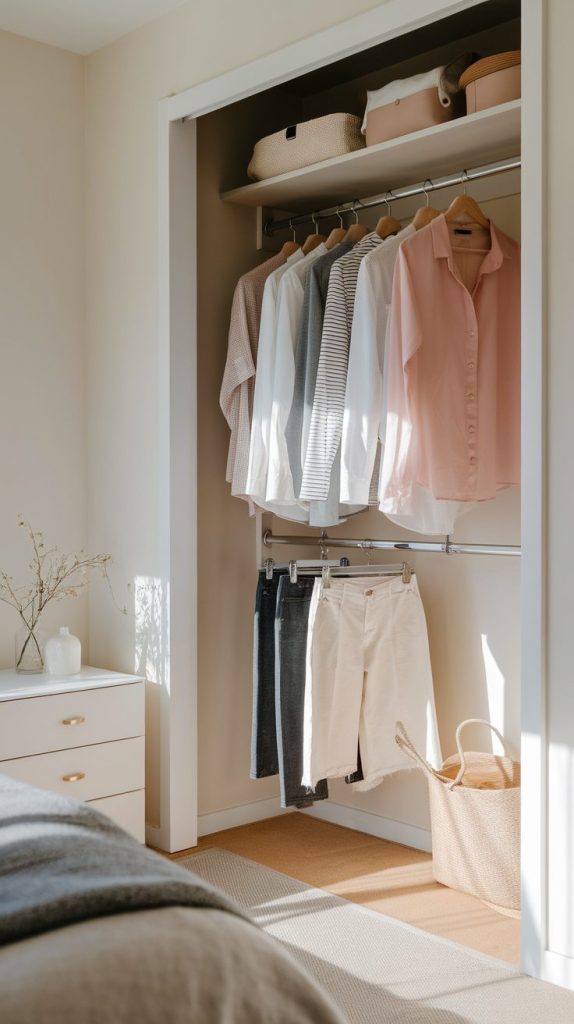
I love this setup for everyday clothes because it keeps outfits visible and reachable. You hang shirts and jackets on the top rod, then place pants, skirts, or shorter items below. You stop stacking clothes on chairs because everything finally fits.
You don’t need fancy hardware to pull this off. Adjustable tension rods or simple closet rod kits handle the job without major tools. I installed one in under an hour and wondered why I waited so long.
This setup works best when you organize by category. Group tops together and keep bottoms below them so your brain connects outfits faster. Mornings feel calmer when your closet actually cooperates.
If you wear longer dresses or coats, leave one side with a single rod. That balance keeps flexibility without sacrificing storage. IMO, this one upgrade delivers the biggest impact for the least effort.
When to Use Double Hanging Rods
Double rods shine when your wardrobe includes lots of shorter items. T-shirts, blouses, jeans, and skirts all benefit from the split layout. You gain structure without making the closet feel cramped.
2. Use Slim Matching Hangers to Instantly Save Space
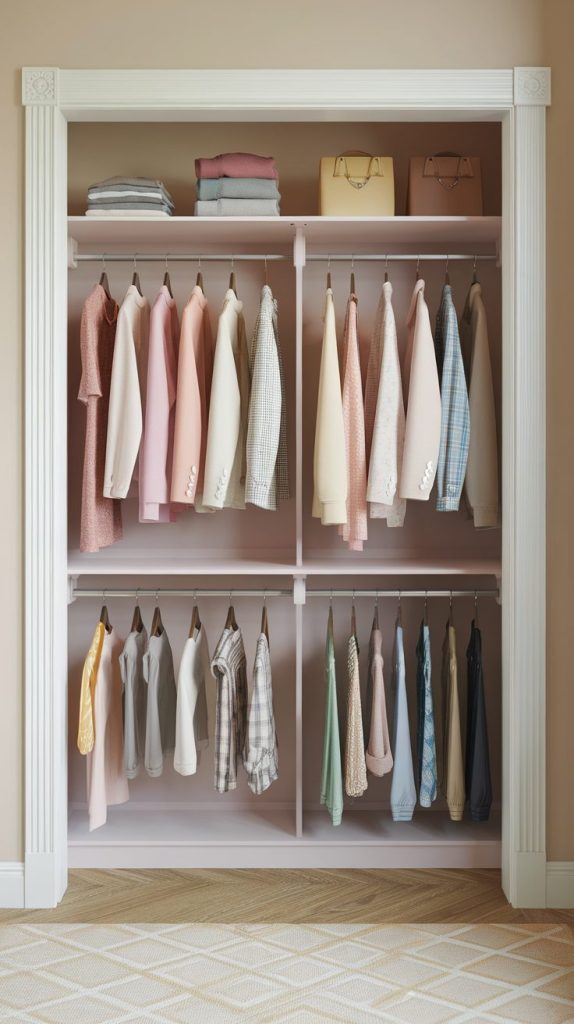
Bulky hangers eat space like they pay rent. I swapped mine out once and immediately noticed how much breathing room appeared. Slim hangers align clothes neatly and reduce wasted inches.
Matching hangers also calm visual chaos. Your closet looks organized even before you finish sorting. That clean look actually motivates you to keep things tidy.
I prefer velvet or thin plastic hangers because they grip clothes well. Shirts stop sliding off, and you avoid that annoying pile at the bottom. You also hang more items without crowding the rod.
This change feels small but delivers daily benefits. Clothes stay visible, wrinkle less, and feel easier to manage. You don’t wrestle with hangers anymore.
If you mix hanger types now, your closet probably looks uneven. Commit to one style and watch everything line up beautifully. The closet suddenly feels intentional instead of accidental.
Why Uniform Hangers Matter More Than You Think
Uniform hangers create consistent spacing between clothes. That spacing helps air circulate and keeps fabrics fresh. You gain space while protecting your clothes at the same time.
3. Add Shelf Dividers to Stop Clothes from Collapsing
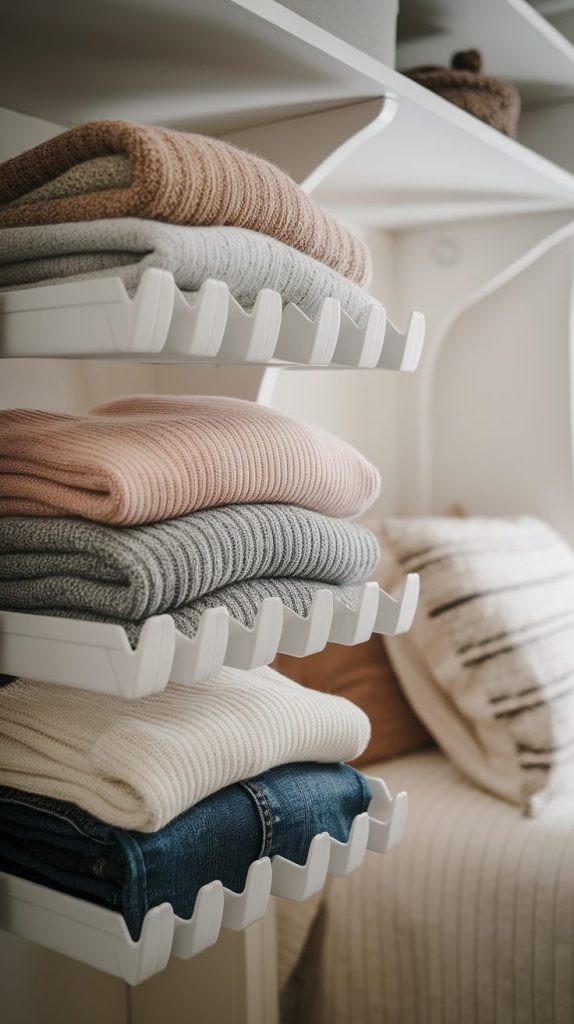
Stacks of folded clothes love to fall over. I used to refold sweaters constantly until I added shelf dividers. That one fix saved my patience.
Shelf dividers create boundaries that keep piles upright. You grab one item without disturbing the rest. Your shelves stop turning into fabric avalanches.
I use dividers for sweaters, jeans, and handbags. Everything stays visible and separated, which speeds up decision-making. You know exactly what you own.
You don’t need permanent installations for this idea. Clip-on or tension dividers work perfectly in rentals. They hold firm but remove easily.
This setup works especially well for deep shelves. Dividers prevent clothes from sliding backward and disappearing. You avoid buying duplicates because you forgot what you owned.
Best Items to Store with Shelf Dividers
Folded knits, denim, and bags benefit most from dividers. You maintain structure without overthinking it. Your shelves finally behave.
4. Store Seasonal Clothes Up High and Out of the Way
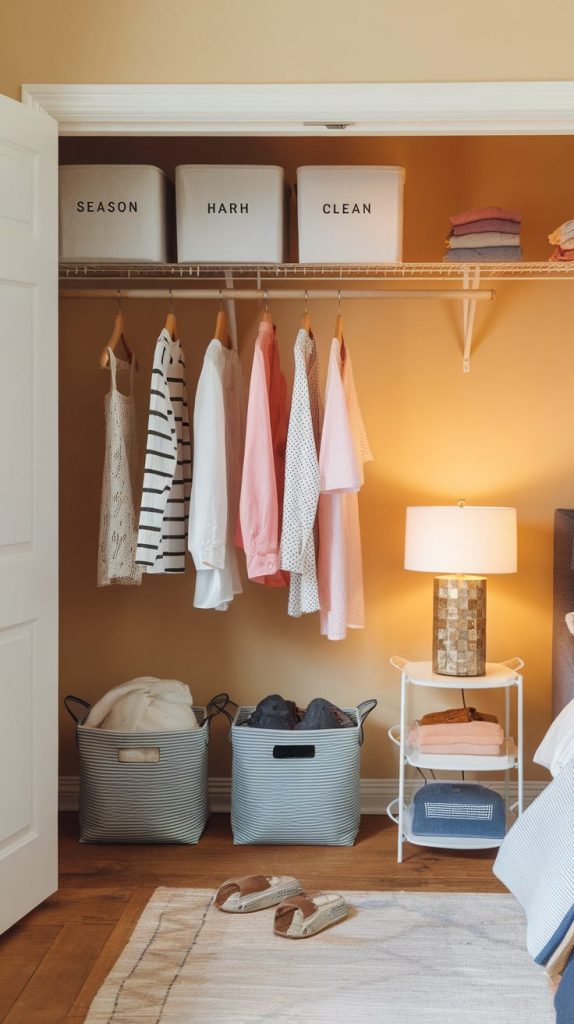
Seasonal clothes hog space when they don’t belong there. I rotate mine every few months and free up instant room. Your closet should serve the current season, not the entire year.
Use upper shelves for off-season items. Store bulky coats during summer and lightweight clothes during winter. That rotation keeps daily essentials front and center.
I recommend clear bins or labeled fabric boxes. You see what’s inside without opening everything. Organization stays quick and painless.
Vacuum-seal bags help with bulky items like jackets or blankets. They compress volume without damaging fabrics. Just don’t overstuff them.
This approach forces you to review your wardrobe regularly. You notice what you actually wear and what you don’t. That awareness prevents clutter from creeping back.
How Seasonal Rotation Simplifies Your Closet
Seasonal rotation reduces visual overload. You focus on fewer choices and dress faster. Your closet starts working with you instead of against you.
5. Install Door-Mounted Organizers for Small Items
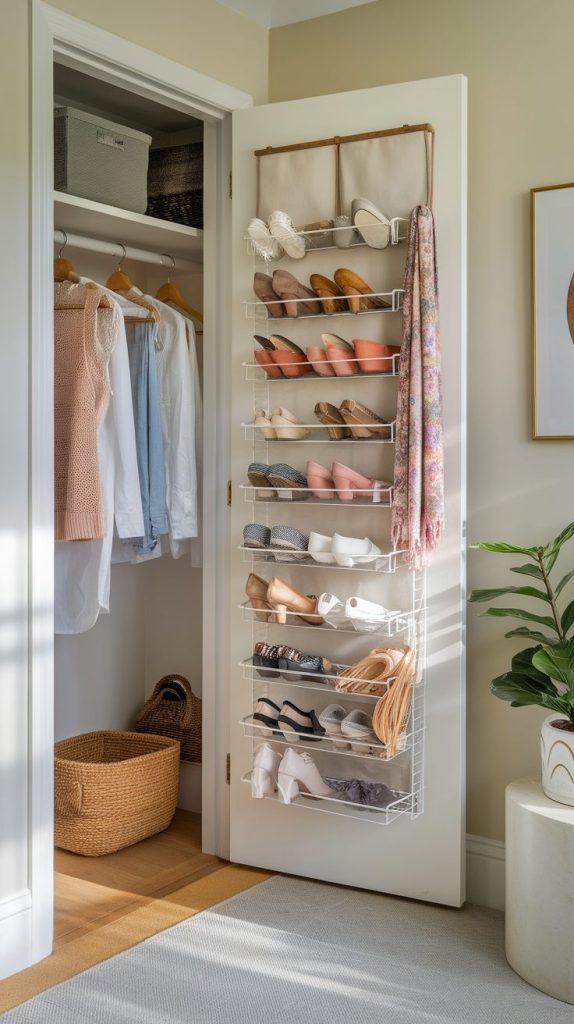
Closet doors hide serious storage potential. I ignored mine for years and regret it now. Door-mounted organizers handle accessories beautifully.
You can store shoes, belts, scarves, or jewelry on the door. Everything stays visible and accessible. You stop digging through drawers.
I like clear pocket organizers for small items. You see everything at a glance and avoid duplicates. Morning routines speed up instantly.
Hooks also work well for bags or hats. They keep items off the floor and protect shapes. The door becomes functional space instead of dead space.
Make sure the organizer fits your door depth. Slim designs prevent crowding when you close the door. The closet still opens smoothly.
Items That Thrive on Door Organizers
Accessories love door storage. Belts, scarves, and flats stay tidy and easy to grab. You save shelf space for bigger items.
6. Suggestion: Use Drawer Units for Folded Basics
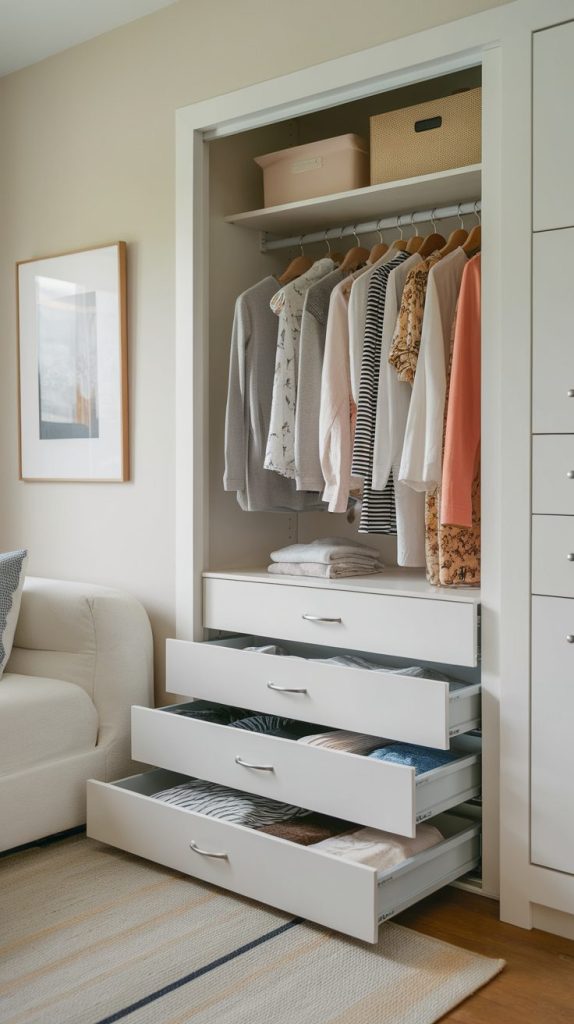
Folded basics often get ignored in small closets. Drawer units change that dynamic completely. They give structure where shelves fail.
I place slim drawer units under hanging clothes. That spot often stays unused, so drawers maximize it. Socks, underwear, and tees finally get homes.
Drawers hide visual clutter while keeping items reachable. You pull out exactly what you need without disrupting anything else. The closet feels calmer instantly.
Clear or labeled drawers help with organization. You know where everything lives. That clarity reduces mess over time.
Choose units with smooth-glide drawers. You use them daily, so quality matters. Cheap drawers frustrate fast.
Why Drawers Beat Open Shelves for Basics
Drawers contain chaos better than shelves. Small items stay contained and organized. Your closet maintains order longer.
7. Add Hooks Inside the Closet for Daily Favorites
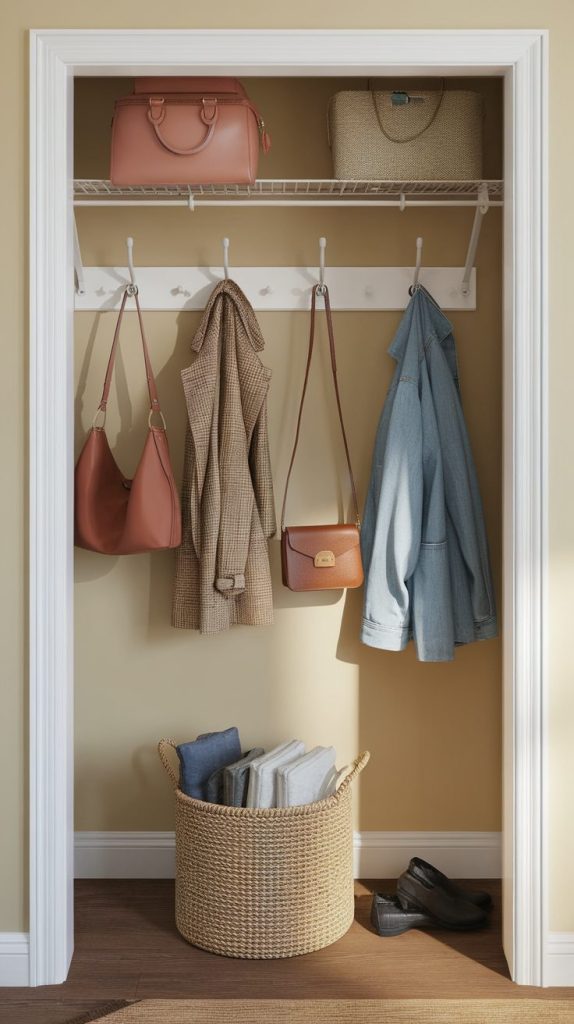
Hooks solve problems shelves and rods can’t. I hang daily-use items on hooks inside the closet. That habit keeps essentials handy.
You can hang bags, hoodies, or tomorrow’s outfit. Hooks reduce wrinkles and prevent pile-ups. Everything stays visible.
I install hooks on side walls or unused corners. They don’t steal much space. They add convenience instantly.
Use sturdy hooks that handle weight. Cheap hooks bend and annoy you. Solid hardware lasts longer and looks better.
Hooks also encourage routine. You return items to the same spot every time. Organization becomes automatic.
Best Uses for Closet Hooks
Daily bags, belts, and light jackets thrive on hooks. You grab and go without digging. Mornings feel smoother.
8. Choose Stackable Storage Boxes for Flexibility
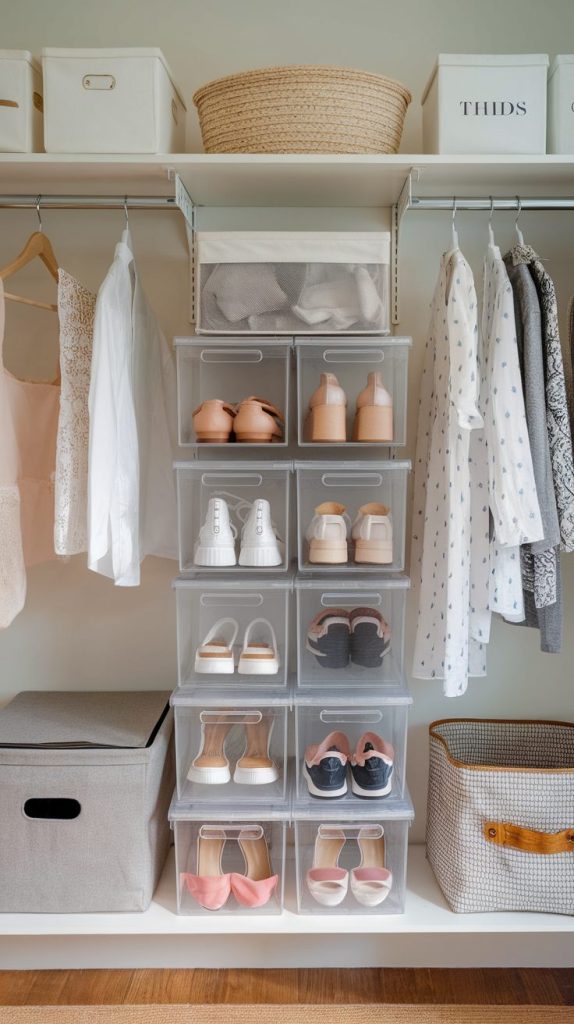
Stackable boxes adapt as your needs change. I love them because they grow with your closet. You adjust layouts without starting over.
Use boxes for shoes, accessories, or sentimental items. Stack them neatly to maximize height. You keep the floor clear.
Clear boxes work best for visibility. You spot items instantly. No guessing games required.
Fabric boxes add softness and style. They suit bedrooms that lean cozy. Labels keep everything easy to find.
This system works well for renters. You avoid permanent changes. You still gain serious organization.
When Stackable Boxes Make the Most Sense
Boxes shine when shelves feel cluttered. They group items neatly. Your closet looks intentional and tidy.
9. Light Up Your Closet to See Everything Clearly
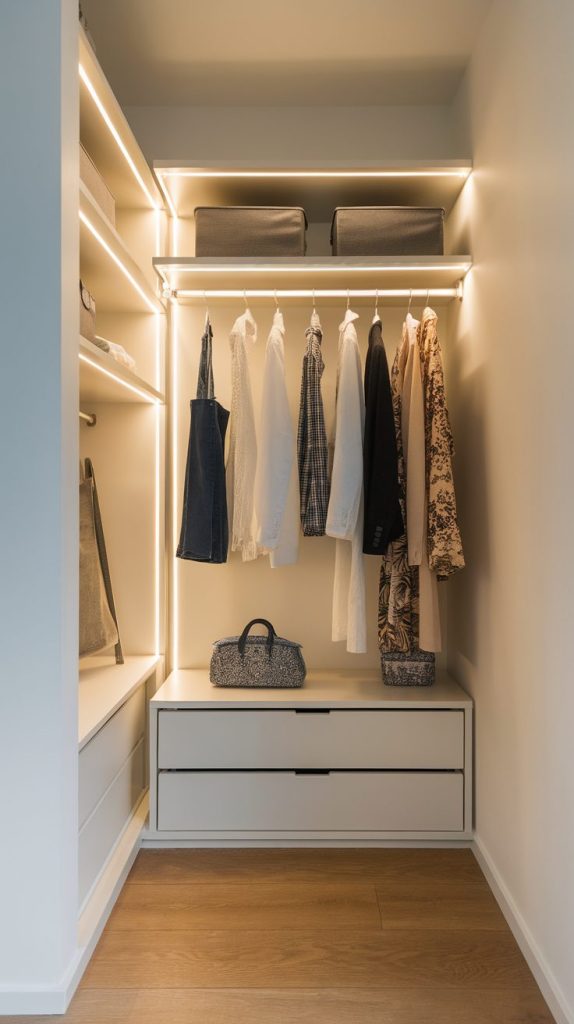
Poor lighting ruins even the best organization. I added stick-on LED lights and never looked back. Visibility changes everything.
Good lighting helps you see colors accurately. You avoid outfit mistakes. You also spot clutter faster.
Battery-powered lights install easily. Motion sensors add convenience. The closet lights up when you open it.
Choose warm light for a cozy feel. Harsh lighting feels unpleasant early in the morning. Comfort matters.
Lighting makes your closet feel bigger. Bright spaces feel open. That illusion helps in small bedrooms.
Simple Lighting Options That Work
LED strips, puck lights, or motion lights all work well. Pick what fits your space. Any upgrade beats darkness.
10. Declutter Regularly and Keep Only What You Love
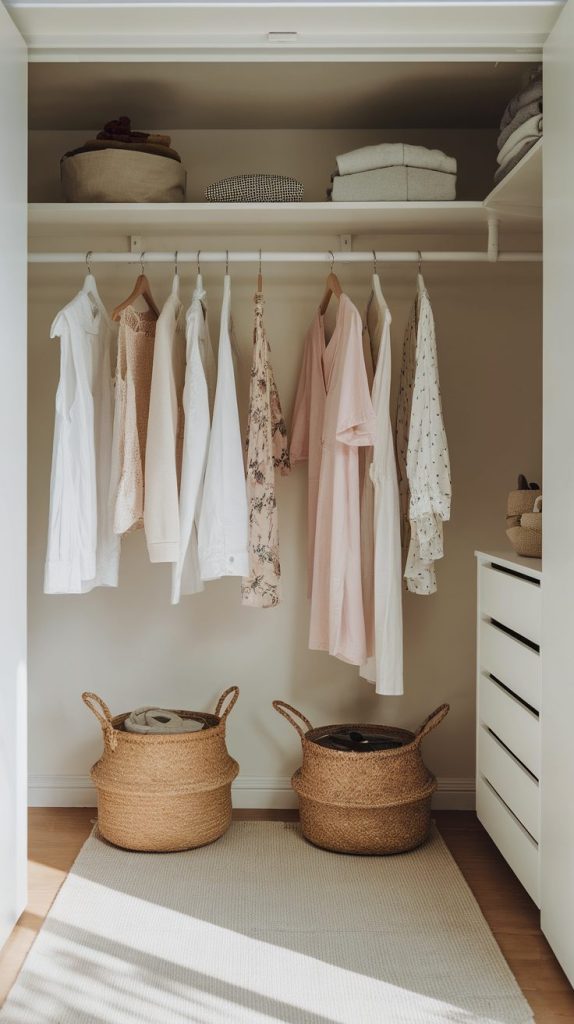
No system survives too many clothes. I learned that the hard way. Decluttering keeps your closet functional.
Review your wardrobe every few months. Remove items you don’t wear. Space appears immediately.
Ask yourself honest questions. Does this fit my life now? Do I feel good wearing it?
Donate or sell what no longer serves you. Someone else benefits, and you gain space. Win-win.
Decluttering also sharpens your style. You see patterns in what you love. Shopping becomes smarter.
How Decluttering Protects Your Organization
Less stuff equals less stress. Systems last longer. Your closet stays enjoyable instead of overwhelming.
Conclusion
A small closet doesn’t limit you when you organize it intentionally. Smart rods, better hangers, and flexible storage change everything when you use them consistently. I’ve seen tiny closets outperform walk-ins with the right setup.
Start with one idea and build from there. Your closet should support your routine, not sabotage it. Trust me, future-you will appreciate the effort every single morning.