9 Small Bedroom Ideas With Smart Wardrobe Design
Small bedrooms fail when storage is treated as an afterthought instead of part of the layout itself.
Wardrobes usually take the blame, even though the real issue is how they’re designed and positioned. A few smart choices can completely change how a room functions without adding square footage.
Most people think small bedrooms need fewer things, but that’s rarely true in real life. Clothes, bags, shoes, and random daily stuff don’t magically shrink just because the room is smaller.
The trick is making the wardrobe work harder without making the space feel crowded or awkward.
This list isn’t about fancy showroom setups or expensive custom builds.
It’s about practical wardrobe ideas that actually make small bedrooms easier to live in, based on what works, what doesn’t, and what I’ve learned after seeing too many badly planned closets.
1. Floor-to-Ceiling Wardrobes That Use Every Inch
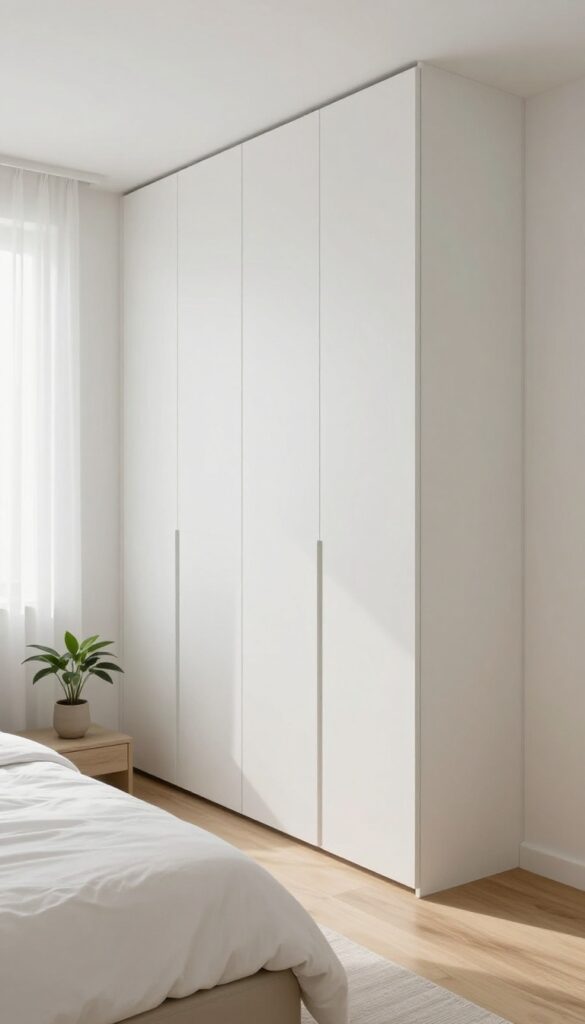
Most small bedrooms waste a shocking amount of vertical space, especially above the wardrobe.
That empty gap collects dust while your storage problems stay unsolved. A floor-to-ceiling wardrobe fixes that by turning dead space into usable storage without expanding the footprint.
This setup works especially well in rooms where floor space is tight but ceiling height is decent. I’ve seen people gain an entire extra season of storage just by extending cabinets upward.
It also makes the room feel more intentional instead of pieced together.
Why This Works
Vertical storage keeps clutter off the floor and reduces visual noise. When everything has a place, the room feels calmer and more organized even if it’s technically full. Tall wardrobes also draw the eye upward, which subtly makes the room feel larger.
How to Do It
- Measure from floor to ceiling before choosing any wardrobe design
- Use the upper sections for off-season clothes or rarely used items
- Install soft-close doors to avoid awkward overhead slamming
- Add internal shelves instead of deep empty cavities
Style & Design Tips
Keep the finish simple so the wardrobe blends into the wall instead of dominating it. Matte white, soft beige, or light wood tones work best in small rooms. Avoid heavy trims or chunky handles that visually break up the height.
Pro Tip or Budget Hack
If a custom build feels expensive, stack ready-made wardrobes and add a simple top panel to close the gap. Paint everything the same color for a built-in look without the custom price tag.
2. Sliding Door Wardrobes That Save Walking Space
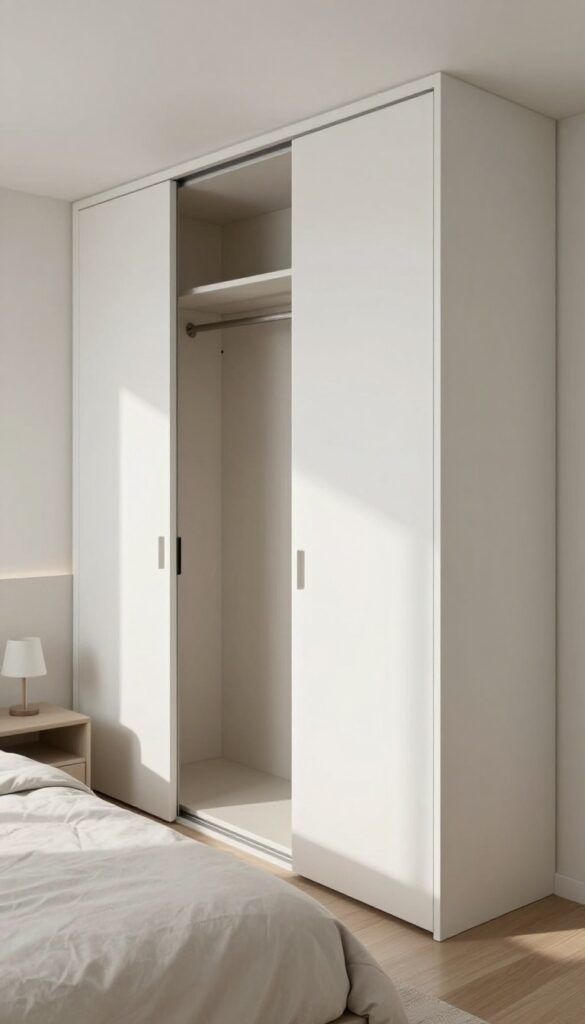
Swing doors look fine in large bedrooms, but in small ones they eat up precious movement space. Sliding wardrobes solve that problem instantly by staying flush with the wall. The difference feels small on paper but huge in daily use.
This setup is especially helpful in narrow bedrooms where the bed already pushes close to the wardrobe. You stop playing the daily game of “open the door, step back, close it again.”
Why This Works
Sliding doors remove the clearance issue entirely. That makes layouts more flexible and reduces visual clutter. The room feels cleaner because there’s nothing interrupting the flow.
How to Do It
- Choose smooth-glide tracks for quiet operation
- Use soft-close hardware to avoid slamming
- Keep door panels lightweight to prevent sagging
- Make sure tracks are recessed if possible
Style & Design Tips
Mirrored sliding doors reflect light and visually double the space, but they’re not the only option. Frosted glass, matte panels, or wood textures also work well if mirrors feel too bold. Avoid heavy patterns that make the room feel busy.
Pro Tip or Budget Hack
If full sliding doors are pricey, install one sliding panel and one fixed panel. You still get the function without doubling the cost.
3. Built-In Wardrobes That Blend Into the Wall
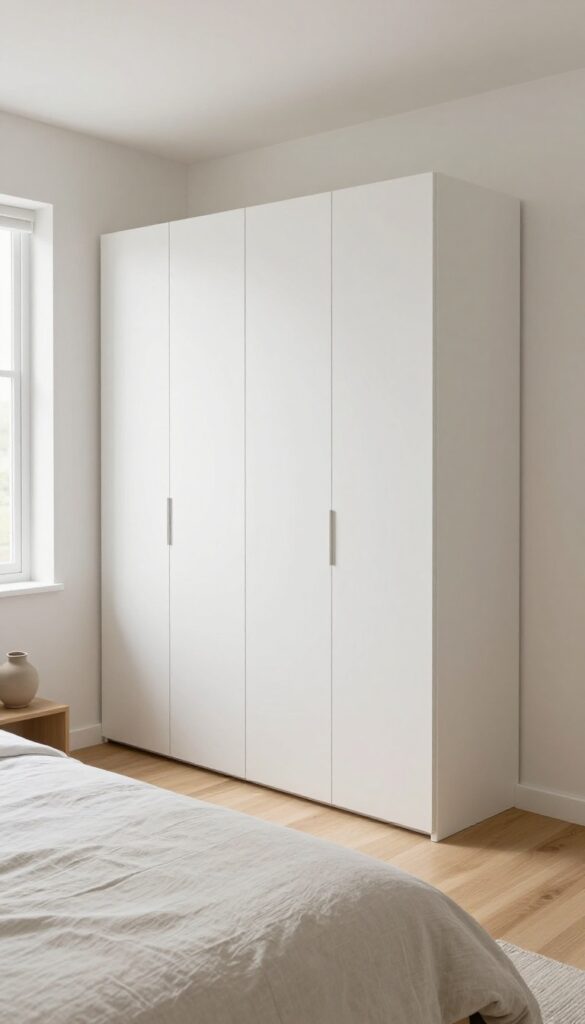
Freestanding wardrobes often look bulky in small rooms, even when they’re technically compact. Built-ins solve that by blending directly into the wall, creating a cleaner and more intentional look. They feel like part of the room rather than furniture shoved into it.
This idea works especially well in rooms with awkward corners or uneven walls. Custom sizing eliminates wasted gaps and makes everything feel more polished.
Why This Works
Built-ins reduce visual clutter by creating a seamless surface. When the wardrobe matches the wall color, the room feels wider and calmer. You also gain flexibility with interior storage layouts.
How to Do It
- Measure wall depth carefully before designing
- Use push-to-open doors for a clean look
- Add internal drawers for smaller items
- Keep the exterior minimal
Style & Design Tips
Flat-panel doors with no visible handles work best here. Neutral colors or soft wood tones keep the design timeless. Avoid glossy finishes unless the room gets a lot of natural light.
Pro Tip or Budget Hack
You can fake a built-in look by framing a standard wardrobe with MDF panels and painting everything the same color. It costs less and looks surprisingly high-end.
4. Corner Wardrobes That Use Awkward Space
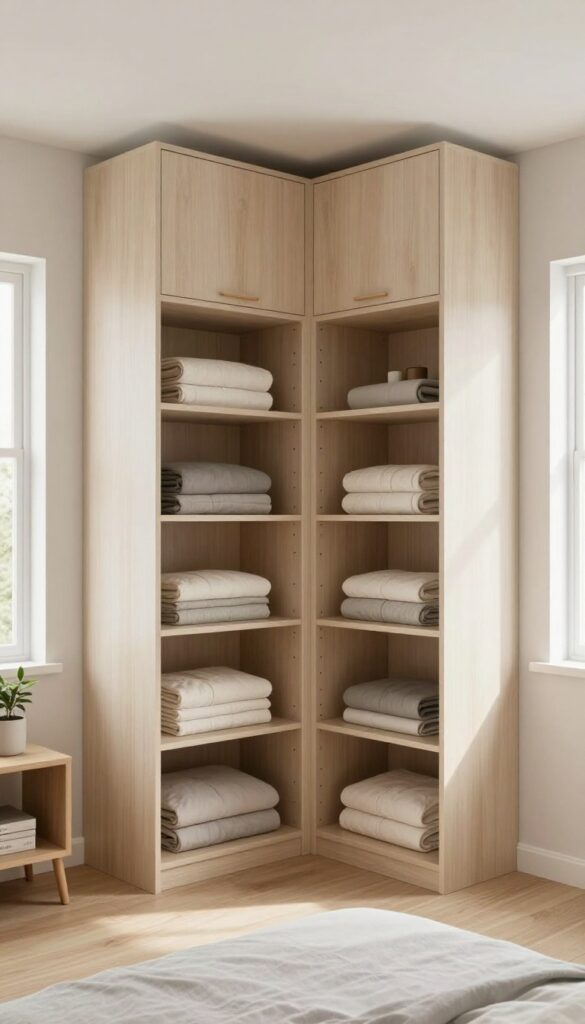
Corners are usually the most wasted parts of a small bedroom. They’re too tight for furniture and too visible to ignore. A corner wardrobe turns that problem into one of the most efficient storage solutions available.
When done right, it frees up wall space while adding more storage than a straight wardrobe ever could.
Why This Works
Corner units maximize space that would otherwise sit empty. They also balance the room layout by reducing long, flat walls that make small rooms feel narrow.
How to Do It
- Choose angled or L-shaped designs
- Use rotating shelves or pull-out racks
- Keep door handles slim or recessed
- Make sure lighting reaches inside
Style & Design Tips
Stick to light colors to prevent the corner from feeling heavy. Soft greys, warm whites, or pale wood work especially well. Avoid dark finishes unless the room is very bright.
Pro Tip or Budget Hack
Use open shelving on one side of the corner unit to reduce cost and visual weight. It also adds personality without overwhelming the space.
5. Wardrobes with Built-In Mirrors
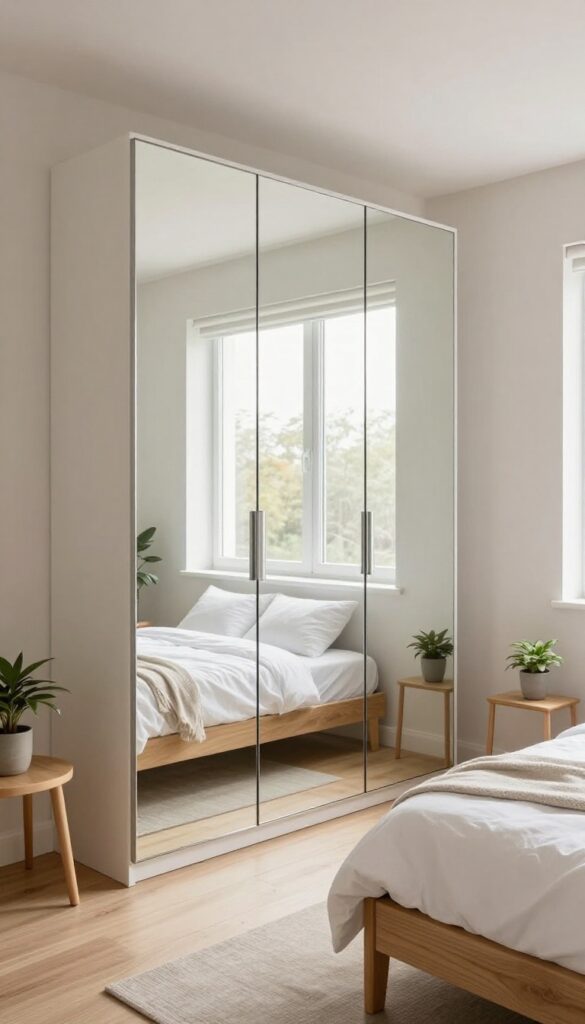
Mirrors aren’t just for checking outfits. In small bedrooms, they’re one of the easiest ways to make the space feel bigger without changing the layout. Adding mirrors to wardrobe doors pulls double duty without taking extra space.
This idea works especially well in rooms with limited natural light.
Why This Works
Mirrors reflect both light and depth, making the room feel more open. They also eliminate the need for a separate standing mirror, freeing up floor space.
How to Do It
- Use full-length mirror panels for maximum impact
- Place the wardrobe opposite a window if possible
- Keep frames thin or invisible
- Clean regularly to avoid streaks
Style & Design Tips
Go for bronze or tinted mirrors if you want something softer than standard silver. Avoid overly decorative frames that clash with modern layouts.
Pro Tip or Budget Hack
Mirror film applied to existing wardrobe doors gives a similar effect at a fraction of the cost. It’s not perfect, but it works surprisingly well.
6. Open Wardrobe Concepts for Small Rooms
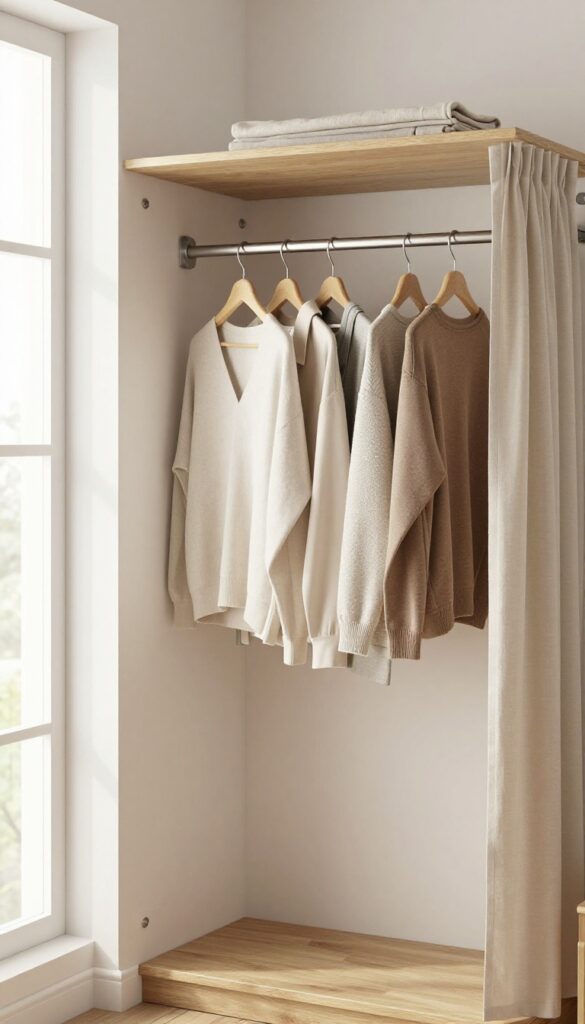
Closed wardrobes aren’t always the best solution, especially in very small bedrooms. Open wardrobes create a lighter feel and make the room look less boxed in. They also encourage better organization since everything stays visible.
This works best for people who don’t own excessive clothing or enjoy a minimalist look.
Why This Works
Open designs reduce visual bulk and improve airflow. They also make daily dressing easier since everything is visible and accessible.
How to Do It
- Use wall-mounted rails instead of bulky units
- Add shelves above for folded items
- Keep clothing organized by color
- Use matching hangers for a clean look
Style & Design Tips
Stick to neutral clothing tones if possible to avoid visual clutter. Wood and metal combinations give a modern, airy feel. Avoid overcrowding the rails.
Pro Tip or Budget Hack
Install a simple curtain or fabric panel that can slide closed when you want things hidden. It’s cheaper than doors and adds softness to the room.
7. Wardrobes with Built-In Study or Vanity Space
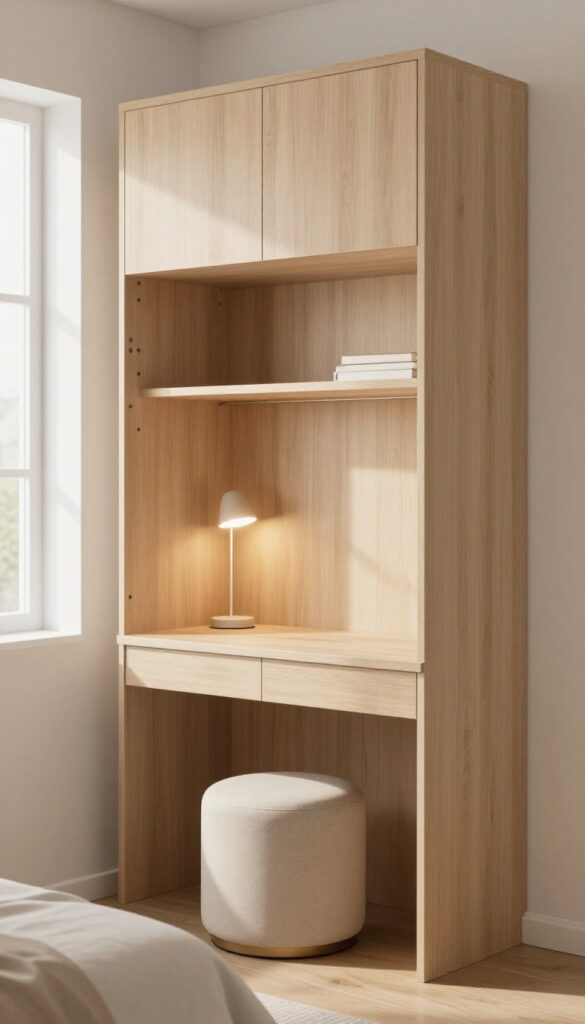
In small bedrooms, furniture needs to multitask. Combining a wardrobe with a desk or vanity saves space and keeps everything in one zone. It’s especially useful in apartments or shared rooms.
This setup works well for people who need a workspace but don’t have room for a separate desk.
Why This Works
Combining functions reduces clutter and improves flow. It also keeps daily essentials close without overcrowding the room.
How to Do It
- Integrate a pull-out or recessed desk
- Add task lighting above the surface
- Keep storage above and below minimal
- Use a compact chair or stool
Style & Design Tips
Choose finishes that match the wardrobe for a seamless look. Soft wood tones or matte finishes help the area feel calm instead of busy.
Pro Tip or Budget Hack
A fold-down desk panel can double as a vanity or workspace without taking permanent floor space.
8. Sliding Mirror Wardrobe with Hidden Storage
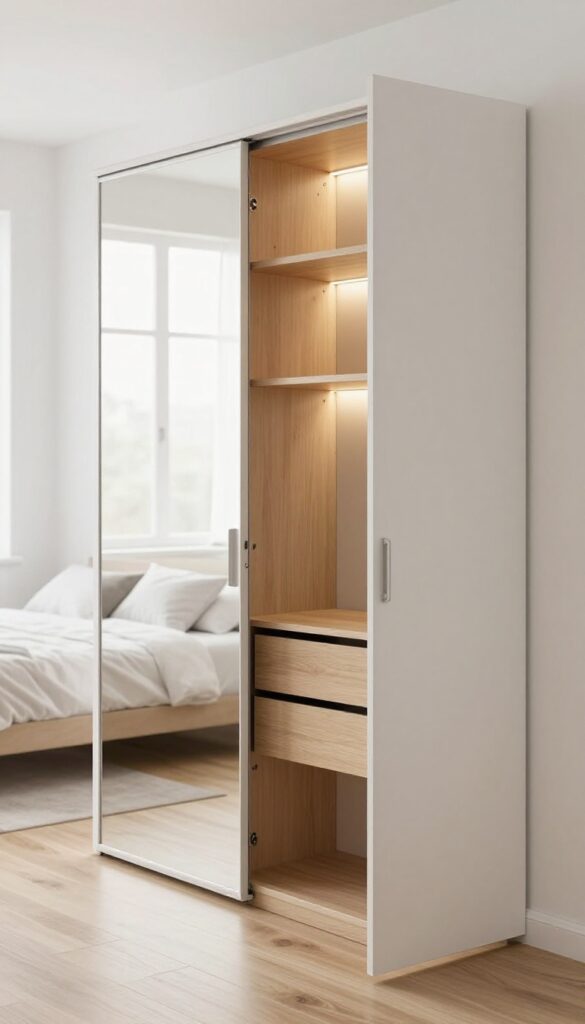
Some of the best wardrobe designs hide more than they show. Sliding mirror wardrobes with internal compartments keep the room looking clean while offering serious storage behind the scenes.
This is ideal for people who want a tidy bedroom without visible clutter.
Why This Works
Hidden storage keeps visual noise low, which makes small rooms feel calmer. Mirrors add brightness while disguising storage depth.
How to Do It
- Use internal drawers for accessories
- Add pull-out shoe racks
- Keep shelves adjustable
- Use soft lighting inside
Style & Design Tips
Stick with simple mirror panels and minimal framing. Avoid decorative lines that break up the reflection.
Pro Tip or Budget Hack
Install battery-powered LED strips inside the wardrobe for visibility without electrical work.
9. Custom Modular Wardrobes That Grow With You
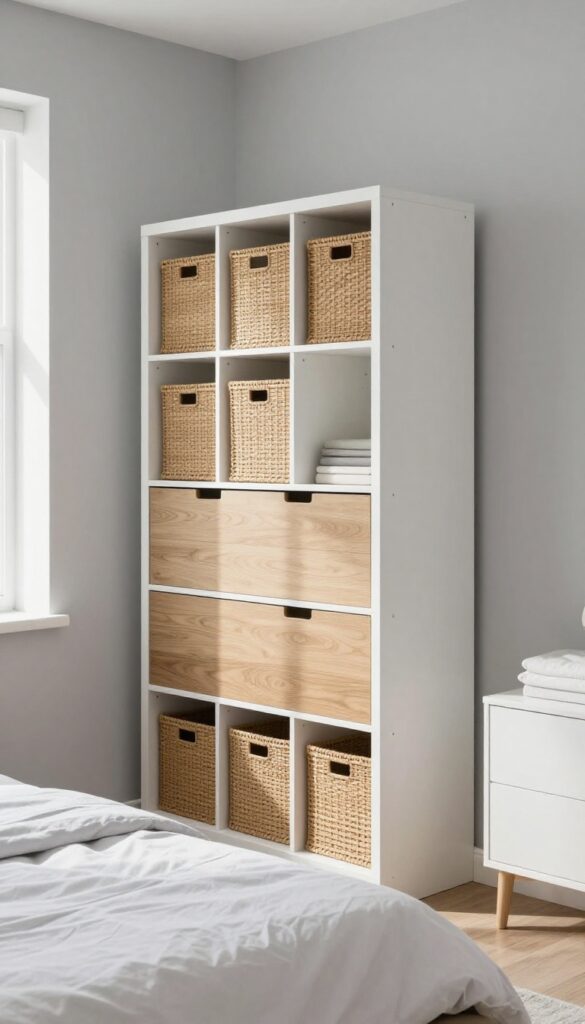
Life changes, and wardrobes should be able to adapt. Modular systems let you adjust shelves, rods, and drawers as your needs change. This is especially useful in small bedrooms where flexibility matters.
This approach works great for renters or anyone who likes to rearrange often.
Why This Works
Modular systems prevent wasted space and adapt to different storage needs over time. You’re not locked into one layout forever.
How to Do It
- Choose adjustable shelving systems
- Use removable drawers and baskets
- Plan for vertical expansion
- Keep components lightweight
Style & Design Tips
Neutral finishes work best for long-term flexibility. White, light oak, or grey blend easily with changing decor styles.
Pro Tip or Budget Hack
Buy a basic modular system and upgrade individual components later instead of buying everything at once.
Final Thoughts
Smart wardrobe design changes how a small bedroom feels more than almost any other upgrade. When storage works properly, everything else in the room feels easier and more intentional. The key isn’t adding more furniture, but making better use of what’s already there.
I’ve learned that small rooms don’t need dramatic solutions, just thoughtful ones. Once the wardrobe works with the space instead of against it, the entire room starts to feel calmer, cleaner, and surprisingly bigger.