8 Covered Deck Ideas for Shade and Comfort
Comfort outdoors usually depends less on furniture and more on how well you control sun, heat, and unexpected weather.
A deck without coverage often looks great in photos but becomes unusable once temperatures rise or rain shows up. Adding the right kind of cover changes how often you actually use the space, not just how it looks. The goal isn’t decoration first; it’s creating a spot that works every single day.
Most people assume covered decks require expensive renovations, but many smart solutions feel surprisingly achievable.
I’ve tested a few of these ideas myself, and honestly, the difference between a bare deck and a shaded one feels like upgrading an entire room. Once comfort improves, everything else—from décor choices to relaxation—starts falling into place naturally.
1. Classic Pergola with Adjustable Shade Panels
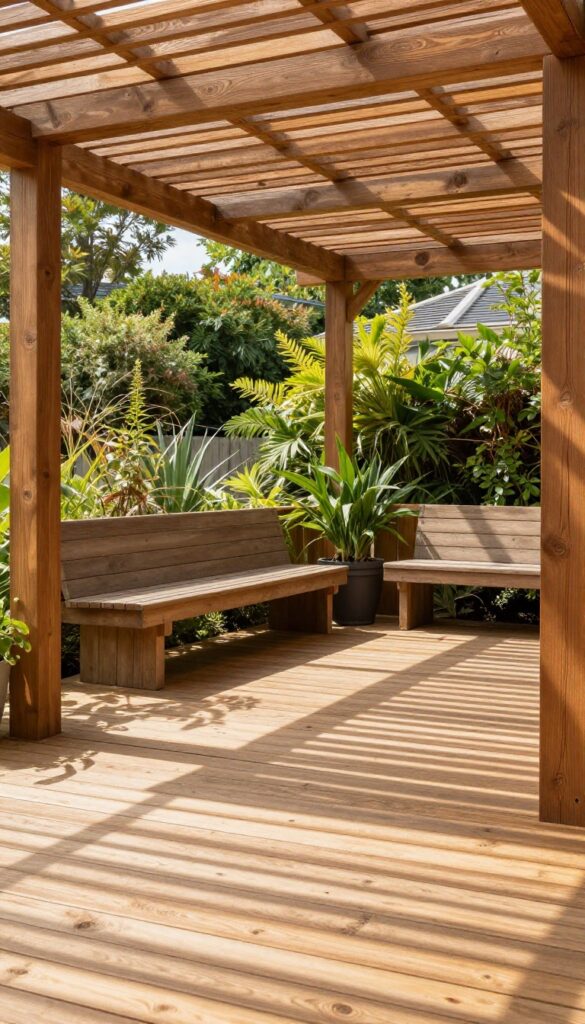
A deck often becomes unusable during peak sun hours, even when the temperature itself isn’t unbearable. That’s where a pergola with adjustable shade panels quietly solves multiple problems at once. Instead of fully enclosing the space, it gives structure while letting you control how much light filters through.
I used to think pergolas were mostly aesthetic, but once I added adjustable panels, the deck instantly felt intentional and functional.
The beauty of this setup is flexibility. You can open the panels on cooler days and close them when sunlight turns aggressive. It keeps airflow moving while still offering protection, which makes a huge difference during long afternoons outside.
Why This Works
Pergolas create partial enclosure without trapping heat. The adjustable panels allow you to respond to changing weather instead of committing to permanent shade levels.
This balance keeps the deck comfortable while maintaining openness. Visually, the structure also frames the space, making furniture arrangements feel more grounded and cohesive.
How to Do It
- Install sturdy vertical posts anchored securely into deck framing for stability.
- Choose adjustable slats or retractable shade panels instead of fixed roofing.
- Position panels parallel to sunlight direction for maximum control.
- Use weather-resistant materials like cedar, aluminum, or treated wood.
Each step matters because stability determines longevity, while panel placement directly affects shade effectiveness.
Style & Design Tips
Stick with neutral tones like warm wood, matte black, or soft white for timeless appeal. Avoid overly ornate designs because simplicity makes the deck feel larger and calmer.
Layer the space underneath with outdoor rugs and cushions so the pergola feels integrated rather than floating above. Consistency between deck furniture and pergola color makes everything look professionally planned.
Pro Tip or Budget Hack
Instead of custom panels, use outdoor roller shades attached between beams. They cost far less but create nearly the same adjustable shade effect.
2. Retractable Awning for Flexible Coverage
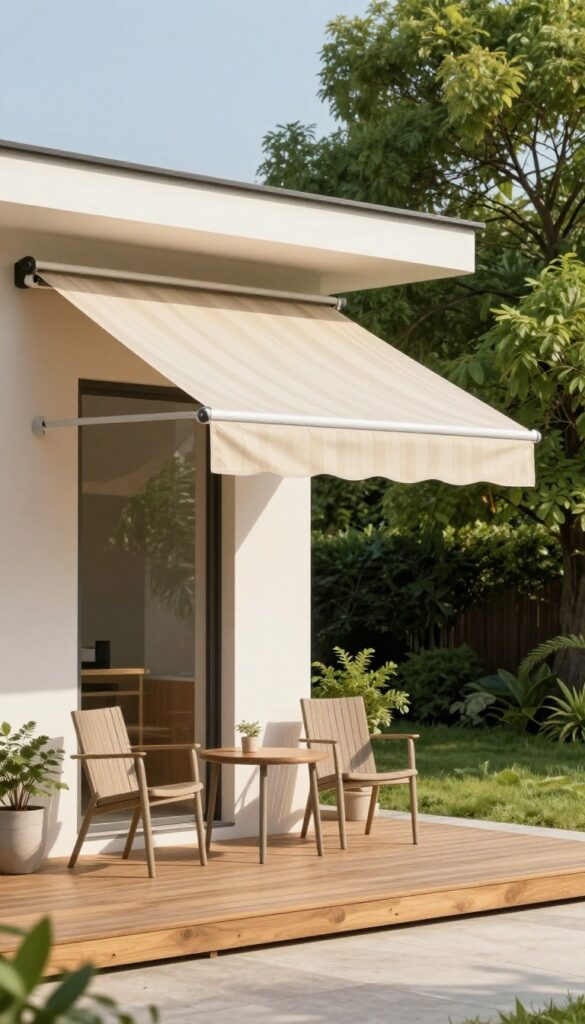
Sometimes permanent structures feel overwhelming, especially if you’re unsure how often you’ll use the deck. A retractable awning gives coverage only when you want it, which makes it perfect for smaller homes or multipurpose outdoor spaces. I like this option because it feels practical rather than committed—you extend it when needed and forget it exists when you don’t.
This solution works especially well for decks connected directly to the house. It creates instant shade without construction noise or major installation drama.
Why This Works
Retractable awnings adapt to daily conditions. You control sunlight exposure, which prevents overheating while preserving natural light indoors.
Because the awning attaches to the home rather than the deck floor, it keeps the area visually uncluttered. That simplicity helps smaller decks feel open instead of crowded.
How to Do It
- Measure deck width carefully before purchasing an awning.
- Mount brackets securely into wall studs, not siding alone.
- Choose UV-resistant fabric to prevent fading.
- Test extension angles to ensure proper rain runoff.
Proper installation prevents sagging and extends lifespan significantly.
Style & Design Tips
Solid colors age better than busy patterns. Soft beige, charcoal, or muted stripes blend easily with most exterior styles.
Avoid overly bright fabrics unless your décor already leans playful. A subtle awning often looks more expensive, even when it isn’t.
Pro Tip or Budget Hack
Manual crank awnings cost far less than motorized versions and rarely break. Unless convenience is critical, the simpler mechanism saves money long term.
3. Covered Deck with Polycarbonate Roofing
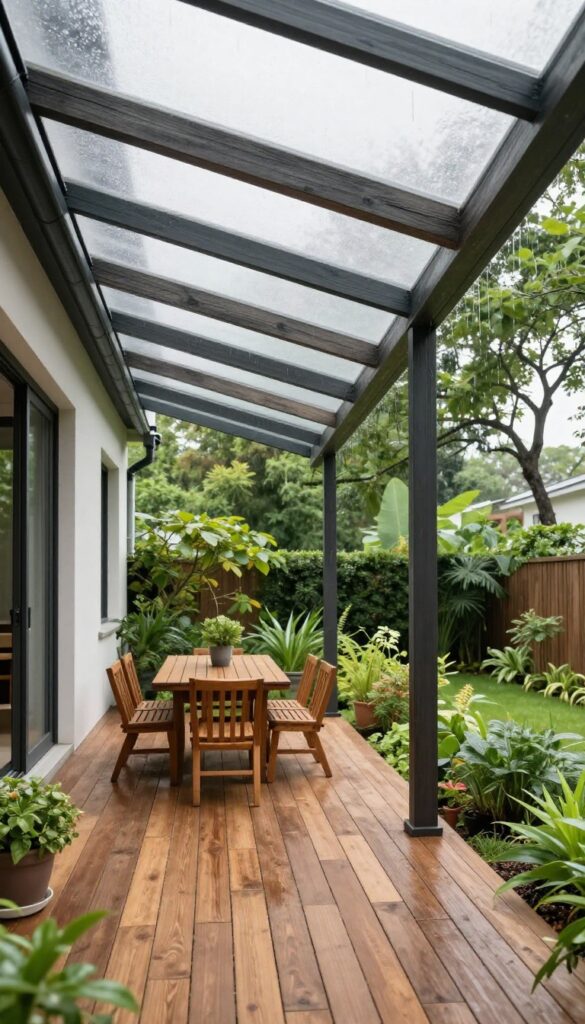
Rain ruins outdoor plans faster than anything else, especially when decks lack solid protection. Polycarbonate roofing offers full coverage while still allowing light through, which keeps the space bright without exposing it to weather. The first time I sat under one during a storm, I realized how underrated this option is.
Unlike heavy roofing materials, polycarbonate panels feel light visually and structurally. They protect without making the deck feel enclosed or dark.
Why This Works
The translucent panels diffuse sunlight rather than blocking it completely. This reduces glare while maintaining natural brightness.
The material also handles rain extremely well, turning the deck into a usable space year-round. Comfort increases because weather stops dictating your plans.
How to Do It
- Install angled rafters to allow proper water drainage.
- Use UV-protected polycarbonate sheets for durability.
- Seal panel edges carefully to prevent leaks.
- Add gutters to manage rainwater flow.
These steps ensure the structure stays functional instead of becoming a maintenance headache.
Style & Design Tips
Pair clear or frosted panels with dark framing for contrast. The combination looks modern without feeling cold.
Avoid mixing too many materials overhead because visual clutter draws attention upward. Clean roof lines make decks appear larger and calmer.
Pro Tip or Budget Hack
Frosted panels hide dirt and scratches better than clear ones, reducing how often you need to clean the roof.
4. Outdoor Curtain Canopy for Soft Shade
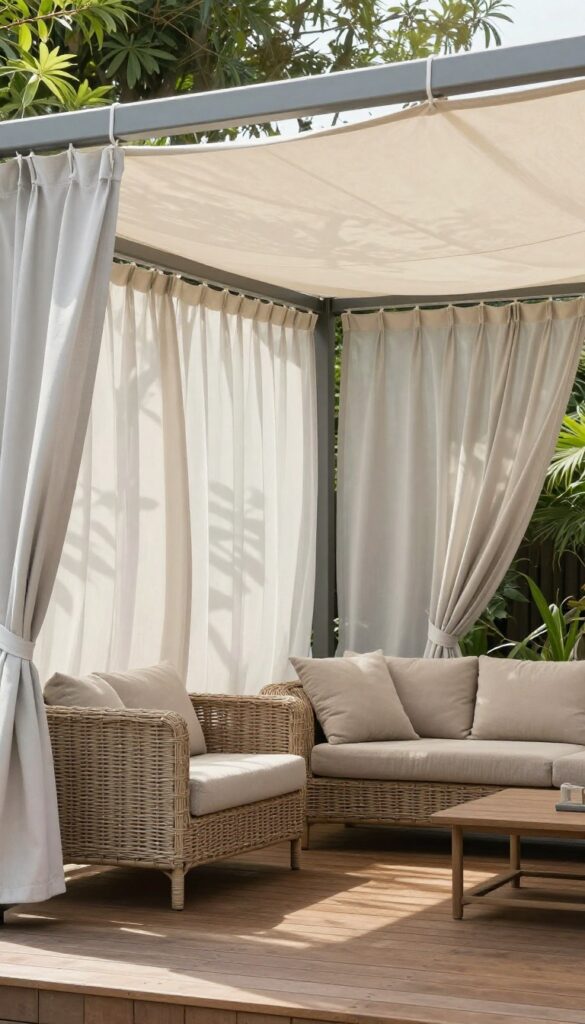
Hard structures aren’t always necessary when the goal is comfort and atmosphere. A curtain canopy creates gentle shade while adding movement and softness to the deck. I tried this setup on a smaller patio once, and it instantly felt more relaxed—almost like an outdoor lounge instead of a backyard corner.
This idea works beautifully for renters or anyone wanting a low-commitment upgrade. You get coverage without permanent construction.
Why This Works
Fabric diffuses sunlight evenly, preventing harsh shadows. Curtains also block wind slightly, making seating areas more comfortable.
Because they move naturally, the space feels alive rather than rigid. That subtle motion adds personality without extra décor.
How to Do It
- Install a simple overhead frame or tension wire system.
- Use outdoor-rated curtains resistant to mildew.
- Secure tiebacks to control airflow during windy days.
- Position seating beneath the densest fabric area.
Correct placement ensures the shade falls where people actually sit.
Style & Design Tips
Light neutrals like ivory or soft gray feel airy and timeless. Avoid overly thin fabric that turns transparent under strong sunlight.
Layer with woven furniture or textured cushions so the softness feels intentional. Matching curtain color with cushions creates cohesion instantly.
Pro Tip or Budget Hack
Use drop cloth fabric treated with waterproof spray as an affordable alternative to designer outdoor curtains.
5. Wooden Pavilion for Full Outdoor Living Room Feel
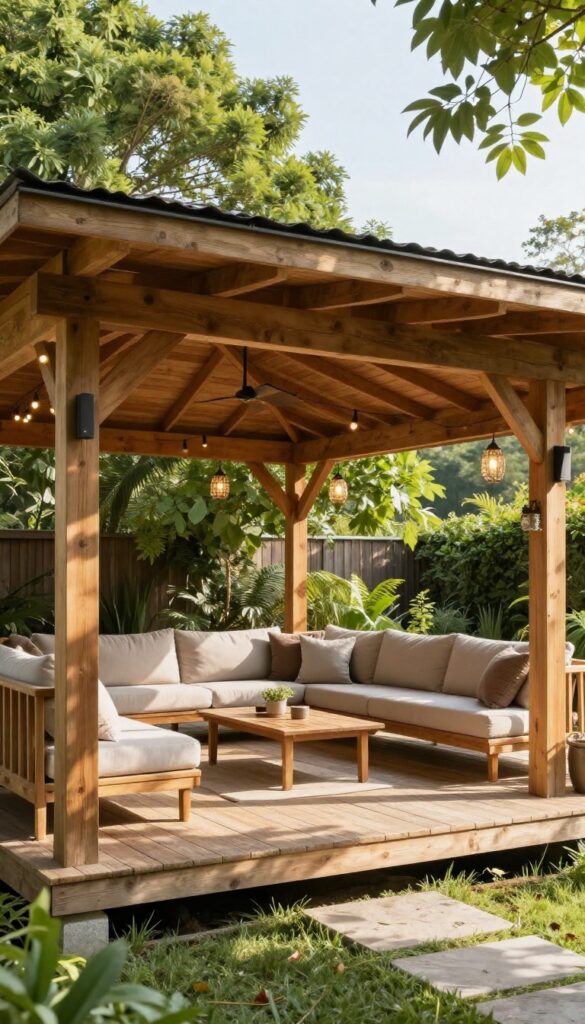
Some decks deserve more than temporary solutions. A wooden pavilion transforms the area into a true outdoor room, providing full overhead protection while keeping sides open. The first pavilion I experienced felt surprisingly cozy without losing that outdoor freshness.
This option works best for homeowners who entertain often or want a dedicated relaxation zone. It creates a clear destination rather than just extra floor space.
Why This Works
A pavilion defines boundaries psychologically. People naturally gather under structured spaces because they feel protected and intentional.
The solid roof blocks direct sun and rain completely, allowing furniture and décor to stay outside longer without damage.
How to Do It
- Build or install a pre-fabricated pavilion kit sized to your deck.
- Anchor posts securely into deck framing.
- Choose weather-resistant wood finishes.
- Add ceiling hooks for lighting or fans.
Structural stability matters because pavilions carry more weight than lighter covers.
Style & Design Tips
Keep wood tones consistent with nearby fencing or siding. Too many finishes make the structure feel disconnected.
Add layered lighting like lanterns or string lights to soften the roof’s visual weight. Warm lighting prevents the pavilion from feeling heavy.
Pro Tip or Budget Hack
Instead of custom builds, look for modular pavilion kits online. Many cost half as much and install surprisingly quickly.
6. Louvered Roof System for Maximum Control
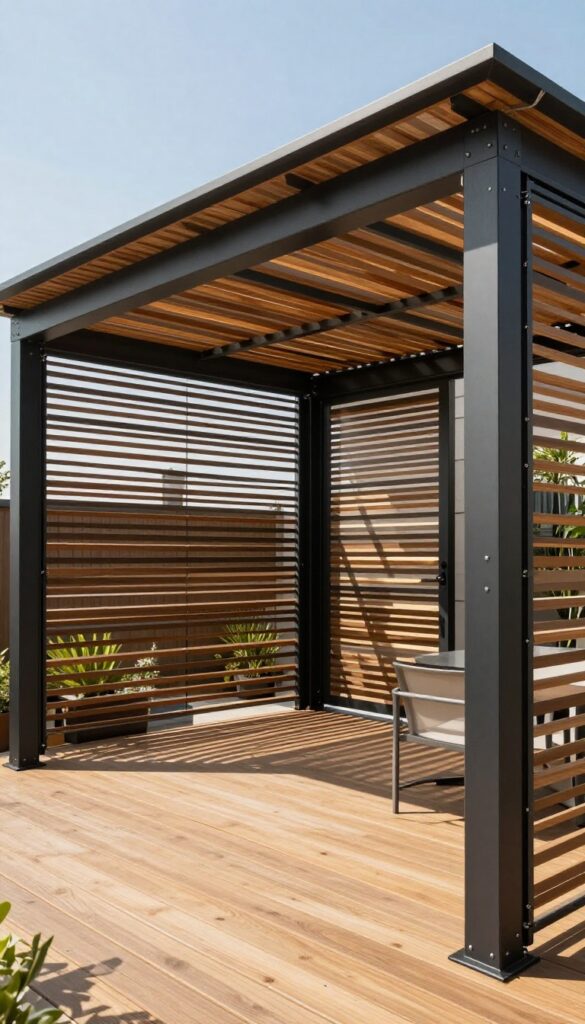
Weather rarely stays predictable, which makes fixed roofs limiting over time. A louvered roof system allows panels to tilt open or closed, giving total control over sunlight and airflow. I used to think these were luxury-only features, but newer versions are becoming much more accessible.
This system feels modern and incredibly practical. You adjust conditions instead of adapting your plans around them.
Why This Works
Adjustable louvers regulate temperature naturally. Open angles release heat, while closed panels create shade and rain protection.
This adaptability keeps the deck usable throughout changing seasons. Functionally, it’s one of the smartest upgrades available.
How to Do It
- Install a compatible pergola-style frame.
- Choose manual or motorized louver mechanisms.
- Angle panels slightly for water runoff.
- Test airflow positioning during installation.
Proper adjustment ensures comfort rather than trapped heat.
Style & Design Tips
Matte black or dark gray frames create a sleek, contemporary look. Pair with minimalist furniture to maintain visual balance.
Avoid overly decorative décor because the structure itself already makes a strong statement. Let the architecture be the star.
Pro Tip or Budget Hack
Manual louver systems cost significantly less and require less maintenance than motorized ones while delivering the same functionality.
7. Green Roof with Climbing Plants
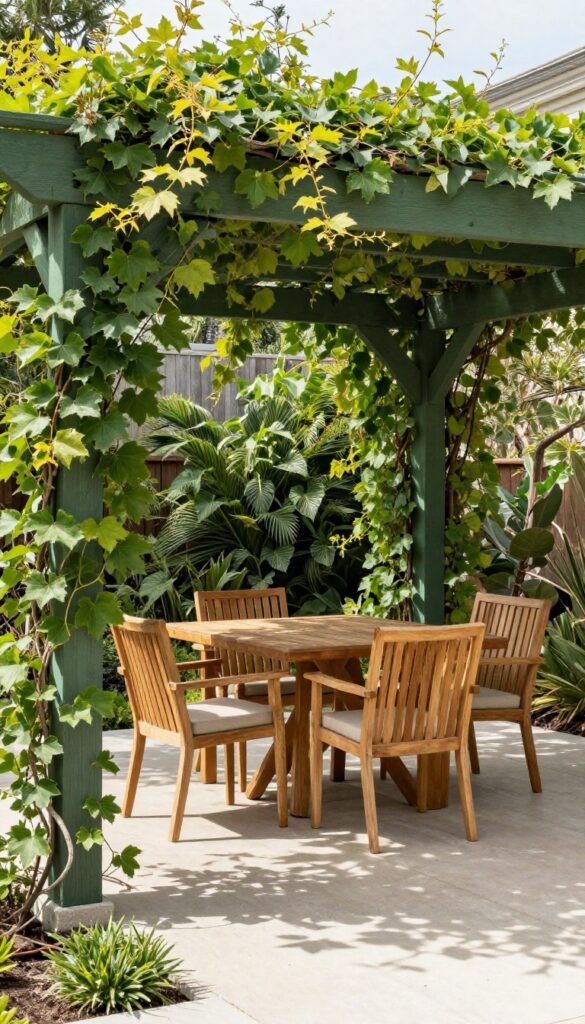
Shade doesn’t always need manufactured materials. A plant-covered structure creates natural cooling while blending beautifully into the backyard environment. The first time I saw vines covering a deck frame, the temperature difference underneath was genuinely noticeable.
This option suits anyone who enjoys gardening and wants a softer, organic aesthetic. It evolves over time, which makes the space feel alive.
Why This Works
Plants absorb sunlight and release moisture, naturally lowering surrounding temperatures. The layered foliage filters light gently rather than blocking it harshly.
This creates a relaxed environment that feels cooler and calmer. The greenery also improves visual connection with the outdoors.
How to Do It
- Install a sturdy trellis or pergola frame.
- Choose fast-growing climbers like jasmine or grapevine.
- Guide vines using soft ties during early growth.
- Water consistently until coverage develops.
Training plants early helps achieve even shade distribution.
Style & Design Tips
Mix greenery with neutral furniture so the plants remain the focal point. Avoid colorful décor that competes visually with foliage.
Add warm wood accents to enhance the natural vibe. Keeping colors earthy makes the space feel intentional instead of wild.
Pro Tip or Budget Hack
Start with smaller plants instead of mature ones. They’re cheaper and adapt better to your specific deck conditions.
8. Sail Shade Layout for Modern Simplicity
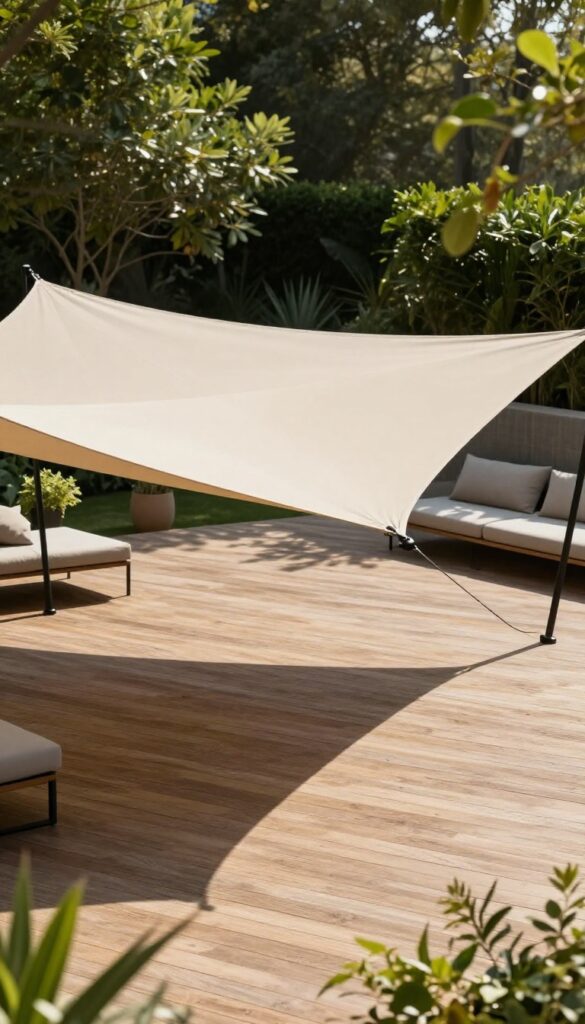
Not every deck needs beams, roofs, or construction tools. Sail shades offer a clean, modern solution that installs quickly and looks surprisingly stylish. I like recommending this idea because it delivers dramatic visual impact with minimal effort.
It works especially well for renters or DIY beginners who want fast results. Installation feels more like setting up outdoor décor than building infrastructure.
Why This Works
Triangular or rectangular sails distribute tension evenly, creating stable shade zones. The angled installation also allows rainwater to run off naturally.
Because sails float visually, the deck feels open while still protected. That balance keeps the space airy and comfortable.
How to Do It
- Anchor corners to sturdy posts or walls.
- Install each point at slightly different heights.
- Use tension hardware for stability.
- Choose breathable outdoor fabric for airflow.
Proper tension prevents sagging and improves durability.
Style & Design Tips
Layer multiple sails in complementary colors for depth. Neutral tones like sand, gray, or white look modern without overwhelming the space.
Avoid perfectly symmetrical layouts because slight angles feel more dynamic. Asymmetry adds designer-level interest effortlessly.
Pro Tip or Budget Hack
Buy standard-sized sails instead of custom ones and adjust anchor points accordingly. This saves a surprising amount of money.
Final Thoughts
A covered deck isn’t about adding more structure; it’s about removing limits on how and when you enjoy the space. Small changes in shade and protection can completely shift how often you step outside and actually relax.
Start with the idea that fits your lifestyle instead of chasing trends. I’ve learned that comfort always beats complexity, and once a deck feels good to use, decorating it becomes the fun part.