7 Floating Deck Ideas for Small Backyards
Square footage limits backyard function faster than most people expect. A tight outdoor space can feel cluttered, awkward, or just plain underused if the layout doesn’t make sense.
Floating decks solve that problem in a clean, practical way.
They create a defined area without heavy construction, and they instantly make a small yard feel intentional instead of accidental.
1. Low-Profile Lounge Deck
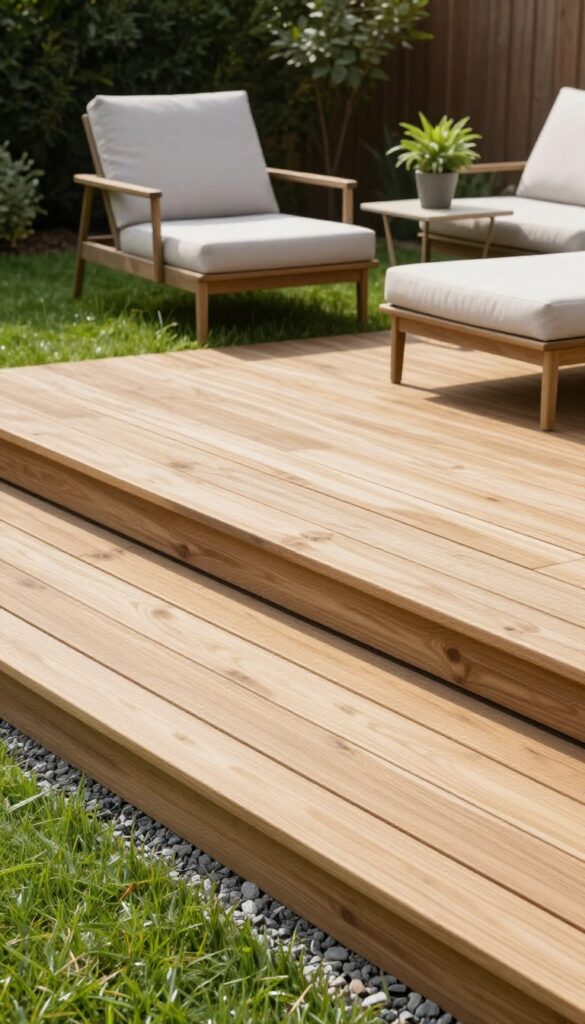
Small backyards often lack a defined place to sit, which makes the whole space feel temporary. A low-profile floating deck creates a subtle platform that separates the lounging area from grass or gravel without adding visual bulk.
I’ve built one barely eight inches off the ground, and it completely changed how the yard felt. It looked finished, not improvised.
Keeping the deck low makes it feel like part of the landscape rather than a structure competing with it. You avoid railings, steps, and visual clutter, which is critical when space is tight. The clean horizontal line grounds everything.
Why This Works
A low deck draws the eye outward instead of upward. That horizontal emphasis stretches the yard visually, which makes it feel wider than it actually is.
It also improves usability. Furniture sits level, feet stay clean, and you don’t feel like you’re dragging chairs across uneven grass every time you rearrange.
How to Do It
- Choose pressure-treated lumber or composite decking for durability
- Keep the height under 12 inches to avoid needing railings
- Level the ground carefully before placing deck blocks
- Use landscape fabric underneath to prevent weeds
Each step matters because a small deck shows flaws faster than a big one. Leveling properly prevents wobble, and weed control saves you future frustration.
Style & Design Tips
Stick to neutral tones like warm brown, soft gray, or natural cedar. Dark stains can visually shrink a small space, so lighter finishes help it breathe.
Avoid bulky outdoor sectionals. Choose slim-profile seating with open legs so you can see the floor underneath, which keeps things from feeling crowded.
Pro Tip or Budget Hack
Skip built-in benches if you’re trying to save money. Freestanding furniture gives you flexibility and costs less upfront.
2. Corner-Placement Floating Deck
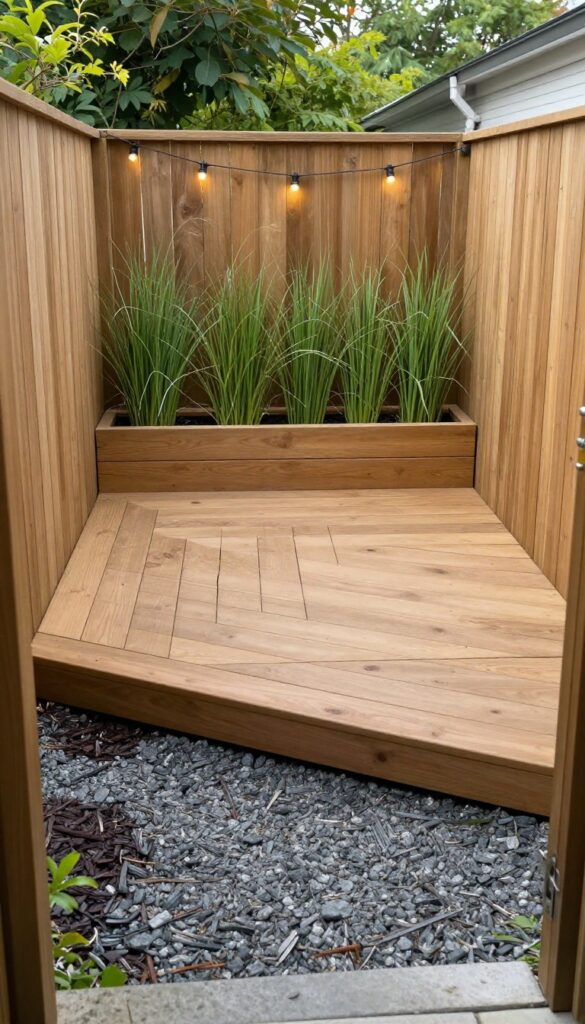
Backyard layouts rarely use corners well. Those areas end up holding random pots, tools, or absolutely nothing.
Placing a floating deck in a corner instantly gives that dead space purpose. I love this approach because it leaves the center of the yard open, which tricks the eye into thinking there’s more room than there actually is.
Why This Works
Corners create natural boundaries. When you tuck a deck into one, you anchor the layout without interrupting traffic flow.
It also makes the yard feel organized. Instead of furniture floating awkwardly in the middle, everything has a clear home.
How to Do It
- Measure the corner carefully and sketch your layout
- Square the frame precisely so it fits flush against fences
- Leave a few inches of breathing room from fence lines
- Add gravel or mulch around the exposed edges
Accurate measuring keeps the deck from looking crooked. That small gap from the fence prevents moisture damage and gives the structure room to expand.
Style & Design Tips
Paint or stain the fence behind the deck in a coordinating color. A consistent backdrop makes the area feel larger and more cohesive.
Add a vertical element like a slim planter wall or hanging lights to draw the eye upward without adding clutter.
Pro Tip or Budget Hack
Use crushed gravel around the base instead of extending decking all the way out. It’s cheaper and gives a clean transition.
3. Multi-Level Mini Platforms
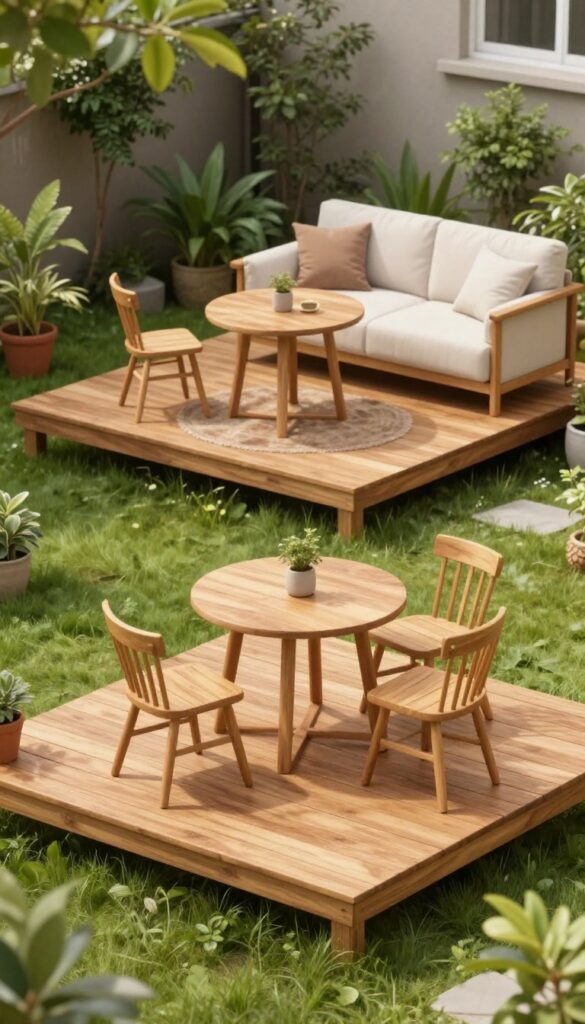
Flat yards can feel boring and compressed. Adding subtle level changes creates depth without needing a huge footprint.
I once built two small staggered platforms instead of one big deck, and the yard felt twice as interesting. The height difference was only six inches, but it changed everything visually.
Why This Works
Layering adds dimension. When the eye moves across levels, the space feels larger because it has more visual complexity.
It also allows you to separate functions. One platform can hold a dining set, while the other becomes a lounge area.
How to Do It
- Build the lower platform first and ensure it’s fully level
- Construct the upper platform with sturdy support blocks
- Keep height differences subtle to avoid railing requirements
- Secure both frames properly to prevent shifting
Stability matters even more when platforms sit at different heights. Small backyard decks get used constantly, so they need solid framing.
Style & Design Tips
Use the same decking material on both levels for cohesion. The contrast should come from layout, not mismatched materials.
Define zones with rugs or different furniture styles rather than dramatic color shifts.
Pro Tip or Budget Hack
Keep both platforms small instead of expanding one large surface. Smaller builds reduce lumber costs and look more intentional.
4. Gravel-Framed Floating Deck
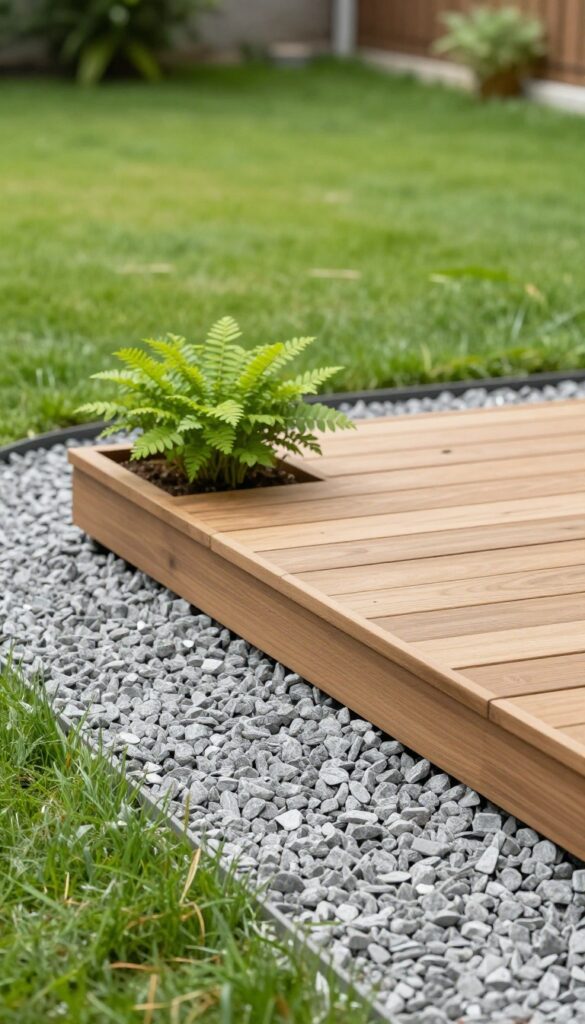
Grass maintenance can dominate small yards. Mowing around furniture and deck edges gets old fast.
Framing a floating deck with gravel eliminates that hassle and gives the yard a modern look. I tried this after getting tired of trimming edges, and honestly, it was one of my smarter decisions.
Why This Works
Gravel creates contrast. The clean border highlights the deck and makes it feel designed rather than dropped in.
It also improves drainage. Water moves away from the structure instead of pooling underneath.
How to Do It
- Excavate a shallow perimeter around the deck area
- Install landscape fabric before adding gravel
- Choose medium-sized gravel for stability
- Compact the gravel slightly for a neat finish
Preparation makes the biggest difference here. Without fabric, weeds show up fast and ruin the look.
Style & Design Tips
Go with light gray or natural stone gravel for a softer effect. Very dark gravel can overpower a small yard.
Pair it with simple planters instead of cluttered decor. Clean lines make the space feel calm.
Pro Tip or Budget Hack
Buy gravel in bulk instead of bagged if possible. It costs significantly less and covers more area.
5. Built-In Planter Edge Deck
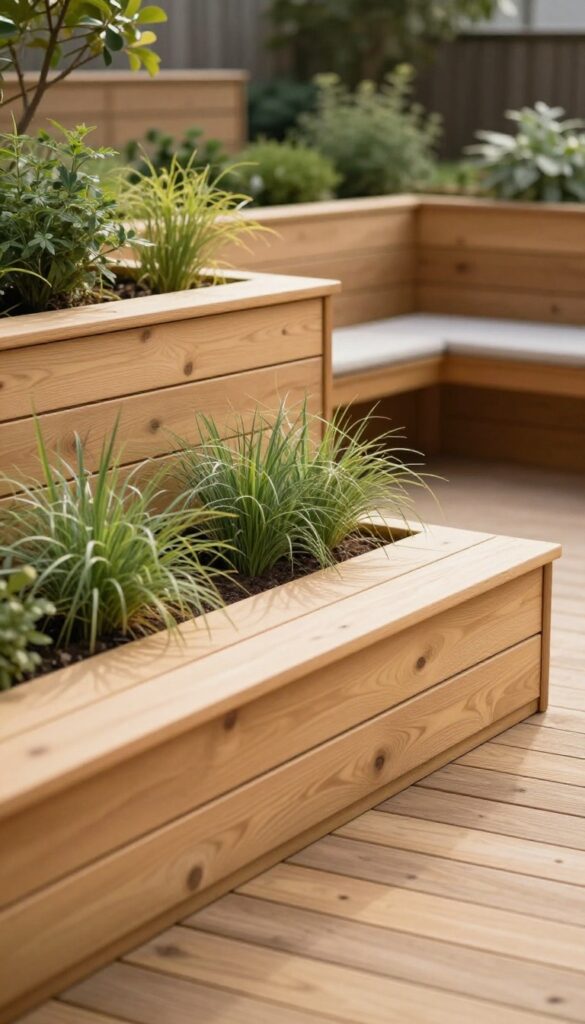
Small backyards often lack privacy. Fences alone sometimes feel too harsh or plain.
Adding built-in planters along the edge of a floating deck softens the boundary and creates a cozy vibe. I’m a big fan of this because it combines seating space with greenery in one move.
Why This Works
Planters break up hard lines. That mix of wood and plants feels inviting and balanced.
They also define the space without adding bulky walls. You get privacy without sacrificing openness.
How to Do It
- Build planter boxes directly into the deck frame
- Line them with heavy-duty plastic or proper liners
- Drill drainage holes to prevent water buildup
- Choose low-maintenance plants suited to your climate
Drainage is critical. Without it, wood damage becomes a real issue.
Style & Design Tips
Stick with simple greenery like ornamental grasses or small shrubs. Overly colorful plant mixes can look chaotic in tight spaces.
Match the planter finish to the deck for a seamless look rather than contrast-heavy styling.
Pro Tip or Budget Hack
Use composite decking scraps for planter siding if available. It resists moisture and saves material costs.
6. Compact Dining Deck
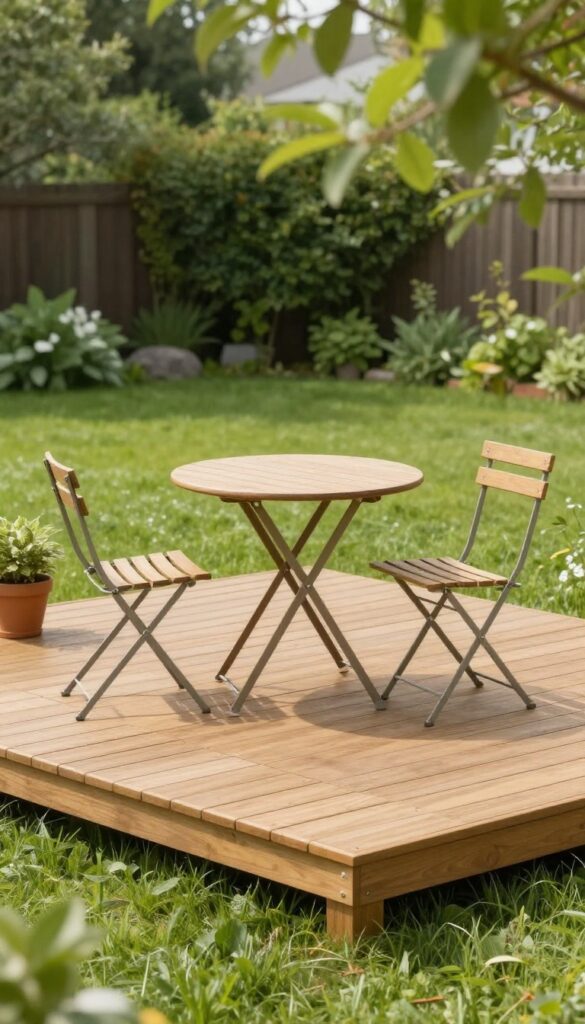
Outdoor dining in a small yard can feel cramped if furniture sits directly on grass. A compact floating deck gives the table a stable base and creates a designated eating zone.
I’ve noticed that even a six-by-six-foot platform makes dinners feel more intentional. It’s not about size, it’s about definition.
Why This Works
Defined areas improve flow. When dining has its own zone, the rest of the yard stays open for movement.
It also protects furniture from sinking or wobbling on uneven ground.
How to Do It
- Measure your table footprint plus chair clearance
- Build slightly larger than the furniture dimensions
- Anchor deck blocks securely on compacted soil
- Seal or stain wood to extend longevity
Clearance matters more than you think. Tight layouts feel uncomfortable fast.
Style & Design Tips
Choose foldable or stackable chairs for flexibility. Bulky chairs crowd small decks.
Add a simple outdoor rug sized correctly to frame the table without spilling over the edges.
Pro Tip or Budget Hack
Refinish an old table instead of buying new. Sanding and sealing can completely refresh it for less money.
7. Minimalist Modern Deck with Hidden Storage
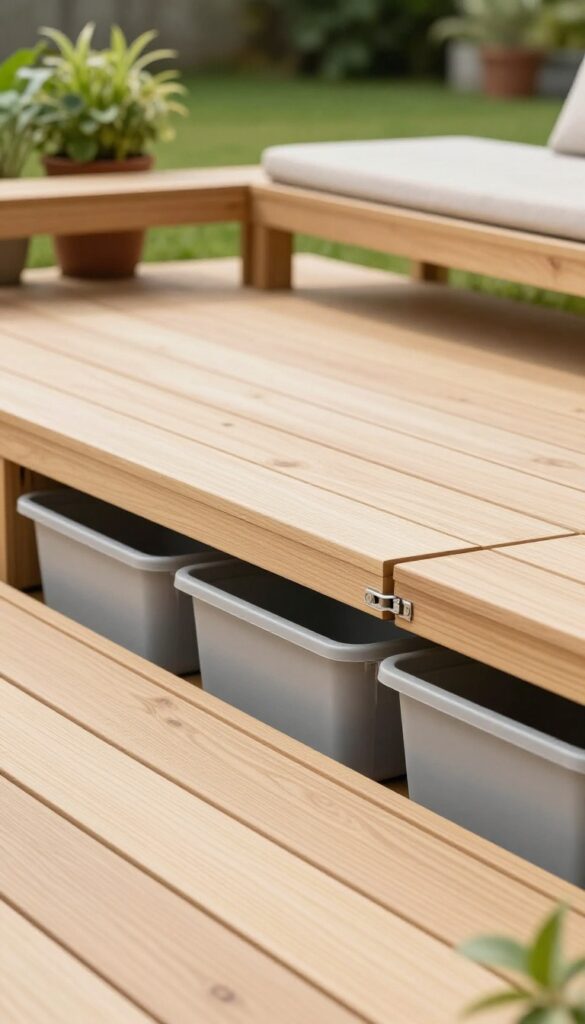
Clutter kills small backyard appeal. Tools, cushions, and random items pile up quickly.
Designing a floating deck with hidden storage underneath keeps everything organized. I love this option because it keeps the surface clean while maximizing space.
Why This Works
Hidden storage keeps visual noise low. A tidy deck instantly feels larger and calmer.
It also eliminates the need for separate storage boxes that eat up space.
How to Do It
- Raise the deck slightly higher to allow storage clearance
- Install hinged panels or lift-up sections
- Use weather-resistant bins underneath
- Ensure airflow to prevent moisture buildup
Proper ventilation prevents mold and damage. Storage should simplify life, not create maintenance headaches.
Style & Design Tips
Stick with sleek lines and simple finishes. Minimalist design keeps the deck from feeling busy.
Avoid oversized decor pieces. Let the clean structure speak for itself.
Pro Tip or Budget Hack
Repurpose plastic storage bins instead of custom carpentry drawers. They’re affordable and easy to swap out later.
Final Thoughts
Small backyards don’t need bigger square footage; they need smarter layout decisions. A floating deck gives structure, function, and visual order without overwhelming the space.
I’ve tried several of these approaches over the years, and every time the yard felt more finished afterward. Keep it simple, build it solid, and let the design breathe a little.