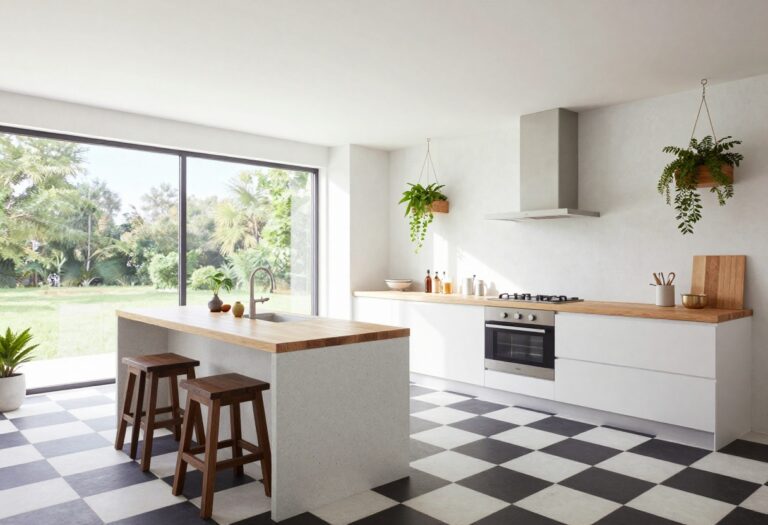
7 Square Bathroom Ideas That Feel Well Balanced
Square bathrooms are tricky because they look like they should be easy, but they’re not. The layout feels fair until you actually try to fit real-life stuff into it, like storage, towel hooks, and a vanity that doesn’t block everything.
The problem is that square rooms don’t naturally guide your eye anywhere. If you don’t plan the layout carefully, everything ends up looking random, crowded, or weirdly empty at the same time.
I’ve seen square bathrooms that looked like a spa, and I’ve seen others that looked like a storage closet with a toilet. The difference usually comes down to balance, not budget.
1. Center the Vanity and Build Symmetry Around It
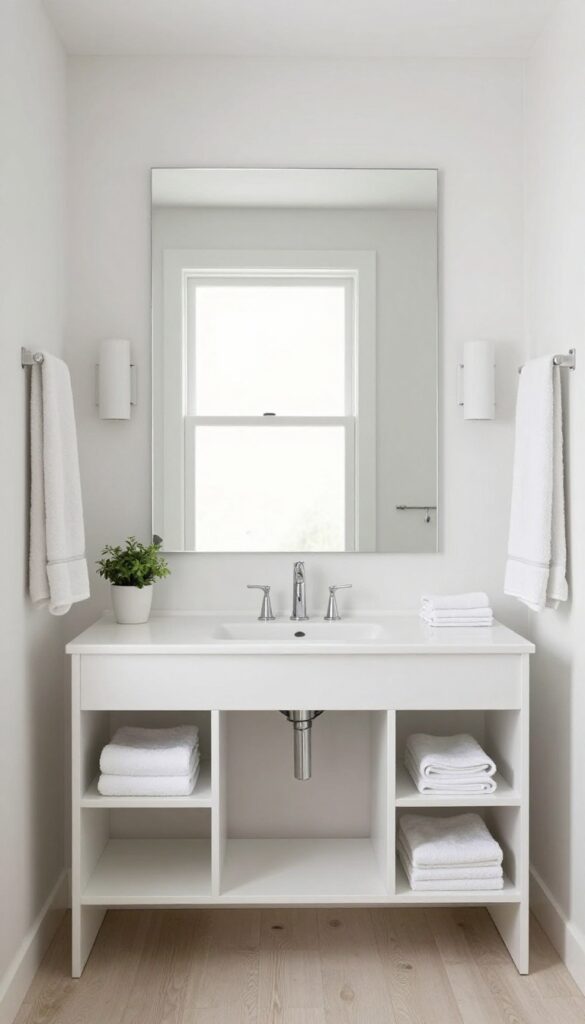
A square bathroom can feel chaotic fast when the vanity sits slightly off-center or feels like it was shoved into a corner as an afterthought.
Even if everything technically fits, the room can still look awkward because your eye doesn’t know where to land. That’s why centering the vanity is one of the easiest ways to make the whole space feel calm and “designed.”
I’ve done this in a small guest bath once, and it instantly made the room feel more expensive. It didn’t even require fancy materials, just better placement and a little visual discipline.
Once the vanity becomes the anchor, everything else starts making sense.
Why This Works
Square rooms don’t naturally create flow the way long bathrooms do. When you center the vanity, you create a visual focal point that makes the space feel organized instead of accidental.
Symmetry is also one of those design tricks that works even when you don’t know anything about design. Your brain just reads it as “clean” and “intentional,” even if you can’t explain why.
How to Do It
- Measure your wall and mark the true center point before installing anything
- Choose a vanity size that leaves equal breathing space on both sides
- Install a mirror that matches the vanity width or is slightly smaller
- Add matching sconces or wall lights on both sides of the mirror
- Place towel hooks or small shelves evenly so the wall feels balanced
If the vanity isn’t centered, everything else becomes harder. But when it is, even basic décor suddenly looks planned.
Style & Design Tips
Go for a vanity with clean lines and avoid overly bulky legs or thick cabinets if the room is small. A floating vanity looks amazing in square bathrooms because it creates more visual floor space, which keeps the room from feeling boxed in.
A common mistake is using a mirror that’s too narrow. You want the mirror to visually “hold” the vanity, not look like it’s floating awkwardly above it.
Use matching finishes on faucets, lights, and hardware. Mixed metals can work, but in square bathrooms, too many materials can make the room feel busy fast.
Pro Tip or Budget Hack
If you can’t move plumbing, fake the centered look by using a wider mirror and adding a tall cabinet or open shelf on the smaller side. It creates the illusion of symmetry without relocating anything expensive.
2. Use a Corner Shower to Open Up the Floor
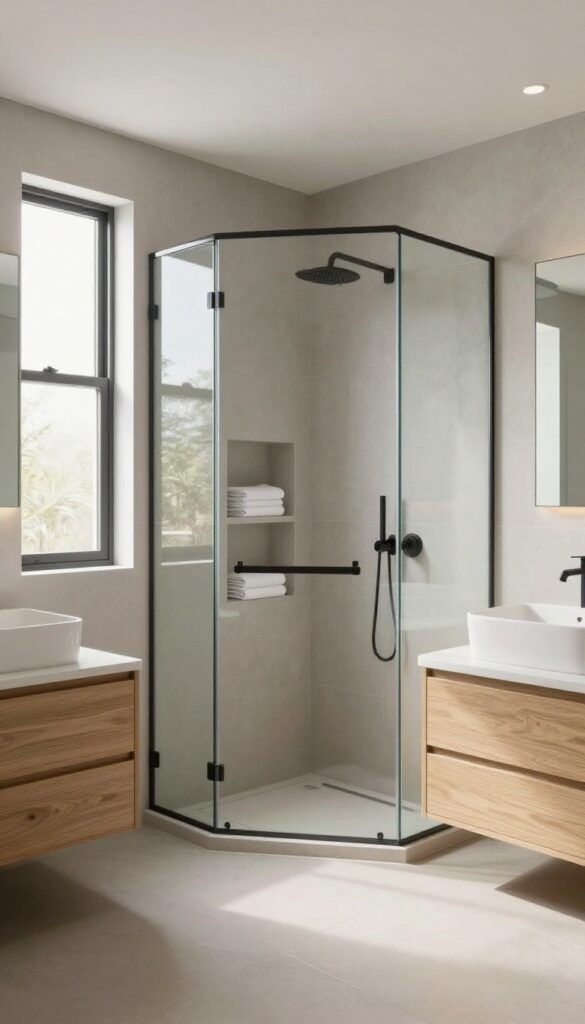
In a square bathroom, floor space matters more than wall space. A regular shower layout can eat up the room and make everything feel cramped, especially when the shower door swings out and blocks movement. A corner shower can solve that problem immediately because it uses a space that often goes unused.
I used to think corner showers looked outdated, but the newer designs completely changed my mind. With the right tile and glass, they can actually look sleek and modern, not like a 2002 apartment remodel.
Why This Works
Corner showers create better circulation because they don’t interrupt the center of the room. In a square space, the center is valuable because it creates that open “breathing zone” that makes the room feel bigger.
They also help you avoid awkward layouts where the toilet and vanity feel like they’re fighting for space. When the shower is tucked into the corner, everything else becomes easier to position.
How to Do It
- Pick the corner that has the best plumbing access if possible
- Choose a neo-angle or curved glass enclosure to soften sharp corners
- Keep the shower walls simple with large tiles or clean panels
- Use a recessed niche instead of bulky corner shelves
- Install a frameless glass door to keep the room visually open
The glass is key here. If you use a shower curtain or heavy framing, you lose most of the visual benefit.
Style & Design Tips
Stick with light tile colors if your bathroom doesn’t get much natural light. Square bathrooms can feel like boxes, so anything dark can exaggerate that unless you’re going for moody luxury.
If you want a modern look, use large-format tile with minimal grout lines. Too much grout creates visual noise, and square rooms already have enough “blocky energy.”
Avoid busy mosaic tile all over the shower walls. It can look cool in photos, but in real life it can make the room feel cluttered.
Pro Tip or Budget Hack
If a full corner shower renovation feels expensive, install a curved shower rod and use a clean, white fabric curtain. It gives a similar space-opening effect without touching tile or plumbing.
3. Create a Balanced Wet Room Layout
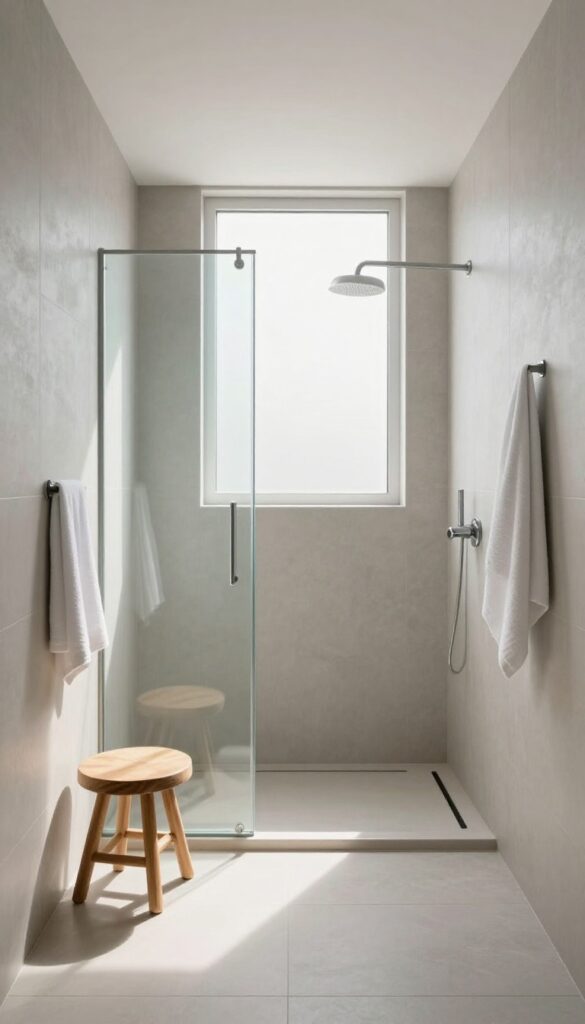
A wet room layout is basically the cheat code for square bathrooms. Instead of separating the shower area with bulky walls or a tub surround, you create one open space with proper drainage and waterproofing. It’s especially useful when the bathroom feels cramped but you still want it to look high-end.
I’ll be honest, wet rooms look expensive even when they’re not. Something about the open design instantly makes the room feel like it belongs in a boutique hotel instead of a basic home.
Why This Works
Square bathrooms benefit from openness because walls make the room feel smaller. A wet room reduces visual barriers and makes the entire space feel cohesive instead of chopped into sections.
It also improves usability. You don’t have to squeeze around a shower door or awkward tub edge, which is a big deal in compact bathrooms.
How to Do It
- Waterproof the floor and walls properly with a membrane system
- Install a linear drain or center drain depending on your layout
- Use a single glass panel instead of a full enclosure
- Choose slip-resistant tile for the entire floor
- Keep the shower controls reachable from outside the splash zone
The slope matters here, so don’t cheap out on installation. If water pools in the wrong spot, you’ll regret everything.
Style & Design Tips
Use the same flooring tile throughout the bathroom to keep the room visually connected. This is one of the easiest ways to make a square space feel larger without changing anything structural.
Add contrast through wall tile instead of floor tile. A common mistake is using a patterned floor and busy walls, which turns the bathroom into a visual circus.
Use minimalist fixtures like a wall-mounted faucet and a floating vanity to keep the wet room sleek. Heavy furniture pieces ruin the clean vibe wet rooms are known for.
Pro Tip or Budget Hack
If you can’t afford a true wet room remodel, mimic the look by using a frameless glass panel and continuing the same tile from the main bathroom into the shower. It won’t be a full wet room, but it gives the same modern flow.
4. Add a Built-In Wall Niche Storage Zone
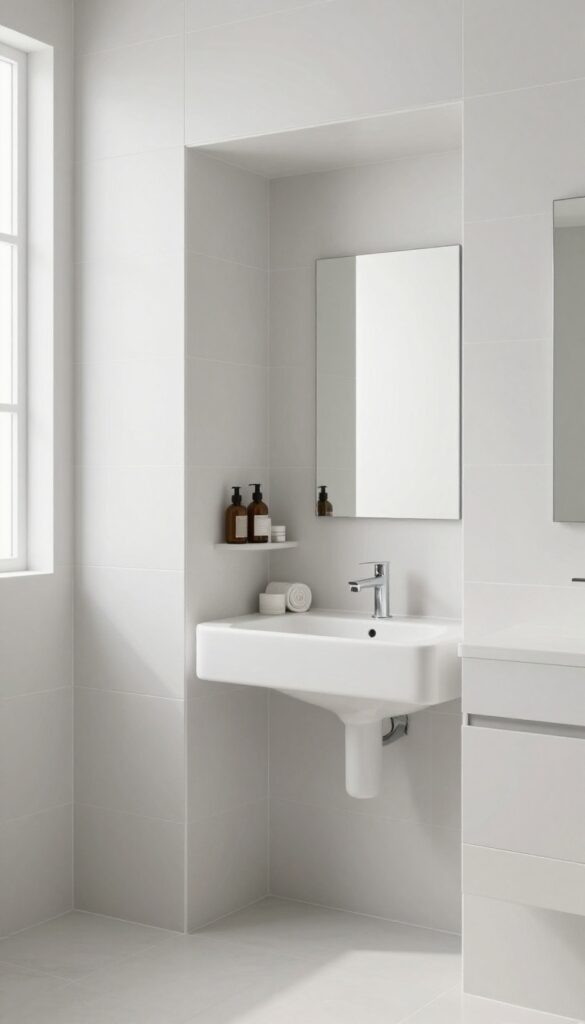
Square bathrooms often feel messy because there’s nowhere to hide the daily clutter. Bottles, skincare, toilet paper packs, hair tools… it all ends up stacked around the sink like a mini pharmacy. A built-in niche solves this by creating storage that doesn’t steal floor space.
I’m a big fan of niches because they feel custom even when they’re simple. And honestly, once you have one, you’ll wonder why bathrooms weren’t designed like this from the beginning.
Why This Works
Built-in niches create depth without taking away usable space. In a square bathroom, every inch counts, so recessed storage is a smart way to stay organized without crowding the room.
It also improves the overall look. When items are stored neatly inside the wall, the bathroom automatically feels cleaner and more intentional.
How to Do It
- Choose a wall cavity that isn’t blocked by plumbing or electrical
- Frame the niche between studs or use a pre-made niche insert
- Waterproof the inside properly if it’s near the shower
- Tile the niche to match the wall for a seamless look
- Add a small ledge or trim detail for a finished edge
If you’re adding a niche outside the shower, you can also paint it instead of tiling it, which is cheaper and still looks nice.
Style & Design Tips
Use niches to create balance by placing them symmetrically when possible. For example, two vertical niches on either side of a mirror can look insanely clean and modern.
Avoid putting random clutter in them. If you treat the niche like a dumping zone, it ruins the whole point. Keep it styled with a few matching containers or neatly folded towels.
Try adding a darker tile inside the niche for contrast, but keep it subtle. Matte black or charcoal tile can look stunning if the rest of the bathroom is light.
Pro Tip or Budget Hack
You can fake a niche look by using a recessed medicine cabinet with a mirror front. It gives you storage depth without opening up the wall as much as a full custom niche would.
5. Use a Square-Friendly Tile Layout That Doesn’t Fight the Room
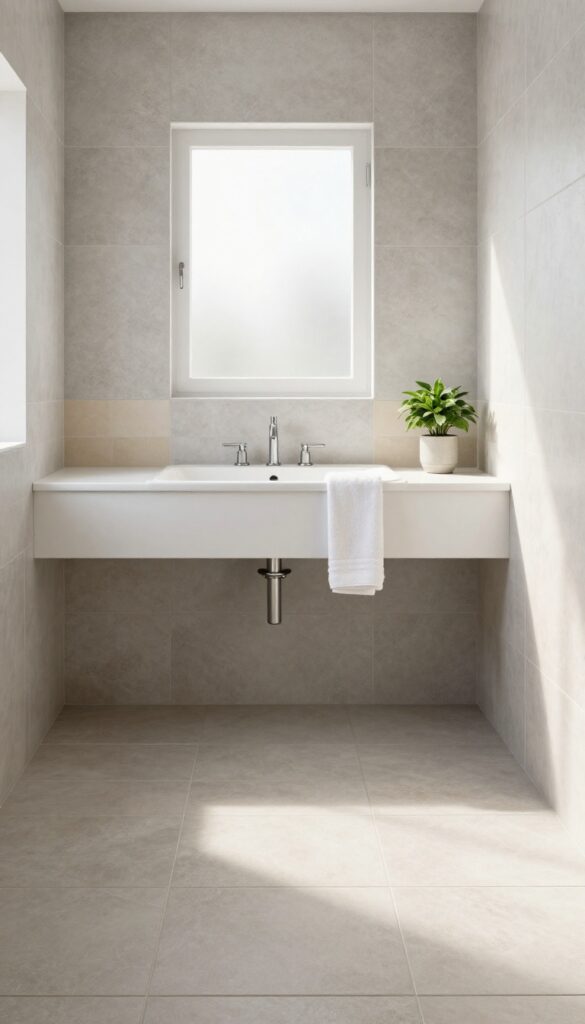
Tile can either make a square bathroom feel clean and expensive, or it can make it feel like a confusing grid. The wrong tile layout exaggerates the boxy shape and makes the room feel smaller. The right layout smooths everything out and makes the space feel balanced.
I’ve made this mistake before by choosing small tiles with heavy grout. The bathroom ended up looking like a graph paper notebook, and not in a cute way.
Why This Works
Tile lines create visual direction. In a square bathroom, you need tile patterns that guide the eye and stretch the space, not reinforce the “perfect square box” feeling.
The right tile layout also makes the room look more professionally designed. Even basic white tile looks high-end when it’s installed with intention.
How to Do It
- Use large-format tiles to reduce grout lines
- Install floor tiles diagonally to visually widen the space
- Consider vertical wall tile placement to make ceilings feel taller
- Keep grout color close to the tile color for a seamless look
- Choose one main tile and one accent tile, not five different ones
The goal is to keep things calm. Square bathrooms don’t handle visual chaos well.
Style & Design Tips
If you love subway tile, try stacking it vertically instead of doing the classic brick pattern. It looks fresher and makes the walls feel taller.
Avoid super high-contrast grout unless you’re 100% committed to that bold look. Black grout with white tile can look amazing, but it also highlights every crooked line and makes the room feel busier.
If you want personality, add it through one accent wall or a small patterned floor. Keep the rest simple so the room doesn’t feel like it’s yelling at you.
Pro Tip or Budget Hack
If you’re working with existing tile and can’t replace it, paint the walls a soft neutral and update hardware to modern finishes. Sometimes the tile looks “bad” only because everything else around it is outdated.
6. Install a Floating Vanity to Make the Room Feel Bigger
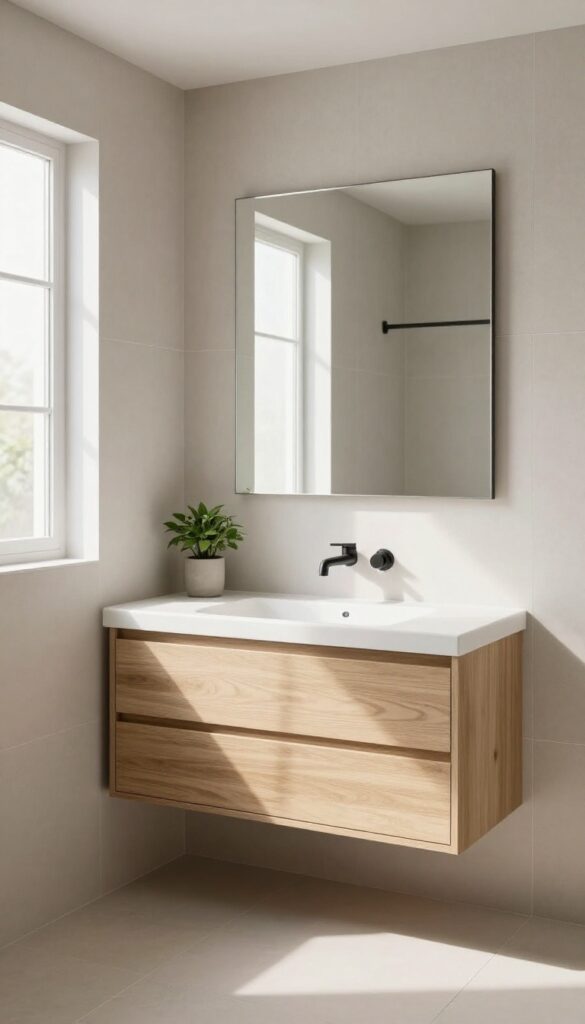
A floating vanity is one of the easiest upgrades for a square bathroom because it instantly creates visual breathing room. Traditional vanities sit heavy on the floor and make the room feel smaller, especially in a space that already feels boxed in. A floating vanity gives the bathroom a lighter, cleaner look.
I used to think floating vanities were just trendy, but they’re honestly practical too. Cleaning under them is so much easier, and they make even a tiny bathroom feel more modern.
Why This Works
Square bathrooms can feel cramped because everything sits at the same level and fills the room from floor to ceiling. A floating vanity breaks that visual heaviness and makes the space feel open.
It also creates a natural “negative space” underneath, which tricks the eye into thinking the room is larger than it actually is. That’s design psychology, not magic.
How to Do It
- Choose a vanity that fits your wall width without overwhelming it
- Install blocking inside the wall so the vanity is securely mounted
- Use a wall-mounted faucet if you want an ultra-modern look
- Add under-vanity lighting for a soft, high-end feel
- Keep plumbing hidden with a clean trap cover if needed
Mounting matters here. If the vanity isn’t secure, it’s not just ugly, it’s dangerous.
Style & Design Tips
Stick with simple finishes like light wood, white, or matte black. Square bathrooms already have strong geometry, so you don’t need overly detailed cabinet fronts fighting for attention.
A big mistake is choosing a vanity that’s too shallow. You want it to look sleek, but you still need storage. Aim for a balance between style and function.
Pair it with a rounded mirror if the bathroom feels too boxy. A round mirror softens the square vibe and adds a more relaxed, designer look.
Pro Tip or Budget Hack
If a floating vanity is too expensive, buy a basic vanity and remove the toe kick, then add furniture-style legs. It creates a lighter look without needing a full wall-mounted install.
7. Build a “Four-Zone” Layout for Perfect Visual Balance
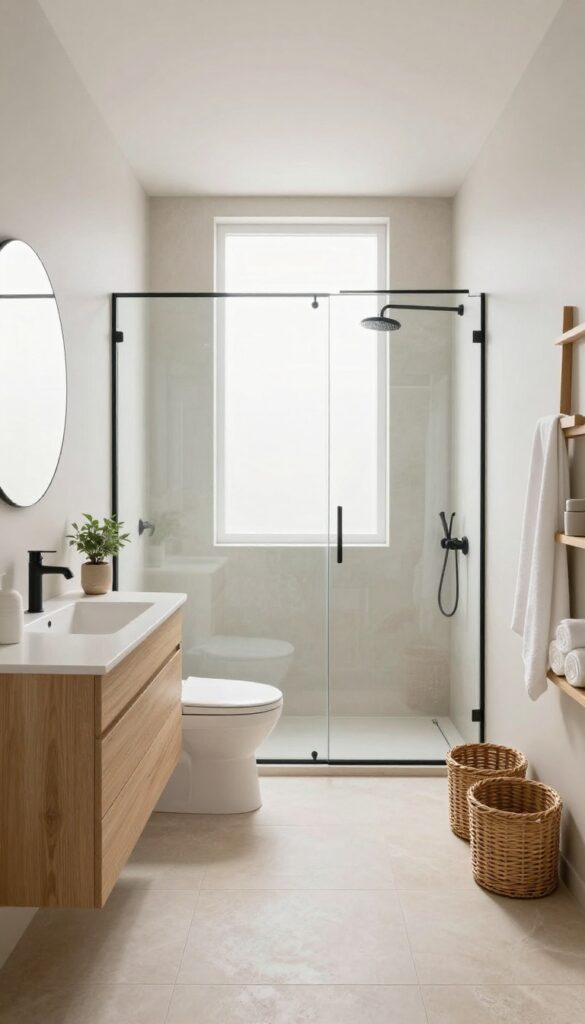
This is one of my favorite square bathroom tricks because it’s more about layout logic than buying new stuff. Instead of placing things randomly, you divide the bathroom into four visual zones, almost like a grid. Each zone gets a purpose, and suddenly the room feels balanced instead of messy.
I started doing this after noticing that the best-looking bathrooms always feel evenly “filled.” Nothing feels shoved in, and nothing feels empty either. That’s not luck, that’s zoning.
Why This Works
Square bathrooms can feel off because everything piles up on one side. A four-zone layout forces you to distribute visual weight evenly across the room.
It also improves function. When each zone has a purpose, you stop wasting space and start using the room like it was designed intentionally.
How to Do It
- Mentally divide the bathroom into four corners or quadrants
- Assign one major element to each zone (vanity, toilet, shower, storage)
- Keep the center area open for movement and flow
- Use wall décor or shelving to balance empty corners
- Add lighting that spreads evenly instead of focusing on one spot
If one corner feels empty, add something vertical like a tall cabinet or open shelves. That’s usually all it takes.
Style & Design Tips
Think in terms of visual weight. A heavy dark vanity needs something to balance it, like a tall mirror or shelving on the opposite side. If everything heavy sits on one wall, the bathroom will always feel lopsided.
Avoid cramming all storage into one corner. Spread it out with a mix of hooks, shelves, and cabinets so the room feels evenly designed.
Add one “softening” element, like a curved mirror, rounded faucet, or arched cabinet door. Square bathrooms can feel too rigid, so one curved shape helps break that harsh geometry.
Pro Tip or Budget Hack
If you want the room to feel instantly balanced, use matching baskets or containers in two opposite corners. It’s cheap, it looks styled, and it fixes that “something feels off” vibe without renovation.
Final Thoughts
Square bathrooms don’t need to feel boring or awkward, but they do need a little more planning than people expect. Once you focus on symmetry, zoning, and clean storage, the room starts looking intentional instead of accidental.
Even small changes like a better mirror size or a floating vanity can completely change how the space feels. If you fix the balance first, everything else becomes way easier to decorate.