9 Kitchen Cabinet Storage Ideas to Maximize Space
Most kitchen cabinets waste space because they’re built for “average” storage, not real-life kitchens with weird appliances, tall bottles, and that one stack of plastic containers that refuses to behave.
The good news is you don’t need a full renovation to fix it. You just need smarter organization choices that actually match how you use your kitchen.
I’ve tested a lot of cabinet storage ideas over the years, and honestly, some of the popular ones are more aesthetic than useful.
The ones in this list are the ones that actually make daily life easier, not just prettier. If your cabinets feel crowded but somehow still look empty, this is exactly what you need.
1. Install Pull-Out Cabinet Drawers
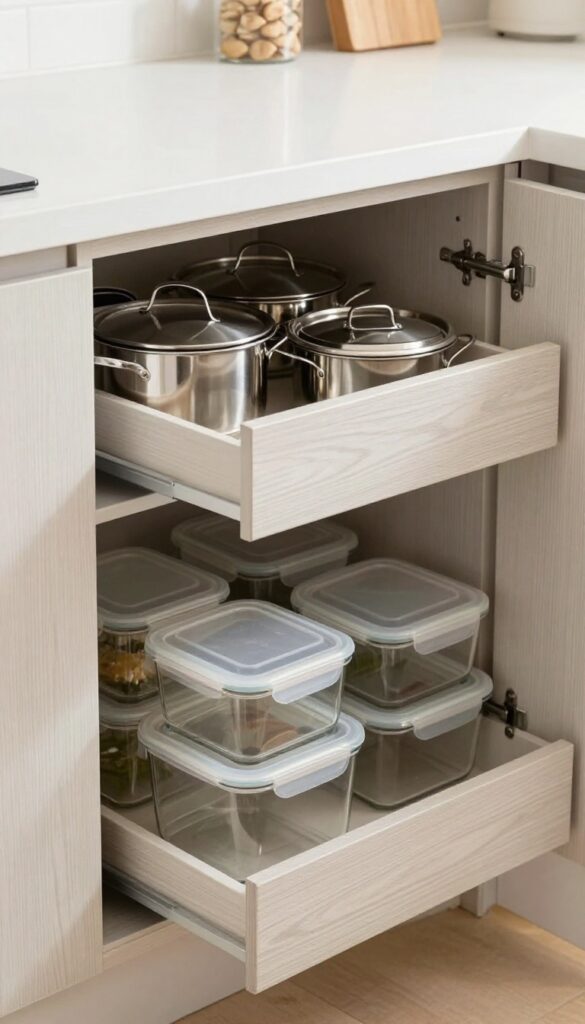
If you’ve ever had to get on your knees and dig through the back of a lower cabinet like you’re searching for lost treasure, you already know the problem. Deep base cabinets are convenient until they become black holes where pots, lids, and random baking trays go to disappear.
Pull-out drawers solve that instantly because they bring everything to you instead of forcing you to crawl into your own kitchen.
The beauty of pull-out drawers is that they make your cabinet space feel twice as big without actually adding anything.
You can separate pots from pans, stack containers neatly, and stop playing “guess what’s behind the blender.” I’ve installed these in two kitchens now, and every time I do, I wonder why this isn’t standard in every house.
Why This Works
Pull-out drawers eliminate wasted depth in cabinets because you can actually access the full space. Instead of piling items in front of each other, you organize them side-by-side and pull the whole thing forward. It also helps you avoid that common mess where everything gets shoved to the back and forgotten.
These drawers also make it easier to keep things clean and tidy. When you can see everything, you naturally maintain better organization. It’s like your kitchen stops fighting you.
How to Do It
- Measure your cabinet interior width, depth, and height before buying anything, because cabinets love to be slightly annoying with sizing.
- Choose heavy-duty pull-out drawer kits if you’re storing pots, pans, or appliances, because cheap sliders will sag fast.
- Install the drawer tracks level and straight, since even a small tilt will make the drawer stick or roll weird.
- Use dividers or bins inside the pull-out drawer to keep items from sliding around when you open and close it.
- Label sections if you share your kitchen with someone who has “creative” organizing habits.
Style & Design Tips
Go for drawers with smooth wood fronts or metal baskets depending on your style. Metal baskets look more modern and airy, while wood drawers feel built-in and higher-end. Avoid overstuffing them, because even pull-outs can become chaotic if you treat them like a junk drawer on wheels.
Also, keep similar items together and don’t mix categories. A drawer full of random kitchen chaos defeats the whole purpose. This is where people mess up.
Pro Tip or Budget Hack
If full pull-out drawers feel expensive, start with just one cabinet, preferably the one where you store pots and pans. Even one pull-out cabinet can make your kitchen feel more functional immediately. You can also buy basic sliding trays instead of full drawer systems for a cheaper option.
2. Use Stackable Shelf Risers for Double Storage
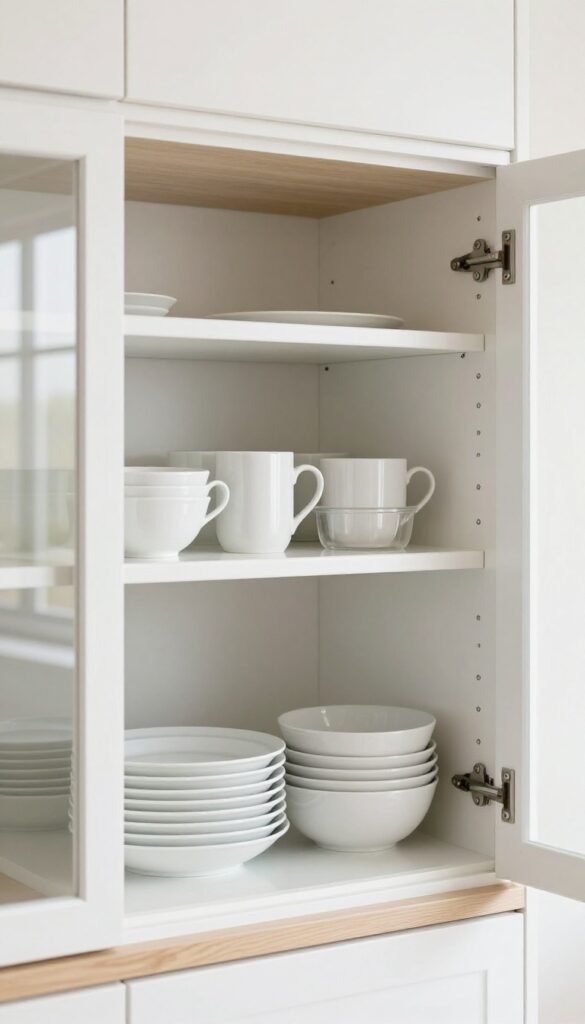
Upper cabinets always look like they have plenty of space until you start stacking plates, bowls, and mugs. Then suddenly you’re building unstable towers of dishes like it’s some kind of kitchen survival game. Shelf risers fix this by creating a second level inside the cabinet, which is basically free space you weren’t using.
This is one of the easiest upgrades you can do because it requires no tools and takes about five minutes. I’ve used shelf risers for everything from plates to pantry snacks, and it’s crazy how much cleaner your cabinets look when everything has its own “floor.” It also makes it easier to grab what you need without knocking over half your kitchen inventory.
Why This Works
Most cabinets have tall empty space above your dishes because shelves are spaced too far apart. Shelf risers let you use that vertical space properly. Instead of stacking items directly on top of each other, you create layers, which improves visibility and access.
This also reduces breakage and frustration. When you’re not pulling out bowls from a shaky stack, your kitchen becomes calmer and easier to manage.
How to Do It
- Choose stackable shelf risers that fit your cabinet depth and don’t block the door from closing.
- Place the riser over your main stack of plates or bowls so you create an upper platform.
- Store lighter items like mugs, small bowls, or snack containers on top.
- Keep heavier items like dinner plates on the bottom level for stability.
- Test your cabinet door clearance before fully loading everything.
Style & Design Tips
White or clear risers look clean and blend in with most kitchens. Wire risers work too, but they can feel a little cheap if your kitchen is more modern or high-end. Avoid risers that wobble, because nothing ruins organization faster than a shelf insert that acts like it’s about to collapse.
Also, don’t overload the top shelf with heavy items. The goal is clean access, not creating a dish avalanche.
Pro Tip or Budget Hack
If you want an even cheaper option, use sturdy small storage crates or even thick wooden cutting boards as DIY shelf risers. It’s not as polished, but it works surprisingly well. Just make sure whatever you use is stable and easy to clean.
3. Add Door-Mounted Storage Racks
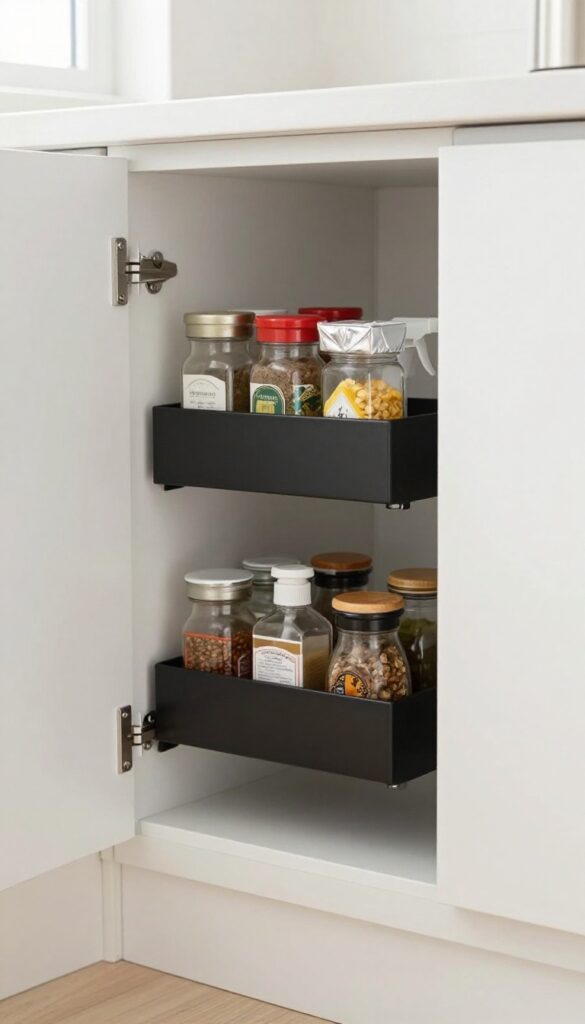
Cabinet doors are one of the most wasted storage areas in almost every kitchen. People use the inside of cabinet doors for absolutely nothing, which is wild when you realize how much space you’re ignoring. Door-mounted racks turn that blank area into storage for spices, wraps, cleaning supplies, or even small jars.
This idea is especially useful in smaller kitchens where cabinet space is limited. It’s also one of those changes that makes your kitchen feel “custom” without the custom price. I installed one of these under my sink once and suddenly all my cleaning sprays stopped living in a messy pile like they were squatting there.
Why This Works
Door racks create vertical storage in areas that would otherwise be wasted. They help you store small items neatly without taking up shelf space. This is especially helpful for things like spices or foil boxes that always get shoved into random corners.
It also improves visibility because everything is stored upright and in a single layer. You stop buying duplicates because you can actually see what you already own.
How to Do It
- Measure the inside of your cabinet door to make sure the rack won’t hit shelves when you close it.
- Choose a rack with shallow depth for spices or wraps so it doesn’t stick out too far.
- Use screws for a secure hold, especially if you’re storing anything heavy.
- Place the rack at a height where items won’t bump into cabinet contents.
- Organize items by type so you don’t turn it into a chaotic door pantry.
Style & Design Tips
Go for slim metal racks in black, chrome, or white for a clean look. Clear acrylic racks work well too if you want something less noticeable. Avoid bulky racks that make the door hard to close, because that will drive you insane over time.
Also, don’t store anything leaky or messy on door racks unless you like cleaning. Cabinet doors swing, and spills happen fast.
Pro Tip or Budget Hack
If you don’t want to drill into cabinet doors, look for adhesive-mounted racks designed for light storage. They won’t hold heavy jars, but they work great for plastic wrap, sandwich bags, or small spice packets. It’s a cheap way to test the idea before committing.
4. Use Clear Storage Bins to Group Cabinet Items
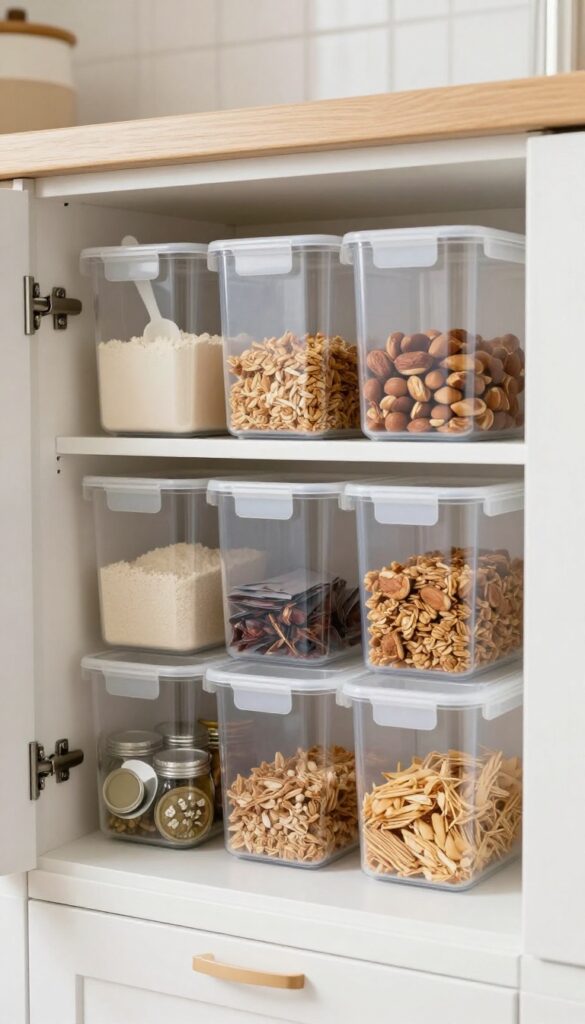
Cabinets get messy fast because everything gets tossed in loose. One day your baking supplies are organized, and the next day it looks like a flour explosion happened inside your cabinet. Clear storage bins solve this by giving everything a home, and they make your cabinet layout feel intentional instead of random.
This is one of my favorite cabinet upgrades because it works for literally anything. Snacks, spices, canned goods, baking supplies, tea packets, protein bars, whatever. Once you start grouping items into bins, you stop losing things behind other things, and suddenly your kitchen feels way more manageable.
Why This Works
Bins create structure inside your cabinets, and structure prevents clutter. When everything has a category, you naturally keep it organized. It also makes it easy to pull out an entire group of items instead of digging around.
Clear bins are especially useful because you can see what’s inside without opening them. That alone saves time and reduces the “where is it?” frustration.
How to Do It
- Empty one cabinet completely so you can organize from scratch.
- Sort items into groups like snacks, baking, breakfast, spices, and canned goods.
- Choose clear bins that fit your shelf height and depth properly.
- Place heavier bins on lower shelves and lighter ones on upper shelves.
- Add labels if you want your kitchen to stay organized long-term.
Style & Design Tips
Choose bins with clean straight sides for a modern look. Rounded bins can waste space because they don’t sit tightly next to each other. Also, don’t buy bins that are too deep unless you plan to use them like pull-out drawers.
Try to keep your bins uniform in style. Mixed bin styles make cabinets look cluttered even if they’re organized.
Pro Tip or Budget Hack
You don’t need fancy bins. Dollar store bins can work perfectly if they’re sturdy and easy to wipe down. Just make sure they don’t crack easily, because cheap plastic can get brittle fast. If you want a nicer look, invest in a few better bins for the cabinets you use daily.
5. Add Lazy Susans for Corner and Deep Cabinets
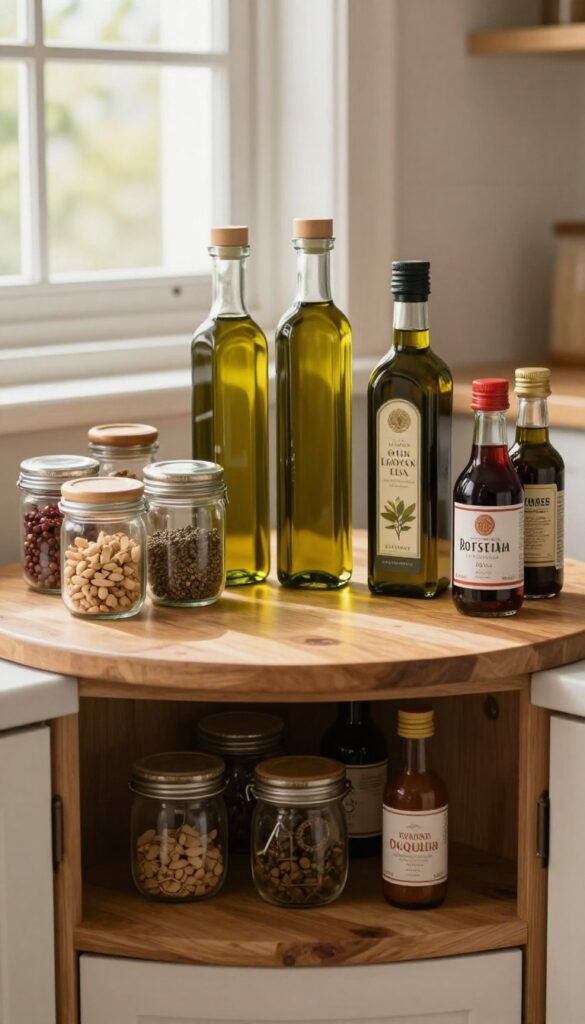
Corner cabinets are honestly the worst part of kitchen storage. They’re awkward, deep, and full of unreachable space that makes you regret every decision you’ve ever made. Lazy Susans fix that problem by turning dead space into rotating, easy-access storage.
They’re not just for spices either. You can use them for oils, vinegars, sauces, snack jars, baking ingredients, or even cleaning supplies. Once you add a lazy Susan, you stop losing things in the back, and you stop knocking over bottles like a clumsy cooking show contestant.
Why This Works
Lazy Susans turn deep storage into accessible storage. Instead of reaching and shoving things around, you simply rotate the tray and grab what you need. This makes corner cabinets functional instead of frustrating.
They also prevent clutter because everything has a visible spot. You don’t stack items on top of each other, which keeps the cabinet cleaner and easier to maintain.
How to Do It
- Measure your cabinet depth and choose a lazy Susan that fits comfortably.
- Use a non-slip lazy Susan so bottles don’t slide around when you spin it.
- Group similar items like sauces, oils, or spices on the same tray.
- Place taller items in the center and shorter items around the edges for balance.
- Keep the tray lightly organized so it doesn’t turn into a spinning mess.
Style & Design Tips
Clear acrylic lazy Susans look modern and work in most kitchens. Wood ones look warmer and more farmhouse-style, but they can stain if you store oils on them. Avoid cheap plastic ones that warp over time, because they start spinning unevenly and become annoying.
Also, don’t overload them. A lazy Susan works best when it has breathing room.
Pro Tip or Budget Hack
If you want to save money, use smaller lazy Susans instead of one huge one. Two small ones often fit better in cabinets and cost less. You can also use lazy Susans in the fridge, which is a sneaky bonus if you’re trying to stay organized everywhere.
6. Install Under-Shelf Hanging Baskets
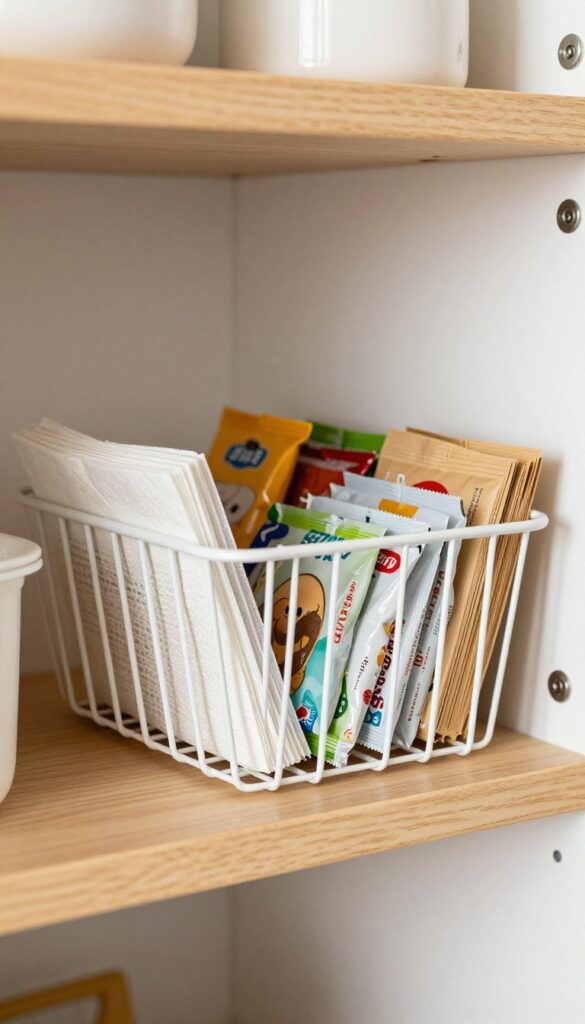
Upper cabinets often have wasted space underneath shelves, especially when you store small items like napkins, tea bags, or snack packs. Under-shelf hanging baskets slide onto the shelf and create an extra mini-storage layer underneath. It’s like adding a drawer without installing anything.
This is one of those organization tricks that feels oddly satisfying because it makes use of “invisible” space. I used one for coffee pods once and it made my cabinet feel like a fancy café setup. It’s also great if you’re trying to stop small items from piling up and getting lost.
Why This Works
Hanging baskets add storage without taking away shelf space. They let you separate small items into a dedicated spot so they don’t scatter around the cabinet. This improves both organization and accessibility.
They’re also removable and adjustable, which makes them renter-friendly. You can move them around based on what your kitchen needs.
How to Do It
- Choose a basket that fits your shelf thickness and doesn’t wobble.
- Slide it onto the shelf and make sure it’s stable before adding anything.
- Store lightweight items like napkins, snack packs, or tea bags.
- Avoid storing heavy cans or jars because it can bend the basket.
- Use multiple baskets if you want a clean, layered look.
Style & Design Tips
Go with white or metal wire baskets for a clean look. Solid baskets look bulky and can make cabinets feel crowded. Also, keep these baskets for smaller items only, because they can quickly become cluttered if you treat them like a dumping zone.
And please don’t stuff them to the top. Overfilled hanging baskets look messy even if they’re technically organized.
Pro Tip or Budget Hack
Use these baskets in your pantry cabinet for snack storage. Kids can grab snacks easily without destroying the whole shelf setup. If you want a DIY option, you can use sturdy wire organizers meant for closets and repurpose them.
7. Use Vertical Dividers for Baking Sheets and Cutting Boards
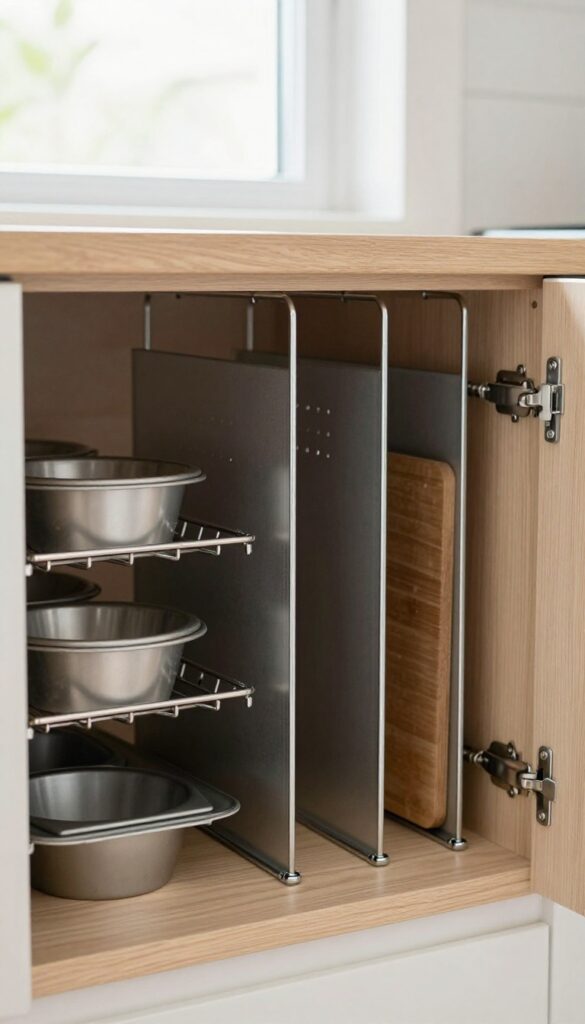
Baking sheets, cutting boards, and muffin tins are some of the most annoying things to store. People usually stack them flat, which creates a clanging mess where you have to lift five items just to grab one. Vertical dividers solve this by letting you store them upright like files in a cabinet.
Once you try this, you’ll never go back. It makes your kitchen feel organized in a very “adult who has their life together” kind of way. I installed a simple divider rack once and suddenly my baking sheet cabinet stopped sounding like a metal concert every time I opened it.
Why This Works
Vertical storage makes flat items easier to access because you pull one out without moving everything else. It also prevents scratches and dents since items aren’t rubbing against each other constantly.
This method also saves space. When trays stand upright, you can fit more in a smaller cabinet and still keep it neat.
How to Do It
- Choose a cabinet near your oven or prep space for convenience.
- Install a vertical divider rack or use adjustable wire dividers.
- Sort trays by size, placing larger ones in the back.
- Store cutting boards and cooling racks in the same area if space allows.
- Leave a little space between items so they slide out easily.
Style & Design Tips
Metal divider racks look clean and modern. Wood dividers look more built-in if you want a custom vibe. Avoid storing too many mismatched items together, because it can turn into a cluttered stack again.
Also, don’t shove items too tightly. If you have to wrestle your baking sheet out, the system isn’t working.
Pro Tip or Budget Hack
Use a basic file organizer from an office supply store. No joke, it works amazingly well for baking trays and cutting boards. It’s cheap, sturdy, and doesn’t require installation. Just make sure it’s wide enough to hold your largest pan.
8. Add Adjustable Shelf Inserts for Custom Height
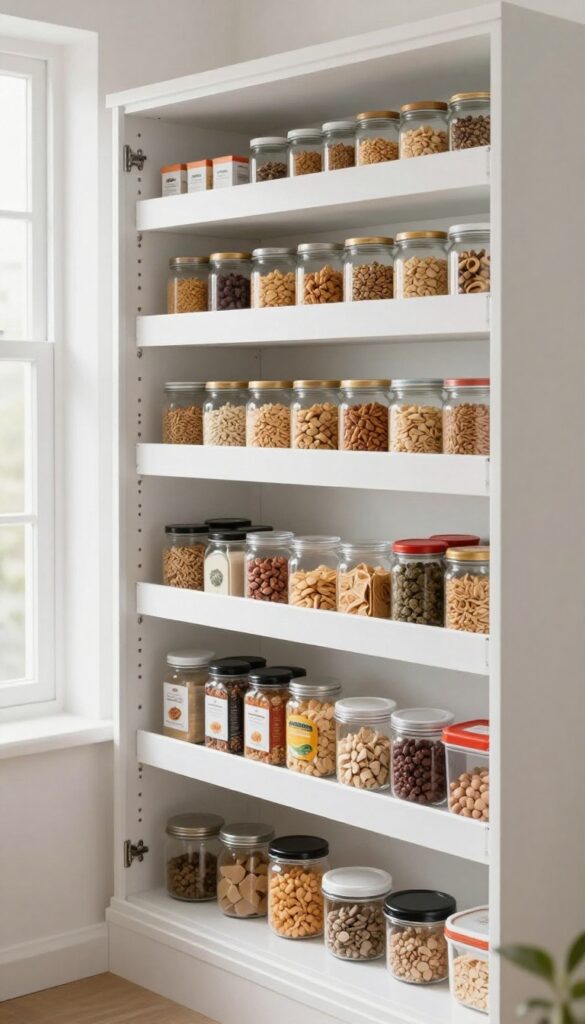
Most cabinets come with shelves that are spaced in a way that makes no sense for how people actually store things. You’ll have one shelf that’s too tall and another that’s too short, and you end up stacking items awkwardly. Adjustable shelf inserts help fix that by giving you customizable shelf height without permanently changing your cabinet.
This is especially useful for pantry cabinets where you store cereal boxes, jars, and small appliances. I’ve used shelf inserts for organizing food containers and it instantly made the cabinet feel cleaner and less chaotic. It’s like you finally have shelves that understand you.
Why This Works
Shelf inserts reduce wasted vertical space by adding extra levels. Instead of stacking items, you spread them out and make everything easier to reach. This also improves visibility, which keeps your cabinets from turning into a “forgotten food graveyard.”
It also makes cabinets more flexible. You can adjust the layout whenever your storage needs change.
How to Do It
- Measure your cabinet shelf height to find inserts that fit comfortably.
- Choose sturdy inserts that can handle the weight of what you’re storing.
- Place inserts in cabinets where you store smaller items like spices, jars, or snacks.
- Store frequently used items on the lower level for easy access.
- Keep rarely used items on the top level so they stay out of the way.
Style & Design Tips
Choose inserts in a matching color so your cabinets look cohesive. Clear acrylic looks modern and clean, while white inserts blend into most kitchens. Avoid inserts with flimsy legs, because they wobble and feel cheap.
And don’t stack inserts on top of inserts. At that point you’re building a storage skyscraper, and it will eventually collapse.
Pro Tip or Budget Hack
You can DIY shelf inserts using sturdy wooden boards and small riser blocks. It’s a simple project if you have basic tools, and it lets you customize the exact size you need. Paint them white for a clean look or stain them for a warmer vibe.
9. Create a Dedicated “Appliance Garage” Cabinet Zone
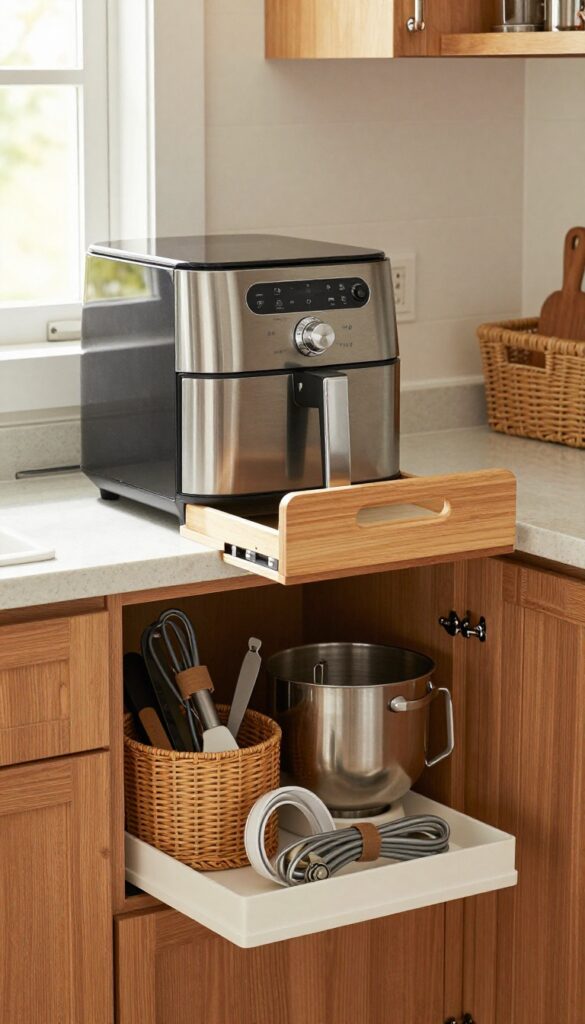
Small appliances are the number one reason cabinets feel overcrowded. Air fryers, blenders, mixers, rice cookers, coffee grinders… they all take up space and they’re awkward shapes that don’t stack neatly. Instead of scattering them across multiple cabinets, create one dedicated appliance zone so everything lives in one organized area.
This idea makes a kitchen feel more functional because you stop constantly moving appliances around. It also makes your countertops look cleaner because you’re not leaving everything out just because you don’t know where to put it. I’ve done this setup before and it made cooking feel less stressful almost immediately.
Why This Works
Grouping appliances together reduces clutter and makes storage more efficient. When appliances are spread out, you waste cabinet space because each one requires its own awkward corner. A dedicated appliance cabinet lets you store them strategically based on size and frequency of use.
It also improves workflow. You know exactly where your appliances are, and you don’t waste time searching or rearranging cabinets to fit something back in.
How to Do It
- Choose one lower cabinet or pantry section for appliance storage.
- Store heavy appliances like mixers and air fryers on the bottom shelf.
- Use pull-out trays if possible so you can slide appliances out easily.
- Store cords neatly using velcro ties so they don’t tangle into a disaster.
- Keep the appliances you use weekly in the front and occasional ones in the back.
Style & Design Tips
Use matching bins or baskets for appliance accessories like blender blades, mixer attachments, and air fryer trays. That keeps small parts from getting lost. Avoid stacking appliances on top of each other unless they’re lightweight, because that gets annoying fast.
Also, don’t store appliances in random cabinets just because they fit. Your kitchen should feel logical, not like a storage puzzle.
Pro Tip or Budget Hack
If you don’t have space for a full appliance cabinet, store appliances in large labeled bins instead. That way you can pull out a bin for “smoothie stuff” or “baking appliances” without cluttering everything else. It’s not as fancy, but it’s insanely practical.
Final Thoughts
Kitchen cabinets don’t need more space, they need better systems. Once you stop stacking everything like a chaotic game of Jenga and start using vertical storage, pull-outs, and smart zones, your kitchen feels easier to live in.
Try just one or two of these ideas first, and you’ll feel the difference immediately. I’m telling you, the moment you stop digging through cabinets like you’re on a scavenger hunt, cooking gets way more enjoyable.