7 Blank Wall in Kitchen Ideas That Look Intentional
A blank kitchen wall usually isn’t “empty” by choice. Most of the time, it’s just the spot nobody knows what to do with, so it stays sad and awkward for months.
The funny part is, it can actually make your whole kitchen look unfinished even if everything else is cute.
The good news is you don’t need a full renovation to fix it. You just need something that looks planned, useful, and visually balanced. Once that wall has a purpose, your kitchen instantly feels more expensive and pulled together.
1. Create a Mini Coffee Bar Wall Setup
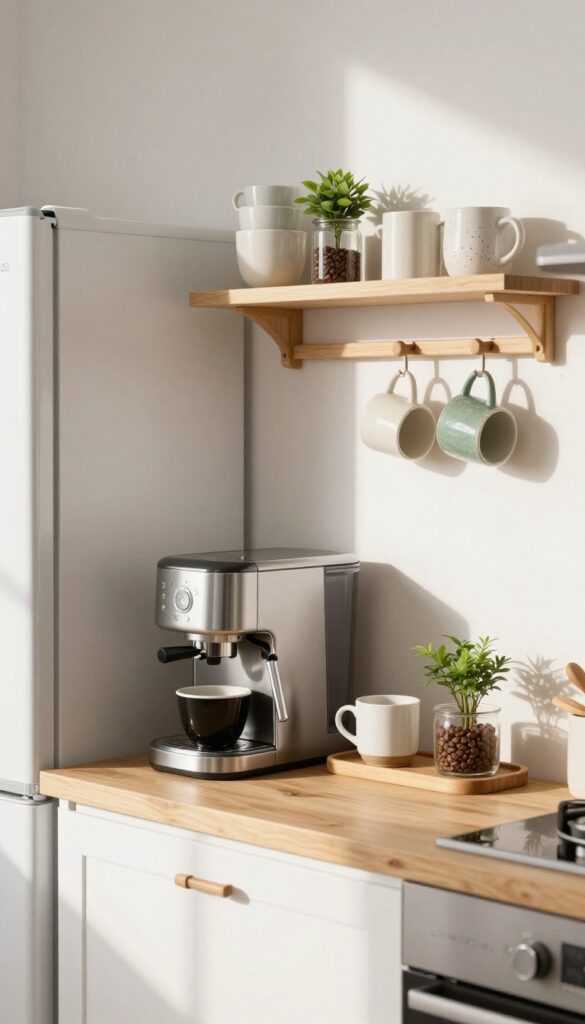
A kitchen coffee station is one of the easiest ways to make a blank wall look intentional, because it naturally looks like a “zone.”
Most kitchens have some random counter space that ends up holding a toaster, a blender, and maybe a pile of mail, so turning part of it into a coffee corner instantly gives it structure.
I’ve done this before, and it’s one of those changes that makes your kitchen feel like it belongs in a home tour video.
The best part is you don’t need a giant space. Even a narrow wall beside the fridge or a corner near the pantry works perfectly. Once you hang shelves or add a small cabinet, it stops looking like empty wall and starts looking like a feature.
Why This Works
A coffee bar works because it adds both function and visual weight. The shelves, mugs, and little accessories naturally fill the space in a way that looks balanced instead of cluttered. It also creates a “destination” in the kitchen, which makes the whole room feel more designed.
It’s also one of those setups that feels cozy without needing to lean into cheesy décor. It’s practical, but it still looks styled.
How to Do It
- Choose a section of counter near an outlet so your coffee maker can actually live there.
- Install 1–2 floating shelves above the counter for mugs, jars, or décor pieces.
- Add hooks underneath the shelf for hanging mugs, which saves space and looks cute.
- Place a tray on the counter to hold your coffee essentials so it feels organized.
- Finish with one statement piece like a small framed print or a wooden sign.
Each step matters because it turns random items into a grouped “setup.” A tray alone can make the difference between messy and intentional.
Style & Design Tips
Go for matching containers or jars so the shelf doesn’t look like a garage storage rack. I personally love clear glass jars with simple labels because they look clean but still feel homey. Keep your color palette tight, like black and wood, white and gold, or beige and brass.
Avoid putting too many small items on the shelves, because that’s where it starts to feel chaotic. Use one larger item like a plant or a framed photo to break up the smaller pieces. And please don’t overload it with mugs unless you want it to look like a café supply closet.
Pro Tip or Budget Hack
Instead of buying fancy floating shelves, use simple pine boards and basic black brackets. They look almost identical to expensive versions once you stain the wood. If you want it to feel high-end, swap your mug hooks for brass ones, because small metal upgrades weirdly make everything look pricier.
2. Install a Statement Peg Rail for Storage and Decor
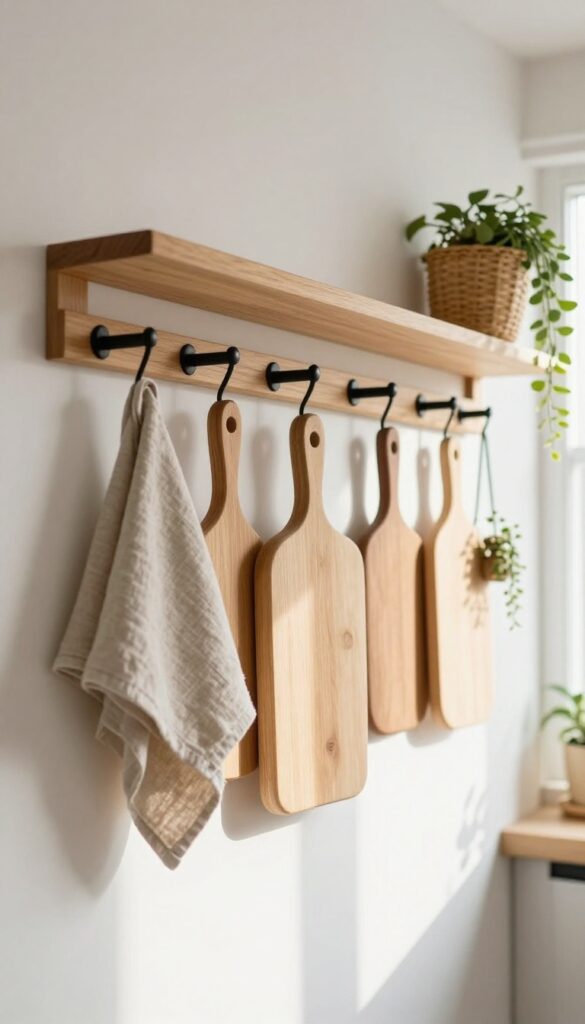
A peg rail is one of those things that feels like a small change, but it completely transforms a wall. Blank kitchen walls often look empty because there’s no texture or function, and a peg rail fixes both. It gives you a place to hang useful stuff, but it also adds that charming “designed on purpose” vibe.
I love peg rails because they work in almost any kitchen style. Farmhouse, modern, minimalist, even slightly boho kitchens can pull it off if you choose the right wood tone and hooks.
Why This Works
Peg rails work because they add vertical interest while also being practical. They break up that boring flat wall and turn it into a usable surface. Hanging items like cutting boards or towels adds layers, which makes the kitchen look styled without looking staged.
It also helps with everyday kitchen flow. You stop digging through drawers for stuff you use constantly.
How to Do It
- Measure your wall space and decide how long you want the rail to be.
- Choose a peg rail style, either a premade one or a DIY wood strip with dowels.
- Mount it into studs so it can hold heavier items like pans or baskets.
- Add hooks evenly spaced so it looks balanced and not random.
- Hang a mix of functional items and decorative pieces like boards or baskets.
Spacing matters here, because peg rails can look messy fast if the items are too crowded. Think of it like styling a shelf, but vertical.
Style & Design Tips
Use matching hooks for a clean look, like matte black or brushed brass. Then hang items that feel cohesive, like wooden cutting boards, neutral dish towels, and maybe a small hanging plant. I always recommend hanging items in groups of odd numbers, because it looks more natural.
Avoid bright plastic stuff unless your kitchen is very playful and colorful. Nothing ruins a beautiful peg rail faster than a neon green oven mitt screaming for attention.
Pro Tip or Budget Hack
If you want the peg rail to look custom, paint it the same color as your wall so it blends in. Then use contrast with your hanging items, like wood tones or black accessories. You can also thrift old cutting boards and sand them down for a “collected over time” look without spending much.
3. Add a Large Piece of Art That Actually Fits the Space
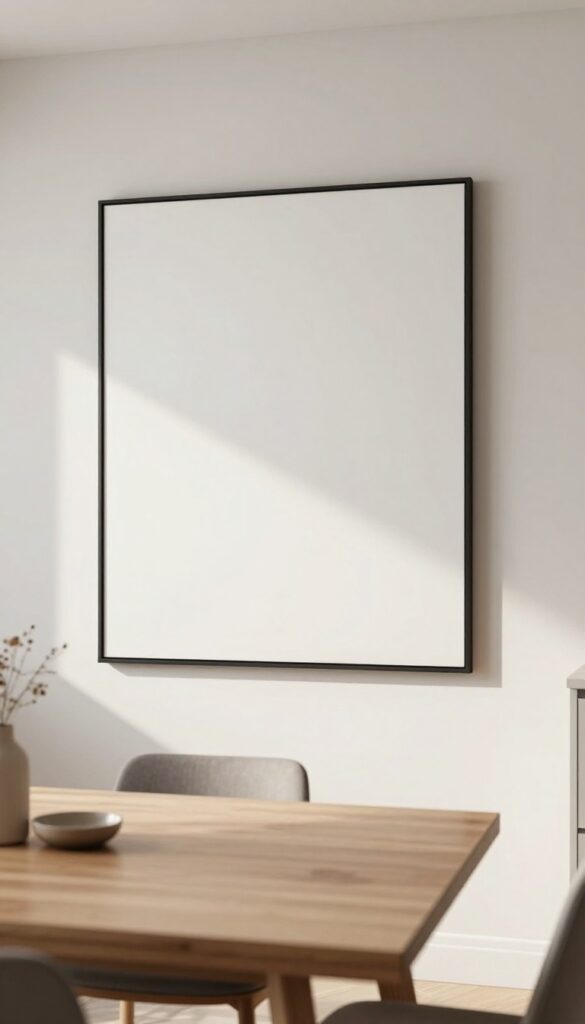
A lot of people avoid putting art in the kitchen because they think it’ll look weird or get ruined. But honestly, blank kitchen walls look unfinished without something bold on them. The trick is choosing a piece that’s the right size, because tiny art on a big wall just looks like you gave up halfway.
I’ve seen kitchens look instantly upgraded just by adding one oversized framed print. It doesn’t need to be expensive, it just needs to fill the wall properly.
Why This Works
Large art works because it gives the wall a focal point. It creates visual weight and balance, especially if your kitchen has lots of cabinets and counters but nothing on the wall. It also adds personality, which kitchens sometimes lack because they’re mostly functional spaces.
The right artwork can make the whole room feel intentional instead of like a rental kitchen you’re afraid to touch.
How to Do It
- Measure the wall and choose art that fills at least 60–70% of the width.
- Pick a frame style that matches your kitchen hardware for a cohesive look.
- Hang it at eye level, not too high near the ceiling.
- Use proper anchors so it doesn’t wobble or fall when doors slam.
- Keep the area around it simple so it stands out.
The size matters more than the design, because even basic artwork looks expensive when it’s large and framed well.
Style & Design Tips
If your kitchen is modern, go for abstract art or black-and-white photography. If your kitchen is cozy or farmhouse, vintage prints or botanical sketches look great. Keep your colors aligned with your kitchen palette so it doesn’t feel random.
Avoid overly literal “kitchen art” like cartoon chefs unless you’re doing it ironically. A subtle food illustration is fine, but those cheesy “Eat” signs have been through enough.
Pro Tip or Budget Hack
Buy a large frame cheaply and print your own art using downloadable prints online. You can also use wallpaper samples as art, which sounds strange but actually looks high-end. Frame a textured wallpaper panel and it’ll look like expensive modern art, no one will know.
4. Build a Floating Shelf Wall with Practical Styling
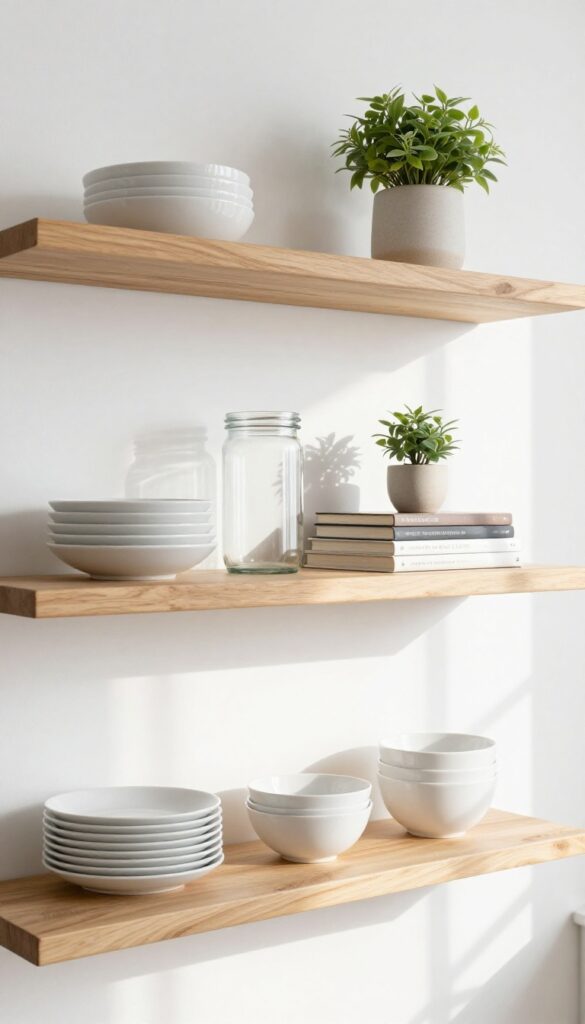
Floating shelves are basically the cheat code of kitchen design. If your kitchen wall is empty, shelves instantly make it look like you planned it that way from day one. Plus, they give you storage without needing to remodel cabinets.
The key is to style them like a normal person, not like a showroom. You want them to look curated, but still useful.
Why This Works
Floating shelves work because they create layers and depth. Cabinets are flat and heavy, but open shelving breaks that up visually. It makes the wall feel intentional while also giving you space to store everyday items.
They also help small kitchens feel less cramped. Removing the “solid block” look of cabinets can make a kitchen feel more open.
How to Do It
- Choose 2–3 shelves depending on wall height and space.
- Use strong brackets or hidden supports rated for kitchen weight.
- Install them evenly spaced so they look structured.
- Place heavier items like plates or bowls on the lower shelf.
- Style the top shelf with lighter décor like plants, cookbooks, or jars.
The spacing and structure matter because random shelves at random heights will look messy. You want clean lines.
Style & Design Tips
Stick to a simple color palette and avoid mixing too many patterns. I like using white dishes, clear jars, and warm wood tones because they always look clean. Add one or two decorative items like a small vase or framed print, but don’t overdo it.
A common mistake is cramming shelves with too many items. Leave breathing room, because negative space is what makes it look styled instead of cluttered.
Pro Tip or Budget Hack
Instead of buying new matching jars and containers, reuse pasta sauce jars and label them. Once they’re clean and uniform, they look surprisingly expensive. If you want extra style points, switch out shelf brackets for black metal ones, because they instantly give the whole wall a designer look.
5. Use a Wall-Mounted Plate Rack or Dish Display
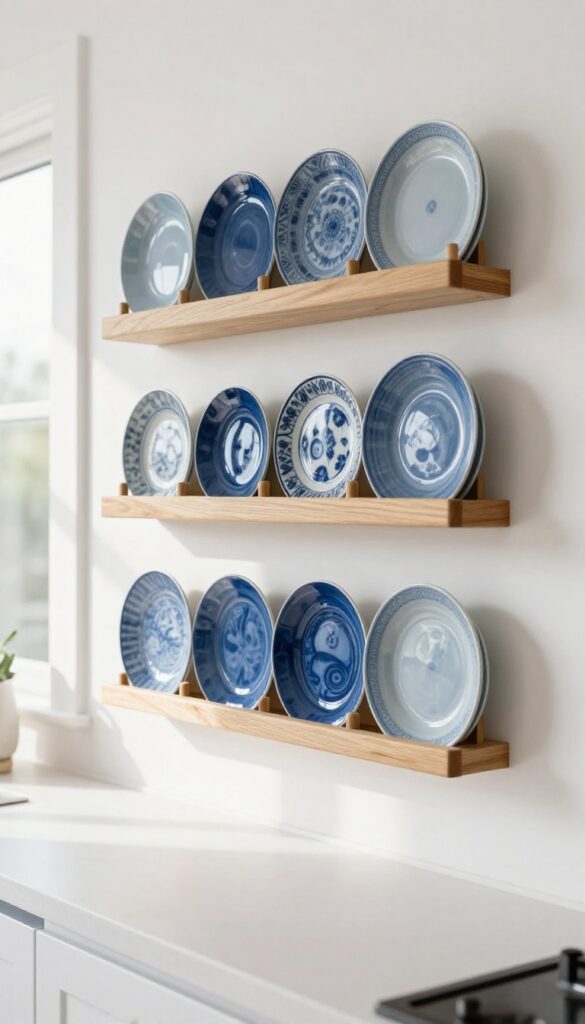
A plate rack sounds like something your grandma might have had, but modern versions look incredibly stylish. It’s also one of the most underrated ways to fill a blank kitchen wall, because it adds texture and pattern without needing artwork.
If you have pretty dishes or even just a few cute plates, this is an easy way to show them off. It makes your kitchen feel more lived-in and intentional.
Why This Works
A dish display works because it adds dimension and repetition. Plates create a natural pattern, and pattern always makes a wall feel designed. It also blends décor and function, because you’re displaying something you actually use.
It’s also a nice way to soften kitchens that feel too sterile or overly modern.
How to Do It
- Choose a wall area that won’t get splashed constantly with grease or water.
- Install a plate rack or open grid rack securely into studs.
- Select plates that share a common color theme or style.
- Arrange them in a balanced layout, mixing sizes for variety.
- Keep the rest of the wall simple so the display feels intentional.
The arrangement matters because random mismatched plates can look like a thrift store shelf. You want it to feel planned.
Style & Design Tips
Stick with neutral or soft colors if you want a calm look, or go bold with blue-and-white patterns for a classic vibe. Matte plates look modern, glossy plates feel more traditional. Mixing too many different styles is the fastest way to make it look cluttered.
Avoid hanging anything too close to the stove, because grease buildup is real and it’s annoying to clean. Also, don’t overcrowd the rack with too many plates, because it starts looking like storage instead of décor.
Pro Tip or Budget Hack
Thrift stores are basically a goldmine for vintage plates. You can buy a whole matching set for the price of one “decorative plate” online. If the plates don’t match perfectly, keep them in the same color family and they’ll still look cohesive.
6. Create a Functional Command Wall with a Chalkboard or Pinboard
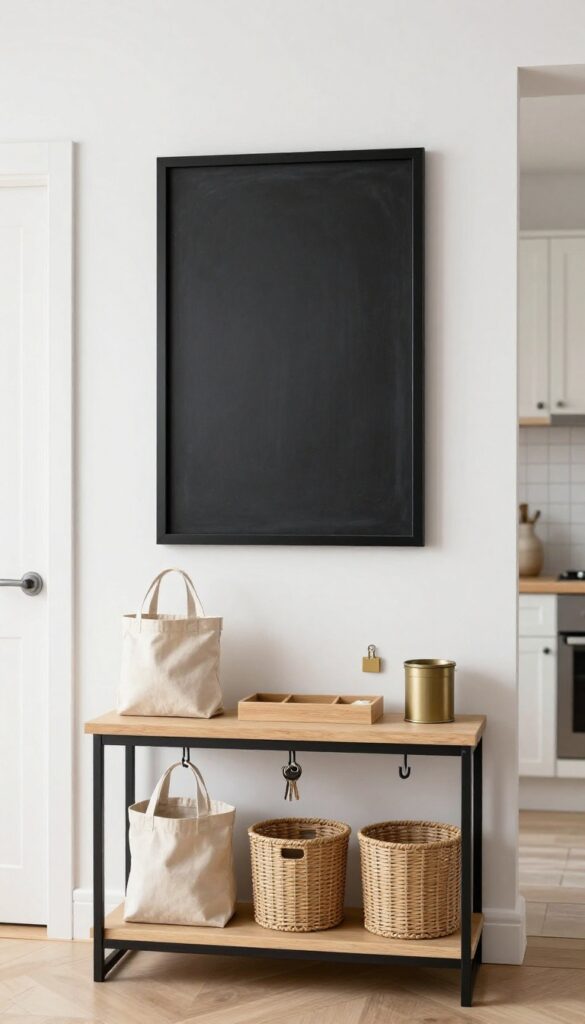
Some kitchens have that one wall where papers start multiplying like rabbits. Grocery lists, school reminders, receipts, random coupons you’ll never use, and suddenly the wall looks messy even if your kitchen is spotless. A command wall solves that problem while making the space look intentional.
I’ve tried this setup before and it genuinely made life easier. It’s not just for moms with kids either, it’s for anyone who wants their kitchen to feel organized without trying too hard.
Why This Works
A command wall works because it turns clutter into a structured system. Instead of papers floating around the counter, everything has a place. It also adds visual interest to the wall, especially if you frame the board or add a shelf underneath.
It gives the kitchen a “real life” function while still looking styled.
How to Do It
- Choose a wall near the entry point of the kitchen or dining area.
- Install a chalkboard, whiteboard, or corkboard in a frame.
- Add a small shelf below for mail sorting or storage baskets.
- Include hooks for keys, bags, or reusable shopping bags.
- Use matching containers or clips to keep everything neat.
This setup matters because the wall needs structure, otherwise it becomes another clutter zone. You’re creating a system, not a dumping ground.
Style & Design Tips
Choose a board with a nice frame so it looks like décor, not like a classroom. Black frames look modern, wood frames feel cozy. Keep your clips, baskets, and organizers in one metal finish like black or brass for a cleaner look.
Avoid bright neon sticky notes everywhere unless you enjoy chaos. Use neutral paper and matching pens if you want it to look intentional.
Pro Tip or Budget Hack
Paint a section of the wall with chalkboard paint instead of buying a board. It costs less and looks more built-in. You can also use a cheap thrifted frame around it to make it look like a high-end wall feature.
7. Install a Tall Vertical Rack for Cutting Boards, Towels, and Greenery
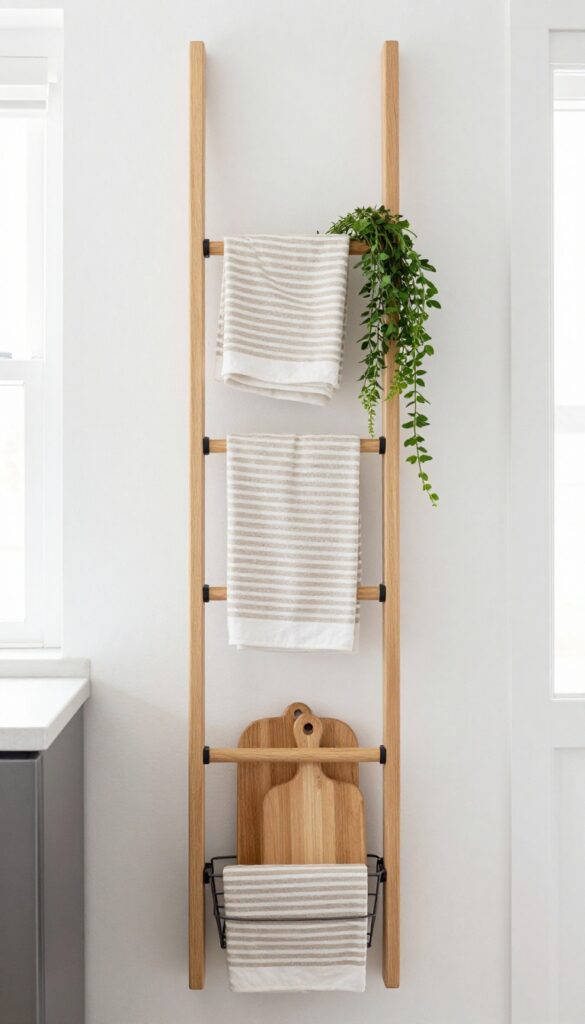
If your kitchen wall is tall and narrow, most people ignore it because it feels awkward. But tall vertical walls are actually perfect for slim racks or ladder-style organizers. They fill space without taking over the room, and they make the wall look planned instead of forgotten.
This idea works especially well beside the fridge, near the pantry, or next to a doorway. It’s one of those spots people usually leave blank, but it can become a feature fast.
Why This Works
Vertical racks work because they use height, which most kitchens waste. They draw the eye upward, making the kitchen feel taller and more styled. They also give you storage for items that normally clutter drawers, like towels, aprons, and cutting boards.
The vertical layout also adds structure without feeling heavy like cabinets. It’s light, functional, and visually interesting.
How to Do It
- Choose a narrow wall space with enough height for a tall rack or ladder shelf.
- Install a mounted towel bar system or use a leaning ladder rack.
- Add hooks for towels, aprons, or small baskets.
- Hang a couple of cutting boards or a lightweight wire basket.
- Finish with a small plant or hanging herb bundle for softness.
Each step matters because it creates layers. Without layers, it’ll look like a towel rack and nothing else.
Style & Design Tips
Keep it visually balanced by mixing textures like wood, metal, and fabric. Neutral towels look best, especially beige, white, charcoal, or soft stripes. Add one pop of green with a plant or herb bunch, because kitchens always look better with something alive.
Avoid hanging too many things at once. If it looks like a laundry drying station, you went too far.
Pro Tip or Budget Hack
Use a cheap wooden ladder from a thrift store or marketplace and sand it down. Stain it in a warm tone and it’ll look like an expensive décor piece. You can also swap plain towels for linen-look towels, which instantly make everything feel more “Pinterest-worthy” without spending much.
Final Thoughts
A blank kitchen wall doesn’t need more random décor, it needs a purpose. Once you treat that space like part of the kitchen design instead of leftover wall, everything feels more finished and expensive. Even small changes like a peg rail or one oversized art piece can completely shift the vibe.
If I had to pick one option that almost always works, I’d start with shelves or a coffee station. They’re useful, they’re easy to style, and they make the wall look like it was always meant to be there.