9 Living Room Partition Ideas That Define Space
Open-concept living rooms look great until real life moves in and suddenly everything feels like it’s happening in one messy, chaotic box.
One minute you’re watching TV, the next you’re staring at laundry baskets, someone’s work desk, and a random pile of shoes that apparently lives there now.
The good news is you don’t need walls to fix that. You just need smarter boundaries that guide the room, control the clutter, and make the space feel intentional instead of accidental.
1. Use a Tall Bookshelf as a Functional Divider
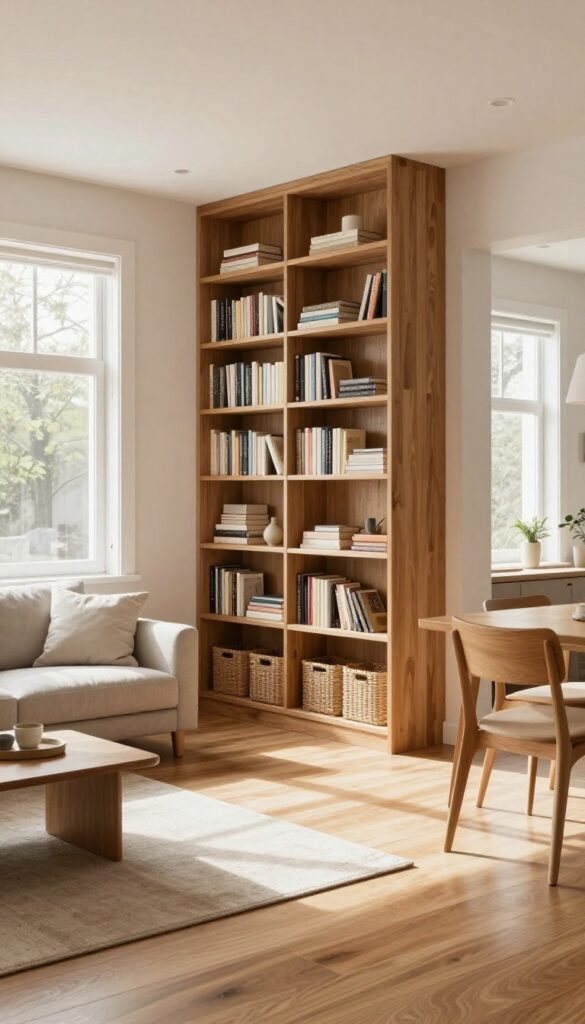
Most living rooms don’t need more “decor.” They need structure. A tall bookshelf partition solves the problem of having one big undefined space by creating a natural boundary while also giving you storage, display space, and a place to hide the random stuff you don’t want guests noticing.
This works especially well when your living room shares space with a dining area or entryway.
I’ve used this setup in a small apartment before, and it instantly made the room feel like it had zones instead of just… furniture floating around with no plan.
Why This Works
A bookshelf creates visual separation without blocking light or airflow. It gives your eyes a stopping point, which makes the room feel more organized and calm.
It also adds vertical height, which makes the living room feel bigger and more layered. When you have open space but no division, everything looks flat, and this fixes that immediately.
How to Do It
- Choose a bookshelf that’s at least chest-height for real separation.
- Place it perpendicular to the wall to create a “wall effect” without construction.
- Anchor it to the wall if it’s tall or if kids/pets live in your home.
- Style the shelves with a mix of books, baskets, and decor for balance.
- Leave a few open spaces so it doesn’t look heavy or cluttered.
Style & Design Tips
Avoid the mistake of stuffing every shelf with tiny items. That makes the whole divider look messy instead of styled.
Use matching storage baskets on the bottom shelves for things like toys, blankets, or cables. If you want it to feel modern, stick with neutral baskets and clean lines, not colorful chaos.
Pro Tip or Budget Hack
If a new bookshelf feels expensive, check Facebook Marketplace for IKEA Kallax or Billy shelves. People practically give them away, and they work like a charm with a little cleaning and a few stylish baskets.
2. Install a Slatted Wood Partition Wall
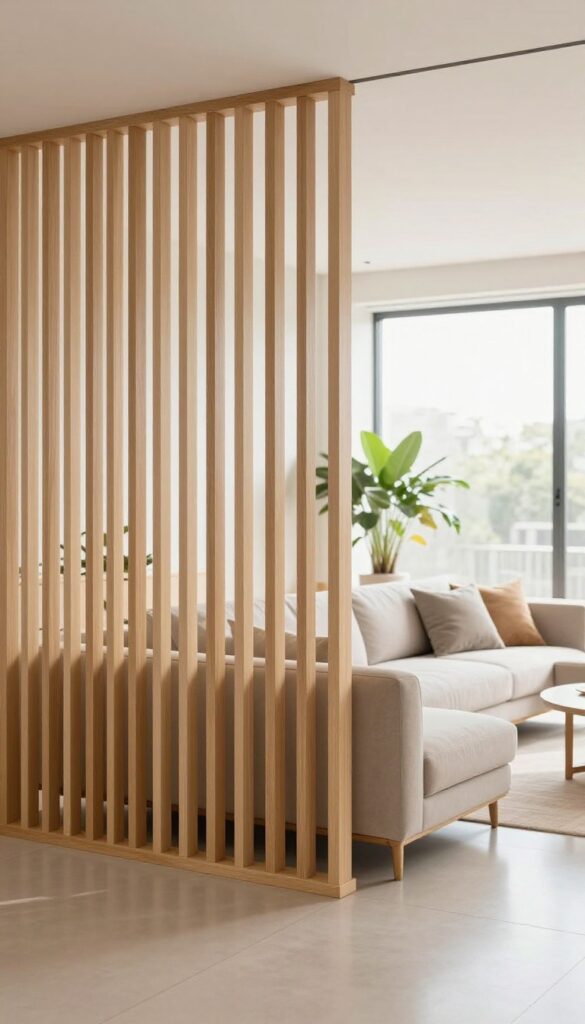
If you want your living room to look like a Pinterest dream without actually building a full wall, a slatted wood partition is one of the best tricks. It separates space while still keeping the room open, bright, and modern.
This is the kind of partition that makes people walk in and go, “Wait… did you renovate?” even though you basically just added wood strips. I’ve seen this idea make basic apartments look high-end with almost no furniture changes.
Why This Works
Slats create separation through rhythm and repetition instead of blocking visibility. You get a clean boundary while still letting light pass through, which keeps the room from feeling boxed in.
It also adds texture, which most living rooms desperately need. Flat walls and flat furniture make rooms feel boring, and slats fix that instantly.
How to Do It
- Decide where you want the separation, like between living and dining zones.
- Measure floor-to-ceiling height carefully before buying materials.
- Use evenly spaced wood slats and mount them to a top and bottom frame.
- Paint or stain them in a tone that matches your floors or furniture.
- Secure everything firmly so it doesn’t wobble or lean over time.
Style & Design Tips
If you stain the wood too orange, the whole thing can look dated fast. Stick with light oak tones, walnut tones, or matte black for a cleaner look.
Don’t overdo the spacing either. If the slats are too far apart, it looks unfinished, but if they’re too close, it becomes visually heavy.
Pro Tip or Budget Hack
You can make this cheaper by using pre-cut wood strips from a hardware store and staining them yourself. Also, if you paint them matte black, the wood quality matters way less because the finish hides imperfections.
3. Divide the Room with a Curtain Partition
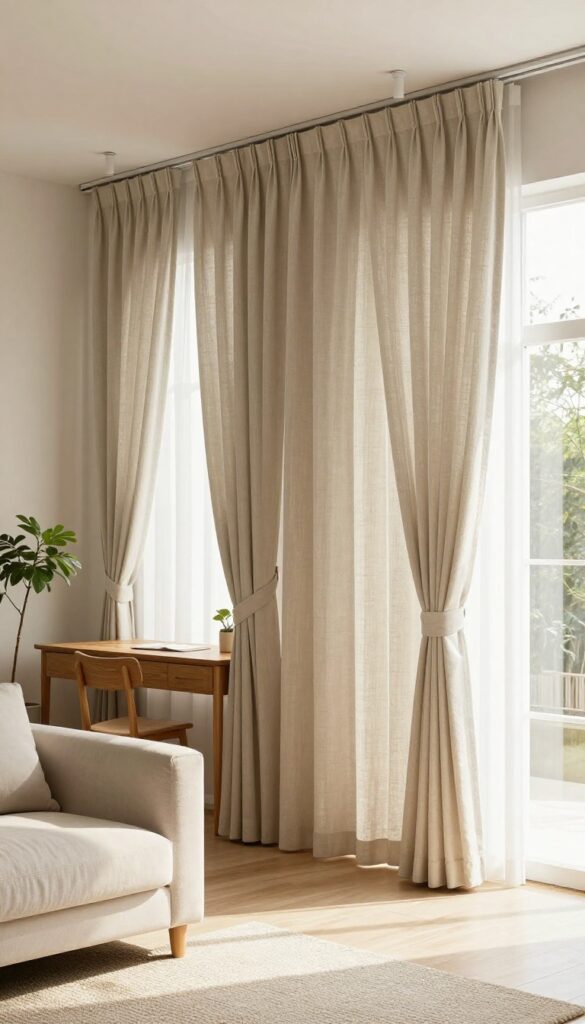
Curtains aren’t just for windows. They’re honestly one of the most underrated ways to create a flexible living room partition, especially if you rent or don’t want anything permanent.
This is perfect when you need to hide a workspace, a guest sleeping area, or a messy corner you don’t want visible 24/7. I’ve used a curtain divider before, and I swear it felt like I got a bonus room overnight.
Why This Works
Curtains give you adjustable separation. You can open them when you want the room to feel bigger and close them when you need privacy or visual calm.
They also soften a room instantly. Hard furniture edges and open layouts can feel harsh, and fabric creates warmth without effort.
How to Do It
- Install a ceiling-mounted curtain track or a sturdy rod.
- Choose long curtains that touch the floor for a polished look.
- Use thicker fabric if you want privacy and sound dampening.
- Add tiebacks so the curtains can stay open neatly.
- Steam the curtains so they don’t look wrinkled and sad.
Style & Design Tips
Don’t pick short curtains unless you want the room to feel cheap. Floor-length curtains always look more intentional and expensive.
Go for linen-style fabric if you want light filtering, or velvet if you want a more dramatic and cozy vibe. Avoid loud patterns unless the rest of the room is extremely simple.
Pro Tip or Budget Hack
Instead of buying custom curtains, grab two extra-long panels and hem them with iron-on hem tape. It takes ten minutes and saves money without looking DIY in a bad way.
4. Create a Partition with a Sofa Back Console Table
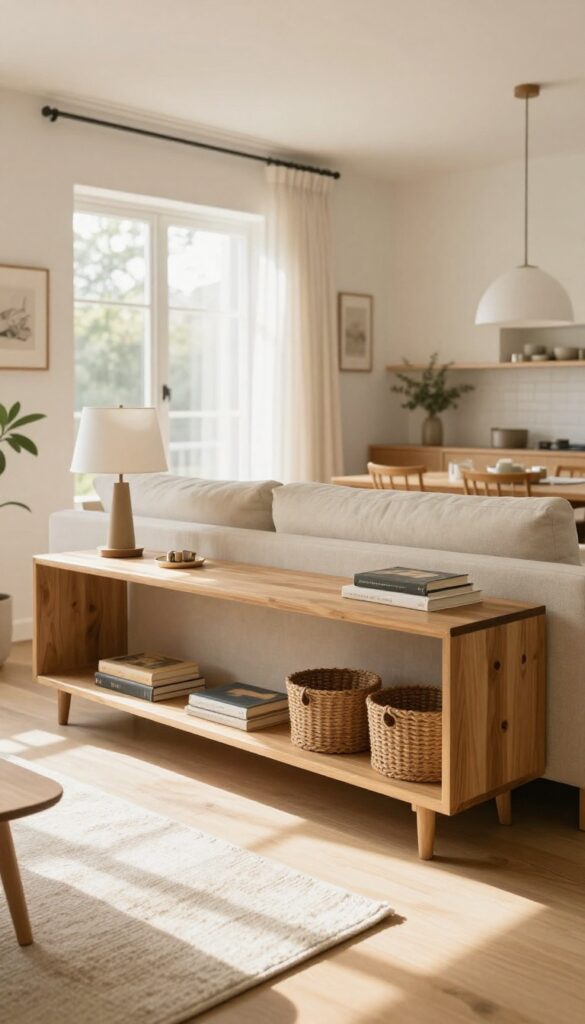
If your sofa is floating in the middle of the room, you’re already halfway to a partition. Adding a console table behind it gives the living room structure and makes the space feel designed instead of random.
This is one of those simple upgrades that makes your living room look instantly more expensive. Plus, it solves the “awkward empty space behind the couch” problem, which is way more common than people admit.
Why This Works
A console table creates a visual boundary without adding bulk. It defines where the living room ends and the next zone begins, whether that’s an entryway, dining area, or open hallway.
It also adds function. You get storage, styling space, and sometimes even a charging station, which is honestly the modern version of luxury.
How to Do It
- Measure the length of your sofa and choose a console slightly shorter.
- Place it directly behind the sofa, leaving minimal gap.
- Add a lamp, books, or a tray for a styled look.
- Use baskets or bins underneath if you need hidden storage.
- Keep decor low so it doesn’t block the view across the room.
Style & Design Tips
This works best when the console table has a slim profile. If it’s too deep, it becomes annoying to walk around and makes the space cramped.
Use one large statement piece like a tall lamp instead of lots of small cluttery decor. Also, don’t forget cords, because messy wires ruin the whole look instantly.
Pro Tip or Budget Hack
If you can’t afford a real console table, use two small side tables placed side-by-side behind the couch. Style them the same way, and nobody will know you pulled a budget move.
5. Use a Folding Screen for Instant Separation
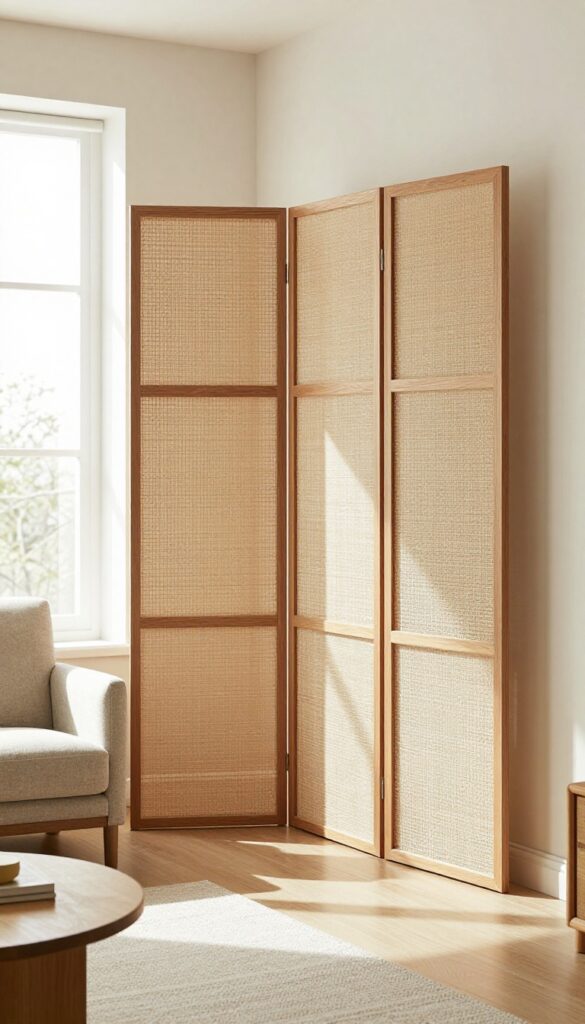
Folding screens are like the lazy genius solution of home decor. You don’t install anything, you don’t build anything, you just place it and suddenly your living room has zones.
This is especially helpful if you want to block off a work desk, hide a kid’s play area, or create a cozy reading nook. I’ve used folding screens before, and I love how fast they change the mood of a room.
Why This Works
A folding screen gives immediate visual separation. It doesn’t need to be structural because the goal is to trick the eye into seeing a “room within a room.”
It also adds texture and personality. A good screen becomes decor, not just a divider, and it can make a plain living room feel styled without adding furniture.
How to Do It
- Choose a screen that’s at least 5 feet tall for real impact.
- Place it behind a chair, desk, or corner area you want separated.
- Angle it slightly instead of placing it perfectly flat.
- Match the screen material to your decor style.
- Keep it stable by placing it where it won’t get bumped constantly.
Style & Design Tips
Cheap folding screens can look like dorm room decor if you pick the wrong one. Avoid thin, shiny materials and go for wood, rattan, or linen-style panels.
If your room already has a lot going on, choose a simple neutral screen. If your room is plain, this is the time to choose something with texture or pattern.
Pro Tip or Budget Hack
Check thrift stores for old folding screens. Even if they look ugly at first, you can paint them matte black or staple fabric onto the panels for a custom look that costs almost nothing.
6. Add a Half Wall Look Using Low Storage Cabinets
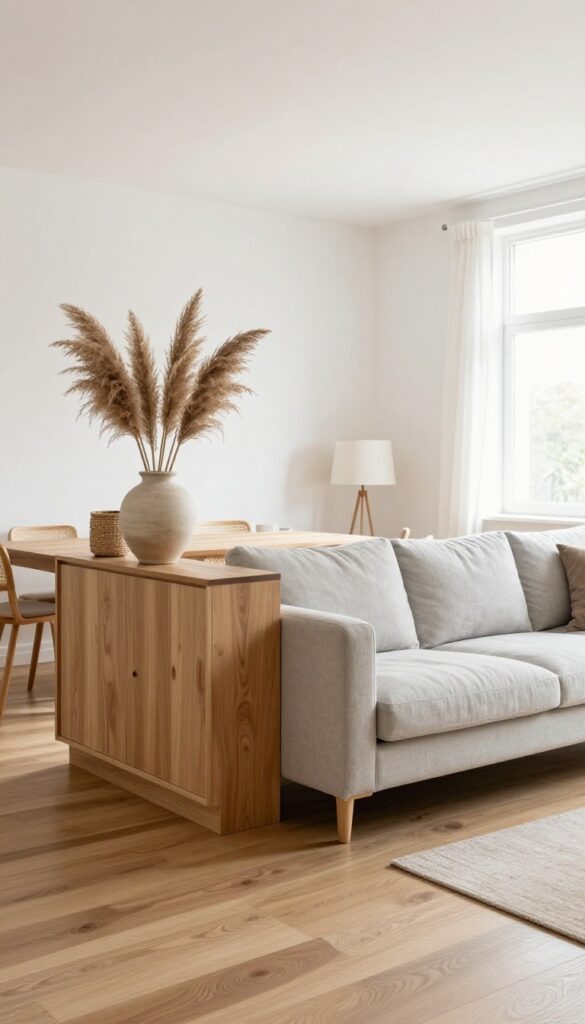
A full-height partition can sometimes feel too heavy, especially in smaller living rooms. Low cabinets create separation while keeping the room open and breathable.
This is perfect if you want to divide the living room from a dining area but still want conversation flow and openness. I love this option because it’s practical, and it doesn’t make your home feel like a maze.
Why This Works
Low cabinets define zones while keeping sightlines open. Your living room feels separate, but you still get that open-concept vibe.
The storage is a huge win too. You can hide board games, extra pillows, toys, and all the clutter that magically appears in living rooms every single day.
How to Do It
- Choose a low cabinet or sideboard around waist height.
- Place it between zones, like behind the sofa or near the dining space.
- Style the top with decor that feels intentional.
- Use cabinet doors or baskets to hide clutter inside.
- Add felt pads underneath so it doesn’t scratch your floor.
Style & Design Tips
Don’t overload the top with tiny decorations. Use one large vase, a table lamp, or a statement bowl to keep it clean.
Also, make sure the cabinet color works with your sofa and floors. If it clashes, it will look like you randomly shoved furniture there instead of designing a divider.
Pro Tip or Budget Hack
Buy a basic cabinet and upgrade it with new hardware. Swapping knobs for brass or matte black pulls can make a cheap cabinet look like a designer piece.
7. Define Space with a Rug Layering Layout
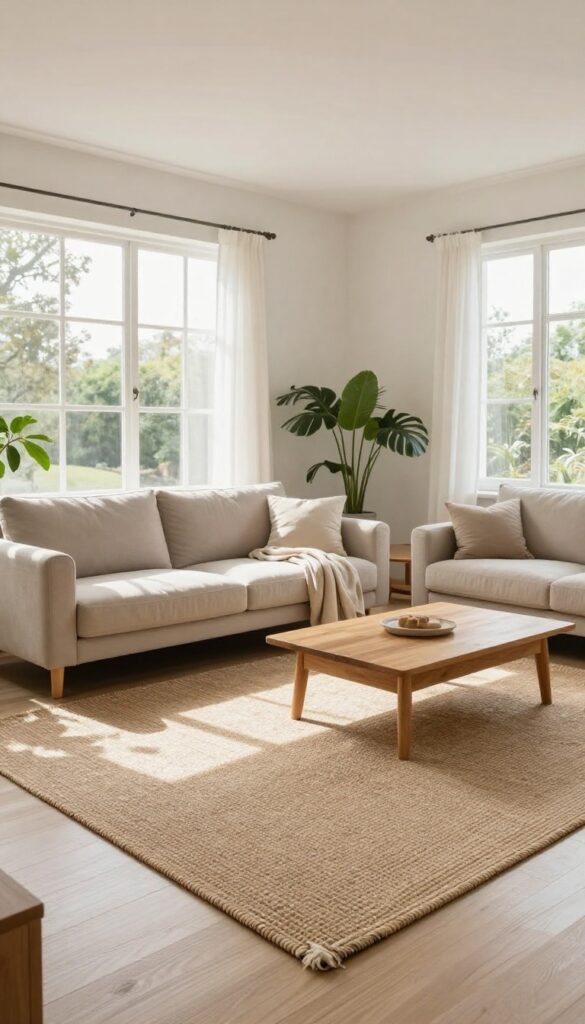
This is the simplest partition idea, and it’s honestly one of the most effective. Rugs can create invisible boundaries that tell your brain, “This is the living room zone,” even if the room is technically open.
I’ve done this in multiple spaces, and it always works. When you choose the right rug size, the living room instantly looks more complete and intentional.
Why This Works
Rugs create visual zones without adding any physical barrier. They guide furniture placement and make a space feel grounded instead of floating.
They also absorb sound. Open living rooms can echo like crazy, and rugs help make the room feel quieter and more comfortable.
How to Do It
- Pick a rug large enough for at least the front legs of furniture to sit on.
- Center the rug under the main seating area.
- Use a different rug style in the dining or entry zone if needed.
- Add a rug pad to keep it from sliding around.
- Arrange furniture so it feels anchored and balanced.
Style & Design Tips
The biggest mistake people make is buying a rug that’s too small. A tiny rug makes the room look awkward and cheap, no matter how expensive the rug was.
Choose a rug with some pattern if your furniture is plain. If your sofa and chairs already have prints, stick with a more subtle rug so the room doesn’t look like a visual fight.
Pro Tip or Budget Hack
If you can’t afford a huge rug, buy a large jute rug as a base and layer a smaller patterned rug on top. It looks stylish and costs way less than buying one massive designer rug.
8. Use Indoor Plants as a Natural Living Divider
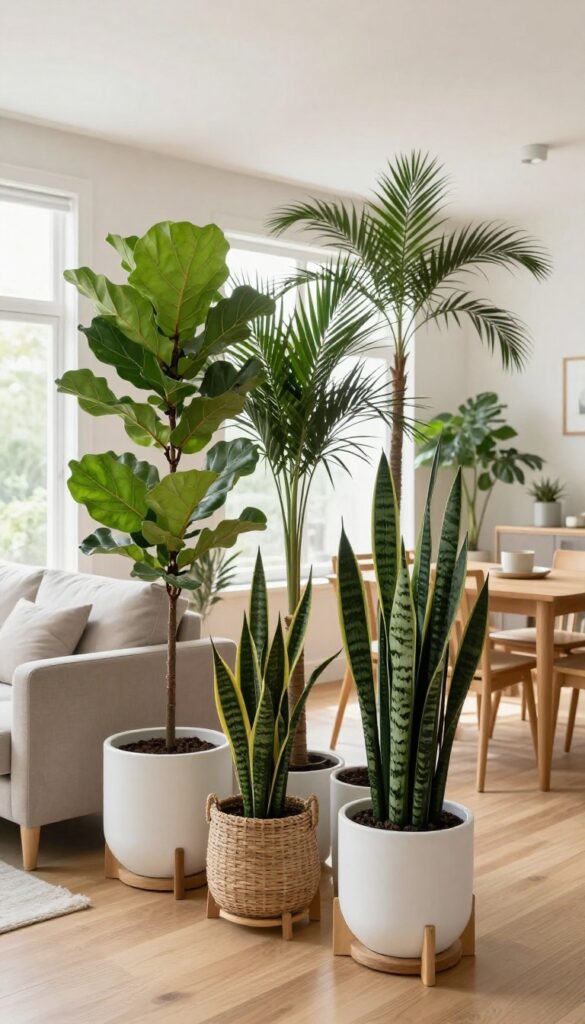
If you want your living room partition to feel soft, fresh, and not like you’re trying too hard, plants are the move. Tall plants and plant stands can create a natural divider that feels alive instead of structural.
This is one of my favorite ways to define space because it doesn’t feel like a “partition.” It feels like styling, but it still does the job.
Why This Works
Plants break up space visually without closing it off. They create a boundary through height and texture, but they don’t make the room feel blocked.
They also make your living room look more expensive. Even basic furniture looks better when you add greenery, because plants give the room that finished, intentional vibe.
How to Do It
- Choose tall plants like fiddle leaf figs, palms, or snake plants.
- Use matching planters to keep the look cohesive.
- Place plants in a row between zones, like living and dining areas.
- Mix heights using plant stands for a layered effect.
- Keep a consistent watering routine so your divider doesn’t die on you.
Style & Design Tips
Don’t mix ten different planter styles unless you want chaos. Stick with one planter color palette, like white ceramic, black matte, or woven baskets.
Also, avoid placing plants too close together. Give them breathing room so it looks styled, not like you dumped them there in panic.
Pro Tip or Budget Hack
If you love the look but don’t want plant maintenance, use high-quality faux plants. Cheap fake plants look embarrassing up close, but good faux ones look shockingly real and still give you the partition effect.
9. Build a DIY Open Archway Partition Frame
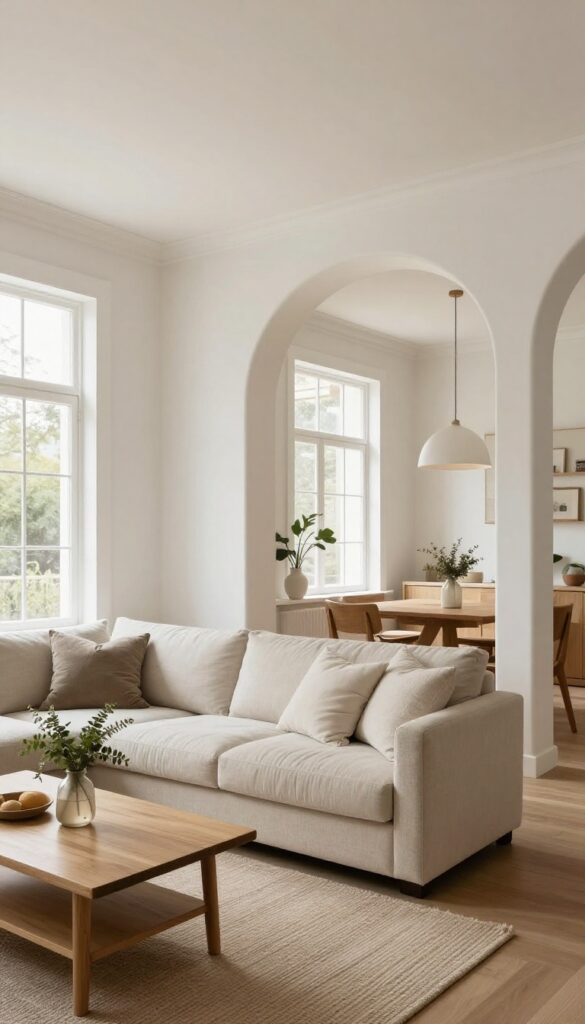
If you want your living room to feel more architectural without committing to a full renovation, a DIY archway frame is a seriously cool option. It creates a defined boundary that feels intentional and custom, like your home was designed that way from the beginning.
This is perfect for separating a living room from a dining space, entryway, or hallway. I’ve seen this idea completely transform boring open layouts into something that feels high-end and structured.
Why This Works
An archway gives the room a “doorway moment” without actually closing anything off. It adds depth and makes the space feel layered, which instantly upgrades the vibe.
It also creates a focal point. Instead of your open layout feeling like one big rectangle, the arch gives your eyes a feature to lock onto.
How to Do It
- Decide where the arch will go and measure the opening width.
- Build a simple wood frame for the sides and top support.
- Cut an arch shape using plywood or flexible drywall.
- Attach and secure everything firmly to the ceiling and floor.
- Patch, sand, and paint it so it looks like a built-in feature.
Style & Design Tips
Paint the arch the same color as the wall if you want subtle elegance. If you want drama, paint it a contrasting tone like deep green, charcoal, or warm beige.
The biggest mistake is rushing the finishing work. If you don’t sand and patch properly, it will look DIY in the wrong way, like a weekend mistake you can’t undo.
Pro Tip or Budget Hack
Instead of building a full arch, create a faux arch effect using paint. Paint an arch shape on the wall where the “division” would be, and you’ll still get a visual boundary without construction costs.
Final Thoughts
A living room doesn’t need walls to feel organized, it just needs smarter boundaries that make the space feel planned. Once you define zones, everything becomes easier, from furniture placement to keeping clutter under control.
If I had to pick one idea that always works, I’d go with a bookshelf divider or a console table behind the sofa. They look good, they solve real problems, and they don’t require a full DIY meltdown to pull off.