8 Grey Floor Living Room Ideas That Feel Cozy
Grey flooring changes how a living room behaves more than most people expect. It affects light, temperature, furniture choices, and even how tidy the space feels day to day.
Some people love it instantly, others struggle to make it feel warm instead of flat. The difference usually comes down to how the rest of the room supports it.
I’ve worked with grey floors in rentals, small apartments, and homes that were trying very hard not to feel cold. The good news is that grey is flexible if you treat it right.
The bad news is that a few common mistakes can make the room feel unfinished or stiff without you realizing why.
Below are the ideas that actually work in real homes, not just staged photos. Each one focuses on making grey floors feel lived-in, comfortable, and intentional instead of sterile or overly modern.
1. Layer Warm Textiles to Offset the Cool Tone
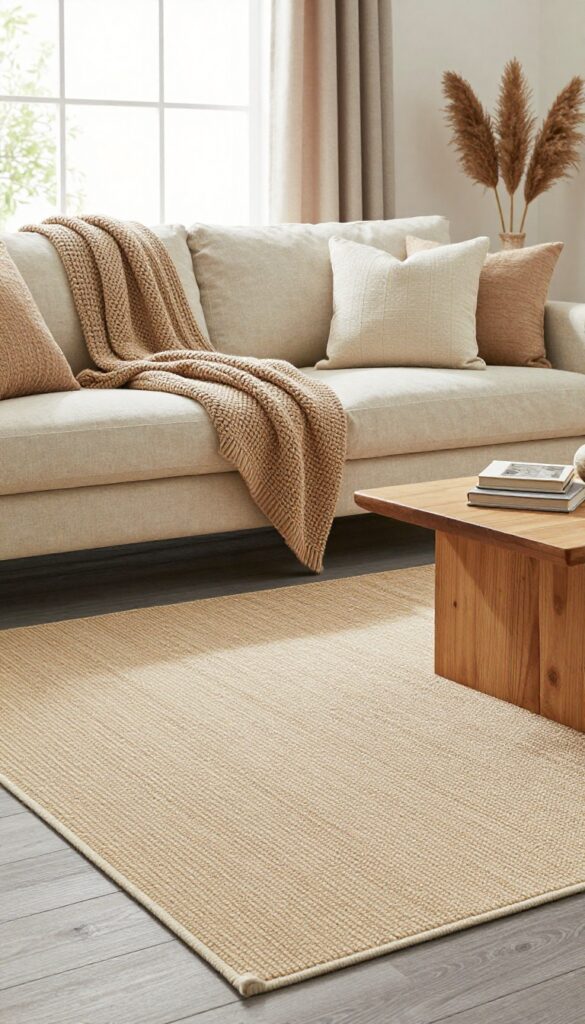
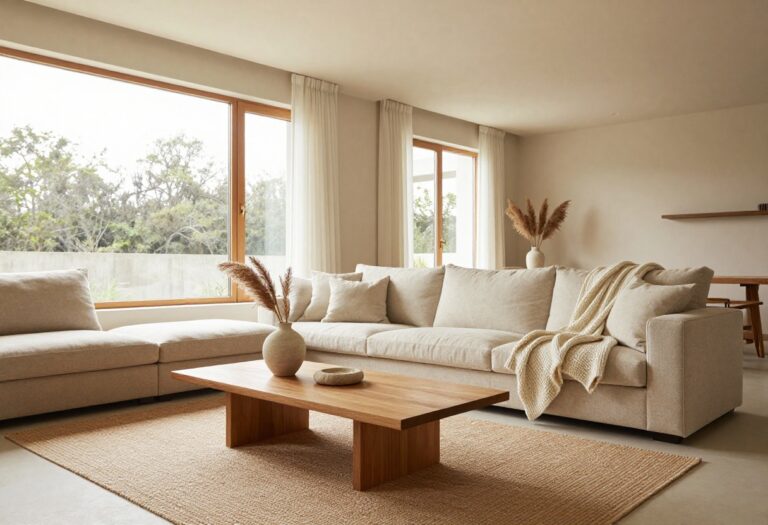
Grey floors tend to lean cool, even when they’re technically a warm shade. That coolness can quietly drain the comfort out of a room if everything else follows the same tone. The fastest fix is introducing warmth through texture rather than color alone.
I learned this the hard way in a living room that felt clean but oddly uninviting. The floor looked great, the walls were fine, but the room never felt finished. Once I added layered fabrics, everything softened instantly.
Why This Works
Textiles break up the visual hardness of flooring and furniture. Soft surfaces absorb light and sound, which naturally makes a space feel calmer and more welcoming. They also create contrast, which keeps grey from looking flat.
How to Do It
- Add a large area rug with warmth in the fibers or pattern
- Layer throw blankets on sofas or chairs
- Use textured pillows instead of smooth, shiny fabrics
- Choose curtains with weight rather than sheer panels
Style & Design Tips
Stick to warm neutrals like beige, cream, camel, or soft tan instead of stark white. Avoid matching everything perfectly, because slight variation adds depth. Mixing knits, linen, and woven textures keeps the room from feeling staged.
Pro Tip or Budget Hack
If you don’t want to buy a new rug, layer a smaller patterned rug over a neutral one. It adds warmth and looks intentional without replacing what you already own.
2. Use Wood Tones to Balance the Coolness
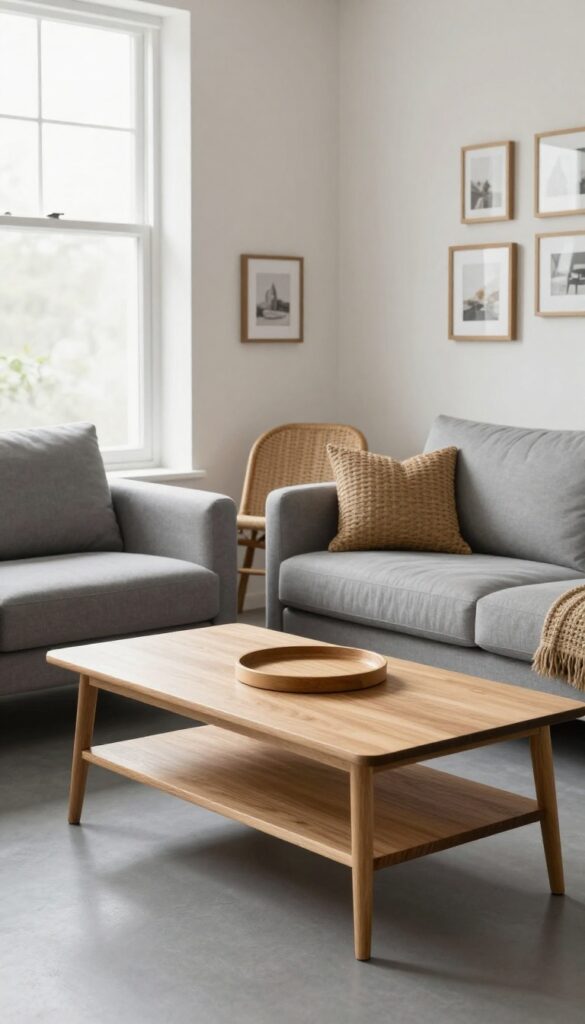
Grey floors pair beautifully with wood, but only if you choose the right tone. Too dark and the room feels heavy, too light and it can feel washed out. The goal is balance, not contrast for the sake of it.
In one apartment, I swapped a black coffee table for a warm oak one and the whole room instantly felt calmer. Same layout, same couch, totally different vibe.
Why This Works
Wood introduces organic warmth and visual movement. It breaks up the sleekness of grey and adds a natural element that makes spaces feel more livable.
How to Do It
- Add a wood coffee table or side tables
- Choose wooden picture frames or shelves
- Use wood legs on sofas or chairs
- Incorporate woven or rattan accents
Style & Design Tips
Medium to warm woods like oak, walnut, or acacia work best. Avoid ultra-red tones unless the rest of the room is neutral. Mixing wood finishes is fine as long as they stay in the same warmth range.
Pro Tip or Budget Hack
If replacing furniture isn’t an option, wood trays, stools, or floating shelves give the same effect for much less money.
3. Add Contrast With Soft, Cozy Rugs
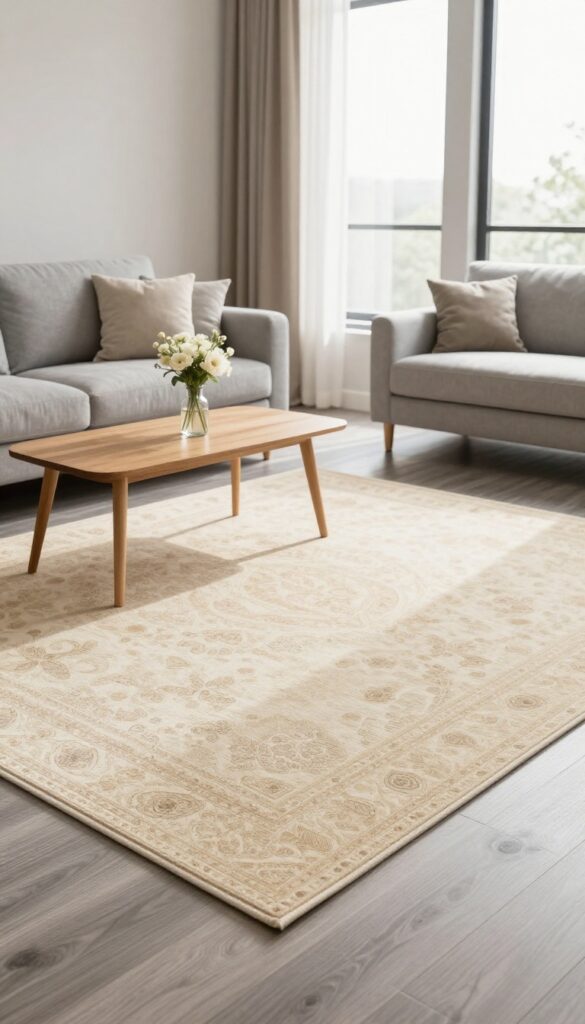
Grey floors can disappear visually if the rug is too close in color. That’s when a room starts to feel flat and unfinished, even if everything else is styled nicely. A good rug creates definition and warmth at the same time.
I once tried a light grey rug on grey floors and couldn’t figure out why the space felt empty. Switching to a warmer pattern fixed it instantly.
Why This Works
Rugs anchor the seating area and create visual separation. They also soften sound and add comfort underfoot, which matters more than people realize.
How to Do It
- Choose rugs with cream, beige, or warm taupe tones
- Look for subtle patterns instead of solid colors
- Make sure the rug is large enough to anchor furniture
- Layer rugs if the space feels too open
Style & Design Tips
Avoid cool grey rugs unless the room has a lot of warmth elsewhere. Persian-style or textured rugs work especially well with grey floors.
Pro Tip or Budget Hack
Check clearance sections for oversized rugs. A larger rug instantly makes the room feel more expensive, even if it was discounted.
4. Use Warm Lighting to Soften the Space
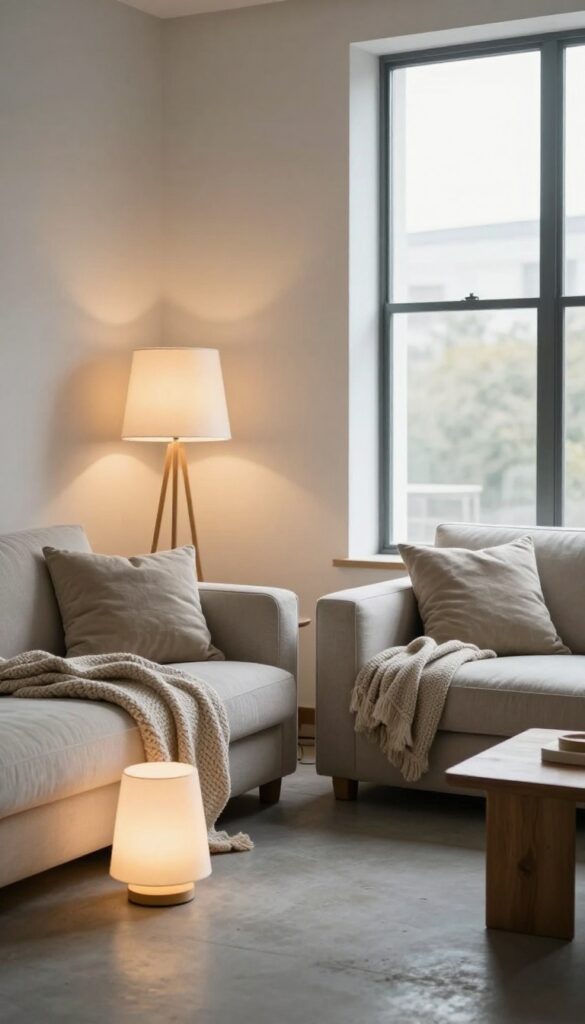
Lighting can make or break a grey floor living room. Cool white bulbs make everything feel sterile, while warm lighting adds comfort without changing the décor.
This is one of the easiest fixes and also one of the most overlooked.
Why This Works
Warm lighting counteracts the cool undertones of grey floors. It creates depth and makes colors appear richer and more inviting.
How to Do It
- Use warm white bulbs instead of daylight bulbs
- Add table lamps and floor lamps instead of relying on overhead light
- Use lampshades that soften light rather than reflect it
- Layer lighting at different heights
Style & Design Tips
Warm bulbs around 2700K work best. Avoid exposed bulbs with harsh light unless they’re heavily diffused.
Pro Tip or Budget Hack
Smart bulbs let you control warmth and brightness without replacing fixtures. One bulb can change the mood of the entire room.
5. Bring in Color Through Decor, Not Walls
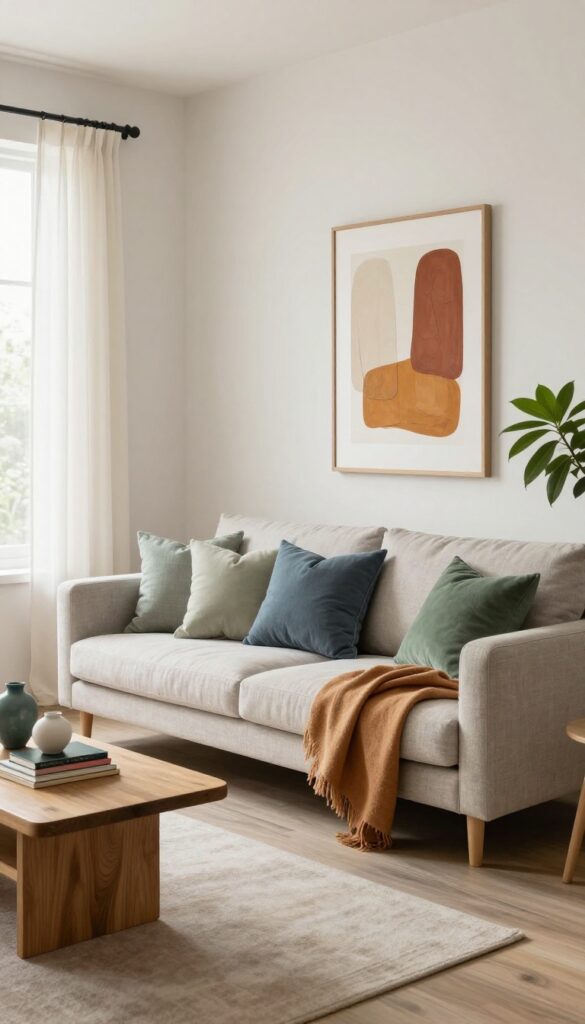
Grey floors don’t need colorful walls to feel cozy. In fact, neutral walls often work better, letting décor do the heavy lifting.
I’ve seen rooms where bold walls fought the floor, while simple decor made everything feel balanced.
Why This Works
Decor is easier to change than paint. Using color in smaller doses lets you adjust the mood without committing long-term.
How to Do It
- Add colored pillows or throws
- Use artwork with warm tones
- Display books or ceramics with subtle color
- Add greenery for natural contrast
Style & Design Tips
Earth tones, muted blues, and soft greens work beautifully with grey. Avoid neon or overly bright colors unless the rest of the room is very neutral.
Pro Tip or Budget Hack
Swap pillow covers seasonally instead of buying new pillows. It refreshes the room for very little money.
6. Create Depth With Layered Furniture Placement
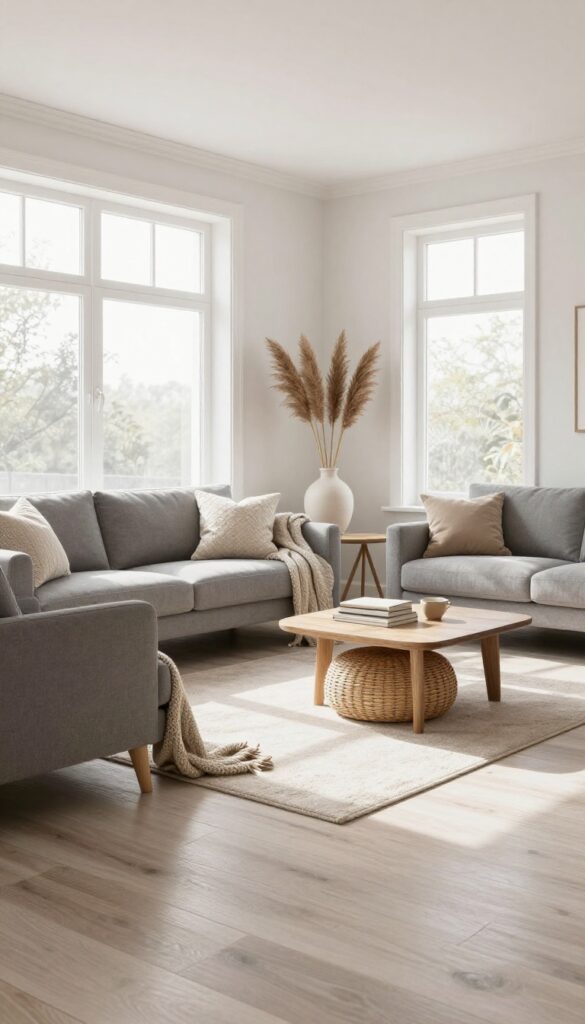
Grey floors can feel flat if everything sits in straight lines. Layering furniture creates movement and makes the room feel intentional instead of staged.
This is especially important in open or rectangular living rooms.
Why This Works
Layering adds visual interest and breaks up large empty areas. It also makes the space feel more lived-in and functional.
How to Do It
- Angle a chair instead of lining everything up
- Add a bench or ottoman near the seating area
- Use side tables at different heights
- Place decor slightly off-center
Style & Design Tips
Avoid pushing all furniture against the walls. Let pieces float slightly to create depth and flow.
Pro Tip or Budget Hack
Even shifting furniture a few inches can change how the room feels. Try rearranging before buying anything new.
7. Use Natural Elements to Add Warmth
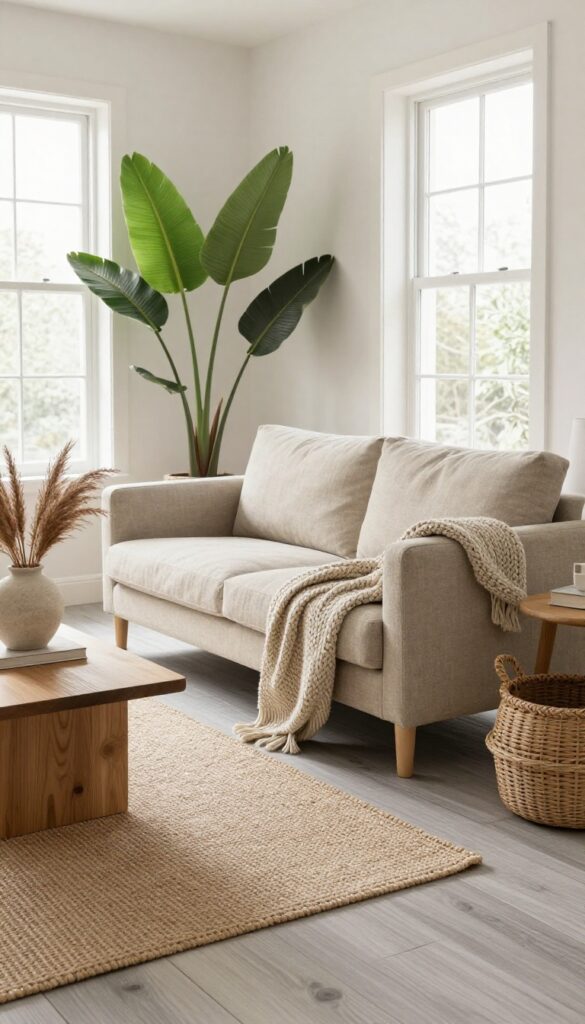
Grey floors pair beautifully with natural materials, especially when the room starts feeling too modern or cold.
Plants, stone, and woven textures make a noticeable difference.
Why This Works
Natural elements bring variation and softness. They also balance the clean look of grey flooring without overpowering it.
How to Do It
- Add houseplants or faux greenery
- Use woven baskets for storage
- Incorporate stone or ceramic accents
- Display dried florals or branches
Style & Design Tips
Stick to a few natural materials instead of mixing too many. Consistency keeps the look calm and cohesive.
Pro Tip or Budget Hack
Even one large plant can change the feel of a room. If real plants aren’t your thing, high-quality faux ones work surprisingly well.
8. Keep the Palette Simple but Intentional
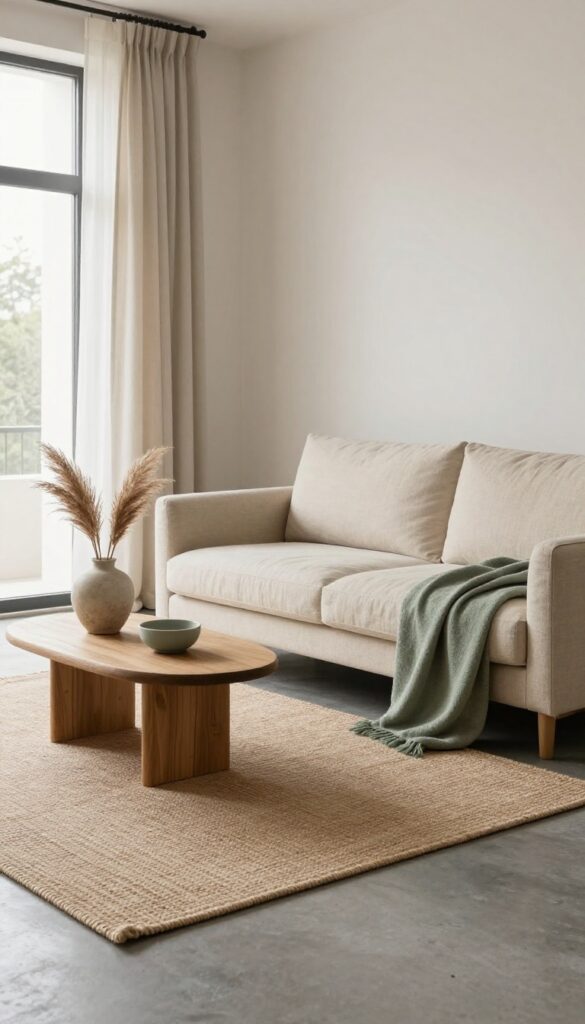
Grey floors already make a statement, so the rest of the room doesn’t need to compete. A tight color palette keeps everything feeling calm and cozy.
This is where a lot of people go wrong by adding too many competing tones.
Why This Works
A limited palette makes the space feel cohesive and thoughtful. It also makes decorating easier over time.
How to Do It
- Choose 2–3 main colors and stick to them
- Use variations of those colors throughout the room
- Repeat materials and tones for consistency
- Edit out anything that feels random
Style & Design Tips
Neutrals with one accent color usually work best. Let texture do the heavy lifting instead of color overload.
Pro Tip or Budget Hack
If something feels off, remove one item instead of adding more. Often the fix is subtraction, not addition.
Final Thoughts
Grey floors don’t have to feel cold or boring, even though they get that reputation. With the right balance of texture, warmth, and thoughtful styling, they can actually make a living room feel more grounded and comfortable than darker or trendier floors.
The key is paying attention to how the room feels, not just how it looks in photos. Once you start layering warmth and personality into the space, grey floors stop feeling like a challenge and start feeling like an advantage.