9 Modern Living Room TV Unit Ideas That Look Sleek
A TV unit quietly decides whether a living room feels intentional or thrown together. It affects storage, wall balance, cable chaos, and how the whole space functions day to day.
Most people don’t realize how much visual weight that single piece carries until it feels wrong.
The good news is that modern TV units have evolved way beyond bulky cabinets and awkward stands. There are smarter layouts now, cleaner lines, and better ways to make the TV blend in instead of dominate the room.
Some of these ideas I’ve tested personally, others I’ve learned the hard way after rearranging furniture one too many times.
1. Floating Wall-Mounted TV Unit
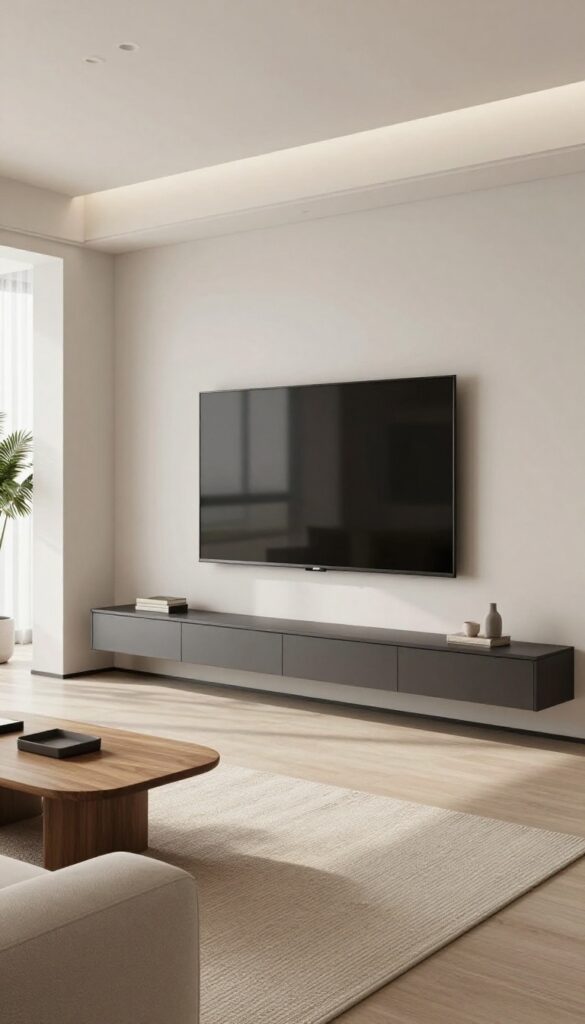
A floating TV unit solves one of the most common living room problems without trying too hard. Floors stay visible, the room feels lighter, and cleaning suddenly becomes easier.
It also removes that chunky, grounded feeling that older TV stands tend to create.
I used to think floating units were just for ultra-modern homes, but they actually work in almost any space if done right.
The trick is keeping the design simple and letting the wall do some of the visual work. Once I switched to one, the room instantly felt more open without changing anything else.
Why This Works
A wall-mounted unit creates visual breathing room by lifting furniture off the floor. That small gap underneath makes a surprisingly big difference in how spacious a room feels. It also helps define the TV zone without heavy framing.
How to Do It
- Mount the unit slightly below eye level when seated
- Keep the width wider than the TV for balance
- Hide cables inside the wall or a rear channel
- Anchor it into wall studs for stability
Style & Design Tips
Stick to matte finishes if you want a modern look that doesn’t show fingerprints. Wood tones add warmth, while white or charcoal feels more contemporary. Avoid oversized handles or decorative trims that clutter the clean lines.
Pro Tip or Budget Hack
If custom floating units feel pricey, use wall-mounted cabinets from modular furniture lines. Mount two side by side and add a slim top panel for a built-in look at half the cost.
2. Minimalist Low-Profile Media Console
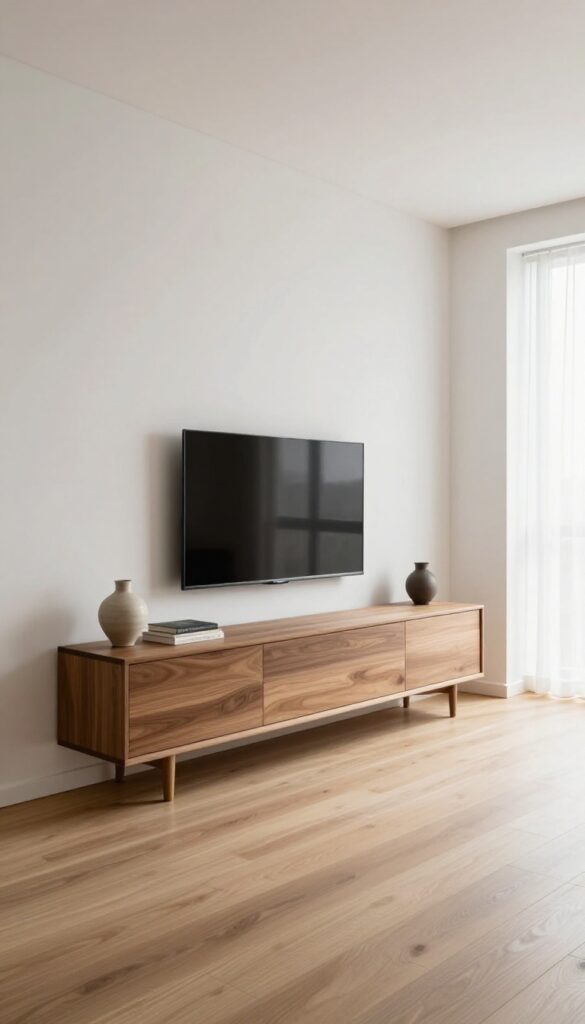
Low-profile TV units are perfect for people who like things calm and uncluttered. They sit closer to the ground and stretch horizontally, which makes ceilings feel taller. This style works especially well in modern or mid-century inspired homes.
I once swapped a tall cabinet for a low console and couldn’t believe how much calmer the room felt. Nothing else changed, but the space suddenly looked intentional instead of crowded.
Why This Works
The long, horizontal shape naturally balances the TV’s width. It also keeps visual weight low, which helps small rooms feel more open. The simplicity makes everything else around it stand out more.
How to Do It
- Choose a unit that’s wider than your TV
- Keep decor minimal on top
- Use closed storage for clutter
- Leave some negative space on either side
Style & Design Tips
Wood finishes like walnut or oak add warmth without overpowering the space. Handle-less drawers keep the look sleek and modern. Avoid high-gloss finishes if you want something that ages well.
Pro Tip or Budget Hack
If you already own a low dresser, it can double as a TV unit. Just remove extra knobs and add felt pads underneath for a quick upgrade.
3. Built-In TV Wall With Storage
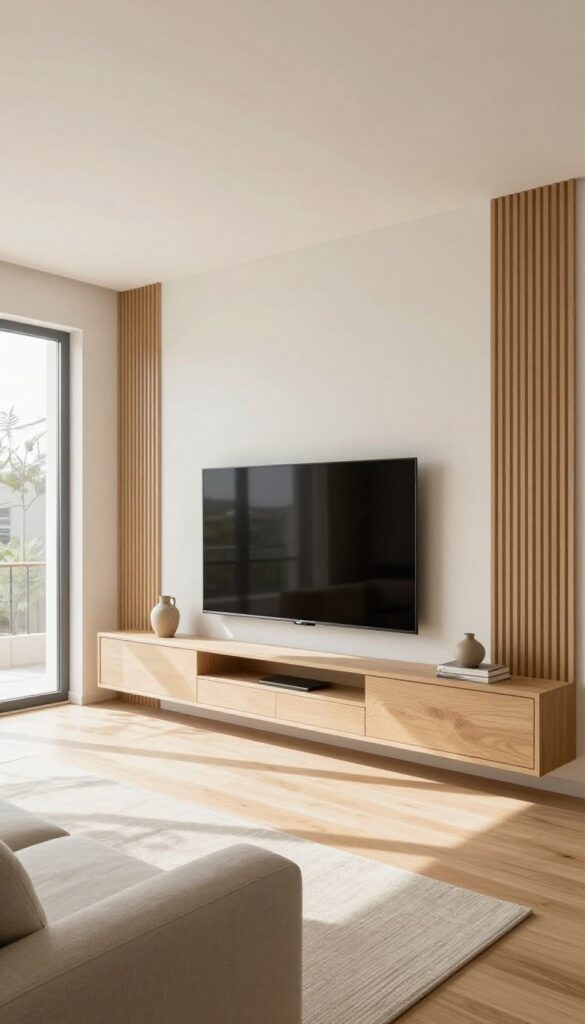
Built-in TV units look expensive because they usually are, but they’re also incredibly functional. They turn an awkward wall into a full storage and display system. When done right, the TV almost disappears into the design.
I’ve seen rooms completely transformed by a built-in, especially when storage was already an issue. It’s one of those upgrades that feels custom and intentional, even in small homes.
Why This Works
Built-ins use vertical space efficiently while keeping everything visually aligned. They reduce clutter by giving everything a designated spot. The TV becomes part of the wall instead of an add-on.
How to Do It
- Frame the TV area first
- Add closed cabinets below for storage
- Use open shelving sparingly
- Keep symmetry in mind
Style & Design Tips
Paint the unit the same color as the wall for a seamless look. Use subtle texture or wood accents to avoid a flat appearance. Avoid overcrowding shelves with decor.
Pro Tip or Budget Hack
You can fake a built-in look using IKEA cabinets and custom trim. Paint everything the same color and it instantly looks higher-end.
4. TV Unit With Vertical Slat Panels
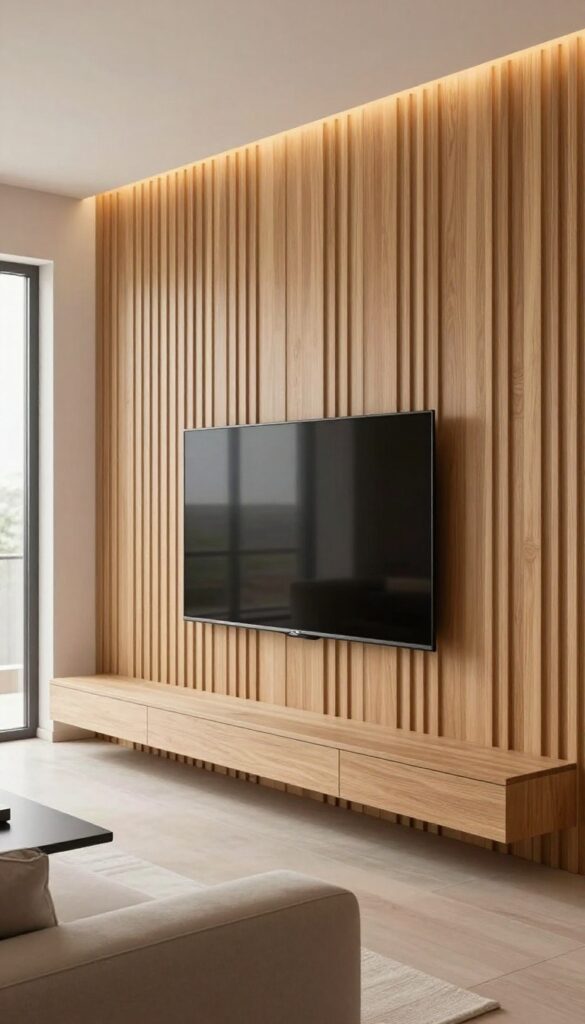
Slat panel designs add texture without overwhelming the room. They’re modern, stylish, and surprisingly versatile. This look works especially well if you want your TV area to feel like a design feature, not just a media zone.
I added slats behind a TV once purely for aesthetics, and it ended up improving the acoustics too. It’s one of those upgrades that feels more premium than it actually is.
Why This Works
Vertical lines draw the eye upward, making ceilings appear taller. The texture breaks up large blank walls while keeping things clean. It also helps visually separate the TV from the rest of the room.
How to Do It
- Install slats evenly with small gaps
- Mount the TV slightly forward
- Use matching tones for a cohesive look
- Add subtle backlighting if desired
Style & Design Tips
Light wood tones feel warm and modern, while darker stains add drama. Avoid mixing too many finishes nearby or it can look busy. Keep surrounding furniture simple.
Pro Tip or Budget Hack
Use MDF slats or peel-and-stick panels instead of solid wood to cut costs without sacrificing the look.
5. Floating Shelves Around the TV
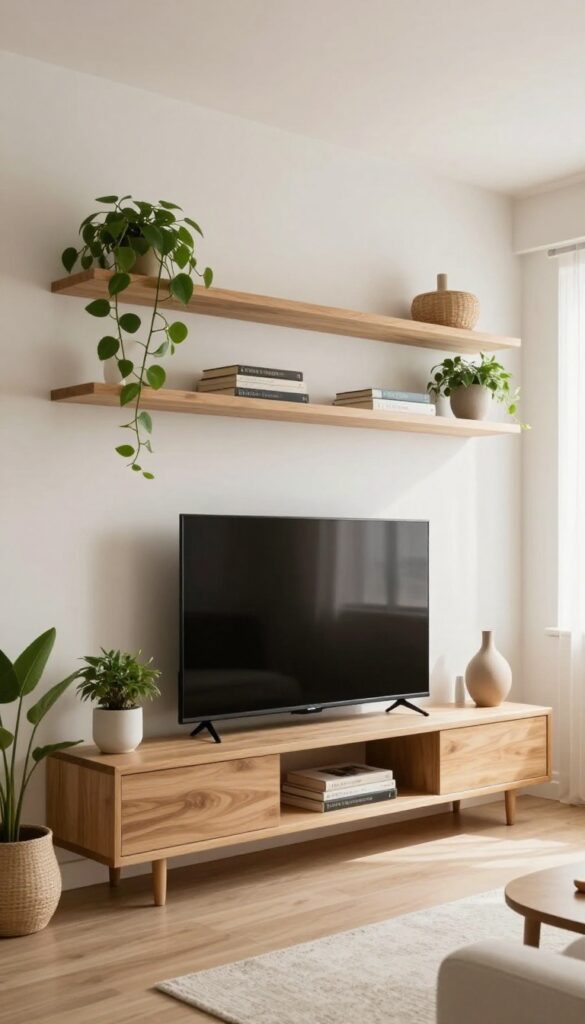
Floating shelves are a great middle ground between minimal and functional. They give you storage without the heaviness of cabinets. When styled right, they can frame the TV beautifully.
I used to overdo shelves until I realized less actually looks better. A few well-placed pieces beat a crowded display every time.
Why This Works
Shelves create visual balance and allow flexibility. You can adjust decor seasonally without moving furniture. They also help soften the sharp rectangle of a TV.
How to Do It
- Install shelves at varying heights
- Keep weight evenly distributed
- Mix decor with functional items
- Leave breathing room around the TV
Style & Design Tips
Stick to a limited color palette to avoid clutter. Use a mix of vertical and horizontal objects for balance. Avoid stacking too many small items.
Pro Tip or Budget Hack
IKEA Lack shelves are affordable and easy to customize with paint or wood wrap for a custom look.
6. TV Unit With Hidden Storage
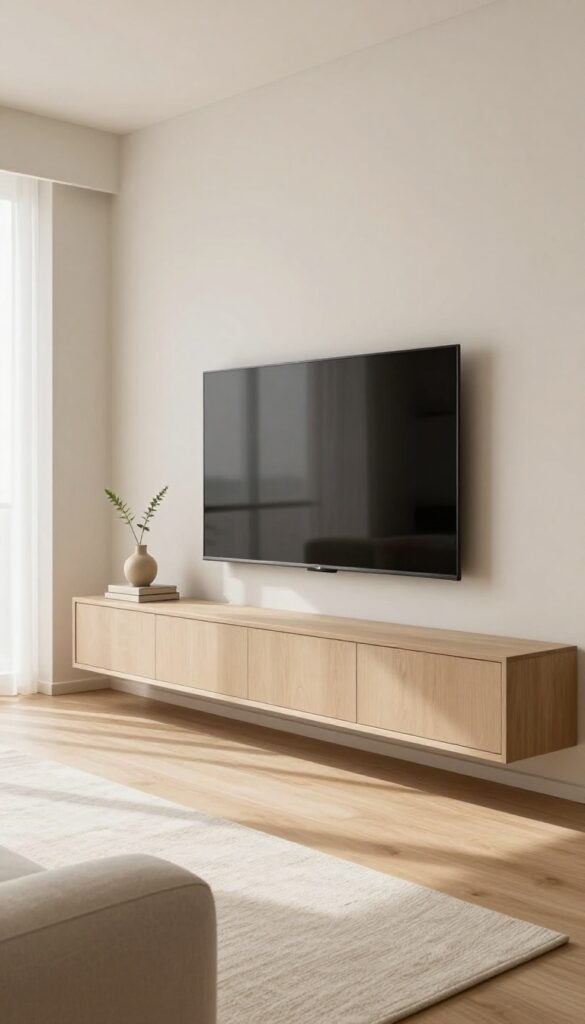
Hidden storage is a lifesaver if you hate visual mess. Remote controls, cables, game consoles, and random items disappear instantly. It keeps the living room looking calm even on busy days.
Once I switched to closed storage, cleaning became easier and faster. Everything finally had a place.
Why This Works
Clutter breaks visual flow, even if it’s minimal. Hidden storage keeps attention on the design instead of the stuff. It also makes small rooms feel more organized.
How to Do It
- Choose push-to-open cabinets
- Use cable management boxes
- Label inside storage sections
- Keep frequently used items accessible
Style & Design Tips
Flat-front cabinets look the most modern. Neutral colors age better than trendy shades. Avoid glossy finishes if fingerprints bother you.
Pro Tip or Budget Hack
Use fabric storage bins inside cabinets to organize cables and accessories without spending extra on custom dividers.
7. Corner TV Unit for Small Living Rooms
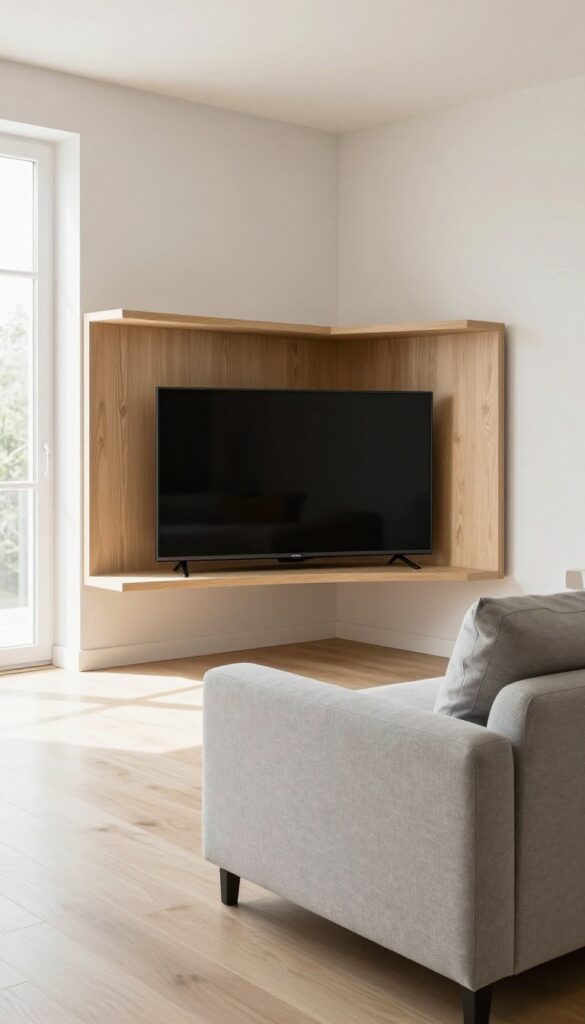
Corner TV units are underrated but incredibly practical. They make use of awkward space and free up the main walls. This is especially helpful in apartments or narrow rooms.
I used one in a rental once and it completely changed the layout options. Suddenly the room felt less boxed in.
Why This Works
Corners often go unused, so placing the TV there maximizes layout flexibility. It also allows better furniture placement without blocking walkways.
How to Do It
- Choose a unit with angled backing
- Keep height proportional to seating
- Angle the TV slightly for comfort
- Use corner shelves for balance
Style & Design Tips
Look for designs with clean edges and open shelving. Avoid bulky corner units that overpower the space. Light colors work best here.
Pro Tip or Budget Hack
A standard TV stand can work in a corner if you add a triangular top panel to customize the fit.
8. TV Unit With Integrated Lighting
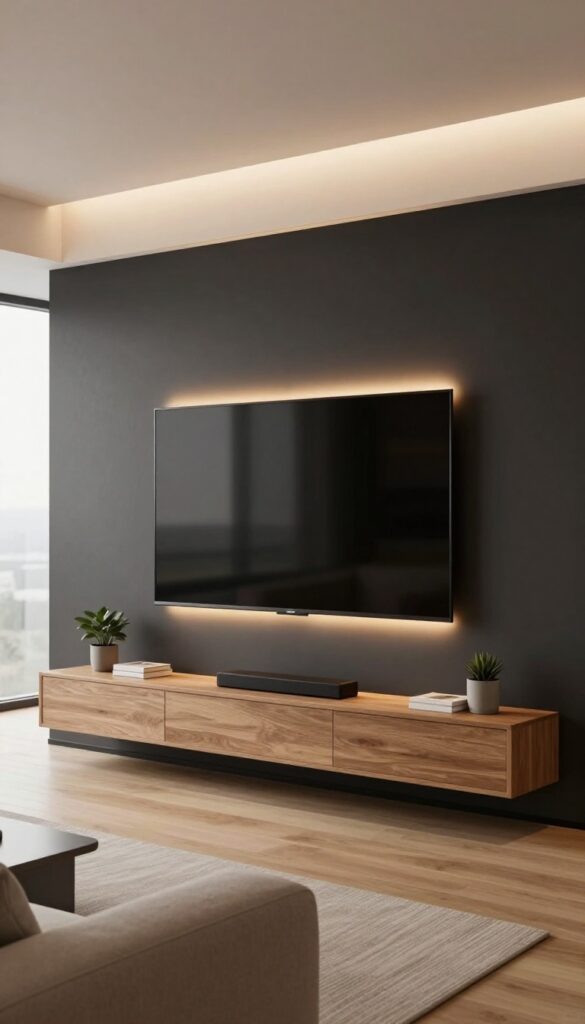
Lighting changes everything, especially around a TV. Integrated lighting adds depth and makes the setup feel intentional rather than accidental. It’s subtle but incredibly effective.
I was skeptical at first, but once I added soft backlighting, movie nights felt instantly better. It also reduced eye strain more than I expected.
Why This Works
Backlighting creates contrast without glare. It highlights the unit’s shape and adds ambiance without overpowering the room.
How to Do It
- Install LED strips behind the unit
- Use warm or neutral tones
- Hide wires carefully
- Keep brightness adjustable
Style & Design Tips
Avoid colored lights unless you want a bold look. Soft white or warm tones work best long-term. Keep lighting subtle, not dramatic.
Pro Tip or Budget Hack
USB-powered LED strips are affordable and easy to install without professional help.
9. Mixed Material TV Unit
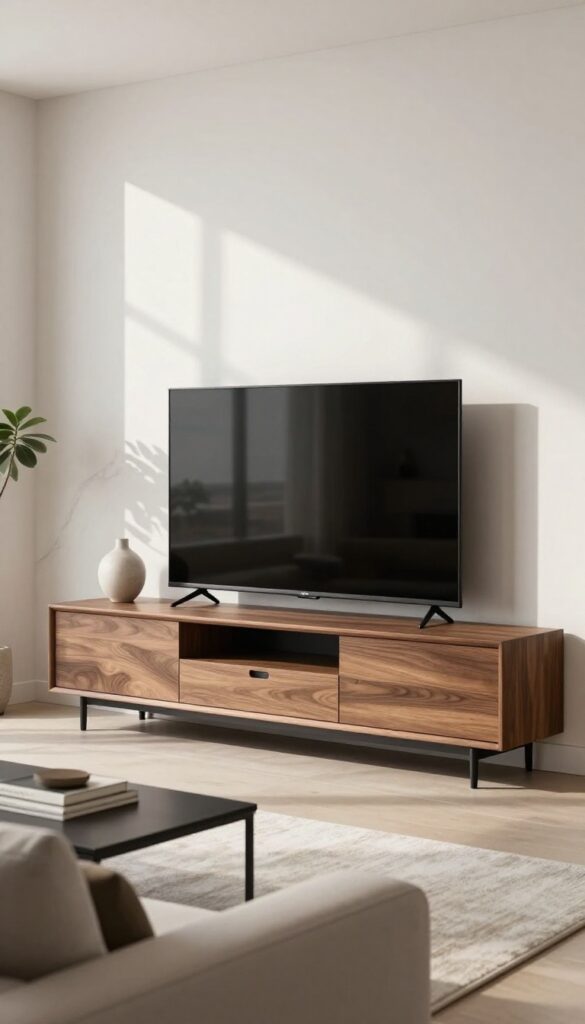
Mixing materials adds personality and depth. A combination of wood, metal, and stone creates a layered, modern look that feels custom. It’s perfect if plain designs feel too flat.
I’ve always liked units that feel collected rather than manufactured. Mixed materials do that naturally without trying too hard.
Why This Works
Different textures create contrast and visual interest. It prevents the TV area from looking one-dimensional. The mix also allows flexibility with decor.
How to Do It
- Pair wood with matte metal
- Add stone or marble accents sparingly
- Keep colors within one palette
- Balance heavy and light elements
Style & Design Tips
Stick to two or three materials max. Too many textures can look messy. Use metal sparingly to avoid an industrial feel.
Pro Tip or Budget Hack
Use peel-and-stick stone or wood panels to fake high-end materials without the cost.
Final Thoughts
A modern TV unit does more than hold a screen. It shapes how the entire living room feels and functions. Small choices in layout, storage, and finish can completely change the vibe of the space.
The best setups always balance style with practicality. Once you find that sweet spot, the room just works better, and everything feels more intentional without trying too hard.