7 Boys Bunk Bed Bedroom Ideas That Feel Cool and Fun
Bunk beds solve a space problem while creating structure in shared bedrooms. They change how a room gets used without demanding extra square footage or complicated furniture setups.
When done right, they also become the visual anchor of the space instead of something you’re trying to hide. That’s where smart design choices make all the difference.
Most bunk bed rooms fail because they’re treated like temporary setups instead of real bedrooms.
A little intention goes a long way here, especially when storage, layout, and personality are handled thoughtfully.
These ideas lean practical first, then layer in style so the room actually works long term.
1. Built-In Bunk Beds With Storage Drawers
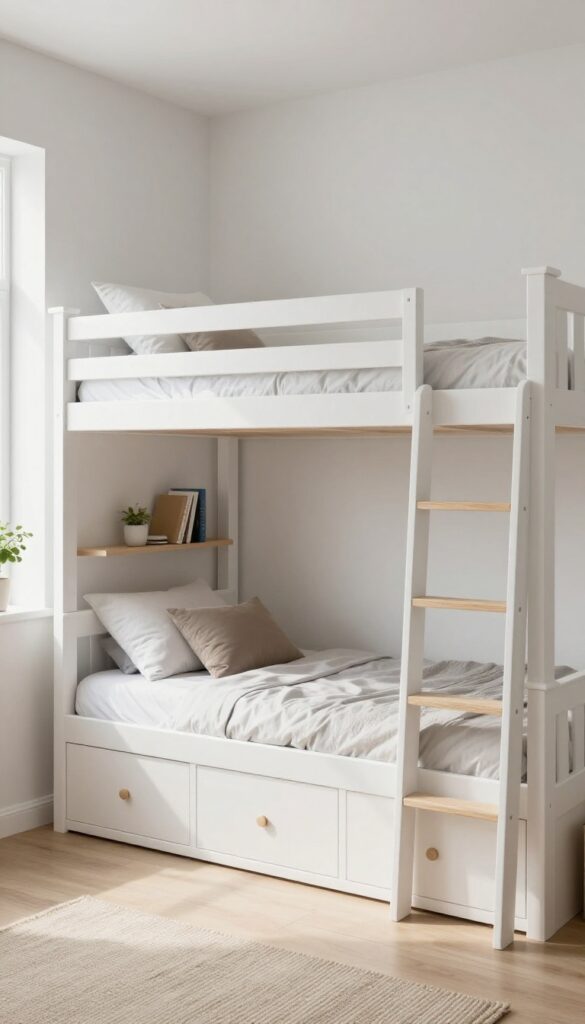
Built-in bunks solve two problems at once: wasted wall space and constant clutter. Instead of squeezing a bulky frame into the room, the bed becomes part of the architecture.
This works especially well in smaller bedrooms where floor space disappears fast.
I’ve always liked this setup because it feels permanent and calm rather than chaotic. The built-in look also helps the room feel more custom, even if the budget is pretty reasonable.
When storage drawers are included underneath, you eliminate the need for extra dressers that usually crowd the room.
Why This Works
Built-ins create visual order, which is huge in shared kids’ rooms. Everything has a place, and the bed doesn’t dominate the room the way freestanding bunks often do.
Storage underneath keeps toys, clothes, or bedding out of sight but still easy to access.
How to Do It
- Measure the full wall carefully before designing the bunks
- Use deep drawers instead of shallow cubbies for flexibility
- Keep the ladder or stairs integrated into the structure
- Choose durable finishes that handle daily wear
Style & Design Tips
Stick with neutral wood tones or painted finishes that won’t feel dated in a year. White, natural oak, or soft gray all age well and work with changing decor. Avoid overly themed designs that kids outgrow fast.
Pro Tip or Budget Hack
If custom work isn’t in the budget, combine two sturdy bunk frames with a DIY drawer base. It looks built-in once painted the same color as the wall and saves a surprising amount of money.
2. Loft-Style Bunk With Study or Play Area Below
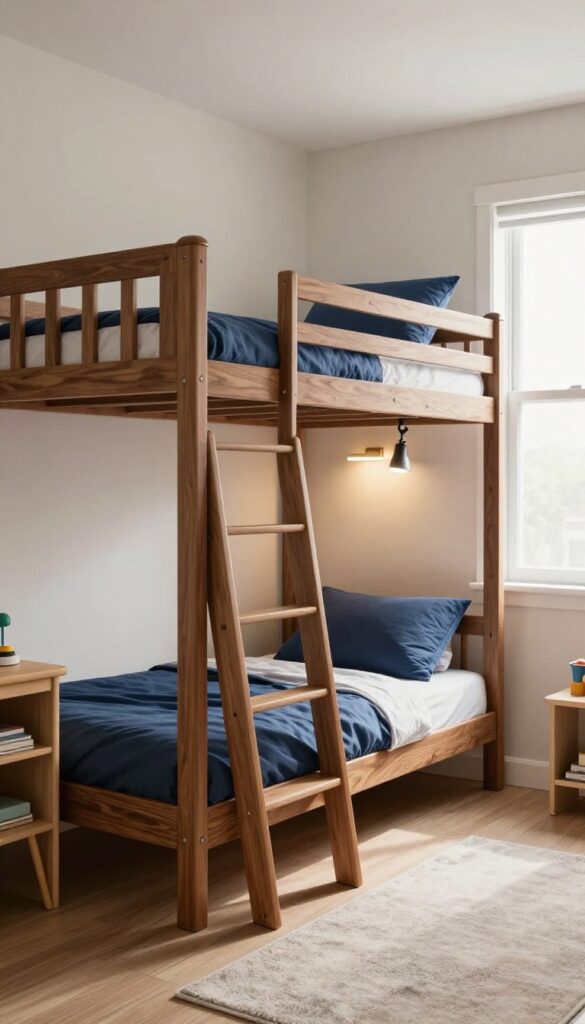
Loft bunks work best when floor space is limited but ceiling height is generous. Lifting the bed opens up a functional zone underneath, which can be used for homework, gaming, or creative play. This layout keeps everything contained without feeling cramped.
I’ve seen this work especially well for boys who like having a “zone” of their own. The space underneath becomes their territory, which helps with organization and ownership. It also keeps messes from spreading across the room.
Why This Works
Vertical space is often ignored, but it’s the key to making small rooms work harder. By stacking functions, the room feels intentional instead of crowded. It also helps separate sleep from play, which surprisingly improves bedtime routines.
How to Do It
- Choose a sturdy loft bed rated for daily use
- Install proper lighting underneath the bunk
- Add a desk, shelf unit, or soft seating below
- Make sure ladder placement doesn’t block walkways
Style & Design Tips
Use darker tones or wood finishes for the bed to ground the space visually. Contrast the lower area with lighter walls so it doesn’t feel boxed in. Soft rugs or wall panels help absorb noise too.
Pro Tip or Budget Hack
Clamp-on reading lights and plug-in sconces save money and avoid hardwiring. They also make the space feel more intentional without extra work.
3. Twin-Over-Twin With a Fun Color Theme
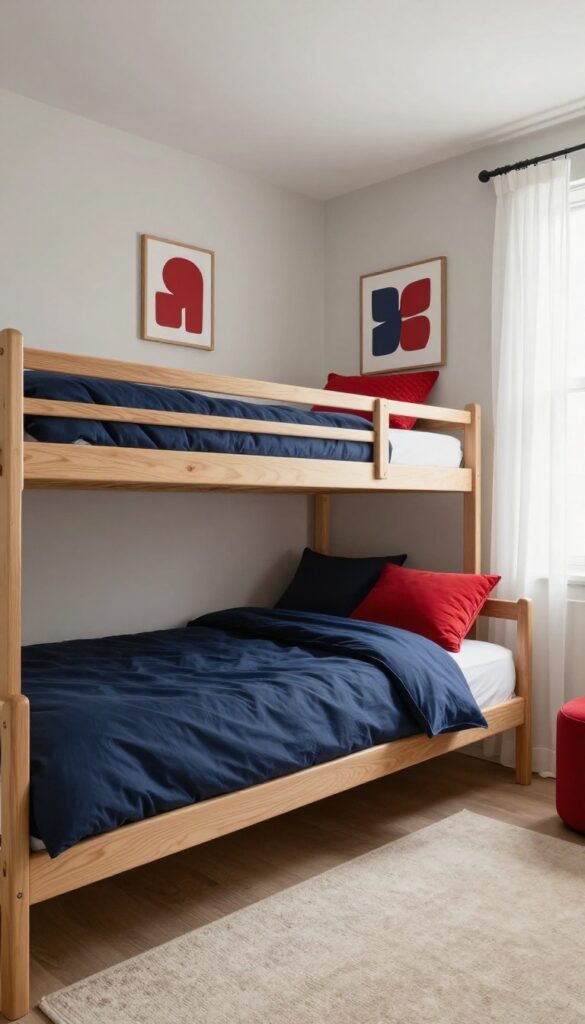
Color does a lot of heavy lifting in kids’ rooms, especially when furniture stays simple. A twin-over-twin bunk gives you symmetry, which makes color choices feel more balanced. This setup works well when both kids share the same style preferences.
The key here is restraint. Too many colors turn the room chaotic fast, and that usually leads to redecorating sooner than planned. Keeping a tight color palette makes the space feel put together even as tastes change.
Why This Works
Matching bed sizes create visual calm, which helps the room feel bigger. Color becomes the personality instead of the furniture itself. It’s also easier to update later with new bedding or wall decor.
How to Do It
- Pick one main color and one accent color
- Use matching bedding with slight variations
- Keep walls neutral to balance bold accents
- Add color through pillows, art, or rugs
Style & Design Tips
Blues, greens, and muted reds tend to age better than neon shades. Avoid themed prints that lock the room into one phase. Solid colors with texture usually last longer.
Pro Tip or Budget Hack
Buy neutral bedding and rotate color using pillow covers and throws. It’s the cheapest way to refresh the room without replacing everything.
4. Bunk Beds With Built-In Desk Units
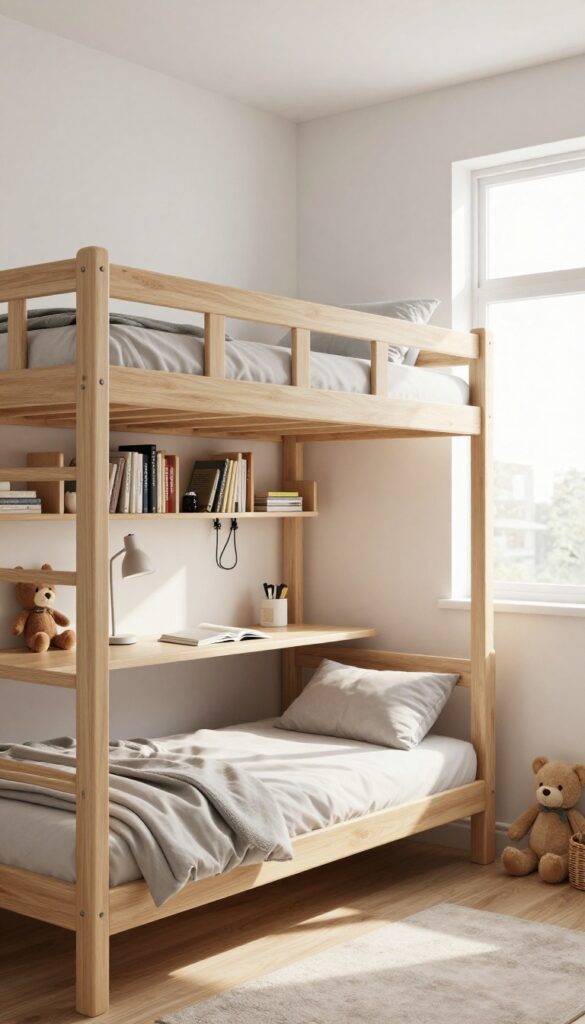
Combining sleeping and study space makes sense once kids hit school age. A bunk bed with a built-in desk keeps everything organized in one footprint. It also helps create a routine around homework and downtime.
I like this setup because it reduces distractions. The desk feels intentional rather than temporary, which makes it easier to keep organized. It’s also a lifesaver in smaller homes where a separate desk isn’t realistic.
Why This Works
Kids naturally focus better when their workspace is defined. Having the desk attached to the bed removes guesswork about where things go. It also keeps cords, books, and supplies contained.
How to Do It
- Choose a bunk with an integrated or attachable desk
- Add task lighting directly above the workspace
- Use wall organizers instead of desk clutter
- Keep cables managed with clips or sleeves
Style & Design Tips
Stick with clean lines and neutral finishes for longevity. Avoid bulky desks that eat into legroom. Floating shelves above the desk add storage without heaviness.
Pro Tip or Budget Hack
If the bed doesn’t include a desk, mount a simple wall-mounted tabletop underneath. It costs less and gives you more flexibility.
5. Bunk Beds With Storage Stairs
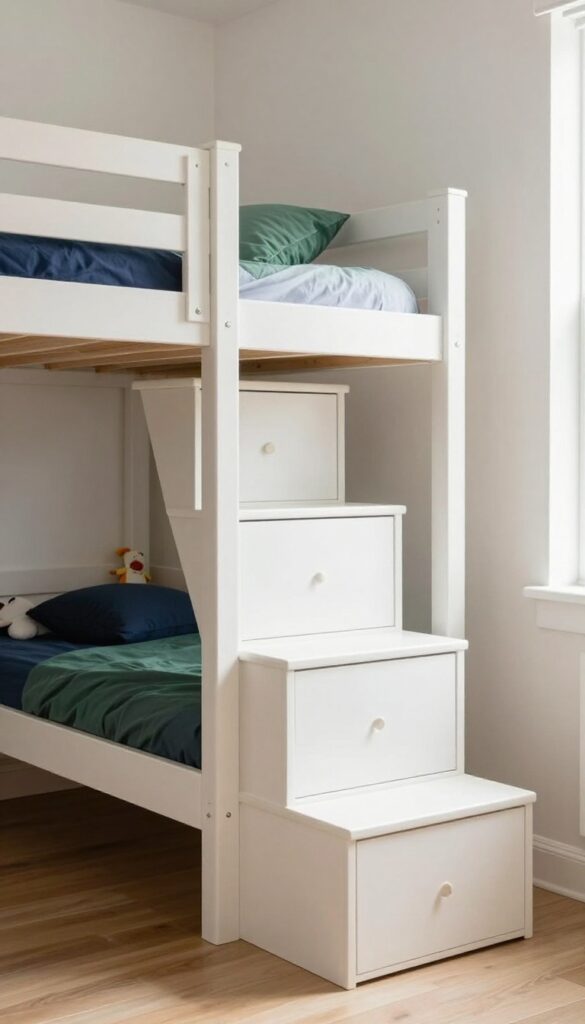
Storage stairs are one of those features that feel unnecessary until you live with them. Each step doubles as a drawer, which means no wasted space and fewer toy piles. They also feel safer than ladders for younger kids.
This setup works especially well in shared rooms where floor storage disappears quickly. The stairs become part of the room’s flow instead of an obstacle.
Why This Works
Every step does double duty, which is ideal in compact rooms. The built-in nature of the stairs also adds structure and visual balance. Parents usually appreciate the safety factor too.
How to Do It
- Choose wide steps with deep drawers
- Make sure drawer slides are soft-close
- Use lower drawers for toys and upper for clothes
- Secure the unit firmly to the wall
Style & Design Tips
Keep stair faces clean and simple. Avoid open cubbies, which look messy fast. Painted finishes tend to hold up better than raw wood in high-use areas.
Pro Tip or Budget Hack
If full stair units are too expensive, add rolling storage bins under a ladder bunk. It’s not as sleek, but it gets the job done.
6. Bunk Beds With Curtains or Privacy Panels
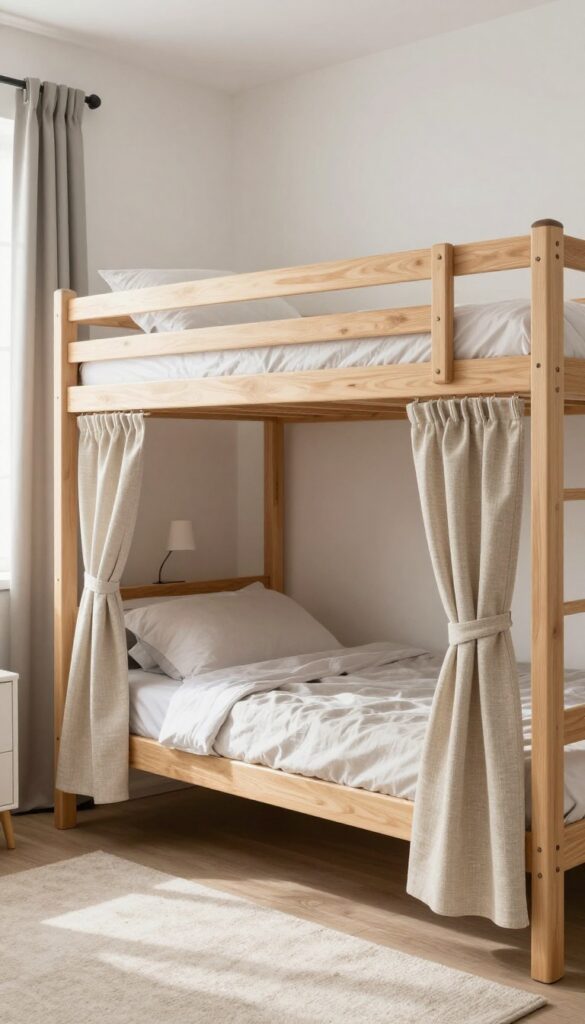
Privacy matters more than people think, especially as kids get older. Curtains or panels give each child a sense of personal space without needing separate rooms. It’s a small change that makes a big difference.
I’ve seen this calm sibling tension more than once. Everyone likes having a little retreat, even in a shared room. It also makes bedtime less chaotic.
Why This Works
Visual separation helps kids feel ownership over their space. Curtains soften the look of bunk beds and add texture. They’re also easy to swap out as styles change.
How to Do It
- Install curtain rods or tracks under the top bunk
- Choose breathable, washable fabric
- Keep colors neutral or lightly patterned
- Secure edges so they don’t tangle at night
Style & Design Tips
Linen-look fabrics feel more grown-up than cartoon prints. Stick with solids or subtle patterns for longevity. Matching curtains on both bunks keeps things balanced.
Pro Tip or Budget Hack
Use tension rods instead of mounted hardware. They’re cheaper, removable, and renter-friendly.
7. Themed Bunk Rooms That Still Feel Grown-Up
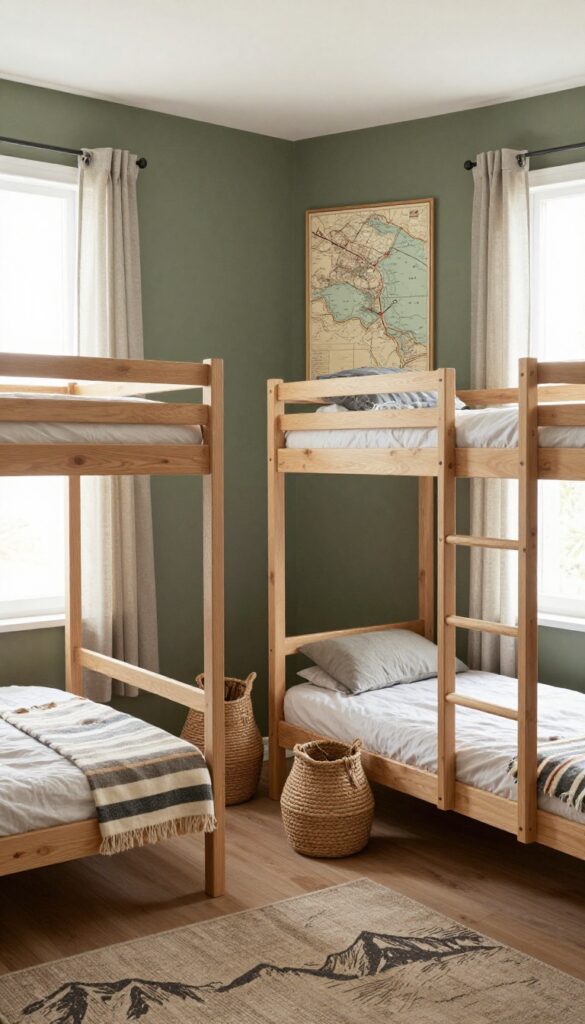
Themes don’t have to mean cartoon overload. A well-done theme feels subtle and flexible while still being fun. Think adventure, sports, or modern industrial rather than characters.
This approach works best when the theme is expressed through color, texture, and accessories instead of furniture shapes. That way the room grows with the kids instead of needing a redo every year.
Why This Works
Themes give the room identity without locking it into a phase. When done right, they feel intentional rather than gimmicky. It also makes decorating easier because choices become more focused.
How to Do It
- Pick one central theme and stick to it
- Use wall art and textiles to reinforce it
- Keep furniture simple and neutral
- Avoid overly literal decor pieces
Style & Design Tips
Industrial themes work great with metal bunks and wood tones. Adventure themes pair well with maps, stripes, and muted colors. Less is always more here.
Pro Tip or Budget Hack
Wall decals or removable wallpaper give you the themed look without long-term commitment. They’re easy to update as interests change.
Final Thoughts
Bunk beds don’t have to feel temporary or chaotic when they’re planned properly. A good layout, smart storage, and thoughtful styling turn them into a long-term solution instead of a compromise. The goal is always function first, then personality.
I’ve learned that the best kids’ rooms are the ones that grow with them instead of fighting change. When the foundation is solid, everything else becomes easier to adjust over time. That’s what makes these ideas worth using.