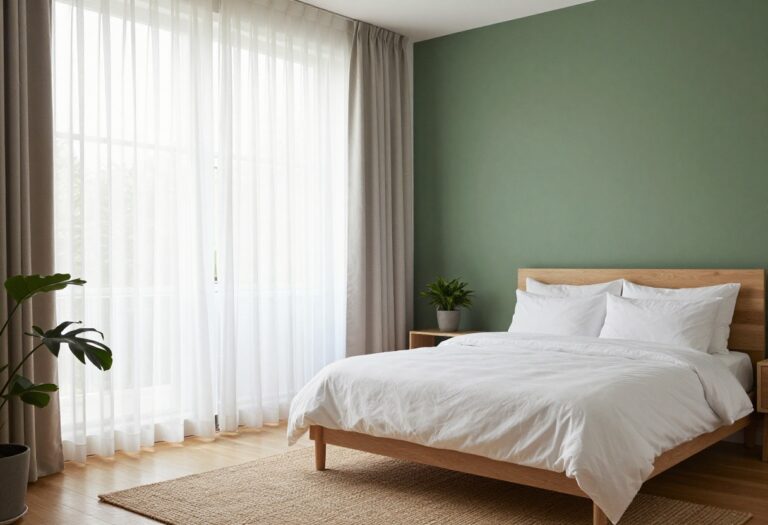
8 Boys Loft Bedroom Ideas That Save Floor Space
Floor space disappears fast in kids’ rooms, especially once a bed, desk, and storage all compete for the same few square feet.
A loft setup changes that equation without changing the room’s footprint. It’s one of those rare layout moves that actually solves a problem instead of just hiding it.
Most people assume loft beds are only for tiny rooms or college dorms, but that’s not really true. They work just as well in average-sized bedrooms when you want better flow or more function.
The trick is choosing the right style and using the space underneath in a way that actually makes daily life easier.
Below are the loft bedroom ideas I’ve seen work best for boys, especially when space is limited but energy levels are not.
1. Desk-Under Loft for Homework and Gaming
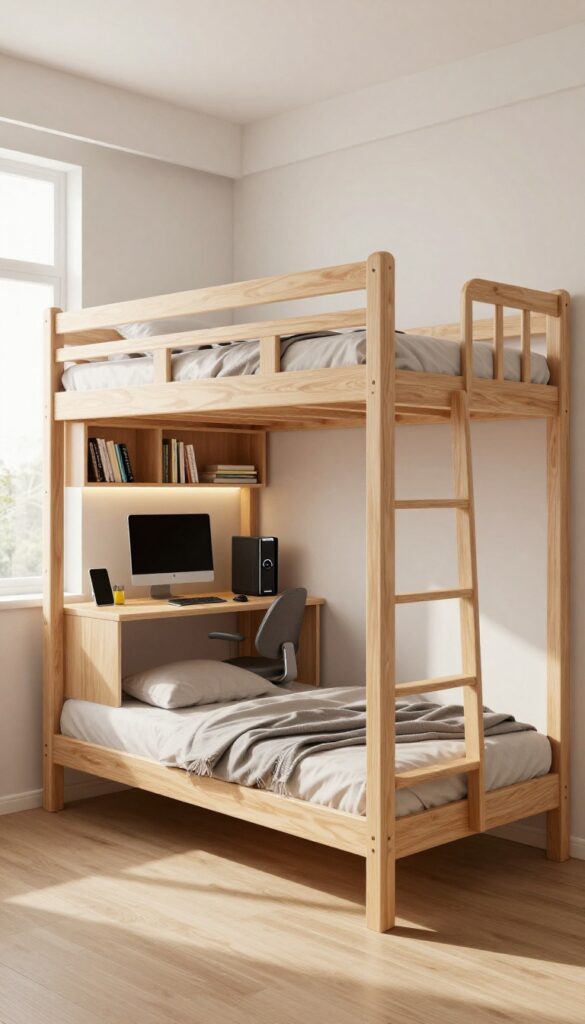
The biggest complaint I hear from parents is that there’s never a good spot for homework that doesn’t take over the whole room.
A loft bed with a built-in desk underneath solves that in one move. It keeps the bed off the floor while carving out a dedicated zone for schoolwork, gaming, or drawing.
I’ve seen this setup work especially well for boys who like having their own little “command center.”
Everything stays in one place, and the desk doesn’t end up buried under toys because it feels like its own zone. It also keeps distractions low since the bed isn’t right next to the desk.
Why This Works
The vertical layout uses height instead of floor width, which is the biggest win in smaller rooms. Separating sleep and work zones helps with focus, even for kids who swear they don’t care about organization. It also makes the room feel more grown-up without feeling boring.
How to Do It
- Choose a loft bed with at least 48 inches of clearance underneath
- Use a compact desk that fits wall-to-wall
- Add a slim chair that tucks in completely
- Mount a small shelf above the desk for books or supplies
Style & Design Tips
Stick with neutral bed frames if you want the room to age well over time. Wood tones or matte black frames work with almost any decor. Avoid bulky desks with drawers on both sides because they eat legroom fast.
Pro Tip or Budget Hack
If the loft doesn’t include a desk, use a simple tabletop and wall-mounted brackets. It’s cheaper, saves space, and you can customize the height perfectly.
2. Storage Loft With Built-In Drawers
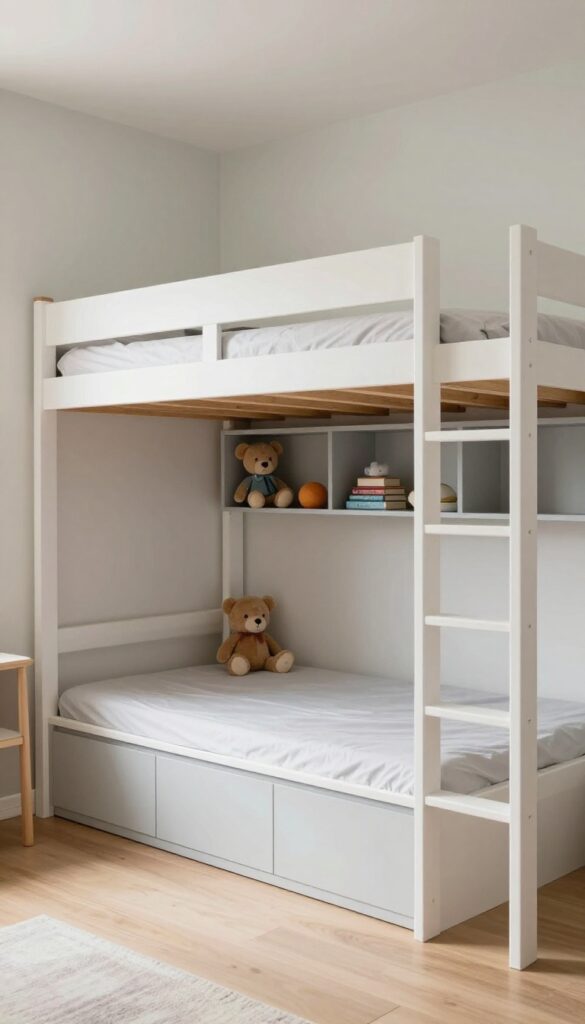
Kids accumulate stuff faster than closets can handle it, and most of it ends up on the floor. A storage-focused loft bed solves that problem without adding extra furniture. Drawers, cubbies, or cabinets built into the base give everything a home.
This option works especially well in shared rooms where floor space disappears quickly. I’ve seen it turn chaotic rooms into something that actually stays clean for more than a day. That alone makes it worth considering.
Why This Works
Storage under the bed uses space that normally goes to waste. It keeps clutter out of sight while still being easy for kids to access. When storage is built-in, it also reduces the temptation to overfill the room with extra bins.
How to Do It
- Choose a loft with at least 3–4 large drawers
- Use labeled bins inside drawers for smaller items
- Keep daily-use items at the front
- Store seasonal items toward the back
Style & Design Tips
Go for simple drawer fronts with no heavy detailing. Clean lines make the room feel less busy, even when it’s full of stuff. Light wood or white finishes help keep the room from feeling boxed in.
Pro Tip or Budget Hack
If the loft doesn’t come with storage, slide rolling bins or crates underneath. Add matching labels to make it look intentional instead of improvised.
3. Loft Bed With Lounge Space Underneath
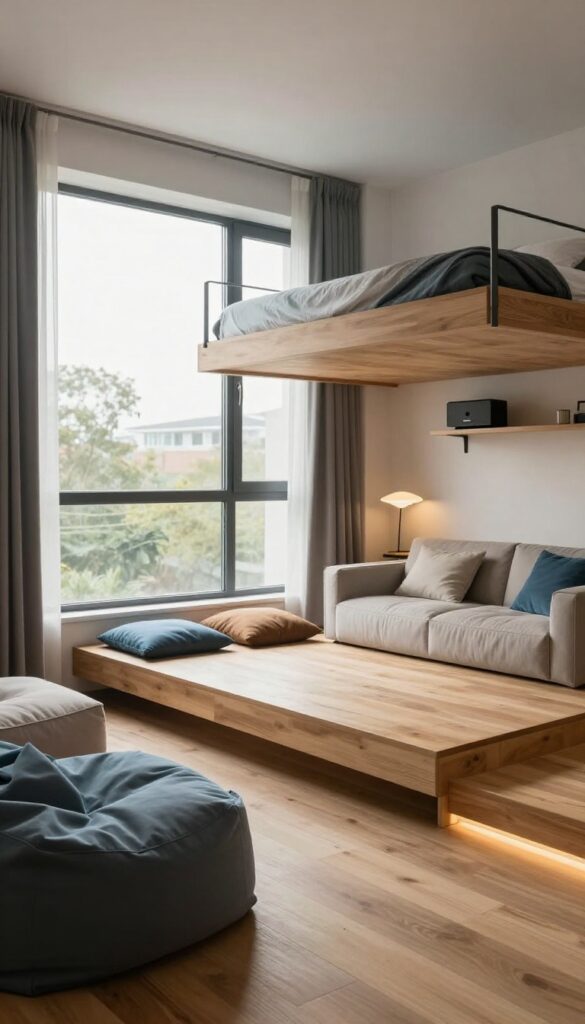
Not every kid wants a desk under their bed, and that’s completely fine. A lounge-style setup creates a relaxed hangout space without taking over the room. Think bean bags, floor cushions, or a small sofa tucked underneath.
This is a great option for boys who like reading, gaming, or just chilling in their own space. It gives them privacy without isolating them completely.
Why This Works
The area under the bed becomes flexible space instead of dead space. It encourages downtime without encouraging mess. Plus, it gives kids a sense of ownership over their room layout.
How to Do It
- Use soft seating that can move easily
- Add a low shelf for books or games
- Keep lighting soft but functional
- Leave enough clearance to sit comfortably
Style & Design Tips
Stick to darker or textured fabrics that hide wear and tear. Avoid oversized furniture that makes the space feel cramped. A simple rug can help define the lounge area visually.
Pro Tip or Budget Hack
Floor cushions and poufs are cheaper than chairs and easier to rearrange. They also grow with the room as needs change.
4. Loft With Wardrobe Underneath
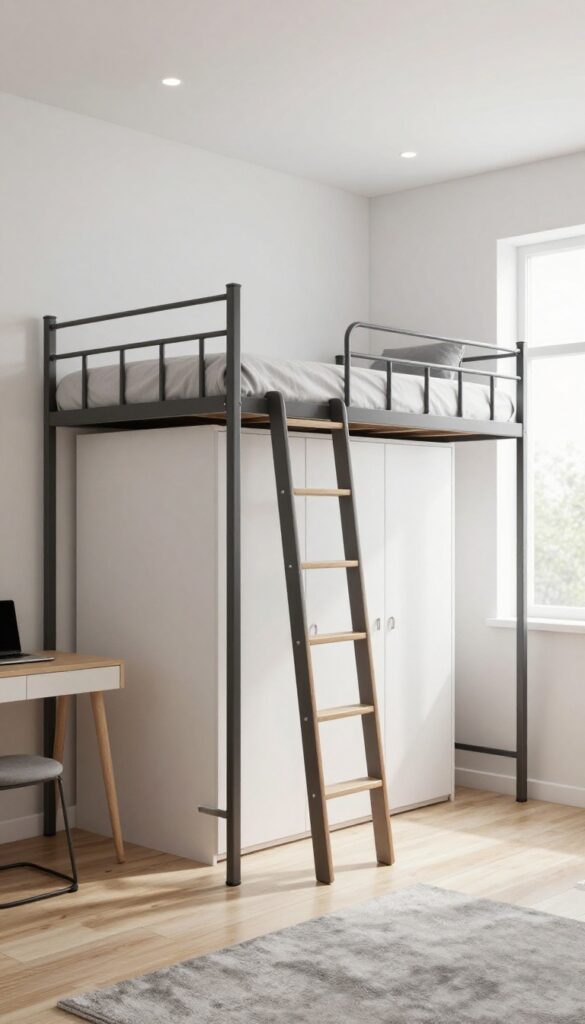
Closets in kids’ rooms are often tiny or awkwardly placed. A loft bed with a wardrobe underneath fixes that by turning vertical space into usable storage. It’s a smart option when floor closets aren’t cutting it anymore.
This setup works especially well for older boys who need space for clothes, sports gear, and shoes. Everything stays organized without needing a bulky dresser.
Why This Works
Combining sleeping and storage zones frees up wall space elsewhere. It also makes getting dressed easier because everything is within arm’s reach. The room instantly feels more functional.
How to Do It
- Choose a loft with hanging space and shelves
- Use slim hangers to maximize room
- Add baskets for socks or accessories
- Keep frequently used items at eye level
Style & Design Tips
Neutral colors keep the wardrobe from feeling heavy. Sliding doors work better than swinging ones in tight rooms. Avoid mirrored doors unless the room has good lighting.
Pro Tip or Budget Hack
Install a tension rod under the loft if built-in closets aren’t an option. It’s cheap, easy, and surprisingly sturdy.
5. Bunk-Style Loft for Shared Bedrooms
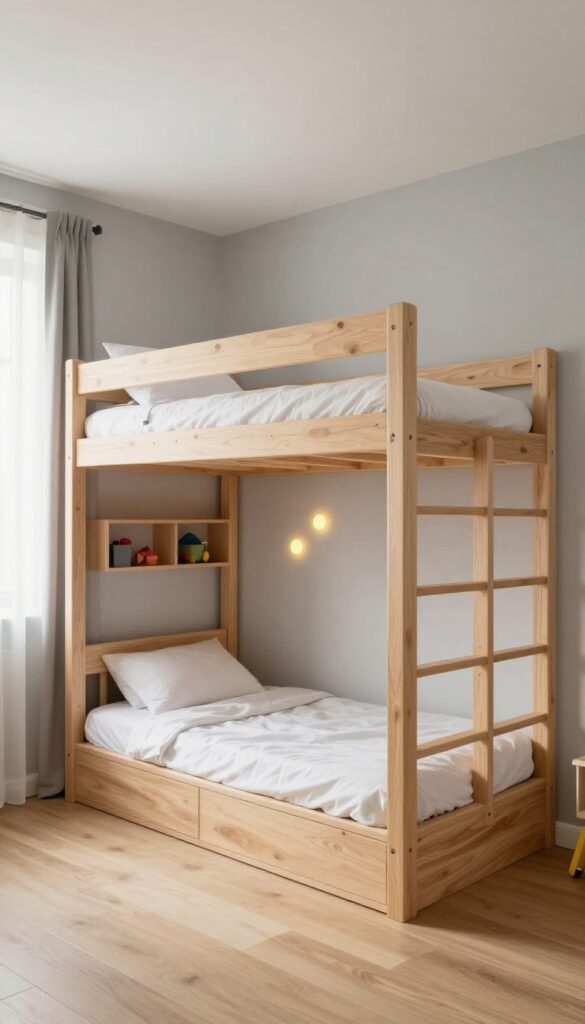
When two kids share a room, floor space disappears fast. A bunk-style loft gives each child their own sleeping zone while keeping the center of the room open. It’s practical without feeling cramped.
This setup works well when kids are close in age and have similar schedules. It also helps avoid arguments over who gets the bigger side of the room.
Why This Works
Stacking beds vertically doubles usable space instantly. It also creates visual separation without needing walls or dividers. That balance makes shared rooms feel more fair.
How to Do It
- Choose a sturdy bunk with guardrails
- Add individual lighting for each bed
- Use under-bed storage for shared items
- Keep the layout symmetrical
Style & Design Tips
Use matching bedding in different colors to avoid arguments. Keep the rest of the decor simple so the room doesn’t feel crowded. Wall-mounted shelves help save space.
Pro Tip or Budget Hack
If buying new bunks isn’t an option, look for modular frames that can convert later. It saves money when the kids outgrow the setup.
6. Loft Bed With Pull-Out Desk
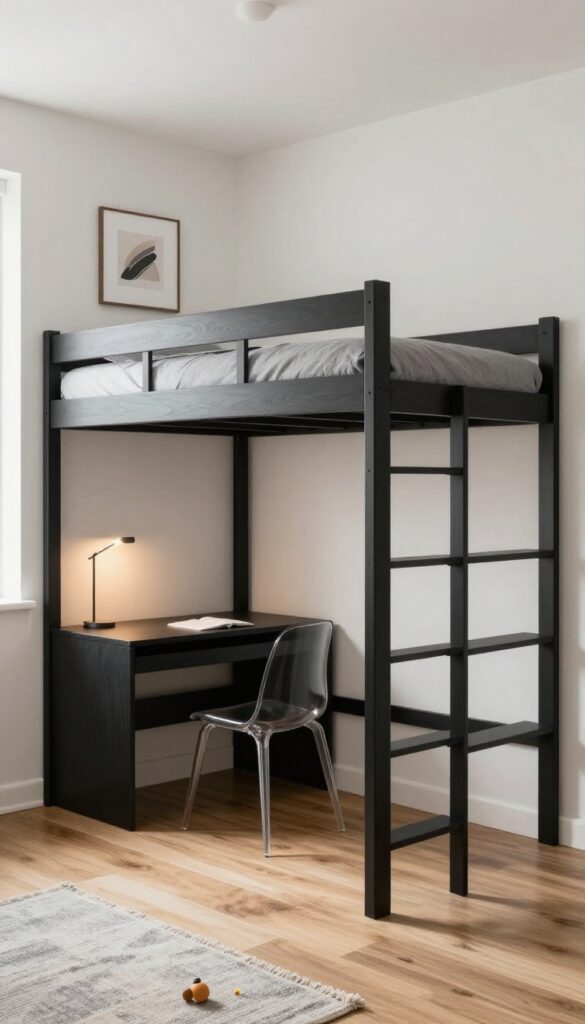
A pull-out desk is perfect for rooms that need flexibility. The desk stays hidden when not in use and slides out only when needed. It’s one of the smartest ways to save space without sacrificing function.
This setup works especially well for younger kids who don’t need a full-time desk yet. It keeps the room open for play while still offering a work surface when necessary.
Why This Works
The room stays visually clean most of the time. It also prevents clutter from piling up since the desk has to be cleared before sliding back in.
How to Do It
- Choose a smooth-glide pull-out mechanism
- Keep desk supplies minimal
- Use a lightweight chair that stores easily
- Secure cords to avoid tangling
Style & Design Tips
Match the desk finish to the bed frame for a cohesive look. Avoid dark colors if the room is small, as they can make the space feel tighter.
Pro Tip or Budget Hack
A rolling cart can act as a mobile desk if a built-in option isn’t available. Just roll it out when needed and tuck it away after.
7. Low Loft for Younger Boys
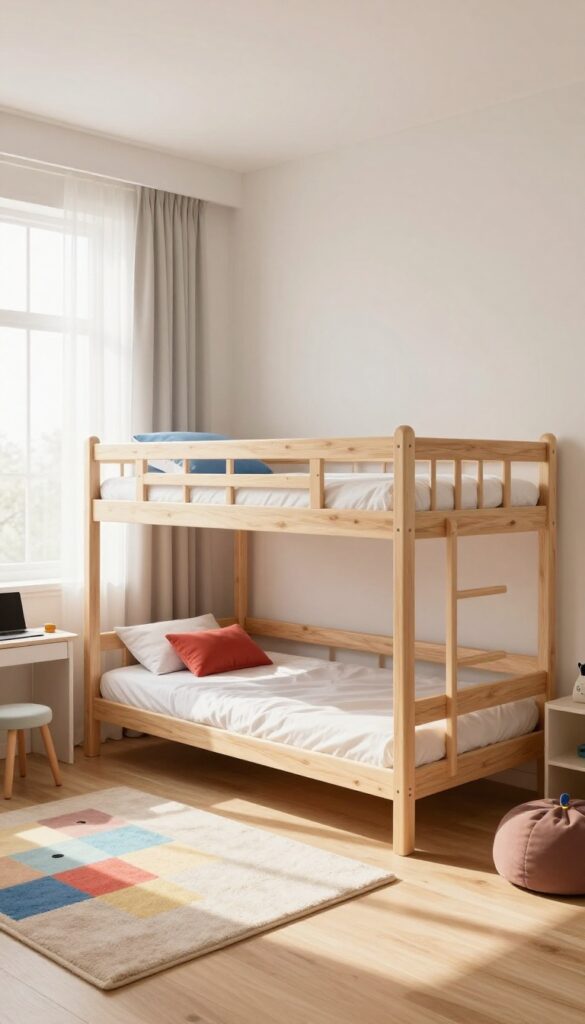
Not every loft has to be tall. A low loft bed creates usable space underneath while keeping everything accessible and safe. It’s ideal for younger kids who aren’t ready for a full-height setup.
This option still saves floor space but feels less intimidating. It also makes bedtime routines easier since climbing isn’t a big deal.
Why This Works
The lower height reduces safety concerns while still opening up floor space. It’s a good transitional option before moving to a higher loft later.
How to Do It
- Choose a loft under 4 feet tall
- Use soft flooring underneath
- Keep storage low and open
- Avoid sharp edges
Style & Design Tips
Bright colors work well here without overwhelming the room. Keep the design playful but not overly themed so it grows with the child.
Pro Tip or Budget Hack
Use open bins instead of drawers to save money and make cleanup faster for younger kids.
8. Loft With Built-In Shelving Wall
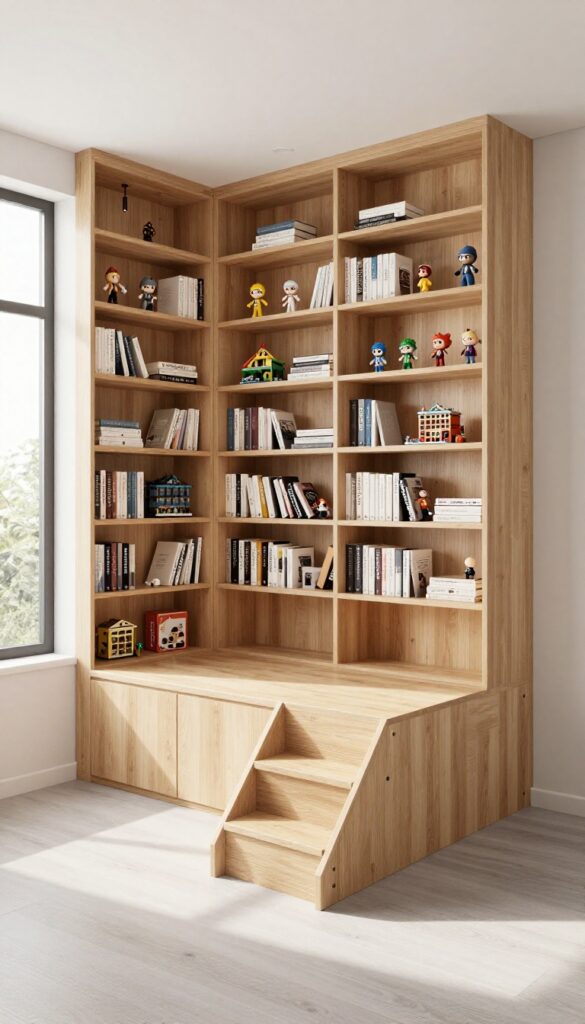
A loft combined with a shelving wall is perfect for boys who love books, collectibles, or building sets. It keeps everything organized without adding extra furniture. The room feels structured instead of cluttered.
This setup works especially well in narrow rooms where wall space matters more than floor space.
Why This Works
Vertical shelving maximizes storage without shrinking the room. It also encourages kids to keep things organized because everything has a visible place.
How to Do It
- Use adjustable shelves for flexibility
- Mix open and closed storage
- Anchor shelves securely
- Keep heavier items lower
Style & Design Tips
Stick to one or two colors to avoid visual overload. Open shelves look best when not overfilled, so leave some breathing room.
Pro Tip or Budget Hack
Wall-mounted cube shelves are cheaper than custom units and easy to rearrange later.
Final Thoughts
Loft beds aren’t just about squeezing furniture into a small room. They’re about making the space work smarter without feeling crowded or chaotic. When done right, they create room to move, think, and grow.
The best setup always depends on how the room is actually used, not how it looks in photos. Pick the option that fits your kid’s habits, not just the trend, and you’ll end up with a space that finally feels balanced.