7 Blackout Curtain Bedroom Ideas for Better Sleep
A soft thud lands against the window frame as heavy fabric settles into place, instantly muting the streetlight glow that always sneaks through at night.
The room feels calmer, darker, and somehow more intentional without a single piece of furniture moving. That small shift changes how the entire space behaves after sunset.
Sleep improves when a bedroom works with your body instead of against it. Light leaks, visual clutter, and awkward window setups quietly sabotage rest more than most people realize.
A few smart curtain choices can fix that without turning the room into a cave.
Blackout curtains aren’t just practical anymore. They’ve turned into one of those rare décor upgrades that solve a real problem while making the room look more pulled together.
1. Floor-to-Ceiling Blackout Curtains for a Hotel-Style Sleep Setup
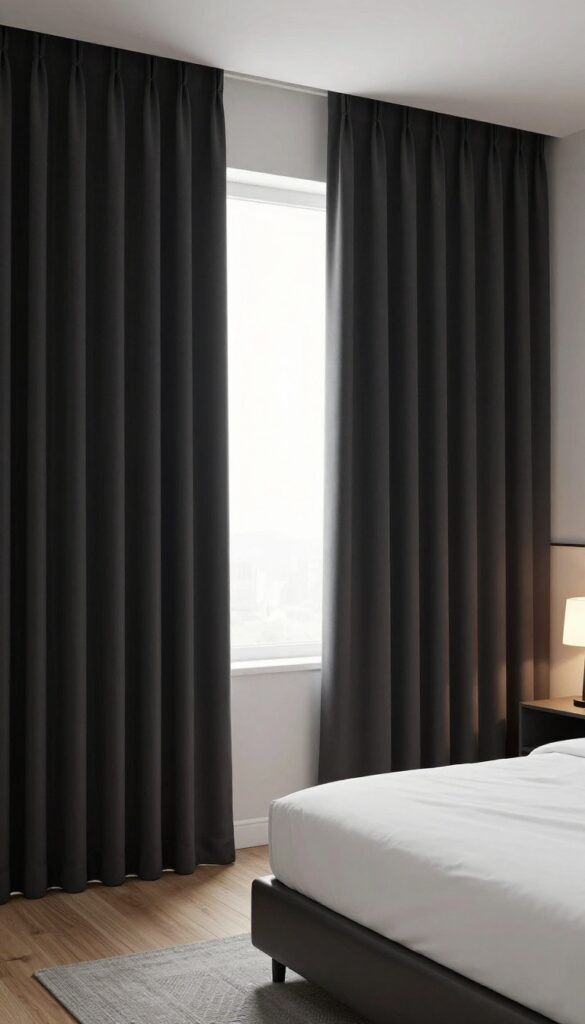
Most bedrooms feel shorter and busier than they need to because the eye keeps catching visual interruptions.
Windows that stop halfway up the wall break the vertical flow and make the room feel restless at night.
Floor-to-ceiling blackout curtains instantly calm that chaos and create a cocooned, hotel-like atmosphere that feels intentional and indulgent.
This idea works especially well if your bedroom struggles with outside light or early morning sun. Tall panels block light more effectively while making ceilings appear higher, which somehow makes the space feel quieter too.
I switched to this setup years ago and immediately noticed how much more “finished” the room felt before even lying down.
Why This Works
Floor-to-ceiling curtains guide the eye upward instead of letting it bounce around the room. That visual continuity helps the brain relax, which matters more at bedtime than most people think.
The extra fabric coverage also eliminates light gaps that shorter panels almost always leave behind.
How to Do It
- Mount the curtain rod as close to the ceiling as possible for maximum height.
- Choose panels that lightly brush the floor instead of floating above it.
- Use blackout-lined fabric even if the outer layer looks lightweight.
- Make sure panels are wide enough to stay closed without tension.
Style & Design Tips
Neutral colors feel calmer at night than high-contrast patterns. Soft grays, warm taupes, or muted earth tones keep the room from feeling heavy. Avoid shiny fabrics because they reflect light and undo the blackout effect.
Pro Tip or Budget Hack
Buy longer curtains than you need and hem them yourself. Most standard retailers sell 108-inch panels cheaply, and shortening them saves money while giving a custom look.
2. Layered Sheer and Blackout Curtains for Flexible Light Control
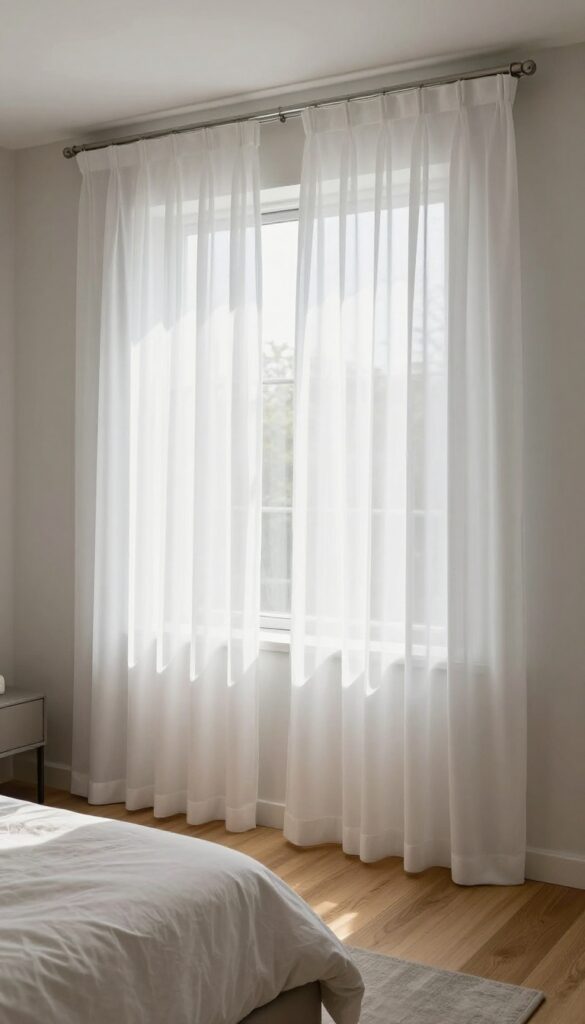
Some bedrooms need total darkness at night but still crave daylight during the day. Layering sheer curtains with blackout panels gives you full control without forcing you to choose between cozy and functional.
It’s one of those setups that feels luxurious once you live with it.
I resisted this idea at first because it sounded fussy. After trying it, I realized how nice it feels to wake up slowly with filtered light instead of ripping curtains open like a raccoon at sunrise. The flexibility alone makes this worth considering.
Why This Works
Layering lets you adapt the room to different moments of the day. Sheers soften daylight without sacrificing privacy, while blackout panels handle sleep hours.
The visual depth from layering also makes windows feel richer and more intentional.
How to Do It
- Install a double curtain rod or track system.
- Hang sheers closer to the window and blackout panels on the outer rod.
- Keep both layers floor-length for consistency.
- Use tiebacks only during the day to avoid light gaps at night.
Style & Design Tips
Stick to similar color families for both layers to avoid visual clutter. White or ivory sheers paired with neutral blackout panels feel calm and timeless. Avoid bold patterns on both layers because the overlap can look busy.
Pro Tip or Budget Hack
If double rods feel expensive, use curtain rings with clips for the sheer layer. They slide easily and cost less than a full second rod.
3. Blackout Curtains in Dark, Moody Bedroom Color Schemes
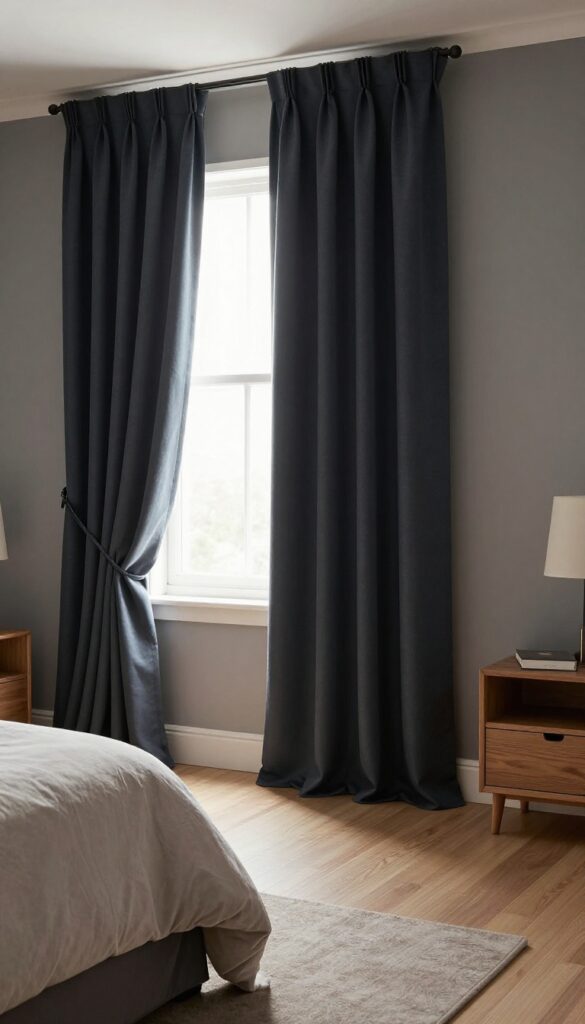
Dark bedrooms get a bad reputation for feeling gloomy, but they actually promote deeper sleep when done right.
Blackout curtains in rich tones like charcoal, navy, or deep olive enhance that effect while anchoring the room visually. The space feels wrapped instead of exposed.
I tried light curtains in a dark-painted room once and it always felt off. Swapping them for deep-toned blackout panels finally made the room feel cohesive and calm at night. The difference was immediate and surprisingly comforting.
Why This Works
Dark colors absorb light instead of bouncing it around. That reduces visual stimulation and helps signal rest to the brain. Matching blackout curtains to darker walls also minimizes contrast, which keeps the space from feeling busy.
How to Do It
- Choose blackout curtains in a shade close to your wall color.
- Use matte or textured fabrics to avoid harsh reflections.
- Extend panels beyond the window frame to block side light.
- Pair with soft lighting instead of bright overhead fixtures.
Style & Design Tips
Balance dark curtains with lighter bedding or wood tones. This keeps the room from feeling heavy during the day. Avoid glossy finishes because they reflect light and break the calm mood.
Pro Tip or Budget Hack
Velvet-look blackout curtains often cost less than real velvet but deliver the same cozy effect. They also absorb sound, which helps light sleepers.
4. Ceiling-Mounted Blackout Curtains to Eliminate Light Leaks
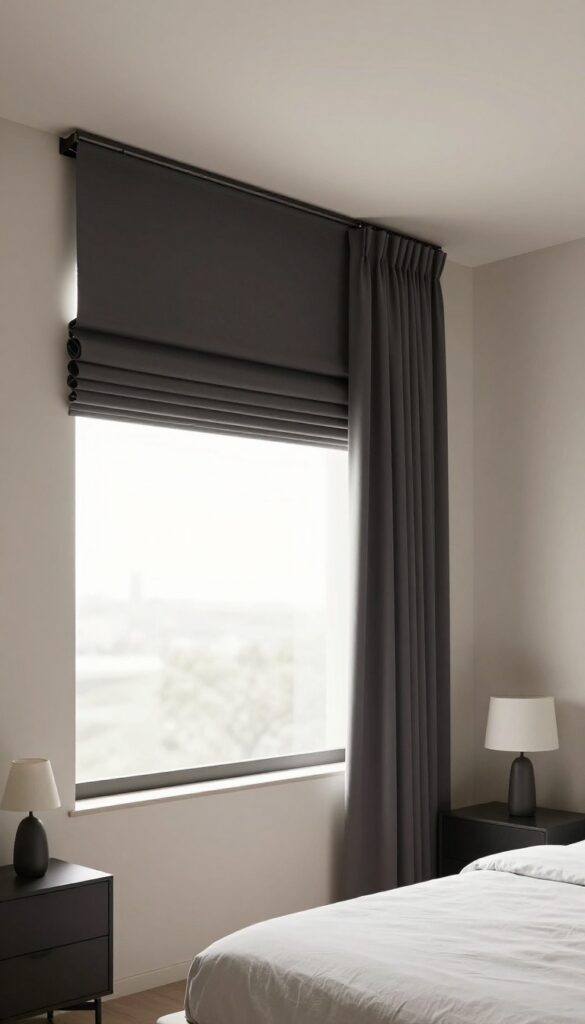
Light sneaking in from the top of a window can ruin the whole point of blackout curtains. Ceiling-mounted tracks solve that problem while giving the room a sleek, modern feel. This setup feels especially good in bedrooms with awkward window placement.
I added ceiling-mounted curtains in a rental once using a simple track system, and I slept better from the first night. The lack of glowing edges around the window made the room feel sealed off from the outside world.
Why This Works
Mounting curtains to the ceiling removes gaps where light usually escapes. The continuous line of fabric also makes the room feel taller and more intentional. It’s a clean solution that quietly improves sleep quality.
How to Do It
- Install a ceiling-mounted curtain track directly above the window.
- Choose full-length blackout panels with generous width.
- Make sure the track extends past the window edges.
- Use smooth-glide hooks for easy opening and closing.
Style & Design Tips
Keep the hardware minimal to maintain a clean look. Neutral curtain colors work best because the mounting already draws attention upward. Avoid heavy tassels or tiebacks that interrupt the flow.
Pro Tip or Budget Hack
Adhesive curtain tracks work surprisingly well for renters. They install quickly and remove cleanly without damage.
5. Blackout Curtains with Thermal Insulation for Better Sleep Comfort
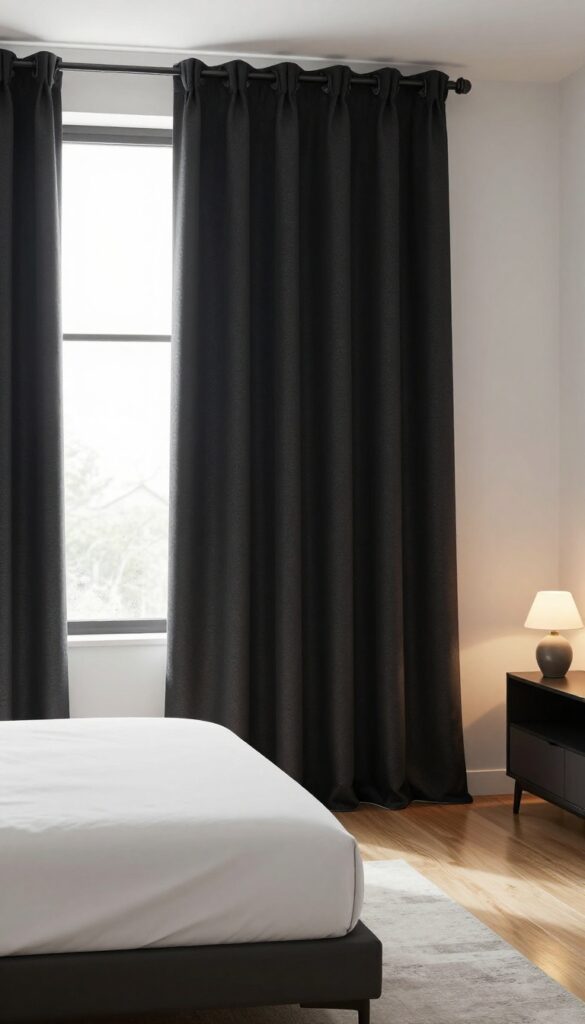
Light isn’t the only sleep disruptor in a bedroom. Temperature swings can wake you just as easily, especially near windows. Thermal blackout curtains block light while helping regulate room temperature year-round.
I didn’t expect these to make such a difference until winter rolled around. The room stayed noticeably warmer at night, and summer mornings felt less stuffy too. Better sleep followed without adjusting the thermostat.
Why This Works
Thermal lining adds a barrier between your bedroom and outside temperature changes. That stability helps the body stay in deeper sleep cycles. Blocking drafts also reduces noise, which matters more than people admit.
How to Do It
- Look for blackout curtains labeled thermal or insulated.
- Install panels wide enough to cover window edges fully.
- Keep curtains closed during extreme temperatures.
- Pair with simple window seals for extra efficiency.
Style & Design Tips
Choose fabrics that feel soft rather than stiff. Textured weaves look warmer and more inviting. Avoid ultra-thin materials because they don’t insulate well.
Pro Tip or Budget Hack
Layer standard blackout curtains over inexpensive thermal liners. This combo costs less than premium insulated panels and works just as well.
6. Minimalist Blackout Curtains for Small Bedroom Spaces
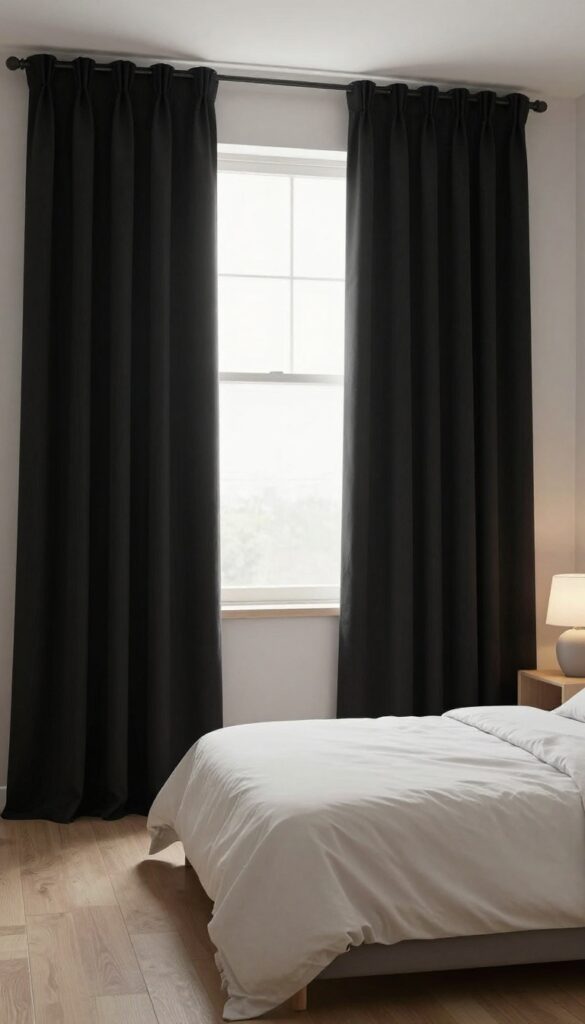
Small bedrooms can’t afford visual clutter, especially at night. Minimalist blackout curtains keep things calm while still delivering total darkness. This approach focuses on clean lines and quiet colors.
I’ve seen tiny bedrooms transformed just by simplifying the window treatment. Removing extra patterns and trims made the space feel larger and easier to rest in. Sleep improved because the room stopped feeling visually noisy.
Why This Works
Minimalism reduces visual stimulation, which helps the brain wind down. Simple blackout curtains disappear into the room instead of demanding attention. That quiet presence supports better sleep without sacrificing function.
How to Do It
- Choose solid-colored blackout curtains.
- Skip grommets and opt for hidden hooks or rings.
- Keep panels straight without puddling.
- Match curtain color closely to wall color.
Style & Design Tips
Soft neutrals work best in small spaces. Avoid contrast piping or bold textures. Clean edges and smooth fabric keep the look intentional.
Pro Tip or Budget Hack
IKEA-style blackout panels offer clean designs at low prices. Hem them properly and they look far more expensive than they are.
7. Blackout Curtains as a Statement Feature Behind the Bed
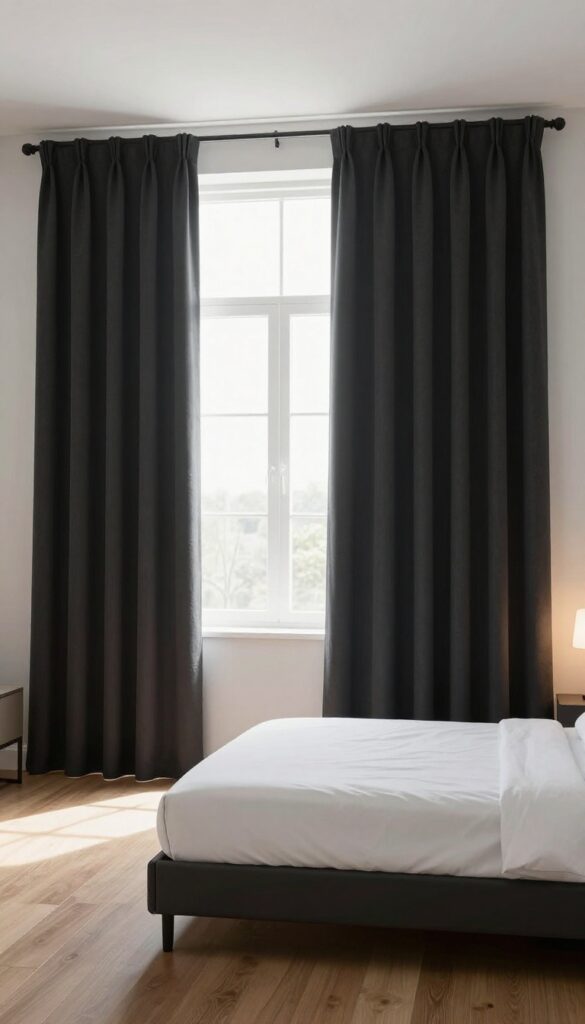
Sometimes windows sit awkwardly behind or beside the bed. Turning blackout curtains into a statement backdrop solves that problem while boosting sleep quality. This approach blends function with bold design.
I tried this in a guest room where the window placement drove me nuts. Extending blackout curtains across the wall behind the bed instantly unified the space. Guests always comment on how well they sleep there.
Why This Works
Using curtains as a backdrop hides window distractions and blocks stray light. The fabric adds softness that balances hard furniture lines. It also creates a cozy enclosure around the sleeping area.
How to Do It
- Extend curtain rods or tracks across the entire wall.
- Use blackout panels with substantial fabric weight.
- Center the bed in front of the curtains.
- Keep panels closed at night for full effect.
Style & Design Tips
Choose colors that complement your bedding instead of matching it exactly. Slight contrast adds depth. Avoid busy patterns that compete with headboards.
Pro Tip or Budget Hack
Use multiple standard panels instead of custom-width curtains. Overlapping panels create fullness without the custom price tag.
Final Thoughts
Blackout curtains do far more than block light when you choose them intentionally. They shape how a bedroom feels, sounds, and supports real rest. Small changes in fabric, placement, and color can quietly transform sleep quality.
Trying everything at once rarely works. Pick one idea that fits your space and lifestyle, then live with it for a week or two. Good sleep tends to follow thoughtful choices, not rushed ones.