8 Dark Wood Floor Bedroom Ideas That Feel Warm
A pair of socks slides across a dark wood floor, stopping just short of the bed where morning light lands in a soft stripe.
The room holds that quiet, cozy feeling that only shows up when textures, colors, and furniture all agree with each other.
Dark floors have a reputation for being moody or heavy, but in the right setup, they feel grounded and comforting.
Warmth in a bedroom doesn’t come from one big statement. It builds slowly through layers, small choices, and a few intentional contrasts that make the space feel lived-in rather than styled for a catalog.
Dark wood floors can absolutely anchor that kind of comfort when they’re handled with care.
1. Layered Neutral Textiles That Soften the Floor
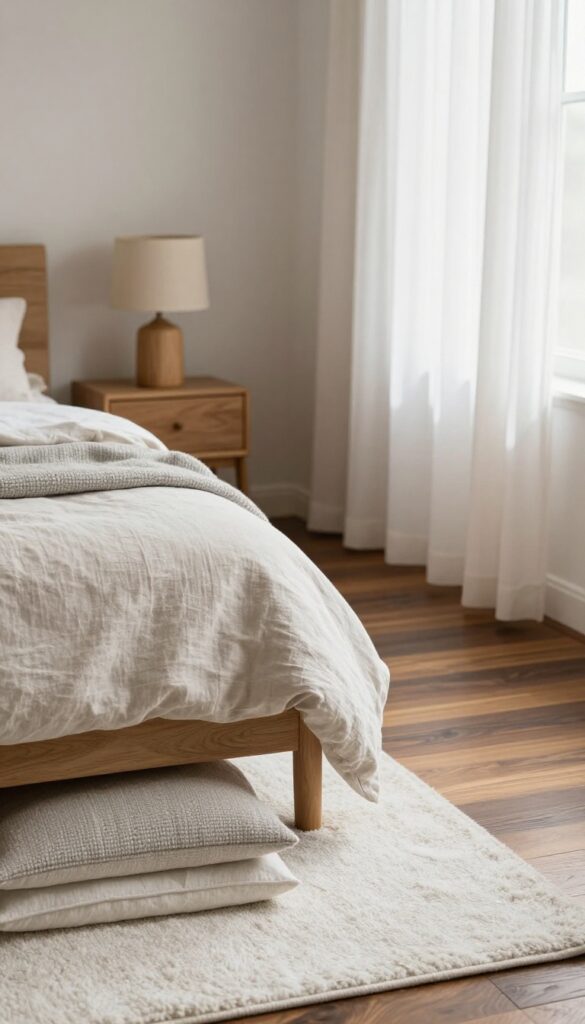
Dark wood floors look stunning, but they can feel a little stark when they’re left exposed with minimal layering.
Bare floors paired with a simple bed setup often read cold, especially in bedrooms where you want that sink-in-and-relax vibe. The fix doesn’t require changing the floors at all, just building warmth upward with the right textiles.
This idea focuses on layering neutral fabrics that balance the depth of the wood without competing with it. Think soft creams, warm beiges, muted taupes, and gentle grays that calm the space.
I’ve tried skipping this step before, and the room always felt unfinished until I added more texture underfoot and on the bed.
Why This Works
Dark floors ground the room visually, but they also absorb a lot of light. Layered textiles bounce softness back into the space and keep the room from feeling flat.
Neutral tones work especially well because they let the wood stay dramatic without overpowering everything else.
Texture does the heavy lifting here more than color. When your eye moves from smooth floors to plush rugs and cozy bedding, the contrast automatically reads as warm and inviting.
How to Do It
- Start with a medium-to-large area rug that sits at least halfway under the bed.
- Add a second layer like a smaller accent rug or runner if the room feels sparse.
- Choose bedding with varied textures such as linen sheets, a cotton duvet, and a knit throw.
- Finish with fabric-upholstered accent pieces like a bench or ottoman.
Each layer should feel intentional, not random. The goal is to soften the floor visually and physically.
Style & Design Tips
Stick to warm neutrals instead of icy whites to avoid a high-contrast look that feels too sharp. Avoid ultra-thin rugs, as they tend to get lost against dark floors. If your bedding is simple, let the rug add pattern or subtle variation.
One common mistake is matching everything too closely. Slight differences in shade and texture keep the room from looking dull.
Pro Tip or Budget Hack
If a large rug isn’t in the budget, layer a neutral flatweave with a smaller plush rug near the bed. This still creates warmth where your feet land without the cost of a full-size rug.
2. Warm Wood Furniture That Complements, Not Matches
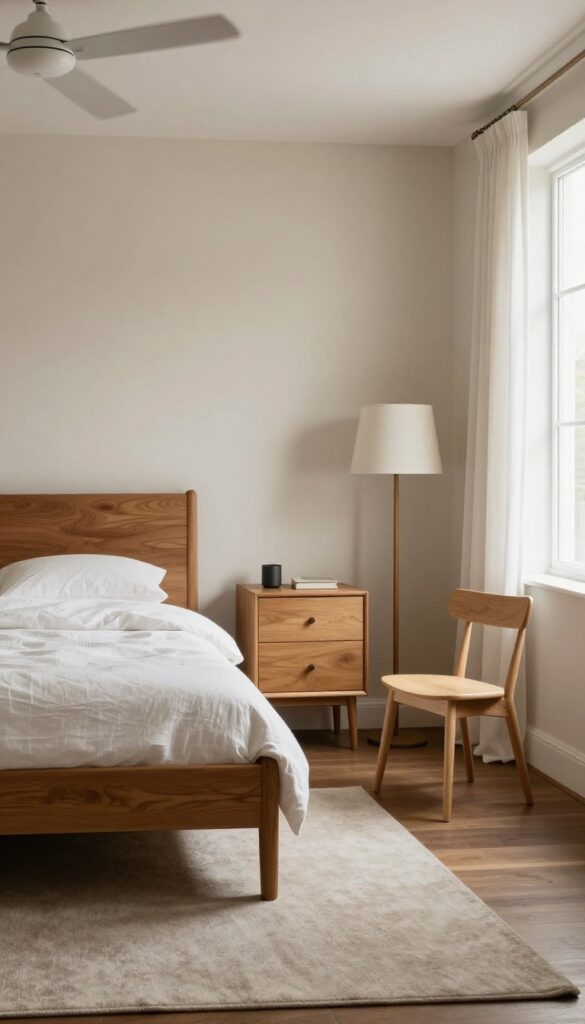
Dark floors don’t require matching dark furniture, and that’s a trap many people fall into. When everything is the same tone, the room can feel heavy and overly serious. The better approach is choosing warm wood furniture that complements the floor rather than blending into it.
This idea leans into contrast within the same family. Medium oak, walnut, or even honey-toned woods create separation while still feeling cohesive. I’ve mixed woods in my own bedroom, and it instantly made the space feel more relaxed and layered.
Why This Works
Matching wood tones flatten a room visually. Complementary tones create depth and make each piece stand out on its own. Warm woods also echo the natural feeling of the floor, reinforcing comfort without overpowering the space.
This approach keeps the bedroom from feeling like a log cabin or a furniture showroom. It feels collected instead of coordinated.
How to Do It
- Choose a bed frame in a medium or warm wood tone rather than black or espresso.
- Add nightstands that are slightly lighter or darker than the floor, not identical.
- Introduce contrast through furniture finishes like matte, brushed, or lightly distressed wood.
- Balance the look with soft textiles and neutral walls.
Think harmony, not duplication. Each piece should feel related but not repetitive.
Style & Design Tips
Avoid mixing more than two or three wood tones to keep the room from feeling chaotic. Warm undertones matter more than color depth, so stay away from gray-washed or overly cool woods. If your floor is very dark, lighter wood furniture keeps the room from feeling closed in.
Metal accents in brass or bronze pair beautifully with warm woods and dark floors.
Pro Tip or Budget Hack
If replacing furniture isn’t realistic, warm up existing pieces with wood-toned accessories like trays, lamps, or framed art. Small touches can shift the overall tone more than you’d expect.
3. Soft, Warm Wall Colors That Balance the Depth
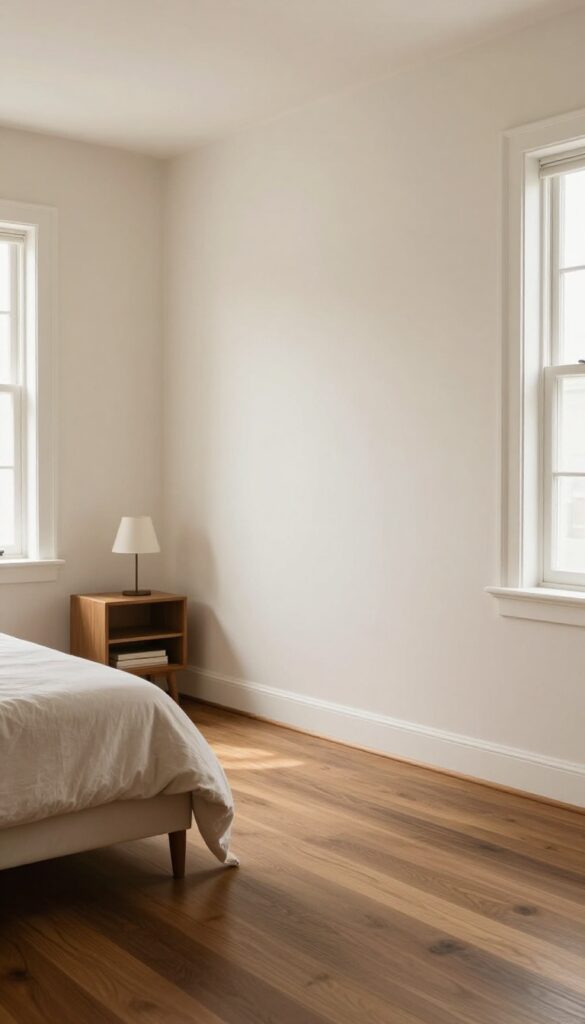
White walls can look crisp against dark floors, but they don’t always feel cozy. Bedrooms benefit from warmth, and wall color plays a huge role in how dark floors read. This idea focuses on choosing soft, warm wall colors that balance the richness of the wood.
Think creamy off-whites, pale greige, muted clay, or warm taupe. I’ve painted a bedroom bright white before and immediately felt the room was colder than it needed to be. Switching to a warmer neutral changed everything.
Why This Works
Dark floors naturally pull visual weight downward. Warm wall colors lift the room and spread that warmth evenly. The result feels more enveloping and less contrast-heavy.
These shades also reflect light gently, which helps dark floors feel intentional rather than dominant.
How to Do It
- Test paint samples in different lighting throughout the day.
- Choose colors with warm undertones even if they read neutral.
- Paint trim in a slightly softer white rather than a stark one.
- Keep the ceiling light to maintain openness.
Paint doesn’t need to be bold to be effective. Subtle warmth goes a long way.
Style & Design Tips
Avoid cool grays or blue-based whites, as they clash with dark wood. Consistency matters, so carry the wall color into adjacent spaces if possible. Matte or eggshell finishes feel softer than high-gloss in bedrooms.
If you love white walls, add warmth through art and textiles to compensate.
Pro Tip or Budget Hack
If repainting isn’t an option, use large-scale art or fabric wall hangings in warm tones to shift the feel of the room without touching the walls.
4. Plush Area Rugs That Anchor the Bed
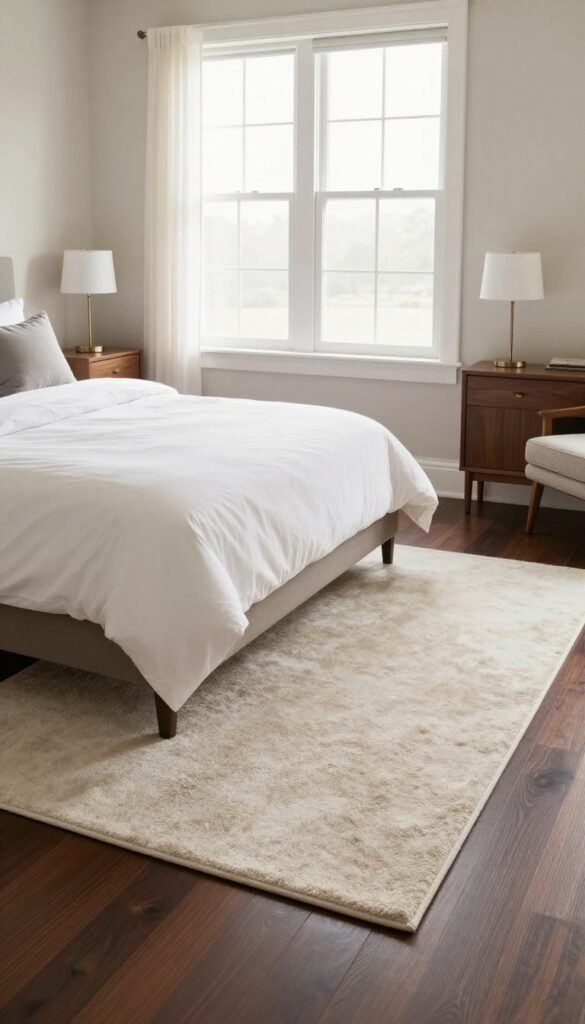
Dark wood floors look beautiful, but stepping onto cold wood first thing in the morning isn’t exactly comforting. A plush area rug solves both the visual and physical problem. This idea centers on anchoring the bed with a rug that adds softness and warmth.
Rugs help define the sleeping area and make the bedroom feel intentional. I’ve noticed that rooms without rugs always feel a bit unfinished, no matter how nice the furniture is.
Why This Works
A plush rug breaks up the hardness of dark wood and adds insulation. It visually lifts the bed, making it feel like a focal point instead of floating in the room. Texture also adds warmth in a way color alone cannot.
This is especially important in bedrooms with minimal furniture or clean lines.
How to Do It
- Choose a rug large enough to extend at least 18–24 inches beyond the bed.
- Place it so the bed sits partially on top, not centered awkwardly.
- Opt for high-pile or thick woven rugs for maximum comfort.
- Keep colors warm and patterns subtle.
Placement matters as much as the rug itself.
Style & Design Tips
Avoid tiny rugs that only sit under the foot of the bed. Scale is everything when working with dark floors. Neutral rugs with slight pattern prevent the space from feeling bland.
If your floor has strong grain, keep the rug pattern softer.
Pro Tip or Budget Hack
Layer a neutral rug under the bed and add a smaller plush rug beside it. This gives you comfort where it counts without buying one oversized rug.
5. Cozy Lighting That Adds a Golden Glow
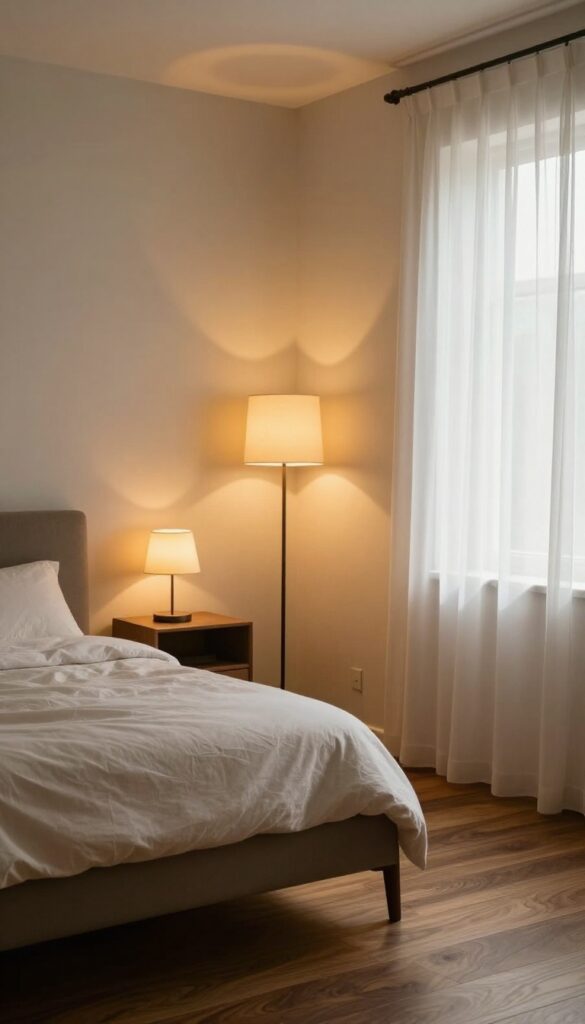
Overhead lighting alone does dark wood floors no favors. The wrong light can make them look harsh or dull. This idea focuses on layering warm lighting that brings out the richness of the floor.
Table lamps, wall sconces, and floor lamps all play a role here. I’ve swapped cool bulbs for warm ones before and was shocked by how much cozier the room instantly felt.
Why This Works
Dark floors absorb light, so you need multiple sources to keep the room balanced. Warm lighting enhances the natural warmth of wood and softens shadows. Layered lighting also adds depth and mood.
Bedrooms should feel calm, not clinical.
How to Do It
- Use warm bulbs in the 2700K range.
- Add bedside lamps at eye level when seated.
- Include at least one ambient light source away from the bed.
- Use dimmers whenever possible.
Lighting should feel adjustable and gentle.
Style & Design Tips
Avoid exposed bulbs that feel too harsh. Soft shades and diffused light work best with dark floors. Brass or fabric lamp bases add extra warmth.
Wall sconces free up nightstand space and add a boutique feel.
Pro Tip or Budget Hack
Swap bulb temperatures before buying new lamps. This small change often fixes lighting issues instantly and cheaply.
6. Warm Accent Colors That Break Up the Darkness
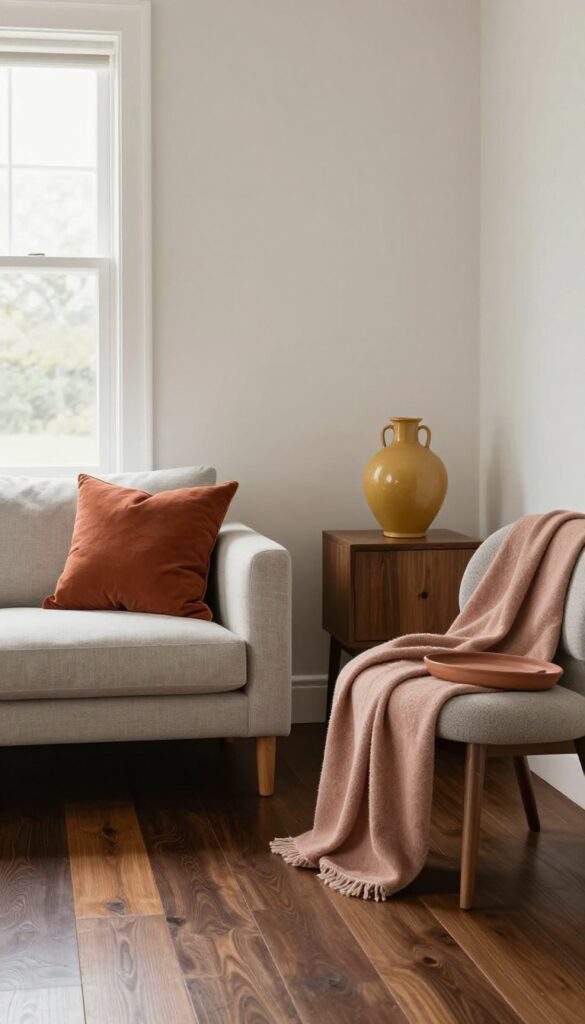
A bedroom with dark floors and all-neutral decor can feel flat. This idea introduces warm accent colors that energize the space without overwhelming it. Think terracotta, rust, muted mustard, or dusty blush.
These colors work best in small doses. I’ve added a single rust throw pillow before, and it completely shifted the room’s energy.
Why This Works
Warm accents create contrast against dark floors and neutral backdrops. They draw the eye upward and keep the space from feeling bottom-heavy. Color also adds personality, which matters in a bedroom.
Used thoughtfully, accents make the room feel curated.
How to Do It
- Start with throw pillows or a blanket in a warm tone.
- Add art that incorporates similar hues.
- Repeat the color once or twice for cohesion.
- Keep the rest of the palette calm.
Restraint keeps accents effective.
Style & Design Tips
Avoid overly bright or primary colors. Muted warmth feels more grown-up and cozy. Stick to two accent colors at most to avoid clutter.
If the room feels busy, pull back and simplify.
Pro Tip or Budget Hack
Shop seasonal sales for textiles in warm tones. Swapping accessories is cheaper than changing furniture.
7. Upholstered Furniture for Soft Contrast
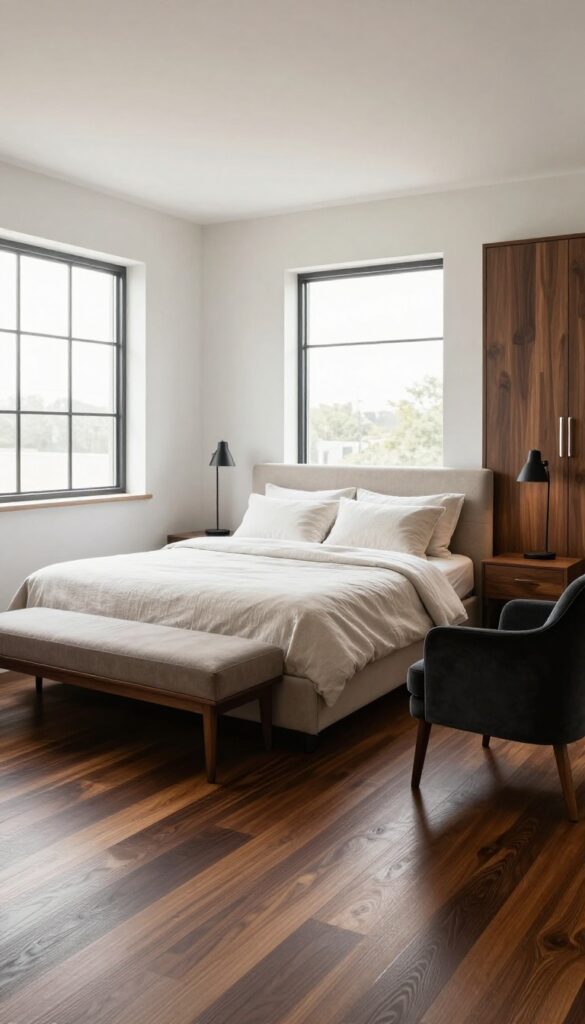
Hard surfaces dominate rooms with dark wood floors. Upholstered furniture introduces softness and warmth that balances everything out. This idea focuses on fabric-covered beds, benches, or chairs.
Even one upholstered piece can change how the room feels. I’m a big fan of fabric headboards for this exact reason.
Why This Works
Fabric absorbs light and sound, making the room quieter and cozier. Upholstery also contrasts beautifully with dark wood, highlighting both elements. The mix keeps the space from feeling rigid.
Bedrooms benefit from softness wherever possible.
How to Do It
- Choose a padded headboard in a neutral or warm tone.
- Add a bench at the foot of the bed with fabric upholstery.
- Include an accent chair if space allows.
- Stick to durable, touchable fabrics.
Comfort should be visible, not just felt.
Style & Design Tips
Avoid shiny fabrics that feel cold. Linen, velvet, or woven blends work best. Keep upholstery colors lighter than the floor for contrast.
If the room feels heavy, choose lighter fabrics.
Pro Tip or Budget Hack
Use slipcovers to transform existing furniture. They’re affordable and easy to swap later.
8. Personal Details That Make the Space Feel Lived-In
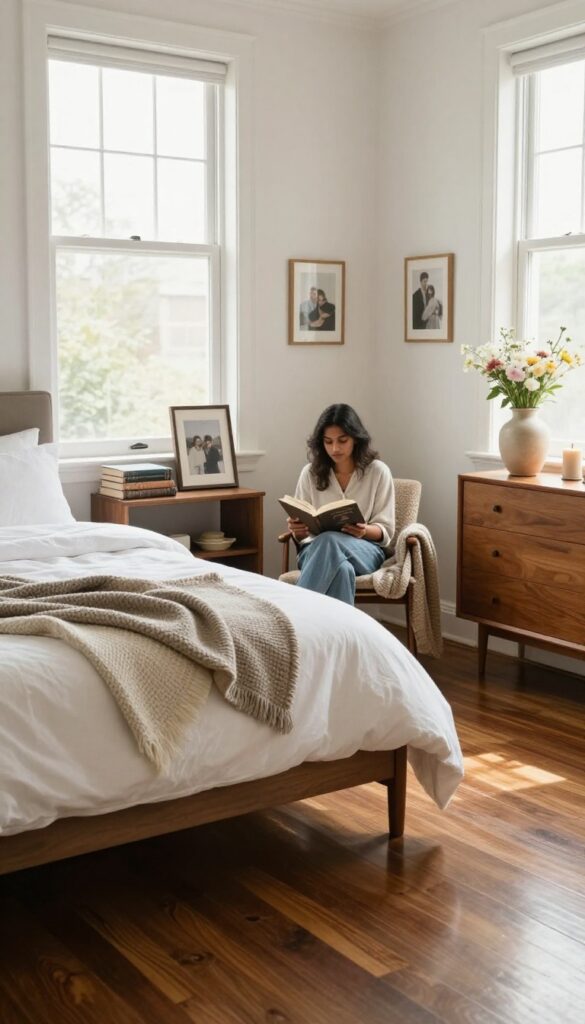
Dark wood floors shine most in rooms that feel real, not staged. This idea leans into personal details that add warmth through meaning rather than design rules. Photos, books, and collected items bring life into the space.
I’ve noticed that the coziest bedrooms always tell a story. They feel relaxed because they reflect the person living there.
Why This Works
Personal items soften the formality that dark floors can create. They add visual interest and emotional warmth. A bedroom should feel like a retreat, not a showroom.
This approach makes the room uniquely yours.
How to Do It
- Display framed photos or art you actually love.
- Keep favorite books within reach.
- Add small decor pieces with texture or history.
- Edit regularly to avoid clutter.
Intentional display beats excess every time.
Style & Design Tips
Group items in odd numbers for balance. Negative space matters, so don’t fill every surface. Keep colors cohesive for a calm look.
Let personality show without overwhelming the room.
Pro Tip or Budget Hack
Rotate decor seasonally using items you already own. Freshness doesn’t require new purchases.
Final Thoughts
Dark wood floors don’t need to feel heavy or dramatic to work in a bedroom. With the right mix of texture, warmth, and personal touches, they become a cozy foundation rather than a design challenge. Small changes often make the biggest difference, especially when comfort is the goal.
Try one idea at a time and let the room evolve naturally. A bedroom should feel welcoming first and stylish second, and dark wood floors can absolutely support both.