10 Clever Kitchen Drawer Organization Ideas to Try
Kitchen drawers look harmless until they explode into chaos, and suddenly you can’t find a spoon without starting a mini excavation.
I’ve been there more times than I’d like to admit, usually while hungry and slightly irritated. If your drawers stress you out more than they help you, you’re definitely not alone.
I want to share ideas that actually work in real kitchens, not those picture-perfect setups that fall apart in a week.
These tips come from trial, error, and a few “why didn’t I do this sooner” moments. Think practical, flexible, and very doable.
We’ll talk about small tweaks that make daily cooking smoother and less annoying. No perfection required, just smarter systems that fit real life. Ready to make your drawers behave for once?
1. Use Adjustable Drawer Dividers for Everyday Flexibility
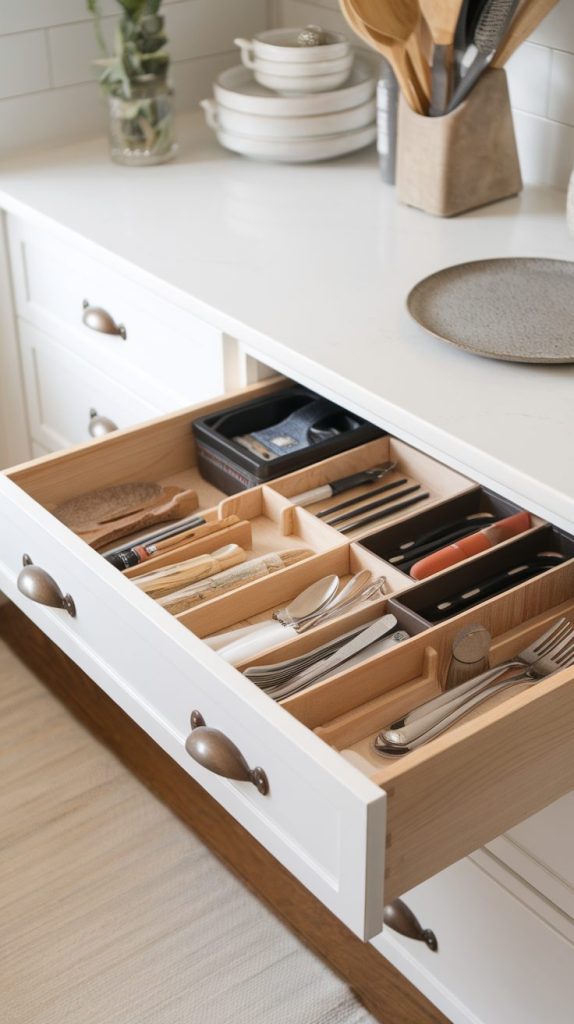
Adjustable drawer dividers changed my kitchen life, and I don’t say that lightly. They let you customize space based on what you actually own, not what a store display assumes you own.
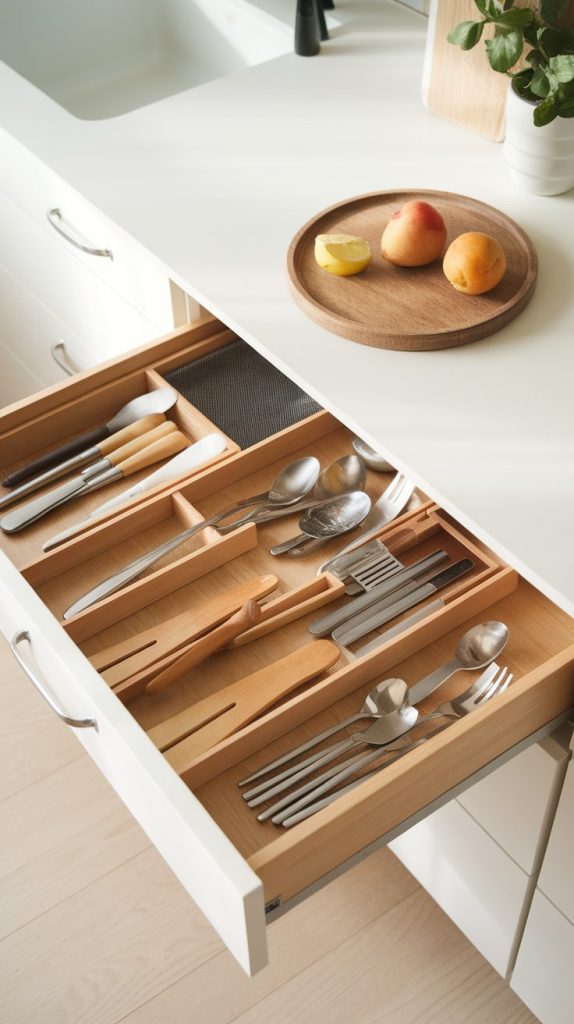
I love that I can move them around when my needs change.
Fixed organizers feel great at first, but they lock you into one layout forever. Adjustable dividers let you create narrow sections for knives or wider ones for bulky tools. That flexibility keeps drawers functional long-term.
I usually group items by how often I use them, not by category alone. Daily tools stay front and center, while occasional items move toward the back. This setup saves time and keeps frustration levels low.
Materials matter here, so I stick with bamboo or sturdy plastic. Cheap dividers slide around and ruin the whole point. Spend a little more once, and you won’t need to rethink this system every few months.
2. Create a Dedicated Drawer for Cooking Utensils Only
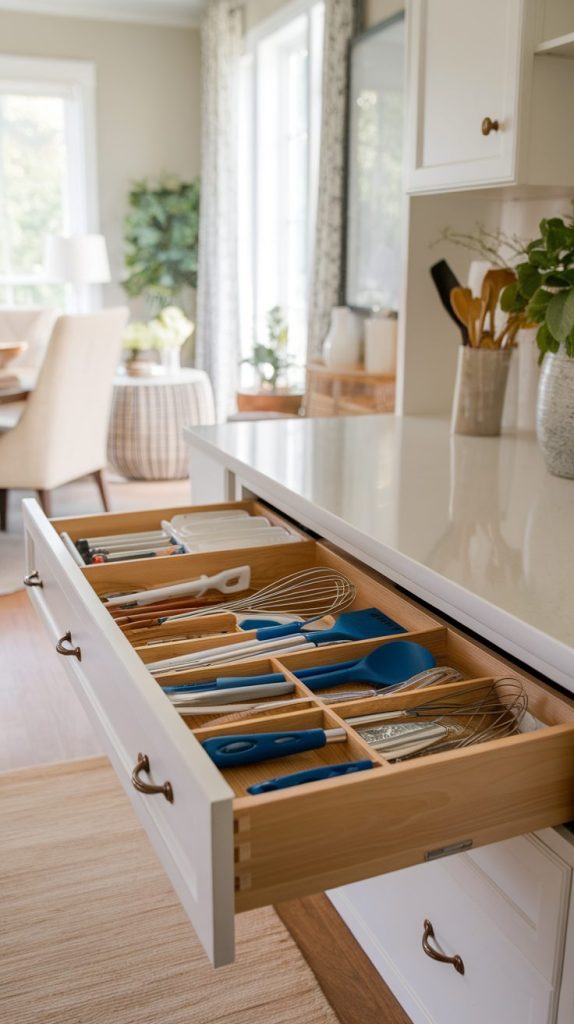
Mixing utensils with random gadgets creates instant chaos, and I learned that the hard way. A dedicated utensil drawer gives spatulas, ladles, and whisks a clear home. That single decision removes so much visual clutter.
I like to lay utensils flat instead of stacking them upright. Flat storage prevents tangles and makes every item visible at a glance. You grab what you need without digging.
Drawer depth matters more than people realize. Deep drawers handle longer utensils easily, while shallow drawers need careful layout planning. Measure first so nothing jams when you close the drawer.
I also limit this drawer to true cooking tools only. If I haven’t used an item in months, it doesn’t earn space here. That rule keeps the drawer efficient instead of overcrowded.
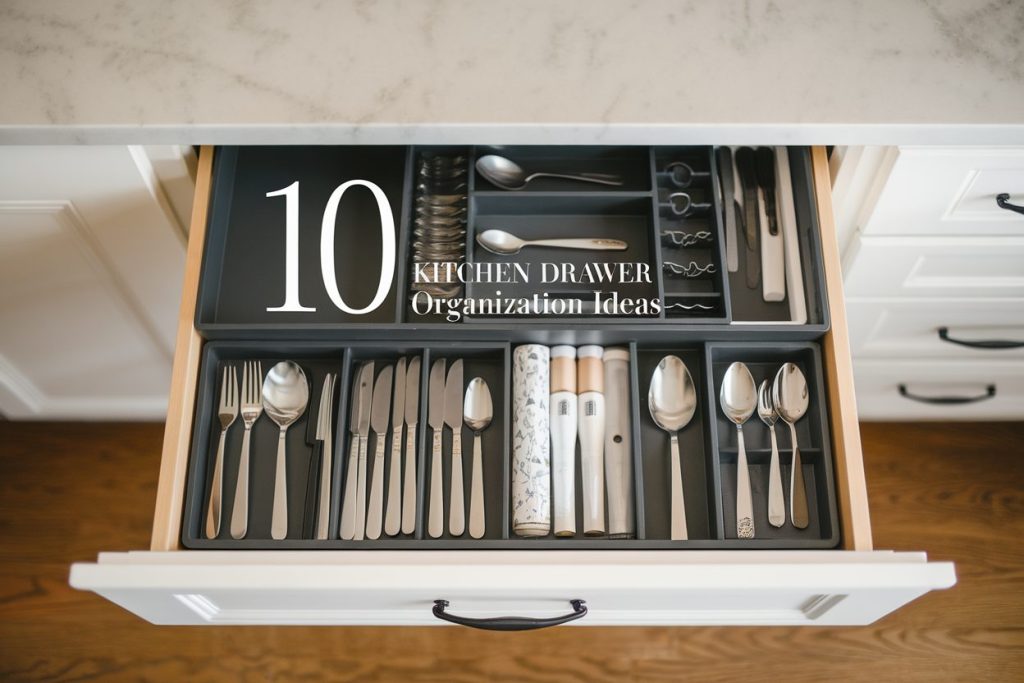
3. Add Drawer Inserts for Cutlery and Silverware
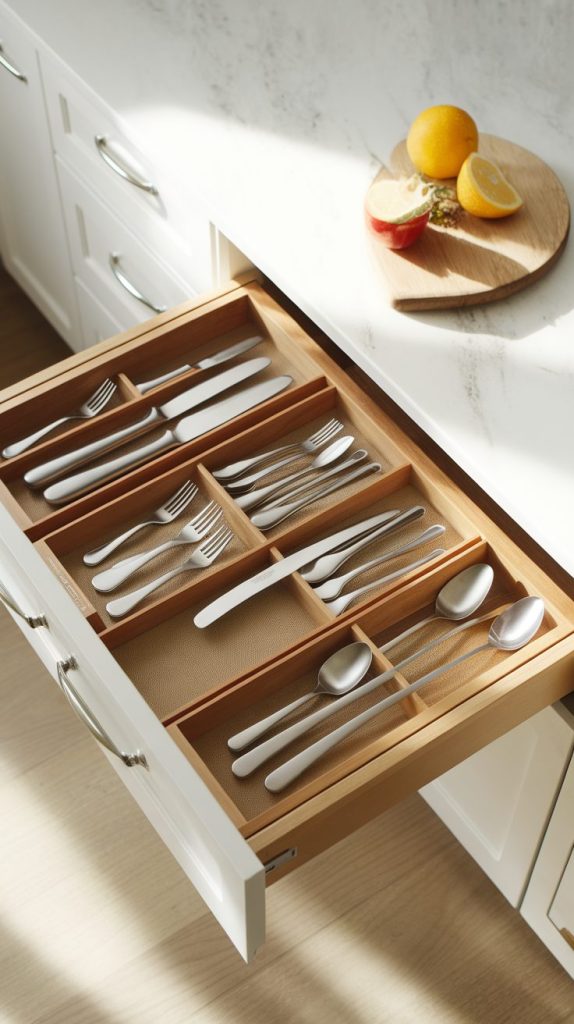
Cutlery drawers seem simple, yet they cause constant annoyance when poorly organized. A proper insert keeps forks, knives, and spoons separated and easy to grab. It also stops that awful clanking noise.
I prefer inserts that stretch to fit the drawer width. Fixed-width inserts leave wasted space that collects crumbs and frustration. Adjustable ones use every inch efficiently.
I separate everyday silverware from specialty pieces like steak knives. That separation speeds things up during busy meals. It also keeps sharp items safely tucked away.
Cleaning becomes easier too, which I always appreciate. You can lift the insert, wipe underneath, and drop it back in place. That tiny convenience adds up over time.
4. Store Spices Flat in a Shallow Drawer
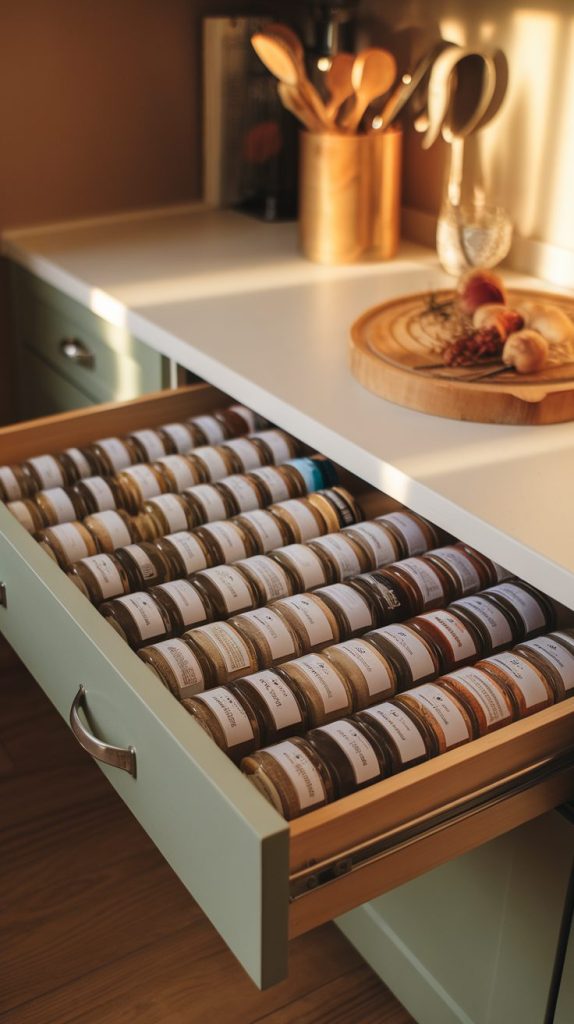
Spice drawers beat spice cabinets every single time, IMO. Laying jars flat with labels facing up makes everything visible instantly. You stop buying duplicates because you forgot what you owned.
I use uniform spice jars to keep things neat and readable. Matching jars create visual calm, which sounds dramatic but feels amazing. Labels on the top matter more than side labels here.
Shallow drawers work best for this setup. Deep drawers let jars roll around and ruin the system. A simple non-slip liner keeps everything steady.
I organize spices alphabetically, but you can group them by cuisine or frequency. Choose a method you’ll actually maintain. Consistency matters more than perfection.
5. Use Small Bins to Organize Junk Drawer Essentials
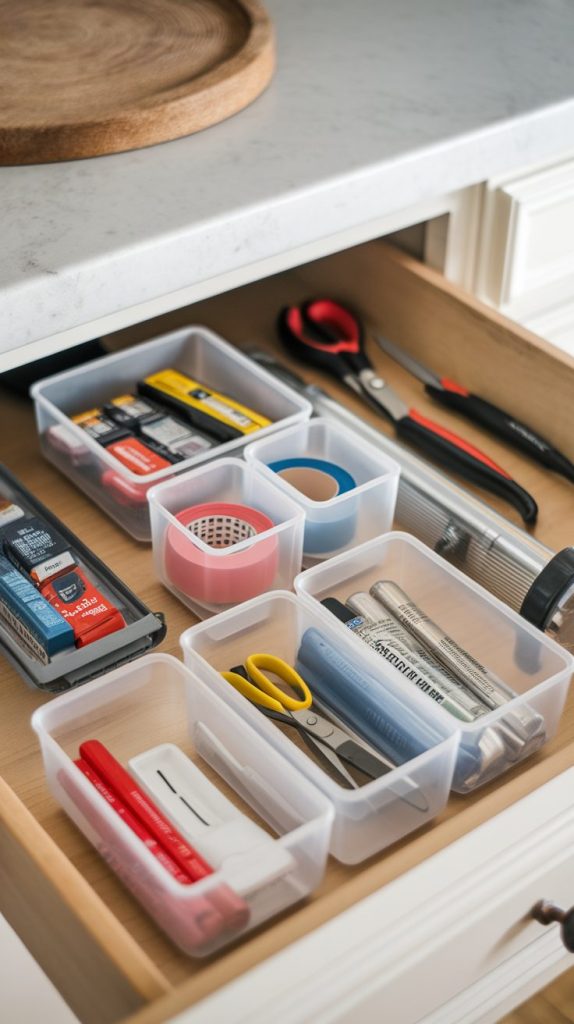
Every kitchen has a junk drawer, so let’s make peace with that fact. The trick involves organizing the chaos instead of fighting it. Small bins turn randomness into controlled mess.
I group similar items together, like batteries, tools, and stationery. Each bin gets a clear purpose, which limits overflow. You still keep everything, just smarter.
Clear bins work best because you see contents instantly. Opaque bins feel tidy but slow you down. Visibility saves time and sanity.
I also do quick clean-outs every few months. If something hasn’t earned its keep, it leaves. That habit keeps the junk drawer useful instead of overwhelming.
6. Install Drawer Peg Systems for Plates and Bowls
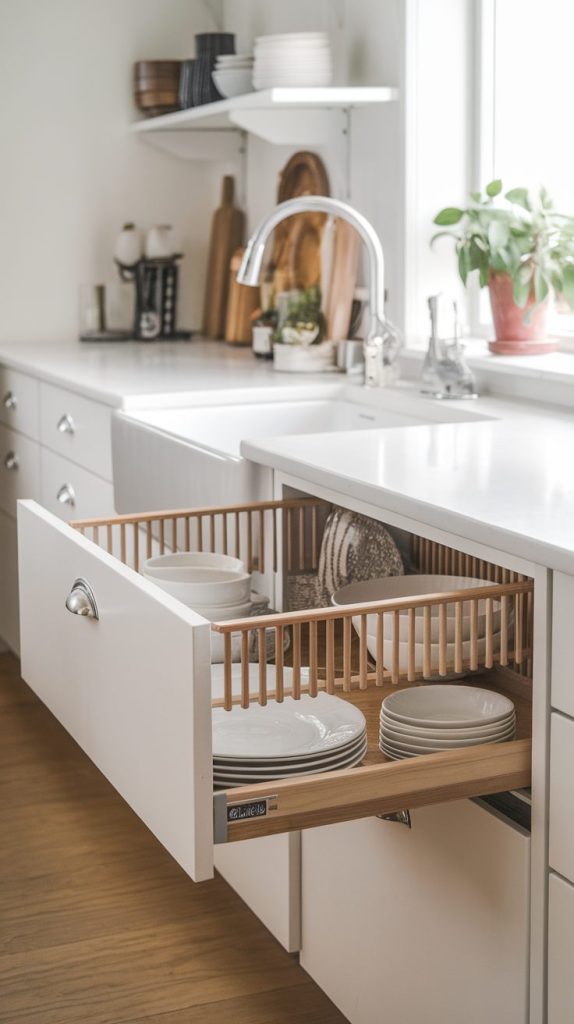
Drawer peg systems feel fancy, but they deliver serious practicality. They keep plates and bowls from sliding around. That stability prevents chips and noisy drawer slams.
I love how customizable these systems feel. You place pegs exactly where your dishes need support. That tailored fit beats generic racks.
Lower drawers work best for dish storage. They reduce bending and make unloading the dishwasher easier. Your back will thank you.
This setup also encourages mindful stacking. You see what you own, so you stop overbuying. That awareness saves cabinet space elsewhere.
7. Organize Food Storage Containers by Size and Type
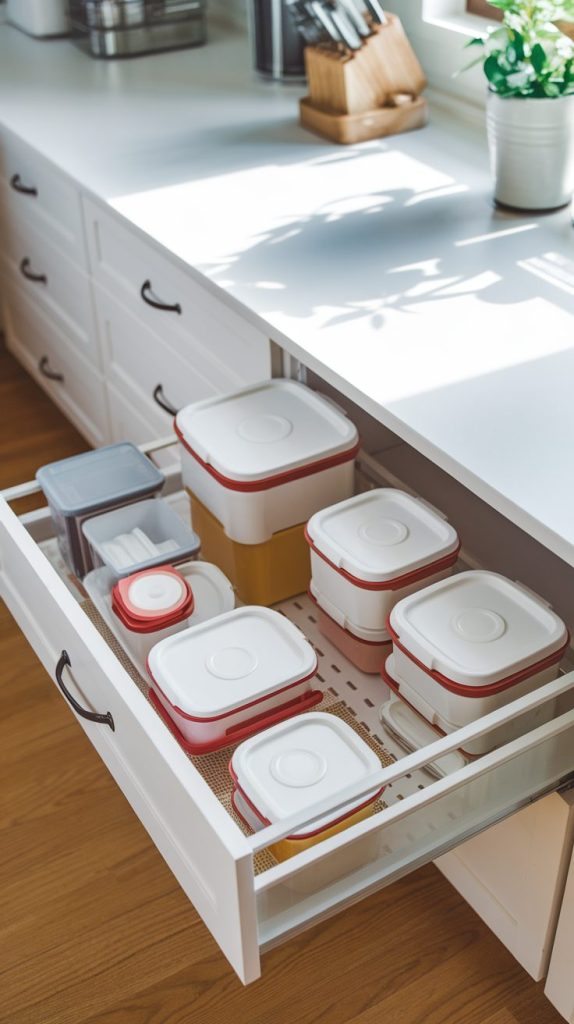
Food containers cause more stress than they deserve. Lids disappear, stacks topple, and patience wears thin. A drawer-based system fixes most of that drama.
I separate lids from containers using dividers. Flat lid storage changes everything instantly. You find matches without searching.
Grouping containers by size helps too. Small containers stay together, and larger ones get their own section. That order speeds up meal prep and leftovers.
I also donate mismatched pieces regularly. Keeping extras “just in case” never helps. A lean collection works better every time.
8. Use Vertical Storage for Baking Sheets and Cutting Boards
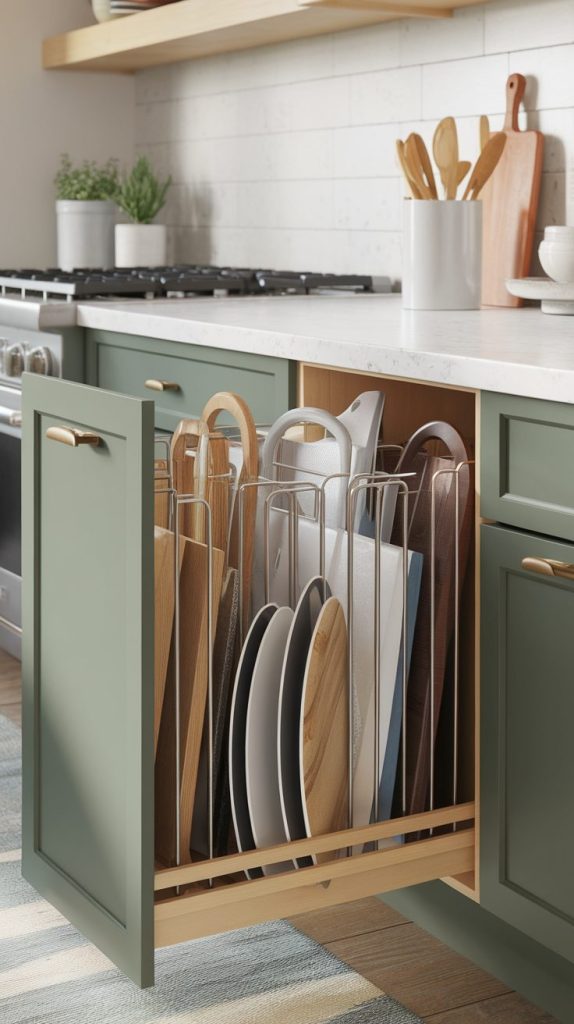
Vertical storage inside drawers feels like a hidden superpower. Baking sheets and cutting boards slide in neatly without stacking. You avoid loud crashes and scratches.
I use sturdy dividers to keep items upright. Flimsy supports collapse under weight. Strong dividers make the system reliable.
This approach works especially well near ovens or prep areas. You grab what you need without crossing the kitchen. That efficiency feels surprisingly satisfying.
I keep similar items together to avoid confusion. Mixing boards and trays complicates things. Simple grouping keeps everything intuitive.
9. Dedicate a Drawer for Coffee and Tea Supplies
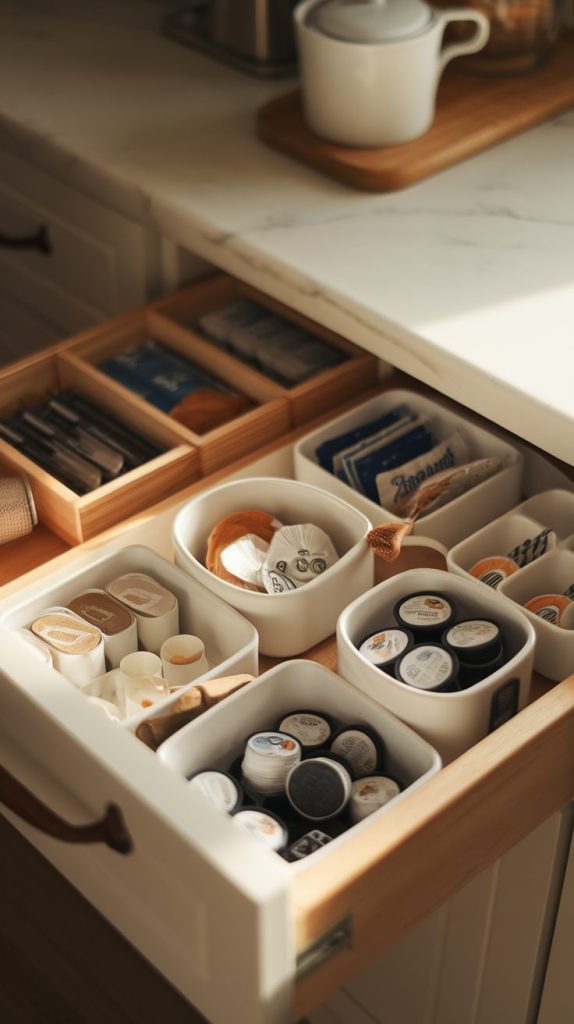
Morning routines run smoother when coffee tools live together. A dedicated drawer holds pods, filters, spoons, and napkins. That setup turns chaos into calm.
I organize this drawer based on my daily flow. Items I use first sit near the front. Less-used extras move toward the back.
Small containers help keep things tidy. They stop scoops and packets from drifting. Order matters when you’re half-awake.
This drawer also helps guests help themselves. Clear organization removes awkward questions. Everyone wins, especially before caffeine kicks in.
10. Label Drawer Sections to Maintain Long-Term Order
Labels feel unnecessary until disorder creeps back in. They reinforce habits and set expectations. Everyone knows where things belong.
I use subtle labels inside drawers, not flashy ones. Simple text works best. The goal involves guidance, not decoration.
Labels also help during cleanups. You return items quickly without guessing. That clarity keeps systems intact.
Over time, labels fade into the background. The benefits stay obvious though. Organization sticks when rules stay visible.
Conclusion
Kitchen drawer organization doesn’t require perfection, just smarter systems that fit how you live and cook. Small changes like dividers, bins, and labels create big daily improvements. You spend less time searching and more time enjoying your kitchen.
I always say organization should support life, not complicate it. Start with one drawer and build from there. Your future self, probably hungry and in a hurry, will appreciate the effort.