10 River Rock Shower Ideas That Add Natural Texture Without Overwhelming a Small Bathroom
River rock brings an earthy, organic feel to any shower, but in a small bathroom, it can easily go from charming to claustrophobic. The trick is using it thoughtfully—as an accent, a floor, or a feature wall—so the texture adds depth without overwhelming the space.
These ten ideas prove that even the tiniest shower can handle a little stone, as long as you keep the rest of the design clean and intentional.
From pebble floors to mosaic niches, each approach is tailored to make your small bathroom feel bigger, better, and full of character.
1. Pebble Floor That Feels Like a Stream Bed
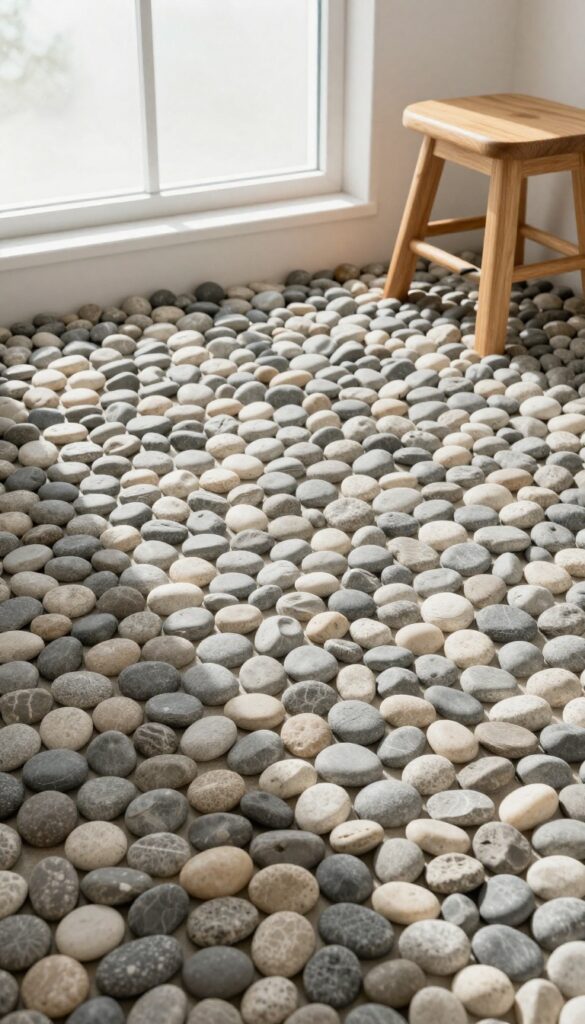
Covering the shower floor with smooth river rocks set in grout creates a tactile, spa-like surface that instantly connects you to nature. The uneven texture provides a gentle foot massage and excellent slip resistance, making it both luxurious and practical. In a small shower, keep the pebbles low-profile and use light grout to avoid a heavy look—this keeps the space feeling open and airy.
Why It Works
The natural variation in pebble sizes and colors adds organic texture without overwhelming a compact footprint. Light grout blends with the stones, visually expanding the floor, while the textured surface improves safety underfoot.
Best For
This idea is ideal for small showers or wet rooms where you want a spa-like retreat without sacrificing square footage. It also works well in bathrooms with neutral or earthy color schemes.
Styling Tip
Pair the pebble floor with a glass shower door to keep sightlines clear. Add a teak bench or wooden accessories to complement the natural vibe without competing for attention.
2. Single Accent Wall Behind the Shower Bench
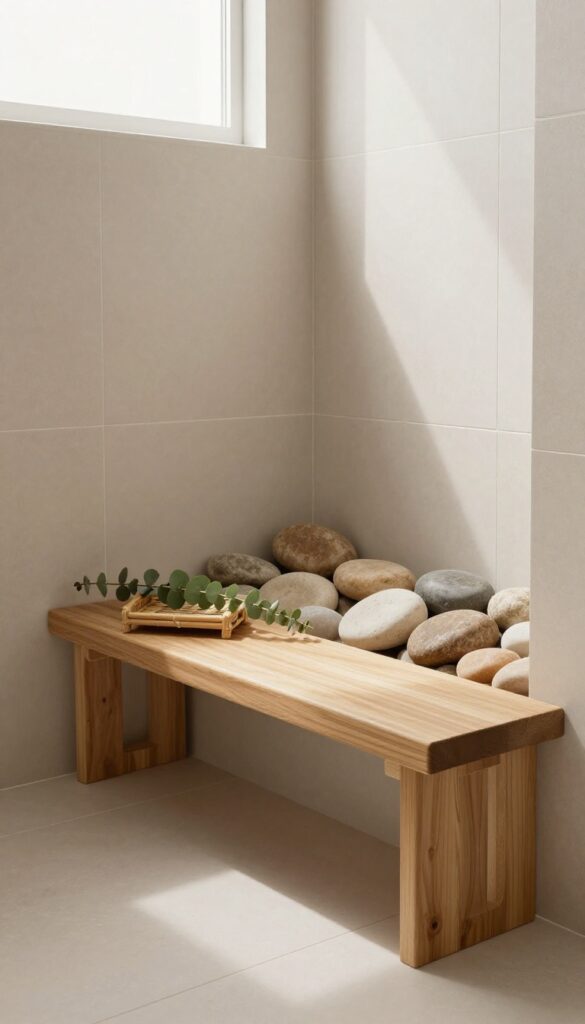
One wall is all it takes to make a big impact. By cladding just the area behind a built-in or teak bench with river rock, you create a natural focal point that draws the eye without overwhelming the room. The rest of the shower stays clean and open with large-format tiles, so the texture feels intentional—not chaotic.
It’s a smart way to add character while keeping things small-space friendly.
Why It Works
Limiting river rock to one wall prevents the shower from feeling too busy or cave-like. The contrast between smooth, large tiles and rough, organic stone adds depth and visual interest. Plus, it’s easier to clean than a fully pebbled shower, and the bench area becomes a natural spot to place bath products or just sit and unwind.
Best For
This idea works beautifully in smaller bathrooms or ensuites where you want a touch of nature without sacrificing openness. It’s also great for anyone who loves the look of river rock but hesitates to commit to floor-to-ceiling coverage.
Styling Tip
Choose river rocks in warm, earthy tones like beige, taupe, and soft gray to complement neutral wall tiles. Add a teak bench and a matching wooden stool for organic warmth. Keep accessories minimal—a single eucalyptus bundle or a small bamboo tray is enough.
3. River Rock Mosaic Strip as a Waterline Border
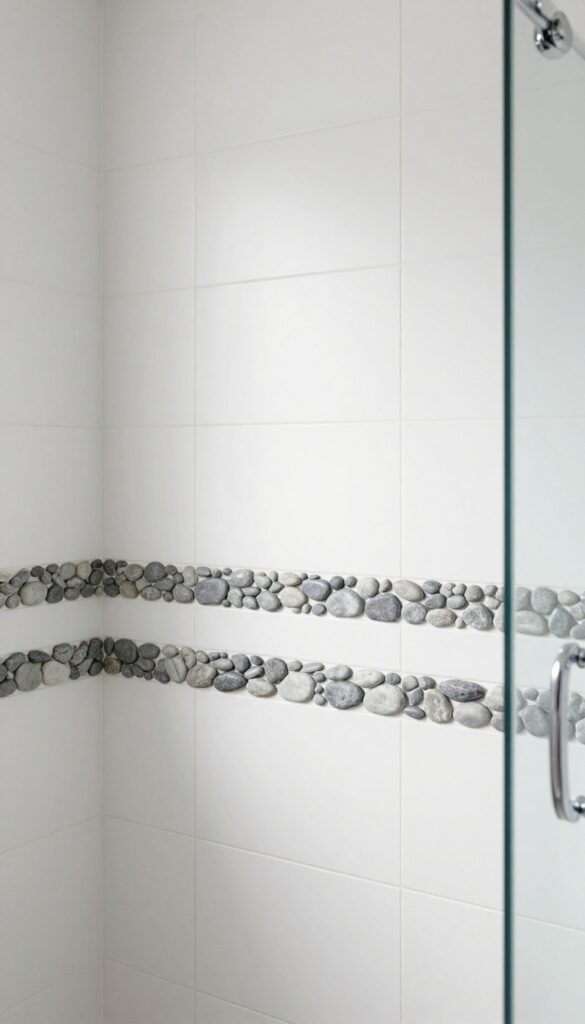
A thin line of river rock mosaic at the waterline is one of those details that quietly elevates a shower. It breaks up large wall tiles with a natural, tactile band that catches light and adds subtle movement. In a small bathroom, this trick draws the eye horizontally, making the space feel wider without adding bulk.
Why It Works
The horizontal strip creates a visual anchor that guides the eye around the room, enhancing the sense of width. River rock’s organic texture contrasts with smooth tiles, adding depth without overwhelming a compact shower.
Best For
Showers with large-format wall tiles or simple subway tile that need a touch of character. Ideal for small bathrooms where you want impact without sacrificing openness.
Styling Tip
Use thin grout (1/16 inch) in a tone matching the river rock to keep the band looking seamless. Place it at eye level or exactly at the shower’s waterline for maximum effect.
4. Floor-to-Ceiling Pebble Column in a Corner
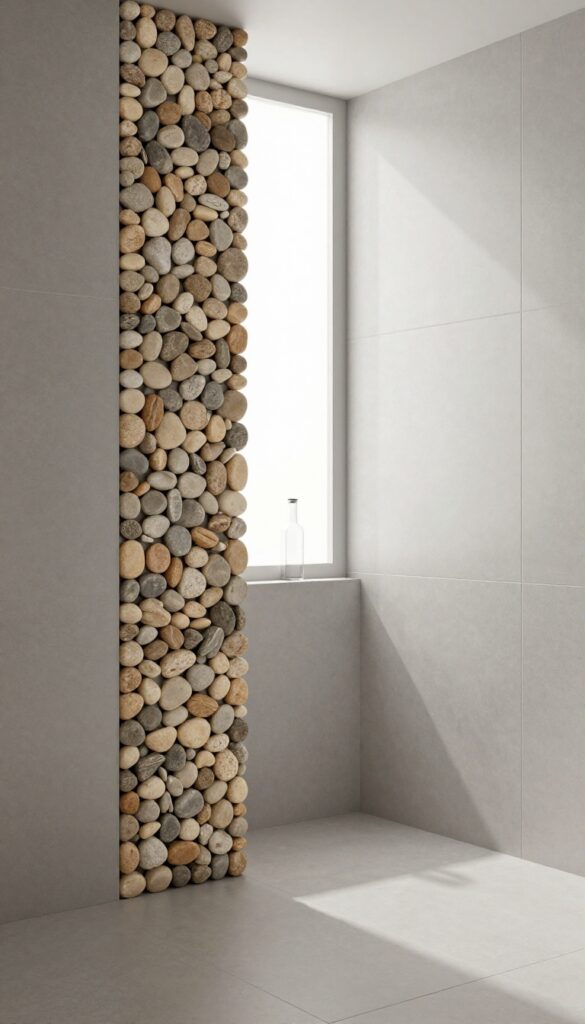
A narrow column of river rock rising from floor to ceiling in one corner of the shower instantly draws the eye upward, making a small bathroom feel taller and more intentional. The vertical line of natural stone adds texture and character without eating into precious floor space. Paired with smooth, light-colored walls, this single feature becomes a quiet focal point that feels both grounded and airy.
Why It Works
In a compact shower, every inch counts. By concentrating the stone in a slim vertical band, you get the organic texture of river rock without overwhelming the room. The upward line tricks the eye into perceiving more height, while the contrast between rough pebbles and smooth tile keeps the look balanced and sophisticated.
Best For
This idea is perfect for small bathrooms or guest showers where you want a natural accent without sacrificing visual openness. It also works well in corner showers or curbless designs where you need to define a zone without adding bulk.
Styling Tip
Choose river rocks in warm neutrals like beige, taupe, and soft gray to keep the column feeling cohesive with most tile colors. Install a slim recessed shelf within the column for shampoo bottles, letting them blend into the texture rather than cluttering the space.
5. River Rock Shower Curb With a Smooth Top
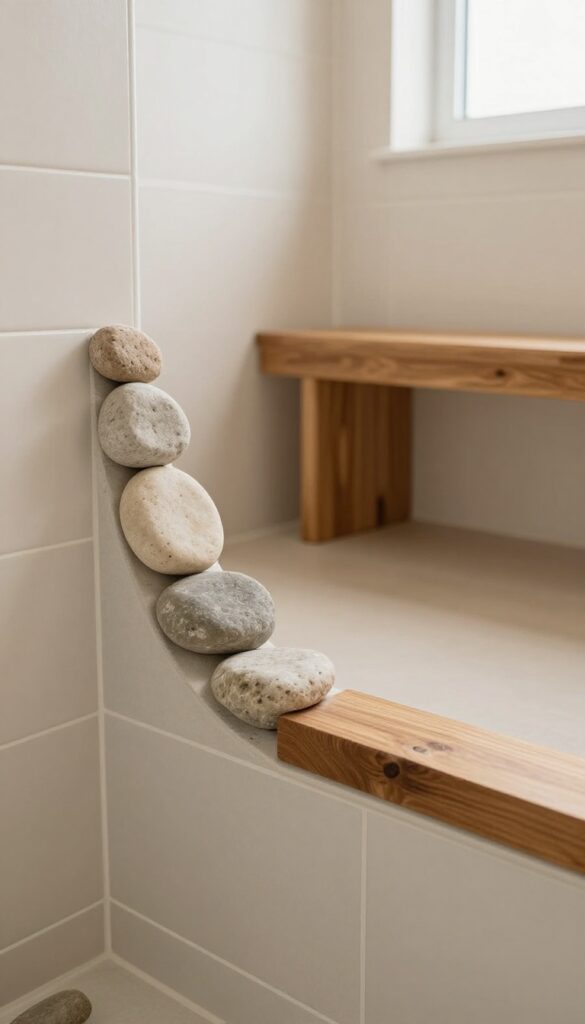
A shower curb might not be the first thing you think about when designing a bathroom, but it's one of those details that can quietly elevate the whole space. Swapping a standard marble or tile curb for river rock set in concrete brings instant texture and an organic feel, while a smooth stone or wood threshold on top keeps it comfortable underfoot. This approach works especially well in smaller bathrooms where every element needs to earn its keep—it adds character without eating up visual space.
Why It Works
The contrast between the rough river rock sides and the smooth top creates a tactile experience that feels both grounded and refined. In a compact shower, this curb defines the zone without adding bulk, and the natural materials tie into earthy color palettes beautifully.
Best For
Ideal for curbless or low-curb shower designs where you want a subtle transition between wet and dry areas. It's also a great choice for small bathrooms or powder rooms where you need maximum style with minimal footprint.
Styling Tip
Pair the curb with warm wood accents—like a teak bench or bamboo mat—to echo the organic vibe. Keep wall tiles neutral (think creamy white or soft gray) so the river rock remains the star without competing.
6. Pebble Niche With a Floating Glass Shelf
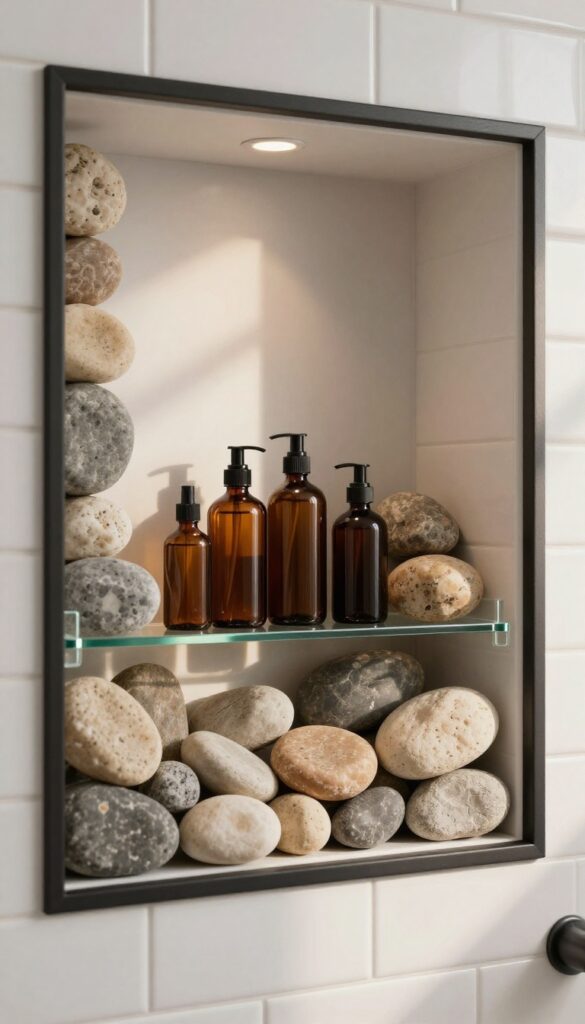
A shower niche lined with river rock brings a spa-like feel into even the smallest bathroom. The organic texture of smooth pebbles adds visual depth without eating up any floor space, making it a smart choice for compact showers. Adding a clear glass shelf keeps your bottles within easy reach while letting the stone pattern shine through, so the niche feels functional rather than cluttered.
Why It Works
The pebble surface provides a natural, tactile contrast to standard tile walls, creating a focal point that draws the eye. A floating glass shelf maintains an open, airy look—perfect for small spaces where every inch counts. It also makes cleaning easier since you can wipe down the shelf without disturbing the stone.
Best For
This idea works well in guest bathrooms or primary suites where you want a subtle luxury upgrade without major renovation. It's especially effective in showers with limited shelving options, as the niche maximizes storage without protruding into the shower area.
Styling Tip
Stick to neutral-toned pebbles like beige, gray, or charcoal to keep the look calm and cohesive. Pair with matte black or brushed nickel fixtures for a modern edge, and use amber glass bottles for shampoo and conditioner to add warmth against the cool stone.
7. River Rock Shower Floor With a Linear Drain
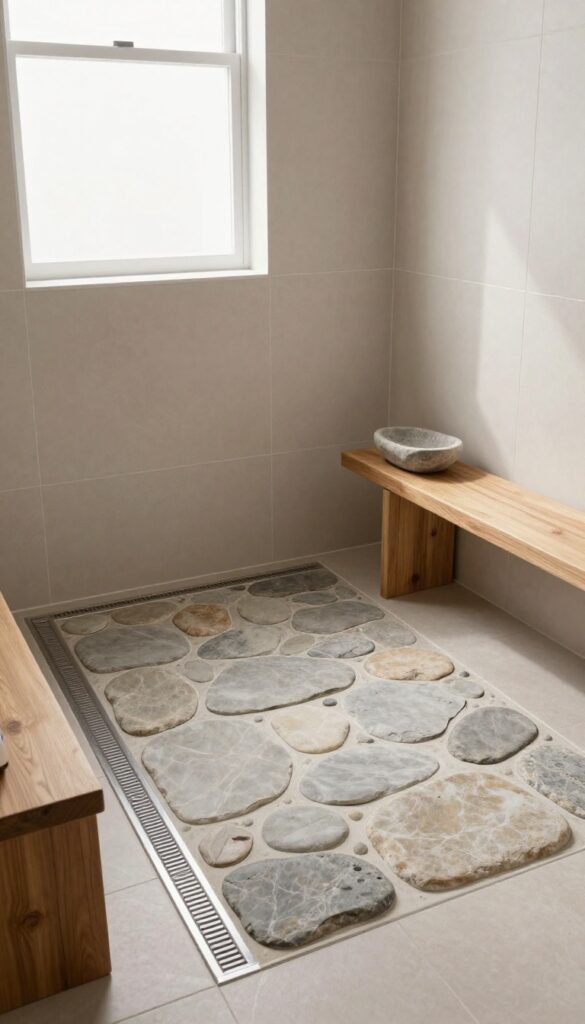
For a shower floor that feels both grounded and sleek, large flat river rocks paired with a linear drain are a winning combination. The smooth, wide stones give your feet a natural texture without the pokey discomfort of round pebbles, and the linear drain tucked along one edge keeps the surface level and easy to clean. In a small bathroom, this setup makes the floor feel like a continuous, uncluttered plane—visually expanding the space while adding organic character.
Why It Works
Flat river rocks offer better footing and are much simpler to wipe down than traditional pebble mosaics. The linear drain eliminates the need for a sloped center drain, so the entire floor stays even and looks more modern. This combination brings natural texture into a small shower without overwhelming it.
Best For
Compact showers where every inch counts. The level floor and streamlined drain make the space feel larger and more intentional, perfect for small bathrooms or guest ensuites that need a touch of nature without sacrificing practicality.
Styling Tip
Choose river rocks in warm gray or taupe tones to complement neutral wall tiles. Add a matching stone soap dish or a wooden bench to tie the look together. Keep grout lines thin and in a similar color to the stones for a seamless finish.
8. Half-Wall River Rock Wainscoting
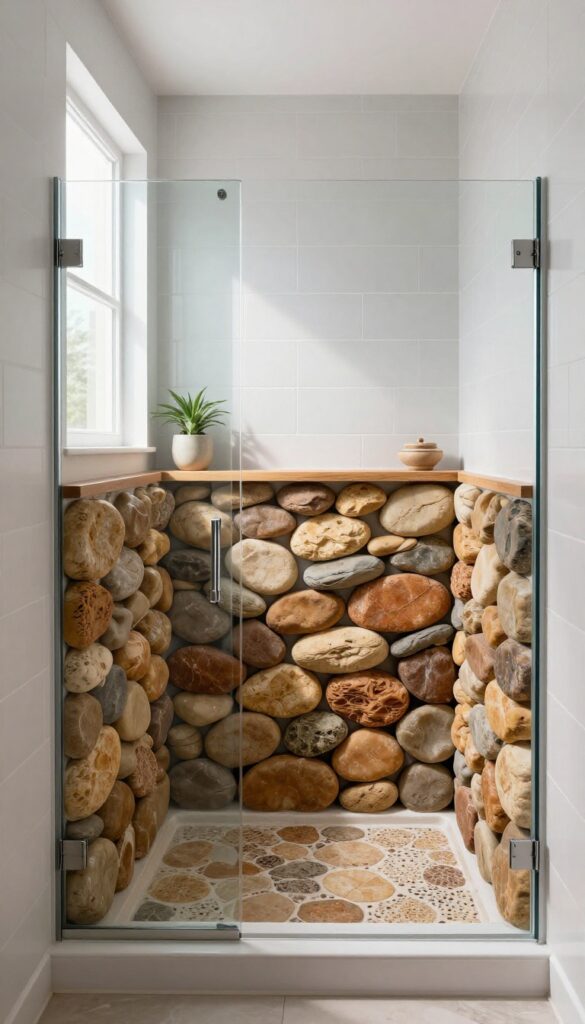
River rock doesn’t have to cover every surface to make an impact. By applying it only to the lower half of the shower walls—like a classic wainscoting treatment—you get all the natural texture without overwhelming a small bathroom. The smooth tile above keeps things light and airy, while the rocky base adds a grounding, organic feel.
It’s a smart way to bring in character without sacrificing visual space.
Why It Works
This approach visually anchors the shower without closing it in. The contrast between rough stone below and sleek tile above creates a deliberate, finished look that feels custom. In a compact bathroom, it gives you the warmth of natural material where you can appreciate it most—at eye level and below—while keeping the upper walls reflective and open.
Best For
Perfect for small bathrooms or powder rooms where full stone walls might feel too heavy. Also great for anyone who loves natural texture but wants to keep maintenance manageable—less river rock means less grout to clean.
Styling Tip
Stick with warm earth-toned rocks like tan, rust, and soft brown to pair with white or light gray upper tiles. Add a narrow wood shelf at the transition line for a subtle ledge that holds a small plant or soap dish.
9. River Rock Shower Seat With a Wood Top
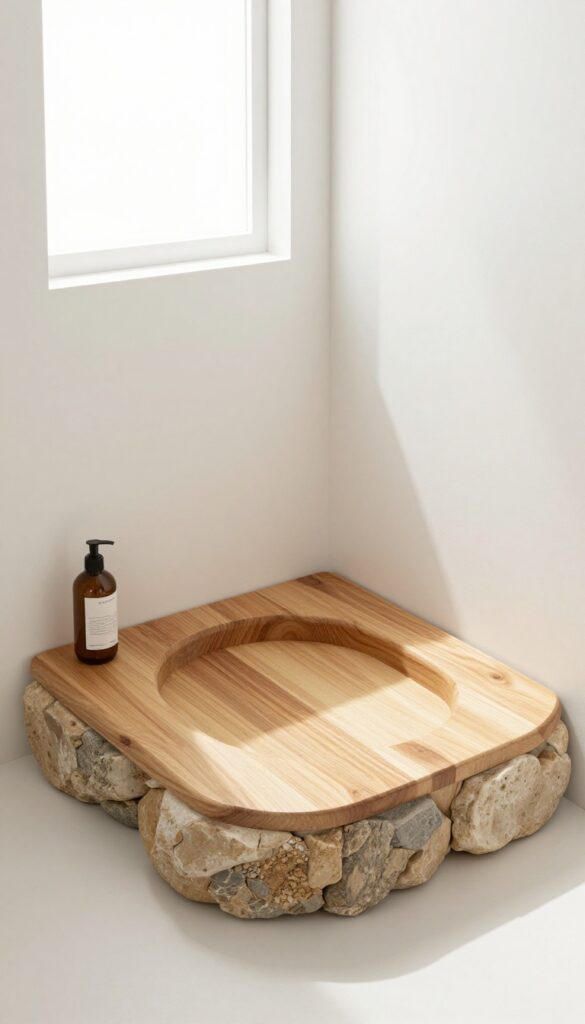
A corner shower seat built from river rock and capped with a warm wood slab is a smart way to add natural texture without sacrificing precious floor space. The rough stone base creates visual weight and organic character, while the smooth teak or cedar top offers a comfortable place to sit or rest a foot during shaving. In a compact shower, this combo pulls double duty: it’s both a functional perch and a sculptural element that makes the room feel more grounded and spa-like.
Why It Works
The contrast between cool, uneven stone and warm, smooth wood keeps the eye moving without overwhelming a small space. The seat tucks neatly into a corner, making use of an area that often goes empty, while the wood top adds a practical surface that’s easy to clean and pleasant to touch.
Best For
This idea shines in smaller bathrooms where every inch counts—think secondary baths, guest showers, or even a primary ensuite with limited square footage. It’s also ideal for anyone who wants to bring in natural materials without committing to an all-stone look.
Styling Tip
Choose teak for its water resistance and warm honey tone, or go with cedar for a lighter, more aromatic feel. Keep the wood top unfinished or sealed with a matte waterproof oil so it ages gracefully. For extra polish, add a single earthenware bottle of shampoo on the seat edge as an accent.
10. Pebble Accent Around a Rainfall Showerhead
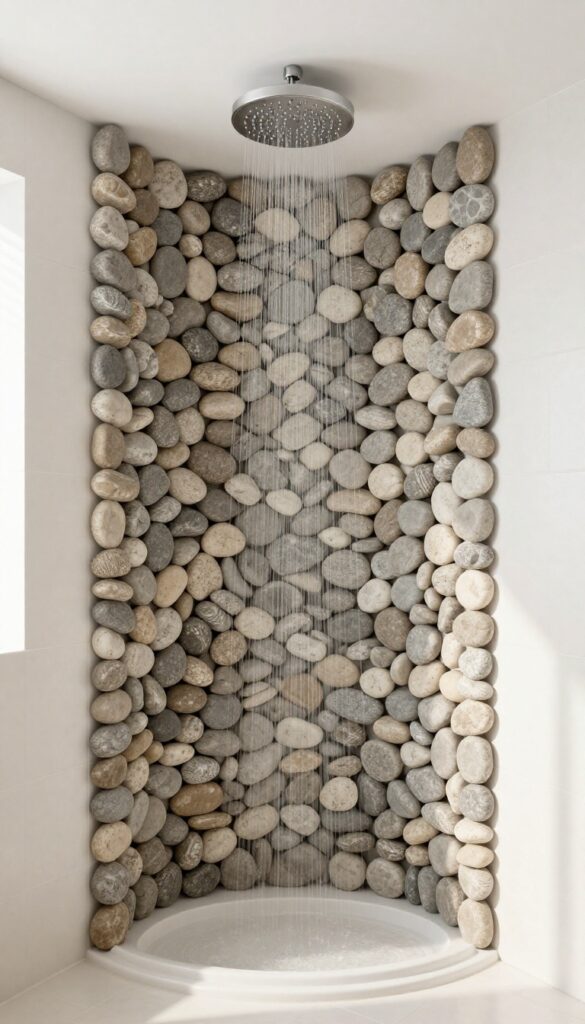
Imagine stepping into your shower and feeling like you're standing under a natural waterfall, even in a compact bathroom. Framing a ceiling-mounted rainfall showerhead with a circular or square patch of river rock creates an unexpected focal point right above you. The contrast between the smooth, rounded pebbles and the clean white ceiling draws the eye upward, making the whole space feel taller and more open.
It's a small detail that adds organic texture without taking up any floor space, which is perfect for tight bathrooms.
Why It Works
This trick uses vertical real estate to add visual interest without crowding the room. The river rock draws attention upward, which can make a low ceiling feel higher. Plus, the natural texture contrasts nicely with sleek fixtures and smooth tiles, giving the shower a spa-like feel that's still practical for everyday use.
Best For
Small bathrooms where floor space is limited but you still want a design moment. It's also great for anyone who loves nature-inspired details but doesn't want to commit to a full pebble floor or wall. Works especially well in showers with white or light-colored walls to let the pebble accent pop.
Styling Tip
Keep the surrounding ceiling smooth and painted bright white to make the pebble patch stand out. For the river rock, choose flat pebbles in neutral tones like gray, beige, or charcoal so they blend naturally rather than compete. Seal the pebbles with a matte stone sealer to prevent water damage and make cleaning easier.
FAQ
Is river rock slippery when wet?
River rock is naturally slip-resistant due to its uneven surface, making it a safe choice for shower floors. However, very smooth, polished stones can be slippery, so opt for tumbled or matte-finished rocks for better grip.
How do you clean river rock in a shower?
Clean river rock with a mild pH-neutral cleaner and a soft brush to remove soap scum from between the stones. Avoid harsh chemicals that can damage the grout or sealant. Sealing the rock annually helps prevent staining and makes cleaning easier.
Does river rock make a small shower look smaller?
It can if used too heavily. To keep a small shower feeling open, use river rock as an accent—on the floor, a single wall, or in a niche—and pair it with large-format light-colored tiles on the remaining surfaces.
What type of grout is best for river rock showers?
Use sanded grout for wider joints between river rocks, as it’s more durable and less likely to crack. For a seamless look, choose grout in a color that matches the rocks or opt for a contrasting shade to highlight the texture.
Can I install river rock over existing tile?
Yes, but only if the existing tile is in good condition and properly prepared. You’ll need to clean, rough up the surface, and apply a bonding agent before setting the river rock. For best results, consult a professional to ensure proper adhesion and waterproofing.
Conclusion
River rock doesn’t have to dominate your bathroom to make an impact. By using it strategically—as a floor, an accent wall, or even just a niche—you can bring natural warmth and texture into even the smallest shower without sacrificing style or space.
The key is balance: let the stone shine in one or two spots, and keep everything else clean, light, and intentional. Whether you go for a full pebble floor or a subtle border, these ideas prove that small bathrooms can still have big personality.