11 Professional Men’s Work Outfits for Office Confidence
Stepping into the office with confidence starts with what you wear. The right outfit can shift your mindset from just another workday to owning the room. It's not about following strict dress codes—it's about finding pieces that make you feel capable and comfortable.
Professional style for men has evolved beyond stiff suits and boring ties. Today, it's about smart combinations that balance polish with personality. Think textured blazers, well-fitted trousers, and thoughtful layering that works from morning meetings to after-work plans.
These 11 outfit ideas are built for real life. Each look is designed to be wearable, practical, and adaptable to your personal taste.
1. The Navy Blazer and Grey Trousers Combo
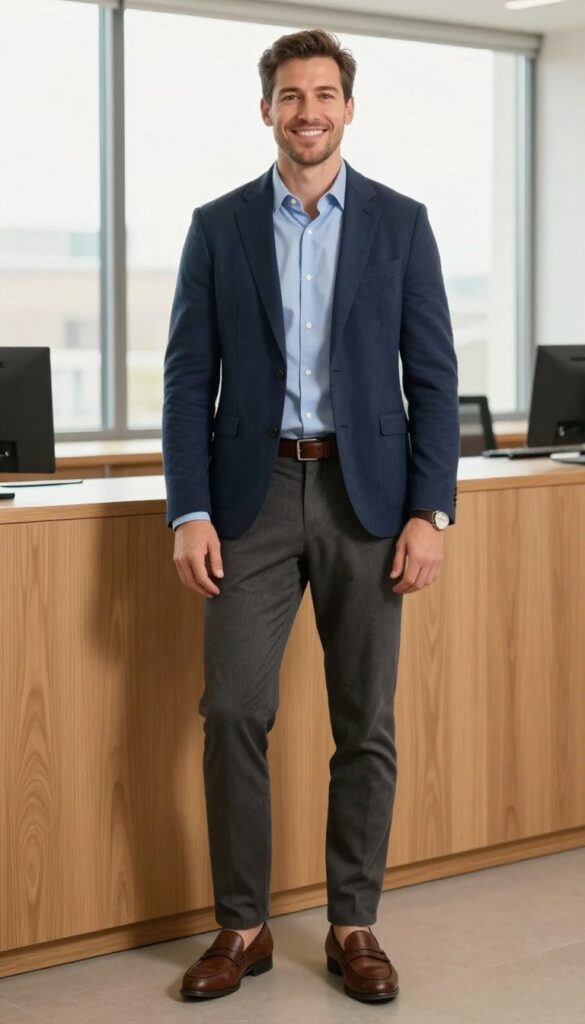
A navy blazer is the Swiss Army knife of professional style. Pair it with charcoal grey trousers and a light blue button-down, and you've got a look that says 'I mean business' without screaming for attention. This combo works for meetings, presentations, or any day you need to feel sharp and put-together.
Brown leather loafers and a matching belt tie it all together with a warm, polished finish.
Why This Color Combo Works So Well
Navy and grey are a power couple in men's fashion. Navy adds depth and authority, while grey keeps things soft and approachable. The light blue shirt bridges the two, adding a breath of freshness.
This palette is easy on the eyes and photographs well, making it ideal for video calls or in-person meetings.
The Right Fit Makes All the Difference
A blazer should hug your shoulders without pulling, and the sleeves should end just above your wrist bone. Trousers should have a slight break over your shoes—no pooling fabric. If you're between sizes, go with the larger and have it tailored.
A well-fitted outfit instantly elevates your confidence and presence.
Shoe and Accessory Pairing Tips
Brown leather loafers are the go-to here, but dark brown oxfords or derbies work too. Match your belt to your shoes for a cohesive look. A simple watch with a brown leather strap adds a touch of class.
Skip the tie unless the dress code demands it—this outfit is polished enough without one.
2. The Minimalist All-Black Ensemble
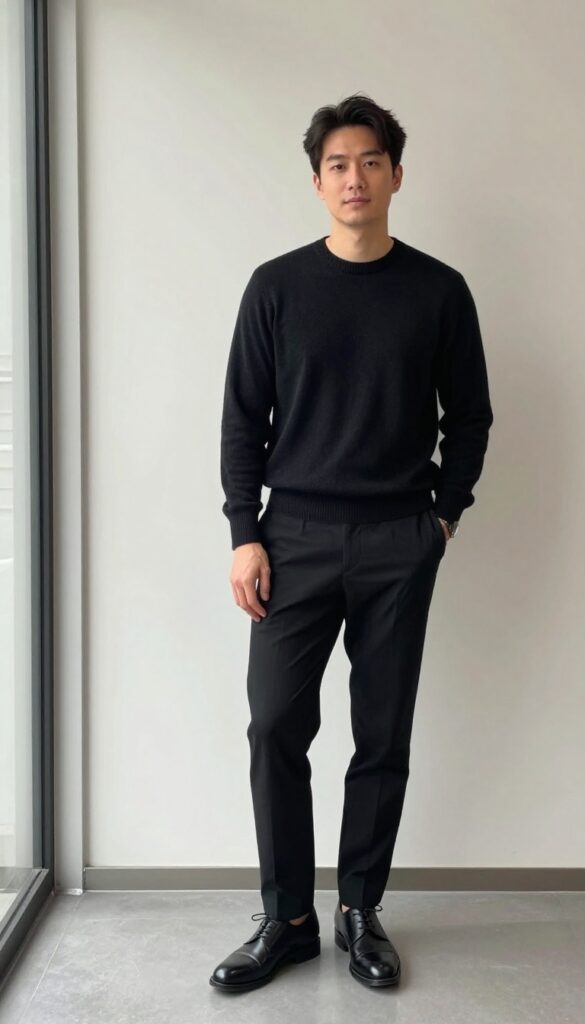
Sometimes the most powerful statement is the one you don't have to overthink. An all-black outfit strips away distraction and puts the focus squarely on you. It's a go-to for creative professionals who want to project quiet authority without shouting.
This look works especially well for evening meetings, gallery openings, or any setting where you want to feel sleek and intentional.
The Power of Monochrome
Wearing head-to-toe black creates an unbroken vertical line that naturally elongates your silhouette. It also simplifies decision-making: you don't have to worry about clashing colors or matching tones. The key is to mix textures to keep the look from feeling flat.
Pair a soft cotton crewneck sweater with smooth wool trousers and polished leather derbies. The contrast between matte and shiny surfaces adds depth without breaking the monochrome rule.
Fit Is Everything Here
Because the palette is so uniform, any fit issues become glaringly obvious. Make sure your sweater sits neatly at the waist without bunching, and your trousers break just once over your shoes. A slightly tapered leg keeps the line clean.
If you're between sizes, opt for the smaller one in the sweater for a trimmer look, and have your trousers hemmed to the right length. A well-fitted all-black outfit reads as expensive even if the pieces are budget-friendly.
Shoes That Anchor the Look
Black leather derbies are the natural choice here, but don't overlook the impact of shoe finish. A matte or lightly burnished leather keeps the outfit grounded, while patent leather would push it toward formal. For a slightly more casual take, try black suede derbies or minimalist black sneakers in smooth leather.
Either way, keep the shoe silhouette streamlined—chunky soles or heavy boots break the clean line you're building.
When and Where to Wear It
This ensemble shines in creative offices, design studios, tech companies with a smart-casual dress code, or after-work events where you want to transition seamlessly from desk to dinner. It also works for client meetings where you want to appear modern and confident without being stuffy. Avoid it in very traditional corporate environments that expect a jacket and tie—unless you add a black blazer, which keeps the minimalism intact while meeting the dress code.
3. The Smart Casual Chino and Blazer Pairing
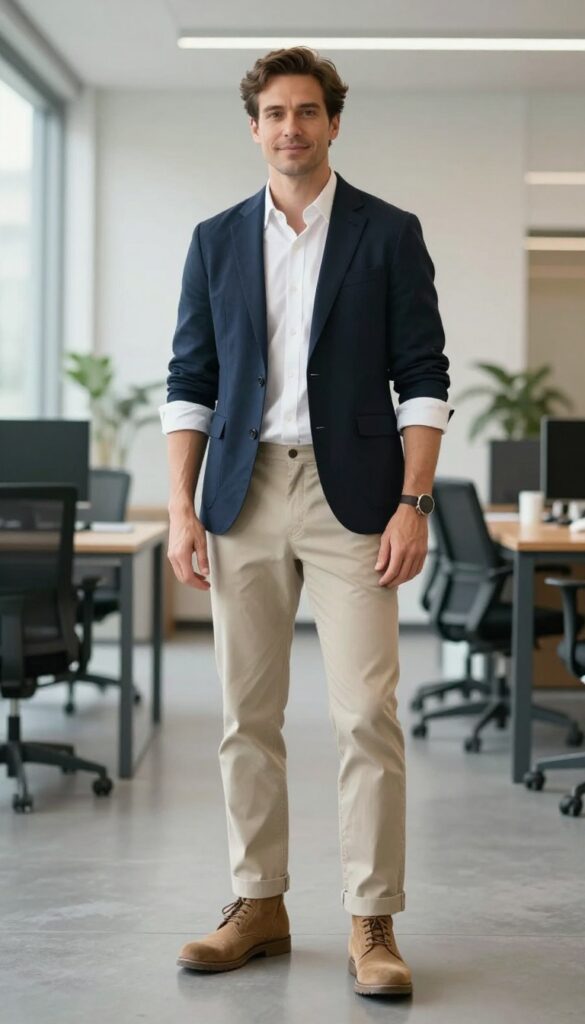
This outfit is your go-to for days when the dress code says 'business casual' but you want to look like you actually tried. The navy blazer and beige chinos combo is a classic for a reason: it's polished enough for a client meeting but relaxed enough for a post-work drink. The trick is in the details—a soft oxford cloth shirt and suede desert boots keep it from feeling stiff.
Why the Navy Blazer Works Here
A navy blazer is the ultimate utility player in a professional wardrobe. It adds structure and authority without the formality of a suit jacket. The key is fit: the shoulders should sit cleanly, and the sleeves should hit just above your wrist bone.
Choose a wool or cotton blend for year-round wear, and leave the top button undone for a relaxed vibe.
Balancing Texture and Color
The beige chinos provide a soft contrast to the navy, creating a balanced color palette that's easy on the eyes. Chinos in a cotton twill with a slight stretch offer comfort and a clean line. The white oxford cloth button-down adds a crisp texture, while the suede desert boots bring in a tactile, earthy element.
Roll the sleeves of the blazer or shirt to introduce a casual note.
When and Where to Wear This Look
This outfit shines in creative or tech offices where the dress code is smart casual, but it also works for client lunches, networking events, or even a casual Friday meeting. The desert boots make it easy to transition to after-work plans like dinner or drinks. Just swap the oxford for a chambray shirt if you want to dress it down further.
4. The Textured Knit and Wool Trousers Look
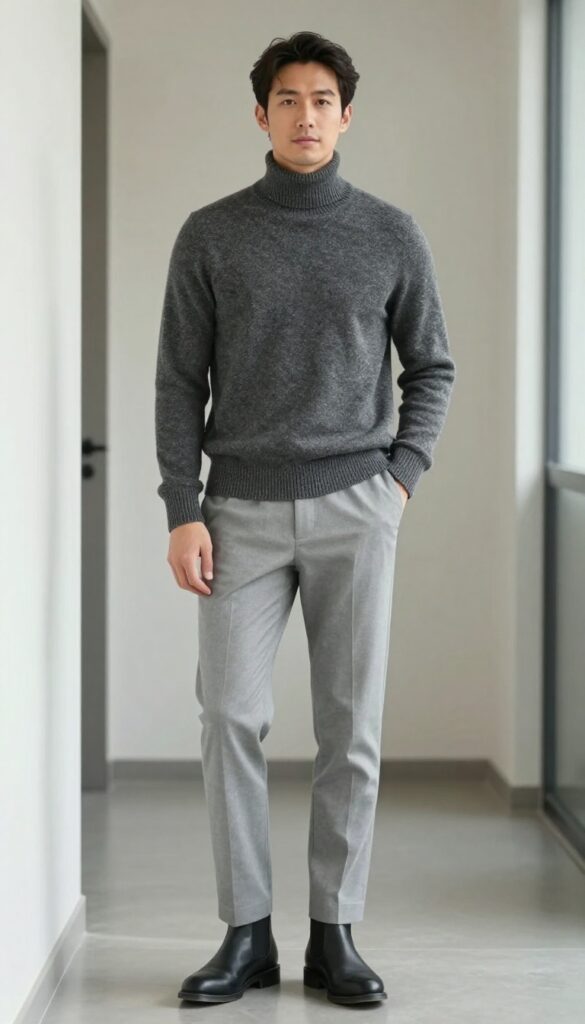
When the temperature drops but you still need to look sharp, this combo delivers. A charcoal merino wool turtleneck pairs beautifully with light grey wool trousers, creating a monochrome base that's anything but boring. The real star is texture—the knit's ribbing against the smooth wool adds visual interest without trying too hard.
Black Chelsea boots ground the look with a clean, modern finish. It's the kind of outfit that feels like a warm hug but looks completely put-together.
Why Texture Matters More Than Color
In a world of flat fabrics, texture is your secret weapon. The ribbed knit of the turtleneck catches light differently than the smooth worsted wool of the trousers, creating depth that reads as intentional and sophisticated. You don't need a pattern or a bright color to stand out—the contrast between matte and slight sheen does the work for you.
This is especially effective in neutral palettes where texture becomes the main event.
Choosing the Right Turtleneck Fit
Not all turtlenecks are created equal. For this look, go with a slim but not tight fit—the knit should skim your torso without pulling. A fine or mid-weight merino wool is ideal because it layers cleanly under a blazer if needed, but also works on its own.
Avoid chunky cable knits here, as they can add bulk under a jacket or disrupt the streamlined silhouette. A charcoal or heathered grey gives you that rich, moody tone that feels elevated.
Footwear That Completes the Silhouette
Chelsea boots are the natural choice because they keep the line from hem to floor uninterrupted. Black suede or leather works equally well—suede adds a softer, more casual feel, while leather leans dressier. The key is an elongated toe and a slim sole that doesn't look clunky.
This boot style also tucks neatly under the trouser hem, especially if you have the pants hemmed with a slight break or no break at all.
5. The Patterned Button-Down with Solid Suit
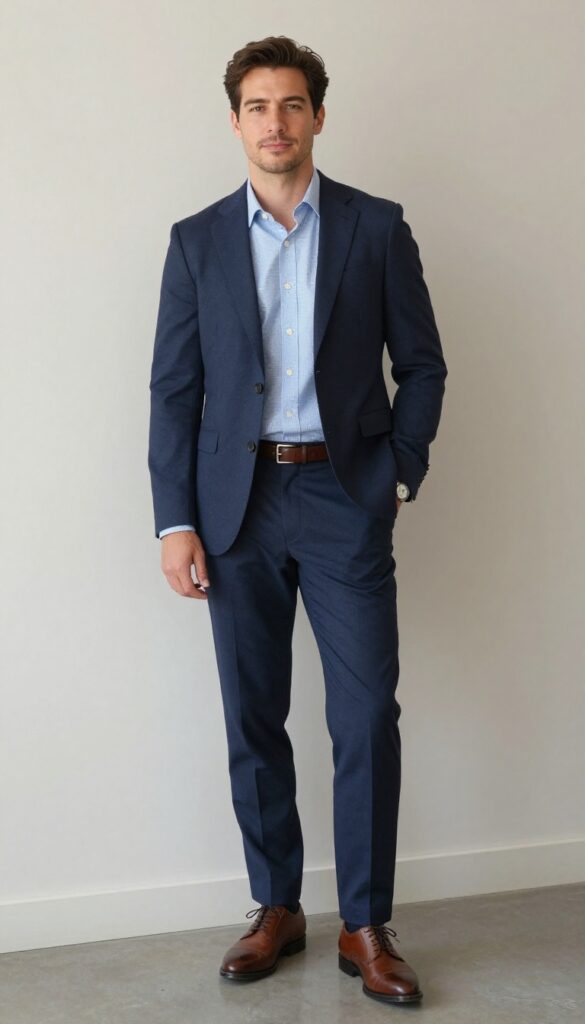
A subtle pattern under a solid suit is an easy way to show you've got style without shouting about it. This look keeps the professional foundation intact while adding a touch of personality that's perfect for client meetings or presentations. The key is balance: let the shirt do the talking and keep everything else quiet and refined.
Choosing the Right Pattern
Stick with small-scale prints like micro-check, mini gingham, or fine stripes. These read as polished from a distance and add texture up close. Avoid bold plaids or large florals—they can overwhelm the clean lines of a suit.
A blue or white base with a subtle contrast pattern works best under navy or charcoal.
Accessory Strategy
When your shirt has pattern, let accessories take a back seat. A simple brown leather strap watch and matching oxfords are all you need. Skip the pocket square or keep it solid white.
The goal is to look intentional, not busy. A matte leather belt in the same brown as your shoes ties everything together.
Suit and Shirt Coordination
Navy suits are the safest canvas for patterned shirts—the dark solid color lets the shirt pop without clashing. Charcoal works too, but avoid black suits, which can feel too harsh. Make sure the shirt's pattern is visible but not loud; you want people to notice it only when they're close enough to shake your hand.
6. The Denim and Sport Coat Weekend-to-Office Transition
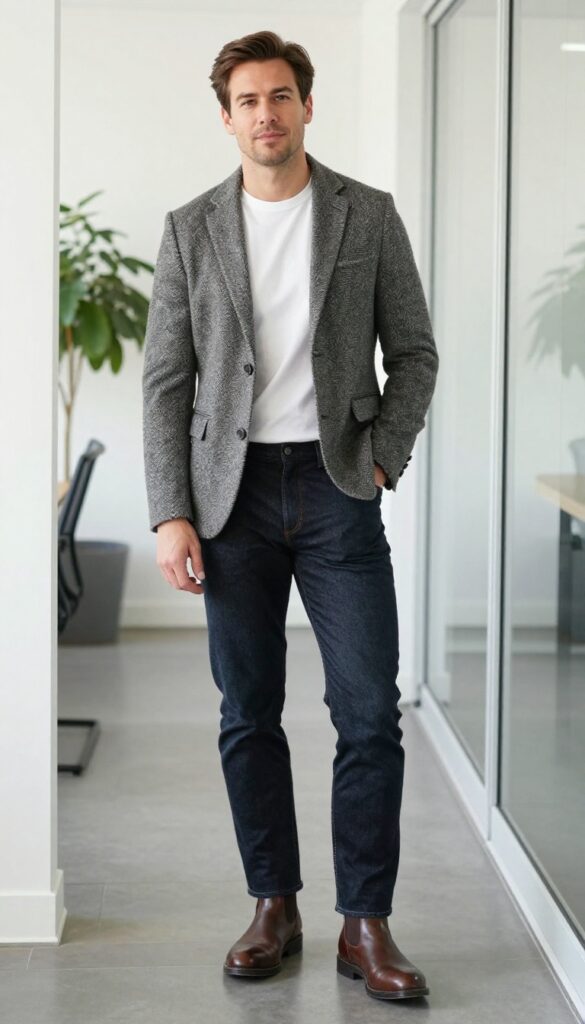
This look proves you don't need a full suit to look put-together at work. A grey tweed sport coat adds texture and structure, while dark wash jeans keep things relaxed. It's the kind of outfit that works just as well for a Friday meeting as it does for Saturday brunch.
The Foundation: Dark Wash Jeans and a White Tee
Start with a pair of slim or straight-leg dark wash jeans—no rips or fading. They're polished enough for the office but still feel like denim. A crisp white t-shirt (not too baggy, not too tight) keeps the base simple and lets the jacket do the talking.
The Jacket: Why Tweed Works
A grey tweed sport coat brings texture and a bit of heritage feel without being stuffy. The herringbone or houndstooth pattern adds visual interest, and the natural wool blend breathes well year-round. Make sure the shoulders fit well and the sleeves show a half-inch of shirt cuff.
Footwear and Finishing Touches
Brown leather boots—chukka or Chelsea styles—anchor the look with a rugged-meets-refined vibe. Add a dark leather belt and a simple watch with a brown strap. If you need to dress it up, swap the tee for a light blue button-down and trade the boots for brown loafers.
7. The Light Layers for Spring and Summer
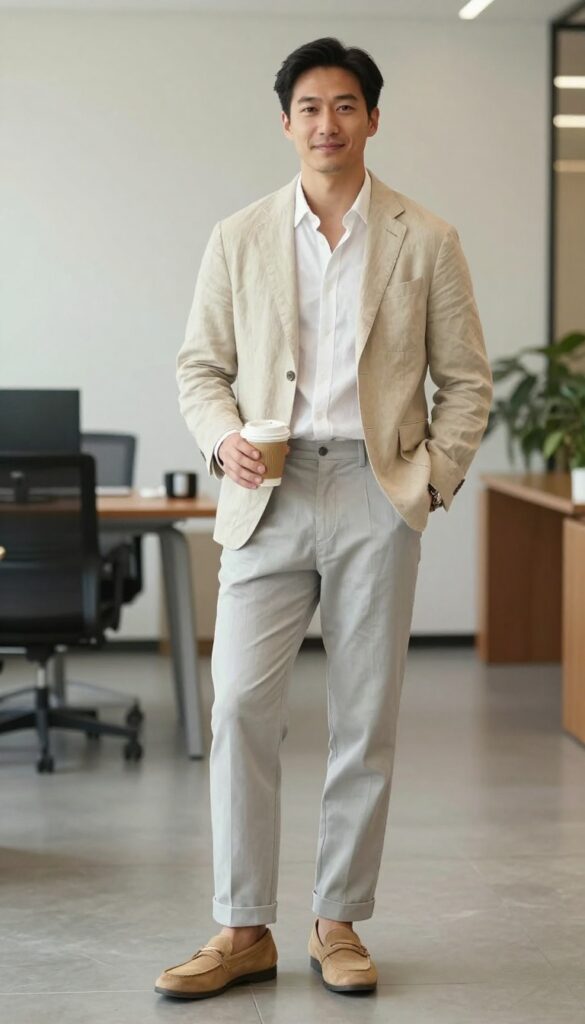
When the mercury rises, you don’t have to sacrifice polish for comfort. A linen blazer in light beige over a white linen shirt and light grey trousers keeps you cool and professional. Loafers or driving mocs complete the look.
This outfit breathes well and works for warm-weather offices or outdoor meetings.
The Fabric Advantage
Linen is the hero here. It’s naturally breathable, moisture-wicking, and gets softer with each wear. The blazer adds structure without the weight of wool, while the linen shirt prevents that sticky feeling.
Trousers in a lightweight wool or cotton blend keep the silhouette sharp without clinging.
Footwear That Matches the Mood
Loafers in tan suede or leather driving mocs keep the outfit relaxed but office-appropriate. They’re easy to slip on and off, and they complement the light palette. Avoid dark, heavy shoes—they’ll throw off the airy feel.
A woven belt in a similar shade ties the look together.
Where This Look Shines
This is perfect for creative offices, client lunches, or days when you’re moving between air conditioning and outdoor heat. It’s also a great travel outfit—the layers pack well and resist wrinkles better than you’d think. Add a pair of sunglasses and you’re set for a summer workday.
8. The Three-Piece Suit Without the Jacket
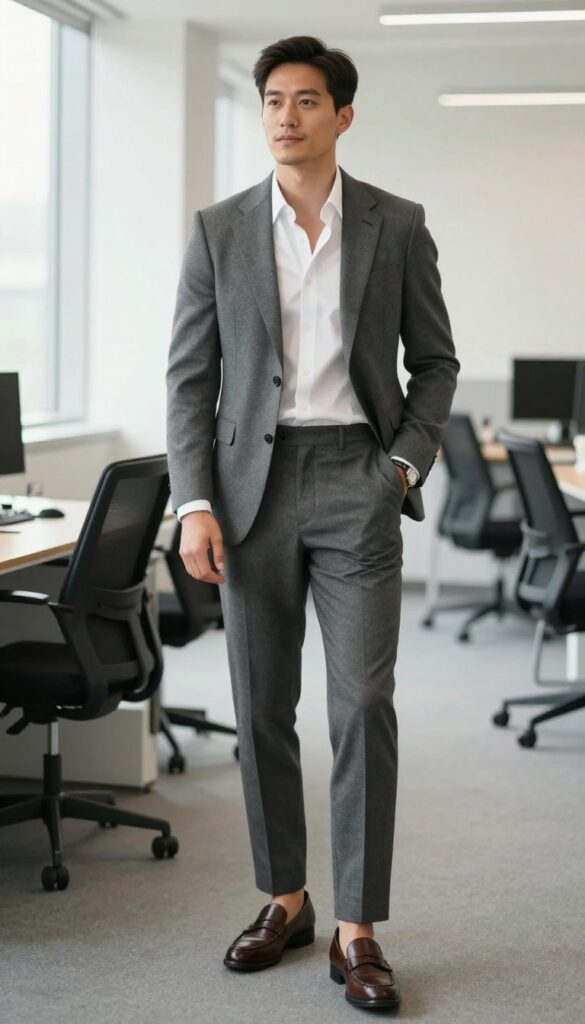
A three-piece suit is a power move, but wearing the full set can feel too formal for a regular Tuesday. The fix is simple: leave the jacket at home. The waistcoat and trousers alone create a sharp, structured look that's still relaxed enough for brainstorming sessions or client lunches.
Roll up your sleeves, skip the tie, and you've got an outfit that says you mean business without trying too hard.
Why the Waistcoat Works Solo
A waistcoat adds definition to your torso and creates a natural V-shape that flatters most body types. Worn without the jacket, it keeps the polished structure of a suit while letting your shirt and arms breathe. The key is fit: the waistcoat should hug your ribcage without pulling at the buttons, and the bottom should sit right at your waistband.
Trousers and Shirt Pairing
Stick with the matching trousers from the suit for a seamless monochrome look. A crisp white or light-blue cotton shirt keeps things clean and professional. Roll the sleeves twice to just below the elbow—this small detail signals approachability and keeps the outfit from feeling stiff.
A pocket square or a subtle watch adds a touch of personality without going overboard.
Footwear and Finishing Touches
Leather loafers or Derby shoes in brown or black ground the look. Avoid sneakers here—the waistcoat demands a dressier shoe. A leather belt that matches your shoes ties it all together.
For a modern edge, try a suede loafer in a warm tone like tan or burgundy. This outfit works best in air-conditioned offices or during mild weather when you can skip the jacket comfortably.
9. The Earth-Tone Layered Look
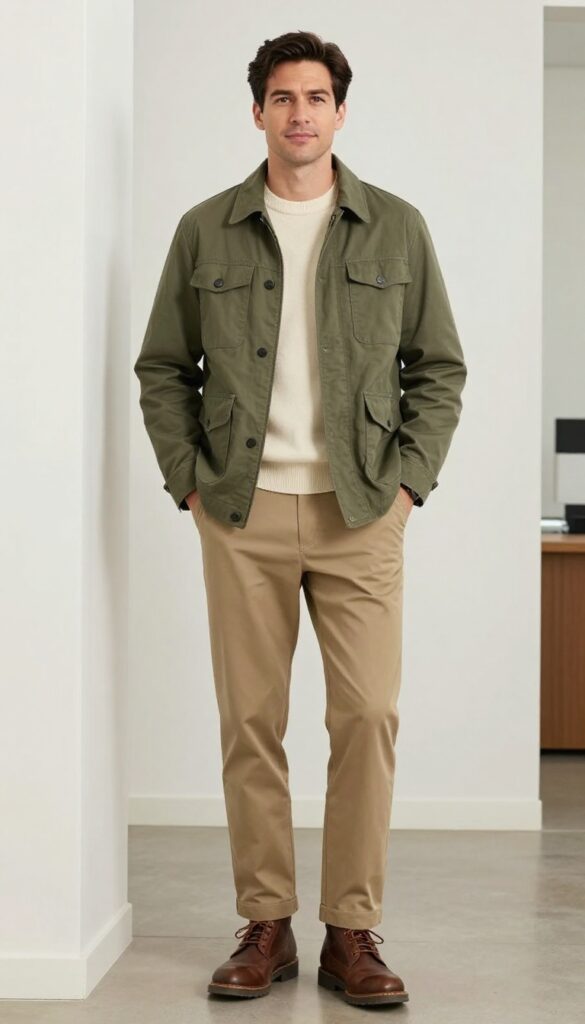
Earth tones bring a grounded, confident energy to the office. This outfit layers an olive green field jacket over a cream sweater, paired with khaki chinos and brown leather boots. The result is rugged yet refined—perfect for casual Fridays or creative workplaces where you want to look intentional without trying too hard.
The muted palette is easy to mix and match with other pieces in your wardrobe, making this a go-to combo for days when you need to feel both comfortable and put-together.
Why Olive and Cream Work Together
Olive green and cream create a soft contrast that feels natural and sophisticated. The cream sweater brightens your upper half, while the olive jacket adds depth without overpowering. This balance keeps the look approachable and professional.
Stick to a true olive (not too yellow or too dark) and an off-white cream to maintain the earthy vibe. Avoid stark white, which can feel too harsh against the muted tones.
Choosing the Right Field Jacket
A field jacket should hit at the hip and have a slightly relaxed fit—not too boxy, not too slim. Look for one in cotton canvas or twill with minimal details like two front pockets and a simple collar. Avoid military-style patches or oversized pockets that can read too casual.
The jacket becomes the anchor piece, so invest in good quality that holds its shape. For warmer months, swap to a lighter-weight version in the same color.
Boots That Tie the Look Together
Brown leather boots are the natural finish for this outfit. Choose a chukka or Chelsea boot in a medium brown—think walnut or chestnut—to complement the khaki chinos and olive jacket. The boots add a rugged touch that keeps the look from feeling too preppy.
Make sure the leather is polished but not overly shiny; a matte or slightly burnished finish works best. If your office is more formal, swap to a brown derby shoe for a sleeker silhouette.
10. The Preppy Sweater and Chinos Combination
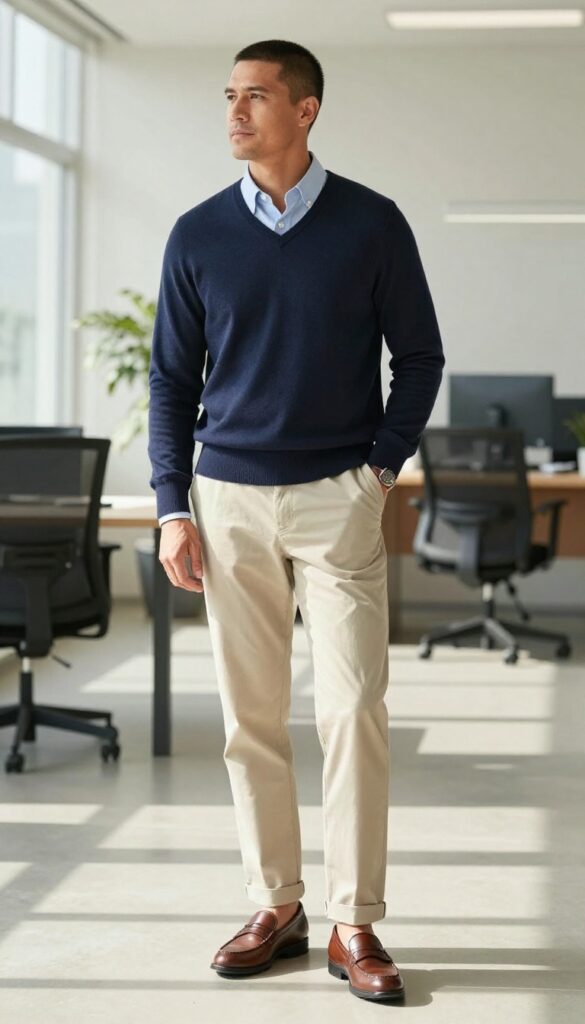
This outfit channels a timeless Ivy League ease that works just as well in a creative office as it does for a client lunch. The navy V-neck sweater over a light blue button-down is a classic pairing that instantly reads as polished but not stiff. Stone chinos keep the look light and approachable, while penny loafers add a touch of heritage charm.
It's the kind of outfit that makes you look like you put thought into your style without trying too hard.
Why Navy and Stone Work Together
Navy and stone are a foolproof color combination because they balance depth and lightness. The dark sweater anchors the look, while the light chinos keep it from feeling heavy. This contrast also helps define your silhouette—the darker top draws the eye upward, and the lighter pants create a clean line that lengthens your legs.
It's a subtle trick that makes you look taller and more composed.
Getting the Sweater Fit Right
The key to this look is a sweater that fits well through the shoulders and chest without being baggy. A V-neck should sit just above the collarbone, and the hem should hit around your waistband—not below your hips. If the sweater is too long, it will throw off the proportions with chinos.
A fine-gauge knit works best here because it layers neatly under a blazer if the afternoon gets chilly.
Footwear That Finishes the Look
Penny loafers are the natural choice for this preppy vibe, but they need to feel current. Go for a pair in polished leather—brown or burgundy adds warmth, while black keeps it more formal. If loafers aren't your thing, clean white leather sneakers can work for a more casual office.
Just avoid anything too chunky or athletic, as that would break the refined feel of the outfit.
11. The Dark Denim and Blazer Night Meeting Look
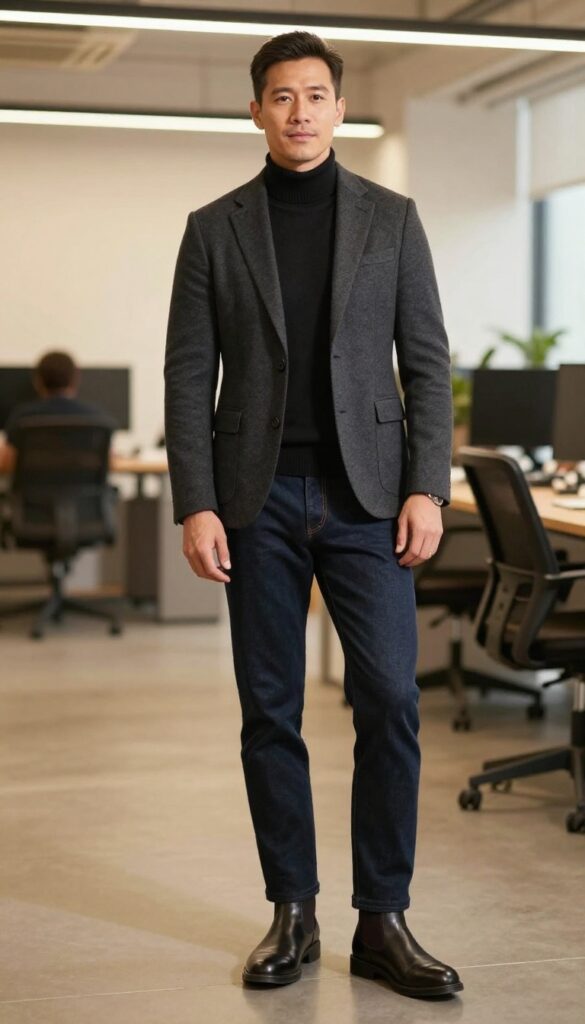
Evening meetings call for a slightly different energy. This outfit keeps you looking sharp without feeling like you're still in daytime boardroom mode. Dark denim paired with a structured blazer creates a look that's professional but relaxed enough for after-hours networking.
Why Dark Denim Works for Night Meetings
Dark indigo jeans read as more polished than lighter washes, especially in low light. Their deep color blends well with a charcoal blazer, creating a cohesive silhouette that doesn't scream 'casual Friday.' Choose a slim or straight fit—not too tight, not too baggy—to keep the line clean.
The Power of a Black Mock-Neck
A black mock-neck sweater adds a modern, minimalist touch. It's sleeker than a button-down and avoids the stiffness of a tie. The high neckline balances the blazer's lapels, drawing attention to your face.
Opt for a fine knit in merino or cashmere for a refined texture.
Chelsea Boots: The Perfect Evening Shoe
Black leather Chelsea boots bridge the gap between dress shoes and casual footwear. They're easy to slip on, comfortable for standing at networking events, and their sleek profile complements the slim jeans. Keep them polished to maintain the professional edge.
Accessorize with Intention
Keep accessories minimal. A simple leather watch with a black or brown strap works well. Avoid bulky belts—a slim, dark leather belt is enough.
If you carry a bag, choose a leather messenger or a sleek backpack in black or dark brown to stay cohesive.
FAQ
Can I wear jeans to a professional office?
Yes, but stick to dark wash, slim or straight fit jeans without rips or fading. Pair them with a blazer or sport coat to elevate the look.
What shoes are best for a business casual office?
Loafers, derbies, Chelsea boots, and clean leather sneakers are all great options. Choose brown or black leather for versatility.
How can I add personality to my work outfits?
Incorporate subtle patterns like gingham or micro-checks, textured fabrics like tweed or linen, and accessories like a leather watch or a pocket square.
Is it okay to wear a t-shirt under a blazer?
Yes, especially in creative or casual offices. Choose a high-quality, solid-color t-shirt in white, black, or navy for a clean look.
What colors work best for a professional wardrobe?
Navy, grey, beige, olive, and white are foundational. Add pops of color like burgundy or forest green through accessories or knitwear.
Conclusion
Building a work wardrobe that balances professionalism and personal style doesn't have to be complicated. Start with versatile staples like a navy blazer, tailored trousers, and quality shoes, then layer in pieces that reflect your personality. Remember, confidence comes from feeling comfortable in what you wear.
Experiment with these outfit ideas to find what works for your office culture and your own sense of style. With the right combinations, you'll walk into every meeting ready to impress.