
9 Long Narrow Living Room Ideas That Flow
Most long narrow living rooms don’t have a “style problem,” they have a traffic problem. People try to decorate them like a normal square room, then wonder why everything feels cramped and awkward.
The shape isn’t your enemy, but it does demand smarter layout choices.
Once you stop forcing symmetry and start designing around movement, the room suddenly makes sense.
The good news is you don’t need a renovation to fix it, just a few layout and styling decisions that actually respect the space.
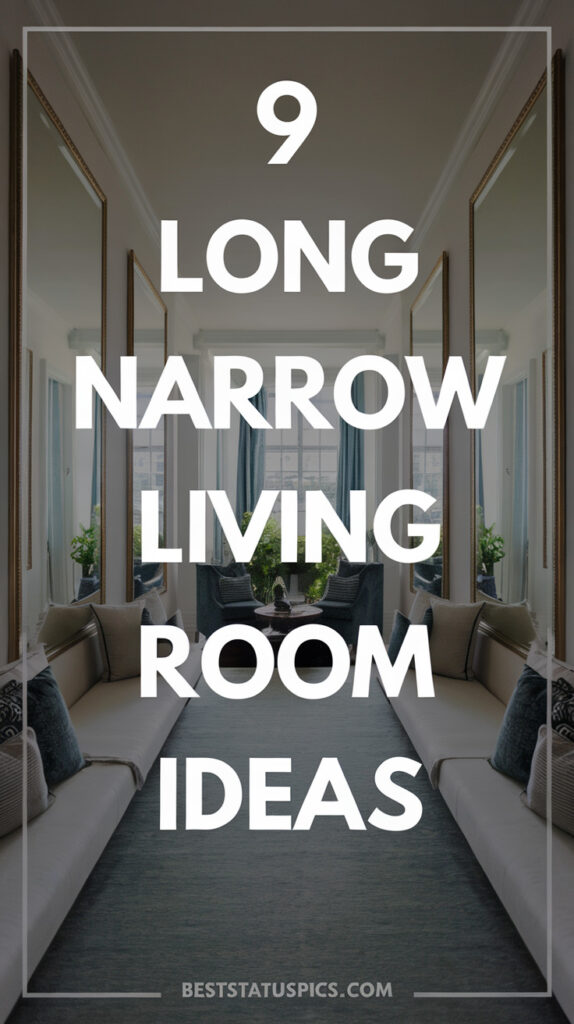
1. Create Two Separate Zones Instead of One Long Layout
The biggest mistake people make in a long narrow living room is treating it like one big stretched-out space. That’s how you end up with a lonely sofa at one end and random furniture floating in the middle like it gave up halfway.
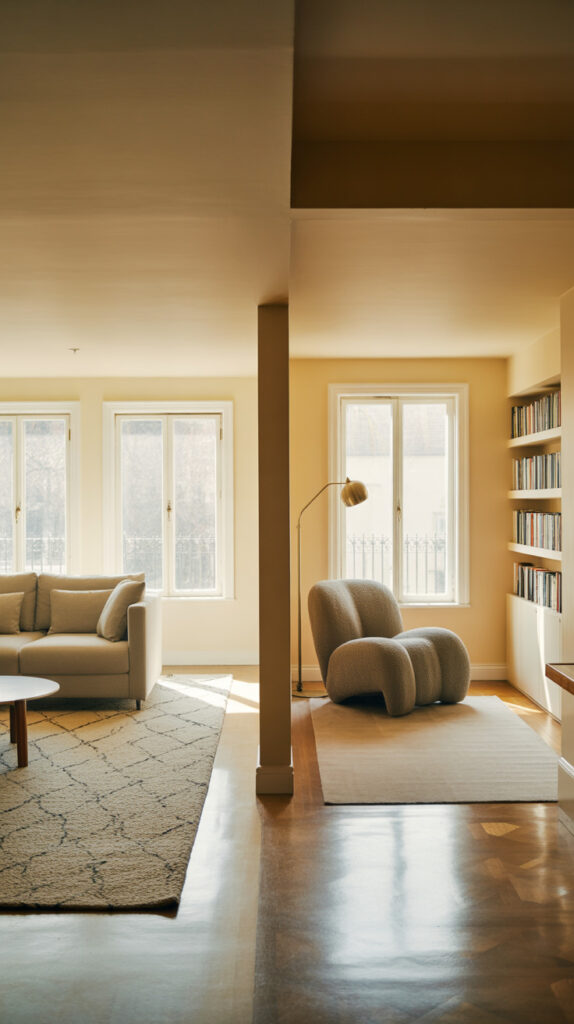
This idea is about splitting the room into two distinct zones so it feels intentional, not like a hallway with a couch.
You can create a main seating area on one side and a secondary zone like a reading nook, mini office corner, or even a small bar setup on the other.
I’ve done this in a narrow space before, and the room instantly felt bigger because it finally had purpose. The weird part is that dividing the room actually makes it feel less cramped.
Why This Works
Long rooms feel awkward because your eyes travel too far without stopping. When you create zones, you give the space natural “breaks,” so it feels cozy and structured instead of stretched out.
It also makes furniture placement easier because each zone has a clear job.
This is basically how designers cheat narrow rooms into looking balanced. Instead of fighting the length, you make it work for you by giving the room multiple destinations.
How to Do It
- Decide your main zone first, usually the TV + sofa area, because that needs the most space.
- Pick a second zone that fits your lifestyle, like a reading chair corner, console table workspace, or even a small bench area.
- Use a rug in each zone to visually separate them and make them feel like their own mini-room.
- Place furniture so it faces inward toward its zone instead of lining everything against the walls.
- Add one anchor item in the second zone, like a chair, small desk, or cabinet, so it doesn’t look like leftover space.
Style & Design Tips
Use rugs that relate to each other, not two totally different vibes. If one rug is modern and the other is farmhouse, the room starts looking confused. I also recommend keeping furniture legs visible because chunky, heavy pieces can make narrow rooms feel boxed in.
Avoid pushing everything flat against the walls because that creates a bowling-lane look. A few inches of breathing space makes a big difference, and yes, it’s annoying how much that works.
Pro Tip or Budget Hack
If you don’t want to buy two rugs, you can layer one big neutral rug under the main area and use a smaller patterned one for the second zone. Even a budget jute rug works great as a base layer. The goal is separation, not perfection.
2. Float the Sofa (Yes, Even in a Narrow Room)
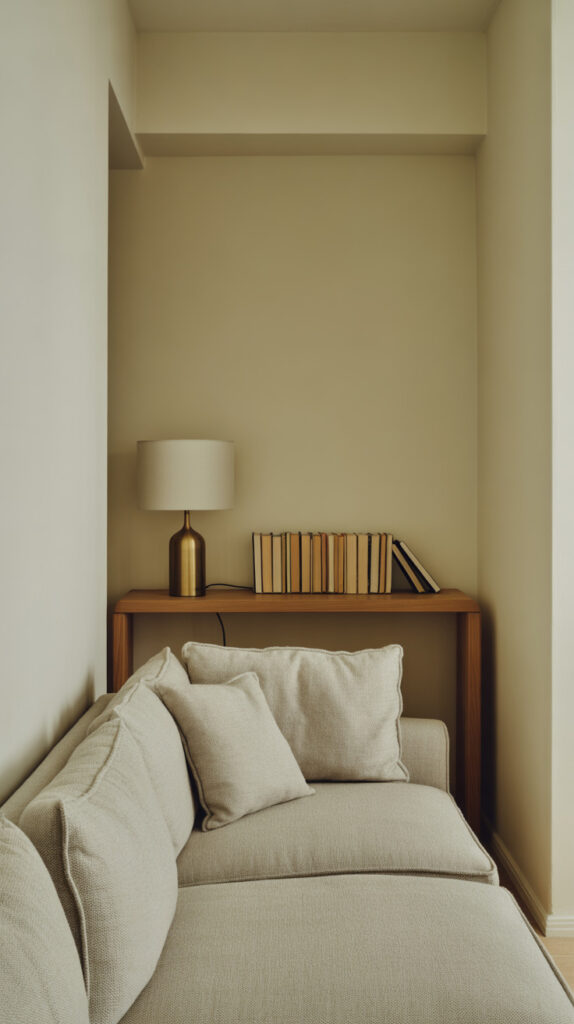
Most people automatically shove the sofa against the longest wall because it feels “safe.” The problem is it usually makes the room feel even narrower, like you’re trying to squeeze everything into a straight line. Floating the sofa a little forward creates space behind it and makes the layout feel more open.
I know this sounds backwards, but it works shockingly well. I tried it once in a tight living room and it instantly stopped feeling like a hallway. The room felt designed instead of accidental.
Why This Works
When the sofa hugs the wall, your eye follows the wall line and the room looks long and skinny. Floating it breaks that visual tunnel effect. It also gives you the chance to create a console table behind the sofa, which adds storage and style without eating up extra space.
Floating furniture is one of those designer moves that looks expensive even when you do it on a budget. It creates depth, and depth is what narrow rooms desperately need.
How to Do It
- Pull the sofa 6–12 inches away from the wall to start, and see how it feels.
- Add a slim console table behind it, or even a narrow bench if you need extra seating.
- If your room allows, angle the sofa slightly to soften the straight lines.
- Keep walking paths clear by leaving at least 30 inches of space for movement.
- Use a rug to anchor the sofa so it doesn’t look like it’s randomly floating.
Style & Design Tips
A narrow console table behind the sofa is a game changer, but don’t choose one that’s bulky. Go for something slim with open legs or light wood so it doesn’t feel heavy. Add one tall lamp and one decorative tray to keep it styled without clutter.
Avoid filling that table with ten little objects because it turns into visual noise fast. Narrow rooms already feel busy, so keep styling simple and clean.
Pro Tip or Budget Hack
If a console table feels expensive, use two matching small stools tucked behind the sofa instead. You get the same layered look, plus extra seating when guests come over. It’s a sneaky little trick that looks intentional.
3. Use a Long Runner-Style Rug Instead of a Standard Area Rug
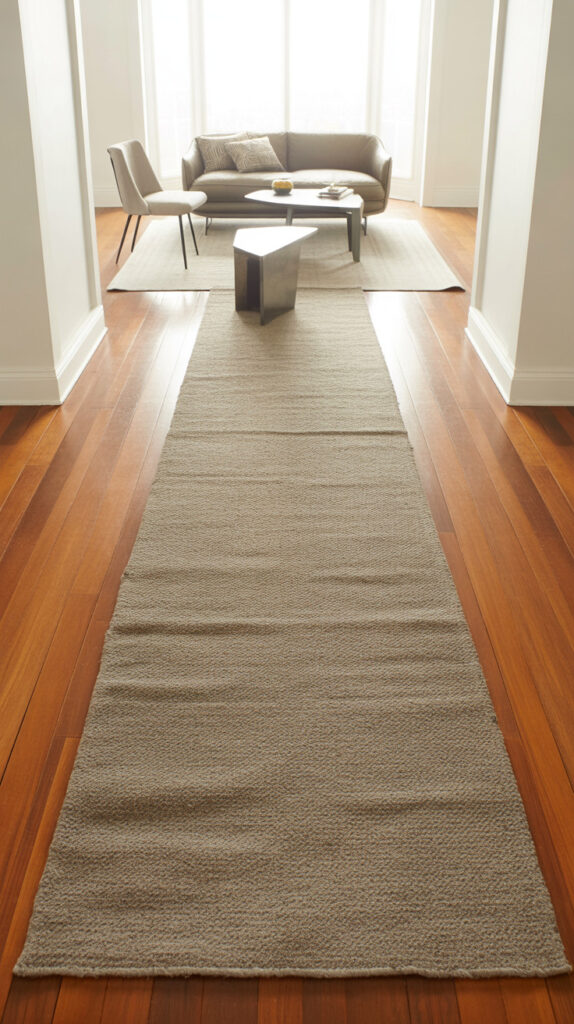
A normal area rug in a narrow living room can look awkward because it either doesn’t fit the width or it leaves weird gaps that make the room feel even longer. A runner-style rug or a long rectangular rug helps guide the room visually without making it feel chopped up. It also makes walking through the space feel smoother.
I’ve seen so many narrow rooms where the rug is too small and it just looks like a sad little patch in the middle. A longer rug gives the room a sense of direction and structure. It’s one of those simple fixes that instantly makes everything look more polished.
Why This Works
Rugs control how the room is “read.” A long rug helps your eyes move through the room naturally instead of jumping awkwardly from one area to another. It also makes the space feel connected and intentional.
The right rug shape can make a narrow room feel wider because it creates a strong foundation line. That foundation helps furniture placement look more stable and balanced.
How to Do It
- Measure your space and choose a rug that runs parallel with the length of the room.
- Make sure at least the front legs of the sofa and chairs sit on the rug.
- If your room is extremely narrow, consider a runner layered over a larger neutral rug.
- Keep rug placement centered with the seating area, not necessarily the whole room.
- Choose low-pile rugs so doors and foot traffic don’t become annoying.
Style & Design Tips
Patterns can work beautifully here, but keep them consistent with your room palette. A bold rug in a narrow room can be amazing, but it needs calm furniture around it. If your furniture is already colorful, go with a neutral rug to avoid chaos.
Avoid tiny rugs at all costs because they make the room look smaller instantly. A rug that’s slightly too big is always better than one that’s too small.
Pro Tip or Budget Hack
If you can’t find the perfect long rug, buy two identical runners and place them side by side. It sounds a little ridiculous, but it can look amazing if the pattern lines up. Just secure them with rug tape so they don’t slide apart and ruin your life.
4. Swap the Coffee Table for Two Ottomans or Nested Tables
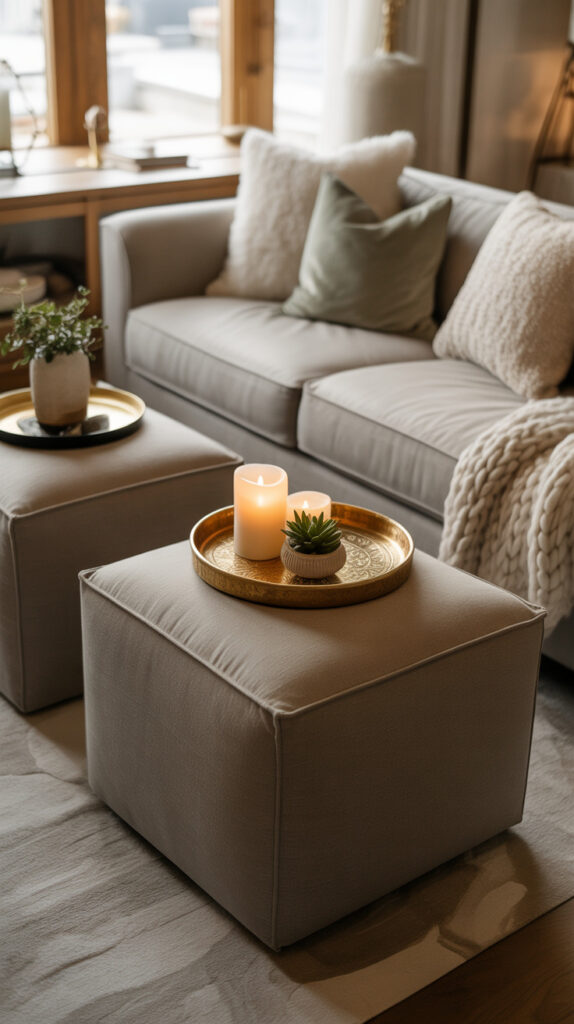
A bulky coffee table in a narrow living room is basically a shin-destroying obstacle. It eats up walking space and makes the room feel cramped, especially when you’re trying to move around it. Instead, use two ottomans, nested tables, or even a long upholstered bench.
This is one of my favorite tricks because it adds flexibility. You can shift pieces around when guests come over, and the room feels more open day-to-day. Plus, ottomans are secretly more comfortable than coffee tables anyway.
Why This Works
Narrow rooms need furniture that adapts. Ottomans and nesting tables give you surface space without permanently blocking the walkway. They also visually feel lighter, especially if they have legs or a smaller footprint.
This layout also makes the room feel less rigid. Instead of one big chunk in the middle, you get pieces that can move and breathe.
How to Do It
- Replace your standard coffee table with two matching ottomans or poufs.
- Add a tray on top if you still want a stable surface for drinks.
- If you prefer tables, choose nesting tables that tuck away when not needed.
- Keep the center walkway clear by leaving at least 18 inches between seating and table pieces.
- Choose pieces that match the scale of your sofa, not oversized ones.
Style & Design Tips
Ottomans look best when they coordinate with your sofa but don’t match it exactly. Try a textured fabric like boucle, leather, or woven material for visual interest. If you go with nesting tables, look for thin metal legs or glass tops to keep the space light.
Avoid chunky square tables because they visually widen the room in the wrong way. You want pieces that feel airy, not heavy.
Pro Tip or Budget Hack
Buy two inexpensive storage ottomans and use them for blankets, remotes, or kids’ toys. Storage furniture is basically cheating, and I fully support it. It keeps the room looking clean without requiring superhuman discipline.
5. Add Wall-to-Wall Curtains to Visually Widen the Room
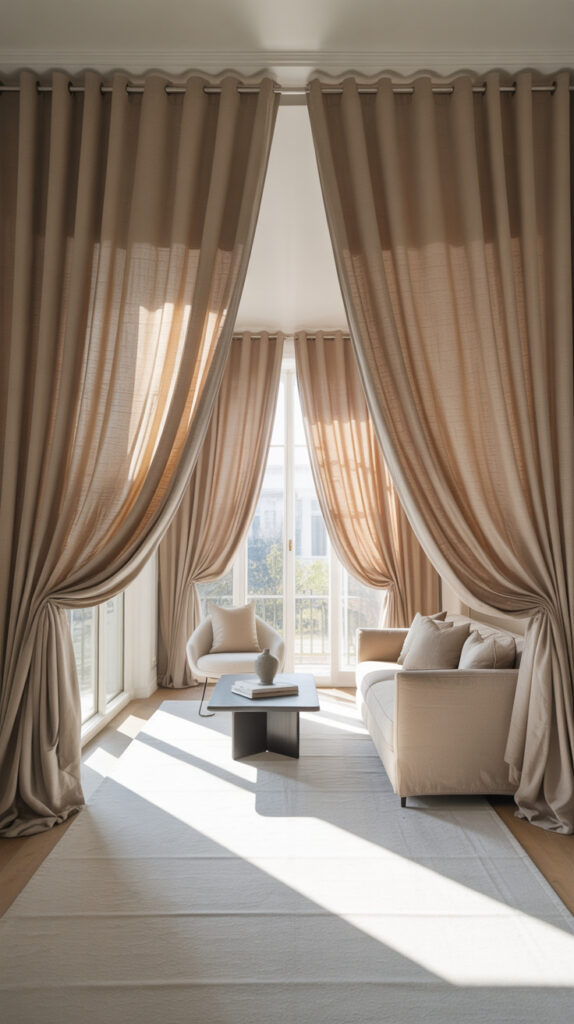
Most people hang curtains directly over the window and stop there. In a narrow living room, that makes the window look smaller and the walls look tighter. Instead, hang curtains wider than the window, ideally wall-to-wall, to make the room feel broader.
This is one of those “how is this even legal” design tricks. It makes the room look wider without moving a single piece of furniture. I’ve done it in small spaces and it’s honestly ridiculous how effective it is.
Why This Works
Your eyes read the curtain span as the width of the room. So if curtains stretch across a bigger section of wall, the room feels wider. It also makes the ceiling look taller when you hang the curtain rod high.
Curtains also soften narrow spaces. Long rooms can feel harsh and straight, so fabric adds warmth and balance.
How to Do It
- Install the curtain rod 6–10 inches above the window frame, closer to the ceiling if possible.
- Extend the rod at least 8–12 inches beyond each side of the window.
- Use floor-length curtains that lightly kiss the floor.
- Choose lightweight fabric if you want airy, or thicker fabric if you want cozy.
- Make sure curtains can fully open without blocking the window glass.
Style & Design Tips
Stick with solid neutrals if your room already has patterns in rugs or pillows. If your room is plain, go ahead and use a subtle pattern for interest. Avoid short curtains because they make the room look chopped and awkward.
Also, please don’t choose stiff shiny fabric unless you want the room to feel like a cheap banquet hall. Linen blends are usually the safest choice.
Pro Tip or Budget Hack
If you can’t afford custom wide curtains, buy two sets of affordable panels and double them up. Fuller curtains always look more expensive. Just make sure your rod is strong enough to handle the extra weight.
6. Use a Slim Console Table Instead of a Bulky TV Stand
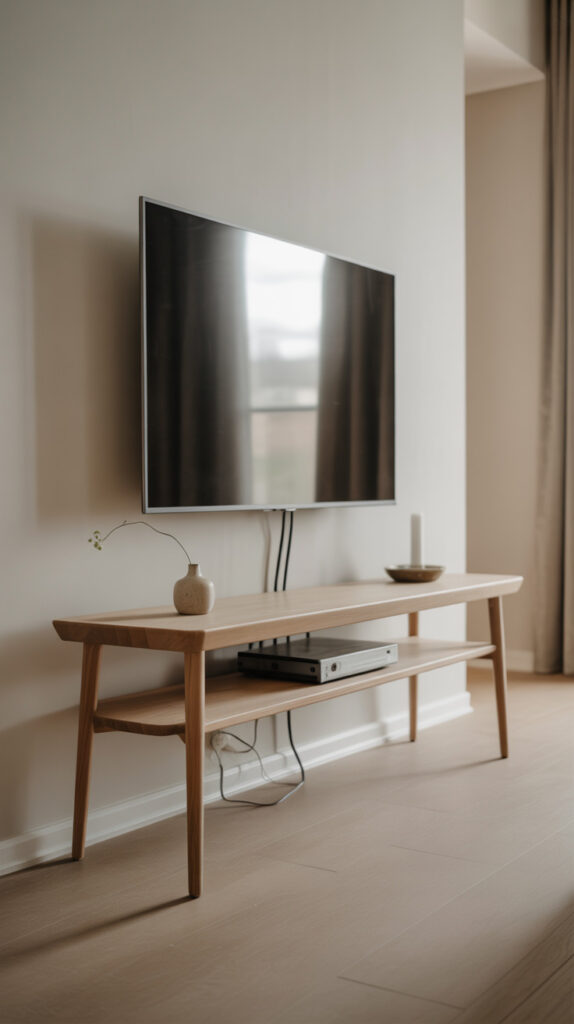
TV stands are often way too deep for narrow rooms. They stick out, block walking paths, and make the whole area feel crowded. A slim console table gives you the same function but takes up less space, which matters a lot when every inch counts.
I switched to a slim console in a tight living room once and immediately wondered why I didn’t do it sooner. The room felt cleaner, lighter, and easier to walk through. Plus, it looked more modern.
Why This Works
Narrow rooms need furniture with a smaller footprint. A slim console keeps the TV area functional without making the room feel boxed in. It also creates visual space, which makes the room feel wider.
This works especially well if your TV is mounted. The wall stays clean, and the floor feels open.
How to Do It
- Measure the depth of your current TV stand and aim for something under 14 inches deep.
- Choose a console with storage if you need space for devices and cords.
- Mount the TV on the wall if possible to save even more space.
- Hide cords using cord covers or cable management clips.
- Style the console lightly with a few objects so it looks intentional.
Style & Design Tips
Look for consoles with open legs or a floating design because they feel less heavy. If you want storage, closed cabinets work great, but avoid thick chunky farmhouse pieces unless your room is very large.
Also, keep styling minimal. A TV wall already dominates visually, so you don’t need a bunch of clutter fighting for attention.
Pro Tip or Budget Hack
Use a long floating shelf as a console instead of buying furniture. It’s cheap, sleek, and works perfectly for small devices. Just make sure you install it properly because a falling shelf is not the kind of DIY memory you want.
7. Place a Tall Mirror at the Narrow End of the Room
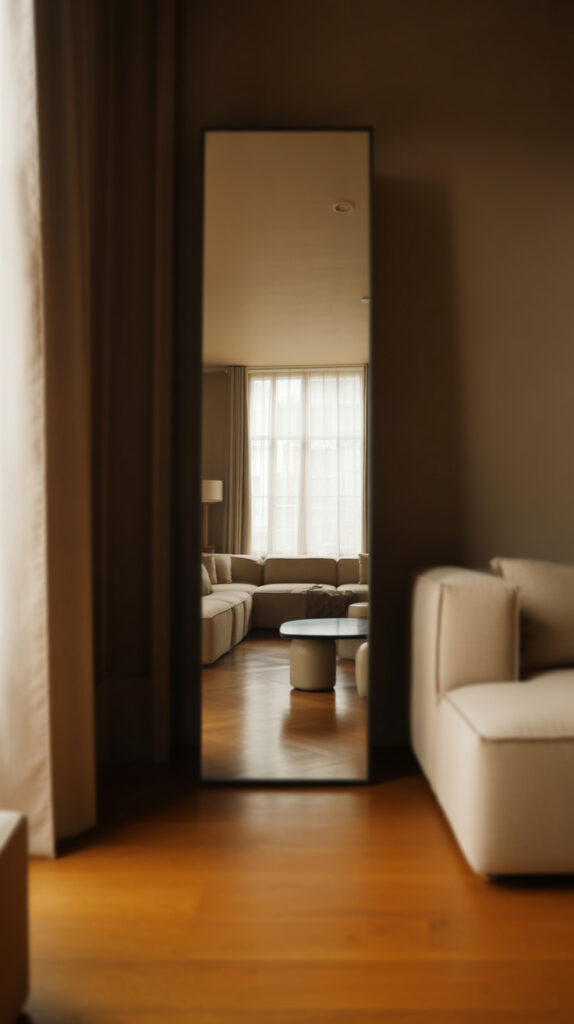
Long narrow rooms can feel like they just keep going forever, and not in a fun luxurious way. One of the easiest fixes is placing a tall mirror at the narrow end of the room to reflect light and create the illusion of extra space. It’s a classic trick, but it works because it’s based on actual visual psychology.
I’ve used mirrors like this in tight spaces and it instantly made the room feel less boxed in. It’s also one of the cheapest ways to make a room look “designed” without buying more furniture. Mirrors are basically magic, but socially acceptable.
Why This Works
Mirrors create depth, and depth makes narrow rooms feel wider. When you place a mirror at the end of the room, it visually extends the space and breaks the tunnel effect. It also reflects whatever is opposite it, so you can double the impact of a pretty area.
This trick works especially well if you reflect a window or a lamp. The room feels brighter and more open without any actual renovation.
How to Do It
- Choose a mirror that’s tall enough to feel dramatic, ideally 60 inches or taller.
- Place it at the narrow end wall or lean it against that wall if you want a casual look.
- Angle it slightly if it reflects something awkward like a blank wall.
- Keep the area around the mirror uncluttered so it becomes a focal point.
- If leaning, secure it with anti-tip hardware for safety.
Style & Design Tips
Go with a frame style that matches your room vibe. A thin black metal frame looks modern, while a wood frame adds warmth. Avoid tiny decorative mirrors because they don’t create the same depth effect and end up looking like wall jewelry.
Also, don’t place the mirror where it reflects messy clutter. Mirrors double everything, including chaos.
Pro Tip or Budget Hack
Thrift stores and Facebook Marketplace are loaded with large mirrors. If the frame looks ugly, paint it matte black or warm white and suddenly it looks high-end. A little spray paint can seriously change the whole vibe.
8. Use Vertical Shelving to Pull the Eye Up (Not Out)
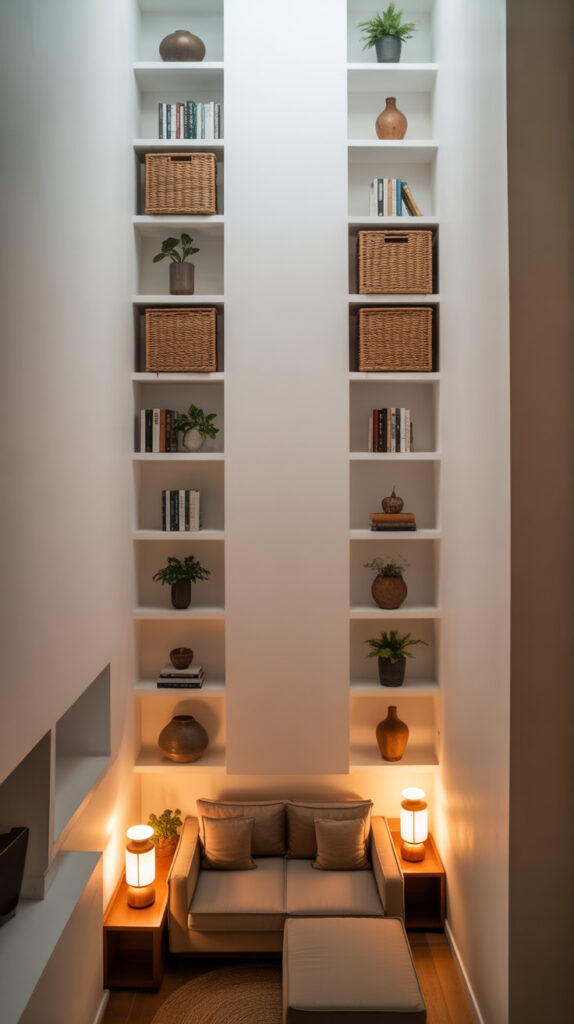
Long narrow rooms naturally pull your eyes across the length, which makes the space feel stretched. One of the smartest moves is adding vertical shelving or tall bookcases to shift attention upward. This makes the room feel taller and more balanced.
I love this trick because it’s subtle but powerful. It’s also great for people who like organization because it adds storage without taking up extra floor space. Narrow rooms don’t need more furniture, they need smarter furniture.
Why This Works
When your eyes move upward, the room feels taller and less cramped. Tall shelving also breaks up long blank walls, which can feel boring or unfinished. It gives the room structure without adding clutter.
Vertical storage is also practical. It uses wall space instead of floor space, which is exactly what narrow rooms need.
How to Do It
- Choose tall shelves or bookcases that are at least 70 inches high.
- Place them strategically, like near the sofa or in an unused corner.
- Mix storage baskets with decor so shelves don’t look messy.
- Keep heavier items on the bottom for stability.
- Style shelves with a mix of books, plants, and decorative pieces.
Style & Design Tips
Avoid overstuffing shelves because it makes the room feel crowded. Leave some breathing space so your shelves look styled, not like a storage closet. Use matching baskets to hide small clutter and keep the look clean.
Also, don’t decorate every shelf with tiny trinkets. A few larger items look more intentional and less chaotic.
Pro Tip or Budget Hack
Buy basic shelves and upgrade them with peel-and-stick wallpaper on the back panel. It adds depth and style without spending much money. This works especially well with subtle patterns like linen texture or light geometric prints.
9. Create a “Visual Path” With Lighting Instead of One Overhead Fixture
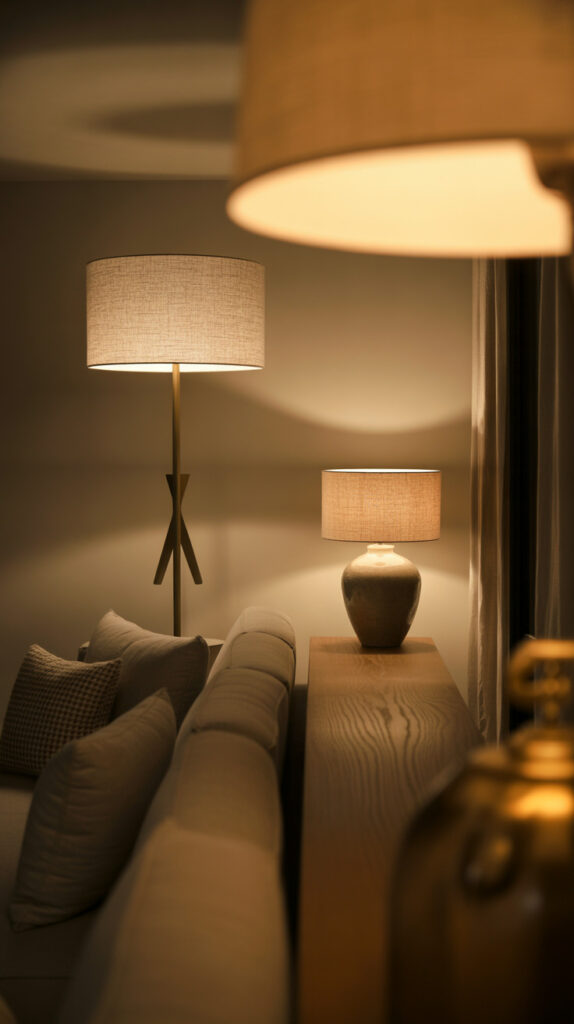
Most narrow living rooms rely on one ceiling light, which makes the whole room feel flat. A better approach is layering lighting throughout the room so it feels warm, balanced, and more naturally divided. Think of lighting like little guideposts that lead your eyes through the space.
I’m obsessed with this idea because it makes the room feel expensive without changing furniture. Good lighting can make a cheap room look intentional, while bad lighting can make a beautiful room look like a waiting area. It’s unfair, but true.
Why This Works
Layered lighting creates depth and makes the room feel wider. Instead of one harsh bright spot, you get multiple pools of light that soften the room and make it feel cozy. It also helps define zones without needing physical dividers.
Lighting also improves flow because your eyes naturally move from one light source to the next. That movement makes the room feel dynamic instead of stretched.
How to Do It
- Add a floor lamp near the sofa for main seating light.
- Place a table lamp on a console table or side table for softer lighting.
- Use wall sconces if possible to save floor space.
- Add a small accent lamp in the second zone to balance the room.
- Choose warm bulbs (around 2700K) to keep the space cozy and flattering.
Style & Design Tips
Mix lamp styles slightly, but keep finishes consistent. If everything is black metal, stick with that, or if you love brass, commit to brass. Avoid lamps that are too short because they look awkward next to sofas and tall furniture.
Also, don’t use cold white bulbs unless you enjoy the vibe of a dentist office. Warm light makes everything look better, including your decor choices.
Pro Tip or Budget Hack
Use plug-in wall sconces instead of hardwired ones. They’re cheaper, easy to install, and still give that high-end layered lighting look. Hide the cords with cord covers and suddenly it looks like you hired an electrician.
Final Thoughts
A long narrow living room can feel tricky, but it’s honestly just a layout puzzle with a few sneaky design tricks. Once you focus on flow, zones, and furniture scale, the room stops feeling cramped and starts feeling intentional. Small changes like lighting, rugs, and floating furniture can make a bigger difference than buying a whole new sofa.
If you try even two of these ideas, you’ll feel the room relax. And yes, that’s a real thing.
