
8 Long Narrow Bathroom Ideas That Feel Spacious
Bathrooms don’t feel cramped because they’re small, they feel cramped because the layout forces everything into one awkward line.
When a room is long and narrow, it’s basically begging you to decorate it wrong. Most people do exactly that, then wonder why it feels like a hallway with a toilet.
The good news is you don’t need to renovate the entire thing to fix the vibe. You just need to make smarter choices with lighting, storage, and where your eyes naturally land. Once you control those three things, the bathroom starts feeling wider almost instantly.
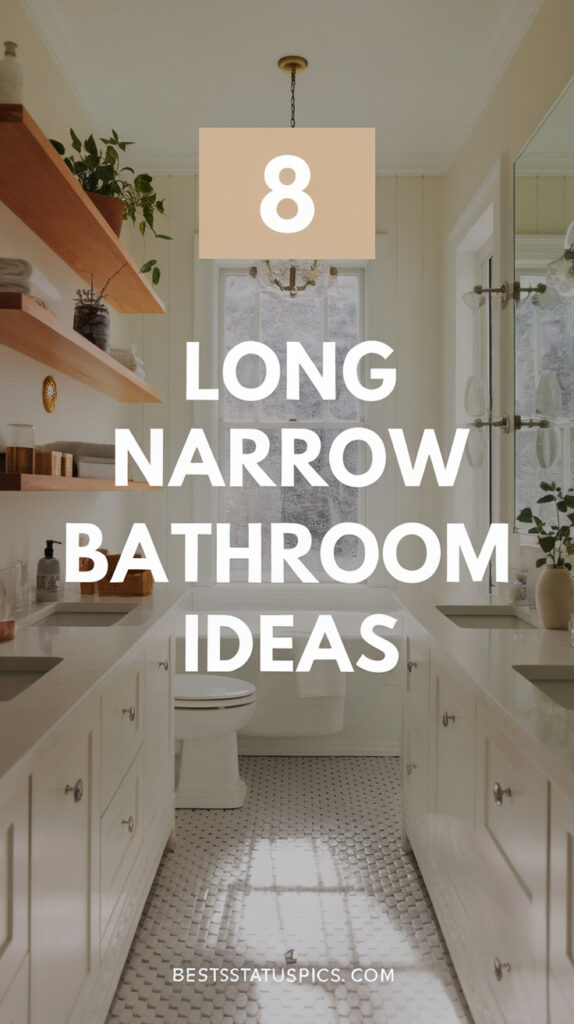
1. Install a Floating Vanity to Open Up the Floor
A long narrow bathroom usually feels tight because the floor looks cluttered, even when it’s technically clean.
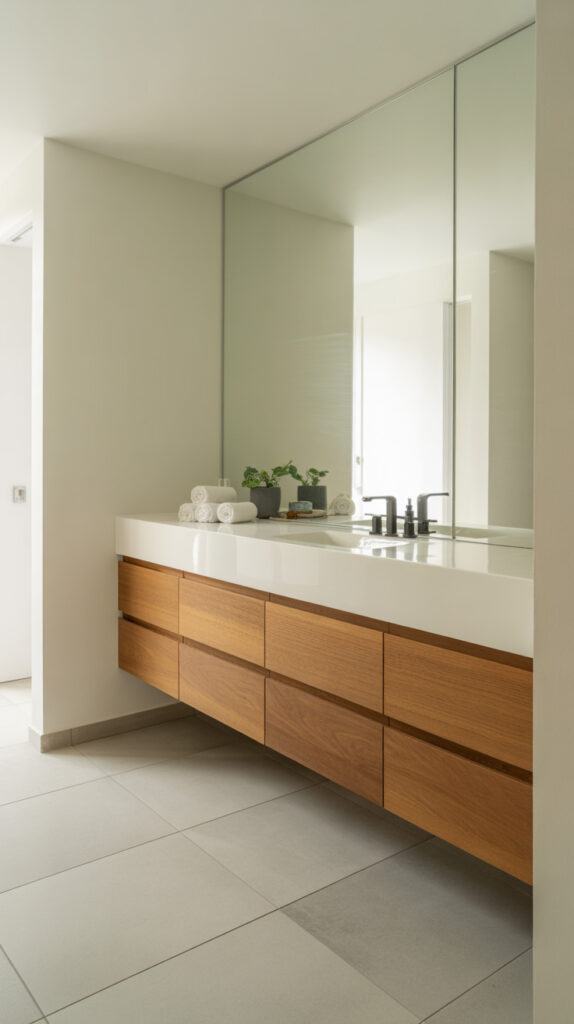
A bulky vanity sitting flat on the ground creates a visual wall, and your brain reads that as “no space left.” I’ve seen bathrooms that weren’t even that small feel like a storage closet just because of one heavy vanity.
A floating vanity changes everything because it lets the floor continue underneath. That little strip of visible flooring makes the room feel wider, cleaner, and less boxed in. And honestly, it just looks more modern without trying too hard.
I used to think floating vanities were only for fancy remodels, but once I installed one in a narrow guest bath, I realized how much space it “gives back.” It’s one of those upgrades that makes you wonder why builders don’t do it more often.
Why This Works
The biggest problem in narrow bathrooms is visual weight. When the floor is blocked by a cabinet, the room feels chopped up, like it has obstacles instead of flow.
A floating vanity creates negative space underneath, which makes the whole room feel lighter. It also improves the sightline from the doorway, which matters more than most people realize.
Even if the bathroom stays the same size, it feels larger because your eyes aren’t stopping at the vanity base. It’s a simple illusion, but it works every time.
How to Do It
- Measure your available wall space and choose a vanity that leaves at least 8–12 inches of breathing room on each side if possible.
- Install a strong wall support system because floating vanities need proper anchoring, not just drywall screws.
- Choose a vanity depth that’s slightly slimmer than standard to reduce how far it sticks out.
- Leave the space underneath open, or add one shallow basket if you really need storage.
- Finish with a wall-mounted faucet if you want the cleanest look and extra counter space.
Style & Design Tips
Go for a vanity color that blends with the wall if your bathroom feels extra tight. A vanity that contrasts too hard can visually cut the room in half.
A common mistake is picking a floating vanity that’s still huge and bulky. You want it floating, yes, but you also want it proportionate, otherwise it still dominates the room.
If you want the space to feel calm, choose flat-panel drawers and simple hardware. Ornate handles and raised details add visual noise in a narrow layout.
Pro Tip or Budget Hack
If a floating vanity is too expensive, you can “fake it” by using a standard vanity and cutting the toe kick back slightly, then adding a recessed base. It won’t look exactly the same, but it will still show more floor and reduce the heavy blocky look.
You can also find affordable wall-mounted vanities online that look high-end once you swap the hardware. Hardware changes are cheap, but they can make the whole piece feel custom.
2. Use a Large Mirror Wall to Double the Visual Width
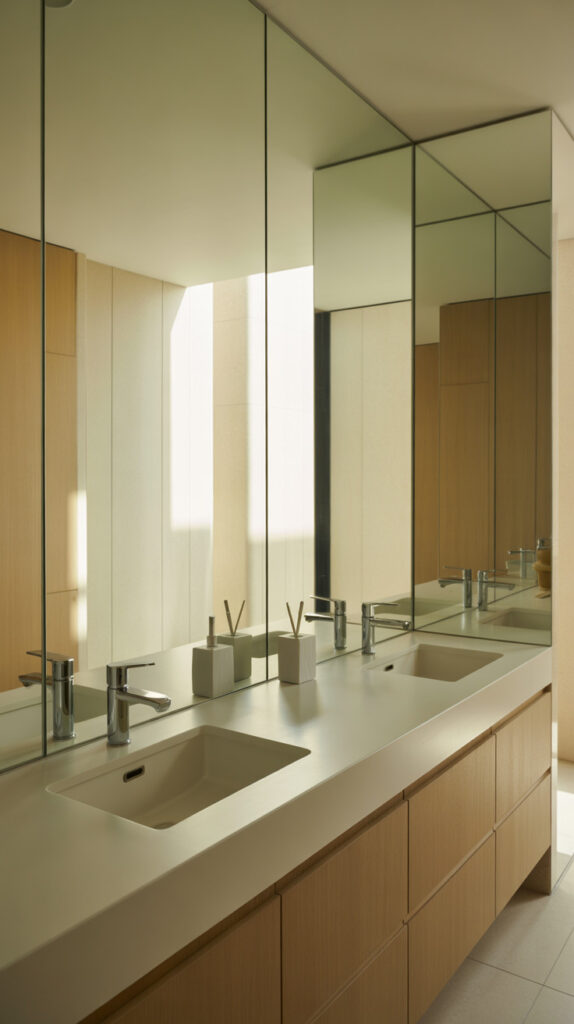
A narrow bathroom mirror is basically a missed opportunity. People hang these tiny mirrors above the sink like they’re decorating a dollhouse, then wonder why the room feels tight. If your bathroom is long and narrow, your mirror should be doing heavy lifting.
A large mirror expands the space visually because it reflects light and creates depth. It’s one of the easiest upgrades you can make without touching plumbing or tile. And if you choose the right style, it makes the whole bathroom look more expensive too.
I’m personally obsessed with oversized mirrors because they instantly remove that “narrow rental bathroom” feeling. Even a basic bathroom feels upgraded when the mirror looks intentional.
Why This Works
Mirrors create the illusion of extra square footage by reflecting the room back at you. In a long narrow bathroom, the reflection helps break up the tunnel effect.
A large mirror also bounces light around, which reduces harsh shadows. When a bathroom has fewer shadows, it feels more open, cleaner, and less cramped.
The wider the mirror, the wider the room feels, even if the walls haven’t moved an inch. It’s basically the cheapest optical trick you can use.
How to Do It
- Choose a mirror that’s at least 80–90% the width of your vanity for maximum impact.
- If possible, go even wider and run the mirror wall-to-wall for a seamless look.
- Mount it slightly higher than normal to visually stretch the room upward.
- Use a thin frame or frameless design so it doesn’t feel bulky.
- Add a light fixture above it that spreads evenly across the mirror surface.
Style & Design Tips
If your bathroom feels narrow, avoid thick ornate frames. They add weight and make the mirror feel like a separate object instead of part of the wall.
Rounded mirrors can work, but in a long narrow space, a wide rectangular mirror usually feels more balanced. It matches the shape of the room and makes everything look cleaner.
A big mistake is installing a huge mirror but keeping the lighting tiny and dim. If the mirror reflects darkness, it won’t help the space feel open.
Pro Tip or Budget Hack
If a custom mirror is too pricey, buy a frameless builder-grade mirror and add a DIY frame around it using trim. Paint the trim the same color as the wall for a clean look, or go black for contrast.
You can also mount two identical mirrors side-by-side to mimic one large mirror. It’s cheaper, and it looks surprisingly intentional when the spacing is tight.
3. Install Wall Sconces Instead of Side-Cluttering Vanity Lights
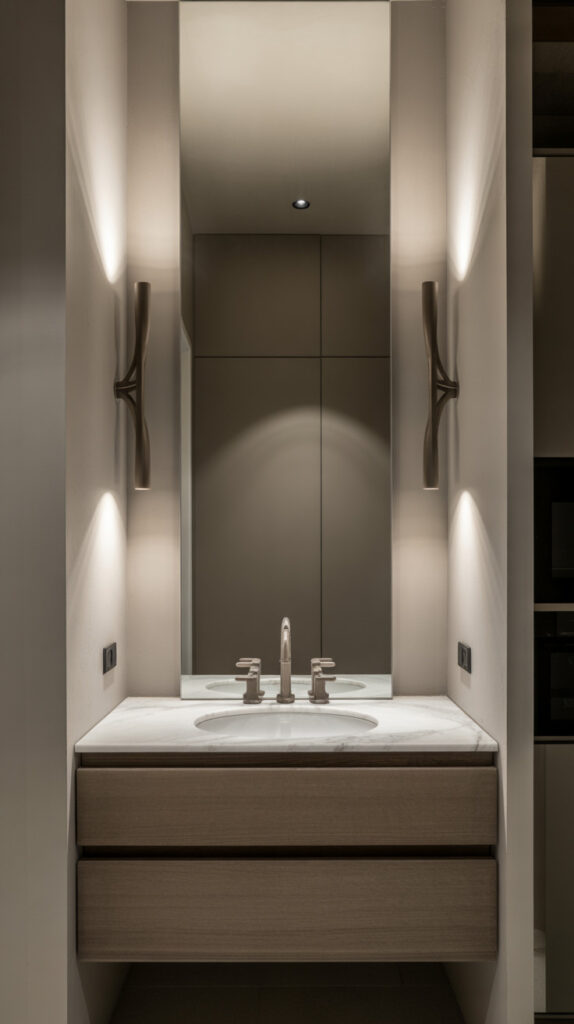
Overhead vanity lights are common, but they’re not always flattering and they can make narrow bathrooms feel even more boxed in. The worst setup is when you have a giant bulky light bar sticking out, taking up visual space above the mirror. It’s like your bathroom is wearing a hat that doesn’t fit.
Wall sconces create better lighting and make the space feel more open. They draw your eyes outward instead of forcing everything into the center. They also make the bathroom look like someone actually cared when decorating it.
I’m telling you, sconces are one of those upgrades that instantly makes your bathroom feel “designed.” Even if the rest of the room is simple, sconces add style without clutter.
Why This Works
In narrow bathrooms, anything that sticks out visually feels like it steals space. Traditional vanity bars often feel bulky, especially in tight layouts.
Wall sconces create symmetry and spread light more evenly across your face and mirror. That balanced lighting reduces harsh shadows and makes the room feel brighter overall.
They also encourage your eye to move sideways, which helps the bathroom feel wider. It’s a subtle trick, but it’s powerful.
How to Do It
- Choose sconces that extend no more than 4–6 inches from the wall.
- Place them at eye level, roughly 60–66 inches from the floor depending on your mirror height.
- Install one on each side of the mirror if space allows.
- If the bathroom is extremely narrow, install one sconce above the mirror instead.
- Use bulbs with a warm neutral tone so the light feels clean but not harsh.
Style & Design Tips
Keep the fixture shape simple in narrow bathrooms. Thin black sconces, brushed brass cylinders, or clear glass shades work best because they don’t add bulk.
Avoid giant lantern-style sconces unless your bathroom has very tall ceilings. They can overwhelm the space fast.
If you want the bathroom to feel taller, choose vertical sconces instead of horizontal ones. That upward pull makes the walls feel higher.
Pro Tip or Budget Hack
If you don’t want to rewire, there are plug-in wall sconces that look nearly identical to hardwired ones. You can hide the cord with a paintable cord cover and it looks clean.
Battery-powered sconces also exist, but don’t expect them to light the whole room. They’re better for mood lighting, not daily bathroom use.
4. Add a Half Wall or Glass Panel for a Shower That Doesn’t Block the Room
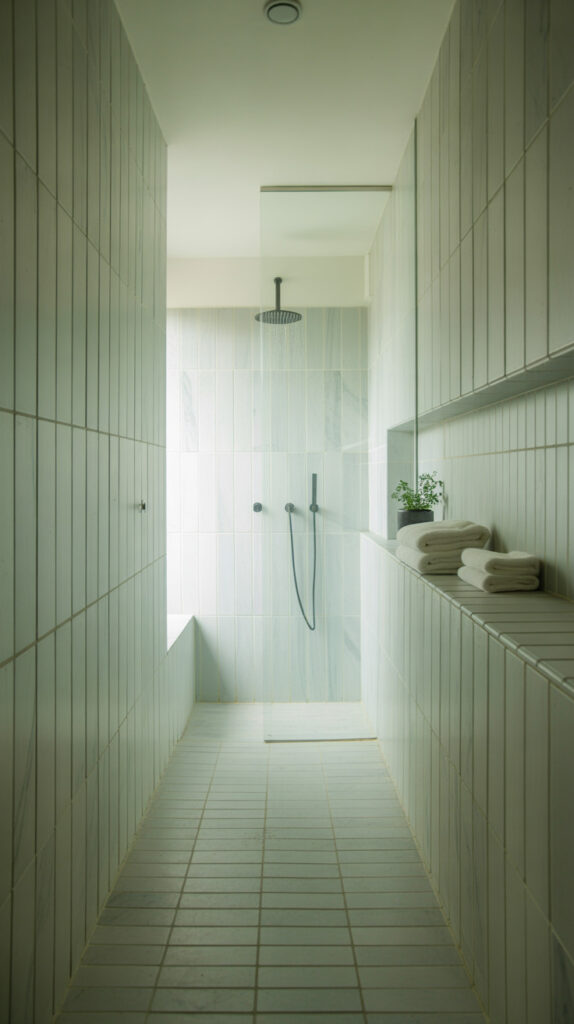
The classic narrow bathroom mistake is a shower curtain that cuts the room in half visually. A shower curtain might be practical, but it creates a soft wall that makes the bathroom feel even narrower. Every time you walk in, it feels like you’re stepping into a hallway with fabric hanging in it.
A glass panel or partial wall fixes this because it lets your eyes see through the shower area. That instantly makes the bathroom feel longer and more open. It also makes cleaning easier, which is not glamorous but definitely satisfying.
I used to think glass panels were a luxury, but after living with one, I realized it’s more about smart design than fancy upgrades.
Why This Works
Visual barriers make narrow bathrooms feel smaller. Shower curtains, dark frames, and bulky doors break up the space and create that closed-in feeling.
Glass keeps the line of sight open, which makes the room feel like one continuous space. Even a small bathroom feels bigger when you can see the entire length without interruption.
A partial wall or panel also adds structure without fully blocking light. It gives you privacy while still keeping the room airy.
How to Do It
- Replace the shower curtain with a fixed glass panel if you have a walk-in shower.
- Choose clear glass instead of frosted if you want maximum openness.
- Install a half wall if you want a little privacy but still want the open feel.
- Keep the shower hardware minimal so it doesn’t look busy through the glass.
- Use a simple drain and consistent tile so the shower blends into the room.
Style & Design Tips
Use frameless or thin-frame glass whenever possible. Thick frames can feel heavy and defeat the purpose.
If your bathroom already feels narrow, avoid patterned shower tiles that clash with the rest of the room. Keep it cohesive, because too many competing patterns make the space feel chaotic.
A common mistake is choosing a glass panel but leaving old clutter behind it. If the shower looks messy, the glass will highlight it.
Pro Tip or Budget Hack
If full glass installation is too expensive, swap your curtain rod for a curved rod. It pushes the curtain outward and gives the shower area a little more breathing room.
You can also use a high-quality extra-long curtain in a light color to reduce the boxed-in feeling. Cheap dark curtains make the bathroom feel like a cave.
5. Create a “Visual Runway” With Matching Floor Tile and Minimal Rugs
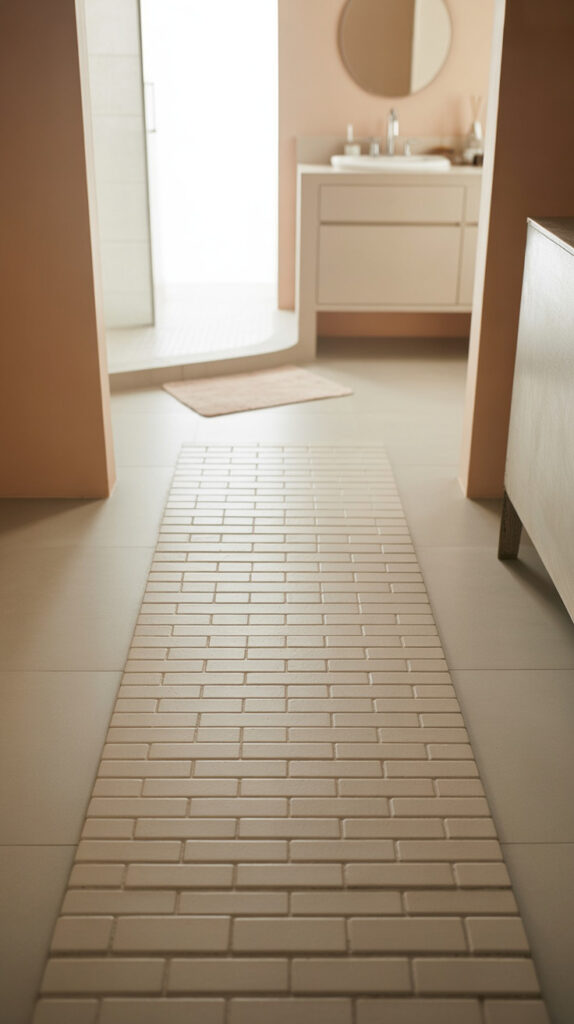
Flooring is the secret weapon in long narrow bathrooms. Most people cover it up with rugs, mismatched mats, and random patterns, then wonder why the room feels chopped up. In a narrow bathroom, every break in the floor makes the space feel smaller.
If you keep the flooring consistent and visible, the bathroom instantly feels longer and more spacious. I like to think of it as creating a runway, where the eye can travel smoothly from one end to the other. It sounds dramatic, but it’s true.
I’ve walked into bathrooms that felt cramped, and the only thing they changed was removing the cluttered rugs. Suddenly it felt like the room gained two feet.
Why This Works
Your eyes naturally follow lines, especially in narrow spaces. If your floor has a clear uninterrupted pattern, your brain reads the room as larger.
Too many rugs break the visual flow and create “sections,” which makes the bathroom feel like multiple tiny zones instead of one open space.
Matching tile or continuous flooring makes the room feel cohesive. Cohesion is what makes a narrow bathroom feel intentional instead of awkward.
How to Do It
- Remove excess rugs and keep only one small mat if needed.
- Choose flooring tile with a subtle pattern or solid look to avoid visual clutter.
- Lay rectangular tiles lengthwise to emphasize the room’s length.
- Keep grout lines light and minimal so they don’t create a grid effect.
- If you have wood-look tile, run the planks in the direction that makes the room feel longer.
Style & Design Tips
Avoid tiny mosaic tile across the entire floor unless it’s very subtle. Too many grout lines create visual noise and make the room feel busy.
If you want texture, choose matte tile instead of high-gloss. High-gloss floors can look cheap fast, especially in small bathrooms.
A big mistake is adding multiple bold rugs with different colors. Even if the rugs are cute, the room will feel broken up.
Pro Tip or Budget Hack
If you can’t change the tile, you can still create a runway effect by using a single long runner-style bath mat instead of multiple small mats. Choose one in a light neutral tone so it blends with the floor.
Also, keep the mat edges clean and squared. Rounded fluffy mats are cozy, but they visually shrink narrow spaces.
6. Use Vertical Storage Instead of Wide Cabinets
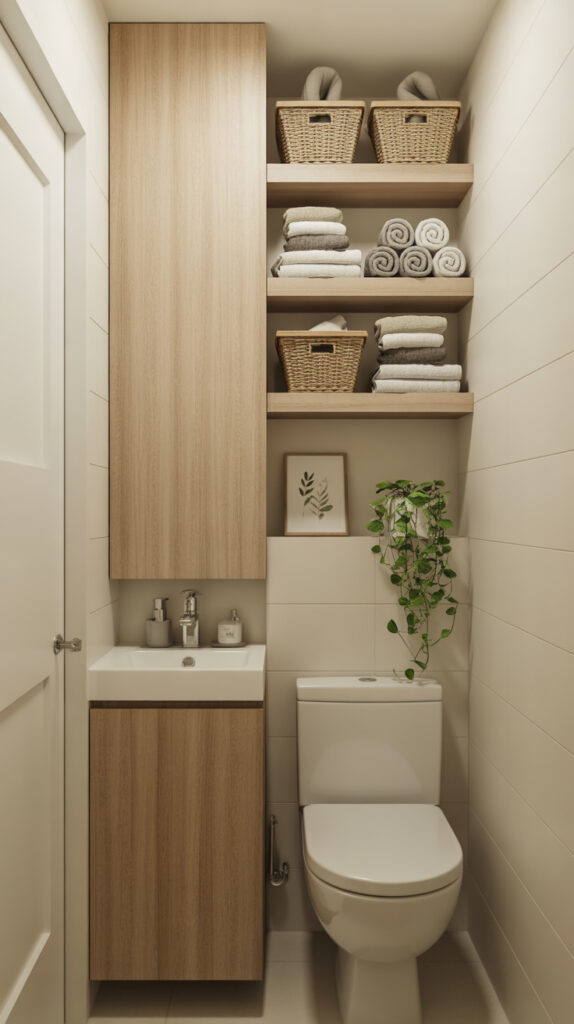
The problem with narrow bathrooms is that people try to add storage the same way they would in a normal bathroom. That means wide cabinets, chunky shelves, and bulky organizers that stick out. In a long narrow layout, that approach is basically sabotage.
Vertical storage works because it uses wall height instead of floor width. Tall cabinets, ladder shelves, and stacked open shelving give you storage without stealing walking space. It’s a smarter use of the room’s shape.
I’m a huge fan of vertical storage because it also makes the bathroom feel taller. And when a room feels taller, it automatically feels less cramped.
Why This Works
Wide storage units make narrow bathrooms feel tighter because they reduce usable floor space. Even if they only stick out a little, the room feels squeezed.
Vertical storage keeps the floor open and directs the eye upward. That upward movement makes the bathroom feel larger and more breathable.
It also helps you organize better, because tall storage naturally creates zones. You can keep towels up top, daily items in the middle, and backup supplies lower down.
How to Do It
- Install floating shelves above the toilet instead of a bulky cabinet.
- Use a tall slim linen tower if you need closed storage.
- Add wall hooks for towels to avoid towel bars that stick out.
- Use stackable baskets inside cabinets to maximize vertical space.
- Keep frequently used items within easy reach so you don’t create clutter.
Style & Design Tips
Choose storage that’s slim and clean-lined. Anything chunky will make the room feel heavy.
If you use open shelves, keep them styled with matching containers. Random bottles and mismatched packaging will make the bathroom look messy fast.
A common mistake is installing too many shelves. Too much vertical storage can look like clutter if you don’t leave breathing space.
Pro Tip or Budget Hack
A simple over-the-toilet shelf unit can work if you choose one that’s narrow and not too deep. Just avoid the cheap ones that wobble and look like dorm furniture.
You can also mount IKEA-style picture ledges as shelves. They’re slim, inexpensive, and perfect for narrow spaces.
7. Paint the Bathroom in a Soft Light Tone With a Strong Accent Moment
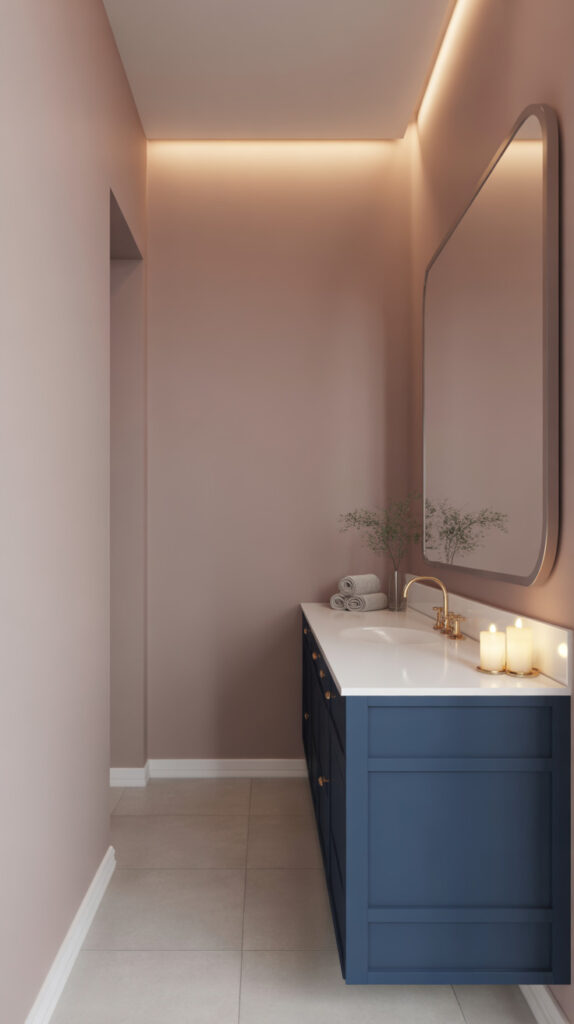
Color can make or break a narrow bathroom. If you go too dark everywhere, the space feels tight and heavy. If you go all white with no contrast, it can feel like a blank box that looks unfinished. The goal is balance, not extremes.
A soft light tone on most walls makes the room feel open, but adding one strong accent moment gives it depth. That accent can be a bold vanity color, a feature wall, or even dramatic hardware. It keeps the bathroom from looking flat.
I’ve done this in a narrow bathroom using a pale warm greige with a black-framed mirror, and it looked instantly wider and more modern.
Why This Works
Light colors reflect more light, which makes the bathroom feel larger. That’s basic, but it matters a lot in narrow spaces.
The accent moment prevents the room from feeling sterile. It creates a focal point, which keeps your eye from obsessing over the narrow shape.
When you control where the eye lands, you control how the room feels. That’s the whole trick.
How to Do It
- Paint most walls in a soft neutral like warm white, greige, or pale beige.
- Choose one focal element to go bold, such as the vanity, mirror frame, or a single wall.
- Keep the ceiling light to avoid lowering the room visually.
- Match trim and door color to the wall color for a seamless look.
- Add contrast with hardware, lighting, or accessories instead of loud wall colors.
Style & Design Tips
Avoid cool stark whites if the bathroom doesn’t get natural light. It can feel cold and clinical.
If you add an accent wall, choose the wall that’s visible first when you walk in. That creates an immediate statement without overwhelming the room.
A mistake people make is adding too many accent colors. Narrow bathrooms need simplicity, not chaos.
Pro Tip or Budget Hack
If you want drama without repainting, use peel-and-stick wallpaper on the far wall. It creates depth and makes the bathroom feel longer.
Another cheap upgrade is swapping your cabinet pulls and faucet to matte black or brushed brass. That contrast makes even plain walls feel intentional.
8. Replace the Door Setup With a Pocket Door or Outward Swing
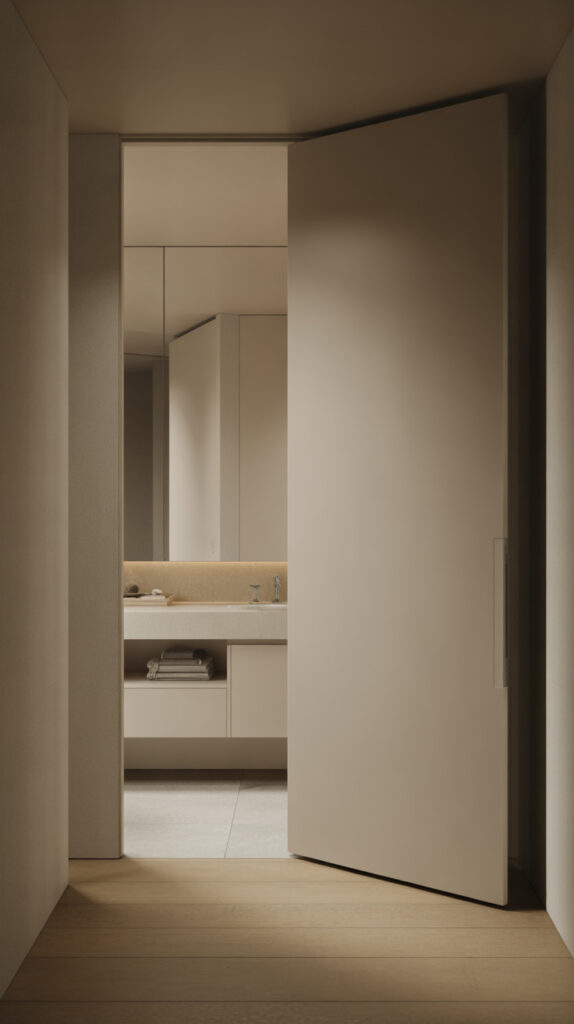
This one is so underrated, but it’s a real game-changer. In long narrow bathrooms, the door can steal a ridiculous amount of usable space. A door that swings inward turns the bathroom into an obstacle course, especially if the vanity is close to the entrance.
Switching to a pocket door or an outward swing instantly makes the bathroom feel more open. You gain floor space and improve movement, which matters more than people think. If you’ve ever bumped into a door while trying to grab a towel, you already know what I mean.
I’ve been in narrow bathrooms where the door was honestly the biggest problem. Fixing the door made the room feel like it was redesigned, even though nothing else changed.
Why This Works
The door swing affects how you move through the room. If the door blocks part of the floor, the bathroom feels smaller and harder to use.
A pocket door removes that issue completely, because it disappears into the wall. An outward swing does the same thing, just in a simpler way.
Better flow makes the bathroom feel larger because you can actually use the space without awkward stepping around obstacles. Function always affects perception.
How to Do It
- Check if your wall can support a pocket door installation.
- If pocket doors aren’t possible, switch the hinges to make the door swing outward.
- Replace the doorknob with a privacy lever for easier use.
- Make sure the new door movement doesn’t block a hallway or nearby room.
- Consider a sliding barn-style door if the layout allows it, but keep it sleek.
Style & Design Tips
If you choose a pocket door, go with a solid door instead of hollow-core. Hollow doors feel cheap and don’t block sound well, which matters in a bathroom.
Avoid oversized barn doors with heavy rustic hardware unless your style truly matches it. In narrow spaces, too much hardware can look overwhelming.
A common mistake is ignoring the door trim and paint. A fresh door setup looks best when it matches the wall and trim style.
Pro Tip or Budget Hack
If you can’t change the door right now, remove bulky towel racks behind the door and replace them with hooks. That makes the door area less crowded and easier to use.
Also, switching to a slimmer door handle can help in tight spaces. It’s small, but it reduces that annoying “door hits everything” issue.
Final Thoughts
A long narrow bathroom isn’t doomed, it just needs smarter design choices than a normal square one. Once you open up the floor, improve lighting, and stop breaking up the visual flow, the space starts feeling bigger almost immediately.
You don’t have to do all eight ideas either. Pick two or three that solve your biggest problem first, and the whole bathroom will feel less like a hallway and more like an actual room you want to be in.