9 Kitchen Lighting Ideas That Make the Space Feel Warm and Layered
Kitchen lighting often gets treated as an afterthought—a single overhead fixture that does the job but nothing more. But the best kitchens use light in layers, mixing ambient, task, and accent sources to create a space that feels both functional and inviting.
A well-lit kitchen doesn't just help you cook; it sets the mood for everything from morning coffee to late-night chats. Layered lighting is about balance.
You want enough brightness to chop vegetables safely, but also soft pools of light that make the room feel warm and lived-in. The trick is to combine different types of fixtures at varying heights and intensities, so the light feels natural and never harsh.
1. Pendant Lights Over the Island
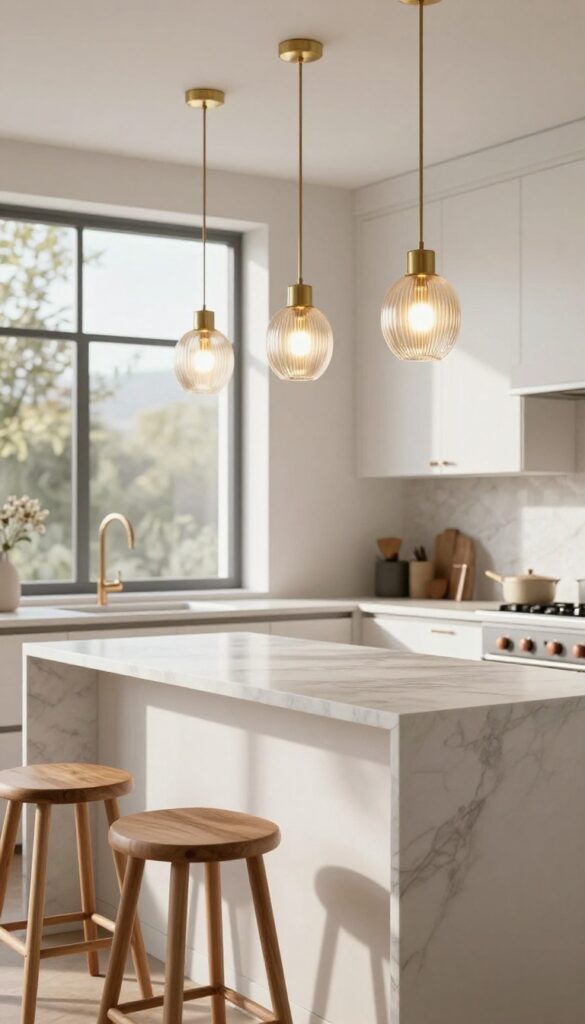
Nothing anchors a kitchen island quite like a row of pendant lights. They draw the eye up, add warmth, and create that cozy, layered glow you want in the heart of your home. Instead of one lonely fixture, try hanging two or three pendants at staggered heights above your island.
Choose warm metal finishes like brass or copper, and always use dimmable bulbs so you can shift from bright meal prep to soft dinner ambiance with a simple switch.
Why It Works
Pendants provide focused task lighting exactly where you need it while also contributing to the room's overall mood. The varying heights break up the visual plane and add depth, making the kitchen feel more dynamic and intimate. Dimmable bulbs let you control the intensity, so the space adapts from bustling morning to quiet evening.
Best For
This idea works beautifully in open-concept kitchens where the island doubles as a dining spot. It's especially effective in kitchens with higher ceilings, as the pendants help fill vertical space without overwhelming the room.
Styling Tip
Keep the pendants simple in shape but rich in finish—think ribbed glass or a subtle dome. Hang them about 30 to 36 inches above the countertop, and space them evenly so they frame the island without crowding it.
2. Under-Cabinet LED Strips
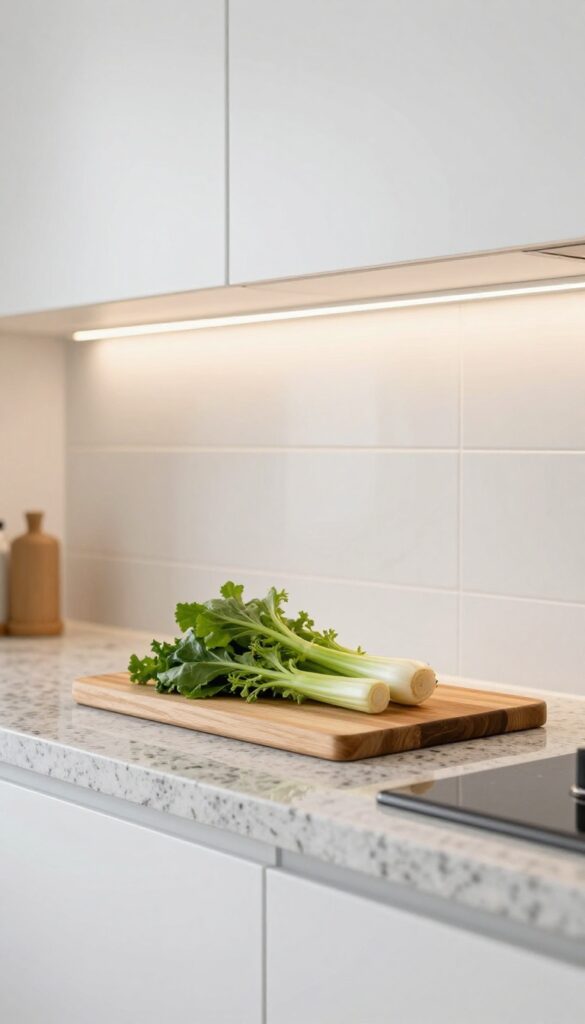
Kitchen counters often end up in shadow, especially when the only overhead light is a single fixture in the center of the ceiling. Under-cabinet LED strips solve that problem instantly, bathing your prep areas in a warm, even glow that makes chopping and cooking feel effortless. The trick is choosing a warm white temperature—around 2700K to 3000K—so the light feels cozy rather than clinical, and adding a dimmer switch so you can dial it down for a softer evening mood.
Why It Works
By placing light directly where you need it most—on countertops and backsplashes—you eliminate harsh shadows that make tasks harder. The slim profile of LED strips means they disappear from view, keeping your kitchen looking clean and uncluttered while providing a layer of light that feels both functional and atmospheric.
Best For
This idea is perfect for kitchens with upper cabinets that cast shadows over the counter, especially if you do a lot of food prep or enjoy cooking as a relaxing activity. It also works beautifully in galley kitchens or spaces where overhead lighting feels too bright or too dim.
Styling Tip
For a seamless look, choose LED strips with a frosted diffuser cover so you don't see individual diodes. Run them all the way to the edge of each cabinet section for continuous light, and consider using a smart dimmer that connects to your phone or voice assistant for easy adjustments.
3. Flush-Mount Ceiling Fixtures with Texture
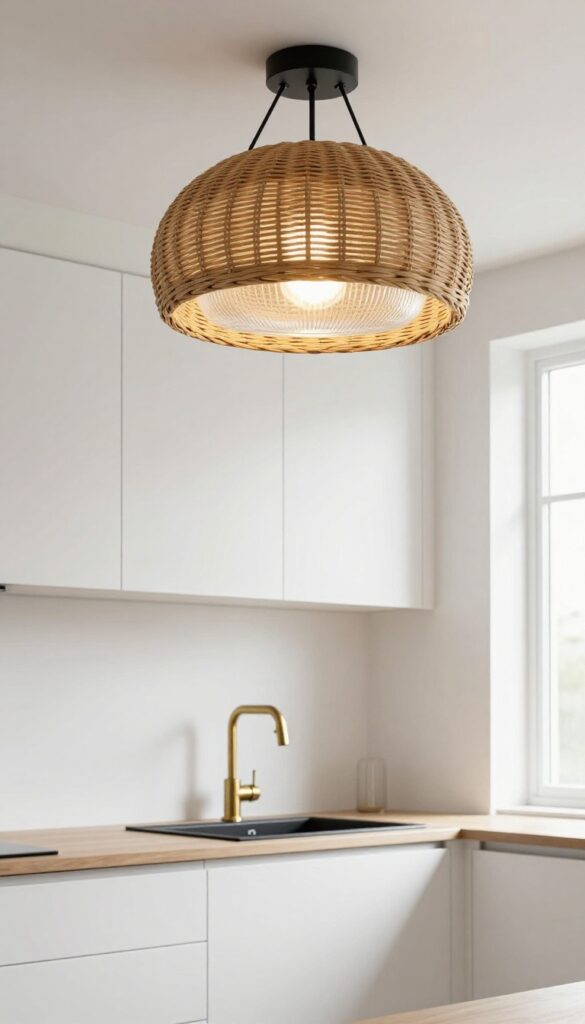
Ceiling lights don't have to be boring. A flush-mount fixture with texture—think woven rattan, ribbed glass, or matte black metal—adds a subtle layer of personality overhead without eating up visual space. It's an easy swap that brings warmth and character to the kitchen, especially when you want the ceiling to feel like part of the design rather than an afterthought.
Why It Works
Texture draws the eye upward and makes the ceiling feel intentional, not forgotten. The soft diffusion from ribbed glass or the natural weave of rattan scatters light gently, reducing harsh shadows and creating that cozy, layered glow. Plus, flush mounts sit close to the ceiling, so they work in kitchens with low ceilings or over islands where pendant clearance is tight.
Best For
This idea shines in kitchens with standard eight-foot ceilings or in open layouts where you want ambient light without visual clutter. It's also perfect for galley kitchens, breakfast nooks, or any spot where a pendant would hang too low.
Styling Tip
Pair a warm wood or rattan flush mount with black cabinet hardware and brass faucets for a balanced mix of natural and industrial. If your kitchen leans modern, go for a ribbed glass fixture in matte black—it adds just enough detail without feeling busy.
4. Wall Sconces on Open Shelving
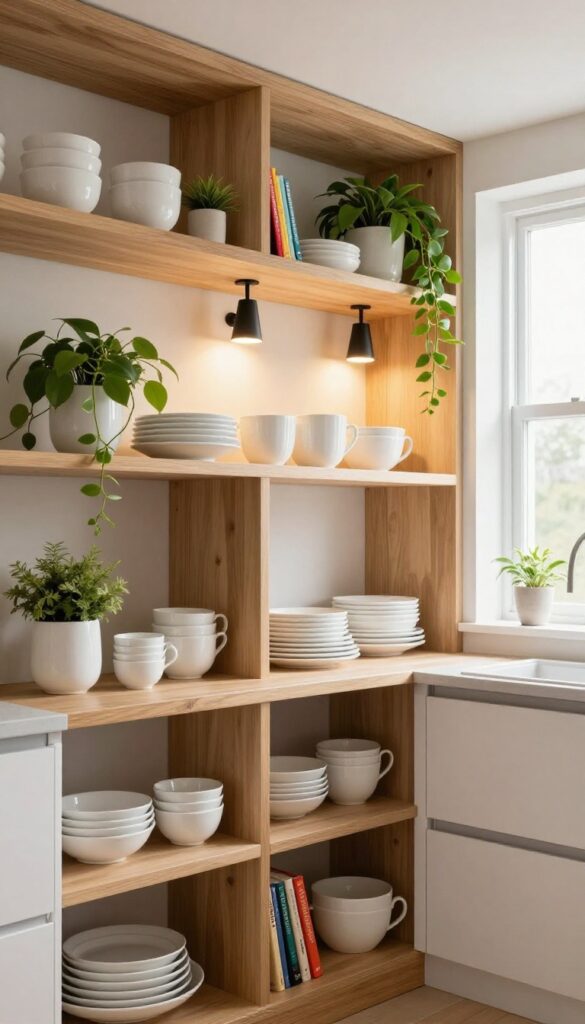
Open shelving in a kitchen is already a great way to display your prettiest dishes and plants, but adding wall sconces takes the whole look from functional to gallery-worthy. Small sconces mounted above or beside the shelves cast warm light onto your items, making everyday ceramics feel like curated art. It’s an easy way to introduce a cozy, layered glow without taking up counter space.
Why It Works
Wall sconces create focused pools of light that highlight specific objects, adding depth and visual interest to open shelving. The warm bulbs soften the overall kitchen ambiance, making the space feel inviting rather than stark. Swing-arm styles offer flexibility, letting you direct light exactly where you need it.
Best For
This idea works beautifully in kitchens with open shelving units, especially those with neutral or white dishware that can reflect light. It’s also perfect for renters or homeowners who want to add character without a major renovation—just mount the sconces and plug them in or hardwire if possible.
Styling Tip
Choose sconces with a matte black or brass finish for a timeless look that complements most kitchen styles. Position them about 6–8 inches above the shelf and angle them slightly downward to illuminate the items below. Layer in a few trailing plants or colorful cookbooks on the shelves for extra charm.
5. Mini Pendants Over a Sink or Prep Zone
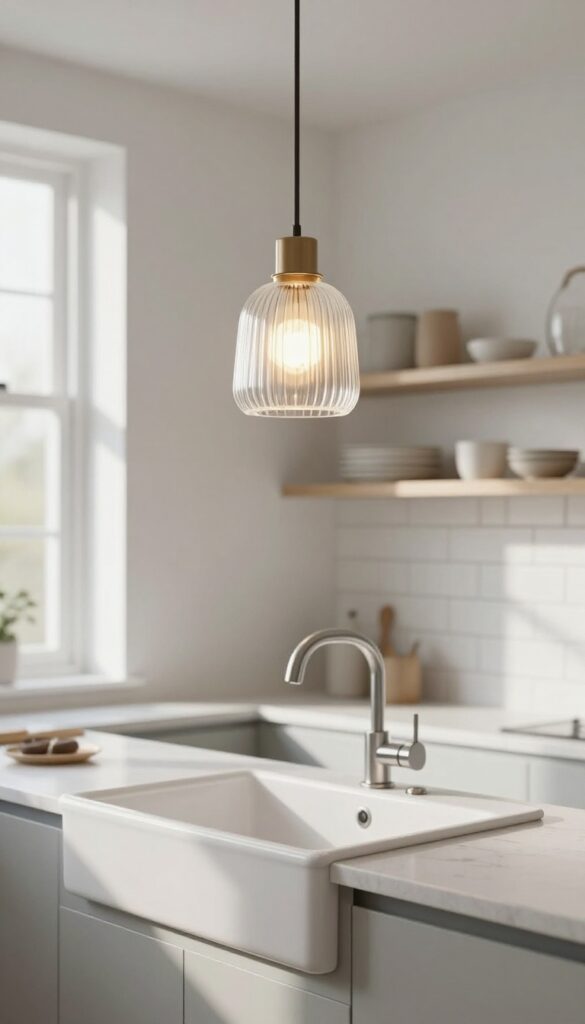
Kitchen lighting often focuses on the main island or dining area, but the sink and prep zones deserve just as much attention. A single mini pendant hung low over these spots creates a cozy, task-oriented glow that feels intentional and inviting. It breaks up the monotony of recessed cans and adds a sculptural touch without stealing the show.
Why It Works
A mini pendant directs light exactly where you need it—right onto the sink for washing dishes or over a countertop for chopping vegetables. This focused illumination reduces shadows and makes everyday tasks easier while adding a warm, layered ambiance to the kitchen.
Best For
This idea shines in kitchens with an open layout where the sink or prep area is visible from the living or dining room. It also works beautifully in galley kitchens or smaller spaces where a full row of pendants would feel crowded.
Styling Tip
Choose a pendant with a slightly translucent shade—like ribbed glass or a soft linen drum—to diffuse light gently. Hang it about 30 to 36 inches above the counter or sink rim for optimal function and visual balance. For extra coziness, pair it with under-cabinet lighting in the same warm color temperature.
6. Recessed Lights on a Dimmer
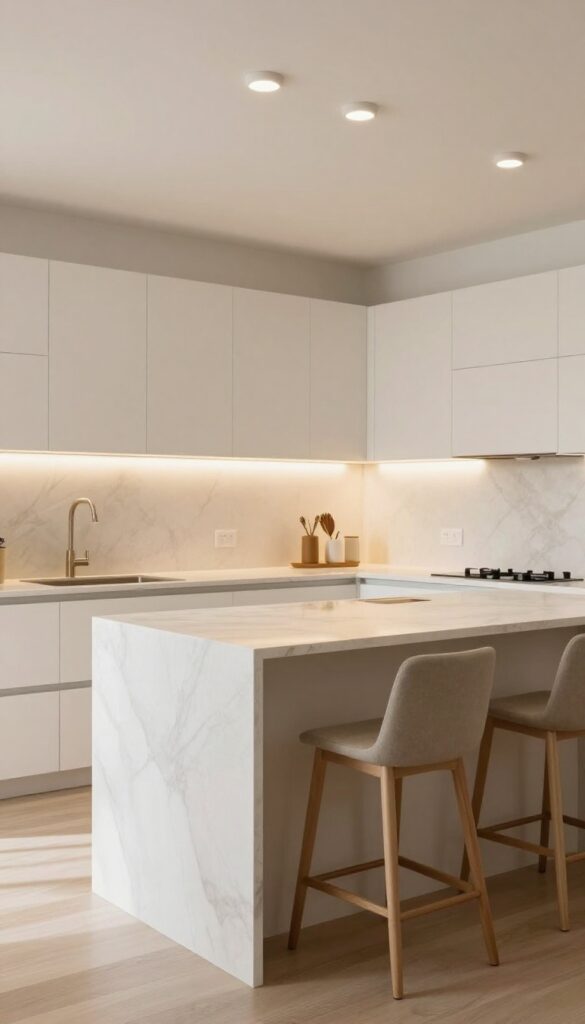
Kitchens can feel harsh when every light blasts at full power, especially during quiet mornings or late-night snacks. Recessed can lights with adjustable trims let you direct light exactly where you need it—washing counters, highlighting a backsplash, or softly illuminating an island. By placing them on separate dimmer zones, you gain the flexibility to dial down the brightness and create a cozy, layered glow that transforms the room from a workspace into a warm gathering spot.
Why It Works
Dimmer switches give you control over the mood without changing fixtures. Separate zones mean you can keep task lights bright while softening ambient lights, or turn everything low for a relaxed dinner. This layered approach eliminates shadows and glare, making the kitchen feel both functional and inviting.
Best For
Open-plan kitchens where the cooking area blends into living or dining spaces. It’s also perfect for kitchens with high ceilings or lots of hard surfaces that can feel echoey and bright.
Styling Tip
Choose trims in a finish that matches your hardware—black for modern, white for clean, or brushed nickel for classic. Position lights about 12 inches from cabinets to avoid casting shadows on countertops.
7. Glass-Front Cabinet Lighting
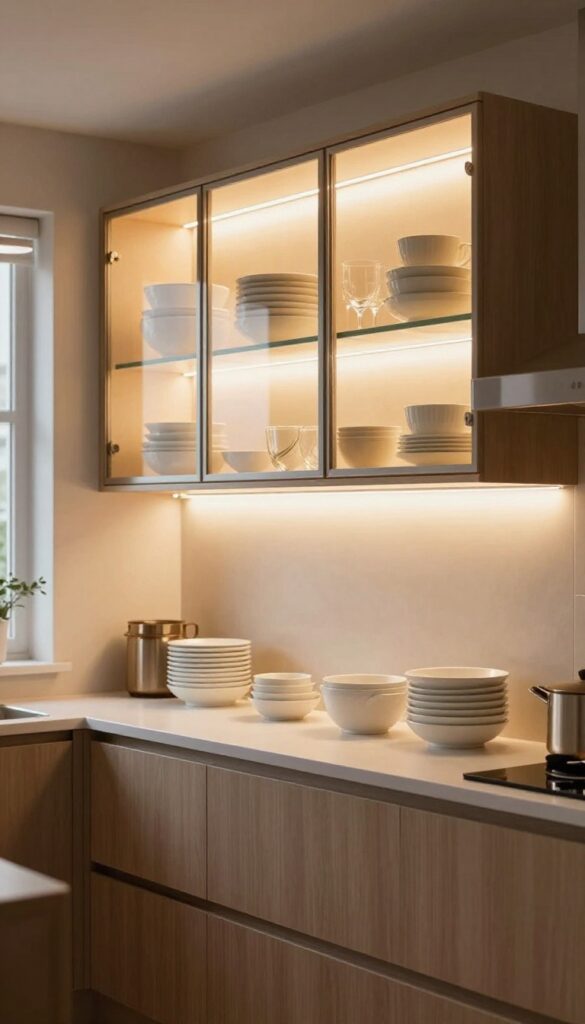
Kitchen cabinets with glass fronts already feel airy and curated, but adding light inside transforms them entirely. Small puck lights or slim linear strips turn your everyday dishware into a glowing display, especially in the evening when the rest of the kitchen dims. The effect is both cozy and layered—like a warm vignette built right into your cabinetry.
Why It Works
Glass-front cabinets can sometimes look dark or cluttered without proper illumination. Interior lighting solves that by drawing attention to what's inside instead of the glass itself. The soft glow also adds depth to the kitchen, making the cabinets feel like intentional design features rather afterthought storage.
Best For
This idea works beautifully in kitchens with upper glass-front cabinets, especially if you have a collection of matching dinnerware, clear glassware, or neutral ceramics. It's also ideal for kitchens that lack natural light or feel flat after sunset.
Styling Tip
Stick with warm white LEDs (2700K–3000K) to keep the glow soft and inviting. Arrange items loosely—leave a little breathing room between stacks—so the light can bounce around. Avoid overcrowding; less really is more here.
8. Chandelier Over a Dining Nook
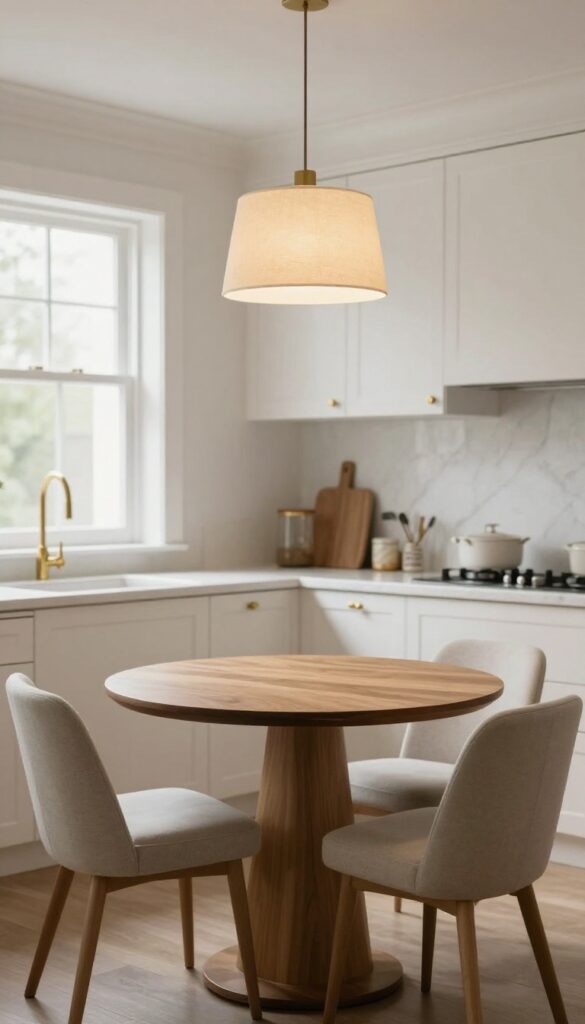
A small chandelier hanging low over a kitchen dining nook brings an unexpected touch of elegance to the heart of the home. The soft glow from fabric shades or candle-style bulbs creates a warm, intimate atmosphere that makes everyday meals feel special. This idea works best when the chandelier is scaled to fit the table—not too big, not too small—and hung at just the right height to feel cozy without getting in the way.
Why It Works
A chandelier adds a focal point that draws the eye down, making the dining area feel like its own little room within the kitchen. The layered light from multiple bulbs or shades softens harsh overhead lighting and casts a flattering glow on faces and food. It’s an easy way to introduce texture and warmth through materials like linen, silk, or frosted glass.
Best For
This idea is perfect for kitchens with a dedicated breakfast nook, banquette, or small table tucked into a corner. It works especially well in open-concept layouts where you want to define the dining zone without building walls. If your kitchen feels too utilitarian, a chandelier can instantly add personality and polish.
Styling Tip
Choose a chandelier with adjustable chain or cord so you can fine-tune the height—aim for about 30 to 36 inches above the tabletop. Pair it with dimmable bulbs to control the mood from bright task lighting to soft dinner ambiance. For a cohesive look, match the metal finish to your cabinet hardware or faucet.
9. Rope Light Under Toe Kicks
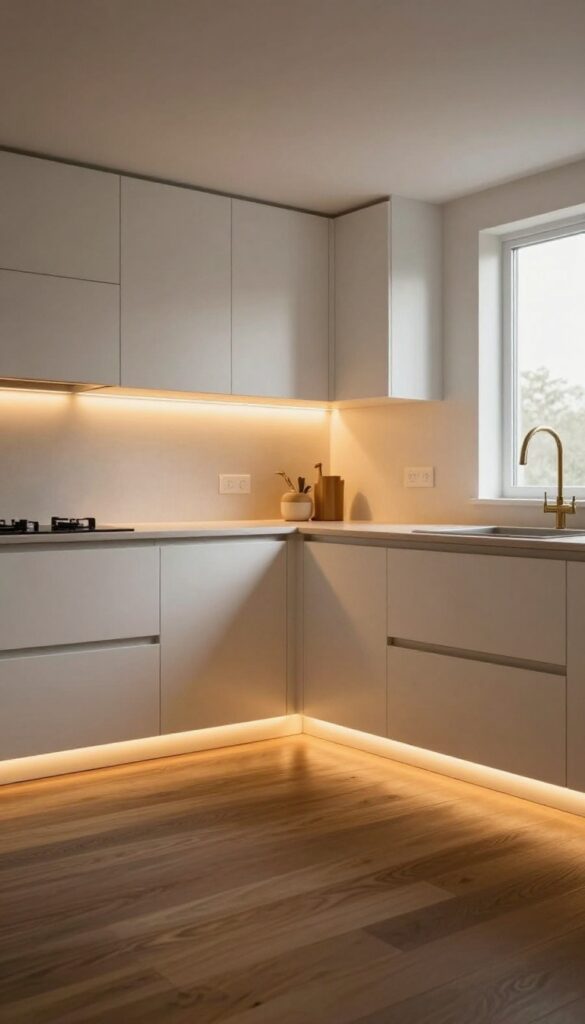
Floor-level lighting is one of those details that feels unexpected but instantly cozy. By running a strip of waterproof rope light along the bottom of your base cabinets, you get a soft glow that makes the kitchen feel larger and warmer after dark. It’s a simple trick that adds depth without overwhelming the space.
Why It Works
The low placement creates a gentle, indirect light that eliminates harsh shadows and gives the room a floating effect. It’s especially effective in open-concept kitchens, where it helps define the cooking zone without adding clutter.
Best For
This idea works well in modern, transitional, or farmhouse kitchens with toe kicks at least 3 inches high. It’s also great for kitchens with dark floors, as the light prevents the space from feeling too heavy.
Styling Tip
Use a warm white or soft amber LED strip to keep the glow inviting. Avoid cool blue tones, which can feel clinical. Install the strip inside an aluminum channel for a clean look and easy cleaning.
FAQ
What color temperature is best for kitchen lighting?
For a cozy, layered look, stick with warm white bulbs between 2700K and 3000K. They cast a soft, yellowish glow that feels inviting, unlike cooler temperatures that can feel sterile.
How many layers of lighting does a kitchen need?
Aim for at least three layers: ambient (overhead), task (under-cabinet or focused), and accent (shelves or toe kicks). This gives you flexibility to adjust brightness and mood.
Can I mix different fixture styles in one kitchen?
Yes, but keep a common element—like finish or shape—to tie them together. For example, mix brass pendants with brass sconces, or use all matte black fixtures for cohesion.
Are dimmers necessary for layered lighting?
Highly recommended. Dimmers let you lower lights for a cozy dinner or brighten them for cooking. They're an easy upgrade that makes any fixture more versatile.
What's the best way to light a small kitchen?
Focus on under-cabinet lights to eliminate shadows and use a single statement pendant to draw the eye up. Avoid bulky fixtures; slim profiles keep the space feeling open.
Conclusion
Layered kitchen lighting doesn't require a full renovation. Start with one or two ideas—like swapping out a flush-mount or adding under-cabinet strips—and build from there. The goal is to create a space that feels warm, functional, and uniquely yours.
Remember, the best lighting schemes are personal. Mix textures, play with heights, and don't be afraid to dim things down. Your kitchen should glow with comfort, not just brightness.