13 Formal Outfits for Men Office Wear Ideas
Dressing for the office doesn't have to be boring. With the right pieces, you can look sharp and feel confident every day. Whether you're in a boardroom or a casual Friday setting, these 13 formal outfit ideas will keep you polished and professional.
We've curated a mix of classic and modern styles that work across seasons and office cultures. From full suits to smart separates, each idea focuses on fit, fabric, and subtle details that elevate your look.
Ready to upgrade your work wardrobe? Let's dive into these versatile formal outfits that balance tradition with contemporary style.
1. The Navy Suit with a White Dress Shirt and Burgundy Tie

This is the kind of outfit that never lets you down. A navy suit paired with a white dress shirt and a burgundy tie is a classic power move for any formal office setting. It's polished, confident, and works just as well for a client presentation as it does for a company dinner.
The dark navy base keeps things sleek, while the burgundy tie adds a subtle pop of color that's professional without being flashy.
The Power of a Perfect Fit
A navy suit only looks sharp if it fits well. Make sure the jacket shoulders sit flush with your own shoulders, the sleeves end just above your wrist bone, and the trousers break once over your shoes. A tailored fit instantly elevates the whole look, no matter the price tag.
If you're between sizes, always size up and have it altered—it's worth the investment.
Choosing the Right Tie Fabric and Knot
For a formal office look, stick with a silk tie in a solid burgundy or a subtle woven pattern. A four-in-hand knot works well for most collar types and creates a slightly asymmetrical, relaxed dimple. Avoid overly thick ties or shiny satin finishes—they can look too flashy for a standard workday.
The goal is a clean, confident finish that complements the suit without competing.
Shoe and Belt Pairing for a Cohesive Finish
Brown leather shoes and a matching brown belt are the natural partners for a navy suit. Opt for dark brown oxfords or derbies to keep the formality high. Black can also work, but brown adds warmth that pairs beautifully with the burgundy tie.
Make sure your belt matches your shoes in color and finish—it's a small detail that pulls the whole outfit together.
2. Charcoal Gray Suit with a Light Blue Shirt and Silver Tie

Few combinations say 'polished professional' quite like a charcoal gray suit paired with a light blue shirt and a silver tie. This trio is a power move for any formal office setting, from job interviews to boardroom presentations. The charcoal base keeps things serious, while the light blue softens the overall look and the silver tie adds just enough shine to feel modern without being flashy.
It's a go-to outfit that works year-round and flatters most body types.
The Power of Neutral Tones
Charcoal gray is one of the most versatile suit colors you can own. It's darker than mid-gray but softer than black, making it appropriate for evening events as well as daytime meetings. The light blue shirt is a classic choice because it contrasts nicely with the suit without being too bold.
Together, they create a balanced palette that feels both authoritative and approachable.
Choosing the Right Silver Tie
Not all silver ties are created equal. Look for a tie with a subtle pattern or texture—like a micro-dot, stripe, or woven silk—to add depth without overwhelming the outfit. A solid silver tie can work too, but make sure it's not too shiny or reflective.
The goal is a refined sheen, not a disco ball. Pair it with a silver tie bar for an extra touch of polish.
Shoe and Belt Coordination
With a charcoal suit, your shoe and belt choices matter. Black leather oxfords or derbies are the safest bet and keep the look formal. Dark brown can work if you want a slightly softer feel, but stick to a deep, rich shade.
Match your belt to your shoes for a cohesive finish. A black leather briefcase or portfolio bag completes the professional image.
3. Navy Blazer with Gray Trousers and a Patterned Tie
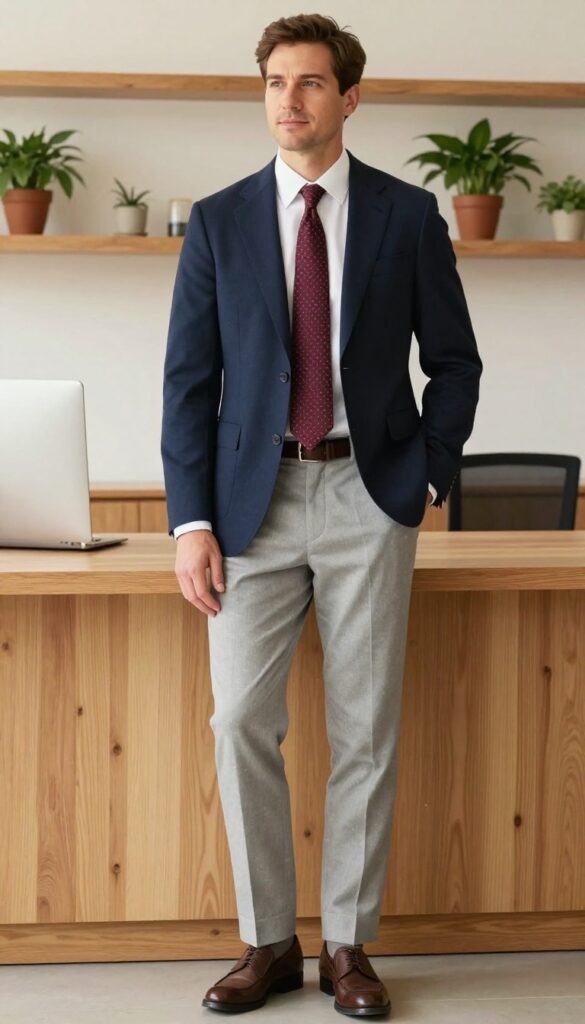
When your office leans smart casual, this combo hits the sweet spot between relaxed and refined. The navy blazer brings structure, gray trousers keep things neutral, and a patterned tie—think subtle stripes or dots—adds personality without screaming for attention. It's a look that says you care about your appearance but aren't trying too hard.
Finding the Right Blazer Fit
A navy blazer should sit comfortably on your shoulders without pulling across the chest or back. The sleeves should end just above your wrist bone, showing about half an inch of shirt cuff. Look for a two-button closure and a notch lapel for a classic office-friendly silhouette.
If you're between sizes, opt for the larger one and have the sleeves tailored—it's worth the small investment.
Gray Trousers That Balance the Look
Choose medium to light gray trousers in a wool blend or a crisp cotton twill. They should have a flat front and a straight or slim-straight leg—no skinny fits here. The break at the hem should be slight; a full break can look sloppy, while no break feels too modern for this classic pairing.
Pair them with a brown leather belt to tie the blazer and trousers together.
Choosing a Patterned Tie That Works
Stick with small, repeating patterns like micro-stripes, polka dots, or geometric prints in colors that complement the navy and gray. A burgundy or deep green tie with a subtle pattern adds warmth without clashing. Keep the tie width proportional to your lapels—around 2.5 to 3 inches is a safe bet.
Finish with a simple dimple knot for a polished touch.
4. Light Gray Suit with a White Shirt and a Knit Tie
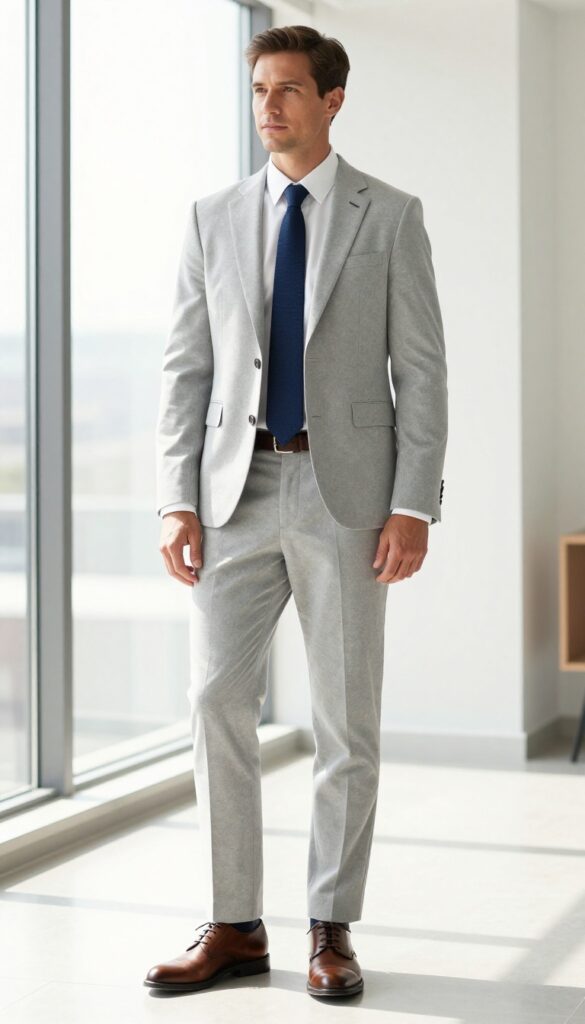
A light gray suit is a breath of fresh air in a sea of navy and charcoal. It’s professional without feeling heavy, making it a great choice for spring meetings or summer office days. Pair it with a crisp white shirt and a textured knit tie to keep the look approachable and modern.
Why Light Gray Works for the Office
Light gray sits perfectly between casual and formal. It’s lighter than charcoal, so it feels more relaxed, but it’s still structured enough for client meetings. The neutral tone also pairs well with almost any shirt or tie color, giving you flexibility without sacrificing polish.
The Knit Tie Difference
A knit tie adds texture and a subtle casual edge to the suit. Unlike a silk tie, it doesn’t scream “boardroom,” but it still looks intentional. Choose a navy or burgundy knit tie for contrast, or go with a darker gray for a tonal look.
The matte finish keeps the outfit grounded.
Shoe and Accessory Pairing
Brown leather shoes are the natural partner for a light gray suit. Go with dark brown oxfords or loafers to keep the look grounded. A brown leather belt and a simple watch (silver or brown strap) complete the outfit without overcomplicating it.
Skip the pocket square for a cleaner, more modern vibe.
5. Black Suit with a White Shirt and a Black Tie
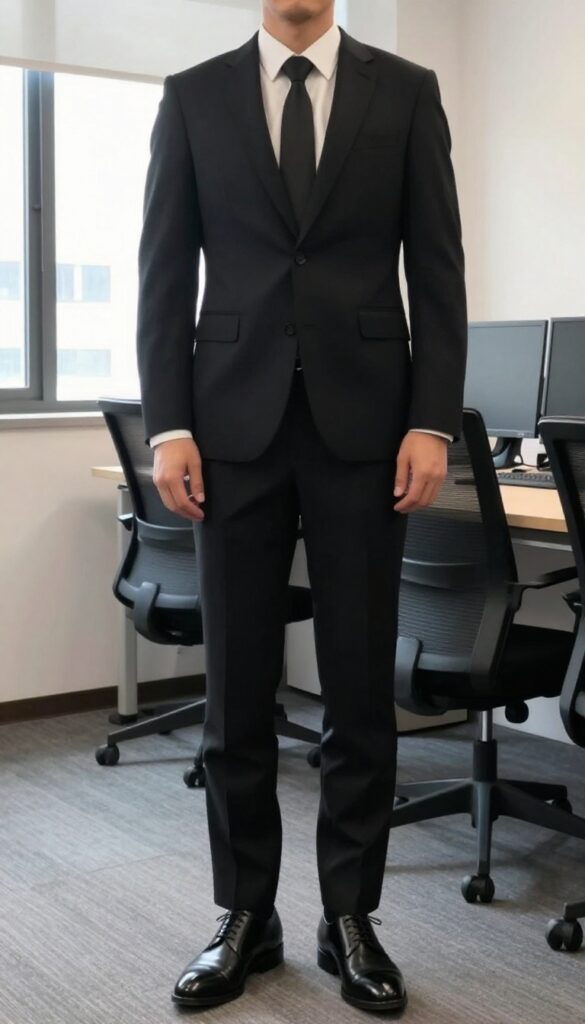
When you need to command the room, nothing does it like a black suit. This is the ultimate power move for formal meetings, presentations, or any day you want to project confidence. Pair it with a crisp white shirt and a black tie for a monochromatic look that's timeless and authoritative.
The Power of a Perfect Fit
A black suit only works if it fits you well. Shoulder seams should align with your natural shoulder, and the jacket should button without pulling. Trousers should have a slight break at the shoe.
Invest in tailoring – it makes a $500 suit look like $2,000.
Tie and Shirt Pairing
Stick with a white shirt – it's non-negotiable for this look. The tie should be black, but consider texture: a silk tie is standard, but a matte or grenadine tie adds subtle depth. Keep the tie knot simple – a four-in-hand or half-Windsor works best.
Shoe and Accessory Details
Black Oxford shoes are the only choice here. Go for cap-toe or plain-toe, and keep them polished. A simple black leather belt and a classic watch (silver or black strap) complete the look without distracting from the clean lines.
6. Brown Suit with a Cream Shirt and a Green Tie
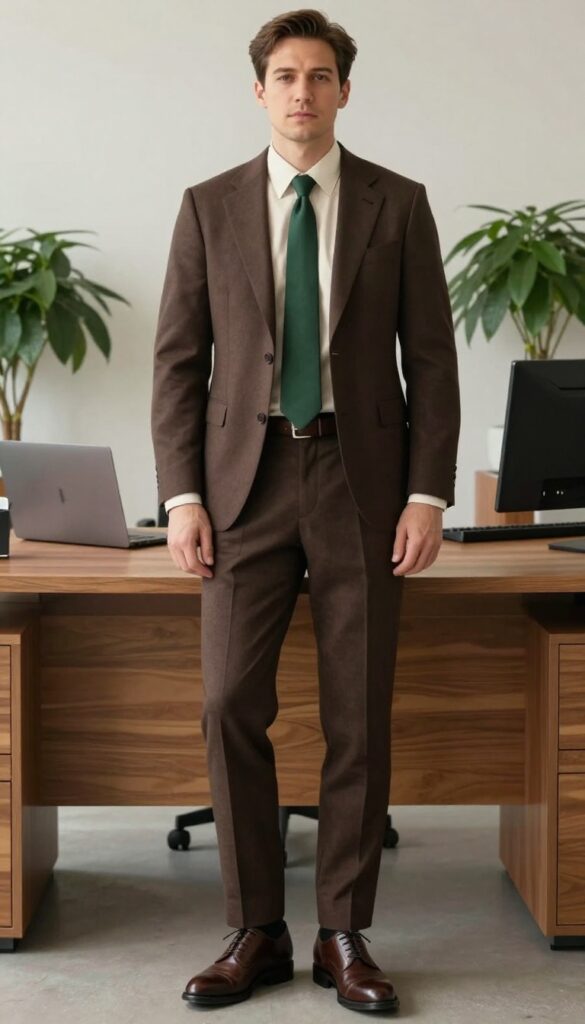
Brown suits are underrated but incredibly stylish. A cream shirt keeps the outfit light, while a green tie adds a subtle pop of color. This combination works well for fall and winter.
It's a refreshing alternative to navy or gray, and it shows you have an eye for color without being loud.
Choosing the Right Brown
Not all browns are created equal. For a formal office look, go with a medium-to-dark chocolate brown or a warm espresso. Avoid tan or camel, which can feel too casual.
The fabric matters too—wool or wool-blend suits drape better and look more polished than cotton or linen.
Tie and Shirt Pairing Tips
A cream shirt is your best bet because it's neutral but softer than white. For the tie, a forest green or olive green works beautifully. If you want to play it safer, a dark green knit tie adds texture and a modern touch.
Keep the tie pattern simple—solid or a subtle microprint—to maintain a professional look.
Shoes and Accessories to Complete the Look
Dark brown leather shoes, like oxfords or derbies, are the natural choice. Match your belt to your shoes. A brown leather watch strap or a simple metal watch keeps things cohesive.
Avoid black shoes—they clash with the warm tones of the suit.
7. Double-Breasted Suit in Navy with a Pocket Square
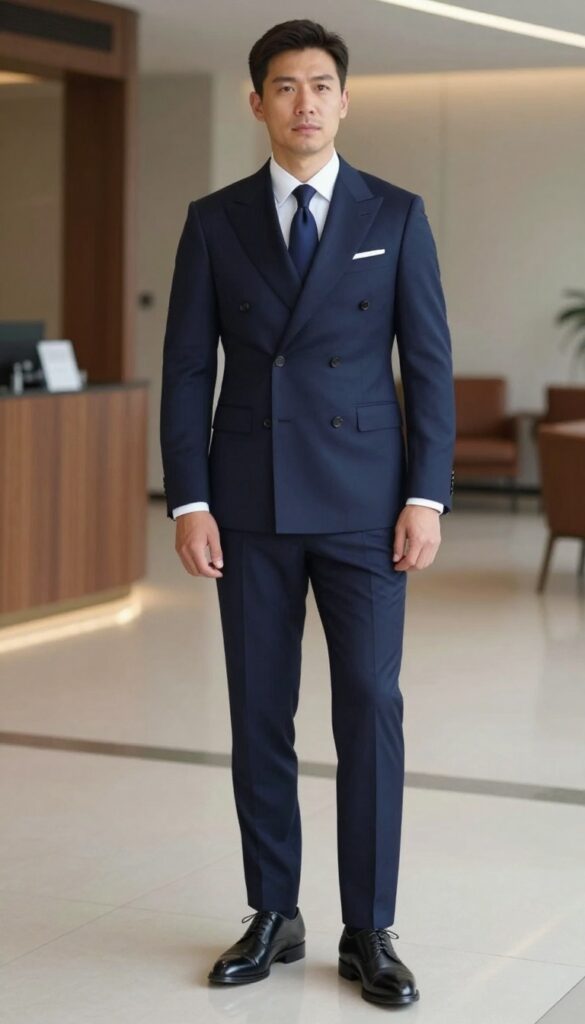
A double-breasted suit is a power move in the office. It’s sharp, confident, and instantly elevates your presence. Navy keeps it versatile and timeless, while a white pocket square adds a refined finishing touch.
This is the look you reach for when you need to make an impression without saying a word.
The Power of the Double-Breasted Silhouette
Unlike a single-breasted jacket, a double-breasted suit creates a strong V-shape that broadens the shoulders and narrows the waist. The overlapping front and extra buttons give it a structured, authoritative feel. For the office, stick with a two-button or six-button configuration—anything more can feel too theatrical.
The key is a tailored fit: the shoulders should sit cleanly, and the jacket should close without pulling.
Fabric and Color Choices for Work
Navy is the smartest choice for a double-breasted suit because it’s serious but not as severe as black. Look for a wool or wool-blend fabric with a subtle texture, like a birdseye or nailhead weave, which adds depth without being flashy. Avoid pinstripes or bold patterns—they can overwhelm the double-breasted styling.
A solid navy keeps the look clean and lets the pocket square do the talking.
Accessorizing Without Overdoing It
The pocket square is your main accessory here. A crisp white linen square folded in a straight or puff style keeps things elegant and understated. Pair the suit with a light blue or white dress shirt and a silk tie in a muted tone—navy, burgundy, or charcoal.
Keep your shoes simple: black or dark brown oxfords or derbies. A leather belt that matches your shoes ties the outfit together. No need for a lapel pin or tie bar; the double-breasted jacket already has plenty of presence.
8. Three-Piece Suit in Charcoal with a Patterned Vest

A three-piece suit is the ultimate power move in men's formalwear. The charcoal base keeps it professional and versatile, while a patterned vest adds personality without going overboard. This look is perfect for days when you need to impress—think client presentations, board meetings, or even a wedding.
Why the Patterned Vest Works
A solid charcoal suit can feel a bit safe, but swapping the plain vest for one with a subtle pattern—like a micro-check or birdseye—adds texture and depth. It catches the eye without screaming for attention. Just keep the pattern small and the colors muted to maintain a polished, office-appropriate vibe.
Tie or No Tie?
With a three-piece suit, you have options. Wearing a tie completes the traditional look, perfect for formal meetings. But going tie-less with the top button undone gives a modern, confident edge.
Either way, make sure the vest fits snugly—no gaping between buttons—and that the shirt collar sits neatly underneath.
Shoe and Accessory Pairing
Stick with classic leather oxfords in black or dark brown to match the suit's formality. A simple pocket square in white or a muted color adds a refined touch without competing with the vest pattern. Keep the belt and watch strap in the same leather family for a cohesive finish.
9. Blue Suit with a Pink Shirt and a Navy Tie

A blue suit is a cornerstone of any professional wardrobe. When you pair it with a pink shirt and a navy tie, you get a look that's both modern and confident. The combination is surprisingly versatile and works for everything from client meetings to office parties.
The soft contrast between the blue and pink keeps things interesting without being loud. A navy tie anchors the outfit and ties the colors together, creating a polished, harmonious palette. It's a simple formula that always looks intentional and sharp.
Choosing the Right Blue
Not all blue suits are created equal. For this outfit, a mid-blue or classic navy suit works best—it's dark enough to be formal but light enough to let the pink shirt pop. Avoid very light blues, which can look too casual, or very dark navies that might swallow the shirt's color.
A solid wool or wool-blend fabric in a medium blue gives you the most flexibility.
Pink Shirt Shades That Work
Stick with muted or dusty pinks rather than bright or neon tones. A light pink or blush shirt looks professional and pairs effortlessly with blue. If you want a bit more contrast, go for a deeper rose or salmon pink.
Keep the collar spread or point collar for a classic office vibe. A crisp cotton or pinpoint oxford fabric adds texture without being too casual.
Tie Texture and Width
A navy tie is the anchor here, but don't overlook texture. A grenadine, knit, or microfiber tie adds visual interest without pattern clash. Stick to a width between 2.5 and 3 inches for a modern, proportional look.
If you want a subtle pattern, a small-scale geometric or foulard in navy and white can work—just keep it understated so the shirt remains the focal point.
Shoes and Finishing Touches
Brown leather shoes are your best bet—oxfords or derbies in dark brown or burgundy complement the blue suit without competing with the tie. A brown leather belt and a simple watch with a brown strap tie it all together. Keep pocket squares minimal: a white linen square or one with a subtle navy edge adds polish without stealing attention.
10. Tweed Suit in Brown with a Turtleneck
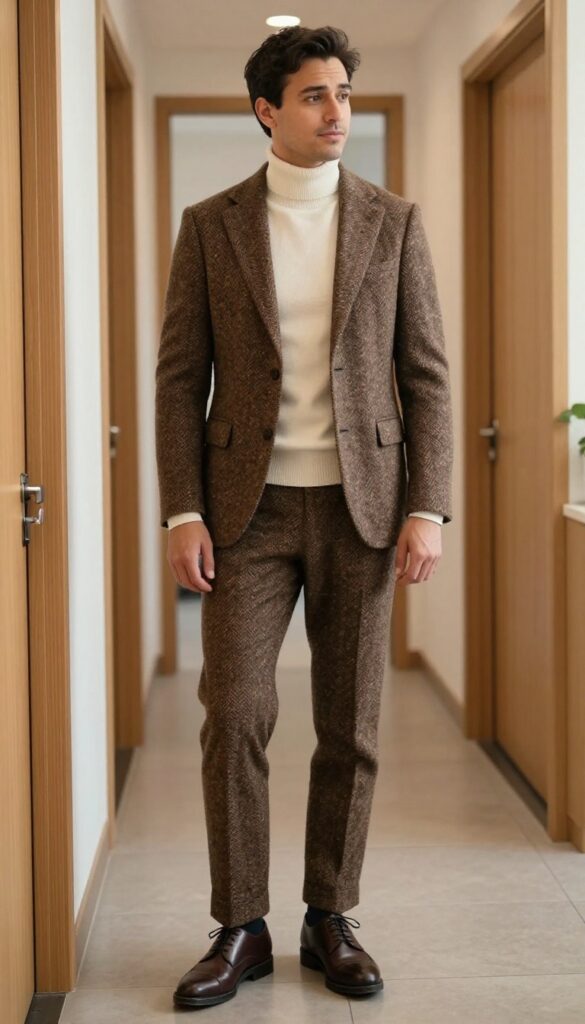
When the temperature drops, a tweed suit is your best friend. It brings warmth, texture, and a distinctly refined look that stands out from standard worsted wool. Pair it with a fine-knit turtleneck in cream or black, and you've got a cold-weather office outfit that's both cozy and commanding.
The tweed's herringbone or houndstooth pattern adds visual interest without being loud, making it perfect for client meetings or days when you want to feel especially put-together.
Choosing the Right Tweed and Fit
Not all tweed suits are created equal. For the office, opt for a lightweight tweed (around 300–350g) in a classic brown or charcoal tone. A slim, not skinny, fit keeps the silhouette modern without looking dated.
Look for a suit with natural shoulders and minimal padding to maintain a relaxed yet polished shape. The trousers should have a slight taper and a medium rise for comfort when sitting for long hours.
Turtleneck Pairing and Color Balance
The turtleneck is the star here. Choose a fine-gauge merino wool or cashmere blend in cream, oatmeal, or black. Cream creates a warm contrast against brown tweed, while black adds a sharper, more dramatic edge.
Make sure the turtleneck fits snugly at the neck and shoulders without bunching under the jacket. Tuck it in or leave it untucked depending on your trouser rise—just keep the front smooth.
Footwear and Accessories for a Polished Finish
Leather boots or oxfords in dark brown or burgundy complement the tweed's earthy tones. A pair of suede chukka boots adds a touch of casual elegance. Accessorize with a leather belt that matches your shoes, and consider a pocket square in a muted pattern or solid cream.
Avoid shiny or overly formal accessories—the tweed's texture calls for matte finishes and understated details.
11. Linen Suit in Beige with a White Linen Shirt

When the mercury rises, your office style doesn't have to suffer. A beige linen suit is the ultimate warm-weather power move—it's breathable, lightweight, and effortlessly sophisticated. Pair it with a crisp white linen shirt, and you've got a look that says 'I'm professional, but I also know how to stay cool.' Skip the tie to keep things relaxed yet polished, perfect for creative offices or summer Fridays.
Why Linen Works for the Office
Linen is a natural fiber that wicks moisture and allows air to circulate, making it ideal for hot days. Unlike heavier wools or synthetics, a linen suit won't leave you feeling clammy or restricted. The beige color is neutral enough to be office-appropriate but adds a soft, approachable warmth that stands out from the sea of navy and charcoal.
Plus, linen's slight texture gives your outfit visual interest without trying too hard.
Nailing the Fit and Fabric Pairing
The key to pulling off a linen suit is fit—go for a tailored but not tight silhouette. The jacket should sit well on the shoulders, and trousers should have a straight or slightly tapered leg. Pairing it with a white linen shirt keeps the fabric consistent and the look cohesive.
If you want a bit of contrast, a lightweight cotton poplin shirt also works. Just avoid heavy or shiny fabrics that clash with linen's matte finish.
Footwear and Finishing Touches
Loafers are the natural companion to a linen suit—choose brown leather or suede for a classic feel. For a more modern edge, try clean white leather sneakers (yes, in some offices). Add a woven leather belt and a simple watch with a leather or canvas strap.
Skip the pocket square to keep the vibe uncluttered. The goal is effortless polish, so don't over-accessorize.
12. Velvet Blazer with Dark Jeans and a Dress Shirt
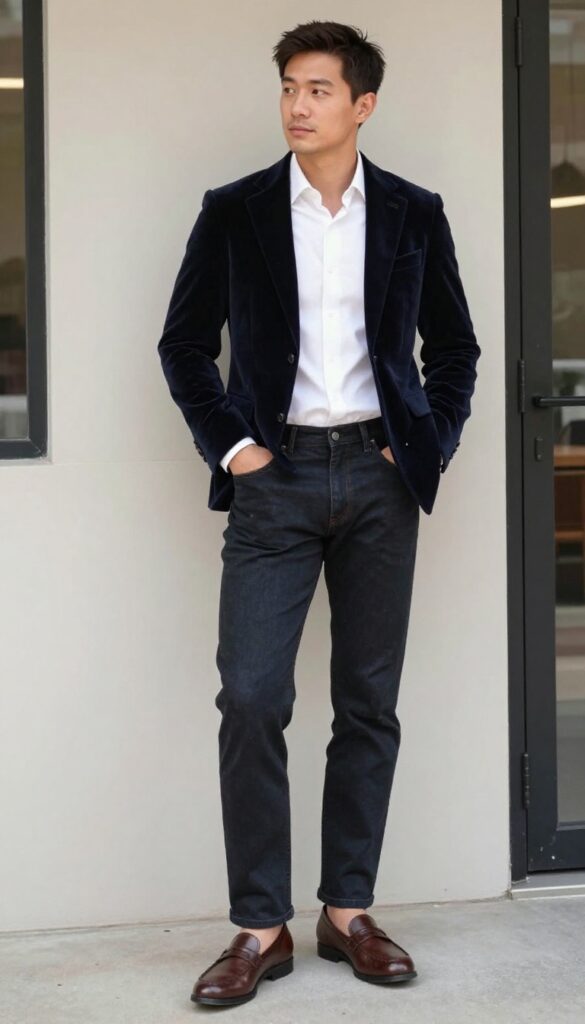
A velvet blazer is a shortcut to looking effortlessly refined. It adds texture and a touch of luxury without being over the top. Pair it with dark, slim-fit jeans and a crisp white dress shirt for a look that works in creative offices or evening events where you want to impress.
Why Velvet Works for the Office
Velvet has a rich, soft sheen that catches the light in a subtle way. It's formal enough for client meetings but relaxed enough for casual Fridays. The key is choosing a dark color like navy, burgundy, or forest green—these shades keep the blazer professional while still making a statement.
Balancing Textures and Proportions
The contrast between the plush velvet and the smooth cotton of the dress shirt creates visual interest. Dark jeans ground the look, keeping it from feeling too dressy. Stick to slim or straight-leg jeans without rips or fading.
A clean, minimal silhouette ensures the blazer remains the focal point.
Footwear and Finishing Touches
Leather loafers or derby shoes in brown or black complete the outfit. Avoid sneakers—they'd clash with the blazer's formality. Add a leather belt that matches your shoes and a simple watch.
Skip the tie; the open collar keeps the vibe modern and approachable.
13. Patterned Suit (Pinstripe or Plaid) with a Solid Tie

A patterned suit is a confident choice for the office. It shows you understand style without screaming for attention. The key is balancing the pattern with solid, neutral pieces so the suit remains the star.
This look works beautifully for meetings, presentations, or any day you want to stand out professionally.
Choosing the Right Pattern
Pinstripes are a classic choice that elongates the silhouette, making you look taller and leaner. Plaid offers a bolder, more contemporary feel. Stick to subtle patterns in navy, charcoal, or medium gray for maximum versatility.
Avoid overly large or bright patterns that can feel distracting in a formal setting.
Solid Shirt and Tie Pairing
A crisp white or light blue dress shirt is your safest bet. For the tie, pick a solid color that matches one of the subtle tones in the suit pattern—like a deep burgundy with a charcoal pinstripe or a forest green with a navy plaid. This creates a cohesive, polished look without clashing patterns.
Shoes and Accessories to Match
Keep footwear classic: black or dark brown oxfords or derbies. A leather belt in the same shade ties the outfit together. Add a simple watch with a leather strap and skip the pocket square to avoid overdoing it.
The goal is a sharp, intentional look that lets the suit speak.
FAQ
What is the best color for a first formal suit?
Navy is the most versatile and recommended first suit color. It works for almost any occasion, from interviews to weddings, and pairs well with a variety of shirt and tie colors.
Can I wear a suit without a tie?
Yes, but it depends on the dress code. For business casual offices, a suit without a tie can look sharp if you leave the top button undone. For formal settings, a tie is usually expected.
How should a suit fit?
A well-fitted suit should have shoulders that align with your natural shoulder line, sleeves that end at your wrist bone, and trousers that break slightly over your shoes. Avoid baggy or overly tight fits.
What shoes should I wear with a formal suit?
Oxfords are the most formal choice, followed by derbies and loafers. Match the shoe color to your belt and suit: black for black suits, brown for navy, gray, or brown suits.
How many suits do I need for a work wardrobe?
Start with two to three suits in neutral colors like navy, charcoal, and gray. This gives you enough variety to rotate while keeping your look professional and cohesive.
Conclusion
Building a formal office wardrobe doesn't have to be complicated. With these 13 outfit ideas, you have a solid foundation for looking sharp and feeling confident at work. Remember, fit and fabric quality matter more than brand names.
Invest in versatile pieces that can be mixed and matched, and don't be afraid to add personal touches like a patterned tie or pocket square. Dress for the job you want, and let your style speak for itself.