11 Easy Work Dresses for Women Office Outfit Ideas
Finding a work dress that's both comfortable and office-appropriate shouldn't feel like a challenge. The right dress can simplify your morning routine, making you look polished with minimal effort. From classic silhouettes to modern twists, these 11 easy dress ideas are designed to fit your work life.
Whether you prefer the structure of a sheath dress or the relaxed vibe of a shirt dress, there's a style here for every dress code and body type. Each look focuses on wearability, so you can move through meetings and errands with confidence.
Think breathable fabrics, flattering cuts, and pieces that transition seamlessly from desk to dinner. Ready to refresh your work wardrobe?
1. The Classic Sheath Dress

A timeless sheath dress in a neutral color like navy or black is a work wardrobe staple. It's polished, professional, and incredibly easy to accessorize. Pair with simple pumps and a structured tote for a look that never fails.
Why Navy Works Best
Navy is softer than black but just as professional, making it ideal for daytime offices. It pairs beautifully with nude pumps and a tan leather tote, creating a sophisticated yet approachable palette.
Accessorize with a Belt
A slim leather belt in a contrasting color, like cognac or black, can define your waist and add visual interest. This small detail keeps the sheath dress from feeling too plain while maintaining a clean silhouette.
Choose the Right Length
Aim for a hemline that hits just at or slightly above the knee for a modern office look. This length is universally flattering and works well for both sitting at a desk and walking to meetings.
2. The Wrap Dress for Flattering Fit
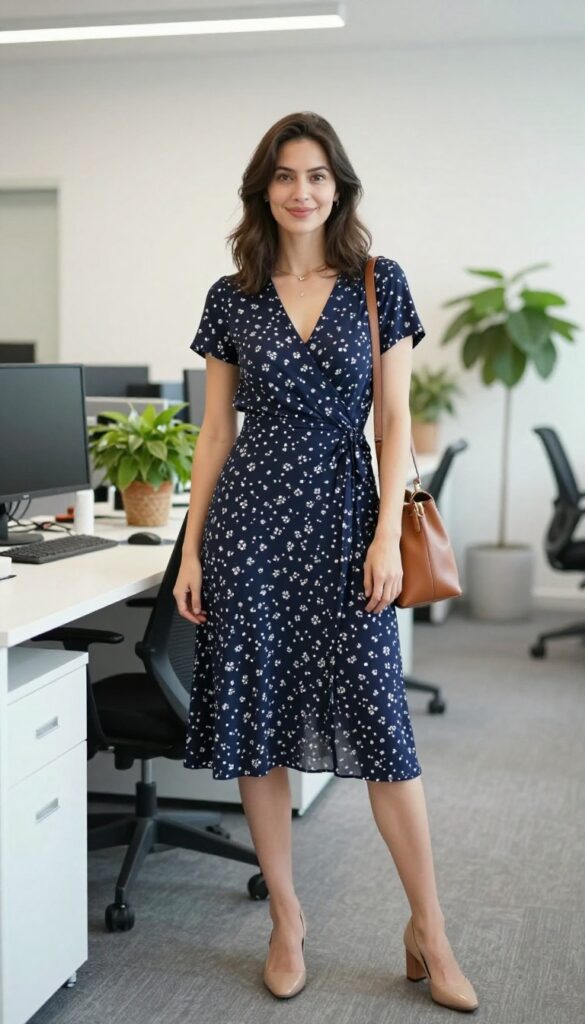
The wrap dress is a true office MVP. Its adjustable waist and V-neckline create a flattering silhouette for almost any body shape, while the midi length keeps things professional. Choose a solid color like navy or a subtle print—think small polka dots or delicate florals—to keep the look work-appropriate.
Pair with low heels or ballet flats for a polished yet comfortable ensemble that takes you from morning meetings to after-work drinks.
Why the Wrap Dress Works for Every Body
The magic of the wrap dress lies in its adjustable fit. You can cinch the waist exactly where you want it, creating an hourglass shape that flatters curves and defines the waist. The V-neckline elongates the neck and balances broader shoulders, while the wrap skirt allows for easy movement.
This dress is especially forgiving for busy days when you need comfort without sacrificing style.
Shoe Pairings That Keep It Professional
Low block heels are a natural match for the wrap dress—they add polish without sacrificing comfort. Nude or black pumps elongate the legs, while metallic flats bring a subtle touch of elegance. For a more relaxed office vibe, try ballet flats or loafers in a complementary color.
Avoid overly casual shoes like sneakers or flip-flops, as they can undermine the dress's professional feel.
Layering for Cooler Office Temperatures
A fitted blazer or a cropped cardigan works beautifully over a wrap dress. Stick to neutral tones like cream, black, or camel to keep the look cohesive. A longline vest can also add structure without hiding the dress's waist definition.
In chillier months, add opaque tights and ankle boots—just ensure the boot height doesn't cut off the leg line.
3. The Shirt Dress for Casual Polish
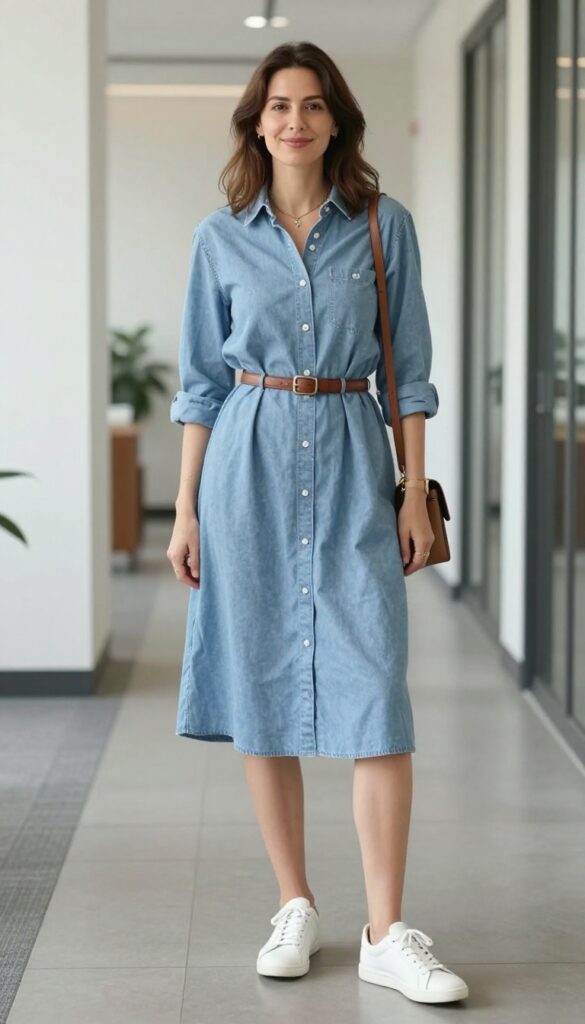
A shirt dress is the work wardrobe hero you didn’t know you needed. It borrows the crisp, structured feel of a button-down shirt but gives you the ease of a one-piece outfit. The result?
A look that’s pulled together without trying too hard. Perfect for days when you want to look professional but still feel like you’re wearing your favorite weekend dress.
Why a Belt Makes All the Difference
An unbelted shirt dress can sometimes feel a bit boxy or shapeless, especially if you’re between sizes. Adding a slim leather belt at your natural waist instantly defines your silhouette and creates a more tailored, office-ready line. It also gives you the chance to introduce a contrast color—like a tan belt with a chambray dress—or keep it tonal for a sleeker effect.
Shoe Pairings That Shift the Vibe
The beauty of a shirt dress is how easily it adapts to different footwear. For a classic polished look, try white leather sneakers—they keep things fresh and comfortable for a commute or a busy day on your feet. If your office leans more formal, swap in loafers or low block heels.
Both options maintain the dress’s casual polish while fitting your workplace’s dress code.
Fabric Choices for Year-Round Wear
Cotton poplin and chambray are go-to fabrics for a reason: they breathe well in warmer months and layer easily under a cardigan or blazer when the temperature drops. For a slightly dressier feel, look for a shirt dress in a soft linen blend or a lightweight twill. These fabrics hold their shape without wrinkling too much, so you’ll look crisp from morning meetings to after-work plans.
4. The Sweater Dress for Cozy Comfort
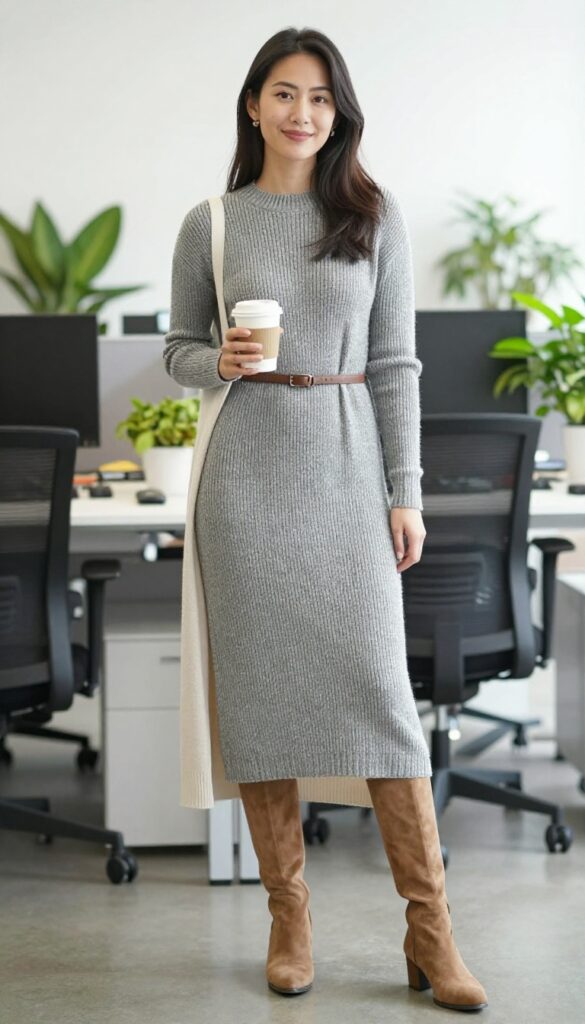
When the temperature drops, a sweater dress is your best friend in the office. It's like wearing your favorite cozy sweater, but in a polished, dress form that looks completely work-appropriate. The key is choosing the right knit—think ribbed or fine-gauge fabrics that hold their shape and don't look too casual.
A neutral tone like camel, charcoal, or heather gray keeps it versatile, while the dress's silhouette can be anything from a relaxed fit to a more tailored midi. Pair it with ankle boots or knee-high boots for instant warmth, and add a long cardigan or a structured blazer for extra layers. This outfit is proof that comfort and professionalism can coexist beautifully.
Choosing the Right Knit and Fit
Not all sweater dresses are created equal for the office. Look for fine-knit or ribbed styles that have a smooth, structured finish—they read as more polished than chunky cable knits. A midi length is ideal for a professional look, and a slight A-line or body-skimming fit flatters most body types without being too tight.
If you prefer a looser silhouette, add a thin belt to define your waist and keep the outfit from looking sloppy.
Boots That Complete the Look
Footwear can make or break this outfit. Ankle boots with a block heel or sleek Chelsea boots keep the look modern and office-friendly. For extra warmth and a taller silhouette, knee-high boots in suede or leather are a stylish choice.
Stick to neutral colors like black, brown, or taupe to keep the focus on the dress. Avoid overly chunky combat boots or stilettos—you want balance, not bulk.
Layering Without Bulk
A long cardigan in a matching or complementary neutral is a natural layering partner for a sweater dress. It adds warmth without overwhelming the outfit. For a more structured vibe, try a tailored blazer in wool or tweed—it contrasts nicely with the softness of the knit.
On very cold days, a classic trench coat or wool coat worn open over the dress keeps you cozy from commute to cubicle.
5. The Fit-and-Flare Dress for Feminine Style
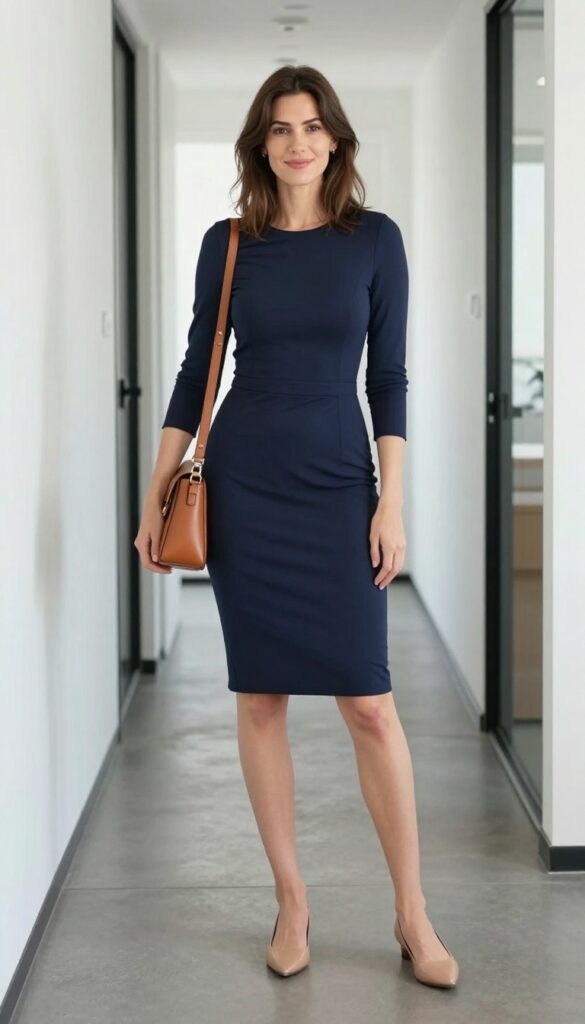
A fit-and-flare dress brings a soft, feminine touch to your work wardrobe without sacrificing professionalism. The defined waist and A-line skirt create a flattering silhouette that suits most body types, while the forgiving fit makes it comfortable for long days at the office. Look for styles in midi or knee-length hemlines, and choose fabrics like cotton poplin or crepe that hold their shape.
Choosing the Right Neckline and Sleeve
For a polished office look, opt for a modest neckline like a scoop, V-neck, or collared button-front. Sleeves can range from short to three-quarter length, which adds coverage while keeping the look airy. Avoid overly low cuts or sleeveless styles unless you plan to layer with a blazer or cardigan.
Balancing Proportions with Shoes and Bags
Since the fit-and-flare silhouette adds volume below the waist, balance it with sleek footwear. Block heels or pointed flats elongate the legs and keep the outfit grounded. A structured tote or crossbody bag in a neutral color complements the dress without competing with its shape.
Layering for Transitional Weather
This dress works year-round with the right layers. In cooler months, add a tailored blazer or a cropped cardigan. For spring or fall, a lightweight trench coat or denim jacket can dress it down slightly while still looking office-appropriate.
Stick to fitted layers to maintain the dress's waist definition.
6. The Midi Dress with Sleeves
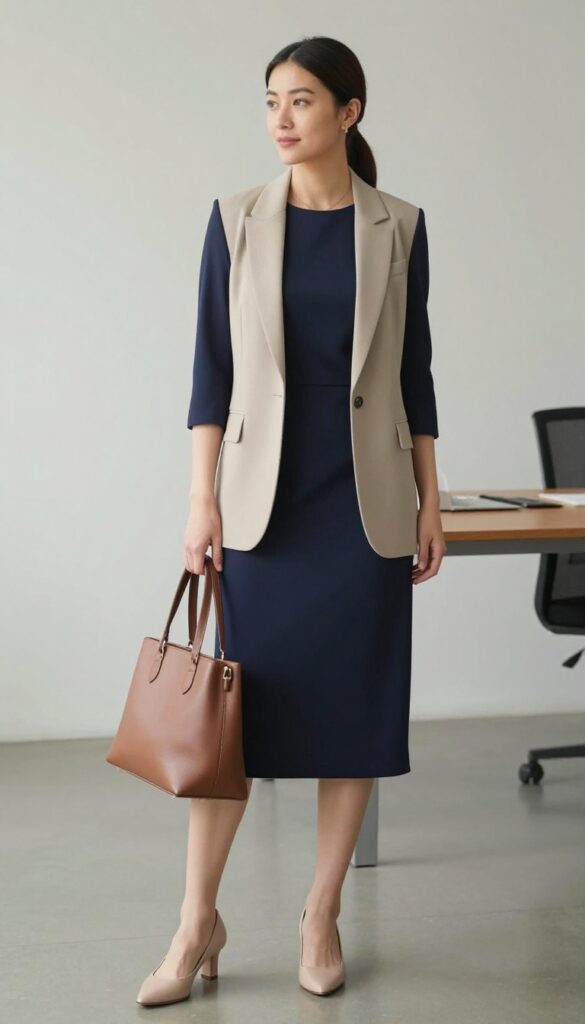
A midi dress with sleeves is a reliable choice when you want coverage without sacrificing style. The longer hem and full or three-quarter sleeves create a polished silhouette that works beautifully in conservative offices. Choose a solid color like navy, charcoal, or forest green to keep the look refined and easy to accessorize.
Why Three-Quarter Sleeves Work Best
Three-quarter sleeves hit right at the forearm, offering more coverage than short sleeves while keeping the look airy and modern. This sleeve length also balances the midi hemline, preventing the outfit from feeling too heavy. It's a subtle detail that makes the dress feel intentional and office-ready.
Layer with a Blazer for Instant Polish
Throwing a tailored blazer over your midi dress instantly elevates the outfit for meetings or presentations. Stick with a blazer in a complementary neutral tone, like black, beige, or gray, to maintain a streamlined silhouette. The added layer also provides warmth if your office runs cold.
Footwear That Keeps It Professional
Pair your midi dress with low-block heels or pointed flats for a comfortable yet professional finish. Nude or black pumps elongate the legs, while loafers add a preppy touch. Avoid chunky sneakers or overly casual sandals, as they can undermine the dress's sophisticated vibe.
7. The Slip Dress Layered with a Blazer
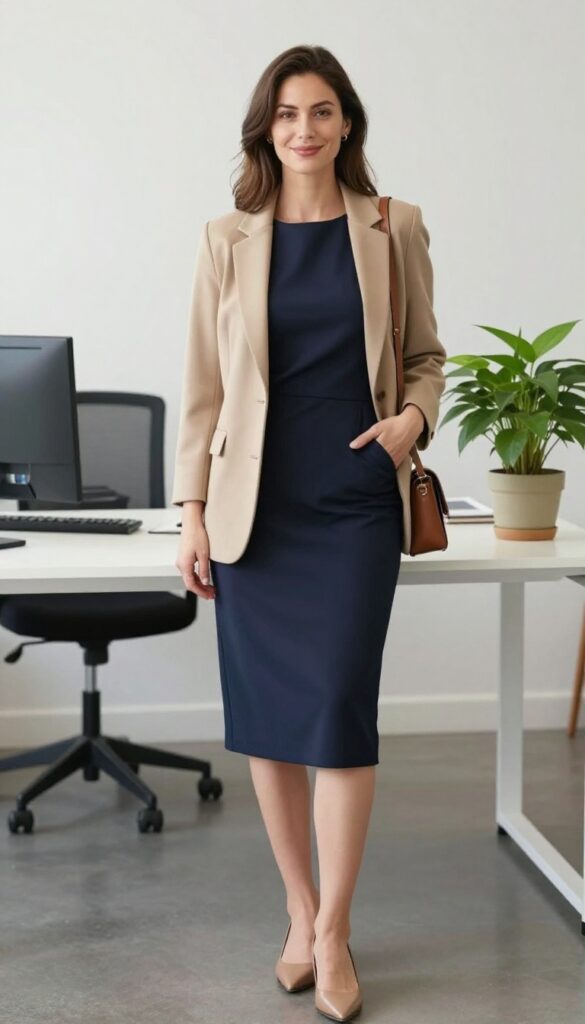
A slip dress might feel too sleek for the office on its own, but layer it with a blazer and you've got a polished, modern work look. The key is choosing a slip dress in a subdued color like navy, black, or olive, and topping it with a tailored blazer in a complementary neutral. This outfit works for creative offices, business casual environments, and even client meetings when you keep accessories minimal.
The Base: Choosing the Right Slip Dress
Opt for a slip dress that hits just above or below the knee in a fabric like silk, satin, or a matte crepe. Avoid anything too shiny or clingy. A midi length is especially office-friendly.
Solid colors are easiest to style, but a subtle print like a small polka dot or pinstripe can work too.
The Blazer: Structure Meets Softness
A well-fitted blazer instantly elevates a slip dress. Choose a single-breasted style in wool, cotton, or a stretch blend. Black, gray, or camel blazers are versatile.
For a softer look, try an oversized blazer in a lighter fabric. Leave the blazer unbuttoned to show the dress's neckline, or button it for a more covered-up silhouette.
Shoes and Accessories: Keep It Sleek
Pointed-toe flats, low block heels, or sleek loafers work best with this look. Avoid chunky sneakers or sandals. Keep accessories minimal: a simple leather tote or crossbody bag, delicate jewelry, and maybe a silk scarf tied around your bag handle.
The goal is a streamlined, modern aesthetic.
8. The Jumpsuit Dress (Dress Jumpsuit)
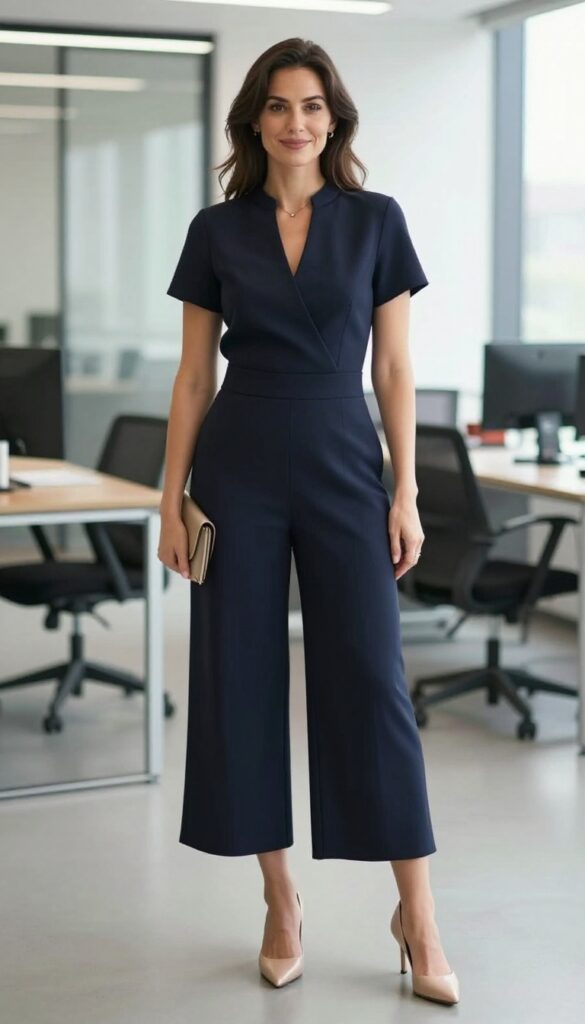
A dress jumpsuit gives you the best of both worlds: the one-and-done ease of a dress with the coverage and comfort of pants. It’s a modern, polished alternative that feels fresh and unexpected in an office setting. Look for a wide-leg style with a defined waist to create a flattering silhouette that moves with you.
Why Wide Legs Work for the Office
Wide-leg jumpsuits offer a professional, tailored look without feeling restrictive. The flowing legs balance the structure of a cinched waist, making the outfit feel intentional and put-together. Choose a fabric like crepe or ponte that drapes well and resists wrinkles, so you stay crisp from morning meetings to after-work plans.
Shoe Pairings That Elevate the Look
Heels are a natural match for a dress jumpsuit, elongating your legs and adding polish. Pointed-toe pumps or block-heel sandals in a neutral tone keep the focus on the jumpsuit. For a more comfort-driven day, sleek loafers or low-heel mules can work too, as long as the jumpsuit hits just above the floor.
The Right Accessories for a Polished Finish
A structured clutch or a small crossbody bag complements the clean lines of a jumpsuit. Keep jewelry minimal—think delicate gold or silver pieces—to avoid competing with the jumpsuit’s strong silhouette. A belt can further define your waist if the jumpsuit doesn’t have one built in.
9. The Knit Dress with Belt
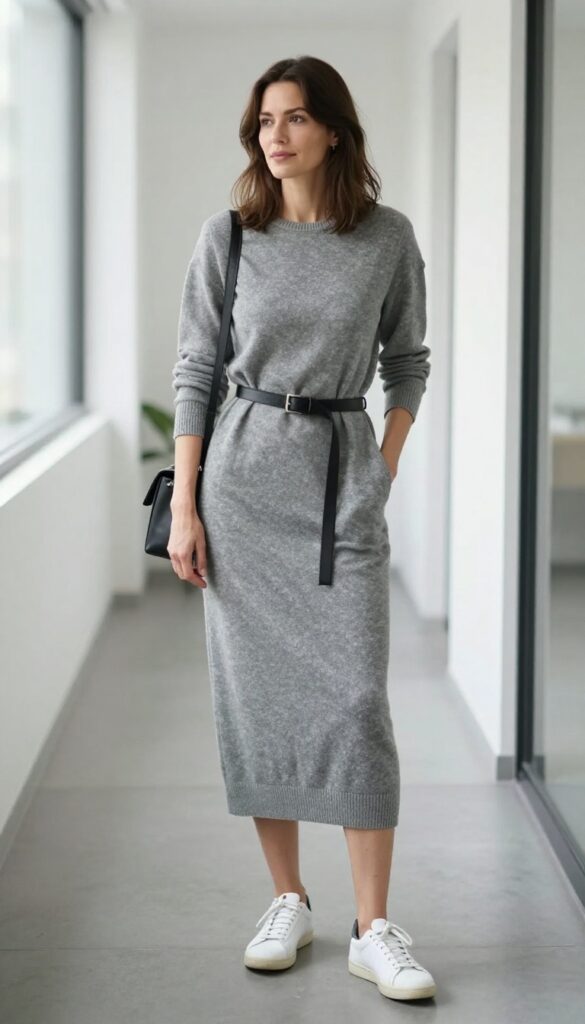
A knit dress is the ultimate blend of comfort and style for the office. The soft, stretchy fabric moves with you, while a belt adds definition to your waist, creating a flattering silhouette. This dress can easily transition from a casual Friday with sneakers to a polished meeting look with boots or heels.
Why a Belt Makes All the Difference
Without a belt, a knit dress can sometimes feel shapeless or overly casual. Adding a belt—whether it's a thin leather one or a wide fabric style—instantly creates a defined waist and a more structured appearance. It also gives you the freedom to adjust the fit throughout the day, especially after lunch.
Shoe Pairings for Every Vibe
The beauty of a knit dress is its versatility. For a relaxed, modern look, pair it with clean white sneakers or fashion sneakers—perfect for casual Fridays or days when you're on your feet. To dress it up for client meetings or dinner after work, swap in ankle boots with a block heel or pointed-toe pumps.
Layering for Different Seasons
This dress works year-round with the right layers. In cooler months, throw on a long cardigan or a tailored blazer, and add opaque tights. For spring or fall, a denim jacket or a lightweight trench coat keeps the look fresh.
Stick to neutral or earthy tones for a cohesive wardrobe that mixes and matches easily.
10. The Patterned Dress for Personality
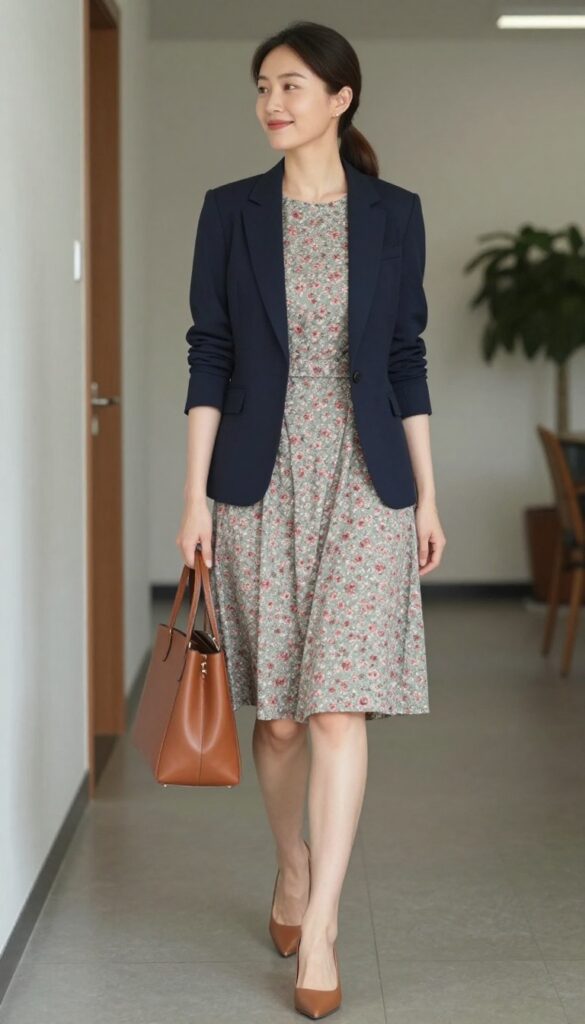
A patterned dress is an easy way to show off your personal style while staying professional. Think subtle stripes, delicate polka dots, or a small-scale floral print—nothing too loud or distracting. The key is to let the pattern do the talking, so keep accessories and shoes minimal.
Choosing the Right Print
For the office, stick with patterns that are refined rather than bold. A thin vertical stripe can elongate your silhouette, while a tiny polka dot adds a playful touch without being overwhelming. Floral prints work well when the scale is small and the colors are muted—think soft blues, dusty roses, or sage greens.
Avoid large, high-contrast patterns that might feel too casual or distracting.
Balancing with Neutrals
Since the dress is the star, ground it with neutral pieces. A structured blazer in navy, black, or camel tones down the print and adds polish. For footwear, simple pumps or loafers in a solid color—like nude, black, or tan—keep the focus on the dress.
A classic tote bag in leather also complements the look without competing.
Accessorizing with Restraint
With a patterned dress, less is more when it comes to accessories. Choose one or two delicate pieces, such as small gold stud earrings and a thin bracelet. A simple leather belt can define your waist if the dress has a looser fit.
Avoid statement necklaces or bold scarves that might clash with the print.
11. The Little Black Dress (Office Edition)
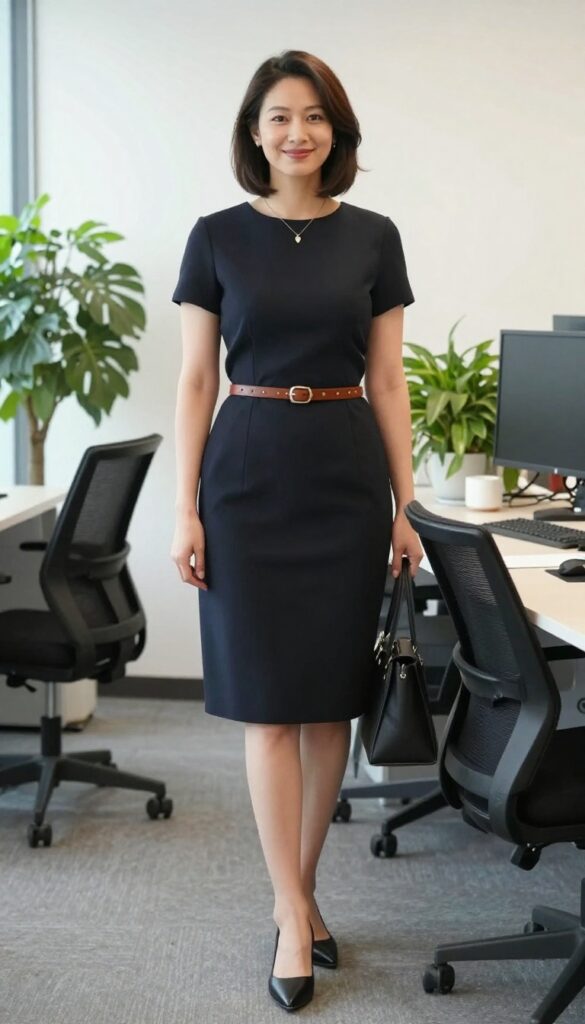
The LBD isn't just for evenings. A modest black dress with a higher neckline and longer hem is perfect for the office. It's versatile and can be styled with different accessories for a fresh look every time.
Finding the Right Fit and Length
Look for a black dress that hits at or just above the knee, with sleeves or a higher neckline for a professional vibe. A-line or sheath silhouettes work well—they skim the body without being too tight. Fabrics like ponte knit or crepe offer structure and comfort.
Accessorizing for the Office
Keep accessories polished but minimal. A thin leather belt can define your waist, while stud earrings or a simple pendant necklace add a touch of elegance. A structured tote bag and low-heel pumps or loafers complete the look without going overboard.
Layering for Different Seasons
This dress works year-round. In cooler months, layer with a tailored blazer or a cashmere cardigan. For warmer days, wear it alone with bare legs and open-toe heels.
A silk scarf tied at the neck can also add a seasonal pop of color.
FAQ
What length should a work dress be?
For most offices, a hemline at or just above the knee is appropriate. Midi and maxi lengths are also great options, especially for more conservative workplaces.
Can I wear sleeveless dresses to the office?
Yes, but consider layering with a blazer, cardigan, or jacket. Some offices allow sleeveless dresses on their own, but it's always safe to have a layer handy.
What shoes go best with work dresses?
Pumps, loafers, ballet flats, block heels, and ankle boots are all great choices. Choose shoes that are comfortable for walking and standing.
How can I make a dress look more professional?
Add a structured blazer, a belt, or simple jewelry. Choose dresses in solid colors or subtle patterns. Ensure the fit is tailored and not too tight or too loose.
Are casual dresses like t-shirt dresses okay for the office?
It depends on your office dress code. A t-shirt dress can be dressed up with a blazer, nice shoes, and accessories. In a casual office, it can work well.
Conclusion
The key to a great work wardrobe is finding dresses that make you feel both professional and comfortable. Start with one or two of these easy styles and build from there—mixing in your favorite accessories to make each look your own.
Remember, the best office outfit is the one that lets you focus on your day without thinking about what you're wearing.