13 Beautiful Kitchen Hutch Ideas That Bring Style Without the Clutter
A kitchen hutch can be a stunning focal point, but it doesn't have to turn into a catch-all for clutter. The key is choosing a design that feels light and intentional—one that showcases your favorite pieces while keeping everyday items organized.
Whether you're working with a built-in or a standalone piece, these 13 ideas prove that style and practicality can coexist beautifully.
From open shelving to soft color palettes, each concept is designed to bring warmth and function to your kitchen without overwhelming the space.
1. Open Shelving Hutch with Glass Canisters
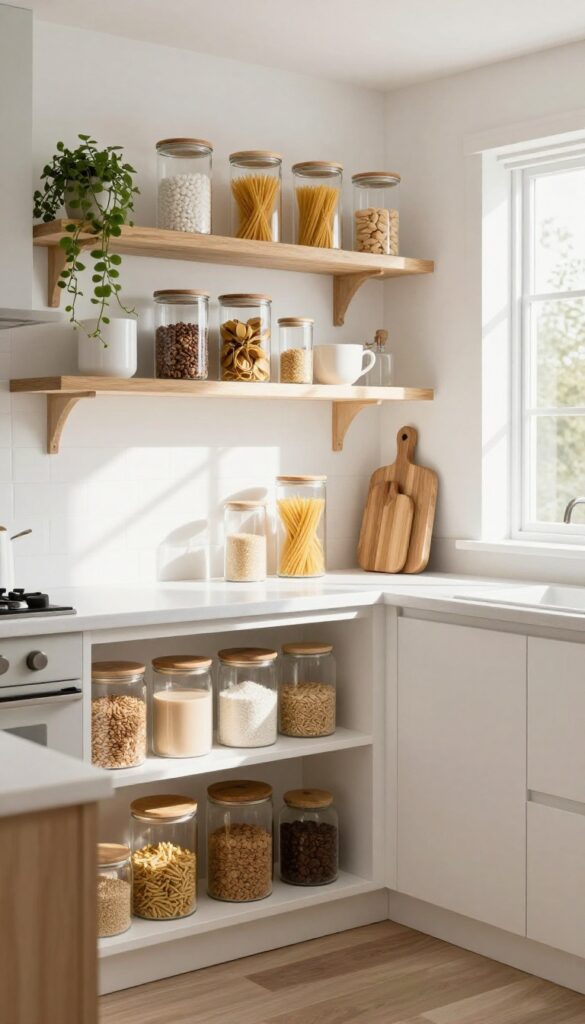
Swapping out solid upper cabinet doors for open shelves instantly changes the whole feel of a kitchen. It’s a simple switch that makes the space feel bigger, brighter, and more intentional. Glass canisters lined up on those shelves add a practical, pantry-friendly look that’s both organized and inviting.
Why It Works
This setup cuts down on visual clutter by turning everyday staples into decor. You can see exactly what you have, so you’re less likely to buy duplicates or let things go stale. The transparency keeps the look light and airy, which is perfect for smaller kitchens or any space that needs a breath of fresh air.
Best For
Kitchens that feel cramped or dark, especially if you want to show off a collection of matching canisters. It also works well in open-plan homes where the kitchen is visible from the living area, because the shelves become a natural focal point.
Styling Tip
Stick to a neutral palette for the canisters—clear glass with white or bamboo lids keeps things cohesive. Group similar items together, like all pasta shapes on one shelf and grains on another, and add a small trailing plant or a wooden cutting board for texture.
2. Two-Tone Hutch with White and Wood
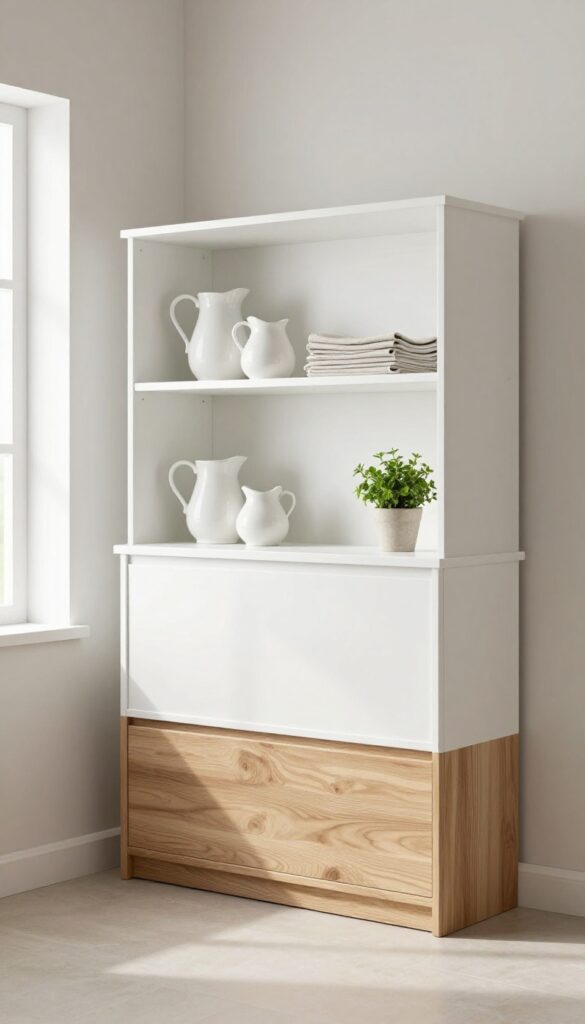
A two-tone hutch brings the best of both worlds: crisp brightness from white and natural warmth from wood. By painting the upper portion white and leaving the base in its natural wood finish, you create a piece that feels grounded yet airy. The contrast draws the eye without overwhelming the room, making it a perfect anchor for a kitchen that needs a little visual lift.
Why It Works
The white upper section reflects light and keeps the hutch from feeling bulky, while the wood base adds organic texture and warmth. This combination prevents the piece from looking too stark or too heavy, striking a balance that fits seamlessly into light and airy kitchens.
Best For
This look works beautifully in kitchens with neutral palettes—think white walls, light countertops, and natural wood floors. It's especially great for spaces that need a touch of warmth without sacrificing an open, breezy feel.
Styling Tip
Keep the wood base clear of clutter to let its grain shine. On the white shelves, group a few ceramic pitchers, a stack of linen napkins, and a small potted herb. Avoid overcrowding—negative space is your friend here.
3. Hutch with Sliding Barn Doors
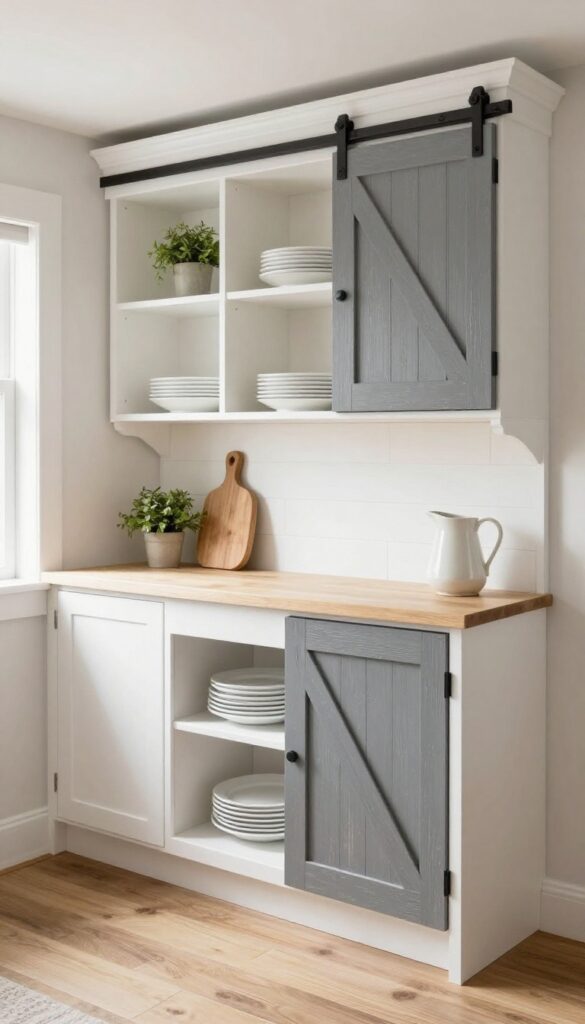
Sliding barn doors aren't just for farmhouse bedrooms—they're a smart, stylish solution for kitchen hutches too. By covering only the lower cabinets with a sliding door, you can hide the clutter of small appliances and pantry overflow while leaving the top shelves open for display. The result is a two-tone look that feels both practical and airy, with a rustic-chic edge that softens the kitchen's overall feel.
Why It Works
The sliding door acts like a curtain for your countertop chaos—just slide it closed and suddenly the mess disappears. Meanwhile, the open upper shelves keep the hutch from feeling too heavy or closed off, maintaining that light and airy vibe. It's a clever way to blend storage and style without sacrificing either.
Best For
This setup is perfect for kitchens that lean farmhouse, rustic, or modern country, especially if you have a busy countertop with mixers, toasters, or coffee makers you'd rather not look at. It also works well in open-plan spaces where the kitchen is visible from the living area, since the sliding door offers quick camouflage.
Styling Tip
Keep the open shelves curated but not fussy—stack a few white dinner plates, add a wooden cutting board, and tuck in a small plant or two. Choose a barn door finish that contrasts with the hutch body, like a weathered gray door on a white cabinet, to make the sliding feature pop.
4. Glass-Front Cabinets with Interior Lighting
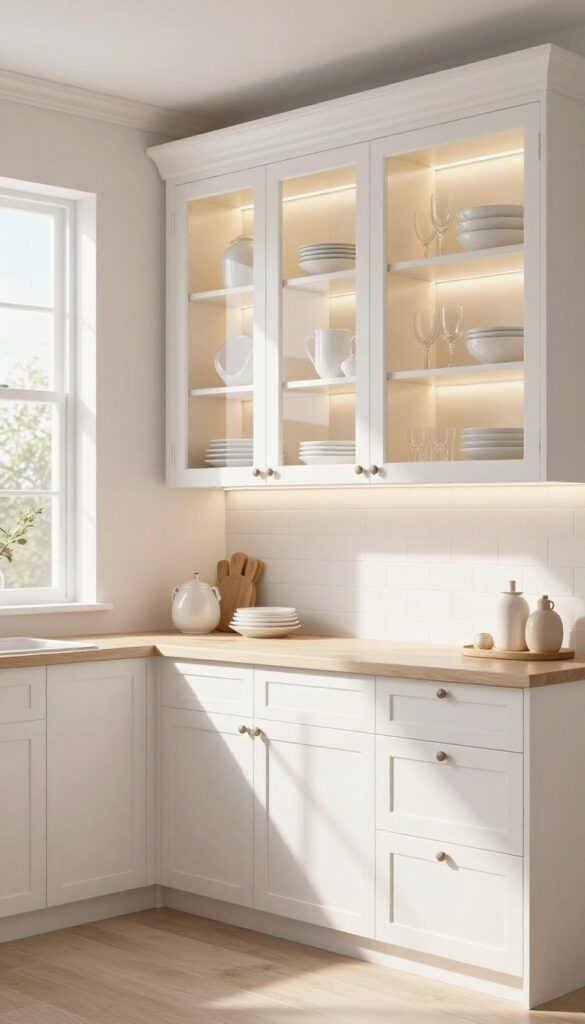
Swapping solid cabinet doors for glass fronts instantly opens up a kitchen, making it feel larger and more inviting. When you add warm LED strips inside, the hutch transforms into a glowing showcase for your favorite dishes. The soft illumination creates depth and a subtle elegance that feels both polished and approachable.
Why It Works
Glass-front cabinets with interior lighting serve a dual purpose: they keep everyday items accessible while turning functional storage into a design feature. The light draws the eye upward, making the kitchen feel taller, and the glow adds a cozy ambiance that’s especially welcoming in the evenings.
Best For
This idea is perfect for kitchens that lack natural light or feel a bit closed in. It also works well in open-concept spaces where the hutch is visible from the living or dining area, adding a decorative focal point that ties the rooms together.
Styling Tip
Stick to a cohesive color palette for the items inside—think white stoneware, clear glass, or soft neutrals. Avoid overcrowding; leave a little breathing room between pieces so the light can bounce around. Dimmer switches on the LEDs let you adjust the mood from bright and functional to soft and romantic.
5. Hutch with Built-In Wine Rack
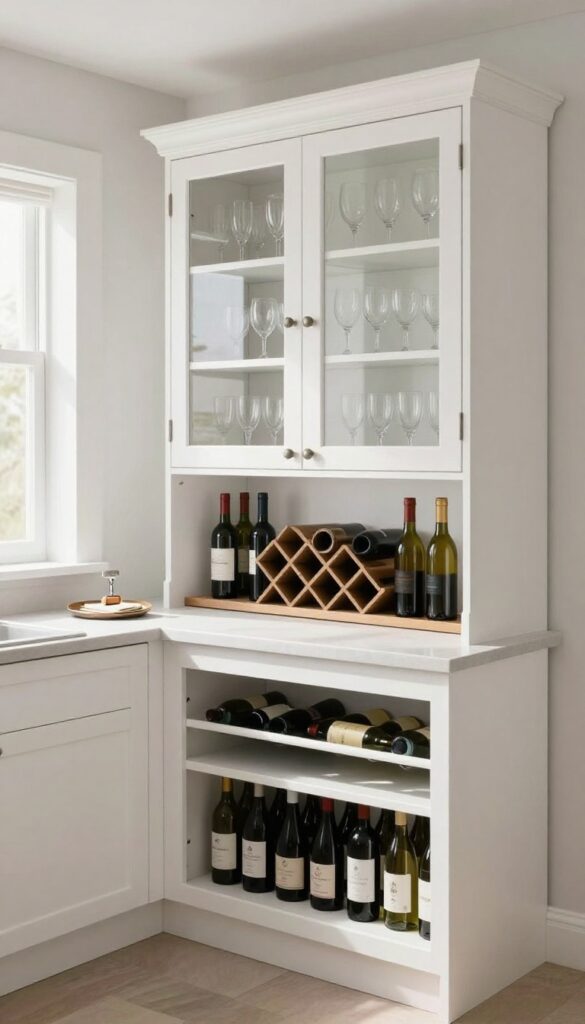
A kitchen hutch that doubles as a wine rack is the kind of smart storage that feels both indulgent and everyday practical. Instead of letting bottles clutter your countertops, this design tucks them neatly into the hutch's framework—either as a slim pull-out drawer or a dedicated open section. The result is a piece that feels intentional, not bulky, and brings a touch of entertaining-ready charm to your kitchen.
Why It Works
It solves two common kitchen dilemmas at once: where to store wine bottles and how to make a hutch feel purposeful. By integrating the rack directly into the hutch, you avoid the need for a separate wine stand, keeping the look streamlined. Plus, having bottles visible but organized makes them easy to grab for casual dinners or impromptu gatherings.
Best For
This idea is ideal for kitchens with a small dining area or an open layout where the hutch doubles as a bar station. It also suits homeowners who love to entertain but want to keep the space feeling airy—not like a crowded liquor cabinet.
Styling Tip
Keep the wine rack area light and airy by choosing a hutch in a pale wood or white finish. Use glass-front doors above or open cubbies to display glassware or a few decorative bottles. Add a small tray with a corkscrew and napkins on the countertop below for a ready-to-serve feel.
6. Minimalist Hutch with Flat-Panel Doors
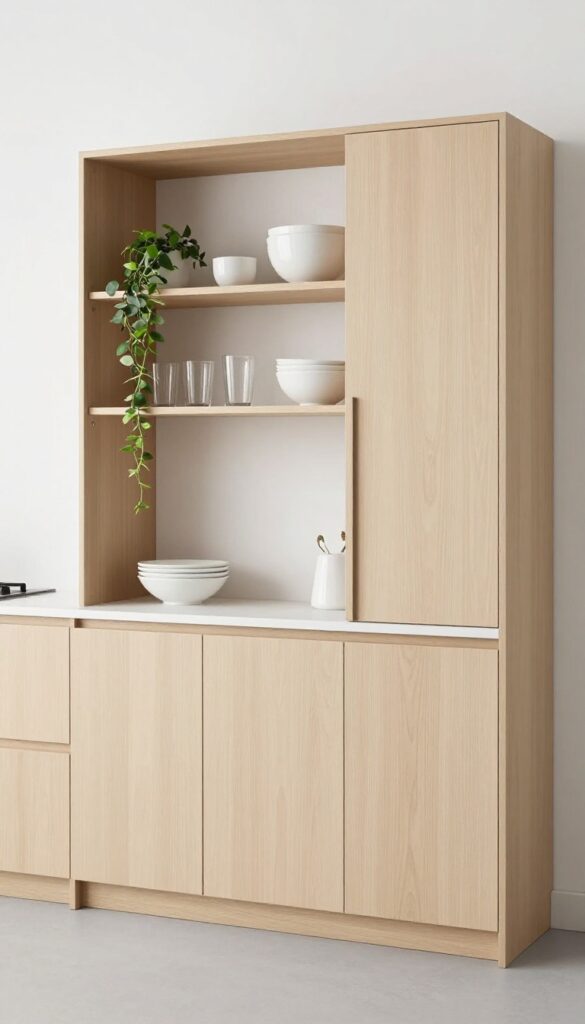
Clean lines and a light touch define this hutch style. Flat-panel doors in a soft matte finish—think pale oak or creamy white—keep the look airy and uncluttered. The simplicity lets the hutch blend into the kitchen rather than dominate it, making it feel like a natural extension of the cabinetry.
Open shelving on top adds a spot to display a few favorite pieces without overwhelming the space.
Why It Works
The flat-panel design eliminates visual noise, which is key for a light, airy kitchen. The matte finish softens reflections and keeps the focus on the overall room rather than the furniture. By keeping countertops bare and hardware minimal, the hutch becomes a quiet storage solution that supports a calm, organized vibe.
Best For
This works beautifully in modern, Scandinavian, or transitional kitchens where simplicity is key. It's also a great pick for smaller kitchens or open-plan spaces where you want storage without adding visual weight.
Styling Tip
Stick to a monochromatic palette on the shelves—white ceramics, clear glass, and a single trailing plant. Use the lower cabinets for everyday dishes or pantry overflow, and resist the urge to overcrowd the top. A single woven basket or a stack of linen napkins can add texture without clutter.
7. Hutch with Open Baskets for Storage
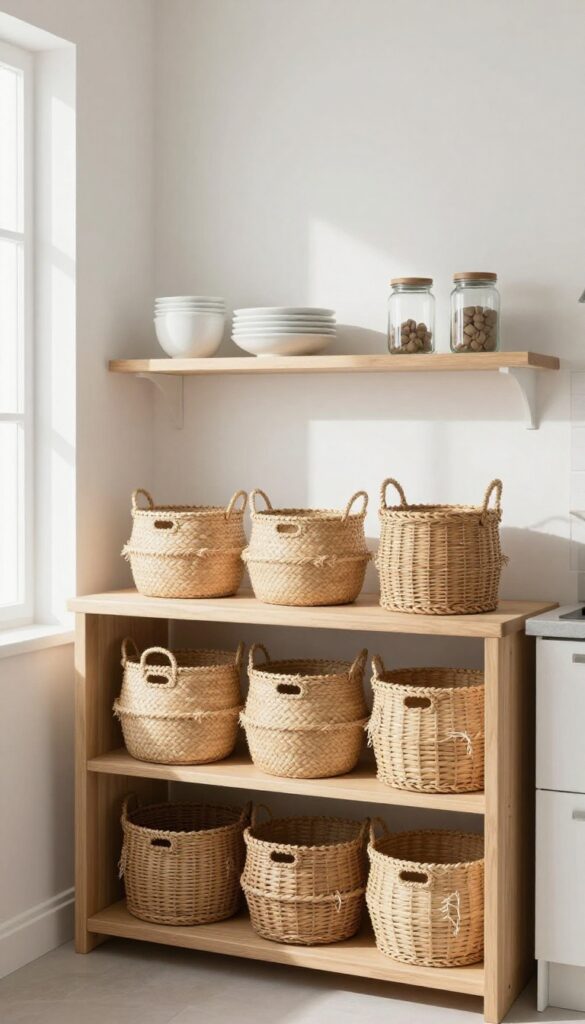
Woven baskets tucked into the lower shelves of a hutch bring instant texture and warmth to a kitchen. They soften the look of a utilitarian storage piece and make it feel more like furniture than cabinetry. The contrast between the baskets' natural fibers and the hutch's clean lines creates a balanced, lived-in feel that's both practical and inviting.
Why It Works
Baskets are masters at hiding everyday clutter while keeping items within easy reach. Linens, cookbooks, or bulk pantry goods disappear into the woven depths, so your hutch stays looking tidy without requiring constant organization. The texture also adds visual interest that prevents the hutch from feeling too flat or uniform.
Best For
This idea shines in kitchens where you need extra storage but want to avoid a closed-off, heavy look. It's perfect for open-concept spaces where the hutch is visible from the living or dining area, because the baskets keep things neat while contributing to the room's overall warmth.
Styling Tip
Mix basket sizes and weaves for depth—try a pair of large rectangular baskets on the bottom shelf and a smaller round one on the middle shelf. Stick to neutral tones like seagrass, rattan, or dark wicker to keep the look cohesive and light. Leave the top shelves open for displaying a few favorite dishes or glass jars.
8. Painted Hutch in a Soft Pastel Hue
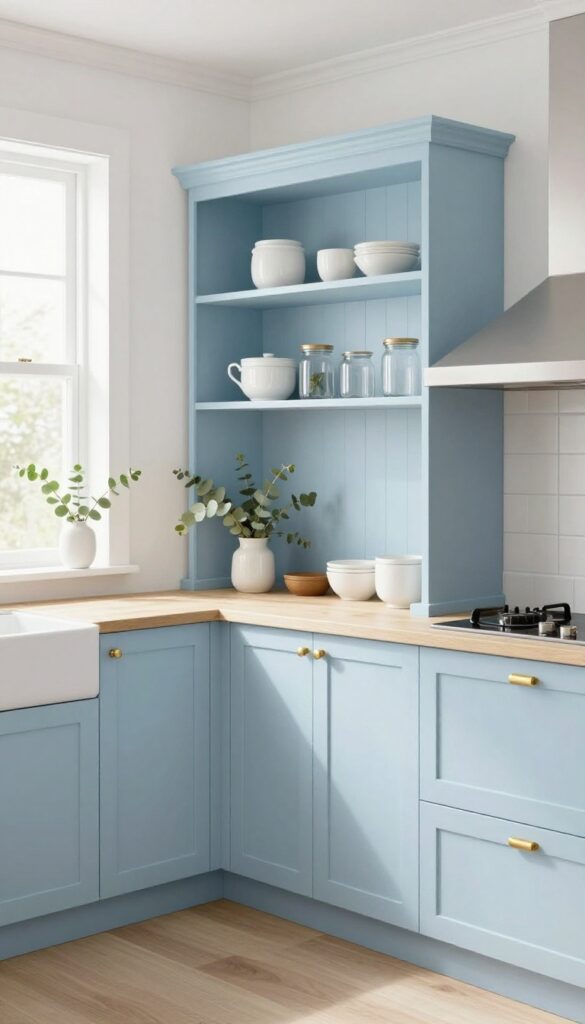
A fresh coat of paint can do wonders, especially when you choose a soft pastel like pale blue, sage green, or blush pink. This simple update turns a standard hutch into a focal point that feels both cheerful and calming. The key is keeping the shade light and muted so it blends effortlessly with your kitchen's existing palette while adding just a whisper of color.
Why It Works
Pastels reflect light beautifully, making your kitchen feel larger and airier. They also play well with natural wood tones, white countertops, and brass or matte black hardware, so you can easily tie the piece into your overall design without a major overhaul.
Best For
This idea shines in kitchens that already lean neutral—think white walls, light wood floors, or gray cabinets. It's also perfect for renters who can't paint the walls but can refresh a furniture piece, as long as you get permission or plan to take it with you.
Styling Tip
Keep the look light by displaying white ceramics, clear glass jars, and a few sprigs of eucalyptus or dried lavender on the open shelves. Avoid heavy or dark accessories that would weigh down the pastel vibe.
9. Hutch with a Coffee Station Setup
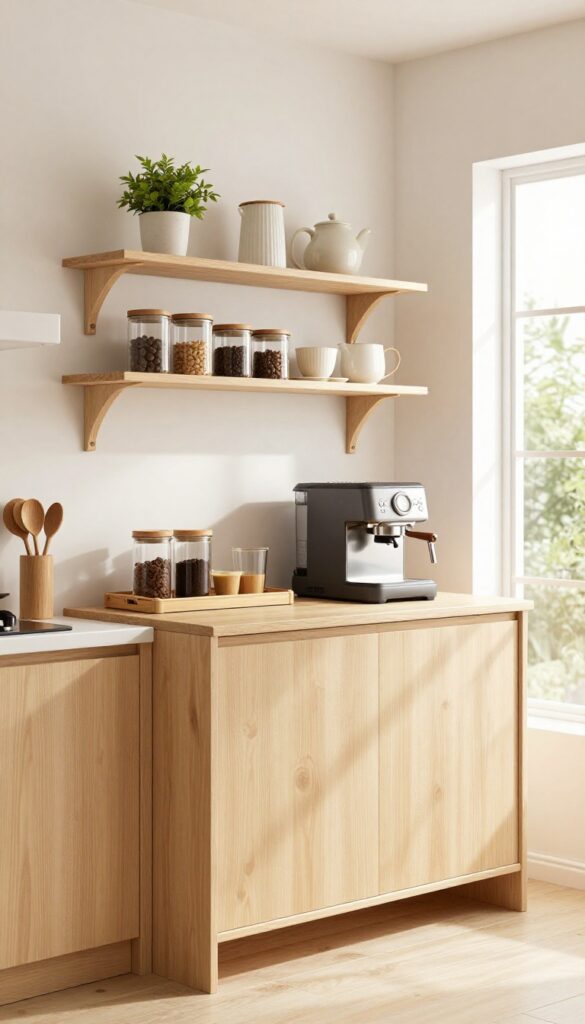
Turning a hutch into a coffee station is one of those ideas that just makes sense. It takes a piece of furniture that can sometimes feel purely decorative and gives it a daily purpose. The result is a spot that feels both intentional and inviting, where your morning routine gets a little boost of style without adding visual noise to your countertops.
Light wood or a soft white finish keeps the look airy, while open shelves show off your favorite mugs and canisters in a way that feels curated, not cluttered.
Why It Works
By dedicating a hutch section to coffee, you create a functional zone that keeps everything you need in one place. The closed storage below can hide filters, extra beans, or small appliances you don't use daily, while the open shelves above display the pretty stuff. This setup frees up valuable counter space and turns a daily habit into a little ritual.
Best For
This idea is perfect for anyone who loves a good cup of coffee but doesn't have room for a full coffee bar. It works especially well in eat-in kitchens or dining areas where a hutch already lives, but it can also be a reason to add a hutch to a kitchen that feels a bit scattered.
Styling Tip
Stick to a neutral palette for the hutch itself, then add warmth with wooden accents like a bamboo tray or a small cutting board. Use a mix of ceramic and glass canisters, and keep the coffee machine compact. A small plant or a single framed print on the top shelf adds personality without clutter.
10. Hutch with Glass Shelves and Greenery
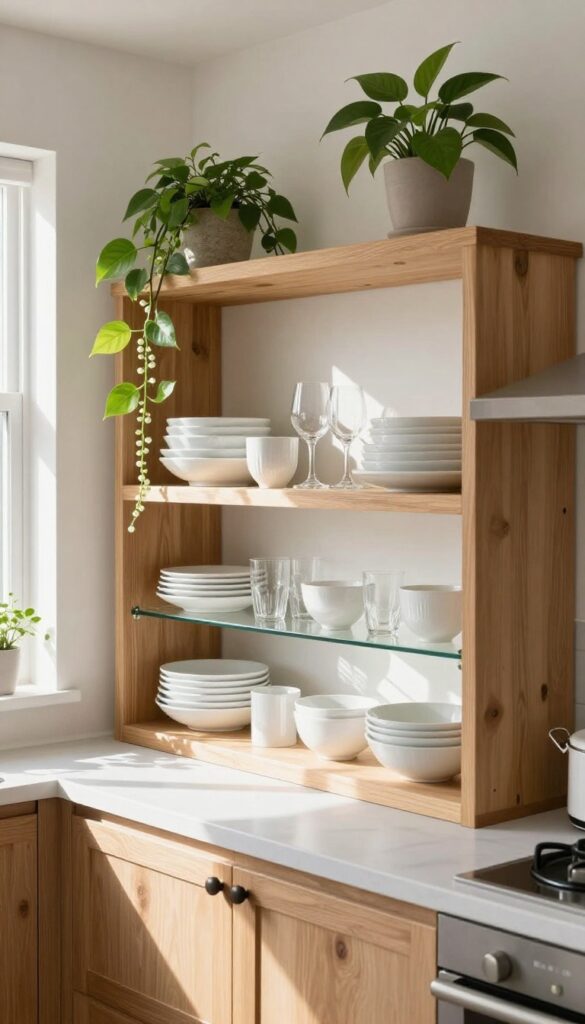
A hutch doesn't have to feel heavy or closed off. Swapping solid shelves for glass instantly lightens the whole piece, letting your dishes and decor breathe while keeping everything visible. The transparent shelves also bounce light around, making even a small kitchen feel bigger and brighter.
Topping it off with a few potted plants or trailing vines brings in a natural, fresh element that softens the look and makes the hutch feel like a living part of the room.
Why It Works
Glass shelves maintain an open, airy feel while still providing functional storage. They prevent the hutch from looking bulky or dark, which is key in a light and airy kitchen. Adding greenery introduces color and life without cluttering the visual space, creating a balanced, inviting display.
Best For
This idea works beautifully in kitchens that get good natural light, as the glass will amplify the brightness. It's also great for small kitchens where you want storage without visual weight, or for anyone who loves a modern farmhouse or Scandinavian look.
Styling Tip
Mix a few trailing plants like pothos or string of pearls with upright succulents or small ferns. Use simple white or terracotta pots to keep the focus on the greenery. Group plants in odd numbers and vary the heights for a natural, effortless arrangement.
11. Hutch with Chalkboard or Pegboard Back
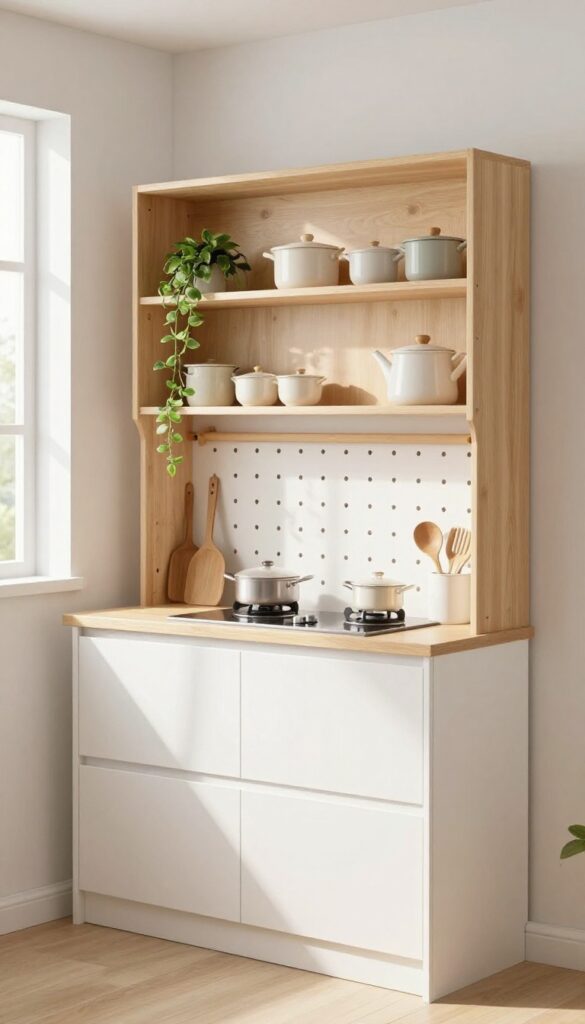
A kitchen hutch doesn't have to be just for display. By swapping out the solid back panel for a chalkboard or pegboard, you turn the whole piece into an interactive command center. It's a clever way to keep daily essentials visible yet organized, without adding visual clutter.
The light and airy feel comes from keeping the hutch itself simple—think white or pale wood—so the functional back becomes a subtle focal point.
Why It Works
- This setup is endlessly practical. A chalkboard lets you jot down grocery lists, meal plans, or sweet notes, while a pegboard offers customizable storage for pots, utensils, or even small plants. Both options keep frequently used items within arm's reach, reducing countertop mess.
- The best part? You can change the layout whenever you want without drilling new holes or buying new furniture.
Best For
This idea shines in busy family kitchens where meal prep and multitasking are the norm. It's also great for small spaces because it maximizes vertical storage without taking up extra floor area. If you love to switch up your decor seasonally, the chalkboard can be updated with new drawings or quotes, making the hutch feel fresh all year round.
Styling Tip
- Keep the hutch light—paint it white or a soft pastel—to maintain an airy look. On the chalkboard, use white or pastel chalk for a soft, cohesive palette. For the pegboard, choose hooks and accessories in brass or matte black for a touch of contrast.
- Add a few open shelves above for displaying pretty dishes or cookbooks, and you've got a functional yet beautiful kitchen centerpiece.
12. Hutch with Integrated Spice Rack Drawers
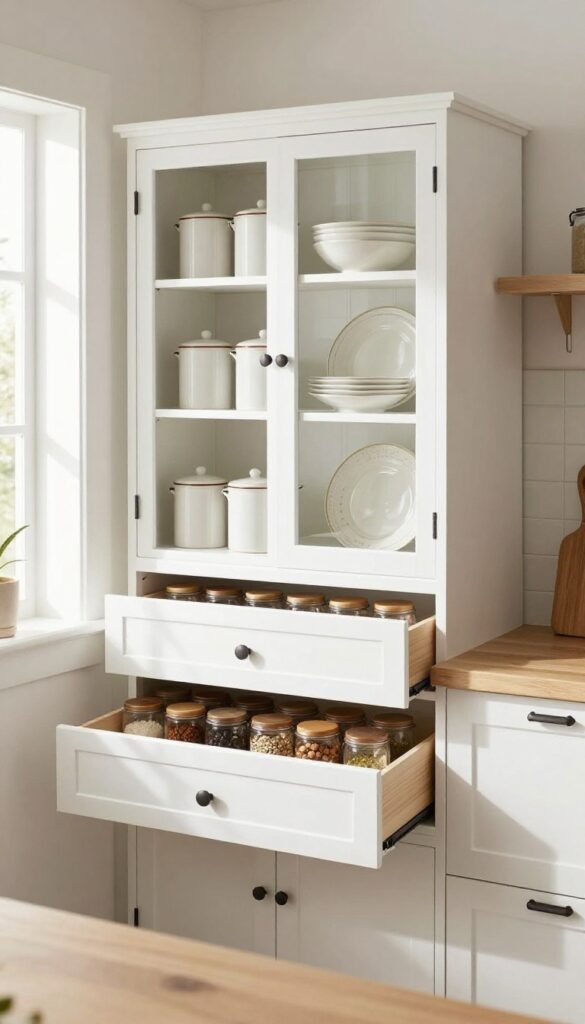
Imagine a hutch that does double duty: displaying your favorite ceramics while hiding the everyday chaos of spice jars. By swapping out a standard lower cabinet for shallow pull-out drawers, you get a dedicated spice rack that slides out smoothly when you're cooking and tucks away completely when you're not. The upper shelves stay clean and curated, so the whole piece feels light and intentional rather than cluttered.
It's one of those kitchen hutch ideas that quietly solves a real storage problem without sacrificing an ounce of style.
Why It Works
Spices are small but multiply fast, and they often end up crammed into overstuffed cabinets or taking over counter space. Integrated pull-out drawers keep them organized by category or frequency of use, and because the drawers are shallow, you never lose a jar in the back. The hutch's upper shelves remain free for decorative items, creating a balanced look that's both practical and visually airy.
Best For
This idea shines in kitchens where counter space is precious but you still want a furniture piece that feels like a statement. It's especially great for avid home cooks who reach for spices multiple times a day and need quick access. The hutch also works well in open-plan kitchens where you want to keep cooking essentials handy but out of sight from the dining area.
Styling Tip
- To keep the light and airy vibe, choose a hutch in a pale wood or soft white finish. Paint the inside of the drawers a contrasting pastel or leave them natural. On the upper shelves, arrange a few matching ceramic canisters, a small plant, and a stack of linen napkins.
- Avoid overcrowding—leave some breathing room between items so the display feels curated, not packed.
13. Hutch with a Mix of Open and Closed Storage
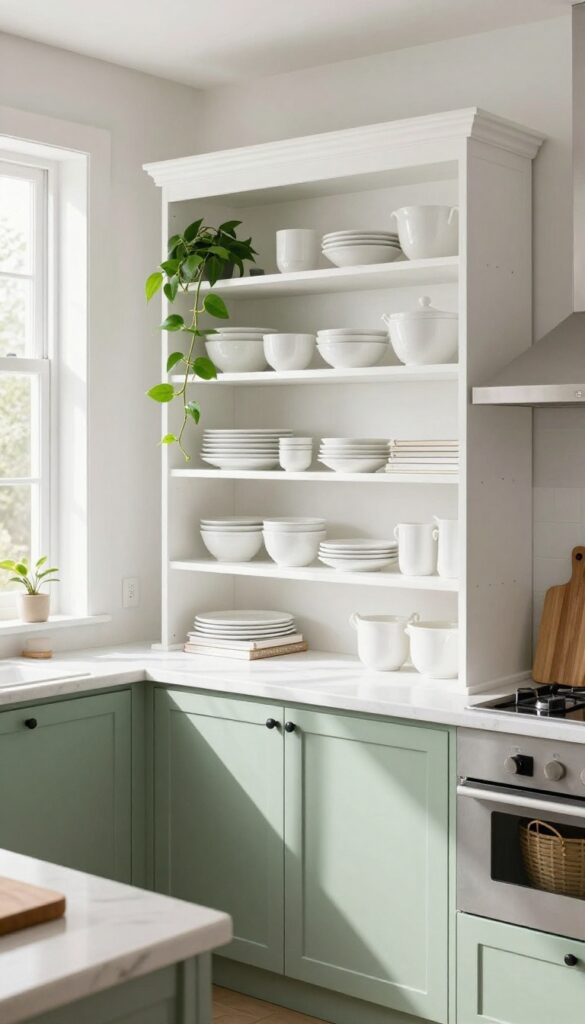
A hutch that combines open shelving with closed cabinets strikes a perfect balance between showcasing your favorite pieces and hiding the everyday clutter. The open sections let you display pretty dishware, cookbooks, or plants, while the closed storage keeps less attractive items like plastic containers or small appliances out of sight. This hybrid approach feels both curated and practical, giving your kitchen a light, airy vibe without sacrificing function.
Why It Works
This design works because it offers the best of both worlds: you get the visual interest of open shelves and the neatness of hidden storage. It prevents the hutch from looking too busy or messy, while still allowing you to rotate decor seasonally. The mix also breaks up the visual weight, making the piece feel lighter and more intentional.
Best For
Ideal for kitchens that need extra storage but also want to maintain an open, uncluttered look. It works especially well in eat-in kitchens or dining areas where the hutch doubles as a display piece. Great for anyone who loves to collect dishes or glassware but doesn't want them all on display at once.
Styling Tip
Use the open shelves for items in a cohesive color palette—like white ceramic, warm wood tones, and a few green accents—to keep the look unified. In the closed cabinets, add woven baskets or shelf risers to maximize space and keep everything organized. A few trailing plants on the top shelf can soften the overall silhouette.
FAQ
How do I style a kitchen hutch without it looking cluttered?
Stick to a cohesive color palette and limit displayed items to a few key pieces. Use baskets or bins for smaller items and leave some empty space on shelves for a breathable look.
What colors work best for a light and airy kitchen hutch?
Soft whites, pale grays, light blues, and sage greens are great choices. These colors reflect light and keep the hutch feeling open and fresh.
Can I add a hutch to a small kitchen?
Absolutely. Choose a slim, open-shelf design or a hutch with glass doors to avoid visual bulk. Mounting it on the wall can also save floor space.
What should I store in a kitchen hutch?
Display everyday dishes, glassware, and cookbooks on open shelves. Use lower cabinets for less attractive items like small appliances, pantry overflow, or linens.
How do I make a hutch feel more modern?
Opt for clean lines, flat-panel doors, and minimal hardware. Incorporate materials like glass, metal, or matte finishes, and keep the color scheme neutral or monochromatic.
Conclusion
A kitchen hutch doesn't have to be a dust-collecting relic—it can be a stylish, functional centerpiece that keeps your space organized and inviting. By choosing designs that prioritize openness and intentional storage, you can enjoy the best of both worlds: beauty without the clutter.
Whether you lean toward rustic barn doors or sleek minimalism, these ideas offer a starting point for creating a hutch that truly works for your home.