12 Creative Kitchen Islands With Seating That Keep Your Space Clean and Welcoming
Your kitchen island does more than hold counter space—it’s where mornings start and conversations linger. Adding seating turns it into a casual dining spot, a homework station, or a place to sip coffee while dinner simmers.
The trick is finding a layout that feels open and uncluttered, not cramped or chaotic. These 12 ideas focus on clean lines and smart storage, so your island stays stylish without sacrificing function.
Whether you’re starting from scratch or giving an existing island a weekend refresh, each suggestion keeps the look light, airy, and genuinely welcoming.
1. A Slim Breakfast Bar With Open Shelving
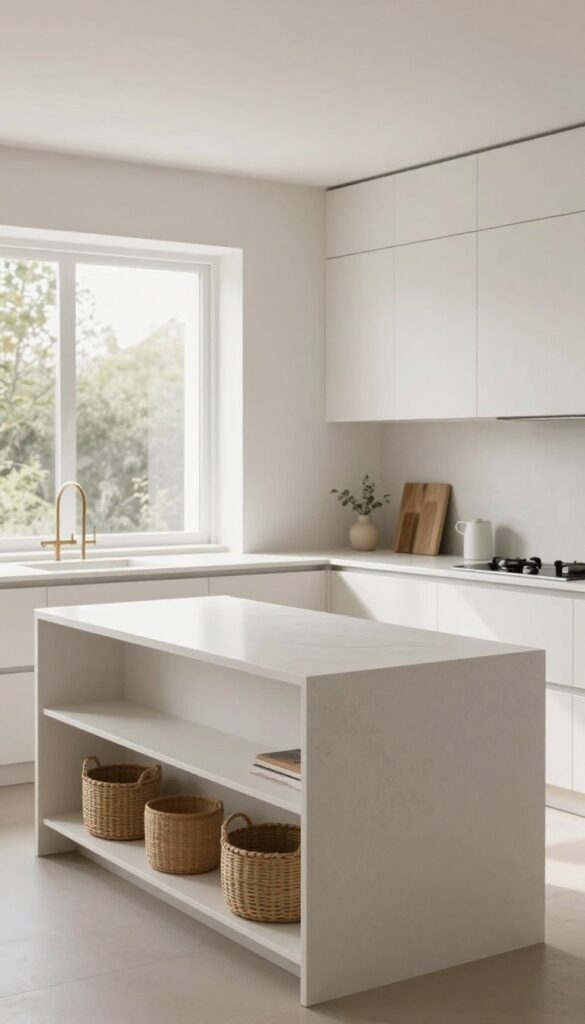
A narrow island doesn't have to feel cramped. By extending the countertop just enough to tuck in a couple of stools, you create an instant breakfast bar without eating up floor space. The open shelving underneath keeps everyday items within reach while maintaining an airy, uncluttered look that's perfect for a weekend refresh.
Why It Works
The cantilevered counter provides a generous overhang for seating without widening the island's footprint. Open shelves eliminate bulky cabinets, making the kitchen feel larger and lighter. Styling the shelves with a few cookbooks or woven baskets adds warmth without visual weight.
Best For
This idea shines in narrow kitchens or galley layouts where a full-size island would block traffic. It's also ideal for small apartments or open-concept spaces where you want a casual dining spot without sacrificing flow.
Styling Tip
Stick to a slim profile for the stools—backless designs or low-profile counter stools tuck neatly under the overhang. Use a mix of closed storage baskets on the lower shelves to hide less attractive items, and leave the top shelf open for a curated display of ceramics or linens.
2. Two-Tier Island With a Prep Side
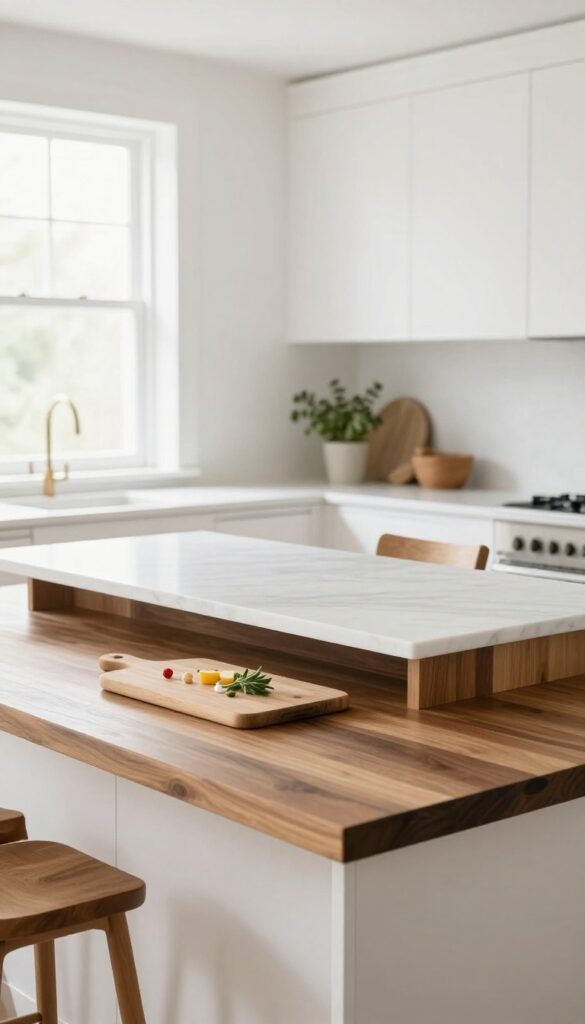
A two-tier kitchen island is a clever way to keep the cooking zone separate from the social zone. By raising the seating area a few inches higher than the main counter, you create a natural visual barrier that hides any prep mess from guests. The lower tier stays clear for chopping, mixing, or plating, while the higher side becomes a clean perch for coffee or conversation.
It feels intentional, not accidental, and the subtle height shift adds architectural interest without extra square footage.
Why It Works
The raised seating tier acts like a mini wall between work and relaxation. Dirty dishes, cutting boards, and ingredient piles stay on the lower level, out of sight from anyone sitting at the island. This keeps the kitchen looking tidy even during active cooking, and the height difference naturally defines each zone so the island feels like two pieces of furniture in one.
Best For
Open-plan kitchens where the island faces a living or dining area. It is also great for families who cook while kids do homework nearby, because the prep side stays out of reach and sight. Weekend cooks who like to entertain while preparing food will love how the two-tier design keeps the hosting side pristine.
Styling Tip
Paint the lower tier a slightly darker shade than the upper tier to emphasize the separation. Use the same countertop material on both levels for continuity, but add a thin contrasting edge on the raised portion to highlight the step. Keep bar stools simple and low-back so they don't compete with the island's clean lines.
3. Butcher Block Top With Woven Stools
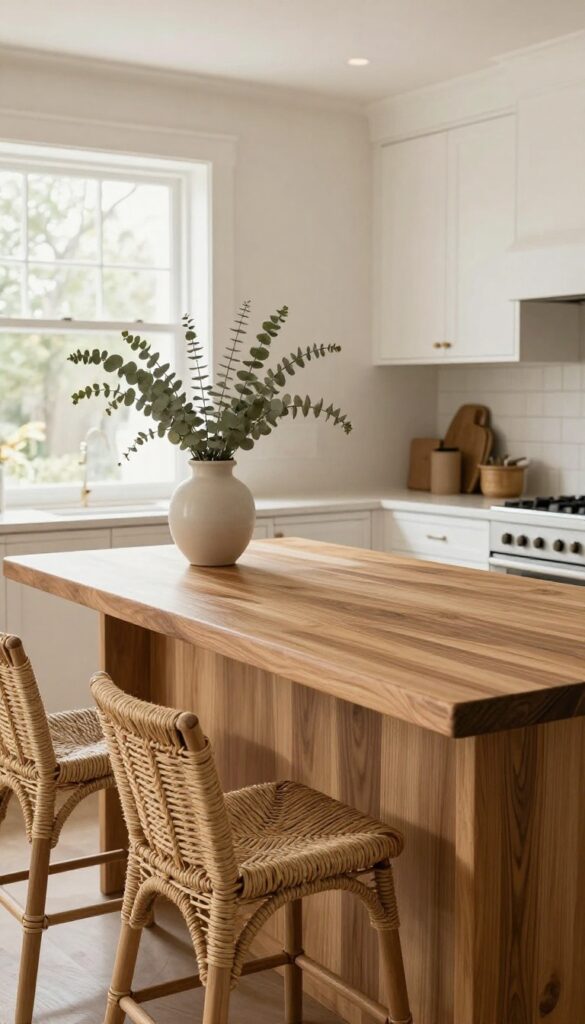
A butcher block countertop instantly warms up a kitchen, and when you pair it with woven stools, the whole setup feels grounded and inviting. The wood grain adds natural texture without clutter, while the stools tuck neatly underneath, keeping the space open and easy to move around. It’s a look that blends rustic charm with practical everyday use.
Why It Works
The butcher block serves double duty as both a work surface and a dining spot, so you get extra function without sacrificing style. Woven stools bring in a soft, organic texture that contrasts nicely with the smooth wood, and their lightweight design makes them easy to slide out of the way.
Best For
This idea is perfect for kitchens with a farmhouse, rustic, or Scandinavian vibe. It also works well in smaller kitchens where you need seating that doesn’t visually crowd the room.
Styling Tip
Choose stools in a natural rattan or seagrass finish to keep the look cohesive. Add a simple ceramic vase with dried eucalyptus on the counter for a subtle pop of green that ties the natural materials together.
4. Waterfall Edge in White Quartz
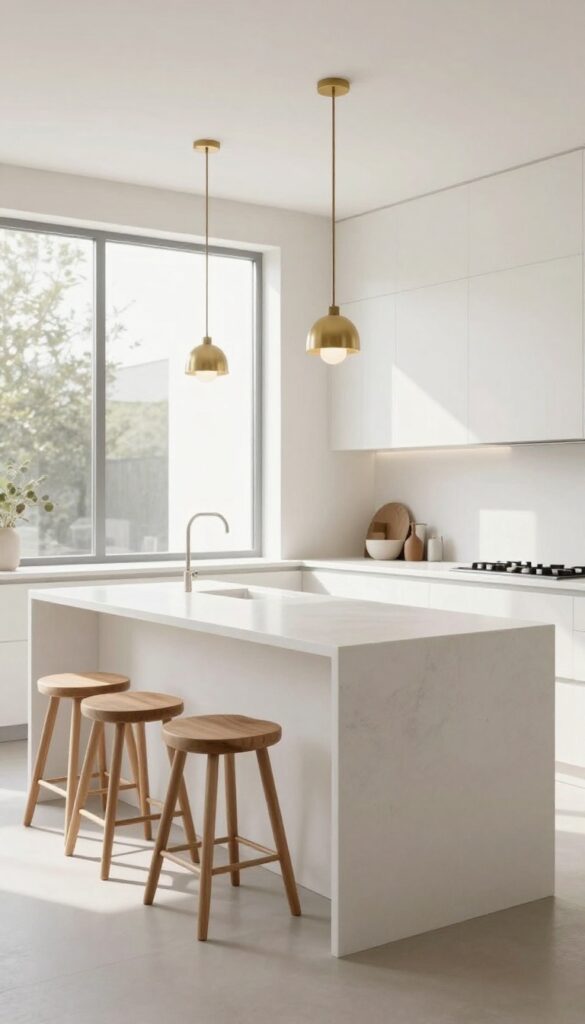
A waterfall edge is one of those details that instantly makes a kitchen island feel more intentional. When the countertop material flows all the way down to the floor, it creates a clean, sculptural look that doesn't try too hard. White quartz keeps things bright and airy, which is perfect if you're aiming for a space that feels open and easy to maintain.
Pair it with backless stools in a soft neutral, and you've got a seating area that feels both modern and welcoming without any visual clutter.
Why It Works
The continuous surface eliminates visual breaks, making the island feel like a single, purposeful block rather than a counter on legs. White quartz reflects light, helping the kitchen feel larger and more open. The lack of a visible base also means less dust and crumbs collect at awkward corners, which is a win for weekend cleaning.
Best For
This look shines in kitchens with a modern or transitional style, especially where you want the island to feel like a centerpiece without overwhelming the room. It's also great for smaller spaces because the uninterrupted white surface helps the island blend rather than dominate.
Styling Tip
Stick with slim, backless stools in a warm wood tone or soft beige to keep the line from counter to floor uninterrupted. Add a single low-hanging pendant light in brushed brass or matte black above the island to anchor the seating area without adding visual weight.
5. Island With a Built-In Wine Rack
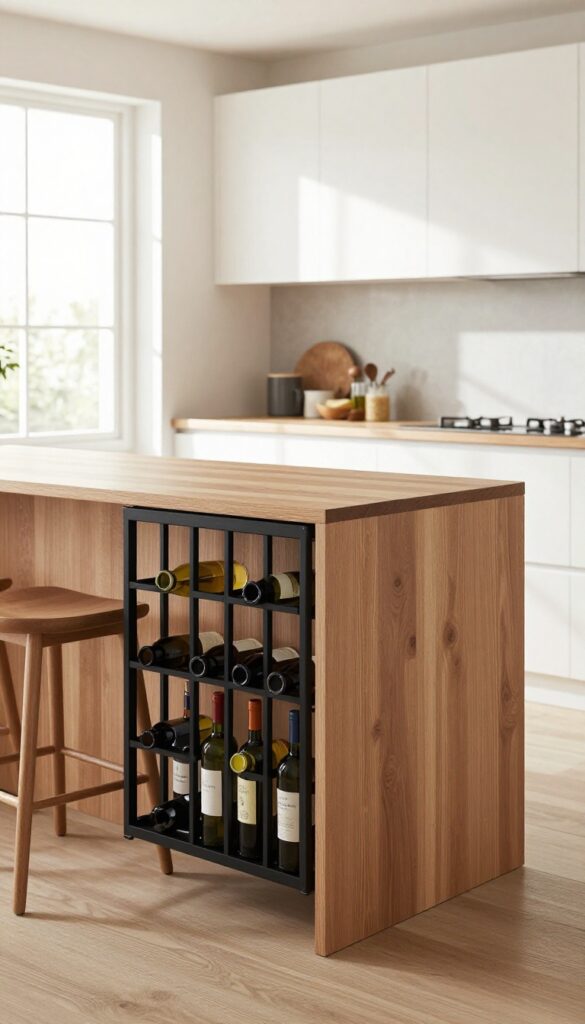
A slim wine rack tucked into the end of your kitchen island does double duty: it keeps your favorite bottles close at hand while leaving the seating area free for meals and conversation. The design feels intentional rather than cluttered, especially when the rack is integrated under the overhang or built into the end panel. It’s a weekend-refresh friendly upgrade that adds a touch of hospitality without demanding extra square footage.
Why It Works
By storing wine vertically in a narrow slot, the rack uses wasted space along the island’s end or beneath the counter overhang. Bottles stay organized and accessible, but they don’t intrude on the seating zone, so the island remains a clean, multipurpose surface.
Best For
Islands with at least a 6-inch overhang on one side or a solid end panel that can be modified. It’s ideal for homes where casual entertaining is common and you want to keep the countertops free of bottle clutter.
Styling Tip
Choose a wine rack finish that matches your island’s base—stained wood for a warm look, matte black for contrast, or brushed brass for a hint of gleam. Pair it with a few stemless glasses on a small shelf above for a complete, ready-to-serve vignette.
6. Mixed Materials: Concrete Base, Wood Top
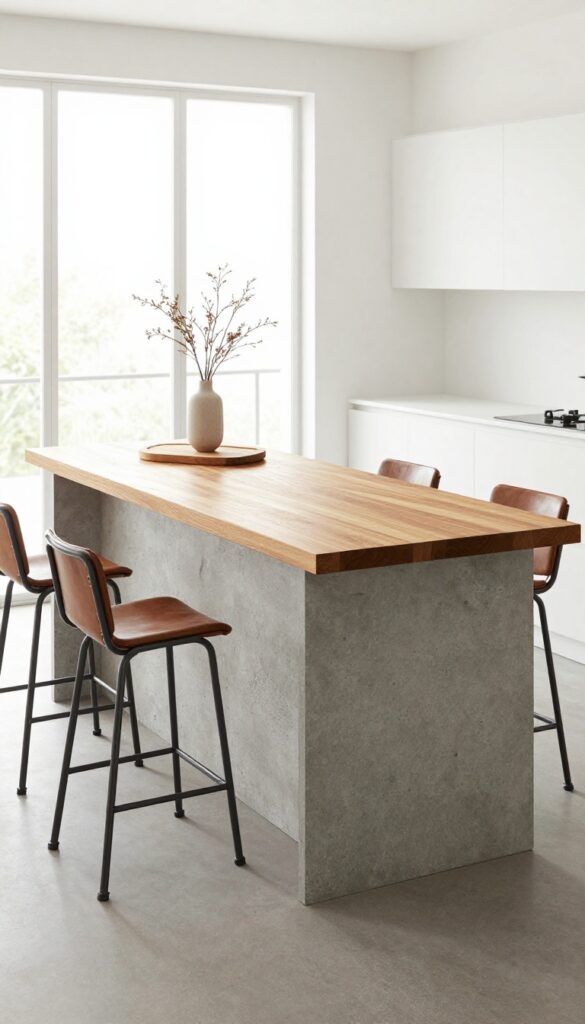
A kitchen island doesn't have to match everything else in the room. Combining a concrete base with a warm wood countertop creates an instant focal point that feels both grounded and inviting. The concrete brings an industrial edge, while the wood adds natural warmth—together, they strike a balance that's modern but not cold.
This mix of materials works especially well in kitchens where you want a bit of character without going full rustic or ultra-minimal.
Why It Works
Contrast is what makes this island stand out. The cool gray of concrete anchors the space, while the wood top softens the look and makes the surface feel welcoming to touch. It's a practical duo, too: concrete is durable and easy to clean, and wood adds a forgiving surface that hides minor scratches better than glossy finishes.
Best For
This island works great in open-plan kitchens where you want to define the cooking zone without closing it off. It's also a smart pick for loft-style apartments or homes with exposed brick or metal accents, since the concrete ties into that industrial vibe while the wood keeps things livable.
Styling Tip
Pull up metal or leather stools to bridge the two materials. Black or brass stools echo the concrete's edge, while brown leather adds another layer of warmth. Keep the countertop mostly clear except for a wooden cutting board or a simple vase with dried branches to reinforce the natural-meets-industrial feel.
7. Rolling Cart Island With Stools
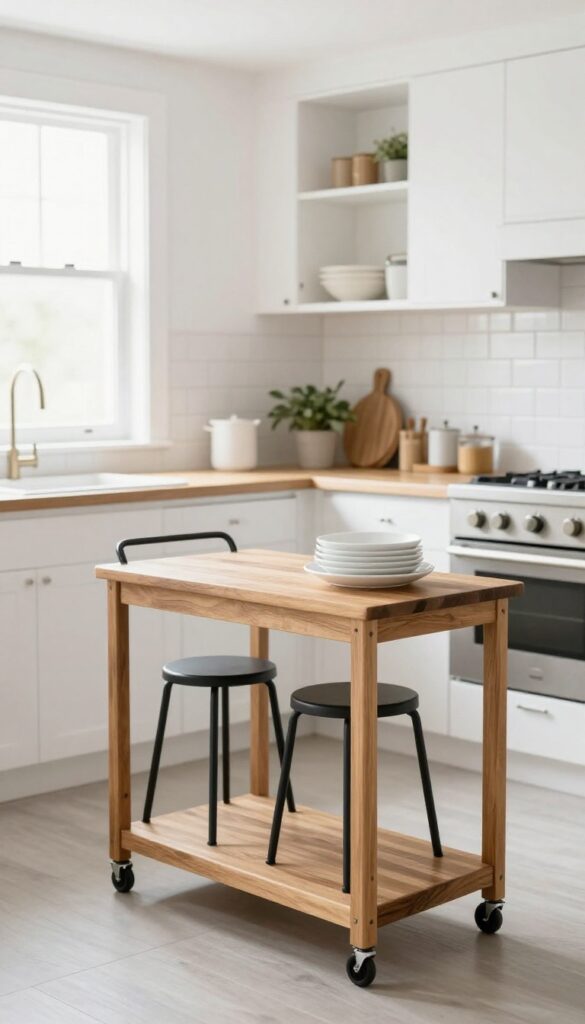
A freestanding cart on casters brings instant flexibility to a kitchen that craves a refresh. Roll it out when you need extra prep space, then tuck it into a corner when you want the floor back. Pair it with two counter stools, and you have a movable breakfast nook that travels with your morning coffee.
Why It Works
This setup is perfect for weekend refreshes because it requires zero installation. You can swap the cart for a different style or move it to another room whenever the mood strikes. The casters make cleaning underneath a breeze, and the open shelving keeps everyday dishes within easy reach.
Best For
Small kitchens, rental apartments, or any space where a permanent island isn't an option. It also suits families who like to rearrange their layout seasonally or for parties.
Styling Tip
Choose a cart with a butcher-block top for a warm, natural surface that doubles as a chopping board. Add two backless stools in a contrasting finish—like black metal against white wood—to keep the look airy and uncluttered.
8. Island With a Deep Drawer for Linens
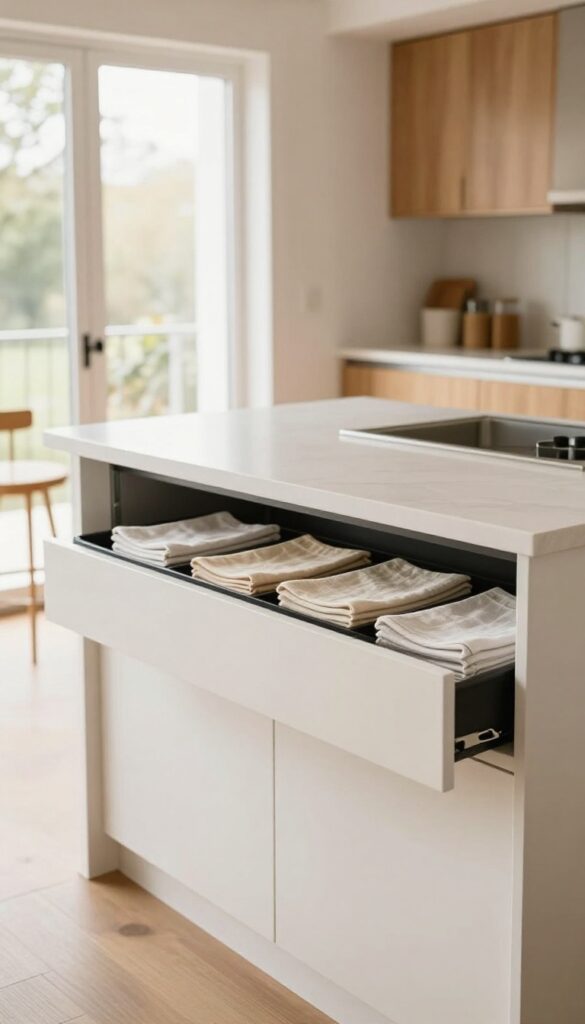
A kitchen island that pulls double duty as a dining spot and a storage hub is a weekend warrior’s dream. Instead of stacking napkins and placemats on open shelves or stuffing them into a crowded cabinet, a deep drawer under the seating overhang tucks everything neatly away. The countertop stays pristine, and when it’s time to eat, you just reach down and grab what you need.
It’s a small shift that makes the whole kitchen feel calmer and more intentional.
Why It Works
This setup eliminates visual clutter and keeps meal prep surfaces clear. A wide, deep drawer can hold linens, utensils, and even small serving pieces, so you’re not hunting through multiple cabinets. The convenience of having everything within arm’s reach speeds up mealtime setup and cleanup, making the island a true workhorse.
Best For
Families or households that eat at the island regularly and want to keep the countertop free for serving or decor. It’s also great for small kitchens where every inch of storage counts, because it uses the overhang space that might otherwise go to waste.
Styling Tip
Choose a drawer with built-in dividers to keep napkins flat and utensils sorted. For a cohesive look, match the drawer front to the island’s cabinetry, and add a soft-close mechanism so it glides quietly. A slim pull-out cutting board on top of the drawer adds extra function without taking up room.
9. Curved Island With a Banquette Feel
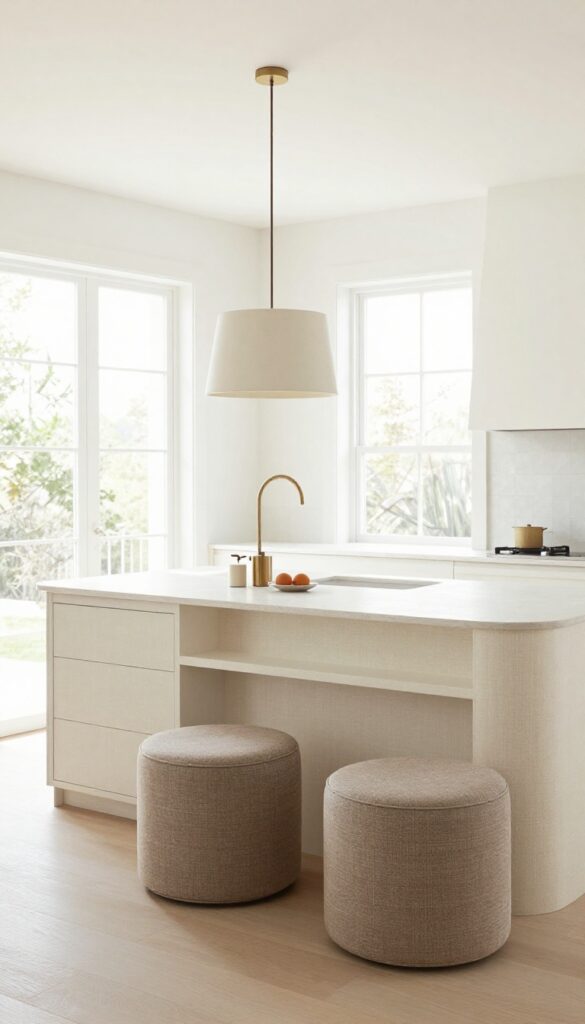
A curved kitchen island softens the hard angles of a busy cooking space and naturally guides movement around it. The rounded end becomes an inviting spot for a couple of stools or a built-in bench, creating a cozy banquette-like nook without needing extra square footage. This shape feels both sculptural and approachable, making the kitchen feel less like a work zone and more like a gathering place.
Why It Works
The curve eliminates sharp corners, which improves traffic flow in open-plan kitchens and makes the space feel safer and more fluid. Upholstered seating along the rounded side adds warmth and texture, turning the island into a casual dining spot that encourages lingering. The banquette vibe brings a soft, residential feel that balances the harder surfaces of countertops and appliances.
Best For
Open-plan kitchens where the island sits between the cooking area and a living or dining zone. Also great for families who want a casual spot for breakfast or homework without dedicating a separate table. Works well in kitchens with a modern or transitional style that could use a softer, more inviting element.
Styling Tip
Choose stools with rounded backs or a gently curved bench that follows the island's shape. Keep the upholstery in a light, durable fabric like performance linen or textured cotton in cream, taupe, or soft gray. Add a small pendant light or a low-hanging drum shade above the seating area to define the nook and create a warm glow.
10. Minimalist Island With a Single Pendant Light
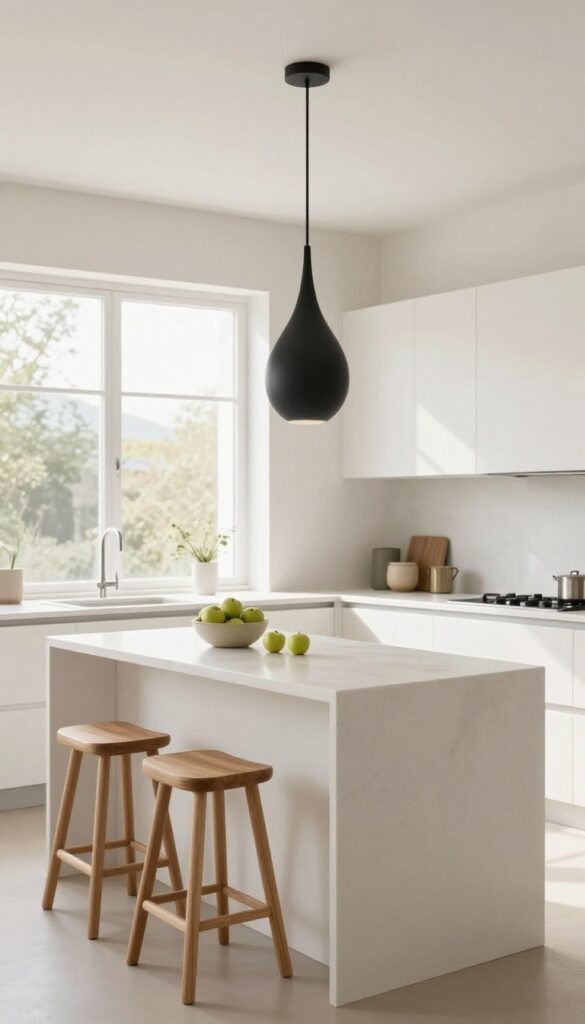
A kitchen island doesn't need to be crowded with cabinets or bulky fixtures to feel functional. By keeping the surface clear and hanging a single sculptural pendant above, you create a clean focal point that feels both intentional and airy. This approach works especially well in open-concept homes where the kitchen flows into the living area, as it avoids visual clutter while still defining the seating zone.
Why It Works
Without upper cabinets or a heavy light fixture, the island becomes a streamlined workhorse. The single pendant draws the eye down, anchoring the seating area without competing with other elements. It also makes the island feel larger and more approachable, perfect for quick meals or casual conversation.
Best For
This idea shines in smaller kitchens or galley layouts where every inch counts. It's also ideal for anyone who prefers a calm, uncluttered aesthetic — think Scandinavian or Japandi style — and wants to avoid the visual weight of a traditional island with storage on all sides.
Styling Tip
Choose a pendant with a soft, organic shape (like a globe or teardrop) in a matte black or warm brass finish to add subtle character. Keep the island countertop clear except for a small bowl of fruit or a single vase of greenery. For seating, opt for slim, backless stools that tuck neatly underneath.
11. Island With a Hidden Trash Pull-Out
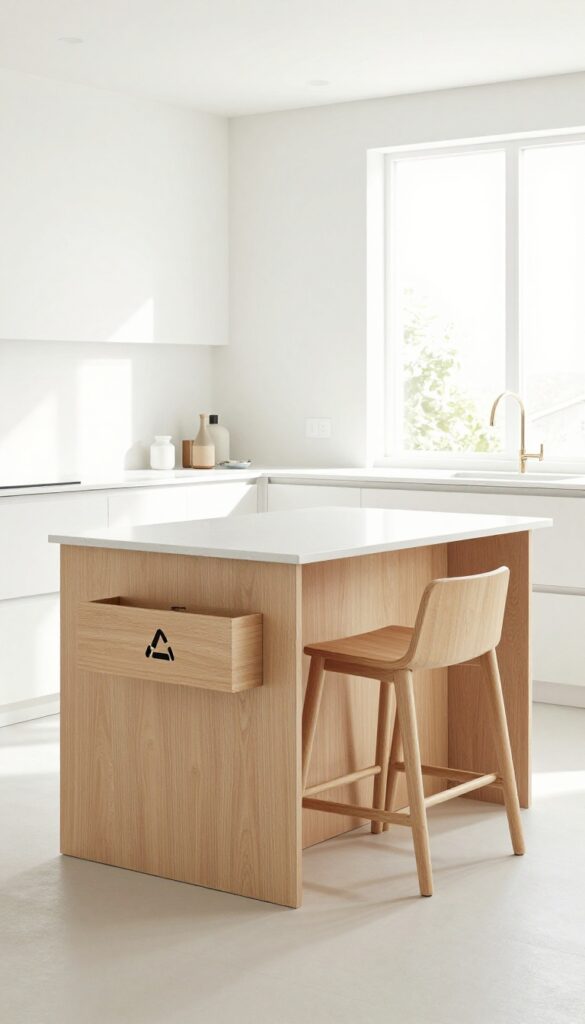
A kitchen island that looks clean and uncluttered is a weekend refresh dream. The secret? A pull-out trash and recycling bin tucked into the seating side.
Guests see a seamless panel, not a bin, and the counter above stays clear for prep or serving. It's one of those smart details that makes daily life easier without sacrificing style.
Why It Works
- By hiding the trash, the island keeps its streamlined silhouette. No bulky bins breaking the visual flow. The pull-out mechanism is smooth and easy to use, and it encourages everyone to sort waste without thinking about it.
- The result is a kitchen that feels more spacious and intentional.
Best For
Busy families or anyone who cooks often and wants to keep messes out of sight. It's also great for open-plan homes where the kitchen is visible from the living area. The hidden pull-out keeps the view tidy without extra effort.
Styling Tip
Match the cabinet front to the island's base for a seamless look. Use a slim, divided insert for trash and recycling side by side. Add a small pull-out drawer above for bags or wipes—it keeps everything you need within reach but hidden.
12. Two Small Islands Instead of One Large
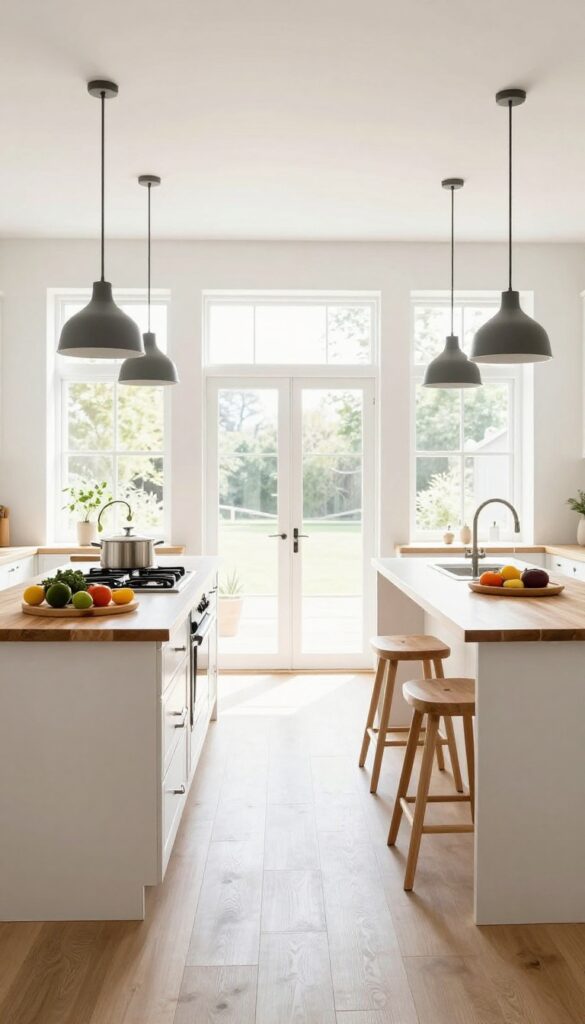
Breaking one big island into two narrow ones is a clever trick that instantly opens up your kitchen. Instead of a single bulky block, you get two purposeful stations—one for prepping and one for casual dining. The gap between them creates a natural walkway, so the space feels larger and more organized.
It’s a weekend-refresh idea that doesn’t require a full renovation, just a shift in layout thinking.
Why It Works
Two smaller islands improve traffic flow by giving people a clear path between zones. The prep island stays clutter-free because the seating island handles all the dining activity. This separation keeps your kitchen looking clean and intentional, even during busy meal times.
Best For
This idea shines in long, narrow kitchens where a single wide island would block movement. It’s also great for open-plan spaces that need a subtle division between cooking and living areas without closing them off.
Styling Tip
Keep the prep island sleek with a butcher-block or quartz top and minimal decor. On the seating island, add a few low stools with slim legs to maintain an airy feel. Use matching pendant lights above each island to tie the two together visually.
FAQ
How much overhang do I need for kitchen island seating?
Aim for at least 12 inches of overhang for comfortable legroom. For counter-height stools, 12 to 15 inches works well; for bar-height stools, go with 15 to 18 inches.
What is the best width for a kitchen island with seating?
For a single row of seating, the island should be at least 36 inches wide. If you want seating on both sides, aim for 48 to 60 inches to allow enough counter space and legroom.
Can I add seating to an existing kitchen island?
Yes, if the island has enough overhang. You can also extend the countertop with a cantilevered slab or attach a butcher block extension. Just make sure the structure supports the extra weight.
How many stools fit at a kitchen island?
Plan for about 24 to 30 inches of width per stool. A 6-foot island typically fits two stools comfortably, while an 8-foot island can fit three.
What stool height works best for a kitchen island?
Match the stool height to your counter height. Standard counter height is 36 inches, so use 24- to 26-inch stools. For bar-height counters (42 inches), choose 30-inch stools.
Conclusion
A kitchen island with seating can transform how you use the room, making it feel more connected and lived-in. The best designs balance practicality with a clean, uncluttered look—so you can enjoy both the function and the style.
Whether you opt for a slim breakfast bar or a two-tier workhorse, these ideas prove that a weekend refresh is all it takes to create a space that feels fresh and welcoming. Start with one small change, and let your kitchen become the cozy hub you’ve always wanted.