10 Modern Single Wall Kitchen Ideas That Feel Fresh and Easy to Use
Single wall kitchens are a masterclass in efficiency. With everything lined up along one wall, every inch counts—and that’s exactly what makes them so exciting to decorate. The key is balancing function with a look that feels open and inviting.
A light, airy approach works wonders here. Think pale woods, soft whites, and just enough contrast to keep things interesting. When done right, a single wall kitchen doesn’t feel cramped—it feels like a breath of fresh air.
These ten ideas focus on making your kitchen both beautiful and easy to use. No complicated layouts or over-the-top trends. Just smart, space-aware choices that turn a simple wall into a hardworking hub.
1. Stick to a Pale Palette with One Warm Accent
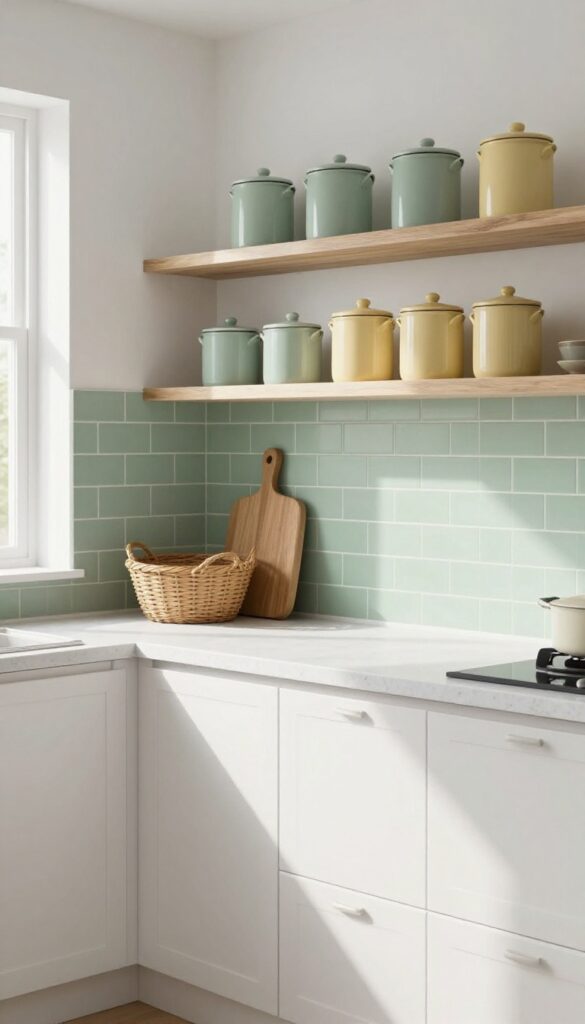
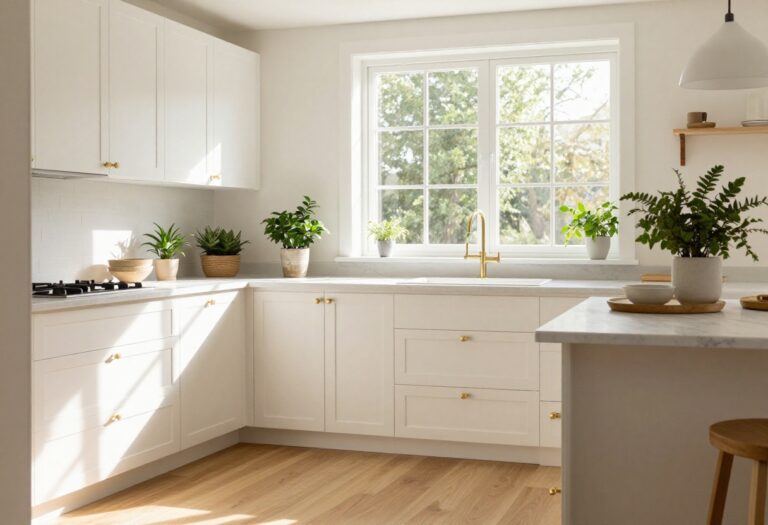
There’s something calming about a kitchen that breathes. By keeping your cabinets and countertops white or off-white, you create a clean, open foundation that makes even a small single-wall layout feel larger. The trick is to add one warm accent color—think soft sage green or buttery yellow—through open shelving, a backsplash, or even a few ceramic canisters.
This approach gives the room personality without weighing it down, so it stays light and airy but never boring.
Why It Works
A mostly neutral palette reflects light and makes the space feel bigger, which is key for single-wall kitchens. The single warm accent draws the eye and adds visual interest without cluttering the look. It’s a simple way to bring in color while keeping the overall vibe fresh and uncluttered.
Best For
This idea works well in small apartments or galley-style kitchens where you want to maximize brightness. It’s also great for renters because you can introduce color with removable elements like peel-and-stick backsplash tiles or open shelving.
Styling Tip
Choose one accent color and repeat it in two or three places—like a sage green backsplash and matching tea towels. Keep everything else neutral to maintain that clean, cohesive feel. For extra warmth, add wooden cutting boards or a woven basket.
2. Use Open Shelving to Create Depth
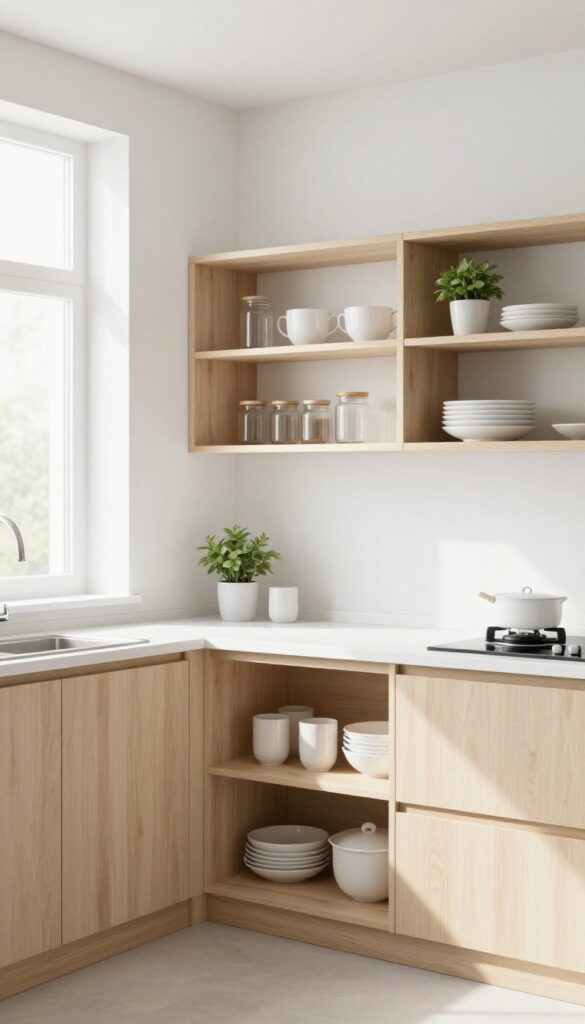
Upper cabinets can sometimes make a small kitchen feel boxed in. Swapping them for floating shelves in a light wood tone instantly opens up the wall and adds a sense of airiness. You get to show off a few everyday dishes and glass jars, which breaks up the visual weight and makes the whole room feel larger and more inviting.
Why It Works
Open shelving eliminates the bulky look of upper cabinets, letting your eye travel farther across the wall. The light wood tone keeps things warm but not heavy, while the displayed items add personality without clutter. It’s a simple swap that changes how spacious the kitchen feels.
Best For
Single-wall kitchens where you want to avoid a closed-in feeling. It works especially well in narrow or galley-style layouts where every inch of visual breathing room counts.
Styling Tip
Stick to a few matching dishes, clear glass jars, and maybe a small plant or two. Leave plenty of empty space on each shelf so it doesn't look crowded—think curated, not packed.
3. Install a Slim Backsplash That Goes All the Way Up
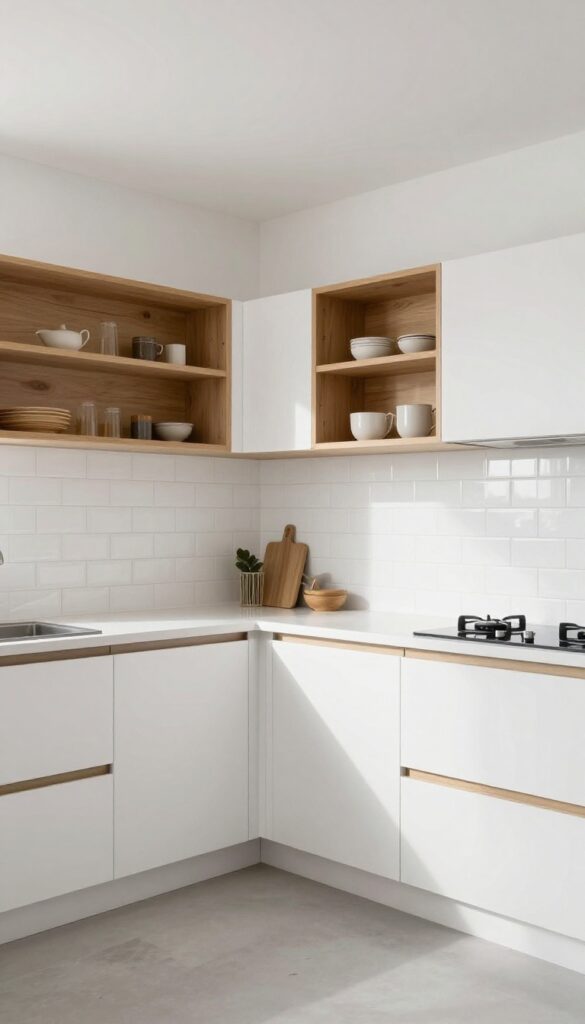
A full-height backsplash does more than protect your walls—it tricks the eye into seeing a taller, airier kitchen. Instead of stopping at the bottom of your upper cabinets, take glossy subway tile or pale zellige all the way to the ceiling. The uninterrupted vertical line draws the gaze upward, making even a compact single-wall layout feel more spacious.
Plus, the subtle sheen reflects light around the room, which is a simple way to brighten things up without adding extra fixtures.
Why It Works
By eliminating the visual break where a backsplash usually ends, you create a seamless backdrop that feels intentional and polished. The reflective surface bounces natural and artificial light deeper into the space, which is especially helpful in kitchens with limited windows. It also makes cleaning easier—splatters and grease wipe right off without worrying about grout lines near the counter.
Best For
This idea shines in single-wall kitchens where every inch of vertical real estate counts. If your kitchen feels cramped or has low ceilings, a full-height backsplash can make it feel noticeably taller. It's also great for galley layouts or open-plan spaces where you want the kitchen to blend smoothly into the living area.
Styling Tip
Stick with large-format tiles (like 4×12 subway or 3×9 zellige) to minimize grout lines and keep the look clean. For extra depth, choose tiles with a slight variation in tone rather than flat solid color. Pair with matte white cabinets and warm wood open shelving to keep the overall feel light but grounded.
4. Choose a Single Statement Pendant Light
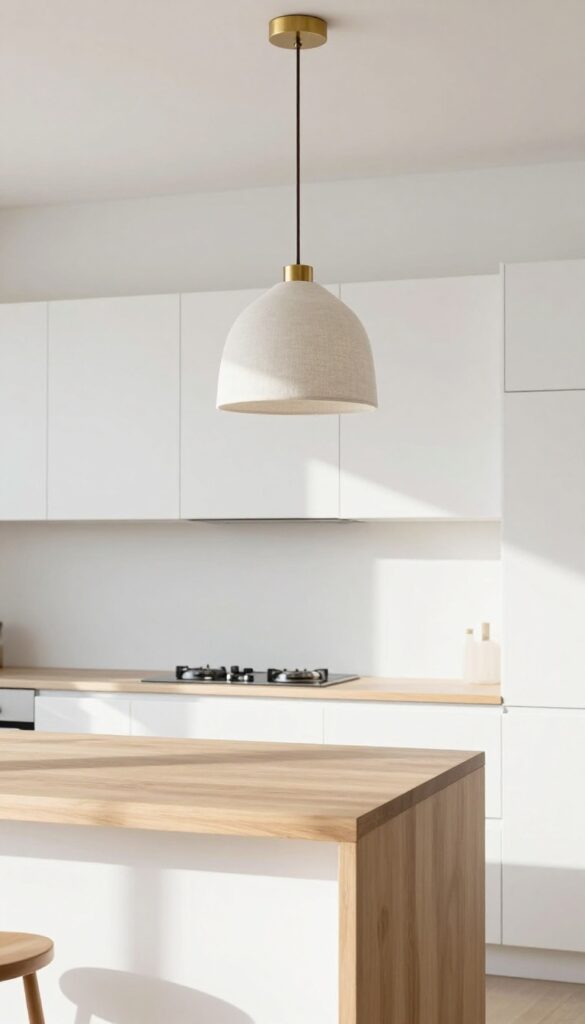
A single sculptural pendant light can do more for a compact kitchen than a row of recessed cans ever could. By hanging one fixture slightly off-center, you create a deliberate focal point that draws the eye upward and makes the ceiling feel higher. The clean silhouette keeps the space feeling open and uncluttered, which is exactly what a modern single-wall kitchen needs.
Why It Works
Multiple light fixtures can visually crowd a small kitchen, especially when counter space is limited. One pendant eliminates visual noise while providing targeted task lighting over an island or dining area. The asymmetry adds a contemporary edge that feels intentional rather than accidental.
Best For
This idea shines in galley-style single-wall kitchens where every inch counts. It's also perfect for open-plan layouts where the kitchen flows into the living area, because the pendant can serve as a subtle divider without blocking sightlines.
Styling Tip
Choose a light neutral shade like linen or opal glass to keep the look airy, or go with brushed brass for warmth. Hang it 30–36 inches above the counter or table, and position it about one-third of the way from one end of the surface rather than dead center.
5. Add a Slim Rolling Cart for Extra Prep Space
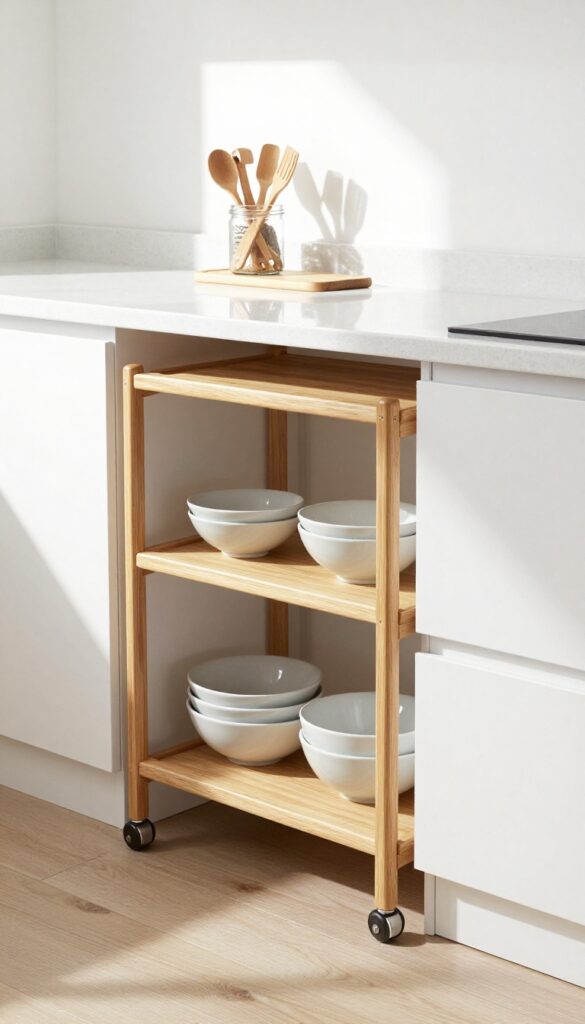
Counter space is premium real estate in a single-wall kitchen, but you don’t need a full island to gain more room to work. A slim rolling cart—think bamboo or white metal—tucks neatly beside the counter when not in use and glides out whenever you need it. It’s the kind of flexible piece that makes your kitchen feel bigger and more open, without sacrificing function.
Why It Works
A narrow cart adds valuable surface area without eating into floor space permanently. You can wheel it right next to the stove for extra prep, then tuck it away after cooking. The open shelving keeps things light and airy, which aligns perfectly with a bright, uncluttered kitchen.
Best For
This idea shines in galley-style or single-wall kitchens where every inch counts. It’s also great for renters who can’t install permanent fixtures—just roll it in and out as needed.
Styling Tip
Choose a cart with two tiers so you can store frequently used items like cutting boards or mixing bowls on the bottom shelf. Top it with a small wooden cutting board and a jar of utensils for an effortlessly styled look that feels intentional, not cluttered.
6. Incorporate a Mirrored Backsplash or Accent
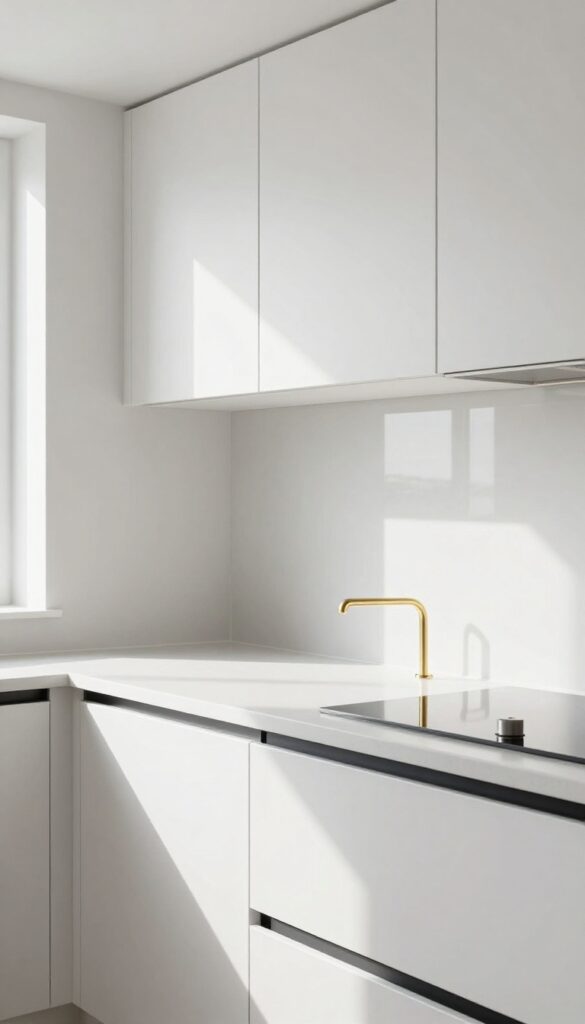
Light bounces differently off a mirrored surface than it does off glossy tile or polished stone. A small section of mirrored backsplash—behind the stove, above the sink, or even as a narrow strip along the counter—catches daylight and makes the whole kitchen feel bigger. It’s not about covering an entire wall in reflective glass; just a single panel or a slim band adds depth without overwhelming the space.
Why It Works
Mirror tricks the eye into seeing more square footage, which is exactly what a compact kitchen needs. It also amplifies natural and artificial light, making the room feel brighter and airier without adding fixtures. Because you keep it small, it reads as a deliberate design choice rather than an afterthought.
Best For
This idea shines in galley kitchens, L-shaped layouts, or any single-wall setup where counter space is limited and you want to avoid visual clutter. It’s especially effective on walls that face a window or a light source, so the reflection pulls in extra brightness.
Styling Tip
Choose a single large mirror panel with beveled edges for a clean, modern look, or opt for mirrored subway tiles if you want texture but still crave that reflective quality. Keep the surrounding surfaces matte or low-sheen so the mirror stands out as an accent—pair it with brushed brass fixtures for a warm contrast.
7. Use Vertical Storage for Utensils and Spices
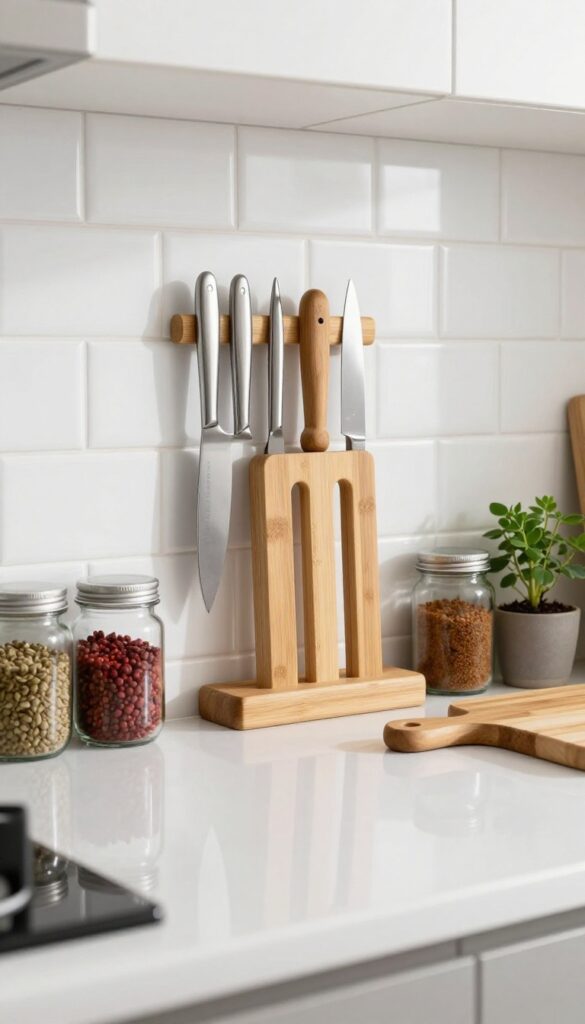
Counter space is precious in a single-wall kitchen, so why not look up? Mounting a magnetic knife strip on the wall and stacking slim spice racks vertically keeps your tools within arm's reach without cluttering the work surface. The result is a clean, open look that feels light and airy—exactly what you want in a compact layout.
Why It Works
Vertical storage makes use of empty wall space, turning it into functional real estate. It eliminates bulky countertop caddies and drawer organizers, giving you more room to prep and cook. Plus, having knives and spices visible but neatly arranged adds a professional, intentional feel to the kitchen.
Best For
This idea shines in small kitchens where every inch counts, especially single-wall layouts with limited cabinetry. It's also great for renters who can't modify cabinets but can install removable adhesive strips or racks.
Styling Tip
Choose a wooden magnetic strip and matching bamboo spice racks to keep the look warm and cohesive. Arrange spices by frequency of use—most-used at eye level—and group similar jars together for visual harmony.
8. Pick a Countertop with Subtle Veining
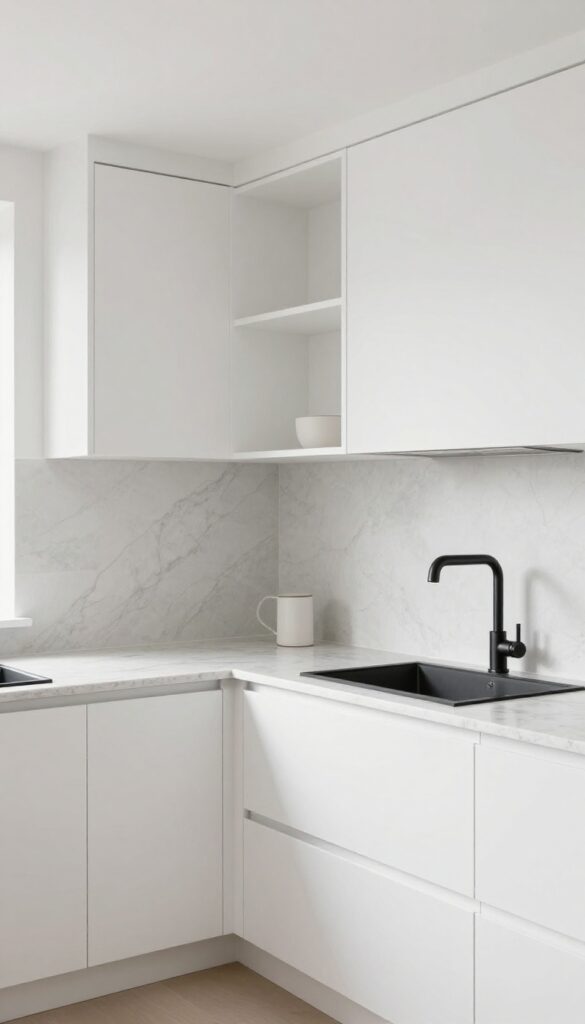
A single wall kitchen puts everything on display, so the countertop becomes a major visual player. Instead of bold, dramatic patterns that compete for attention, choose quartz or marble-look porcelain with soft, minimal veining in gray or taupe. The gentle lines add texture and interest without overwhelming the clean, streamlined look that makes a single wall layout feel open and airy.
Paired with plain cabinetry, this countertop creates a balanced, sophisticated foundation that feels both fresh and timeless.
Why It Works
Subtle veining brings organic movement to an otherwise linear kitchen without creating visual clutter. It adds depth and a touch of luxury while keeping the space feeling light and uncluttered—exactly what a single wall kitchen needs to maintain its airy vibe.
Best For
This idea works beautifully in kitchens with white or light wood cabinetry where the countertop can serve as a soft focal point. It’s also ideal for galley or small kitchens where every surface is highly visible and you want a cohesive, calming look.
Styling Tip
Balance the veining by keeping other surfaces matte and simple—think matte black hardware, a brushed nickel faucet, and open shelving with minimal decor. For extra harmony, pick up the taupe or gray tone from the veining in your bar stools or window treatments.
9. Layer Textures with Natural Materials
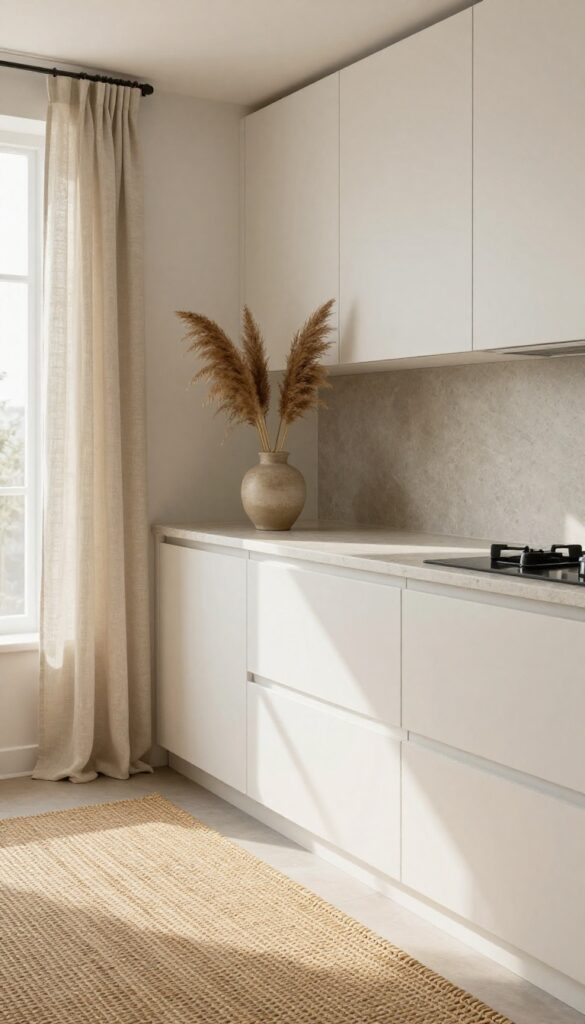
A single-wall kitchen can risk feeling flat when everything is too uniform. The fix is simple: bring in natural textures that add warmth and depth without cluttering the layout. Think smooth stone, soft woven fibers, and matte finishes that invite touch and soften the overall look.
Why It Works
Layering textures creates visual interest and makes a compact kitchen feel richer and more inviting. Natural materials like seagrass, linen, and ceramic absorb light rather than reflect it, which helps the space feel calm and grounded.
Best For
This idea works well in kitchens with neutral or white cabinetry that need a dose of organic warmth. It's also great for rental kitchens where you can't change permanent surfaces but want to add personality through textiles and accessories.
Styling Tip
Stick to three main textures: one smooth (countertop), one woven (runner or baskets), and one soft (curtains or towels). Keep the color palette tonal—cream, sand, warm gray—so the mix feels cohesive, not busy.
10. Keep the Floor Light and Continuous
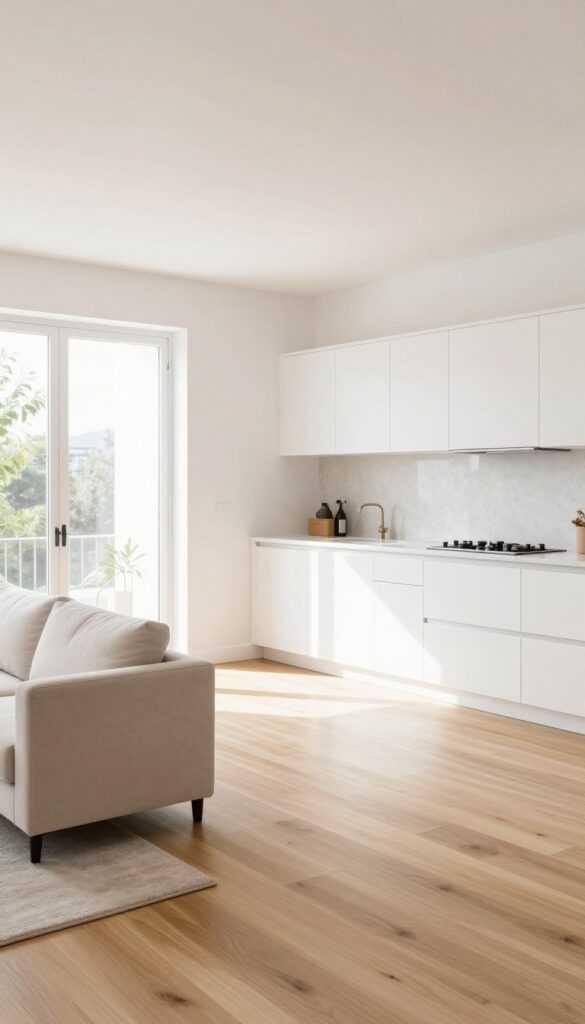
One of the smartest tricks for opening up a single-wall kitchen is to treat the flooring as one seamless surface from one room to the next. Instead of cutting the floor at the kitchen boundary, let wide-plank light oak boards or large-format pale tiles run straight through into the living or dining area. This visual flow tricks the eye into seeing a larger, more unified space.
It also removes that awkward line where two different floors meet, which can make a small kitchen feel chopped up.
Why It Works
Continuous flooring creates an uninterrupted sightline that makes both rooms feel bigger. The lack of a physical or visual break encourages the eye to travel freely, so the kitchen doesn't feel like a separate, cramped zone. Light colors reflect more natural light, which further amplifies the sense of airiness.
Best For
This idea is perfect for galley kitchens, studio apartments, and open-plan layouts where every inch counts. It works especially well in homes that get limited natural light because pale flooring helps bounce brightness around. If you're planning to sell down the road, this trick also appeals to buyers looking for a spacious, modern feel.
Styling Tip
Choose flooring with subtle grain or minimal veining so it reads as calm and clean rather than busy. Pair it with a rug in a soft neutral tone placed in the living area—not under the kitchen cabinets—to define zones without breaking the floor's continuity. Keep baseboards thin and painted to match the wall color so they don't interrupt the flow.
FAQ
What is the best color for a single wall kitchen?
Light colors like white, cream, pale gray, or soft pastels work best because they reflect light and make the space feel larger. You can add warmth with wood accents or one small pop of color.
How do I make a single wall kitchen feel bigger?
Use open shelving, full-height backsplashes, and mirrors to create depth. Keep countertops clutter-free and choose slim, multi-functional furniture. A light color palette also helps open up the room.
Can I have an island in a single wall kitchen?
Yes, but keep it narrow and on wheels so it can be moved when needed. A slim island or butcher block cart adds prep space without blocking the flow. Just make sure there’s enough room to walk around.
What type of lighting works best for a single wall kitchen?
Layered lighting is ideal: recessed lights for general illumination, under-cabinet strips for task lighting, and one statement pendant for style. Avoid bulky fixtures that overwhelm the wall.
How do I add storage without upper cabinets?
Use open shelves, magnetic strips for knives, pegboards for pots, and tall pantry cabinets at one end. A rolling cart or wall-mounted racks also provide extra storage without closing off the space.
Conclusion
A single wall kitchen doesn’t have to feel like a compromise. With the right mix of light colors, smart storage, and thoughtful accents, it can become one of the most functional and stylish rooms in your home.
Start with one or two ideas that resonate with your space, and build from there. Small changes—like swapping hardware or adding open shelving—can make a big difference in how fresh and easy your kitchen feels every day.