12 Elegant Kitchen Diner Ideas for Cozy Everyday Meals
Your kitchen diner is where mornings start with coffee and evenings wind down over dinner. It's the heart of daily life, but making it feel both elegant and cozy can be tricky. You want a space that's stylish enough to enjoy, yet practical enough for real, everyday use.
The key is blending warmth with function. Think soft textures, warm lighting, and furniture that invites you to linger. These ideas focus on creating a lived-in feel without sacrificing style.
From clever storage solutions to simple decor swaps, each suggestion is designed to make your kitchen diner feel like the coziest spot in the house. Let's dive into 12 ways to bring that magic home.
1. Warm Wood Accents for Instant Comfort
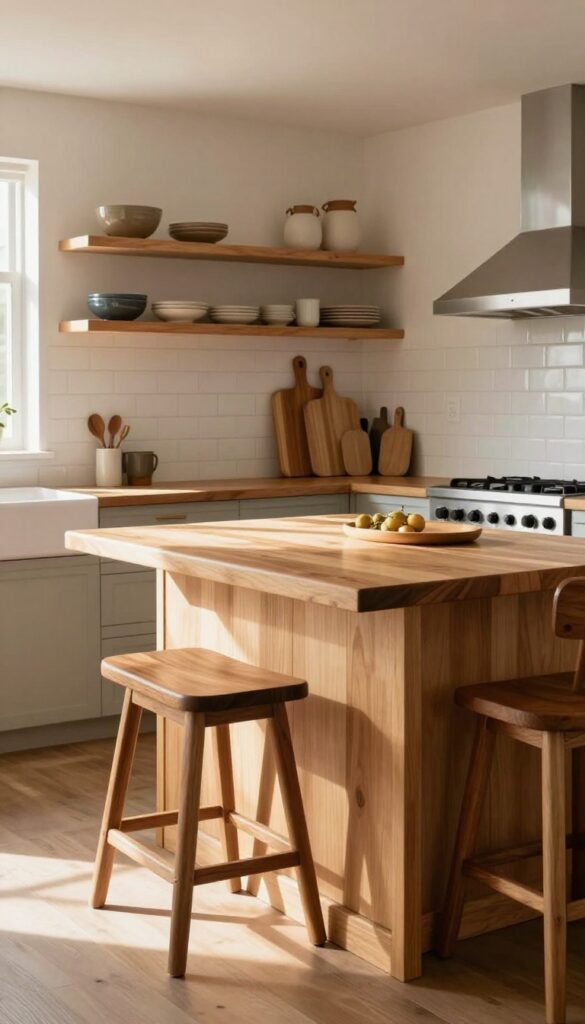
There's a reason wood has been a staple in kitchens for centuries—it brings a natural warmth that nothing else can replicate. By adding wooden elements like open shelving, a butcher block island, or bar stools, you instantly soften the hard edges of appliances and countertops. The result is a space that feels lived-in and inviting, without sacrificing style.
Why It Works
Wood introduces texture and organic warmth that balance out the coldness of stainless steel, tile, and stone. It creates visual contrast and makes the kitchen feel more approachable, turning it into a cozy gathering spot rather than just a workspace.
Best For
Kitchen diners that feel too sterile or modern. If your space has lots of white cabinets or sleek surfaces, adding wood accents will bring the warmth needed for everyday meals.
Styling Tip
Mix wood tones intentionally—don't match everything perfectly. Pair light oak shelves with a darker walnut island or teak bar stools for depth. Add a few wooden cutting boards leaning against the backsplash to reinforce the look without cluttering.
2. Layered Lighting That Sets the Mood
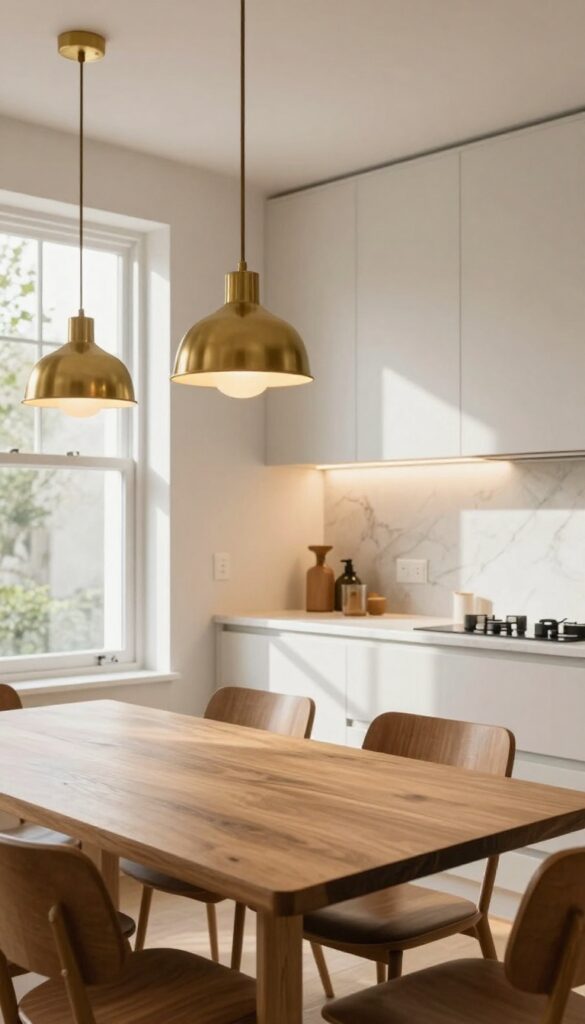
Lighting is often an afterthought in kitchen diners, but it's one of the easiest ways to transform the space from purely functional to genuinely inviting. The trick is layering—mixing different light sources at different heights so you can dial in the perfect ambiance for everything from a quick breakfast to a leisurely dinner party. Think of it as creating a lighting wardrobe: you need options for every occasion.
Why It Works
Layered lighting gives you control over the room's atmosphere without any major renovations. Pendant lights provide a focal point and warm glow over the dining table, under-cabinet task lighting ensures you can see what you're chopping, and a dimmer switch ties it all together so you can shift from bright and efficient to soft and romantic in seconds.
Best For
This approach works well in open-plan kitchen diners where the cooking and eating areas share one space. It's especially helpful if you have an island or peninsula that serves double duty as a prep station and casual dining spot, since you can highlight each zone independently.
Styling Tip
Choose pendant lights with warm-toned metal or glass shades—brass, copper, or smoked glass—to add a cozy glow. Install them about 30 to 36 inches above the table surface for optimal illumination without blocking sightlines. Pair with LED strip lights under cabinets that have a color temperature around 2700K to keep everything feeling cohesive.
3. A Cozy Banquette for Casual Dining
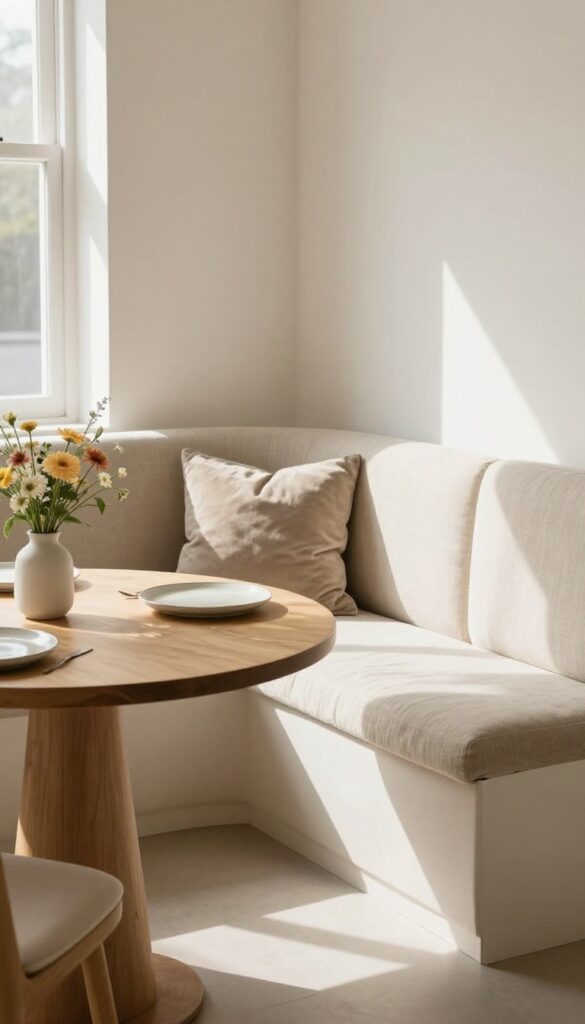
Banquette seating turns a corner of your kitchen diner into a warm, inviting nook that practically begs you to sit down and stay awhile. Whether built-in or freestanding, the enclosed feel creates intimacy without closing off the room. Upholstered cushions in soft, washable fabrics add comfort and practicality, so you can relax without worrying about spills.
Why It Works
Banquettes maximize seating in a compact footprint while making the dining area feel like its own special spot. The cozy, enveloping design naturally encourages slower meals and better conversation—exactly what you want for everyday family dinners or catching up with friends over coffee.
Best For
This idea shines in open-plan kitchens where you want to define a dining zone without losing flow. It's also ideal for awkward corners or bay windows that are hard to furnish with standard tables and chairs.
Styling Tip
Choose a bench depth of at least 18 inches so cushions sit comfortably, and opt for performance fabrics like outdoor-grade cotton or Crypton to resist stains. Add scatter cushions in varying textures—linen, velvet, or knit—for a layered look that feels collected over time.
4. Open Shelving with Everyday Elegance
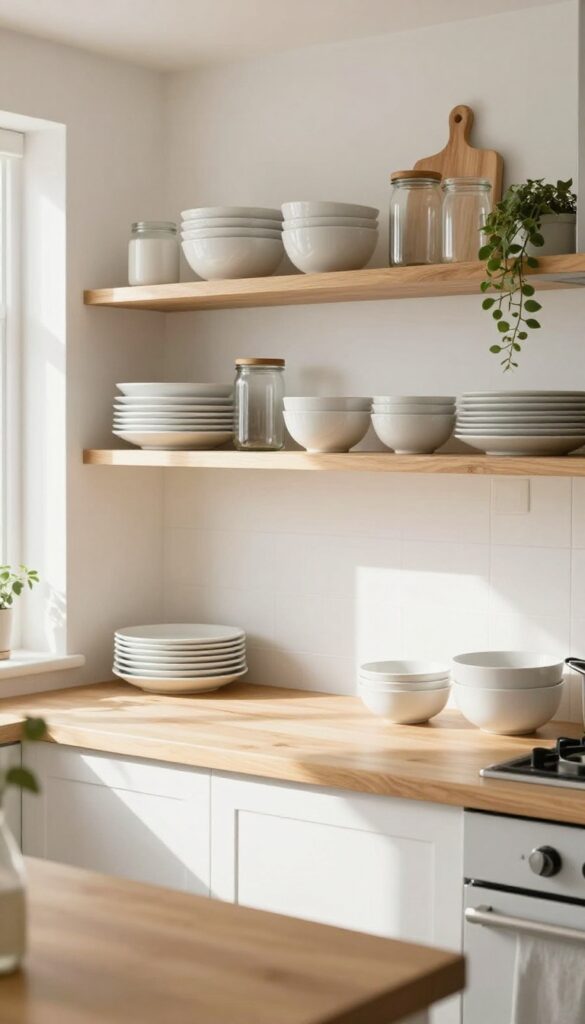
There's a certain charm to seeing your favorite mug or a stack of simple white plates within easy reach. Open shelving brings that warmth into your kitchen diner, turning everyday items into part of the decor. It's not about perfect, staged displays—it's about showing off the things you actually use, arranged in a way that feels both intentional and relaxed.
Why It Works
Open shelving makes your kitchen feel more spacious and inviting, and it saves you from rummaging through cabinets. By mixing functional dishware with a few decorative touches like a ceramic vase or a small trailing plant, you create a lived-in look that's effortlessly stylish. The key is to keep it practical—everything should be something you reach for regularly.
Best For
This idea works beautifully in smaller kitchen diners where every inch counts, as well as in open-plan spaces where the kitchen flows into a dining area. It's especially great if you have a collection of dishes or glassware you love and want to showcase without the formality of a china cabinet.
Styling Tip
Stick to a cohesive color palette for your dishes—neutrals like white, cream, and soft gray keep the look calm and cohesive. Layer in texture with wooden cutting boards, linen napkins folded on shelves, or a single copper pot. Leave some breathing room between items so the shelves don't feel cluttered; aim for about two-thirds full with one-third empty space.
5. Soft Textiles That Invite Touch
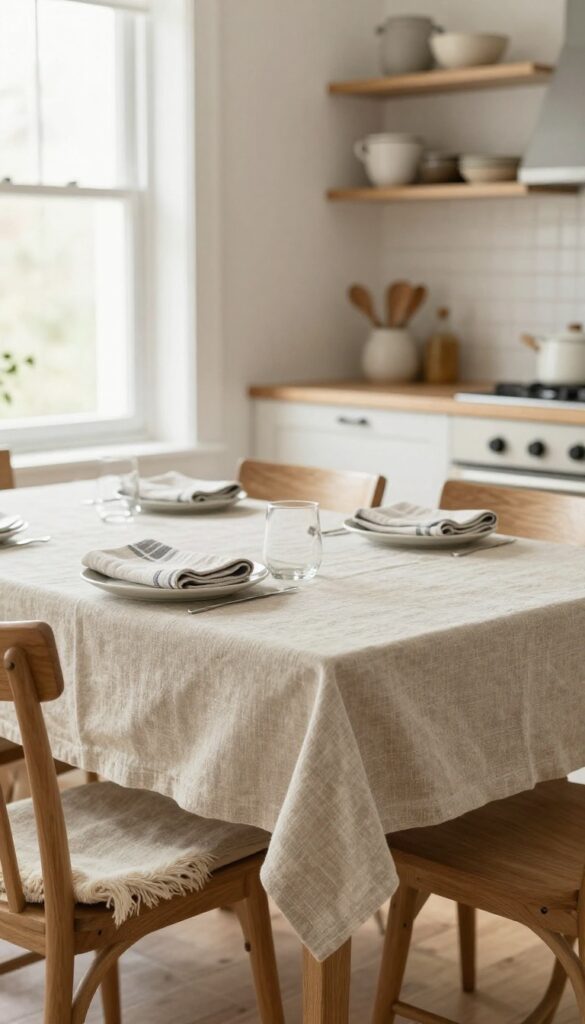
There's something about soft fabrics that instantly makes a kitchen diner feel more welcoming. Linen napkins, a cotton tablecloth, or a textured runner add warmth and absorb sound, making the space feel quieter and more intimate. These simple touches turn a functional area into a place where you actually want to linger over coffee or dinner.
Why It Works
Hard surfaces like tile, wood, and countertops can make a kitchen feel cold and echoey. Soft textiles break up those hard lines, adding visual softness and acoustic comfort. They also introduce color and pattern in an easy-to-change way, so you can refresh the look seasonally without a big commitment.
Best For
This idea is perfect for open-plan kitchen diners where the cooking and eating areas blend together. It's also great for smaller spaces where you want to define the dining zone without adding bulky furniture. If your kitchen feels too stark or noisy, textiles are the quickest fix.
Styling Tip
Stick to natural fibers like linen, cotton, or wool for an organic feel that ages well. Choose one hero textile—like a striped runner or a patterned tablecloth—and keep other fabrics neutral to avoid visual clutter. Layer textures: pair a smooth cotton tablecloth with nubby linen napkins for depth.
6. A Statement Rug to Define the Zone
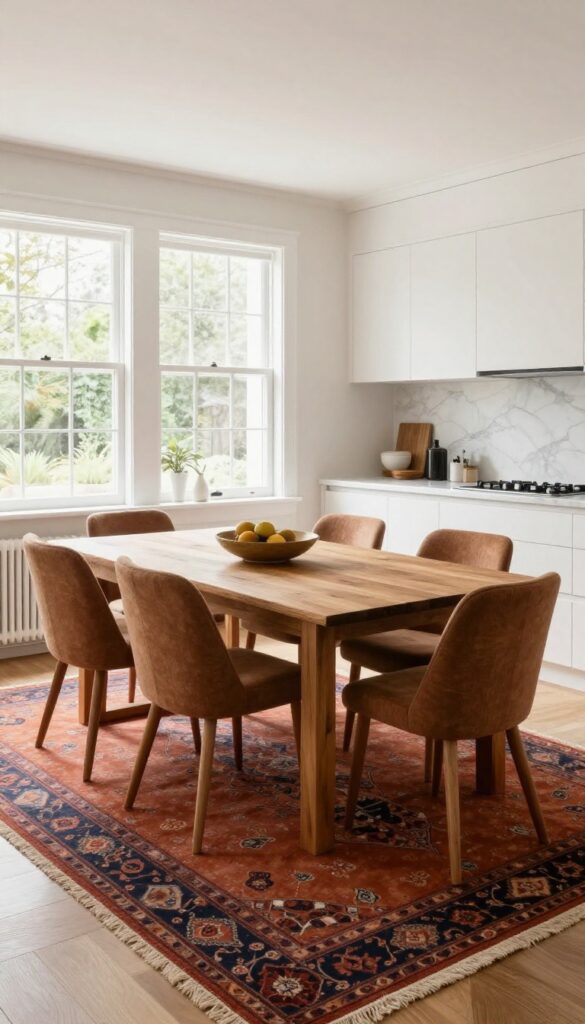
In an open-plan kitchen diner, a rug does more than soften footsteps—it visually carves out the dining area. A durable, low-pile rug under the table creates a clear boundary between cooking and eating zones, making the space feel intentional. Choose a pattern that hides inevitable spills while adding warmth and color, tying the two areas together without matching them exactly.
Why It Works
A rug anchors the dining set, preventing the table from floating in a sea of hard flooring. It also absorbs sound, making meals feel cozier. The right pattern can disguise crumbs and stains, so you don't stress every time someone drops a fork.
Best For
Open-concept kitchens where the dining area needs definition without a wall. It's especially useful in high-traffic spaces where you want to separate work from relaxation without sacrificing flow.
Styling Tip
Choose a rug that extends at least 24 inches past the table on each side so chairs stay on it when pulled out. For busy families, go with a flatweave or indoor-outdoor style that's easy to vacuum or spot-clean.
7. Greenery That Breathes Life
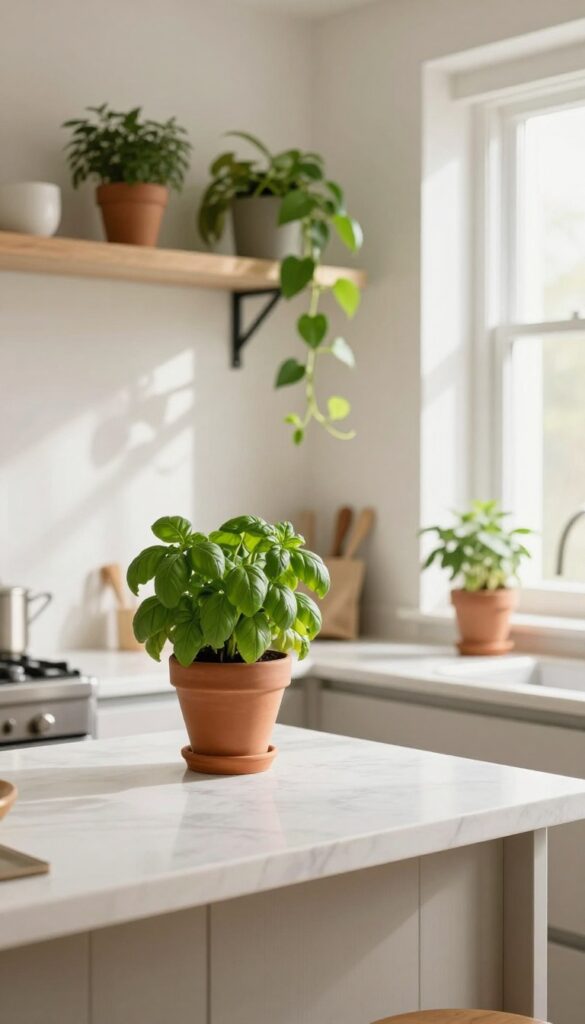
Plants have a way of making a kitchen feel instantly more inviting. A few well-placed pots soften all those hard edges—countertops, cabinets, tiles—and add a layer of life that no decor accessory can match. The trick is choosing greenery that feels natural in the space, not like an afterthought.
Why It Works
Plants naturally soften the hard surfaces common in kitchens and introduce organic shapes and fresh color. They also improve air quality and create a calming, lived-in atmosphere that makes everyday meals feel more relaxed.
Best For
This idea works beautifully in any kitchen diner, especially ones with neutral or monochrome palettes where a pop of green can stand out. It's also ideal for smaller spaces because vertical plants or windowsill herbs take up zero floor area.
Styling Tip
Mix practical herbs like basil and mint on the windowsill with a trailing pothos on a high shelf. Use simple terracotta pots or matte ceramic planters in warm earth tones to keep the look cohesive and understated.
8. Mixed Seating for Personality
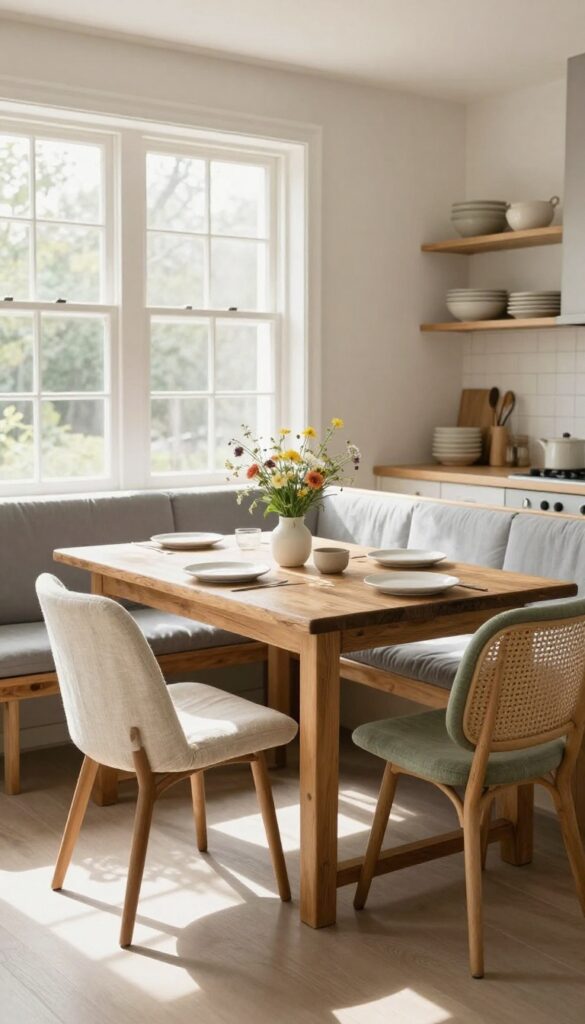
A dining set where every chair matches can feel a bit too perfect, like a catalog page. Mixing a bench on one side with different chairs on the other instantly warms up the space and makes it feel like your own. This approach gives the room a collected-over-time look that's both inviting and visually interesting.
Why It Works
The contrast between the bench and mismatched chairs breaks up the formality of a standard dining set. It adds layers, texture, and a sense of history that makes the kitchen diner feel lived-in rather than staged.
Best For
Families or households that want a relaxed, casual dining area where guests can pull up any chair without worrying about matching. It also works well in open-plan spaces where you want to define the dining zone without adding bulky furniture.
Styling Tip
Stick to a unifying element like wood tones or seat colors to keep the mix cohesive. For example, pair a wooden bench with chairs that all have wooden legs, even if the seat styles differ. Add cushions in similar fabrics for extra comfort and harmony.
9. Warm Metal Finishes for Subtle Glow
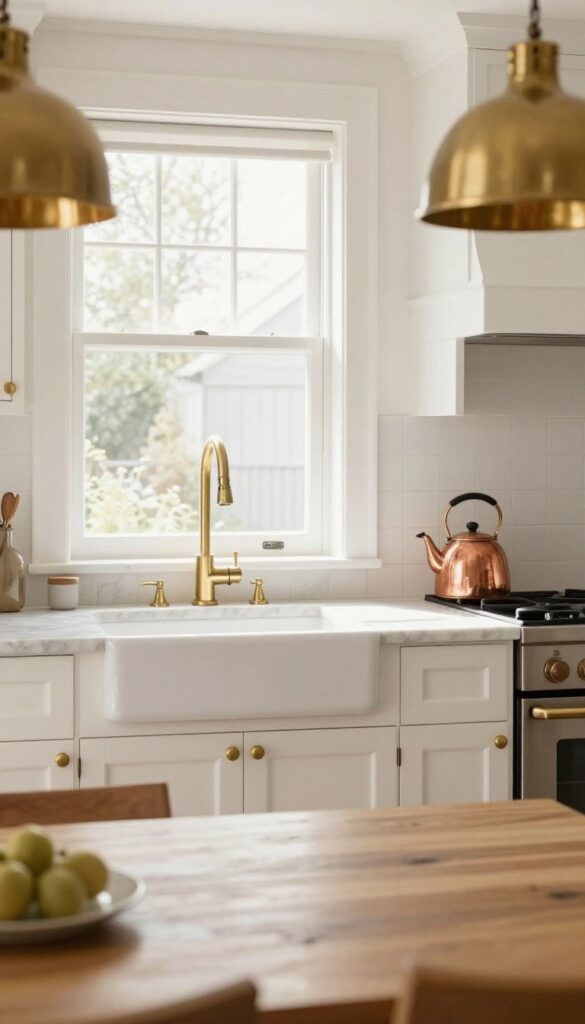
Brass and copper have a way of making a kitchen feel instantly more inviting. Unlike chrome or stainless steel, which can read a bit clinical, warm metals catch the light softly and throw a gentle glow around the room. That subtle shimmer adds depth without trying too hard, which is exactly the kind of effortless elegance that makes everyday meals feel a little special.
Why It Works
Warm metals reflect light in a flattering way, creating visual warmth even on gray days. They also patina beautifully over time, developing character that fits right into a lived-in home. The contrast against cool tones like marble or white cabinetry keeps the look balanced but far from sterile.
Best For
This idea shines in kitchens with neutral palettes—think white, beige, or soft gray—where brass or copper can act as the jewelry of the room. It's especially effective in open-plan spaces where the metal finishes tie together the kitchen and dining area without needing extra decor.
Styling Tip
Start small: swap out your faucet for a brushed brass model, then add matching cabinet pulls and a single pendant light. Stick to one warm metal family to avoid a mismatched look. A copper kettle on the stove or brass canisters on the counter reinforce the theme without overwhelming.
10. A Beverage Station for Morning Rituals
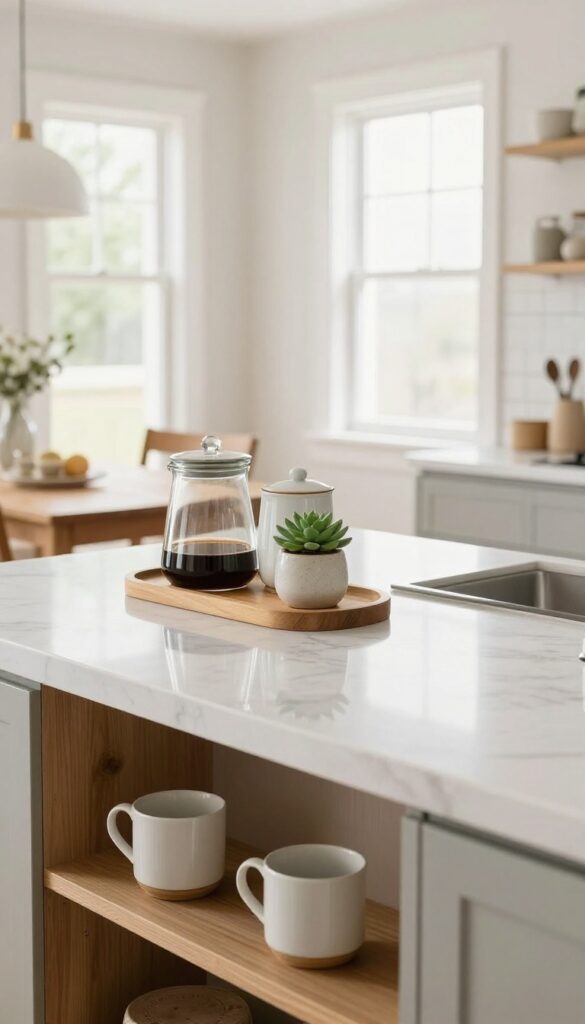
Mornings feel calmer when everything you need is within arm's reach. A dedicated beverage station—whether a slim countertop section or a rolling cart—turns the simple act of making coffee or tea into a small ritual. It doesn't have to be elaborate; a tray, a few canisters, and a tiny plant are enough to make the space feel intentional and welcoming.
Why It Works
This setup streamlines your morning routine by keeping supplies organized and visible. It also creates a natural focal point in the kitchen diner, drawing the eye without requiring much effort to maintain. The combination of function and style makes it feel like a purposeful design choice rather than just extra counter space.
Best For
Ideal for open-plan kitchen diners where the counter doubles as a buffet or serving area. Also great for small spaces where every inch needs to earn its keep—a narrow console or bar cart works beautifully against a wall.
Styling Tip
Use a wooden or marble tray to anchor the station and corral items. Choose clear glass canisters for coffee beans and tea bags so you can see what's inside, and add a small ceramic vase with fresh greenery for life. Keep mugs on a low shelf or hook nearby so they're easy to grab.
11. Curtains Instead of Blinds
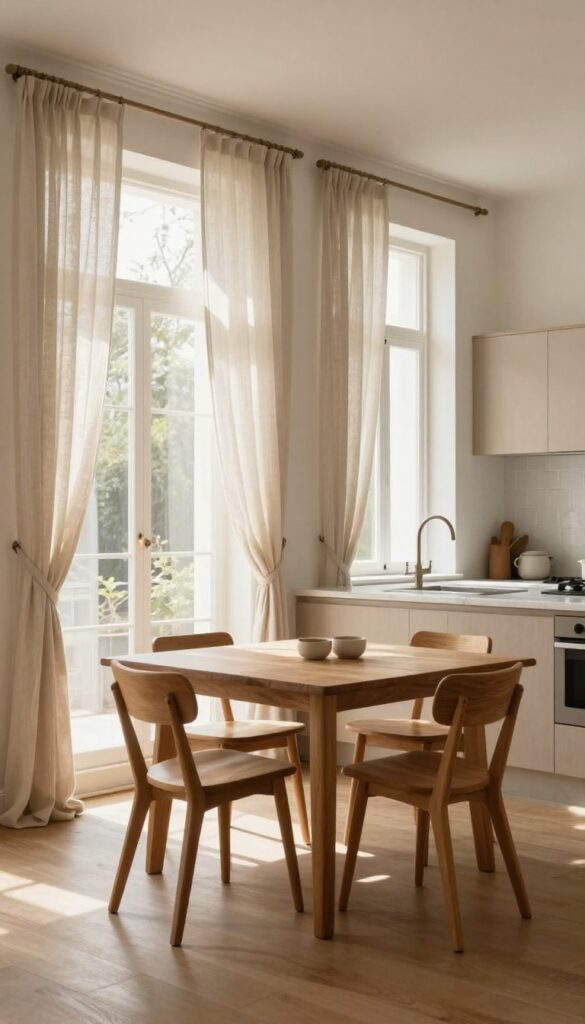
There’s something undeniably softer about fabric over hard surfaces, and swapping out kitchen blinds for floor-length linen curtains is one of the easiest ways to bring that feeling in. The gentle folds of natural linen diffuse harsh sunlight into a warm, even glow—perfect for those slow weekend breakfasts or a quiet weeknight dinner. It instantly shifts the room from purely functional to comfortably lived-in, like a real dining space that happens to have a stove.
Why It Works
Linen curtains add texture and warmth that blinds simply can't match. They absorb sound, soften the light, and create a visual anchor that makes the kitchen feel more like an extension of the home rather than a separate work zone. Plus, they're easy to pull open or close as needed, giving you control over privacy and brightness without the clatter of plastic or metal slats.
Best For
This look works especially well in kitchens with large windows or sliding doors where you want to blur the line between indoors and out. It's also great for open-plan spaces where the kitchen flows into a dining or living area—curtains help tie the whole room together with a cohesive, residential feel.
Styling Tip
Hang the curtain rod as high as possible—close to the ceiling—and let the fabric just kiss the floor for an elegant, tailored look. Choose a neutral linen in oatmeal, stone, or soft white to keep it airy, then add a simple tieback in leather or brass for a practical touch that lets in more light when you need it.
12. Personal Touches That Tell Your Story
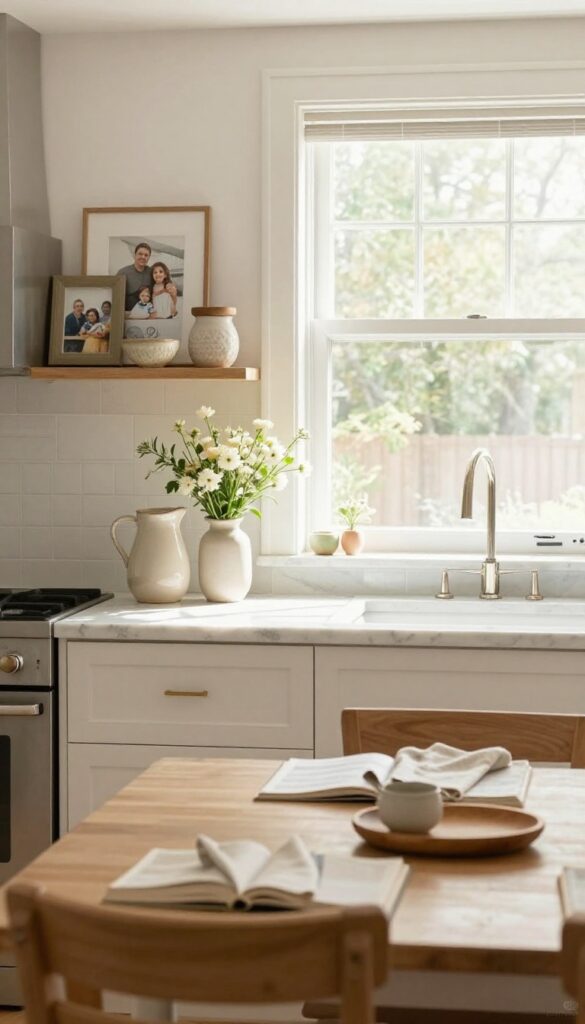
A kitchen diner should feel like the heart of your home, not a showroom. The easiest way to achieve that is by layering in items that mean something to you. A favorite cookbook propped open on the counter, a ceramic pitcher passed down from a grandparent, or a few candid family photos on a shelf—these small details instantly make the space feel lived-in and welcoming.
They whisper your story without saying a word.
Why It Works
Meaningful objects create an emotional connection to the space, making it feel warm and inviting rather than sterile. They also serve as natural conversation starters when guests gather around the table.
Best For
This idea works well in any kitchen diner, but it's especially powerful in open-plan layouts where the dining area can feel disconnected from the cooking zone. Personal touches bridge that gap and tie the whole room together.
Styling Tip
Edit carefully—too many knick-knacks can look cluttered. Choose three to five items that vary in height and texture, and group them on a countertop tray, a floating shelf, or the windowsill near your dining table.
FAQ
How can I make my kitchen diner feel cozy without cluttering it?
Focus on a few key elements like warm lighting, soft textiles, and natural materials. Use open shelving sparingly to display only your favorite pieces, and keep countertops clear of non-essentials.
What's the best flooring for a kitchen diner that's both stylish and practical?
Wide-plank wood or wood-look tile offers warmth and durability. Add a washable rug under the dining table for extra comfort and style.
How do I choose the right dining table size for my kitchen diner?
Allow at least 36 inches of space around the table for chairs and movement. A round or oval table can work well in smaller spaces, while rectangular tables suit longer rooms.
Can I mix modern and rustic elements in a kitchen diner?
Absolutely. Pair sleek pendant lights with a farmhouse table, or combine modern bar stools with wooden countertops. The contrast adds character and keeps the space from feeling one-note.
What colors work best for a cozy kitchen diner?
Warm neutrals like beige, cream, and soft gray create a calming base. Accent with earthy tones like terracotta, olive green, or deep blue for depth without overwhelming the space.
Conclusion
Creating an elegant kitchen diner doesn't require a full renovation or a big budget. Small changes like swapping out lighting, adding textiles, or introducing natural elements can transform how the space feels. The goal is to make your kitchen diner a place where you actually want to linger—over coffee, conversation, or a simple weeknight meal.
Start with one or two ideas that resonate with you, and build from there. Your cozy everyday meals deserve a setting that feels just as good as the food tastes.