10 Bedroom Wall Shelf Ideas for Extra Storage
Storage problems rarely come from owning too many things; they usually come from using space poorly. Bedroom walls often sit half empty while floors and dressers get crowded with clutter.
Shelves fix that imbalance without making a room feel cramped. A good wall shelf setup gives everyday items a home while still looking stylish instead of purely functional.
Some shelf ideas are purely decorative, but the best ones quietly solve real storage issues. The following ideas focus on practical bedroom wall shelves that actually make daily life easier.
1. Floating Shelves Above the Bed
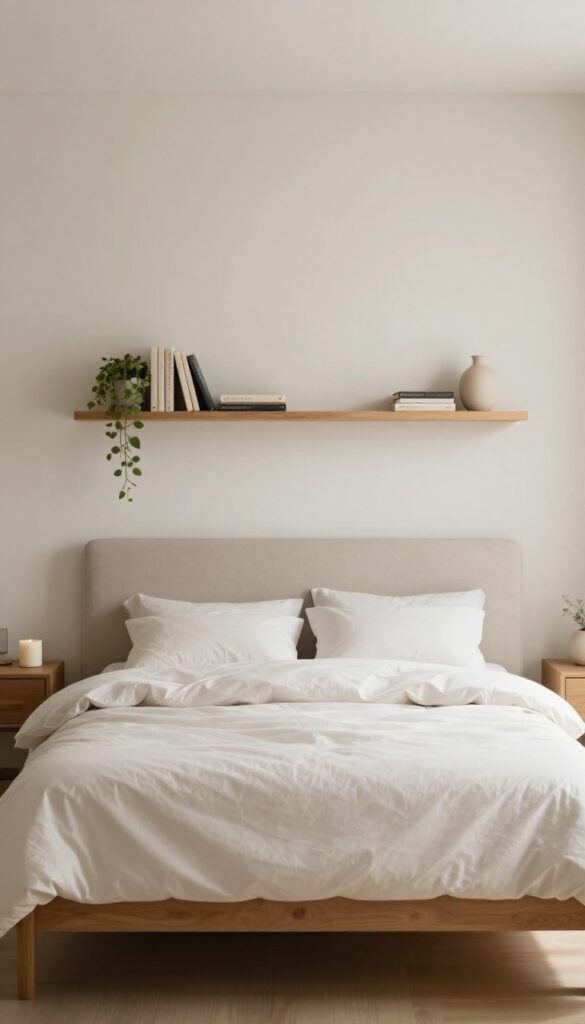
Beds usually dominate the largest wall in the bedroom, yet that space often sits completely unused. A couple of floating shelves above the headboard instantly add storage without taking up any floor space.
I like this setup because it balances practicality with style. You can store books, small decor pieces, or even bedtime essentials without cluttering your nightstand.
Floating shelves also feel lighter visually than bulky cabinets. When installed correctly, they almost disappear into the wall while still doing real work.
Why This Works
The wall above the bed naturally draws attention, so adding shelves there creates both storage and a focal point. Instead of blank wall space, you get layered depth that makes the room feel more intentional.
This placement also keeps useful items within reach. If you like reading in bed or keeping a water bottle nearby, the shelves act like an extended nightstand.
How to Do It
- Measure the width of your bed and install shelves slightly shorter than that width for balance.
- Mount shelves about 12–18 inches above the headboard to avoid bumping your head.
- Use sturdy wall anchors or studs because shelves above beds must be secure.
- Limit each shelf to a few items so the setup stays clean and uncluttered.
Style & Design Tips
Stick to lightweight decor and books instead of heavy objects. Heavy items not only look crowded but also increase safety risks.
Use matching frames, small plants, or candles to create a simple rhythm across the shelf. Avoid random clutter because the bed area should still feel calm and restful.
Pro Tip or Budget Hack
Basic floating shelves from hardware stores work fine, but adding wood stain or paint instantly upgrades their look. I once used cheap pine boards and stained them walnut, and honestly they looked like designer shelves afterward.
2. Corner Wall Shelves
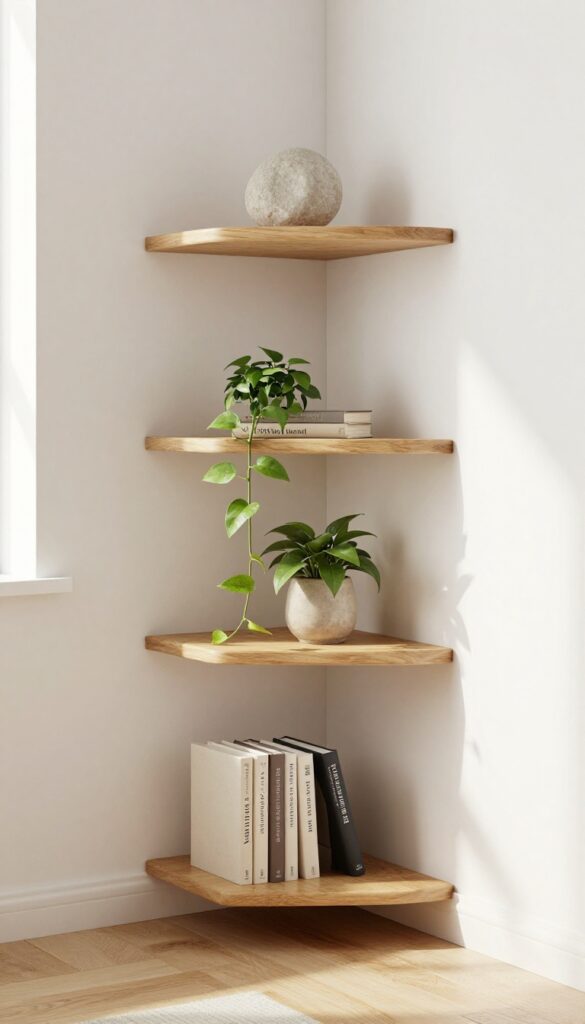
Corners usually become wasted space in bedrooms. Most people push furniture against flat walls and ignore the angled corners completely.
Corner shelves turn that forgotten space into useful storage. They’re perfect for small bedrooms where every square foot matters.
I’ve used corner shelves for books, plants, and even bedside lighting in tight rooms. It’s one of those solutions that feels obvious after you try it.
Why This Works
Corners offer vertical storage without interfering with walking space. Shelves there use areas that normally stay empty.
Because corner shelves stack upward, they also guide the eye upward. That trick can make a small bedroom feel taller and less cramped.
How to Do It
- Choose triangular or L-shaped corner shelves designed specifically for corners.
- Start the lowest shelf about 30–36 inches from the floor.
- Install additional shelves evenly above it to create vertical flow.
- Keep heavier items on the bottom shelf for stability.
Style & Design Tips
Use similar items across the shelves for visual consistency. For example, books on one level, plants on another, and decor on the top.
Avoid overcrowding corner shelves. Too many objects can make the corner feel chaotic instead of organized.
Pro Tip or Budget Hack
Simple wood corner shelves are easy to DIY. Cut triangle pieces from plywood, sand them smooth, and mount them with brackets underneath.
3. Picture Ledge Shelves
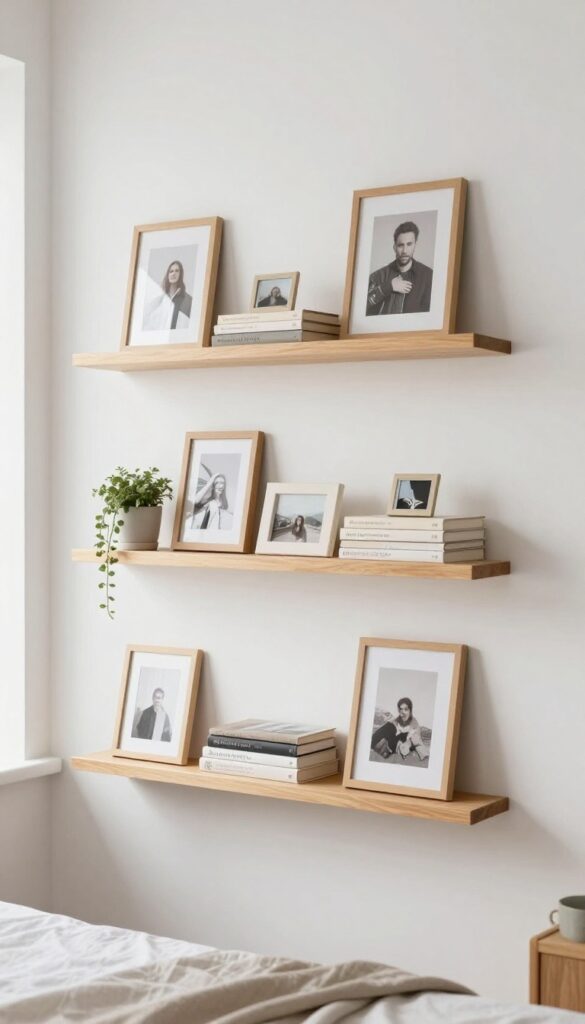
Picture ledges are shallow shelves originally designed for photo frames. In bedrooms, they quietly become one of the most versatile shelf options.
Because they’re narrow, they don’t stick out much from the wall. That makes them perfect for tight bedrooms where bulky shelves feel intrusive.
I also like that you can easily swap items without drilling new holes. Frames, books, or decor can move around whenever you feel like refreshing the room.
Why This Works
The shallow depth keeps the room feeling open. Even multiple ledges don’t make the wall feel heavy.
Picture ledges also create flexible storage. Instead of fixed placements, you can rearrange items whenever your style changes.
How to Do It
- Install one long ledge or stack two to three vertically.
- Leave about 10–12 inches between ledges for comfortable spacing.
- Secure them into studs or strong anchors.
- Lean frames, books, or small decor pieces against the back edge.
Style & Design Tips
Mix heights and textures to keep the display interesting. Combine books, framed art, and small plants instead of repeating identical items.
Avoid lining everything up perfectly. Slightly overlapping frames creates a relaxed layered look.
Pro Tip or Budget Hack
Long picture ledges can get expensive, but simple 1×4 wood boards with a small front lip can mimic the same design for a fraction of the cost.
4. Built-In Wall Niche Shelves
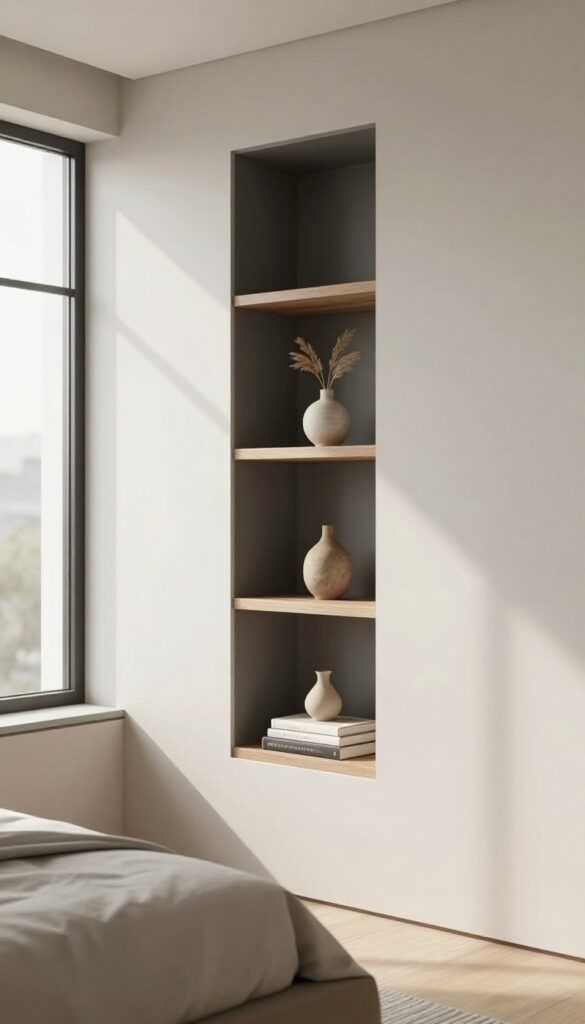
Not every shelf has to stick out from the wall. Built-in niche shelves create storage inside the wall itself, which looks incredibly clean.
These are especially nice in modern bedrooms where minimal design matters. The shelves feel intentional instead of added later.
I’ve seen this done in remodeled bedrooms, and the result looks surprisingly high-end.
Why This Works
Because the shelves sit inside the wall, they don’t take up visual space. The room stays sleek and uncluttered.
Niche shelves also act as architectural details. Instead of basic drywall, the wall itself becomes part of the design.
How to Do It
- Locate wall studs to determine where a niche can fit.
- Cut drywall between studs to create the recessed opening.
- Frame the inside with wood for support.
- Add shelves and finish with paint.
Style & Design Tips
Paint the inside of the niche a slightly darker color than the wall for contrast. That small difference makes the shelves stand out without overpowering the room.
Keep decor simple. Too many items inside a niche ruin the clean architectural look.
Pro Tip or Budget Hack
If cutting drywall sounds intimidating, try shallow recessed shelving kits designed for easy installation.
5. Ladder-Style Wall Shelves
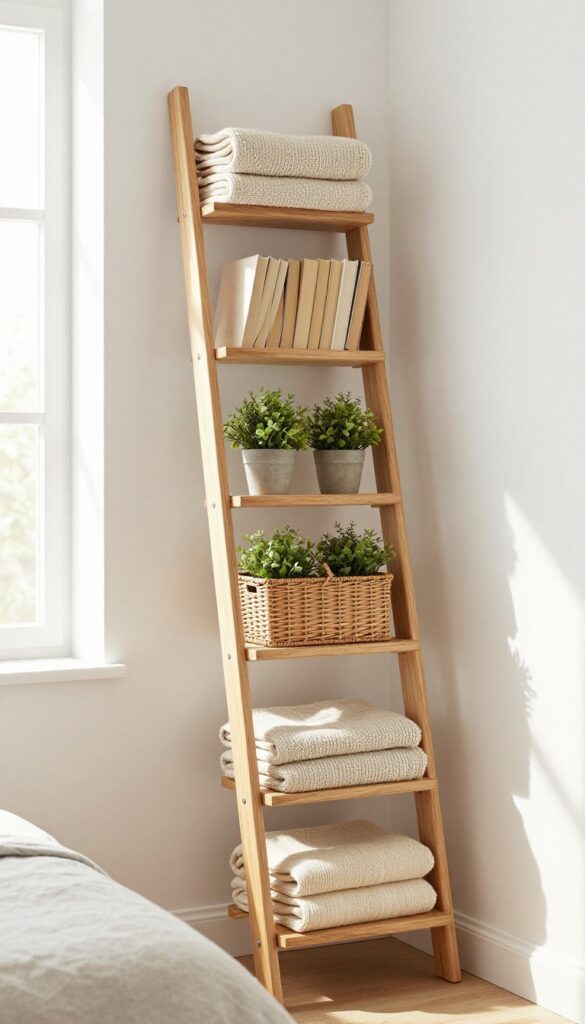
Ladder shelves lean against the wall while still attaching for safety. They create multiple levels of storage without heavy construction.
This design works well in bedrooms with a casual or modern vibe. It feels stylish but still functional.
I personally like ladder shelves for blankets, books, and small baskets. They keep things organized without looking overly structured.
Why This Works
The angled design makes shelves visually lighter. Even large ladder units don’t feel bulky.
Because shelves get smaller toward the top, the structure naturally draws attention upward.
How to Do It
- Place the ladder shelf against a wall with enough vertical height.
- Secure the top to the wall for stability.
- Use lower shelves for heavier items.
- Reserve upper shelves for lighter decor.
Style & Design Tips
Combine baskets, books, and decor to create balanced layers. Baskets are great for hiding clutter while still looking stylish.
Avoid filling every shelf. Leaving some space open keeps the design from feeling busy.
Pro Tip or Budget Hack
Old wooden ladders from flea markets can become shelves with a little sanding and stain.
6. Shelves Above the Door
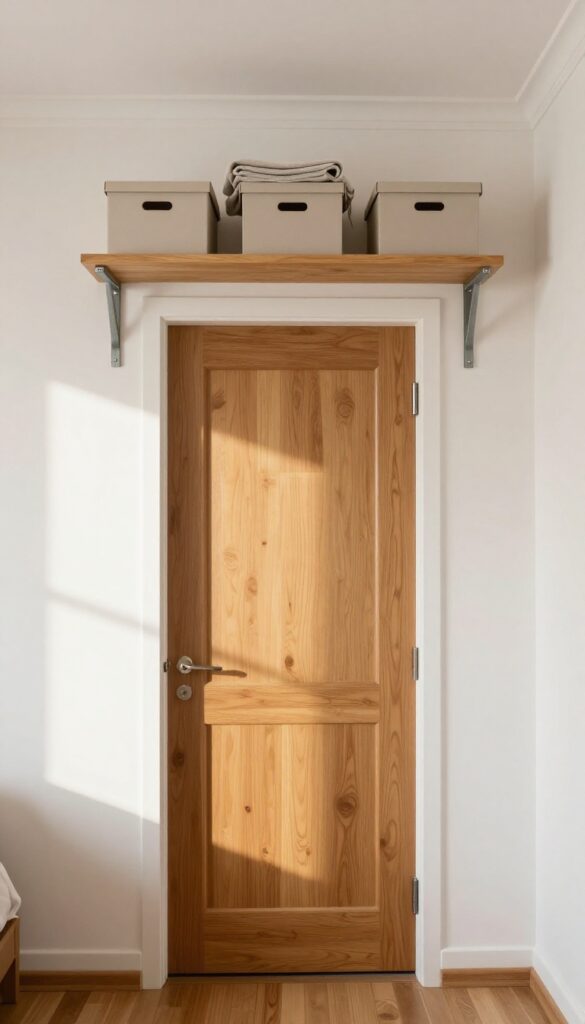
The wall above a bedroom door is almost always empty. Installing a shelf there creates hidden storage that most people never think about.
This space works great for items you don’t use daily. Extra blankets, decorative storage boxes, or seasonal decor fit perfectly there.
I started using this trick in a small apartment bedroom, and honestly it made a noticeable difference.
Why This Works
The area above doors rarely interferes with anything. Using it for storage adds function without sacrificing space elsewhere.
Because it sits high on the wall, the shelf doesn’t visually clutter the room.
How to Do It
- Measure the door frame width.
- Install a shelf slightly wider than the frame.
- Mount it about 10–12 inches above the door.
- Use sturdy brackets for support.
Style & Design Tips
Store items inside matching storage boxes for a clean look. Random objects can look messy at that height.
Choose shelf colors that match trim or wall colors.
Pro Tip or Budget Hack
A simple board and two brackets can create this shelf for under $20.
7. Bedside Wall Shelves Instead of Nightstands
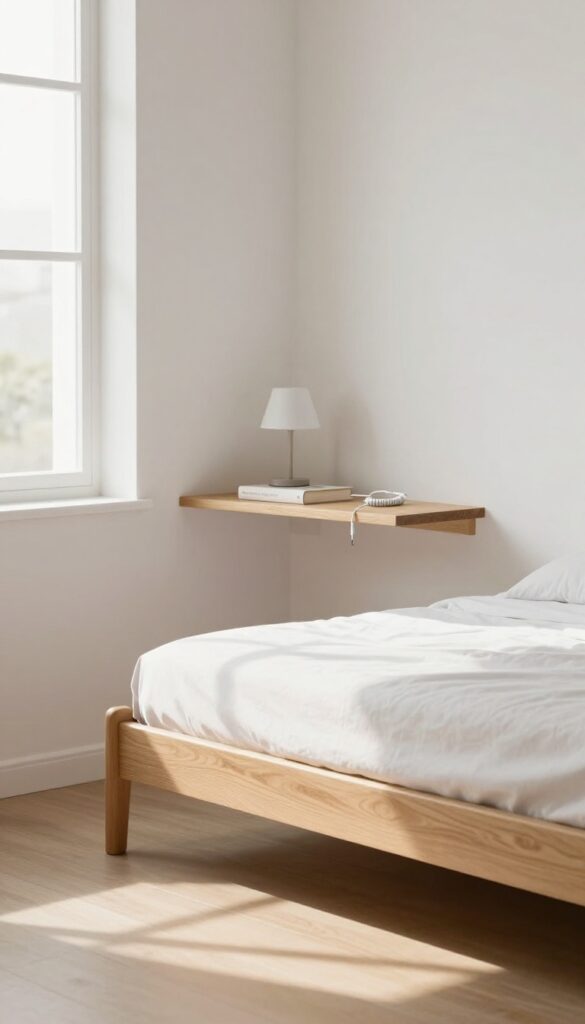
Nightstands take up floor space that small bedrooms can’t always spare. Wall shelves next to the bed solve the same problem without crowding the room.
A single shelf can hold a lamp, book, and phone charger easily. In tight bedrooms, that’s honestly all you need.
I’ve used this setup before, and it made the room feel noticeably more open.
Why This Works
Wall shelves free up floor space. The room instantly feels less cramped.
They also allow more flexibility with bed placement because you’re not dealing with bulky furniture.
How to Do It
- Install shelves about 24–28 inches from the mattress height.
- Keep shelves about 8–10 inches deep.
- Mount securely into studs.
- Leave space for charging cables or lamps.
Style & Design Tips
Choose shelves that match the bed frame material. Wood shelves pair nicely with wooden beds.
Avoid oversized lamps that dominate the small surface.
Pro Tip or Budget Hack
Small floating shelves often cost less than nightstands, making this a surprisingly affordable solution.
8. Full Wall Shelf Grid
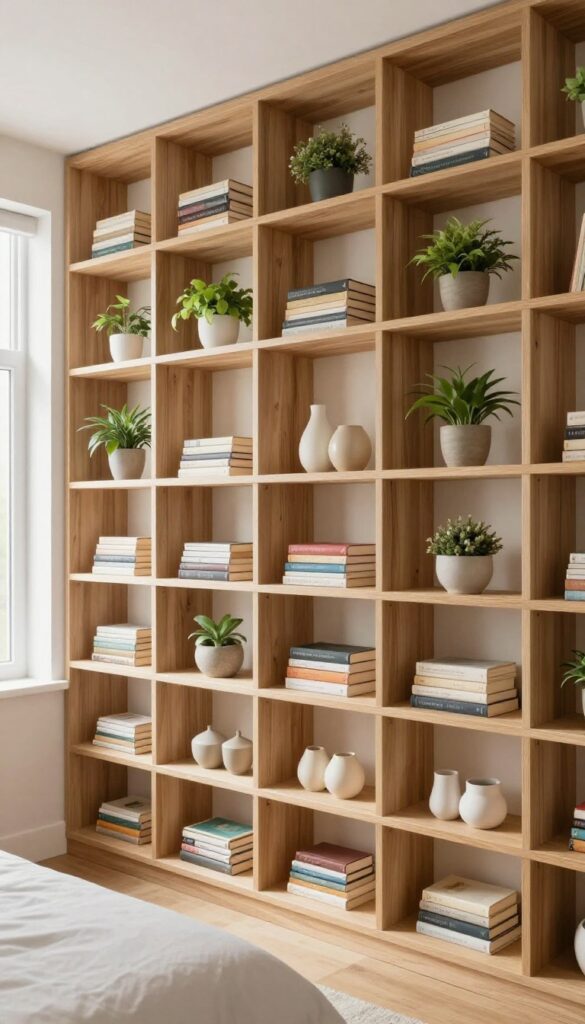
A grid of small shelves across one wall creates massive storage while still looking stylish. It’s basically a decorative storage wall.
This idea works especially well for people who collect books, plants, or decor. Instead of hiding items away, you turn them into a display.
I’ve seen this in creative bedrooms and it always looks impressive.
Why This Works
Multiple small shelves distribute weight evenly. The wall feels balanced instead of overloaded.
A grid layout also creates visual structure. Everything looks organized even when storing many items.
How to Do It
- Plan a grid layout before drilling holes.
- Measure equal spacing between shelves.
- Use identical shelves for consistency.
- Anchor everything securely.
Style & Design Tips
Group items by color or theme to avoid visual chaos. Books together, plants together, decor together.
Avoid random placement that breaks the grid symmetry.
Pro Tip or Budget Hack
Using simple cube shelves creates an easy modular system.
9. Window Frame Shelves
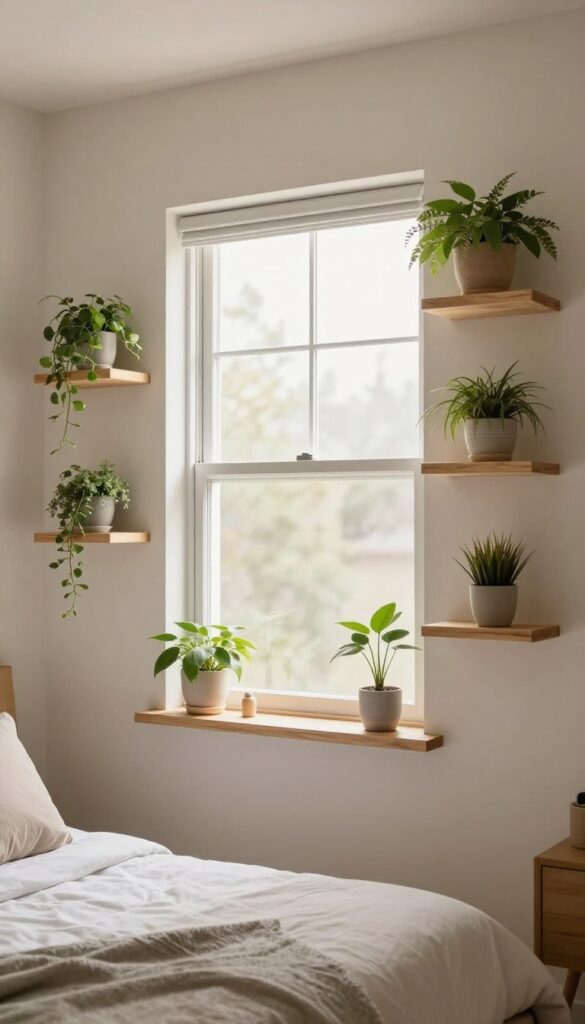
The wall around bedroom windows often stays empty. Adding narrow shelves around the window frame creates useful storage while framing the window visually.
This setup works great for plants, books, or decorative items. It also makes the window area feel more integrated into the room.
I tried this once with small plant shelves and the window suddenly became the best feature in the room.
Why This Works
The window already attracts attention, so shelves there feel natural. They add depth without distracting from the window itself.
Plants placed near windows also thrive because of the natural light.
How to Do It
- Install narrow shelves beside or above the window.
- Keep shelves shallow to avoid blocking light.
- Use anchors or studs for safety.
- Place lightweight items only.
Style & Design Tips
Plants look fantastic here. Combine trailing plants with small pots for visual interest.
Avoid thick shelves that block sunlight.
Pro Tip or Budget Hack
Simple floating picture ledges work perfectly as window shelves.
10. Floating Shelf Desk Combo
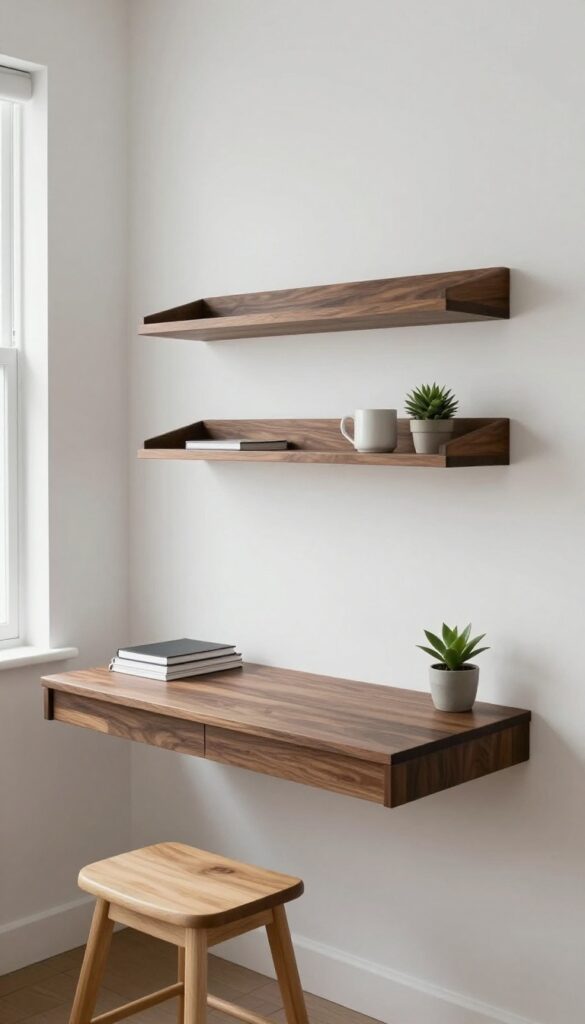
Not every bedroom has space for a full desk. A floating shelf desk solves that problem by combining workspace and storage.
The shelf acts as a desk surface while additional shelves above hold supplies. It’s compact but surprisingly functional.
I’ve used this idea in a tiny bedroom workspace, and it worked far better than expected.
Why This Works
Floating desks eliminate bulky legs and frames. The room stays open and flexible.
Adding shelves above the desk keeps everything within reach while maintaining organization.
How to Do It
- Install a deep floating shelf (16–20 inches) for the desk surface.
- Mount it about 29–30 inches from the floor.
- Add smaller shelves above for storage.
- Use wall studs for maximum strength.
Style & Design Tips
Keep the desk area clean with minimal decor. Too many items make small workspaces feel chaotic.
Choose shelf colors that match the room to maintain visual harmony.
Pro Tip or Budget Hack
Two heavy-duty brackets and a thick wood board can create a strong floating desk for very little money.
Final Thoughts
Smart storage rarely comes from buying more furniture. It usually comes from using the walls better and letting vertical space do the heavy lifting.
Bedroom wall shelves are simple, affordable, and surprisingly versatile. Once you start using them, you’ll probably notice several other empty wall spots begging for the same treatment.
Personally, I still think floating shelves above the bed and bedside wall shelves are the biggest space savers. Try one idea first, and chances are you’ll end up installing a few more before long.