10 Loft Bedroom Ideas for Sloped Ceiling Spaces
Awkward angles change how a room functions long before they change how it looks. Sloped ceilings often limit where furniture can sit, how you move around the room, and what kind of storage actually works.
A loft bedroom usually ends up with a mix of cozy charm and practical headaches. Some layouts feel magical, while others make you bump your head every morning.
Getting the balance right matters more than buying expensive décor. Smart placement, clever storage, and a little design awareness can turn a tricky attic space into the best bedroom in the house.
1. Low Platform Bed Layout
Most loft bedrooms waste their best space by trying to force tall furniture under the lowest part of the ceiling. That rarely works, and it usually makes the room feel cramped.
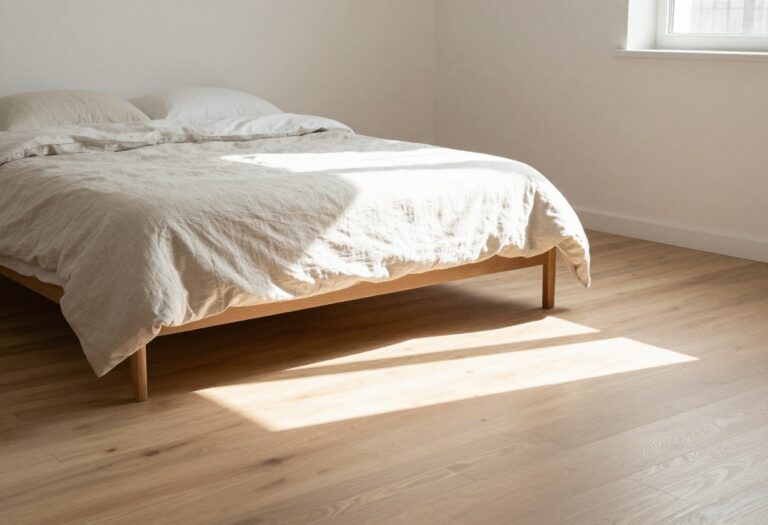
A low platform bed completely flips that problem. Instead of fighting the slope, the bed sits comfortably where the ceiling dips the most, freeing the taller areas for movement and storage.
I’ve seen people struggle with bulky bed frames in attic rooms, and honestly, they always regret it. The moment they switch to a low platform setup, the whole space suddenly feels bigger and calmer.
Why This Works
Sloped ceilings limit vertical clearance, so the lower your furniture sits, the more usable space you create.
A platform bed also visually lowers the center of the room. That makes the ceiling appear higher, even though nothing about the structure actually changed.
How to Do It
- Choose a low-profile platform bed no taller than 10–12 inches.
- Place the headboard against the lowest wall under the slope.
- Keep nightstands short or use floating shelves instead.
- Leave the highest ceiling area open for walking space.
Style & Design Tips
Soft linen bedding and neutral tones help prevent the room from feeling heavy. Thick wooden frames can make a loft look crowded very quickly.
Avoid tall headboards entirely. A minimal headboard or wall-mounted cushion panel works much better with the roofline.
Pro Tip or Budget Hack
You can create a DIY platform bed using two wooden pallet layers and a plywood sheet. Sand it well, stain it lightly, and suddenly it looks like a custom piece that cost hundreds.
2. Built-In Under-Slope Storage
Anyone who has lived with a sloped ceiling knows the dead space problem. The lower corners of the room often turn into messy piles of stuff because regular cabinets simply don’t fit.
Built-in storage solves that in a way that feels intentional instead of improvised. Drawers, cabinets, or cubbies can follow the angle of the ceiling and use every inch of space.
I helped a friend plan this for her attic bedroom once, and the difference was ridiculous. What used to be wasted space became the most useful storage in the entire house.
Why This Works
Sloped ceilings create triangular areas that traditional furniture can’t use. Custom or semi-built storage fills those gaps perfectly.
The room stays organized without adding bulky furniture that disrupts the layout.
How to Do It
- Measure the angle of the ceiling slope carefully.
- Build low cabinets that match the roofline shape.
- Add drawers, open cubbies, or sliding doors.
- Paint the storage the same color as the wall to blend it in.
Style & Design Tips
Keep the design clean and minimal. Decorative cabinet doors or busy textures can make a small attic feel cluttered.
Flat panels and handleless drawers look much more modern and seamless.
Pro Tip or Budget Hack
Instead of custom carpentry, you can use IKEA drawer units laid sideways and build a simple angled top panel over them. It costs a fraction of true custom cabinetry.
3. Cozy Reading Nook Under the Lowest Slope
The lowest part of a sloped ceiling usually feels too tight for normal furniture. That doesn’t mean it has to stay empty.
Turning that area into a reading nook makes the space feel cozy instead of awkward. A small mattress cushion, some pillows, and a soft throw blanket instantly create a relaxing corner.
Personally, I think every attic bedroom should have one of these. It’s the kind of space people naturally drift toward when they want a quiet moment.
Why This Works
Reading nooks require very little vertical clearance. Sitting or reclining works perfectly under a low ceiling.
It also turns an unusable corner into a purposeful relaxation zone.
How to Do It
- Add a thin mattress cushion or daybed pad.
- Layer a few support pillows against the wall.
- Install a small wall reading light.
- Place a tiny side table or crate nearby.
Style & Design Tips
Stick with soft textures and calming colors. Heavy furniture ruins the relaxed feel.
A neutral palette with warm lighting and textured fabrics creates the coziest atmosphere.
Pro Tip or Budget Hack
A single twin mattress on the floor with oversized pillows works perfectly for this setup and costs almost nothing.
4. Exposed Beam Accent Design
Many loft bedrooms already have exposed structural beams. Instead of hiding them, highlighting them can add incredible character.
Beams instantly make the room feel architectural and intentional. They turn what could look like a cramped attic into something closer to a boutique cabin bedroom.
I used to think beams only worked in rustic homes, but modern interiors actually look amazing with them too.
Why This Works
Exposed beams draw the eye upward, which visually expands the space.
They also add strong horizontal lines that balance the steep angles of the ceiling.
How to Do It
- Sand and refinish existing beams if needed.
- Paint beams white for a modern look or stain them darker for contrast.
- Add subtle accent lighting along the beam edges.
- Keep the rest of the ceiling simple.
Style & Design Tips
Too many dark beams can make a loft feel heavy. If the room is small, choose lighter finishes.
White beams with neutral walls create a clean Scandinavian-style aesthetic.
Pro Tip or Budget Hack
Fake beams made from hollow wood boxes can mimic the real thing without structural work.
5. Skylight-Focused Bed Placement
Skylights are often the best feature in a loft bedroom. Unfortunately, many layouts ignore them.
Positioning the bed beneath a skylight transforms the sleeping area completely. Waking up to natural daylight from above feels surprisingly luxurious.
I once stayed in a small attic Airbnb that did this, and honestly it felt like a boutique hotel.
Why This Works
Natural light from above makes small rooms feel bigger and brighter.
It also creates a natural focal point in the room.
How to Do It
- Position the bed directly under or slightly below the skylight.
- Install light-filtering skylight blinds.
- Keep surrounding décor minimal.
- Use light-colored bedding.
Style & Design Tips
Too much furniture around the bed can block the effect.
Keep the area simple so the skylight remains the star of the space.
Pro Tip or Budget Hack
If a skylight isn’t possible, install a ceiling-mounted LED panel light that mimics daylight.
6. Floating Shelf Wall Storage
Loft bedrooms rarely have enough wall height for full bookcases. Floating shelves solve that problem beautifully.
They follow the slope of the ceiling and create storage without adding visual weight.
I personally prefer floating shelves over bulky cabinets in attic rooms because they keep everything feeling open.
Why This Works
Shelves adapt easily to uneven wall heights. They can be placed exactly where the ceiling angle allows.
They also provide both storage and decoration space.
How to Do It
- Install shelves along the slope of the ceiling.
- Use sturdy anchors.
- Keep spacing consistent.
- Mix books, plants, and décor.
Style & Design Tips
Avoid overcrowding shelves. Too many items make the room look messy.
A few well-spaced objects look far better than clutter.
Pro Tip or Budget Hack
Simple pine boards with hidden brackets create stylish shelves for very little money.
7. Built-In Window Bench Seating
Dormer windows in loft bedrooms create a small recessed area that often goes unused.
Turning that space into a window bench creates both seating and storage.
It’s one of those upgrades that makes the room feel custom designed instead of improvised.
Why This Works
Window benches combine seating with hidden storage.
They also highlight the architectural shape of the window.
How to Do It
- Build a bench frame under the window.
- Add a hinged lid for storage.
- Place a thick cushion on top.
- Add pillows for comfort.
Style & Design Tips
Choose fabrics that complement the rest of the bedding.
A neutral cushion with patterned pillows usually works best.
Pro Tip or Budget Hack
You can create this with two small storage cabinets and a wooden top panel.
8. Vertical Accent Wall on the Tallest Side
Every sloped ceiling room has at least one tall wall. That wall deserves attention.
An accent wall there adds visual height and anchors the room.
Without it, the space can feel oddly unbalanced.
Why This Works
Vertical design elements make the ceiling appear taller.
They also guide the eye toward the highest point of the room.
How to Do It
- Choose the tallest vertical wall.
- Add wood paneling, wallpaper, or paint.
- Keep the pattern vertical.
- Place the bed or dresser nearby.
Style & Design Tips
Avoid busy patterns. Large vertical textures work better.
Wood slats or soft vertical stripes look especially good.
Pro Tip or Budget Hack
Thin DIY wood slats painted the same color as the wall create a modern accent effect.
9. Hanging Pendant Lights Instead of Lamps
Traditional lamps often don’t work well under sloped ceilings. They take up space and feel awkward.
Pendant lights solve the problem while adding style.
They also free up valuable surface space on nightstands.
Why This Works
Hanging lights use vertical space instead of table space.
They also add a strong design feature near the bed.
How to Do It
- Install pendants on either side of the bed.
- Choose adjustable cords.
- Use warm bulbs.
- Position lights slightly above head height.
Style & Design Tips
Minimal pendant designs work best.
Large chandeliers can overwhelm a small loft.
Pro Tip or Budget Hack
Plug-in pendant lights avoid the need for electrical rewiring.
10. Soft Neutral Color Palette
Busy color schemes make sloped ceiling rooms feel chaotic.
Soft neutral palettes calm the space and make it feel larger.
I’ve tested this in several small rooms, and it works every time.
Why This Works
Light colors reflect more light and visually expand small spaces.
They also soften the harsh angles of the ceiling.
How to Do It
- Choose two to three neutral tones.
- Use light paint for walls and ceilings.
- Add texture through fabrics.
- Keep furniture colors consistent.
Style & Design Tips
Layer textures instead of colors.
Linen bedding, wool throws, and soft rugs create warmth without clutter.
Pro Tip or Budget Hack
If repainting isn’t possible, switch to light bedding and curtains to brighten the space.
Final Thoughts
Sloped ceilings make bedroom design trickier, but they also create some of the most charming spaces in a home. A little creativity usually matters more than square footage.
The best loft bedrooms don’t fight the angles. They work with them.
Once the layout makes sense, decorating becomes the easy part. And honestly, those cozy attic rooms often end up being everyone’s favorite place in the house.