9 Simple Small Bathroom Ideas That Look Clean
Function matters more than size when a bathroom starts feeling cluttered. Most small bathrooms don’t actually lack space; they lack smart decisions that support daily routines.
Clean design usually comes down to removing friction, not adding decoration.
People often assume a renovation fixes everything, but small changes shift how a room feels almost instantly. I’ve seen tiny bathrooms look calm and organized simply because layout choices started working with the space instead of fighting it.
The ideas below focus on practical upgrades that quietly make a bathroom feel fresh and intentional.
1. Floating Vanity for Visual Space
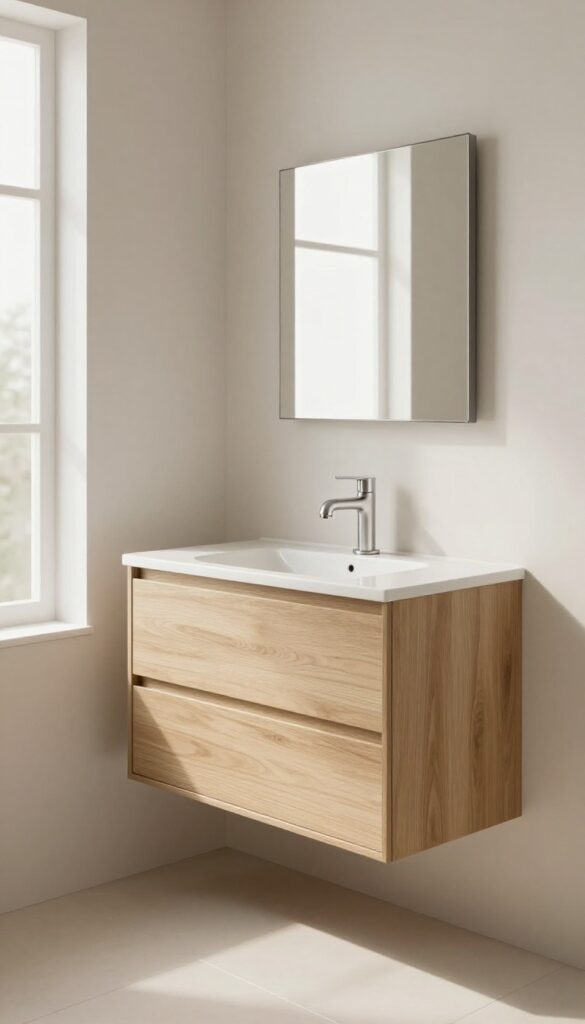
Small bathrooms struggle most at floor level, where bulky cabinets visually crowd the room even when storage exists. A floating vanity solves this by lifting storage off the ground and letting the floor breathe visually. I installed one in a cramped guest bathroom once, and the difference felt oddly dramatic for such a simple swap.
The goal isn’t just modern style; it’s reducing visual weight. When your eyes see uninterrupted flooring, the room automatically feels larger and cleaner.
Why This Works
Floating furniture creates negative space, which helps the brain interpret openness even in tight layouts. The visible floor line extends across the room, making everything feel less boxed in.
Cleaning also becomes easier because dust and water don’t hide underneath cabinetry. Practical convenience quietly reinforces the clean aesthetic.
How to Do It
- Choose a wall-mounted vanity sized slightly smaller than your existing cabinet
- Confirm wall studs or install proper mounting brackets for weight support
- Keep plumbing simple by aligning with current pipe placement
- Leave at least 8–10 inches of visible floor beneath for openness
Each step prevents unnecessary construction while maximizing visual payoff.
Style & Design Tips
Stick to flat-front drawers instead of detailed cabinet doors because ornamentation adds visual clutter quickly. Light wood tones or matte white finishes reflect cleanliness without feeling sterile.
Avoid oversized sinks that extend beyond the vanity edge. Proportions matter more than luxury materials here.
Pro Tip or Budget Hack
If a new vanity isn’t in the budget, remove the cabinet doors from your current unit and repaint it a soft neutral. Adding slim legs underneath can mimic the floating look surprisingly well.
2. Large Mirror Instead of Decorative Wall Art
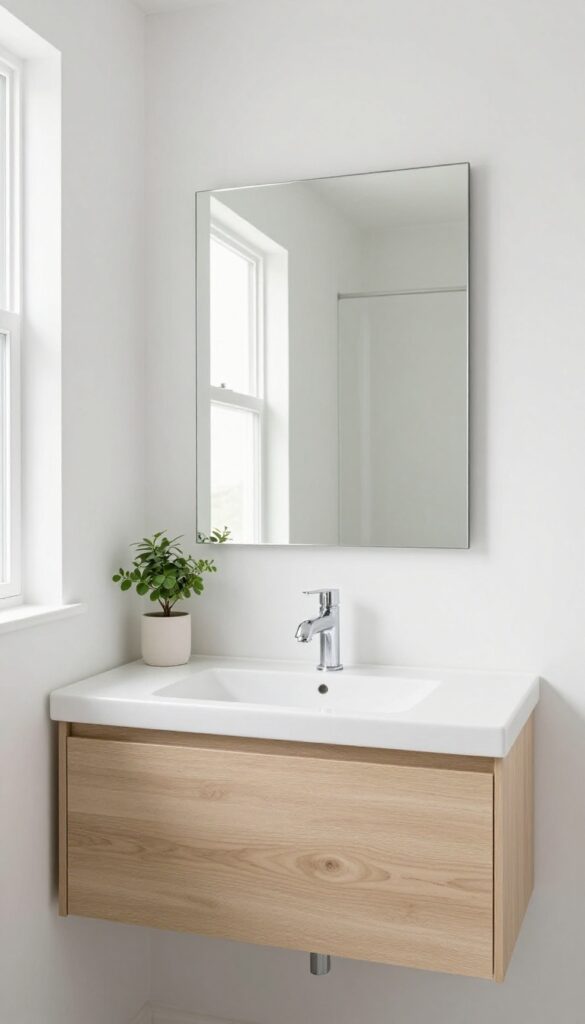
Wall décor often shrinks a small bathroom because it breaks visual continuity into pieces. A large mirror expands light and space at the same time without adding clutter. I used to hang framed prints above vanities until realizing mirrors do the same decorative job while solving spatial problems.
A mirror should function first and decorate second. When sized correctly, it becomes the cleanest design element in the room.
Why This Works
Mirrors bounce light around the room, reducing shadows that make corners feel tight. The reflection doubles visual depth, tricking perception without any renovation.
Fewer wall interruptions also create calmer visual flow. Your brain reads simplicity as cleanliness.
How to Do It
- Choose a mirror that spans at least 70–90% of vanity width
- Mount slightly higher than faucet height to prevent splash marks
- Use frameless or ultra-thin frames for minimal visual weight
- Anchor securely using wall-rated mounting hardware
Proper placement prevents awkward proportions that make mirrors feel oversized.
Style & Design Tips
Rounded corners soften small spaces and prevent harsh lines from stacking visually. Thin black frames work well if you want contrast without heaviness.
Avoid gallery walls in tiny bathrooms because multiple frames create visual noise quickly.
Pro Tip or Budget Hack
Buy a plain builder-grade mirror and frame it using slim wood trim painted to match your vanity. It looks custom without the custom price.
3. Wall-Mounted Storage Instead of Floor Cabinets
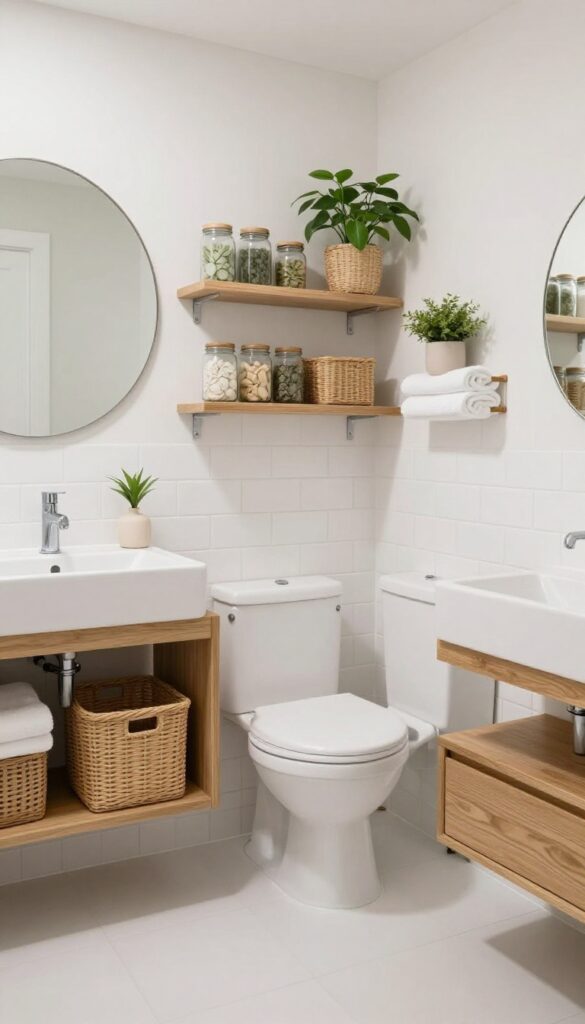
Extra storage often becomes the reason bathrooms feel cramped. Floor cabinets steal movement space and visually crowd narrow layouts. Switching storage upward instantly frees breathing room.
I learned this after removing a skinny cabinet that technically helped storage but constantly made the room feel blocked.
Why This Works
Vertical storage uses unused wall height while keeping pathways clear. Open floor areas make even a tiny bathroom feel organized and intentional.
Eye-level organization also encourages better habits because essentials stay visible and accessible.
How to Do It
- Install floating shelves above the toilet or beside the mirror
- Use wall-mounted baskets for daily-use items
- Anchor shelves into studs or wall anchors for stability
- Limit shelf depth to 6–8 inches to avoid crowding
Shallow storage prevents accidental bumps in tight spaces.
Style & Design Tips
Choose matching containers or jars to maintain visual consistency. Mixed packaging instantly looks messy even when organized.
Avoid overcrowding shelves; empty space is part of the design.
Pro Tip or Budget Hack
Repurpose kitchen spice racks as slim bathroom shelving. They’re cheap, compact, and perfect for toiletries.
4. Neutral Color Palette with One Accent Tone
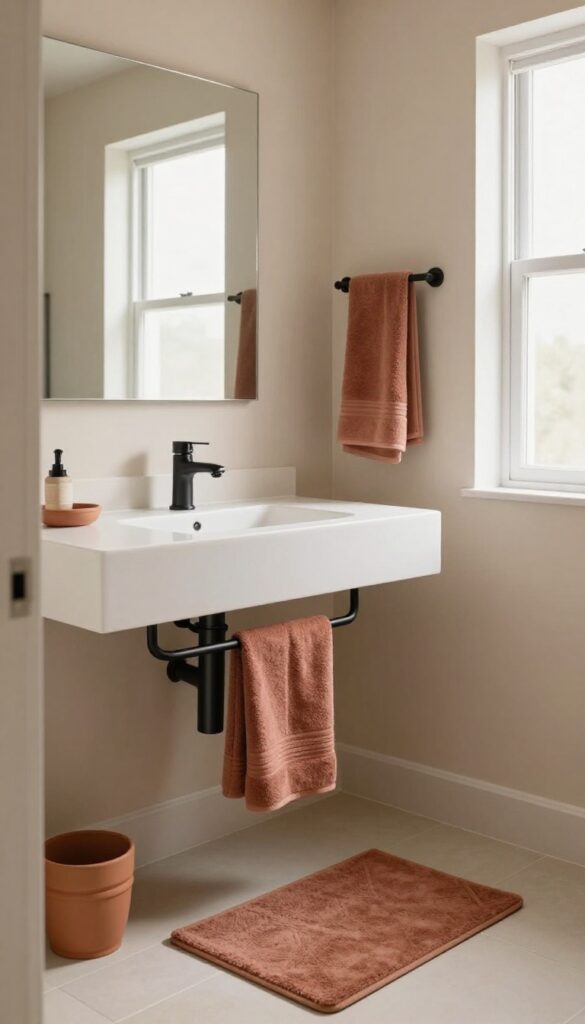
Too many colors make small bathrooms feel busy faster than almost any design mistake. A restrained palette keeps surfaces visually connected and calm. I used to chase trendy colors until realizing simplicity always ages better.
Neutral doesn’t mean boring; it means intentional restraint.
Why This Works
Limited colors reduce visual breaks between surfaces. The eye moves smoothly around the room instead of stopping at contrasts.
Consistency also makes cleaning feel easier because clutter stands out quickly.
How to Do It
- Choose one dominant neutral like white, beige, or soft gray
- Add one accent color through towels or accessories
- Keep large surfaces consistent in tone
- Repeat accent color subtly across two or three items
Repeating color creates cohesion without overwhelming the space.
Style & Design Tips
Warm neutrals feel softer than cool grays in small rooms. Matte finishes look cleaner longer because they hide fingerprints.
Avoid mixing multiple metal finishes unless intentionally coordinated.
Pro Tip or Budget Hack
Swap textiles seasonally instead of repainting walls. Towels and bath mats change the mood instantly for very little cost.
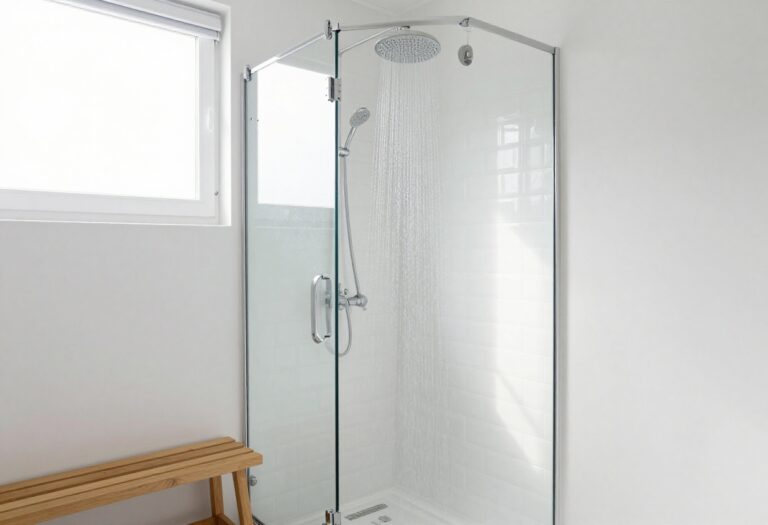
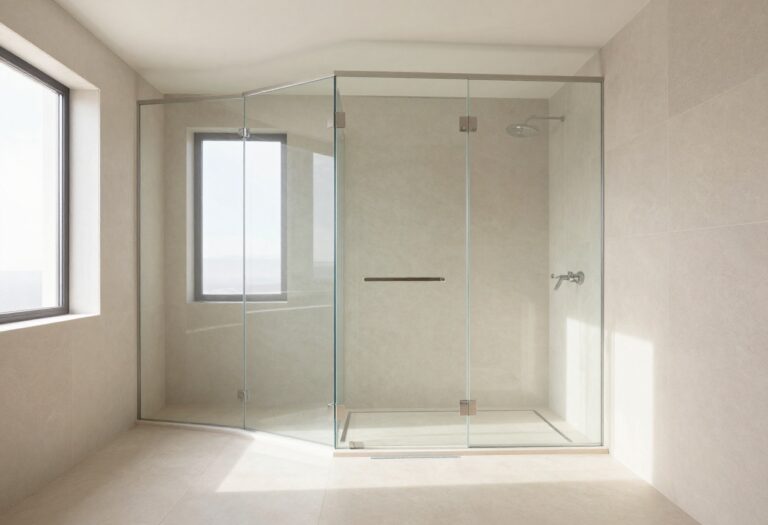
5. Glass Shower Panels Instead of Curtains
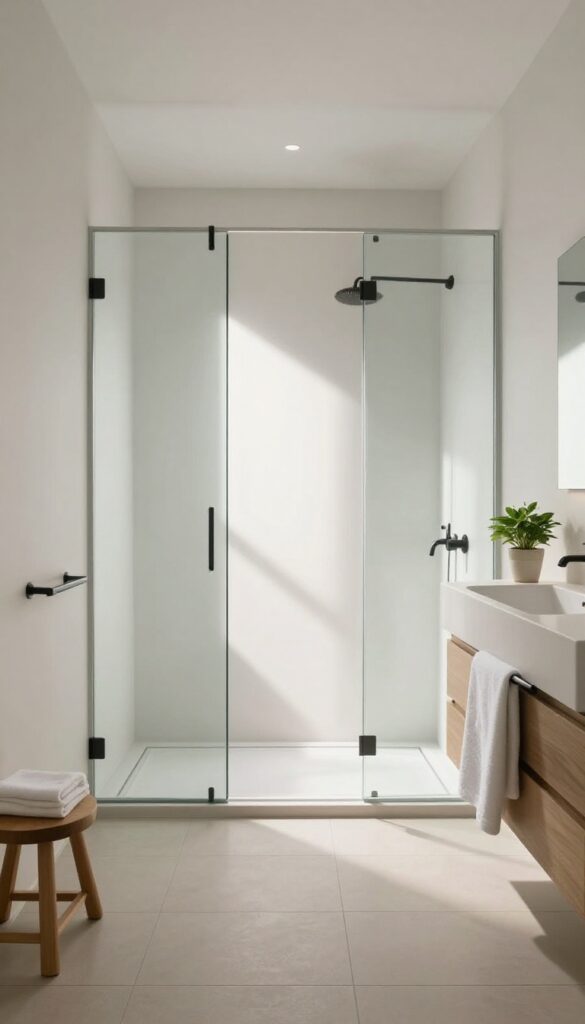
Shower curtains visually cut a bathroom in half. Replacing them with glass panels keeps sightlines open and uninterrupted. I resisted this change for years thinking it felt too modern, but it ended up making the biggest difference.
Transparency often equals cleanliness in small spaces.
Why This Works
Glass allows light to travel freely across the room. Continuous flooring and tile visibility make the bathroom appear larger.
Less fabric also means fewer moisture traps, which helps maintain freshness.
How to Do It
- Install a fixed glass panel or sliding glass door
- Choose clear glass rather than frosted options
- Seal edges properly to prevent leaks
- Maintain regular wiping to prevent water spots
Maintenance matters more with glass but takes only seconds daily.
Style & Design Tips
Minimal metal framing keeps the look clean and modern. Black hardware adds definition without visual clutter.
Avoid heavily patterned shower tiles if the bathroom is already small.
Pro Tip or Budget Hack
Use a half-glass panel instead of a full enclosure. It costs less and still opens up the space visually.
6. Hidden Storage Inside Everyday Items
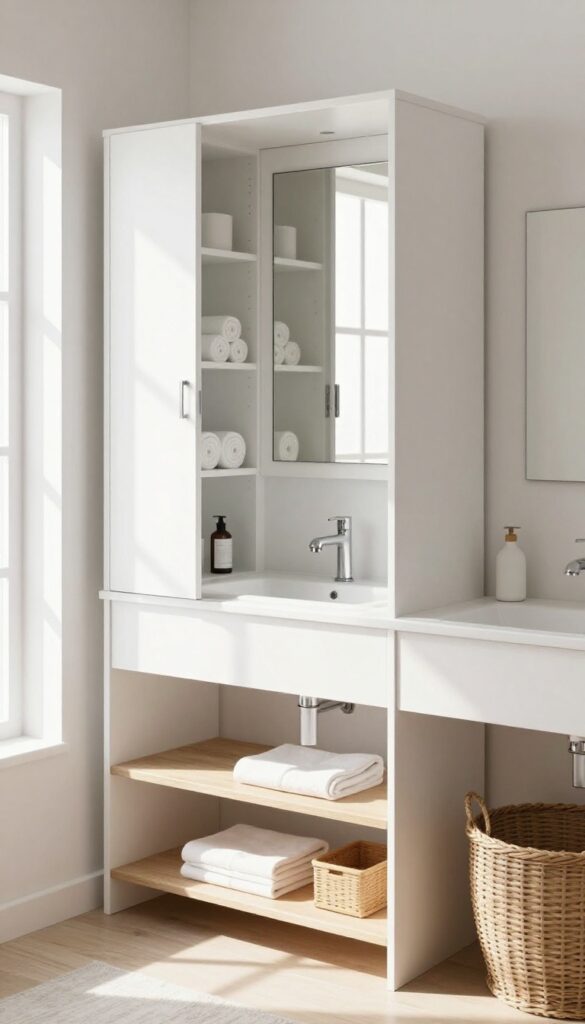
Visible clutter builds slowly until the bathroom suddenly feels chaotic. Hidden storage turns everyday objects into functional organizers. I started using mirrored cabinets and storage stools, and it changed how tidy the space stayed without effort.
Good design often hides work behind simplicity.
Why This Works
When items disappear visually, the room feels calmer even if storage capacity stays the same. Less visual information reduces mental clutter.
Multi-functional pieces maximize limited square footage efficiently.
How to Do It
- Replace mirrors with medicine cabinets
- Use storage baskets inside vanity drawers
- Choose stools or benches with hidden compartments
- Store backups out of sight but within reach
Organized invisibility keeps surfaces clean longer.
Style & Design Tips
Keep finishes cohesive so storage pieces blend naturally into the room. Handle-less designs reinforce a streamlined look.
Avoid oversized organizers that waste internal space.
Pro Tip or Budget Hack
Use labeled shoe boxes inside cabinets for inexpensive drawer organization. They work surprisingly well and cost almost nothing.
7. Minimal Counter Styling with Functional Decor
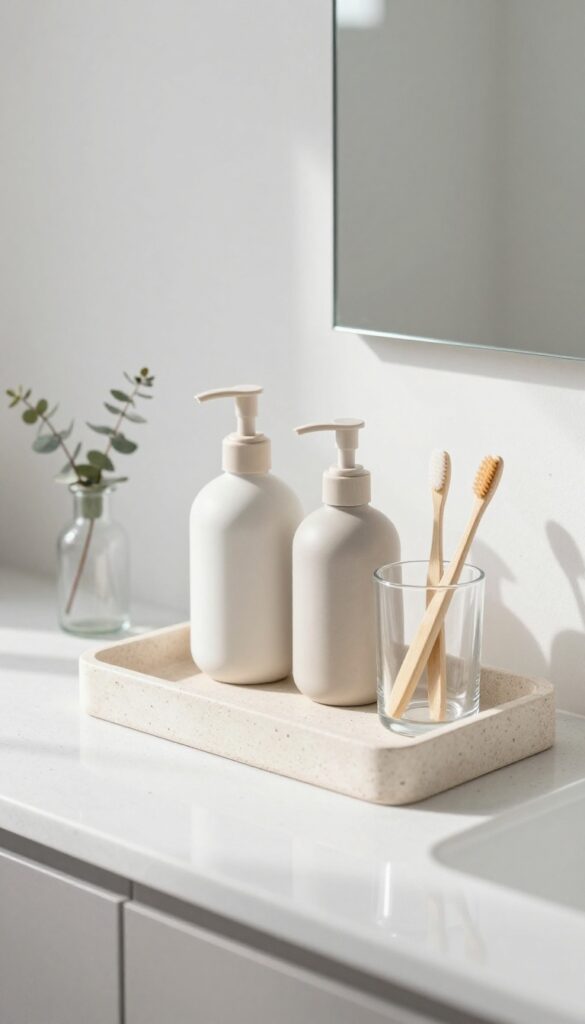
Bathroom counters attract clutter because daily routines involve many small items. Limiting visible objects keeps the space looking clean without sacrificing practicality. I realized most counters only need three or four intentional pieces.
Everything else belongs behind doors or inside drawers.
Why This Works
Visual simplicity signals cleanliness immediately. Fewer objects also make cleaning faster, which encourages consistency.
Functional decor balances beauty with purpose instead of adding unnecessary items.
How to Do It
- Keep only soap, toothbrush holder, and one decorative item visible
- Use trays to group items together
- Store daily products inside drawers after use
- Wipe surfaces nightly to maintain clarity
Consistency matters more than perfection.
Style & Design Tips
Choose matching dispensers instead of mismatched product bottles. Neutral ceramics or glass elevate everyday essentials.
Avoid overcrowding trays because they quickly become clutter zones.
Pro Tip or Budget Hack
Refill inexpensive pump bottles with bulk products. The uniform look instantly upgrades the counter.
8. Better Lighting Layers Instead of One Ceiling Fixture
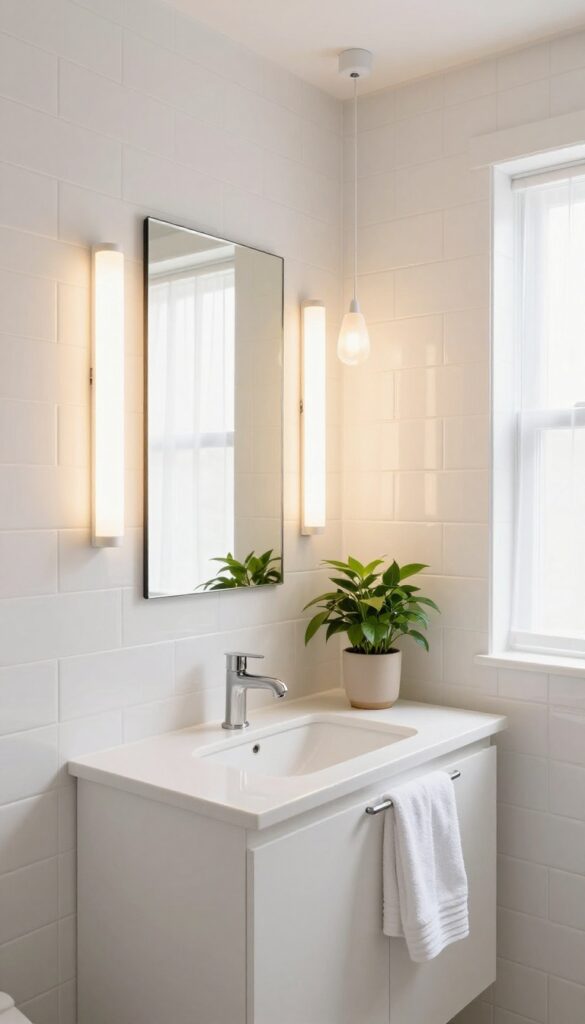
Many small bathrooms rely on a single overhead light that creates shadows and dull corners. Adding layered lighting makes the space feel cleaner and more intentional. Lighting upgrades often deliver the highest impact for the lowest effort.
I swapped harsh ceiling lighting for layered fixtures once, and suddenly everything looked more polished.
Why This Works
Balanced lighting removes shadows that exaggerate clutter and imperfections. Even illumination enhances mirror use and daily routines.
Good lighting also highlights clean surfaces, reinforcing the overall aesthetic.
How to Do It
- Add vertical sconces beside the mirror
- Use warm-white LED bulbs for flattering light
- Install dimmers if possible for flexibility
- Keep brightness consistent across fixtures
Matching color temperature prevents uneven lighting.
Style & Design Tips
Slim fixtures work best in tight spaces. Soft diffused lighting feels cleaner than exposed bulbs.
Avoid overly decorative fixtures that compete with functional elements.
Pro Tip or Budget Hack
Battery-powered LED sconces offer a renter-friendly upgrade without wiring changes.
9. Consistent Hardware and Simple Finishes
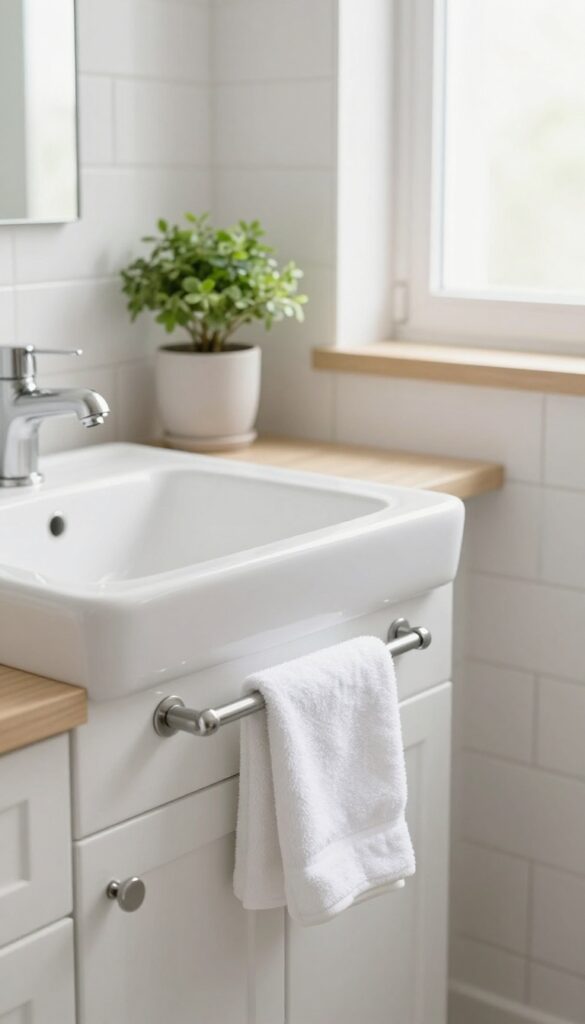
Mixed finishes create subtle chaos even when everything is technically organized. Matching hardware ties the room together quietly. I didn’t notice this detail until replacing random chrome pieces with one consistent finish, and suddenly the bathroom looked intentional.
Small details often carry the biggest visual weight.
Why This Works
Consistency reduces visual distractions and creates cohesion. The brain interprets repetition as order and cleanliness.
Unified finishes also make future updates easier because everything already aligns.
How to Do It
- Choose one metal finish for faucets, handles, and hooks
- Replace mismatched hardware gradually if needed
- Keep shapes simple and modern
- Coordinate towel bars and accessories
Small upgrades compound into noticeable transformation.
Style & Design Tips
Brushed finishes hide water spots better than polished ones. Matte black or brushed nickel tend to look clean longer.
Avoid trendy shapes that may feel dated quickly.
Pro Tip or Budget Hack
Spray-paint existing hardware using metal-safe paint for a cohesive look without replacing everything.
Final Thoughts
Clean bathrooms rarely come from expensive remodels; they come from thoughtful decisions repeated consistently. Small changes that improve flow and reduce visual noise almost always outperform big decorative upgrades.
Pick one idea and try it before tackling everything at once. Progress builds momentum, and honestly, watching a small space start working better feels incredibly satisfying every single time.