10 Front Yard Landscaping Ideas With Rocks
Rocks solve problems that plants alone can’t fix. They control erosion, reduce maintenance, and give structure to a yard that otherwise feels flat or unfinished.
Front yards often look messy because there’s no visual anchor pulling everything together. Strategic rock landscaping adds that structure without turning your home into a desert display.
Done right, rock features feel intentional, clean, and surprisingly modern. The trick is balance, not overloading the yard with gravel like you gave up halfway.
1. Rock Garden With Mixed Textures
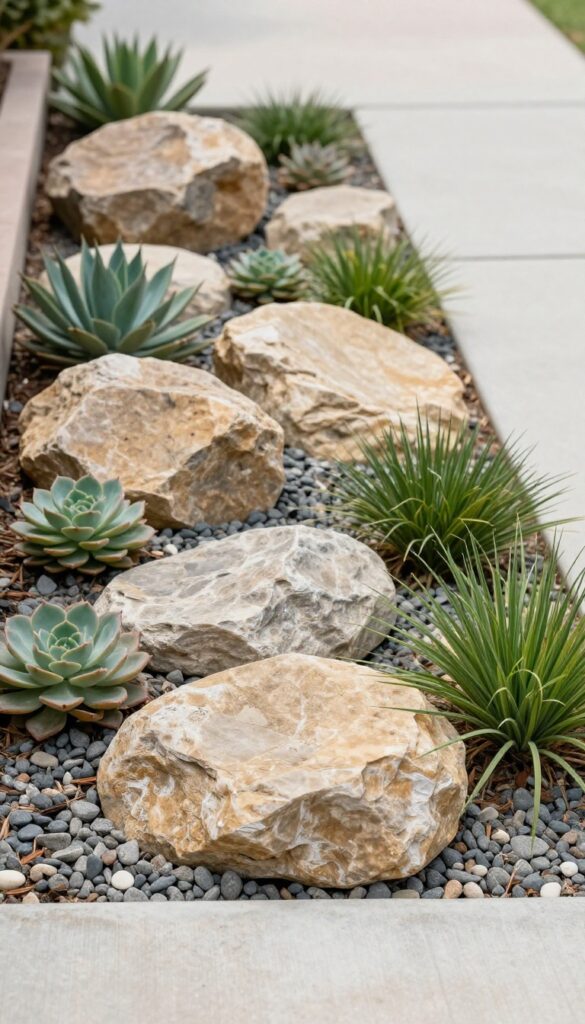
Most front yards struggle with that awkward empty patch near the walkway or driveway. Grass won’t grow well there, and random shrubs just look like an afterthought.
A mixed-texture rock garden fills that space with intention. Combine river rocks, crushed gravel, and larger boulders, then layer in drought-tolerant plants for contrast. I tried this in a narrow side strip once, and it instantly looked curated instead of neglected.
Why This Works
Different rock sizes create visual depth, which keeps the eye moving. Texture variation prevents the design from feeling flat or overly uniform.
It also reduces maintenance because you’re replacing high-water grass with durable materials. The structure stays consistent year-round.
How to Do It
- Outline the area with spray paint to define the shape clearly
- Remove grass and weeds completely
- Lay landscape fabric to block regrowth
- Add larger rocks first as anchors
- Fill gaps with medium and small gravel
Each step prevents shifting, weed issues, or awkward placement later.
Style & Design Tips
Stick to one color family so it looks cohesive rather than chaotic. Warm-toned stones pair beautifully with beige or brick homes.
Avoid overloading with too many plant varieties. Two or three plant types keep it clean and intentional.
Pro Tip or Budget Hack
Buy bulk gravel from a local supplier instead of bagged rocks from big-box stores. It cuts the cost almost in half.
You can also collect larger statement rocks from landscaping clearance sections for serious savings.
2. Modern Rock Border Along Walkway

Walkways often blend into the lawn and disappear visually. A rock border defines the path without building a full concrete edge.
Adding a 6–8 inch strip of decorative stones along both sides creates contrast instantly. I’ve done this with black polished pebbles next to light concrete, and the difference was dramatic.
Why This Works
Borders create clean lines, which automatically make a yard feel organized. They visually guide guests toward your front door.
The rock also prevents grass from creeping into the walkway edges. Less trimming equals less weekend frustration.
How to Do It
- Mark the border width evenly along the path
- Dig a shallow trench about 2–3 inches deep
- Install edging to keep stones contained
- Add landscape fabric
- Pour in decorative gravel and level it
That edging step is crucial because rocks love to wander.
Style & Design Tips
Dark stones pop against lighter paths, while white gravel gives a fresh, coastal feel. Match your home’s exterior tone for cohesion.
Keep the border width consistent for a clean look. Uneven edges scream DIY in the wrong way.
Pro Tip or Budget Hack
Use leftover gravel from another project to save money. Mixing subtle shades often looks more natural anyway.
Plastic edging works fine and costs far less than metal options.
3. Dry River Bed Feature
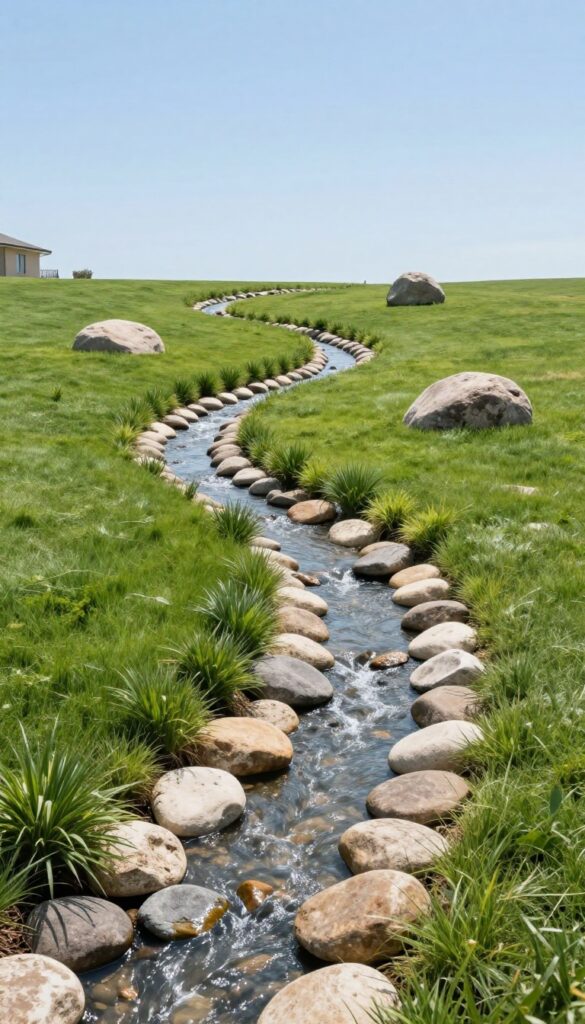
Poor drainage ruins lawns and makes front yards look patchy. Instead of fighting water flow, design around it.
A dry river bed made with smooth river rocks mimics natural water movement. Even when dry, it adds visual movement across the yard.
Why This Works
Curved lines soften the stiffness of straight driveways and sidewalks. The river bed shape creates flow.
It also channels rainwater away from the house. Functional landscaping always wins.
How to Do It
- Identify natural water runoff direction
- Outline a curved path
- Dig slightly deeper in the center
- Add landscape fabric
- Layer larger rocks first, then smaller ones
The center dip helps direct water properly.
Style & Design Tips
Blend plantings along the edges to make it feel organic. Ornamental grasses work especially well.
Avoid perfectly straight lines. Nature doesn’t do straight.
Pro Tip or Budget Hack
Use inexpensive base gravel underneath and top with decorative stones. No one sees the bottom layer anyway.
You can even mix in a few large statement boulders for drama without overdoing it.
4. Rock Mulch Around Trees
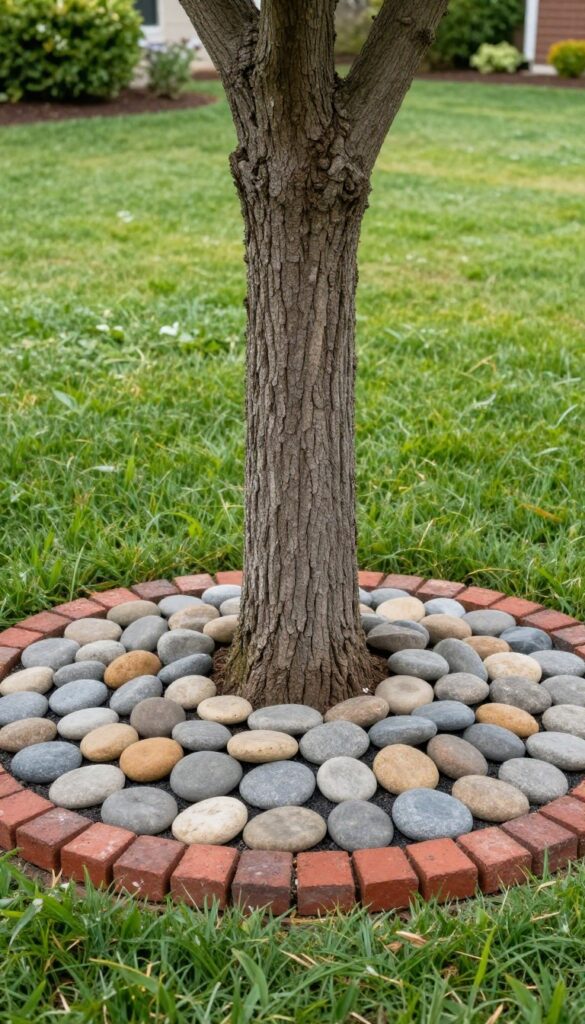
Tree bases often become muddy rings or weed zones. Traditional mulch fades and needs constant refreshing.
Rock mulch provides a permanent, clean alternative. It instantly sharpens the look around trunks.
Why This Works
Stones prevent soil erosion and maintain consistent ground cover. They don’t decompose like wood mulch.
It creates a polished appearance that frames the tree like artwork.
How to Do It
- Clear weeds and old mulch
- Define a circular border
- Add edging if desired
- Lay landscape fabric
- Pour in decorative rock evenly
Keep stones slightly away from the trunk to protect bark.
Style & Design Tips
Choose stones that complement your driveway or walkway for continuity. Consistency matters.
Avoid piling rocks too high. A shallow layer looks refined.
Pro Tip or Budget Hack
Reuse old bricks as edging for a low-cost border. It adds character and keeps stones in place.
If budget is tight, mix cheaper gravel underneath and top with decorative rock.
5. Gravel Seating Area Accent
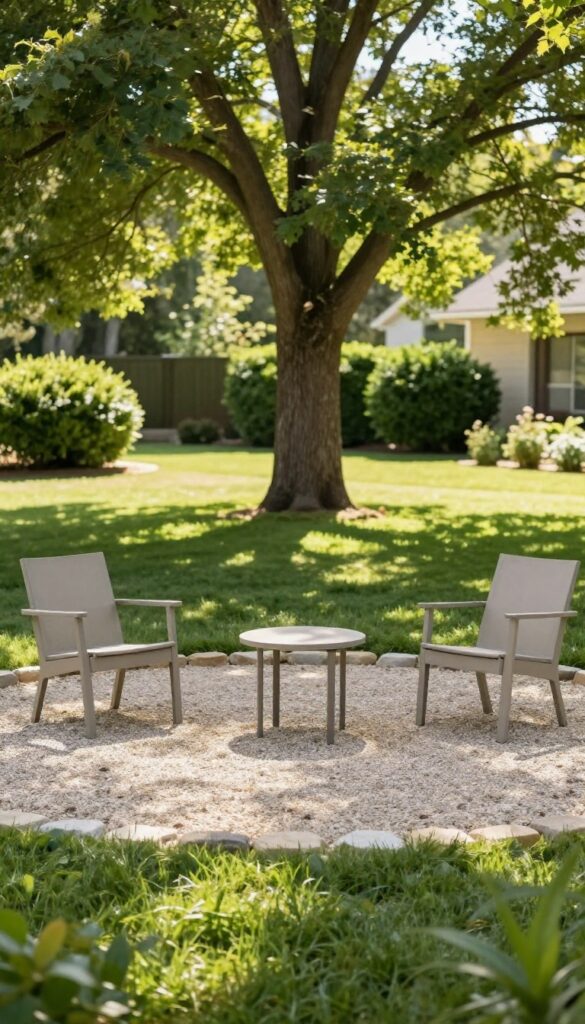
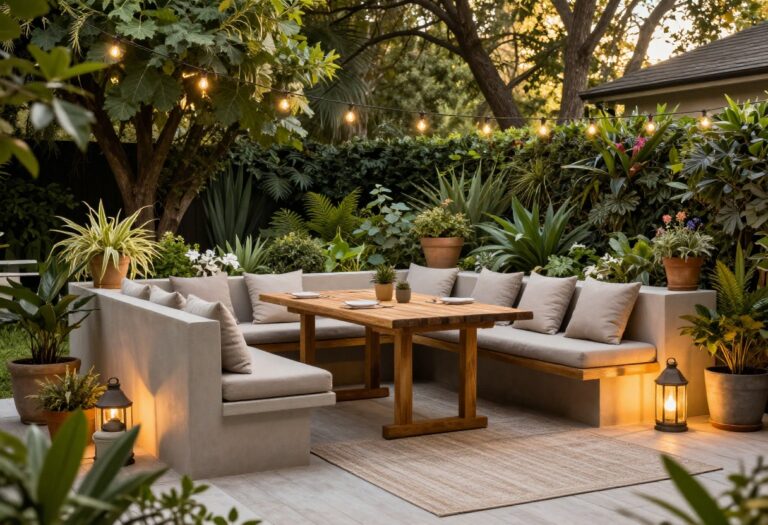
Front yards sometimes feel underused because they lack defined gathering space. A gravel seating zone fixes that.
Even a small circular gravel pad with two chairs feels intentional. I once added one near a tree, and suddenly the yard felt welcoming instead of decorative-only.
Why This Works
Defined zones create purpose in outdoor spaces. Gravel keeps the area stable without pouring concrete.
It drains well and requires minimal maintenance.
How to Do It
- Choose a flat location
- Mark a circular or square shape
- Remove grass and level ground
- Add landscape fabric
- Pour and compact gravel
Leveling matters so chairs don’t wobble.
Style & Design Tips
Frame the area with larger stones or subtle edging. It keeps the gravel contained.
Neutral gravel tones work best unless you’re going bold intentionally.
Pro Tip or Budget Hack
Repurpose patio furniture instead of buying new pieces. A fresh coat of paint does wonders.
Solar lights around the edge elevate the look without wiring costs.
6. Rock Pathway Through Garden Beds
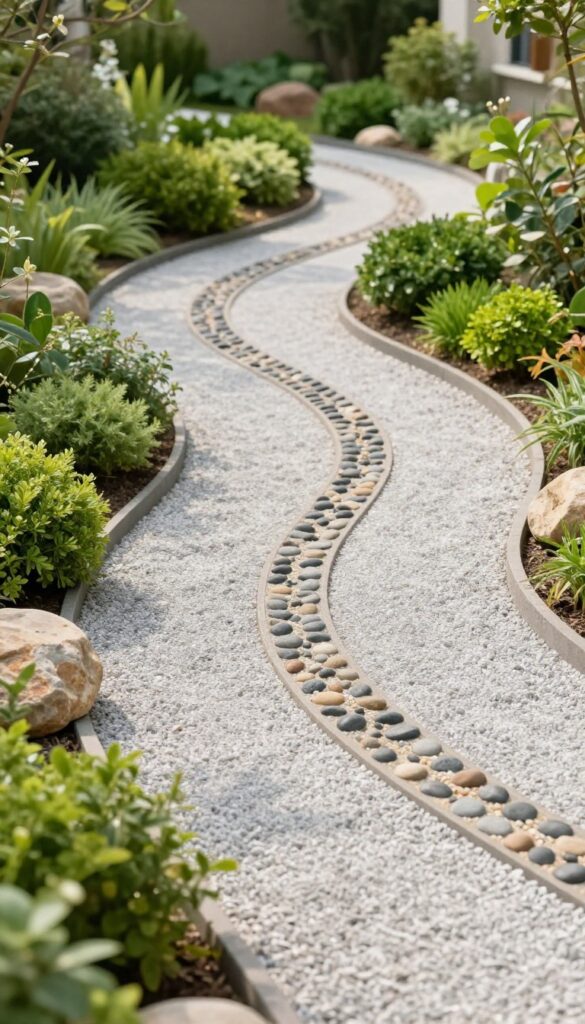
Stepping stones can look scattered and random. A full rock pathway creates cohesion.
Using compacted gravel between garden beds makes maintenance easier. I’ve found it keeps mud off shoes better than grass strips.
Why This Works
Gravel pathways improve accessibility. They also visually separate planting zones.
It keeps foot traffic from damaging delicate plants.
How to Do It
- Outline the path clearly
- Remove soil to a shallow depth
- Add base gravel
- Compact thoroughly
- Add decorative top layer
Compaction prevents sinking over time.
Style & Design Tips
Match pathway gravel to existing rock elements. Harmony keeps it elevated.
Avoid making it too narrow. At least 24 inches feels comfortable.
Pro Tip or Budget Hack
Rent a plate compactor for a day instead of buying one. It’s cheaper and saves effort.
Leftover gravel from borders can often finish the top layer.
7. Large Statement Boulders
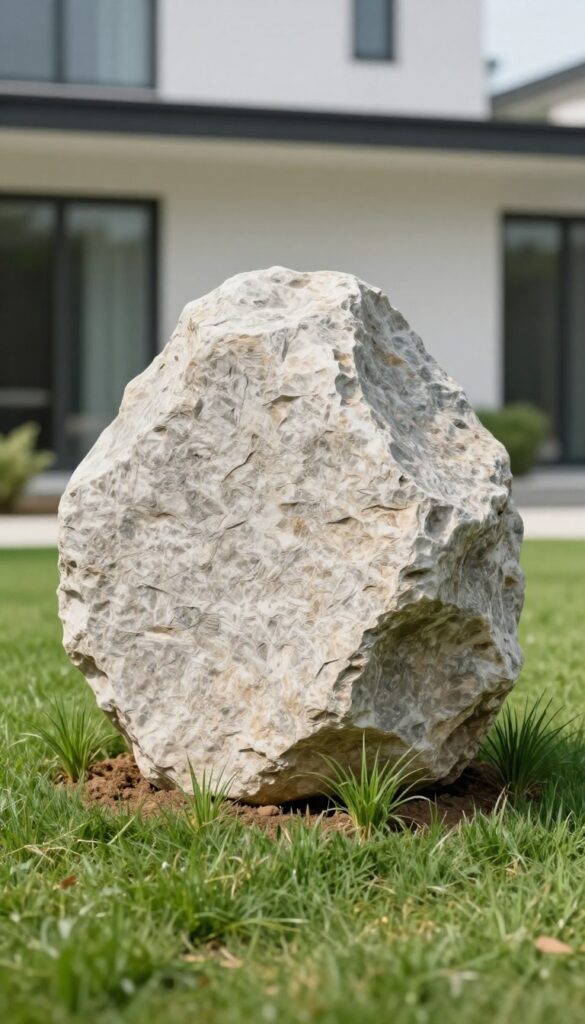
Empty lawns lack focal points. A single large boulder changes everything.
Positioned strategically, it becomes a natural sculpture. I was skeptical at first, but one well-placed rock made the yard look professionally designed.
Why This Works
Focal points give the eye somewhere to land. It anchors open space.
Natural stone adds organic texture against structured architecture.
How to Do It
- Choose proportionate size for yard
- Dig a shallow base hole
- Set boulder partially into soil
- Pack soil firmly around it
Partial burial makes it look authentic.
Style & Design Tips
Don’t center it perfectly. Offset placement looks more natural.
Pair it with low greenery for balance.
Pro Tip or Budget Hack
Check local quarries for discounted irregular stones. They’re often cheaper than garden center pieces.
Delivery fees matter, so compare options first.
8. Zen-Inspired Minimal Rock Layout
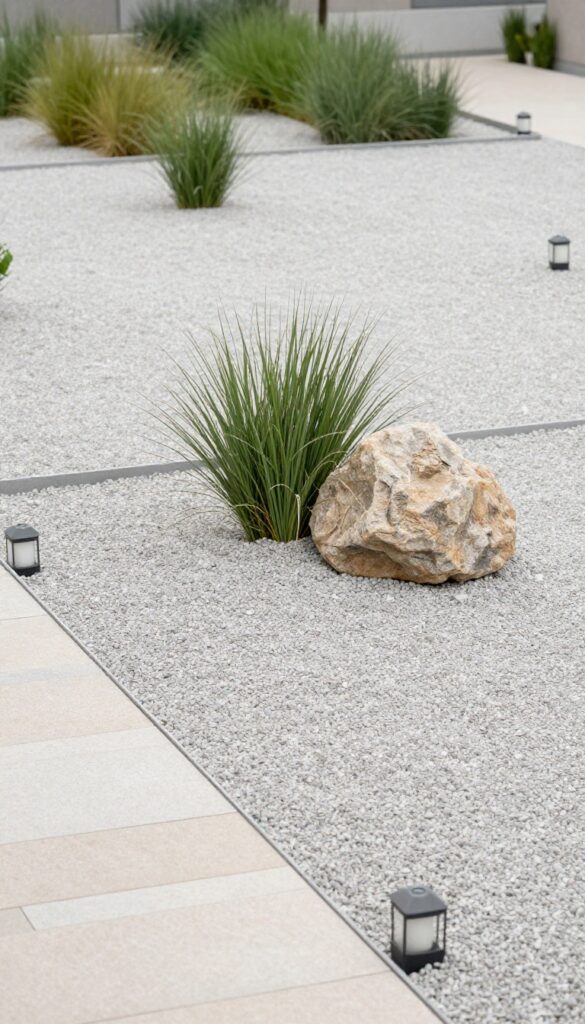
Busy landscaping overwhelms small front yards. A minimal rock layout creates calm structure.
Use light gravel, one or two sculptural plants, and clean lines. It’s simple but powerful.
Why This Works
Minimalism reduces visual clutter. It highlights architectural lines.
Maintenance becomes almost effortless.
How to Do It
- Remove excess plants
- Install landscape fabric
- Spread light-colored gravel
- Add one focal plant
Restraint is key here.
Style & Design Tips
Stick to a limited color palette. Neutral tones work best.
Avoid mixing too many textures.
Pro Tip or Budget Hack
Use inexpensive pea gravel for large coverage areas. Save premium stones for accents.
Small solar lanterns enhance the look subtly.
9. Rock Retaining Edge for Sloped Yards
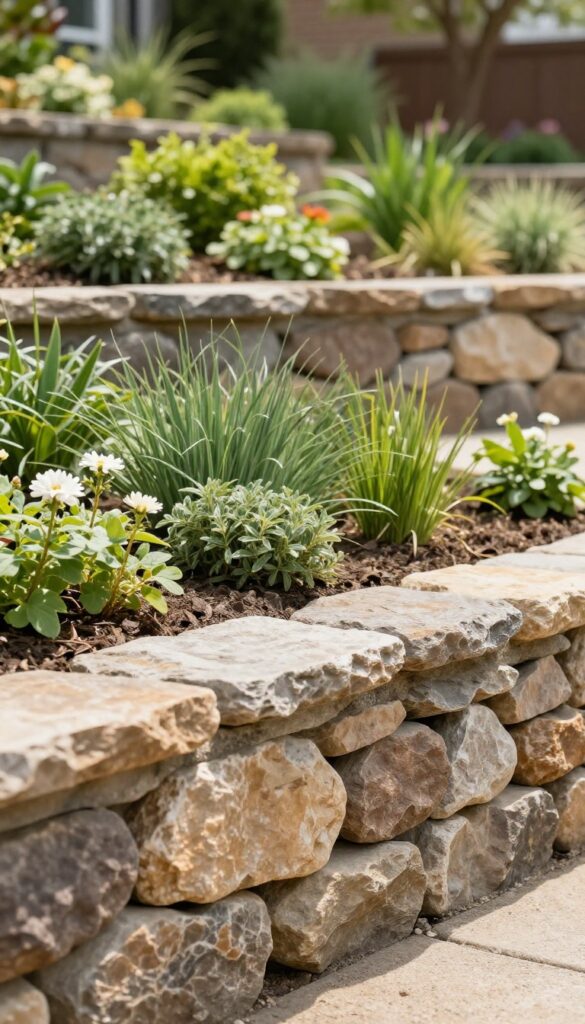
Sloped yards create uneven visuals and erosion problems. Rocks can stabilize and beautify.
A low retaining edge made from stacked stones provides structure without major construction.
Why This Works
It prevents soil from washing downhill. It creates terraced planting zones.
Stone walls feel timeless and sturdy.
How to Do It
- Measure slope carefully
- Dig foundation trench
- Add compacted gravel base
- Stack stones tightly
Start with the largest stones at the bottom.
Style & Design Tips
Keep wall height modest for DIY projects. Taller walls require professional help.
Blend plants along the top edge for softness.
Pro Tip or Budget Hack
Use locally sourced fieldstone to cut costs. It blends better with regional landscapes anyway.
Borrow a level tool to keep it straight.
10. Rock and Succulent Combination Bed
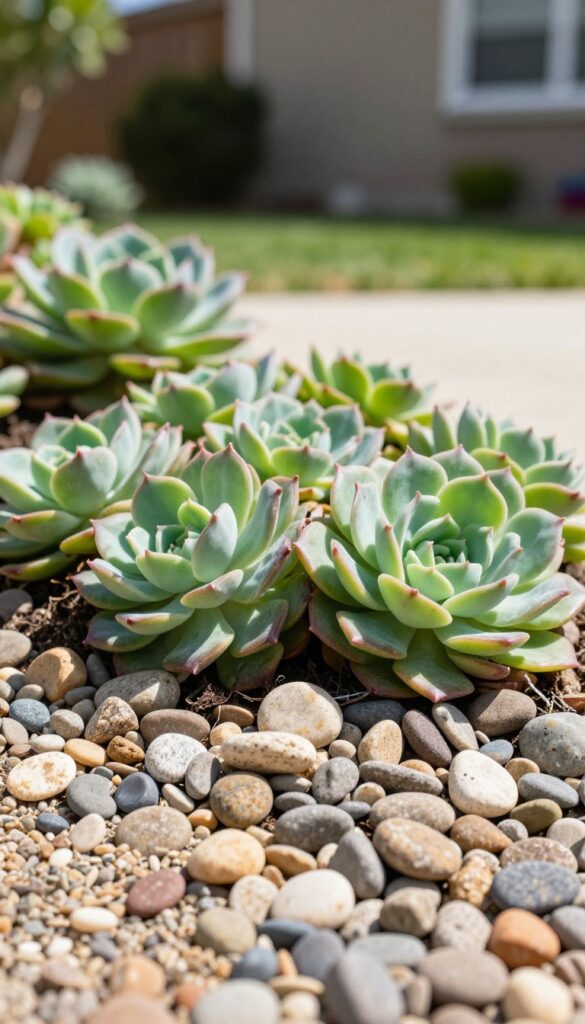
Traditional flower beds demand constant watering and trimming. Succulents paired with rocks change the game.
Layer gravel, medium stones, and low-growing succulents for a sculptural effect. It looks high-end but stays low effort.
Why This Works
Succulents thrive in well-drained rock beds. They require minimal care.
The contrast between soft plant shapes and hard stone textures feels dynamic.
How to Do It
- Clear and prep soil
- Add drainage layer
- Arrange larger stones first
- Plant succulents strategically
- Fill gaps with gravel
Spacing prevents overcrowding later.
Style & Design Tips
Mix heights subtly for dimension. Avoid overcrowding small plants.
Neutral stones highlight vibrant greens beautifully.
Pro Tip or Budget Hack
Propagate succulents from cuttings instead of buying new plants. It saves money and multiplies fast.
Start small and expand gradually.
Final Thoughts
Rock landscaping isn’t about replacing greenery; it’s about creating structure that makes everything else look better. The right balance turns an average yard into something that feels planned.
Start with one area instead of redoing the whole front yard at once. Once you see the difference, you’ll probably want to tackle the next section anyway.